PT.2 Facing Yourself : Inside The Mind Of An Olympian Fencer - Episode 36 w/ Khalil Thompson
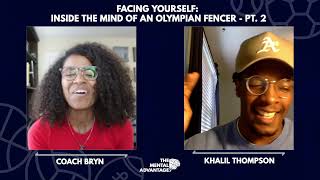
U.S. Olympic saber fencer Khalil Thompson talks about qualifying for Tokyo, the mental side of elite competition, and how he learned to enjoy the process rather than obsess over rankings. He describes the surreal moment of securing his Olympic spot at nationals and how community kept him grounded through the emotional roller-coaster of success and failure.
Chapters
Enjoy the process. There's no, like, it's because the one thing about it is that you have to be able to take the punches, but also, and realize that the success, you'll have the success one day, and then one day it's gonna be, you're gonna be feeling great, the next day you're gonna be, you just have no feeling at all. Not even be in the dumps, you're just gonna have no feeling at all.
Right.
And at that point, it's like, you're so focused on the end goal, you're never going to— you're just so focused on running to the finish line. You got to realize you have to run to the finish line.
I'm excited for you to see this week's episode. But before we get to that, I have a message for you. If you're a parent of an elite athlete or a coach of a high-performing team and you want— you're looking for some help or assistance with making them more mentally resilient, perform with more confidence, be more consistent, anything like that, then this is for you. I have an 8-week program all designed to address exactly that, to help your athlete be at their best on a more consistent basis and not get tripped up by those little voices in their head and getting down on themselves for mistakes, but performing like we know they can. So what I want you to do is don't delay, schedule a— just grab a time on my calendar through this link and let's set up a time to talk about your specific situation and how what I'm offering in my 8-week program can help. Okay, so it's brindresher.com/freeconsultation. So click this link, grab a time on my calendar. I look forward to talking to you. And now on to this week's episode.
Yeah, there were a lot of moments like that, and then sort of like, you know, I just like started— my teammates and I, we kept— some of us kept each other in check We kept up with each other and saying what everyone was doing. We were doing Zoom trainings together, and at that point it was just like, I gotta figure out sharper, but I also push my body to a different point that way. That's actually when I started running. Okay. I don't— I'm not the biggest fan of long-distance running, or 3 miles isn't that long. Yeah, but for someone who doesn't run at all But at that point, I realized it's like, I'm in a state right now where my mind has to have a certain flow. Yeah, I need to find that flow. I need to find how to— like, my body needs to push past this point. Yeah, because that used to have— when I was younger, I had like a 7.5-minute mile. Then when I got older, I got back to 10, and I was like, nah, I got this down. Yeah, I gotta cut that down. I was like, okay, that was it. Okay, so the biggest, the biggest aspect for me, mental aspect, when you— because in that moment when I got back to competing, because then you also have to get the feel of fencing in a competition. That's not— you have to get the feel of fencing in a competition. Yeah, you could do all the training in the world, but if you don't know how to compete, you are shook and afraid. I didn't want to get back in the field of competition, and when it came to it, it was just like It's— everyone says like, I put all this time in and stuff like that. I'm just like, I know how— I knew how to do what it's like to lose making a team. Yeah, not to make a team before, because there are many teams I didn't make. I've only made one Olympic team and one national team in my entire career. There are a lot of people my age that and older who have made way more national teams, way like medaled at World Championships and stuff like that. And in my head, I'm just like, I'm just gonna fence. Yeah, that's the one thing I'm focusing on is I'm just fencing today. I'm doing me, be me. And sometimes it's funny because some people think I'm like a very person. You were mean. And I was like, I was like, oh, you've only seen me at competitions.
Yeah, like I'm focused, right?
I'm just focusing. Like, I'm in, I come in, check my stuff. I walk out.
Yeah.
You say the highs a little bit, but I'm not really for that, for all that. I'm just here to fence and that's it.
Right.
There's no animosity at all.
Yeah. Okay. I have a question. All right. Yes. It's kind of ways back in your story, but then I want to go forward because I want to get to the Olympics. Right. You said sometimes I just, I, at that point when I lost the competition, I had to just focus on the person in front of me. So, and I mean, I had to just like, I didn't care who I was fencing. I knew what I needed to do to match. Do you feel that? I mean, obviously maybe there is no one-size-fits-all and it's, it's more of an it depends answer, but do you think it's better just to go into the match like, you know, focusing on what I know I can do, or do I need to know the habits, the patterns of my opponent?
Mix of both. Okay. Because it depends on who it is, but yeah, because there are times you just don't know who this person is and you gotta figure it out as you go along. Um, if you have the most— I honestly, like, you have to really believe in yourself more than relying on the tactic.
Got it.
And the strategy. Because things change. Some things just change. You're like, I'm going to do XYZ. Nope, that's not going to work. That's not going to work. I'm going to hit you this. I'm going to hit you from this side. Nope. I'm going to parry. Nope. And for me, sometimes, but there's also the, I'm going to just do me. That's not going to work either. The biggest thing for success is adaptability.
I am.
And I, I like to find inspiration outside of sports sometimes. So Jay-Z said this one time that he wanted to— he didn't want that hot spark, and he wants to be able to last.
Gotcha.
And in order— but in order to last, you have to adapt. I'd say the same thing and put it in fencing. The only way to win a match— because you're fencing— unless you're fighting somebody who's doing the same exact thing every single time and you finally— that's cool. If they're doing something that you don't understand, no, yet you have to learn how to change. Yeah, if you don't change, you're gonna lose.
Gotcha. That makes sense. That's amazing. I love that. Be adaptable. You have to be adaptable and flexible. And I love also that you were talking about— and after this, that you were talking about, um, just gotta keep throwing stuff at them. Like, you can't— you gotta— you know, no matter how many different, you know, I guess strategies you're going to deploy throughout a fencing match. You can't give up and you have to know that it's not a one-size-fits-all approach. So I think that's amazing.
You gotta have a risk. You gotta be risky. Yeah. You gotta be risky. Like, what was it? Um, again, like everybody's different.
Yeah.
So there are people who have the same fencing style, have the same coach, have their unique traits that separate them from each other. So they have their own way of fencing. Yeah, you got to know how to fence. That's why I say you have to know the person in front. You have to take them for who they are in front of you, because they can't be, oh, well, they do this. Like, no, this person is in front of you. This person has their strengths, but they also have their weaknesses.
You have to learn, and I'm going to learn it. You have to be able to match. Yeah, absolutely.
You can use the strengths against them. You can use their weaknesses against them. Using someone's strength against them is Probably the hard part.
Yeah, of course. Okay, so question: when you went to the, uh, the, the match that was qualifying for the Olympics, like you said, 12 people, 4, we had the whole mental break in between. Excuse me, defense. Tell me about the moment, maybe the match that, you know, like you're, you're— maybe the match where you're like, oh my God, if I win this I'm going to the Olympics, and then how that played out.
So I have a story for this, because the answer that I would give wouldn't, wouldn't be as great unless I had to give the story. So I, it came down to the last competition. It was a national tournament. So 3 spots have already been build on the team, the last spot. And I already was ranked 4th for the team, but that didn't— there were 2 other people that could potentially pass me. So it comes down to the last tournament, 3 are the top 3 seeds in the tournament. And when you walk in the room, like, for everyone knows who's like at that point engaging with like who's in the team, and you just have people staring at you and they're just like, they're just like, oh, what's gonna happen? Blah blah blah. And it's just like, thank you. And I'm just— thanks. It's just like, I'm just not even thinking about it. Like, right, I'm just like, I'm not thinking about what's gonna happen tomorrow. I'm just like, you know, I'm gonna take tomorrow for when it comes, right? So the tournament goes on, uh, we're all like top 3 seeds going to the first round, top 2 seeds going to the second round. Um, I really like— like, I'm just like, all right, here's my first match. That's it. So we're all just like, we're fencing. Um, that's to a point where one of the guys loses in the quarterfinals. The dude— and then one of the other guys beats one of my teammates from my club in the quarterfinals also. I had to fence the winner of that match, so— but I was fencing, right? Um, I had won my match. In the quarterfinals, and then now it's between us. We have to face each other. So in my head, I'm just like, all right, I looked at the rankings, and normally I don't do this, but I'm like, look at the rankings. I know there's another thing also, you need to know exactly how you have to do at each tournament in order to make the team, because we get— we get points for every ranking, and that's how the rankings are set up. Okay, so at this point, I'm just like I'm just like, all right, it's like not just time defense, but now I was like, this is the match now. I got it. Watching, this is the one everyone's watching. This is the one I was like, right on. Like, so in my head I'm just like, I'm just like, I'm just gonna— I was like, I, I, you know how I fence, I know how you fence. What happens right now is just I'm just going in this match I know how to fence you now. I'm just gonna fence. So the match goes on and it was a close match, and there's this video, um, I fall after I win. Oh wow. I didn't realize. So normally I don't do it. So in fencing, we yell to celebrate and stuff like that. Um, my legs gave out after I did it because I was so locked in that after I did, I was just like It was just relief. I was just like, all right, it happened. Um, my teammates congratulating me, and I'm just like, thanks guys, thanks. But this is the semifinals. I still have another match to face after this. Oh, okay. No, that's nothing. The tournament's not over. It's just like, there's like, there's another bout. And one of my teammates is like, hey, guess what? And I was like, what? He's like, you qualified the match before. And I was like, wow. I didn't know because that's like certain— you can get a certain amount of points, but based off of like, like one point result can switch out another one. So this tournament result was going to switch out. I knew this one because I had— right, like it didn't— gotcha. So but compared to the other guys, like one of the other guys that lost in this quarterfinal had to win the tournament. So the moment he lost, and the guy that I fenced in the quarterfinal, um, and the semifinal— once I made the semifinal, he really got me. At that point, the points difference isn't that far off. And, um, I didn't know, so everyone was like— and they post on Instagram, and normally I don't do this, but we had a very long break. Yeah, so I was like, I'm like, I'm gonna go. And this is the thing, I play Candy Crush. Oh, in between matches. So this one time I had such a long break where I was like, I was just on my phone. I was like, I need to take my mind off fencing because this is like a very important match. Um, and when they told me, I was just like, what? And they're like, yeah, we didn't tell you because if we told you, you wouldn't have fenced the way you did, right? I actually accept that because my whole mind would have shifted. And I know myself long enough to know completely different because like, that's another thing is like, yo, like, you— because once you hit that goal, you're just like, all right, cool, job's done. But at that point, like, the job's not done. The job's not done. I still need to compete. I still need to win this. At that point, I was like, I need to win. I'm just like, yo, I want to win this national tournament. I've never won a national tournament at the senior level before. For. Um, and I did, and I was just like really happy about it. And like, I still had— I hadn't had a moment yet, and it didn't happen to me until I flew back home from the Olympics. Wow. It didn't— I didn't— it really didn't hit me until I flew back home. Um, and that point I was just like I, I am going to look good. And it's like still something that like me saying sometimes, yeah, I'm still getting used to it. But it was just like, like I was sitting at home, I'm sitting on the— I'm just like, I have time to my— I'm just like, I spent since May, right, I have been traveling. Actually, no, since March. But like after the Olympics, I really picked up. I had been traveling so much. Like I went Virginia. 4 weeks later, I was like, yeah, training camp in New York, training camp in Rome, back home, training every day at 10 AM, work, and then like, and then training camp in LA, then go to the Olympics, then the Olympics. And that's a whole nother animal right there. And after, on the way, I'm just like, I've just rode in myself. I'm just like, I have time with myself to really process what I just experienced the last few months of my life. And I'm just like— I started crying. Like, I had a tear come down, and I'm just like, wow. That was like— I was just like, oh my God. I had no words. I tried to journal, couldn't even write a word. I could— I have 5 journal entries of just me writing and that's it. It just like, I couldn't write it because I didn't process it. Like, it took a very long— I didn't process it until like a month ago.
Wow.
Yeah, it was a lot to process.
Yeah, I imagine. Okay, so obviously many of us have never been to the Olympics. The experience of this particular Olympics is, even though it's still the Olympics, it's different because there's different protocols in place and different things like that. So as you go through this process, as you're saying it was difficult to process and you're having the, the comedown, tell me a little bit about the, the experience while you were there. And, um, and then we'll go into a little bit of the finish up and get to the rapid fire questions. Tell me what it was like. Yeah, of getting to the Olympics, like what, you know, like any of it, Olympic Opening Ceremony, any of All right, cool.
Thank you. Because I was just saying, the period before the Olympics is a lot. A lot of training. That's why. After you qualify, like I said, it's like a couple days. And then, all right guys, hey, we got to come up with what we're doing. Like, all right, we have the team set now. Training camp. So what are the dates? And they're like, we have to leave. We're like, we're going to leave by this day. Well, it's all that stuff. So months go by, a couple, actually no, not even months, weeks. I'm sorry. It felt like months, but it was weeks. Right. So this is May, this was May to June. Okay. And end of June. I left for LA July 6th. So it was like, it was like weeks. So we left and we went to LA for a week training together as a team. And we had like some other, we had like some other guys that are out there with us. And we had a good group of guys. Is like you want to have good spirits. First, like, I saw also my first Olympics with two of my teammates. One of my teammates, it was his third Olympics. The other one, it was his second. And I saw how they shifted in practice because they had— now they know what it takes to get there, right? They fence on that level. So you're just watching me, like, I'm just like I'm like, yo, this isn't normal practicing, right? Everyone— like, you have to go harder now. You've never experienced before, right? But then proper— like, again, proper preparation, right? So we're in LA, we're training, and then when we get to Tokyo, um, we flew to Tokyo. When you fly there, like, you're seeing other people from other sports, and then you're like a beach volleyball shooting on our flight. Uh, COVID severely changed this game, at least from what I've heard. Just, yeah, I've never experienced it, but also like a lot of things change. Like, um, well, first when we got there, someone, someone had, uh, tested positive early, so there's like a whole— and there's a whole procedure of going to the— like you have to wait to get your test, you have to go through this whole thing to get your test. Wait for the COVID They have to contact trace the plane and they separate people, stuff like that. So someone on my flight had tested positive. I had— me and my teammates sat in the airport for 12 hours. Wow. So this was normally like 6 hours to get your, um, to get the COVID test done. It took us an extra few hours for the contact tracing and stuff like that. So eventually get on the bus and there's buses there coming for you and they know your schedule and they know what's happening. They keep in contact because these are— there's nothing also is that in this particular airport, like you have to show up and you have your credential with you and they have to like, they don't activate it, but like that for right now, that was our visa of getting into the country. Gotcha. So we had that and we, they like scan it, all that stuff. We get to— the bus comes, we go to the village, and it's been— that's actually, it's 3 AM, right? I got there, it's 3 AM, so I— 3 AM or 3, 4 AM, and we're there getting stuff, and I'm just like tired, I want to go to sleep. So we got to get to credential, now we have to officially get our credential, we go in they take us to our room or take us to the US, you know, because it was like— the village is very big. It's like a— it's a big city.
Oh wow, okay.
Like, it's not— it's, it's just like a bunch of apartment— I wouldn't say they say, but it's like a lot of apartment complexes all in one area, uh, by the Tokyo Bridge. And then I like, you walk, I walked in the room and COVID check, another change of COVID Um, there's a bag, it was like a giant, there's like a giant suitcase bag, other bags on it. It's just like all the goodies, some of the goodies and stuff they give you. Um, and then like the first few days you're figuring out the bus schedule, you're figuring out like the dining is open 24/7, so you can Um, there's like a schedule. Team USA has their own training center, so you go there. So you guys hit the bus there. The training there also is like— and now you're with the team and you know who's the first-timers, right? And like, it was really cool, especially where we were. Like, we were in this gym, so it was like enough strips for us, and we shared it with the strength and conditioning. So that was like the other gym. Yeah. So like other athletes were coming in and like working out there. So it's like people, actually one of my friends on the women's volleyball team I saw there and she was like, oh my God, you're here. And I was like, hey, what's up? We hadn't seen each other in a while. It was great catching up. So you go through all that, you meet new people from other sports and people are like, Jersey also, stuff like that. Yeah. We go a little exploring. Then opening— night of opening ceremonies. Fencing is the first week, um, men's saber is the first day, but I was the alternate for the team event, so I didn't have to fence. That's it. Um, so some of my teammates were like, yeah, I'm not going to opening ceremonies.
This is fair because like they got to fence at like 9 in the morning. Yeah, yeah, yeah.
So I, I went to— I went and it was awesome. It was cool. You get to meet people, um Basketball players, they don't stay in the village. Um, that's— we saw the video of Kevin Durant, everyone singing happy birthday to them. It's hilarious. Um, and great, like, it's beautiful to watch in person. And like, you walk by cameras and people like, hey, I'm from NBC, you want to be on TV? And I was like, yeah, yeah, that'd be cool. It's a good talk. You know, you walk— first of all, opening ceremony is also very long.
Yeah, it's—
you gotta walk through all this stuff. Yeah, walk through a tunnel to walk out into the field, and that's the stadium where the track and field is. Then like there's the whole show and then the lighting, the torch. Um, you can leave earlier if you want to. We left at— actually, we left like night. Um, and then the next day the atmosphere changes because now it's like, okay, cool, everyone's like getting acclimated to the village, stuff like that. It's competition. And then you have like the people, you have, you see the competitions or you get to watch. Um, there's TVs, there were TVs in the building and you just like watch other sports. Like I was watching—
what are your sports you like to watch? What are the ones that you like to like watch?
Yeah, okay, all right. Uh, first one must always be fencing. I watch—
I love watching fencing.
Yeah, it's like, yeah, um, gymnastics. So fencing, gymnastics, track and field. I love it. Swimming, like the basic ones that everyone else watches.
Um, did you meet Simone Biles?
Did you meet her? No, I did not. Okay, all right. They had moved out. So that's another thing also, is that some people think that like we know everything that goes on and everything— we find everything out at the same time other people do. Gotcha. It's just that we're so like trapped, like not trapped, we're so focused on everything else we're doing, on like ourselves, that you're just like, oh, like, oh, Simone Biles isn't competing. And again, we don't know why. Um, they had moved out also because people were catching COVID Village. Oh, okay. Which is like another thing is like you have to do COVID testing, you have to wear masks when you're inside except when eating. They had like plastic dividers for each individual seat, um, gloves on for whenever you carry your trays. You have to submit a spit test every morning. Wow. Yeah, there was no like nose test. Like they like have vials for you and like scan— no, because every, every ID also, I mean, every credential has like a barcode. There's a matching barcode on these files that you just, you wake up and boom. Gotcha. Wow. And you submit it. And the cool thing also is that like, I was in, we were in like an apartment. It's like, look.
Yeah.
So we're sharing rooms with our teammates. So like, we're just sitting there talking with our teammates about what we're experiencing. You could walk around somewhere in the building. Or around the village, it's like a game place.
Yeah.
Um, there's a dining hall, there's stores. Um, and then like there were times like we'd walk around the building like for USOPC, uh, rooms for athletes. And we were just hanging out, watching, like there's channels of different sports. I think we watched like sailing or something like that. I forgot. Um, oh, diving. I love watching diving. Okay. Love watching diving. And there's hearing other people's experience at the Olympics, meeting new people. And then there's also, you witness the various people are going through, the champ, the people who are winning, the people who aren't doing, didn't do as well. People were just happy. People were happy to be there. And honestly, there's no shame in that. It's very difficult making Olympic team. Commending anybody who makes it, doesn't make it, even though you don't make it, that doesn't athlete you are.
That is so important.
Um, that's a— also, I would say it's like being— like, having done it, like someone say, oh, well, you're not on the other side of it. Like, I, I know what it's like to not make— maybe not— it's like not to make the team. And that's when you sit at home and you're watching other people do it, that's rough. It's because you're thinking to yourself, that could be me. That doesn't take away from how good you are as an athlete.
At all. It doesn't. So important for people to hear that because I think a lot of people like, the job's not done as you're going through the tournament. And I remember Kobe saying, and I've talked about this on the podcast before, but Kobe talking about like, you know, why am I happy? The job's not done, you know, type thing.
But I think I know what you're talking about. Yeah, but I think it was like, that was like in the playoffs.
Wait, and they were like, you can't be happy because he was in the middle of the playoffs. And he was like, but it's like but they had a victory in that particular game. And I think that it is important to celebrate our wins along the way because when we have those losses, it's not like everything before it is for naught. 100%. I think it's so important. So what was your experience as— I mean, I know we don't have enough time to go through the whole version, but the truncated version of what was it like? Obviously, you said you saw people in the different varying emotions. What was it like as you were navigating competition and kind of like, you know, was a medal a goal? And if not, of course, I guess it always is a goal, but, uh, how did that play out for you?
So my particular situation is as a fourth member of the team, um, I only fence the team event, but I can only fence the team event and be when I'm subbed in. Okay. And fencing, you only have one substitution. If you're going in, you're in for the rest of the day. Ah. And yeah, so that was like really— that was really important for me. It was just like, yo, I have to stay ready. And it's always— it's like mentally, any situation. So like The training is like, okay, if something happens, like I'm training with the guys and fencing with them because, you know, the individual competition's first. So once the individual competition happened, day after I went to practice, I'm like, I'm swept. I had to switch my team. Yeah, because it's for us, it's the same, it's, it's like a relay except it's 3 versus 3. So it's each person fences each other up to 45 points. Okay. Um, and for saber and like it doesn't reset. So after the first match, you're winning 5-0, next match 10-6, next match 15-8, and so on until 45. But that doesn't mean that a team can't catch up from 15-8 to make it 20— to make it— they're losing, but now it's 20-19. 11 touches, it changes the whole rhythm of the match. So the whole point is that, like, if you're forward— so I had to be ready so that if I get subbed in, I gotta go. There's also that, like, don't be carried away, because also, like, we have a thing where, like, if you don't compete— yeah, so you gotta— like, there's that, there's that. I know I'm gonna go in. It's also just like, listen, I'm gonna take it in. I'm taking it for what it is. Again, taking it day by day for sure right now. And again, just staying ready. And so I got subbed in because one of our teammates got injured. Defense, I would have lost, but I didn't even defense the next match and then there was another injury. That was like, it was a little upsetting, but it was, it was just, we were there together. Yeah. And we had like a job to do. And not meddling, that was, when you go to like the Olympics the first time, you're just like, was a lot to process. Yeah. Especially in a team event, you're just like, yo, I want to do it. We really wanted the medal for sure. We really wanted that. But I think also now that's brought us closer together as a group.
Yeah, absolutely. That's awesome. All right. As you're— like you said, it took you a couple of months to process this whole, like, the post-game experience. Looking back, what message do you have for people who, you know, don't know what it's like for us to keep in mind? I think you've already given us a— doesn't matter if you go or don't go, it doesn't take away from yourself as an athlete. But anything else that you think would be a breadcrumb for a future Olympian or anyone that has competed at the Olympics, you know, that, you know, you think that they would need to remember? Process, or you're learning yourself as you're going through it?
I would say enjoy the process. There's no— like, it's because the one thing about it is that you have to be able to take the punches, but also and realize that the success— you'll have the success one day, and then the next One day you're gonna be— it's gonna be— you're gonna be feeling great. The next day you're gonna be— you just have no feeling at all. Not even be in the dumps, you're just gonna have no feeling at all, right? Um, at that point it's like you're so focused on the end goal, you're never gonna— you're just so focused on running to the finish line. You gotta realize you have to run to the finish line and you need to be a part— like, that's the part you're working on. You're not— because even then, like, the— and like, qualifying for the Olympics isn't— qualifying for Olympics, graduating college, like, stuff like that— this goal isn't the end goal. Like, you need to keep going, and then things change. Your perspective— your perspective changes. You've experienced something something now that you, that you have to adjust to? Like, I think for the hard part— not the hard part, the part now is like, I've never had like a title to my name like that. Like, yeah, like, um, so it's weirder now. It's like, I've always just been Khalil. Now it's Khalil the fencer, or like, I was a cool guy who fences, right? I was like, cool, you're the Olympian. Um, and it's like, is there a way to act about that stuff? Like, no, you just have to keep what got you to the point of where you attain this title or obtain this position you're in your life. You have to keep that same work ethic and turn it up a little more because now you just— you have to raise that standard because now you've met that, you've made it. Or even if you failed you got to go take back and learn about it. But you've experienced failure too. So now you know what you need, you know what messed up. Now you know how to fix it and do better.
Love that. Love that. So important for everyone listening, watching. It's really important what Khalil said there too, is not to get so— your identity so wrapped up in that too. Like he said, it's about the process. You know, the journey, because everything continues. Life continues no matter what, right? So after the Olympics, there's life.
You can't do it by yourself.
And you can't do it by yourself.
Absolutely. I spent a lot, like, you know, a lot of the time when you think that you can, you know, you gotta spend time by yourself, you do. There's one thing you do have to spend time by yourself, because there's a lot of work that the work of the work that came with, you know, working with your coach, fencing with your team, your teammates, stuff and stuff like that, and competing with your teammates. There's also that work by yourself, that little tiny percentage that's going to help out the greater— like, that's something you need to also realize is you have to have a balance between yourself and like around other people, because when you fail, your failures hit harder when you're really passionate. And sometimes you can't get out of it by yourself. Other people just help you.
Oh man, so many good things, like, right? Because it's, it's not free knowledge. Yeah, you can't do it by yourself, but also you do need to know about the work you're going to put in, you know, that extra inch, that extra, you know, just those little, those increments that you think don't matter, but there is, it's everything. So like, so good.
Yeah, I'm not at the wake up at— I'm not at the wake up at 4 AM stage, but you know, 10,000 hours— just like work by yourself because you need to learn how to— because you need to push yourself. Yeah, because that's the thing about fencing, right? Because that's Olympics is you're on a stage, even though honestly fans would have made this experience much harder because again, remember what I said about getting carded? Yeah. You're on a stage and you're in a big room that echoes. There's less strips, but there's these lights start coming down. There's a giant screen in front of you with a video with live footage of you on it. Yeah, there's a ref that's now farther away than normal, and your coach is way farther than normal. Gotcha. So now you're at a point where you're just like, you're literally in a spot, place right now. Oh, and everything else is dark, so all the lights are just on the strips. Wow. So at this point you're just like, at this point you're just like, I have to be focused. Again, the lights were sometimes like, you can get lost in it and like, you're not even see what's in front in front of you. Yeah. And you just focus and you're like, no, this, this moment right now, I have to be in tune with what I have to be in tune. Yeah. Because if you aren't being able to focus on yourself in that moment or push yourself, that's what's really the hard part comes. That's what's really hard.
Yeah, absolutely. You've given so much, and this is a lot of the stuff that we talk about. I mean, I'm a mental performance coach, talk about with my athletes. Obviously I've never coached defender, so not saying I understand everything from that perspective, but you've given a lot of good things for anyone playing any sport and just pursuing a big goal, like you said, because it's not about just that goal, because then there'll be another one and there'll be another one and there'll be another one. So it's about what did it take to get there? And, you know, like they say, what you did to get there, you know, here is not what's going to take to get you there. And so, like, you've given so much. All right, so we're gonna go into, uh, one One more question, and I think you've already answered it, but maybe, uh, you know, you can say something more specific, and then we're gonna get into the rapid-fire questions to wrap this up. All right, so, uh, what is your mental advantage, Khalil?
What is my mental advantage?
Yes.
Hmm, first time someone's asking me this. I'd say my mental advantage is that The life— my life experience. Um, I have this thing where I used to compare myself to a lot of people so much. I have an older sister, and my sister unfortunately didn't make the team, but she's— she's tried twice going to the Olympics. She didn't make it. My sister also was a doctor. Um, so like siblings are the first sibling, that's their first set of competition. Yes, absolutely. Whether you like it or not, we're gonna admit it, but like, that's the first person you gotta do. Yeah, like as a competitor, um, and it's like trying to chase this person, and now it's like trying to chase this form, the standard of excellence, right? So at that point, from there, I would always compare myself to other people, especially when you see people at competitions. Fencing, you lose, you're you're watching the rest of the competition. Yeah. So you're seeing other people go farther ahead and you're just like, why is this not me? Why is it not me? It could be me. And when you think that way, you're blocking your own blessings because that person is not you. That person doesn't fence like you. That person doesn't think the way you do. That person doesn't train the way you do, right? Or some people like, like people train others, right? There's a thing Um, and at some point when I realized that, I was just like, I've yet to— you guys from your own race? Absolutely. Same, it's the same way, same way in track. I think track and field, I didn't realize it's like, yo, when you're running, I'm not looking. You can't look left and right or who's next to you. You gotta always look ahead because you're in your own lane. Same with fencing. You're fencing your match. Yeah, I've seen people fence matches and look at the strip next to them. They're like, oh, what's happening over there? Like, nah, the finish line is in front of you. But your opponent, the person you're fencing, is in front of you, not the person next to you.
It's in front of you.
Gotcha. Like, so at that point, just like, in my head, I'm just thinking, I got to swim my own race.
Yeah, love it, love it, love it. So much good. Okay, so now it's time for the rapid fire questions. Kaleo, these are the most personal of all of them. Okay, what is your favorite— oh wait, sorry, I forgot to make sure. Are you ready for the rapid fire questions, sir? Let's go. Okay, let's do it. All right, what is your favorite snack?
Okay, all right, I go through stages. Okay, all right, in the summertime, Italian ices, cherry flavored.
Oh, nice.
If I'm watching TV, Flamin' Hot Cheetos. Okay.
You would not think that Flamin' Hot Cheetos would be an Olympian snack. So good to know. Just kidding.
Go ahead. Or Cool Ranch Doritos. Classic.
Classic. I still love Cool Ranch Doritos. I'm vegan now, but take me back to my childhood. I ate way too many bags of that stuff. Okay, uh, yeah, yeah. Okay, next one. Favorite flavor of ice cream, if you have one. If you're not into ice cream, your favorite dessert.
Cookies and cream.
Cookies and cream. That is the most— I work in the schools, uh, sometimes I speak in schools, and we often use that question, and that is one of the most popular flavors. Fun fact.
Cookies and cream. Cookies and cream. Cookies and cream. Oreo or mint chocolate chip or mint chocolate.
Really good. Yes. Okay. Do you have a superpower you've ever wanted to have and why?
All right. So I was thinking about this yesterday, right? I love— first of all, one, I'm a huge— I grew up reading comic books. Okay. I love anime, all that stuff. Superpowers are so difficult. Like, one, because here's the thing, right? Like, kind of like they get so into it, like to a point where like people are gods and it's just, yeah, how did this get here? Um, like people like, I like super strength, but then they think they're gonna be Superman, but like it's really not like that, right? Um, I had a superpower though, you know what I would say?
Ah, this is—
I always go back and forth with this. It's either I would rather have the— I'd either have the Flash's powers.
I knew you were gonna be a speed guy.
Wait, wait, wait, question, question, question. I do have a question.
I have a question though.
Okay, is it one specific power or is it a set of powers?
Well, you get to decide, but typically I ask for one, but I mean, hey, you make the rules.
Okay, well, I'm just saying, because like the Flash has super speed, but he can also like phase He can also time travel and all this other stuff. Oh, okay, okay. You know what? Um, honestly, I think one of the coolest superpowers is Green Lantern's ring.
Me too! Say why, say why.
So first of all, one, again, I grew up like— I like Green Lantern has always been one of my favorite superheroes. I grew up with John Stewart, Black man. Okay. So, and then the funny thing is, I was like, I delved deeper into it, and they were like, because Green Lantern wears masks. Everyone's like, yo, Green Lantern, why don't you wear a mask? He's like, I'm Black, everyone's gonna figure it out at some point, so I'm not gonna wear a mask. So I say Green Lantern, one, because so they have like an emotion— the color spectrum is also an emotional spectrum in those comic books. So green represents will. And your constructs come not just from— are as strong as your will and also your imagination. So it could be what— so like one Green Lantern rebuilt an entire city, another Green Lantern can fly through space without anything, you don't need anything, you can fly at light speed.
Yeah.
Um, but it's also like you're— everything is up to your imagination. So at that point it's limitless. Like people are coming up with like I think it's the cool thing where it's like this guy's in a fight but he's using like a rabbit to catch himself from falling, or— but you can also fly and come up like a giant hammer, or like I'm seeing dudes build robotic mech suits like out of energy. Like, that's cool. Um, there's that, but then also probably— yo, I think Spider-Man has the dopest powers.
You think so?
Uh, so here's the thing, there's a reason why. Here's the reason why. Peter Parker and Miles Morales, because I love both. Spidey sense. First of all, he's extremely strong to a point where he can lift a building. He can walk on walls. He's extremely smart. So, I mean, that wasn't a power, but he's smart enough to build his own web shooters, something that most like private companies couldn't do, right? The guy makes like his suits are on— his suits are actually pretty cool. He's funny. And like, dude, the guy, the guy has like— Spider Sense is the dopest power ever. His little physical reaction to danger. Yeah, to a point where it's just like he's not even— he's dodging bullets. Or no, or this is my third one, the one from the, from The Matrix.
Oh well, yeah, I mean Neo is pretty good.
Again, that's like some god-tier stuff.
Yeah, of course. First of all, these are all amazing. I definitely— I did not— I'm not a comic book person, first of all. You've definitely given the— let me say, I probably said first of all twice there, but you have given the most in-depth answer for this question ever. Secondly, the Green Lantern, my exposure to it was the Ryan Reynolds movie, but when I found out about that—
I apologize.
Yeah, I know, I know, I know. I'm sure that it was an offense to like the original. And what you're telling me now, I'm like, okay, now I see why it didn't do so well, because the devotees were like, we're not going to see that. However, um, I— that's when I found out about The Ring, and the— and I was like, that's so cool. But you've also given me a new perspective on Spider-Man. Not that I ever didn't like him, I love superheroes in general, but awesome, awesome, thank you.
And there's like so many intricacies into their powers that like even actually I think really cool powers like that. I think the X-Men have the coolest powers, in my opinion.
They do. They have pretty cool powers. I don't want to take too much more of your time, but I do want to— you and I need to have a separate conversation about superheroes and then real superpowers. That's kind of the whole premise of this podcast is why I talk to athletes, because they are our real-life superheroes, right? I mean, what you guys do— I mean, obviously, I was an athlete, and so I think of you guys as superpowers.
Superheroes. I should actually do want to say something about that because it's interesting when you say that they're superheroes. Um, I think I'm just like, I, I go back and forth, like not back and forth, but like sometimes like I try to tell them I'm just a regular guy. You are not just because like, um, but again, like it's normal for me to be around people who— because that's like my biggest thing is I like being around people who inspire me. Yeah. Um, and I don't want to be around— I'm like, my, my friend group, like, I'm around people who— my best friend, my best friend just graduated law school at Georgetown University. One of my friends, my other best friend just graduated, is now a PT. One of my friends was like, he graduated college early and was like, I'm gonna work corporate. And now he's just like, I don't want to do this anymore. And now he works at a startup. Almost as like, like, stuff like that. And then everyone's like, oh yeah, the Olympian. I'm like, bro, everyone in this group chat can do— has something where they could just calm us down, like get us off our pedestal. Because we also know each other.
Yeah, exactly.
I don't think like when you, when you start thinking of yourself in a persona and like detach yourself, like detach who you are from the title, that's because who you are is what got you there. Yeah, it's like I wasn't Khalil Thompson, the Olympian, before. I was Khalil Thompson. That's it. Um, I get like, my friends inspire me. So like, even older people around me, or people, people where I want to be in life. Yeah, my friends are the ones who also want to go somewhere with their lives. And to a point now, we barely see each other. We know a lot of us live in different parts of the country. We don't really get to talk But we're still very close friends, and like, that's a great thing.
Yeah, love what you're saying.
I'd say more, I'd say more, but I don't like being seen as it, but it's also happy for a kid to be able to look at you and just be like, I'm inspired. So like, inspire people, inspiring, it's also great to inspire others.
Absolutely. And I mean, and I do preface in my, uh, intro episode about how I do know that athletes are real people, because that's where we get confused with the Simone Biles situation and whatnot. People go through things. And definitely want to have you back and have maybe a deeper conversation about mental health, because that is obviously something that is a challenge as you try to navigate, right, the whole thing. So we'll definitely talk about that in depth, uh, because I got to know your story. Then we definitely want to talk more mental health later. All right, this question is not so serious, but for some people it is. All right, you have toilet paper in your house, I imagine. Do you like your roll to come over the top or under the bottom? Do you have a preference?
Very personal question, but over.
Over. He's an over. You know what, Khalil, I've had a lot of athletes on and it seems to be overwhelming and over thing. So now I'm starting to think it's a personality thing of athletes. I'm not saying—
yeah, no, okay. I just think that like under, like, it just rips. Like, you don't want that. Like, under is just weird. Like, because you pull— most places you go, right? Like, you go to a public bathroom and you pull under, it comes off.
Yeah, it breaks.
You don't really have control.
That's right. Now, do you change it at your house if somebody puts it on wrong? Yes. Okay, will you change it at my house if it's wrong in my bathroom?
No, it's not my house.
That's weird. Some people do, Kodo. Some people do. I do change it. I'm an over, and I do change it in my house, but I won't change it.
That's like another thing with like boundaries. That's a boundary, right?
Yeah. You don't just go—
that's like going in someone's house and like tilting like their art because you don't like it. Yeah, exactly. Or like moving an art— like you don't do that. That's weird.
Yeah, you shouldn't, right? You shouldn't. But people do. People have very strong feelings about certain things.
I'll say Okay, the one thing— this is my best friend's house though, to a point where like I have like family dinner. I'm at their house all the time for dinner. There's one time that my friend, he is so disorganized in his kitchen that his utensils were mixed up. That was the— I was just like— but like again, I, I only did it because I helped clean up also. I'm like, like, yeah, you're just being helpful. So I'm just like— and like his mom was just like— I was like, I was like, nah, I'm sorry, I can't do this.
I just rearranged it. Okay, um, who's your personal hero?
My personal hero? Um, probably my mom.
Yeah, sounds like— I figured she was going to be your answer.
I mean, I have a lot, but I think that like for someone like ground level, uh, single parent putting two kids through college and as athletes. Like, that's really— as a Black woman, that's extremely difficult, um, very emotionally and mentally taxing and monetarily taxing.
Yeah, absolutely.
Especially with your— especially with your youngest being a guy. So I would say that was like—
there's that.
Yeah.
That's a lot. And hold on, don't tell me the other person before you do, because I've got one other question. What would you want to be remembered for?
What do I want to be remembered for?
I don't know. Haven't figured it out yet. That's okay.
No, I think that it's just like There's not really a mission, and like, I wouldn't say that— like, I have my goals in life, but I'm really just living my life to one, succeed so I can help others, help like my family succeed. I want to help others. I like helping others. Um, I mean, probably being a great counselor for sure, one of the, like, one of the best best. There's that. Uh, great— sorry, best is fine.
Greatest is better.
Got it. Uh, greatness is a choice. Boom. There you go. That's free. That's real. That's real free knowledge right there. There you go. Cut that, cut that part out.
Yeah, greatness is a choice.
But also, I would say, like, you know, I think I, I don't like getting caught up in, like, the I want to be remembered. Yeah, a certain way. Because like, I think when you just need somebody, like, you need to— everyone leaves an impression on them. And I think just like, just be you. Yeah, that's what I'm trying to do right now, is just be me, to do the best of my ability, inspire others the best that I can. I just like, I, I, I just don't want to— I'm not like a guy who's like be out here. Everybody's got to see me. Nah, I'm just, I'm just like, just trying to do my thing.
That's it. I'm just doing my thing. All right, Khalil, thank you so much. This has been a fantastic conversation. You've given so much unique perspective. Obviously, you've tipped a lot of us to the world of fencing, which we all need because we need to watch the sport as well and celebrate it. Where can we find you as far as social media? And are you working on anything that you want us to support you?
Uh, currently not right now because I'm focusing on graduating college, so I'm just getting that out the way. I told myself all personal projects got to go aside because, again, another mission, got to get that one done. Um, social media, you can find me on Instagram at Khalil, K-H-A-L-I-L, Anthony_.
All right, and I will put that in the show notes obviously below, and you'll be able to tap in with Khalil and even send him some encouraging messages as he continues his way through his education. Khalil, this has been an amazing conversation. Thank you so much for your time and just being so candid and, uh, you know, flowing with us.
No problem. Thank you for having me. I'm really excited. I'm really happy to be here.
Awesome. Thank you.
More from Bryn


Who else hype for this upcoming season with Caitlin Clark and the Fever with all these great adds?







How to be nicer to yourself: Stop putting yourself down either out loud or in your head


Winning At The Net Game of Sports & Life No Matter The Score - Episode 60 w/ Jordanne Scott