Redefining Success: How To Write Your Own Story - Episode #9 w/ Mackenzie St. Onge
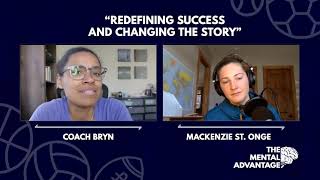
Mackenzie St. Onge played hockey at Dartmouth, then rugby, and founded The Sideline Perspective to help retiring athletes find identity beyond sport. She battled perfectionism and anxiety before therapy and a servant-leadership approach rewired her thinking. Her platform offers resources and tools like athlete-resume frameworks for athletes discovering their value after the game ends.
Chapters
that service and servant leadership mindset like really knocked me out of that, like what ultimately was a selfish cycle, constantly focusing on myself and my body and what I ate and how I performed. And, you know, somebody had told me a couple of years ago, but I was realizing it then that they said, Mack, if you spent the amount of time you know, that you spend worrying about food or your body or being upset like this because of this anxiety and invested it into other things. Like, think of all the things you could do. And that was both a sad and very real, you know, comment and realization for me that came to fruition my senior year because it was that give to others. And I don't even have time to think about, you know, these things that used to be all-consuming.
Hey, everyone. I'm so happy that you are here. We've got the amazing Mackenzie. Um, how do you pronounce your last name? I want to say this correctly.
Saint-Ange. Saint-Ange.
I love that. See, I was going to say it wrong. And you know, of course, probably a professional podcast host, of which I do not claim to be, would, uh, have gotten that beforehand. But I also like the vulnerability. So Saint-Ange is a former hockey player. Then to rugby, and now works for U.S. Skiing and Snowboarding. We're going to find out more about her amazing journey. And she's got also a cause that she's really passionate about that we'll talk about at the end about helping athletes sort of like find their bearings post-sports life. So Mackenzie, welcome. How are you?
Thank you. I'm doing well. I'm happy to be here and excited to dive into this conversation.
Awesome, awesome. So hockey for girls, uh, this is not something we hear a lot about, so I would love to hear your journey. I always like to start with the beginnings. So how do you find yourself to hockey? Is it the first sport you pick up? You know, what, when did, where did your sports journey begin?
Yeah, hockey fell into one of many. I grew up in a small town in Vermont, and my parents moved there because they're really looking to have an active lifestyle, to have kids that just embrace the outdoors and the mountains. And they were former competitive skiers. So I think they initially envisioned us, you know, spending a lot of family time on the mountain, which we did. But ironically, even growing up in a ski town, I found my way over to the rink, which at the time was really just a tin roof with chain-link fences. So why I wanted to spend every waking minute there, I don't know. But I actually was a multi-sport athlete kind of up through even the end of high school and was able to mix in, you know, club soccer, competitive soccer. That was kind of my first love of a sport, actually. But then the doors for hockey started to open up. I was able to, you know, play at an elite level with some of the best girls in the country. And I think a combination of factors led me to want to pick hockey to specialize in.
So, okay, so let's, let's go back to what you said there, the soccer part. So when you're choosing, when you're a multi-sport athlete, which by the way, there's lots of studies about the benefits of, you know, not specializing at too young of an age to kind of get the benefits of all the different sports. But when did it become apparent to you that soccer wasn't it for you? Or was it just that hockey was more?
See, it's really funny. I look back and I wouldn't even say that either of those statements are true. Like soccer felt like it was it. Like I was a more naturally talented talented soccer player than I ever was as a hockey player. Um, I had a leg up for my age group more so in soccer than I ever did in hockey. Um, and you know, with hockey, I think what happened was I, I loved being able to feel like there was a chip on my shoulder, that there's something to prove, that there was something to work towards, that my potential in it was like for me to uncover. And so when I step on a soccer field versus a rink with hockey gear on, like, it was two very different feelings for me. Like, you know, we got to win a couple state championships, like, led my team through penalty kicks and through all that as a sophomore. And like, I would step on the field and feel really confident, you know, hear the other team saying, oh, like, what do we do? She's on the field, coach. Like, I don't know how to, you know, mark her. Like, that was such a cool feeling. And I have to say, like, And I never got to experience that in hockey. I never felt like I fully like had that confidence. But what I did get to have was an environment where like I really got to learn like what grit meant and what, you know, hard work and dedication meant. And, you know, it's a unique sport as well in the way that you operate as a team. You're out on the ice for a 45-second shift and, you know, you got to get off mentally, reset and trust your teammates out there to, you know, do that work while while you are waiting for your next turn. So there was a number of factors, and, you know, one of the, the best hockey academies in the country was located right in my backyard. Again, ironic that it was in a ski town, but I enrolled as a freshman and kind of kept that balance of multi-sport athlete up until my junior year, and then shifted to say, okay, college hockey is, you know, where I see doors opening and what I'd I'd like to pursue alongside some of my other academy teammates.
First and foremost, that's fascinating for you to be so naturally gifted in a sport to the point that the competition is like afraid of you. Like, I don't know what to do. And then to decide to specialize in hockey, in hockey because it challenges you, because it's not something that comes naturally to you. And as you've already suggested it didn't ever feel like that same pinnacle level. But that's, that's interesting. So do you remember when, like, if you could take us back, because of course this is called The Mental Advantage, and I'm always curious, um, when you were making that decision, you know, and I like, I know there was grit involved in this and that, but like, who was talking to you at that time? What was going on for you mentally? Because, you know, I'm thinking the soccer coach is probably like dragging, you know, you're dragging the soccer coach by your leg and Like, no, coach, I'm going to hockey. But tell me a little bit more about that story.
I mean, yeah, actually, you brought up, you know, an interesting situation where it was probably my freshman year of high school and trying to manage, you know, where summer hockey starts to cut into spring soccer and winter seasons overlap and things like that. And there was one other girl on my team who actually, funny enough, followed a similar path, played for the same the same club soccer team and the same competitive hockey academy. And so the two of us, you know, we'd say, well, like, we have this conflict and that conflict. And it was interesting, particularly as we got older, particularly as coaches start to expect more and more and multi-sport athletes start to taper off a little bit, to make that case for ourselves and say, look, we can show up and we're going to put the work in and be dedicated to two sports. And, you know, if we miss this practice, You know, we're not like, you know, failing as teammates. We're just trying to balance our lives here. So that was really, really interesting. And yeah, I think the other piece for me too is like, I think I took a realistic look as well at the fact that I was competing, yes, at a high level in soccer. Absolutely. And but it was Vermont in the grand scheme of the country, you know. And I think I was also looking at that and saying, you know, to really pursue that, it would either mean going to like a prep school or, or moving somewhere else. Things that I easily would have committed to, to do. But at the time I was still walking that line with hockey. And part of me, you know, looks back and could have seen myself go to like an IMG Academy down in Florida, could have seen myself go to, um, you know, any name, any New England prep school. But I think in that case, you know, I would have I would have held on to soccer and hockey and then, you know, maybe played both at a D3 level or something like that and, and found a medium. And I, I think there was some part of me that was like, no, I want to like really rise to the top in, in what I'm doing. And, uh, you know, combination of logistics, passion, heart, you know, what it was asking of me and who I wanted to step up and be. It's tough, you know. I don't know how I quite made the decision, but at the end of the day, like You look back and you wouldn't necessarily change anything because I, I wouldn't be where I am now.
But yeah, no, that's awesome. I love that. And I think that speaks to your character, right? Like, you're like, you had the awareness, which we need so many athletes to have, that, hey, I'm a big fish in a small pond, so this is not on par with like what it would be if I go to this other place. Yeah, of course I'm going to put the work in, I'm going to do everything to be my best, but this sport has a challenge and an upside right now that's going to put me to the test and going to give me that, you know, because like, yeah, once you kind of best the competition and you're kind of like, I'm— this is cool, but I, I need, I need more. And so I think that's great. I think that's great. So you join, you decide to specialize in hockey. Was there anything— and I think, you know, this is helpful to know— was there anything mentally different for that journey than it was playing soccer? 'Cause you had played soccer and obviously won a state championship, went through the ranks. So what was more mentally demanding about hockey or would you say they were the same or just different sports but different demands?
I think like what I loved about soccer and what I felt so comfortable with the game was being able to like settle into 90 minutes and like, my mind was just always looking at like, okay, you know, I can come up against the same defender 2, 3 times and I can start playing with their head. Like, I can make that pass once, but I can keep the ball the next time and, you know, find that rhythm and be able to build like relationships and connections with teammates, the entire, you know, field of folks out there and be able to say, look, I'm seeing this, can we adjust here? I'll come to you and you shift there. And that builds and builds over 90 minutes. Hockey is so quick, it's so instinctive, and there are systems and there are like, you know, guidelines that we play within. But you see most of the ice from the perspective of your singular line of 3 people as a forward. And then every time you're out, yeah, you might come across the same player, you know, a couple times, but things are going to shift. Like once in a while there's strategy and matching up lines, but in general you roll to keep legs fresh and, you know, to to keep people in more strategic positionings of like power play, penalty kill. So a little bit less of like, you know, settling into that, that rhythm and repeatability that I really loved about soccer. And all that to say, too, like, I think I was watching soccer. This is an interesting point, right, that you were saying about women's hockey, not seeing it so often. Like, I was watching women's soccer from the time that I was young. I remember that that was like a huge thing that bonded my dad and I. We'd sit down, you know, on a Saturday morning and we'd watch the women's national team play. And those were the first women that like inspired me to be an athlete because, you know, I knew every woman on that team. And I remember the commercials and the ads they put out, which was like the greatest team you'd never heard of. And that just like hit me. And I, you know, we'd, we'd pause the TV and we'd talk about this line and how you want to play that ball. I never did that with hockey. And like to this day, like I couldn't even tell you a— like my favorite NHL team. Like I didn't watch a lot of hockey. Let alone women's hockey, because it was not visible. And I didn't know who to look up to. So I think that's the other piece is like growing up in my town where this hockey academy was located, there were times I would go to the rink and I'd see those girls play. You know, I'm a middle schooler, they're high school, but they're the best high schoolers in the country. And it was like, oh, I could do that with hockey. Like it opened up my brain and mind to the potential. So that was, that was huge. But I think to your, to your question, I wasn't as instinctive with my awareness of, you know, where to be, how to play on the ice, as I was with soccer because I didn't grow up watching it and I didn't, you know, feel as natural and as comfortable in those systems. And so I was a very disciplined player. It was like, okay, this is our forecheck, like 9 times out of 10, that is the exact line I'm going to skate. And so I got to be a really reliable, really, like I said, disciplined kind of defensive minded, like, strategic, like, strategic in the team sense kind of player. Whereas often some of the, the girls who got the attention, got the opportunities, you know, a little bit flashier, they were just trying things, they didn't care if they failed, they, you know, had more of that sixth sense. So it was a different style of play.
But I love that you've played both sides, right? So the idea of being able to be flashy, being able to be that out front runner, and then going to a role player, which is like, you can depend on me. And I think people undervalue the role players, right? Because you don't have a LeBron James, because like you don't have those flashy players without the role players who free them up to be a little bit more reckless because you know that I'm going to be clutch on those rebounds, you know, for basketball for example, or you know I'm going to be there. So I think that's great. So tell me a little bit about, because I don't know everything about your story, which is what I love about these. Tell me, so you're, you, you're transitioning to kind of specializing in hockey your junior year, you're seeing an upside What was the biggest high school moment in hockey for you? And do you remember where you were? I mean, like how you felt, any of that?
Yeah, I mean, I can share an on-ice moment if you want, but, but for me, the first thing that comes to mind is committing to play collegiate hockey. And so that, like, I remember in detail. I was in Rhode Island visiting family, you know, had gone through a couple of different conversations with Dartmouth that I ended up committing to, but also with other schools and kind of playing out those options. And so, so I had expressed, you know, that this is my preference and was waiting for kind of the other half to make their decision.
Yeah.
And yeah, you look at your phone, you see who's calling, and you get the butterflies, right? It's— I mean, it's interesting how many parallels there are from the recruiting process to like dating, you know, as weird as it sounds. So, you know, like my, my main interest was calling me back. It's very exciting. And it wasn't a particularly long conversation. But I still remember, you know, Mark Hudak, who's the head coach at the time, saying like, yeah, we would love to have you. We have a spot, you know, if you'd like it. And so all of a sudden, the ball's in my court. But, you know, in making that decision, I pretty much knew that was the choice I wanted to make. My parents wanted to talk it over a little bit just to say like, okay, it's a great school. Like, that's incredible. Do you understand the financial implications of that, given that it's Ivy League and there aren't there were no scholarships available, etc. But, you know, end of the day, it was the right thing. I can say that for, you know, 4 years out, it was the right thing.
Yeah.
Um, and yeah, that was, that was cloud nine. That was like, ah, okay, it was worth it. Like, you know, I, I have this next opportunity, this next chapter, and, um, you know, time to keep grinding.
Nice. So, so was there any schools that were— now obviously it was your intention to go Ivy League. You're clearly academically gifted because you can't go Ivy league for a sport if you don't have the grades, or at least that I know of, let me say that. Um, was there a school that was offering any partial scholarships? Was there anything that kind of pulled you like to be a little bit more like, uh, yeah, I mean, I, the esteem of like going to a Dartmouth, but the financial help my family, was any of that going on for you?
So it's interesting. I would actually say like, I grew up an hour away from Dartmouth, and I didn't really think like much of it. I didn't dream of going there. I mean, I had seen their women's team play once in a while, but it wasn't like, that's my spot. Like, I'm— that's my goal. I went into the process of recruiting thinking I grew up in a small town. I've seen the positive and the negative sides of sport culture and coaches that do or don't care about their athletes. Right. And I I know I need to not just make this decision based on hockey, but it plays a huge role. And I was so hungry to play for a team again, you know, because the hockey academy that I was at was 40 girls under one roof fighting for the same collegiate spots across 30 teams. And so it got kind of cutthroat. And I was hungry to put on a jersey and feel like these people are with me, not not against me. And that's the vibe that I really got from Dartmouth, from the coach, from, from the team. And then there was the additional aspects of flexibility to go abroad as a student athlete. Very uncommon, particularly with hockey, because the season runs October to February, March. In a semester school, you have to be enrolled for that entire time. At Dartmouth on quarters, you can take 10 weeks in the spring. And I went to France and then I did an internship. And so it really added value, I think, to, to my student athlete experience that I wouldn't have otherwise gotten. To the financial aspect, I was talking to, you know, a couple other schools. Providence, for example, is one. And, you know, ultimately decided like that the team and that culture was something I was so hungry for and that I was familiar with that like small school vibe. Dartmouth has 2,000 undergrad. Growing up in a small town like It might be, it might be 4. I, it's been a minute. Um, but anyways, it's small, it's small. And, uh, and, and student athletes take up about a quarter of the campus. So it's, it's pretty cool to, you know, feel like you have that community and, and that you have a place in that group. And that's the vibe that I got growing up in a small town in Vermont. So that was familiar as well. I did not appreciate the financial aspect of my decision. I appreciate it now that I'm paying off student loans, but at the time I actually remember, you know, I got the phone call, cloud nine, and then, you know, an hour later I'm sitting down at a table with my parents and I'm like, can you believe it? This is amazing. The best thing ever. And they're like, okay, well, like, you know, financials. And I'm like, I'm sorry. Why aren't you happy for me? Like, why are you talking about like boring, sad stuff? Like, no, be happy. And you know, I look back and I definitely laugh at myself in that conversation and my immaturity and lack of perspective. But the amount that my student athlete experience and then my experience just as part of the Dartmouth community has given and given and given again to me, both in those 4 years and since, like that, that was truly an investment. And I think the other part was, as I got through my 4 years and got closer and closer to hitting the reality of paying my student loans, you know, I felt the pressure to make that experience, uh, worth it and to play every shift as hard as possible, to study for every test and make sure I was prepared. You know, I had some people, you know, paid full boat, and other people were on full scholarship, and there was their full financial aid. There's quite the range, and you get word of like, well, each class costs, you know, X hundred dollars, don't skip. So that resonated with me, at least.
That's, that's really something I hadn't considered before, is why there's like that pressure coming out, because it is— you're faced with that reality. So as you're graduating, you know that the, you know, whatever the deferment on those loans ends, and then it's time to deal with the reality. So yeah, like I don't think I've ever heard it put quite that way. And, you know, like, obviously I experienced it too, but I don't know that I was thinking of that. But yeah, it is a reality when you get that, that, that bill in the mail and you're like, how long is it going to take me to pay this off? Yeah. Yeah, for sure. So you spoke about the culture and I think this is important, right? Because when we talk about the mental game and you talk about the good and the bad coaching experiences, what did Dartmouth have culturally that made you like, Yeah, this is because I've experienced that. So maybe you could tell us a little bit about the— not, you don't have to name names, but like the bad and then how this was different.
Yeah, so, um, like I said, I think that the sour taste in my mouth primarily came from high school. I would not have been the hockey player that I am today or have gotten to play at a D1 level if it wasn't for going to that hockey academy because we were able to spend so much time on the ice. I was being pushed and playing with the The top girls in the country, you know, they're currently in the Olympics, like both teammates from high school and college, and, you know, primarily all playing professionally, you know, if they're still involved in the game. And so that, that was incredible. But from a coach and a culture perspective, the vision wasn't there, or the understanding of, you know, the, the personal level beyond just the on-ice performance, right? Let alone that we were teenage girls, you know, majority of them living away from home. I lived at home for 2 years given the nature of my unique situation being from that town, but I stayed in the dorms for my second 2 years. And honestly, I'm glad I didn't start as a freshman because, you know, we've— for, uh, you know, self-identifying females out there, you've been a teenager and you know how gnarly girls can get, let alone those who are competitive, right? So the, the drama among the dorms and all that was a lot. I'm glad I didn't have to face, you know, 4 whole years of that, but It wasn't supervised, it wasn't managed, it wasn't guided. And, you know, there were times where stuff on ice played out off ice and vice versa. And then coaches that, you know, would, would pick favorites and, you know, would say, oh, like, you know, there's horror stories. I guess I don't need to go into the really, really bad ones, but, you know, ones where You know, you're made to feel like you're crazy that some aspect of the culture is off or wrong or—
Gaslighting.
Yeah, that you're not good enough. Or, you know, that if you didn't, like, participate or suck up, that some aspect of your athletic success was going to be compromised.
Before you go into the good thing about Dartmouth, I think it's important for people to know these things because, you know, of course, we've got these elite academies like the IMGs and the different places across the country. And I have no knowledge of what goes on in IMG, so I'm not— I'm just naming them because I know their name. But I, I think it's important to see that because there is that feeling of, oh, you know, like, one, you're away from your parents, two, you're getting your validation from this coach, and then there's this competing for that attention, and then it becomes a very cutthroat situation. And if the coach is not managing that, or the team, or whatever is not being held to a certain way, yeah, that can devolve and it can become about just who's the best and those are the people I focus on. And yeah, your attitude is not high caliber enough to navigate this. So, you know, you just need to suck it up kind of thing. So I think it's important for people to know that that culture definitely is one of the reasons why people stop playing sports. So kudos to you for staying with your vision and your dream, even despite having to navigate those situations. So what did you see at Dartmouth that was like, okay, I feel like this is going to be a safer place for me as well as a place I can excel.
Yeah. I mean, first of all, I think it probably would have gone for any collegiate team. I saw a team that was like in it together, like had this common mission. There was no, at the time, next level outside of the Olympic level for people to be, you know, elbowing each other out for. Right. So that was a great start. And that was just like, you know, a win for getting to move up to play collegiately. And then, you know, beyond that, I saw a coach who invested an entire spring term and offseason on weekly meetings on different character values. And, you know, a very clear mission and, like, vision and value for the team. Like, our slogan was Team Tradition Excellence. And, you know, team came first. And also, you know, a program that had years and years of You know, second one being tradition and a legacy that you felt like you were stepping into. And, you know, it was made very clear for recruits and for freshmen, like, hey, this is what we expect of people and how we hold ourselves as Dartmouth hockey players and what that means on campus. Like, we're not the team that goes out and, you know, gets blasted and, you know, just kind of makes fools of ourselves. Like, we uphold our reputation and that means a lot to us. And we're laying the groundwork of, you know, next generations to come. I mean, so strongly to the point that the coach that recruited me retired after my junior year, and we had a new coach coming in my senior year. And our class of, of 7 seniors, rising seniors, like that, we bonded together. Like it didn't matter who leadership was at the time during that transition. It was like, how can we communicate to this coach and to incoming freshmen and kind of maintain those aspects of the culture that we have just valued, you know, to, to this guy because they meant the world to us. And that's what it means to be a Dartmouth hockey player.
Nice, nice. So obviously, um, having to balance— we talked a little bit about like the balance, the world of academics at a very rigorous academic, you know, institution where it's, you know, highly valued, in addition to being an athlete. And I know it was challenging for me, and I certainly wasn't at Dartmouth, you know, I— and I was at a much bigger school, Michigan State University, but But I'm just curious, like, what helped you mentally to get through that whole period? In addition to— I'm sure the culture helped, but what, what personally got you through?
I'd say, you know, in part, maybe not the best way to get through, but like a perfectionist aspect of me. And that was, you know, a strong driver of keeping up with life when it's getting thrown at you fast-paced that way. Hockey, school, hockey, school, friends, um, you know, sleep, food. Um, so that, that was a big piece. And, and also just like I said, kind of like grit that I learned in high school to, one, like pursue my dream regardless of, you know, whatever drama was going on around me, and to, um, learn and develop and get better as a player to be able to compete with the girls that I was around. Like, I took that in and brought that into my collegiate experience as well. Um, but I think, you know, there is something about that fast-paced, high-pressure environment. A little bit of context about Dartmouth is, like I said, we operate on a quarter system, which provided the flexibility for going abroad, different, for, um, different things. But it means that our terms are 10 weeks long and dive really deep, really fast into 3 courses at a time. So like people talk about syllabus week at normal schools, or like syllabus week, we have stuff due on the first day of class. Like it is go. Yeah, it is go, go, go. So I think I also really like settled into a rhythm that I, I'm still trying to figure out how that has reverberated or like echoed into my life now, which is burn bright, burn out for 10 weeks, breathe, reset, do it again, and 4 years of that cycle. So, you know, that, that would be quite the roller coaster. And I pretty quickly found, you know, just due to a variety of different, like, personal aspects, you know, being mental health, disordered eating, the loss of a friend, like Given that you're supposed to process all of that or handle it in how quick all that was going and everything else I had on my plate, I needed more support. So I also, you know, sought out a therapist and was able to take advantage of that. That kind of helped me maintain that balance a little bit.
Did the school have it, or was it— so it was a school therapist?
Yeah, it was through the school, and it was actually an individual that primarily worked with athletic teams. So that's cool. Sport background.
Yeah, I love that. Now, was that suggested to you, or did you just have the wherewithal to know?
Um, it was suggested to me when I was, um, like grieving the loss of a friend, because that was kind of a pretty acute event. Like, okay, you know, if you're processing this, support could help. But that wasn't actually the time that I really, like, was open to it. It took another year or so, um, for me to realized that it was actually kind of, like I said, the perfectionism, the, you know, personal stress you put on yourself, the identity aspect of I'm a hockey player and whether I succeed or fail on the ice determines my value off the ice. And, you know, that being kind of a roller coaster. And then really struggling with food and body image, um, just kind of crippling anxiety around some of that, recognizing like this is, this is taking up time that I really would like to be able to spend in other areas of my life, whether it be self-growth or, you know, better friendships or relationships, or just time to be able to kick back and relax rather than have an anxiety attack. So I kind of made a pact with one of my teammates, and she was going through something as well. And we said, all right, I'll make an appointment by Friday if you do, if you do. And And that, that's when it really stuck for me.
Wow. So yeah, definitely that. That's so great to have. Like, sometimes we are more willing to do things when we're helping someone else. And so in the process of helping her, I'm sure like it was like, okay, cool, I'll do this if you do it. And so really great that you had that thought to like go get that support. But yeah, sometimes it takes a while. Like I always say, we're planting seeds. You never know when they're going to be like, yeah, I'll do that. That sounds good. After they've talked to you. So I want to talk a little bit about what you just— there's two things you just mentioned that I think we have to touch on, we can't go past, which is, um, one, the value on the ice and, you know, spilling over to my value off the ice, or my performance on the ice spilling over to my value off the ice. Say more about that and how, um, when you first noticed that you would do that. Um, and it's fine if you go back and then come forward, but I'm just curious because I know this happens a lot for athletes, but I think it's helpful to start to see where that starts to like, did it happen once you got to the college level or did you notice it before that?
One of the distinct memories that comes to mind was after my freshman year at this hockey academy. And, um, you know, one of the aspects was there was a girl who, um, was also a freshman and, you know, in the eyes of people around her wasn't at a, you know, skill level that seemed to be fitting in with the team. And yes, the coaches kind of said to a couple of players, like, make, make it not fun, you know, make it not fun for her that she doesn't want to come back. And, you know, that was— nobody like targeted me out that way. But I still remember finishing my freshman year and recognizing like this is a coach, this is a team, this is an academy, like I'm paying for it, but at the same time they get to say who's on the roster. And I was bawling in my kitchen with the seed of an idea planted that what if they don't invite me back next year? And I, yeah, literally bawling, like at a loss. I can still like remember, you know, how vividly emotions kind of like play out in memories. Yeah. Yeah, so that's memory one, right? Like of not fear of not being good enough and what does that mean for me and who I am and how people see me and what I do next. I was invited back. I played all 4 years. I worked my way up and got consistent playing time my senior year and obviously committed to play for Dartmouth. But like you said, that seed of an idea being planted and growing and growing and growing and continuing continuing to be in that competitive environment, you know, probably only watered it and gave it light and yeah, made it grow.
Yeah. So you're, you're struggling with that because you're, you know, like always, and it's like that thing, right? Even if no one's ever saying like, we don't want Mackenzie on the team, there's that feeling of like, well, what if one day they just decide I'm not the best or somebody new that they like better comes along? And so even if no one's saying that or even putting that energy out, We're concerned because we have this trauma from that experience. So yeah, that's something that's really, I think, important because I don't think people realize how long that stuff stays with you. It can be one event, like you said, in your freshman year in high school, and then you're 35 somewhere and you're still having that same feeling, even if the ice and the hockey and all that is not still present. So the other thing I want to talk about is your body dysmorphia or body challenges, however you would characterize it. So I apologize if I'm not saying that correctly. Um, where do you feel like that came from? Um, because all of a sudden, because obviously that's going to affect you mentally, right? What you're eating, what you're doing, your energy levels. So where does that start to show up for you, and how is that affecting you mentally while you're performing?
Yeah, so I mean, interesting where, like, it breaks my heart how, how commonplace this seems to be, and females and in female sport these days. I can think back to like end of elementary school, like running around in the summer, and like, as it might happen, you get chafing. And I remember thinking like, this is painful, this is, you know, uncomfortable, it's embarrassing, and this wouldn't happen if my legs didn't rub together, if my thighs weren't so big, right? So that I like remember that for sure. But I think like when I started to like manipulate food or orient like good and bad foods and, you know, what that meant, and, and really like keep an eye on a scale and have a goal in mind, that was more like my junior year of high school. And like, I would say that came with feeling like, okay, I'm committing to hockey and there's more and more pressure to like now be really good. And at hockey. Um, and, you know, seeing teammates— I had a teammate who was bulimic, and like, you know, I was close to her. And it's kind of weird, like, those, those storylines, those habits, those patterns can become contagious. Um, but the way it played out for me was really like orthorexic tendencies and habits and patterns where, like I said, certain foods were good, certain foods were bad. Like, um, And, and I would get crippling anxiety if I like was out of balance on like, you know, quote unquote good foods and things like that. And it was really easy for me to get it twisted in my own mind and, you know, hide to others whether I realized I was doing it or not, because I could say, well, I just want to train really hard. I just want to be like a phenomenal hockey player and I want to be fit. And if I'm, if I'm fitter, I'll be faster. And if that, you know, coach said I need to be faster on the ice, so this is how I'm going to do it. And, you know, it just looks like I have a really good work ethic and a lot of discipline when in fact what's going on behind the scenes is, is mental health.
Wow. So orthorexic, just— and you may have defined it, but just so that the people that are listening know, what does that mean specifically?
So it's a pursuit of quote unquote health to the point that it's unhealthy.
I've never heard that before. Yeah, yeah, this is that Dartmouth education.
Well, I'll say like I didn't learn that term until probably, you know, my sophomore year in college. And when I did, it was like, oh, I might have a problem. Like, this applies to me. And I also remember like, so, so I'd say my like true like battle with this went from started in my junior year of high school and, you know, even to a year after college. So that's, that's a solid 6, 7 years.
Yeah.
And, and now I'm in a healthier place, but it's one of those things that like the voice doesn't go away, it just gets quieter and you learn to, you know, have another one be louder. And Yeah, I think there's just a ton of learning that went through that process and realizing like, you know, a year after school I stopped tracking, you know, calories and food in an app. So the first time I logged everything I ate for 4 or 5 years, and when I stopped, I was like, oh, normal people don't do this. They, they eat an apple and that's all they do. They don't write it down. They don't track it. They don't look at the carbs and the sugars. Like, you know, point blank. And so there's been a lot of like different, different parts to the healing process. But yeah, it was definitely a part of my journey.
That's, that's just— I think you've, you've opened my eyes to something that I wasn't aware of, like this thing of like, you think that athlete is just really intent on, you know, doing what's necessary for the fuel for the sport. But not really realizing that we're actually dealing with something that is an obsessive behavior that could, you know, obviously unchecked and continued is going to be very harmful and probably already is very harmful for that person. So you, you're, you're, you're challenged with all this stuff. You go to see the therapist. Do you see any, like around that time, cuz you know, of course the advantage is like, you know, now that I'm getting help, do you see a change in what's happening on the ice? As a result of this support?
So I will say like my first year, like with therapy, was just a lot of go in and emotion dump and like try and get words out between the like overwhelming feelings. And I think, you know, one, one thing that my eyes were open to was just the fact that like, okay, this is a story. This is a story that you are telling yourself, but you've been living in it so long and so deeply that you don't recognize it as that anymore. It's just what you think is reality. It's like the chocolate cake is reality making me less valuable of a human, um, was the way my brain was coding things. And, you know, I think one of the, the most powerful things that my therapist was able to do for me is say like, I grant you permission to change that story. And, you know, let's figure out what that looks like. So I think I got to that point more towards my senior year. But another interesting aspect was that, you know, like I said, we went through that coaching change. And as a senior in a leadership group and ultimately named a captain, it was like, whoo, okay, the boat is turning. We have a new coach. She doesn't really understand the tradition of Dartmouth hockey. You know, it feels like some of that stuff is at stake. I'm also realizing that, you know, I could pursue playing overseas or something afterwards, but this is probably my last year playing competitively. And also feeling like it was, it was the last I had in me. I was a little burnt out given everything.
Yeah.
So yeah, so I, I went into very much a play for the joy, play for myself, but play for my team and serve my team and make, you Have conversations with them consistently, like be that person that can be their rock. And that service and servant leadership mindset like really knocked me out of that, like what ultimately was a selfish cycle, constantly focusing on myself and my body and what I ate and how I performed. And, you know, somebody had told me a couple of years ago, but I was realizing it then that they said, Mac, have you spent the amount of time, you know, that you spend worrying about food or your body or being upset like this because of this anxiety and invested it into other things? Like, think of all the things you could do. And that was both a sad and very real, you know, comment and realization for me that came to fruition my senior year because it was that give to others, and I don't even have time to think about, you know, these things that used to be all-consuming, which is such a good way to get out of that.
Like, I think so many people don't really value, or we don't really think it's like, we're so into ourselves that like the best way out is to sometimes like lift others up. That's why I always say like my team, when my athletes are having a bad game, it's like become the biggest cheerleader. Like give what you want to, what you think you need to everybody else, and then it comes back around and it It's just so powerful. And I think I really want to highlight what you said, which is, I grant you permission to change the story. And it's just a story we keep telling ourselves. And some of us are operating because your identity is so intermingled with that, that it feels like a loss of self to change the story. Like, this is the person that I've known that I've been riding with all this time, and you're telling me to change the story? Well, who am I without this story.
So, so real. Like, I— like, there— and there were years working on that too. Like, who am I without anxiety around food? Who am I without this, um, you know, constant scrutinization of my body? And particularly moving on from being an athlete, like, that was really interesting. I had to get to a point where, you know, I went from training strength training, following a program for 8, 10 years of my life. And it's what, you know, made, made me feel good, or so I thought, to a point where I had, you know, not really taken a break. Given some of my mental aspects, I overtrained, I underate, I put my body through the wringer. And there was a point where it was like, no, stop. Like, I would go lift and I wouldn't have my team there, you know, so it was just me. And I would think about I'm like, why am I lifting? This hurts actually. Let me take a break. And I challenged myself too to not turn to the gym to be that pacifier in a way, to be that soother, to be that outlet. Let me sit with my emotions. Let me figure out where they're coming from and let me process and heal from that perspective. And it was a couple months before I got back into lifting and got back into strength training. But when I came back to it, you know, it was interesting because the thing that was always in my head— go harder, put more weight, push further, like dig to that pain cave— I realized was actually like self-hatred. It was a feeling of unworthiness. And yet that was what I prided myself on as an athlete, was I was always the person willing to dig deeper So now, you know, I think I'm still figuring it out. When I go to the gym, when I relate to myself as a physical being, when I want to run or go for a hike, where does that motivation come from? Because I'm done with it coming from I'm not valuable or I have to do this to fix some aspect of myself. But I still love that pushing limits of potential. So I have to kind of figure out like How do I dig that deep from a place of self-love, from a place of what am I capable of, from a place of potential?
Yeah, I think it's that, it's that myth that we have to do it always physically instead of like, like it has to be like I gotta go hard on everything. And it's like if we can find that balance between like, which is one of my passions, between the masculine and the feminine, where it's like how much of it do I have to bring? And if I love myself enough and I'm in a good place and I'm taking proper actions a lot of the heavy lifting is also gonna be done on the other end that I would then just be, you know, grinding to the point of like, you know, unhealthy behaviors. And so, um, just, it's so good that we're having this conversation and, and a pleasant surprise. And I know that sounds weird for me to say it's a pleasant surprise to, to be talking about an eating disorder or, you know, this anxiety, but so many athletes go through this. So many people that are not athletes athletes. And so I think it's helpful to hear how somebody, you know, you're sharing your journey, and I really appreciate you being vulnerable because that really is going to help a lot of people that are going to hear this. So thank you, Mackenzie, this is great. Um, okay, so you're realizing it's the end, you got a different coach, all that stuff. Now you're navigating out of the sport and, and going through this process of loving yourself and healing. What's next?
So I actually fell into rugby, and it's a funny story where coming up on my senior year, I got to see the women play sevens for the Rio Olympics. And prior to that, my exposure to rugby was, you know, men's fifteens over in France. So a language I didn't understand, 250-pound men piling on each other, like no way I was gonna be able to grasp what was going on. Like, vibes were great and in the stadium, but I didn't understand the nuances of the sport. But seeing women play sevens, which is a form of the game that has a lot more space on the field, it's a little bit easier to say like, okay, that's that person's role, that's how that works. As well as a game that like showcases speed and physicality a little bit more, whereas 15s is like, you know, team groups and certainly physical, but like you don't see the open running and space as much as you do.
Gotcha.
And so to circle back even to the beginning of our conversation here, it was like, aha, in my mind, this is soccer and hockey. Yes, exactly. So I was like, no way, like if I could even like try and capture that feeling of with like speed and physicality of hockey with the space and the awareness and the smarts of soccer. Like, I have to give this a try. Something was just like calling me to it. So I remember one day I like got up the courage in the summer to like walk into the rugby coach's office. My heart was beating so fast, which I don't know why, because it was either like yes or no. Like, and either way I move on with my life. But I was like, hi, uh, you've never met but I'm Mac, I play for the hockey team, and I think I would really love rugby. Like, I'm fully committed to my senior season of hockey, so that's fall and winter, but, you know, I could start now learning the game and figuring things out. And if you would have me for the spring term to be able to come out and play with you guys and train, like, what do you think? And to their credit, they said yes and, you know, stayed in touch with me through that whole time, gave me a rugby ball, which which I proceeded to immediately go down to the field. I must have looked like, I don't know, I would have laughed at myself if I saw me back then, right? Just trying to figure out how to throw this ball against a fence. And I only had one. So it was throw, run and pick it up from the fence, run back, throw, you know. And so it was like, you know, I almost felt like a little kid again of like, oh, this is so fascinating. And I get to be a beginner and I get to try something new. And I think it eased a little bit the idea that, you know, hockey was going to be a hard stop because I went straight from the end of our hockey season. The next week I was jumping in with the rugby team for their, their lifts and in the gym and part of the team. So I was able to still have that community, that timeline of practice in the afternoon. And this is a team and, you know, we're working together. But with the added value of, you know, I'm learning something new and I can give myself a little bit more grace than I ever could on the ice, um, with hockey.
So because you were like kind of like the, the more scholarship athlete versus the new beginner. And so, okay, so thinking back, knowing what you know now, and I'm not suggesting that the move to rugby is not the best move for you, but do you Do you feel like you didn't really grieve the loss of hockey because you took that time?
It was a crutch, 110%. Like, I look back at it and, um, and I also went like gung-ho into rugby too. It was like, okay, if I'm gonna do this, like, I want to do it as good as possible. Like, I want to hit these goals. And also seeing, for example, like, role models like Alev Kelter, who, you know, was a high-level soccer player and then went, you know, played for Wisconsin and played hockey and D1, and I think was on the national team at least played with national teams for a little bit. And she became this superstar in rugby. So I was like, okay, there's the path, there's the opportunity, like, obviously the hard athlete mindset, let's go.
Right.
And I think I also just felt like really at home in the sport and the culture too, right. So rugby is something where you need all types of body shapes and sizes and physical abilities to to succeed. And it's not come to the team and make your body perform like a rugby player. It's, oh, how does your body perform? Let's find your spot. So immediately body acceptance was like something that was easier to do in that setting. Um, and then it was a place where, you know, they're used to having walk-ons, they're used to having new people, so the community was so open arms and I, you know, love to learn. I'm such a curious person. I ate that up. Like anybody who would teach me anything or spend extra time. And then like even something as small as like, you know, rugby and the cultures that it comes from, like, you know, it would be island music in the locker room all the time and just like vibes and, and like, that's what I literally listened to 24/7, like any workout, like, so everybody has their own vibes, like mine is reggae, island music, like that's it. And so I don't know, I just kind of felt like I found my people in a way and found this, this sport that was like this combo of two parts of me that I was able to like marry together. And so I think there every part of me was saying like, don't lose this, like don't, don't have this just be like a 10-week thing and it disappears. So I continued to pursue it. For like another year beyond college. I was working with the team. I was training with the team. I went and played in Hawaii. I broke my collarbone and that kind of reset me. And I came back to work with the team as I was rehabbing and everything. And that was kind of my turning point of, all right, I rehab my collarbone. Absolutely. I can still play. Like I have a metal plate in there. It's not going anywhere. But what does that look like? And who, who do I want to play for? Like, do I want to compromise or change like the city that I'm living in so that I can play with a certain team, XYZ. And through all these experiences, I was more and more solidifying my passion for character development through sport, for, you know, that, that meeting point of psychology and athletics. And that's when I realized, like, okay, well, if I want to make a career move, like, what job is going to be really fulfilling? Because I had been nannying and dishwashing and training and like all these things, like I said, I learned I could be gritty and I could grind as an athlete, but at the same time, you're graduating, you know, Division I athletic experience and an Ivy League degree, and you feel like, you know, maybe nannying is not your full value or, you know, expression of yourself to the world. And there's also the, the canned definition of success out of those schools that you don't feel like maybe you're meeting. So So I was looking at like, okay, I'm, I'm about a year and a half past graduation here. What is, what does my career look like when people ask me what I'm doing? What do I want to say? And how do I pursue that? Got the opportunity to come out and work with US Ski and Snowboard in Utah, took it for the opportunity to, you know, change of pace, change of scenery, and, and found that it was really hard to get connected with a team out here, um, given location and practice times and stuff. And, you know, honestly, COVID hit not too long after. So it was a series of events where I realized like my bandwidth is dwindling. What I want to compromise or sacrifice for the ability to pursue competitive and high-level sport is changing. In high school, it was a no-brainer. I'm missing, you know, somebody's house party, that's fine. But now, you know, missing the opportunity to build relationships and develop a career and settle into a new place where, you know, quality of life is important to me and taking advantage of time in the mountains, that was different. So it was in that chapter, in that time where I realized, okay, you know, recovering from this injury doesn't look like just rolling back into competitive sport, that all of it kind of started to hit me at once. Like, I'm not a hockey player, and rugby, you know, isn't gonna be able to continue to pan out as that next thing that I give everything to. I need— instead of give everything to one thing, I need to give, you know, parts of me to multiple things so I can be balanced in life.
Awesome. That's so— oh man. So this— at this point now, and is this where the sideline perspective starts to come to being, or is this more of a hindsight as I go through this dark night of the soul of like, okay, it's all hitting me I've got to step away from sport. Who am I without this? Because, well, and let me, before we, you answer that question, I want to say something that I was thinking while you were, you had these qualities though that followed you throughout all of your journey, right? You're somebody that's hungry to get out and prove yourself. You're somebody who works hard. You have all of these things, but we think it's because I'm a hockey player, because I'm a soccer player, because I'm I'm— I play rugby, or I'm an athlete, but I think it's because I'm Mackenzie. What do you think about that?
I love that. And I think, like, I mean, even just hearing you say that, like, gives me shivers because I am, you know, only, you know, 3 years out from, like, feeling like I was in competitive athlete mode. And I'm still, again, learning to rewrite that story of, like, where my value comes from and where I place it now, and being very careful where I place it now. Like, not in my job, not in, you know, relationship or my financial stability. Like, it's got to be inherent because I have learned that lesson. And hearing you affirm that, like, it's just like one of those reminders, like, yeah, yeah, that's right.
Awesome, awesome. Okay, so when— so one of your things is the sideline perspective. I was— I had the pleasure of being on your podcast, but it's, it's not just a podcast, it's more of a movement.
So tell, tell us a little bit about Yeah, so The Sideline Perspective as it exists now is a community platform, a website, and a social media page, a podcast, and, you know, a variety of resources to support injured and retiring athletes in, you know, finding where they want to land in life beyond sport, finding who they are, finding where their value comes from. And the, you know, concept for it, or the realization for the need for more conversation around these topics primarily came, you know, about 7 or 8 months after I graduated. I was, like I said, working in the athletic department and seeing the next generation of Dartmouth student-athletes approach their senior day, their graduation day, as I had just passed mine. And, you know, it was actually, you know, the football team in particular that I was seeing wrestle or hearing the conversations about All right, well, we've got pro day coming up, so I'm going to train for that. And then watching the, you know, pro day not go well for them. So they're not, they're not going to make the NFL, which was definition number one for success. And they pivot to definition number two, which is the Ivy League aspect of it. Suit and tie, job in New York, job in Boston, job in San Francisco, make a lot of money. And, you know, maybe their major didn't fit that. Maybe they didn't have time for all the extracurriculars to set their resume apart. Maybe on paper they don't match up with other graduates. And it broke my heart that nobody taught these people, nor myself, to create their own definition of success, and that we, you know, just kind of copy and pasted and, and went with that. And so I wrote a letter to a friend on the football team because— saying, you know, hey, look at all the things you've accomplished. In your athletic career and they're going to take you so far. And what you choose to do next is going to be incredible because it's you doing it. And I wrote that because I was like, I was realizing I didn't know who else was going to tell him that if I didn't. And very quickly I was like, I want to write a letter to all of my teammates and to all the graduating athletes. And I wish I got that letter and, yeah, you know, kind of worked from there to figure out what is What does this look like? How do we tell this to people? How do we have a movement, a message, a community, and a conversation around this so that every athlete knows they're more than their sport? And that idea was, it was so clear to me, but I didn't know how I was going to execute. And timeline-wise, I moved to Hawaii and continued to pursue rugby shortly after. So there I was on a beautiful island, life's good, I'm camping, I'm hiking, I'm happy with my sport. You know, if I didn't break my collarbone and reset and have to come back to New England and, and reassess who I was and what I was doing, it all may have never come to life. You know, it may have never circled back the way that it did when I returned to campus rehabbing a collarbone and seeing these athletes again back in this environment again approaching graduation a year later and figuring out what they were going to do.
I just, I find these things so amazing because it's always like, oh, if this hadn't happened, and then some people kind of like, so crazy or ironic. I'm like, no, there was a mission that you were charged with. And you, you, you're, I think, you know, like, you know, I believe in like the energies of the higher self and like, there's a part that's like, this is the mission, this is the deal. And unfortunately, to kind of get us off the train of like, well, but this is, this is also where I'm getting my juice, right? Or I think I'm gonna get my juice. Um, and I just use juice as, for those listening, um, I know you get it, Mackenzie, but juice like where I'm getting my value, where I'm getting like, you know, what drives me. And then all of a sudden, you know, the universe goes, nope, your other thing is the thing. And so, you know, manifest the injury and then now like, you know, you're, you're changing lives for athletes. And it's so important, the More Than an Athlete movement I know LeBron has his documentary. I don't know if it's a foundation. I'm trying to find more information about that. But I love that you have the sideline perspective and we need, we just need more people talking about this because I think a lot of the fans don't know what the athletes go through. And then when they're transitioning out and like when you were talking about that letter, I was like, oh my God, Mackenzie, like I'm glad you said I wish someone had given this to me because I'm like you were writing it for yourself.
Like, yeah, you know, yeah, absolutely. And that exactly was like my experience. I thought I was just in love with my life in Hawaii. It was like everything I could have asked for or felt like at that time. And, you know, I was like, I'm only going to leave if like I have a plan to come back in exactly, you know, 10 weeks when doctor says this is going to be healed. And right. And beyond that, it felt like somebody took like a snow globe life, turned it upside down and was like, oh, this is fun. Let's see where everything lands and where they landed. I never would have predicted at the time, but I just felt like everything was getting ripped away from me and instead it was just being built up.
Yeah. And I don't think a lot of people know that athletes go through that. Like, it's just that feeling of like, just imagine you're being validated, affirmed by the this main vehicle, and then it's almost like it's ripped away from you because you just age out of the sport, or there is no upside. Like, there is no professional hockey league to transition into at that time, those type of things. And the Olympic team is too small and you're competing with the entire country's competing for what, like 15 spots? I don't know how many girls are on a hockey team, so please forgive But I want to highlight what you said about all the skills, right? Because I thought about this and I was talking to some of my senior athletes and I'd love for you to expound on this, but this idea that we need to come up with athlete resumes. Because this idea that you have, because a lot of athletes feel like I'm behind the 8-ball because I've competed in sports for so long if I'm not going to go pro. So what's the, what's the resume? Like, what if we come up with a resume to say, I need to go in and sell why these years that I've endeavored in this sport are going to make me a great person to be in your organization?
Yeah. I mean, it's like taking the fact that we essentially got, you know, a master's or PhD in our sport and like not to diminish that because the hour, if we put the hours and time we put into our sport into an education, or into another position, like, we would be, you know, C-suite level, we would be executive, you know, life would be great. But we invested in another aspect. And what I love about that aspect is that sports are a microcosm for life, that like everything reflected in and around sport, as the athlete, as people within the system, administratively, as fans, as culture, like we are constantly learning about who we are as people and, you know, what goes or doesn't go in our culture based on how sports play out and how athletes are, you know, become celebrities. And that should absolutely be seen as like a credible and valuable piece of, you know, our investment in our life and in ourselves and, and add value. I think some of the main pieces that are pretty, you know, blanket-wise across the board— it shows commitment, it shows, you know, dedication and perseverance, it shows coachability. Yes, there is a talent aspect, but like, no matter what your talent level is, you need to be able to either listen to a coach or work within a team. Even individual sports, your team may not be be, you know, somebody that's on the field or out there, you know, competing with you, but it's a team of people who want to see you succeed— a coach, a nutritionist, a PT, etc. So, as well as like personal accountability and ownership, like at the end of the day, if you want to succeed in that area, you're the one who has to like take the shots or put the reps in or, you know, put the extra time in. So those are some pretty pretty generalizable ones. And then of course, you know, there's for me personal aspects of my journey battling mental health or, you know, being an underdog or having that mindset or, you know, really holding true to my values in a relatively toxic environment in high school. Like those are things that honestly in job interviews, like people ask, you know, how does this apply? How would you handle the situation? And I can say, well, I think back to this time as team captain and it was really applicable. Cool.
Exactly, exactly. So, um, I know that we didn't get to the U.S. skiing, but I want to sort of put an end cap on this interview because, um, but I think that we've talked about a lot of great stuff. So if you want to find more information about the sideline perspective, I'm going to have you share that in just a moment. But it's time for the rapid-fire questions. Are you ready?
Yeah, I am.
Okay, they're super personal, so just Ready? Perfect. All right. What is your favorite flavor of ice cream or favorite snack? Yeah, favorite flavor of ice cream.
Yeah. Funny, I was just having this conversation recently. It's mint chocolate cookie by Ben Jerry's, but I'm really across the board a Ben Jerry's fan.
Okay, mint chocolate cookie. I don't know if I know that one. Now, I'm vegan, so I can't try it, but it sounds delicious because my favorite Girl Scout cookie was the Thin Mint. Yep. So that, yeah, like just, yeah. And I like mint chocolate chip and there are some vegan flavors that I have had. So yes. Okay, awesome. And what is your go-to snack?
Ooh, I snack all the time on everything, but I love a good bowl of popcorn. That's pretty standard if I'm like sitting down somewhere. If I'm on the go, it's a bar of some type.
Okay. Have you ever been to Chicago with the Garrett's popcorn with the sweet and the, and the cheesy popcorn or the caramel or any of that?
I have not, but I'm picturing those like holiday popcorn bins where there's like— Yeah, yeah, different kinds.
Yeah. Okay. You like that though? You like the mix? Because see, I don't like— I don't— I think I just like regular popcorn or I like sweet popcorn, but I don't like the mix.
I was gonna say, I actually like, that's really rich to me. I kind of like just the straight up, like, I'll either air pop it and then like my hack is using the spray cans of like olive oil so that it's like got a little flavoring and then you can put salt, like you could go sweet or salty or whatever on there. You could put cinnamon, you could put garlic powder. So that's kind of how I do it.
Okay, I like that. All right, favorite super— what superpower would you want and want?
I, I would probably want the superpower of time travel. I think I would really have a blast getting to like see and learn and experience other time.
Where would you go? What time periods? Like, definitely go— what would your go-to be?
I, I know you would go to multiple, but like Yeah, I love like music from the '60s, so I would want to go back there and like go dance.
Go to Woodstock, right? Okay. All right. This one is probably the most personal. The toilet paper— people have preferences here, so I have a couple of questions about that.
Are you an over-the-top or an under-the-bottom, and why do you choose what you choose? Over, always, and probably just because I'm slightly OCD.
Okay, I've literally not had anyone say under yet, but I'm convinced we'll find one because I don't think—
It just feels right. Also, like, I remember there was some— we had to memorize poems in 4th grade. Somebody did a whole poem on that of like, over is the way to go. Like, if you do under, you're weird. I think that's stuck with me.
Right, yeah. And I mean, athletes, it just feels like over the top. Just feels like on brand, you know. But okay, so question, because this is true for me. If the toilet paper is wrong at your house, do you change it? Yes. Okay. If it's wrong at my house, do you change it?
Oh, I think that like there's a scale of like level of friendship and people that I know. And if there's a chance of me using that bathroom again, Okay.
Because there's people that literally will change at other people's houses. Okay. Also, last question. As far as the bathroom situation, are you a bathroom snooper? Do you go through other people's cabinets or anything like that?
No, unless I have an urgent need for something. And even then I'll probably just ask.
Yeah, exactly. Okay, cool. All right. And then the last question is, who is your— well, two last two questions. Who is your personal hero?
Uh, personal hero, Abby Wambach. That goes all the way back to like watching the, the national team with my dad, like knowing and idolizing her before, you know, people really understood like the, the level of impact she was gonna have on the game, all the way up through like, yeah, just seeing her grow as a player and now an advocate for so many things in life.
Okay, it seems that my camera is frozen, so The good news is we still have the audio. And last, last question. What do you want to most be remembered for?
I, I think I've grown to have a personal definition of success that is, you know, being somebody who makes other people feel seen and heard and valued, particularly in times and opportunities when and they don't see it for themselves. So I would like that to be my legacy that, you know, I listened, I understood, I was nonjudgmental, and I helped them, you know, find their value for themselves.
All right. Well, you're, you're, you've already done that. You're continuing to do it with The Sideline Perspective. Where do we find out more about you, The Sideline Perspective? What else do you want us to know about you? Yeah.
On a personal level, you can find me on Instagram at mstonje.12. So mstonje.12. Otherwise, um, it's kind of across the board for The Sideline Perspective, either @thesidelineperspective on Instagram, thesidelineperspective.com, or The Sideline Perspective Podcast.
Okay. And my last question, uh, is I, I forgot to ask you this, and I think this is important. What is your number one tip or mental advantage, to take advantage of the name of the podcast, that you would pass on to people listening, former athletes, current athletes, etc.?
Something like a tool that I was able to find that was pretty effective for myself in times of mental struggle, or I'm really hung up on something, there's anxiety, I don't know how to overcome something, is to ask the first question: why do you care? Like, why do you truly care? And sometimes that eliminates it right then, like, oh, I don't really have a good reason to care about this. Like, it's, it's actually not a reflection of me, it's a reflection of someone else. But if I can come up with a good reason why I care, why I'm upset, why it's bothering me, then the next question is is where does gratitude come in? Like, where can I be grateful for some aspect of this experience, some aspect of this opportunity, this relationship, this challenge? What is it teaching me? And I just think gratitude is really powerful. So why do I care? Where does gratitude come in?
Love that. Love that.
Love that.
All right. Well, this has been fun, Mackenzie. I hope you enjoyed it. Definitely everybody, please connect with Mackenzie. Um, and just thank you for sharing everything today.
Yeah, thank you so much for having me. It's been a great conversation.
More from Bryn


Who else hype for this upcoming season with Caitlin Clark and the Fever with all these great adds?







How to be nicer to yourself: Stop putting yourself down either out loud or in your head


Winning At The Net Game of Sports & Life No Matter The Score - Episode 60 w/ Jordanne Scott