The All-In Mentality: How To Excel At A Sport When You Aren't A Natural - Epiosode #5 w/ Natalie All
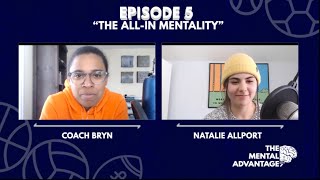
Canadian snowboarder Natalie Alport switched to the sport at 12 with no formal training, made the junior national team, then faced injuries and missed Olympic qualification. She talks about the mental tools that got her there, how sponsorship pressure affected her, and why she stepped away from elite sport in 2015.
Chapters
Hey, hey, hey, so happy to be back here with the Mental Advantage Podcast. We have the fabulous Natalie Allport. And you know, it's funny because her name is Allport, but I think she can do all sports. She is a professional.
She comes from the former—
she's— well, I don't know, I was recently schooled on this. So I'm going to ask Natalie in a second, but she used to be on the national team as a snowboarder. But I think calling someone a former snowboarder, it may be offensive. So I'll get clarity on that. Hey, Natalie, how you doing?
Hey, yeah, I'm doing great. Um, yeah, you know what, for that question, it's true, you know, snowboarding is a lifestyle sport, um, which is interesting. Like, you ask people who were swimmers and they're like, yeah, I was a former pro swimmer, they probably don't swim like that, you know, for fun anymore. But snowboarding is a lifestyle. So I definitely, you know, I find it tough too because like even in my bio everywhere it's like former national team snowboarder, but I'm like, I'm still a snowboarder, you know, like So yeah, there's— it's hard to put that into a short amount of characters.
Yeah, exactly. I was just interviewing an Olympian and I was saying former Olympian and she's like, you can never take that away from us. And so I was like, good to know. So I got schooled on the process as being not an Olympian and currently no prospects in the future. I will no longer strip anyone of their Olympic titles because she's right. Like, once an Olympian, always an Olympian, because what percentage of success society can say that. Well, uh, so Natalie, first and foremost, uh, what I like to do is I want to find out, like, you know, you got into snowboarding, how did this all start? Like, was this your first sport that you picked up? How did you fall into snowboarding?
Um, yeah, to the dismay of my parents, um, pretty much is that's how it went. Uh, I, I grew up playing every sport, like literally, like, uh, I think from the womb my parents just knew I was going to be athletic. My Dad loves sports and I was firstborn. And so he immediately was always— he'll tell you now that he was like building my leg endurance and things on the bed. You know, I think the people like to say that in retrospect.
Yeah, exactly.
You know, if I became a librarian, he probably wouldn't bring that up. But yeah, he loves to tell those stories. But yeah, played literally every sport that I could get my hands on. I think I was 3 years old when the Atlanta Olympics were on. And my parents tell me that I was on my tricycle going around and around the house in circles saying, I'm going to go to the Olympics, which, uh, yeah. So I was, I was determined from that day. We still have the couch and there's the mark where I would scuff the corner. I would cut the corner for extra speed. Um, uh, but yeah, I was just determined to be an athlete and that was my whole goal. I just didn't know what sport. Uh, growing up, I played a lot of sports with the boys. So I actually would tell my family that I would go to the MLB or I would play NFL or NHL. NHL. Um, I didn't really have it in my mind that that wasn't necessarily a possibility. That came with growth, unfortunately, realizing that those opportunities aren't necessarily out there. But, uh, I eventually settled on hockey. That became my main sport. Um, still played like track, all the different sports at school, but that was like lived, breathed competitive hockey. Um, but I had grown up on the West Coast. We moved to the East Coast later on in, in my childhood, so I always grew up skiing, like around skiing, somehow got into skateboarding. Don't really know how, but then, uh, when we did move to where, uh, my family and I, we still all live in this same area of where, uh, of the Ottawa area in Canada. Uh, I traded in my skis one day for snowboard at the ski hill. All the, like the cool kids in my class, they all snowboarded. So I definitely wanted to keep up with them. So traded it in and just really never looked back. But, uh, I will say I was absolutely horrible at snowboarding when I started. Um, so So nobody really understands that, that they think I was, must've been a natural, especially picking it up, not when I was like 5, I picked it up when I was about 12. Um, but I was not a natural at all. And so that's why it really was to the dismay of my parents, because I was a natural at a lot of other sports. And all of a sudden I gave up those dreams. And especially at the time, my discipline of snowboarding wasn't in the Olympics yet. Um, there was a whole bunch of things. They thought I was just going to be a ski bum. So they were not happy with that decision at first.
Very cool.
Very cool.
So first, I love— first of all, I love hearing that, like, because this is not the first time I've heard this story and I've had a few different people on from baseball, from volleyball, from different things, but that, that you wanted to be in the Olympics at a very young age. And I like how all the sports you wanted to do were pro. Like, you were just not even going for like, I just want to play baseball. You're like, I'm going to be at the top.
Of the top.
And that was always the thing. Maybe your dad was ingraining that in you. He was like, you're happy with your legs, right? Either way. So you pick up snowboarding and you're not great at it. And so this is called the mental advantage. Tell me about that process. Like, right, you said much to your dismay, and you said, um, and, and I'm glad you said Canada because I was going to say like hockey is not as common as, as the growth arc of a lot of people here in the States. Not to say that girls don't play hockey, but it's not as common. And hockey's huge up there. But when do you first remember being introduced to the mental side of sports since you were playing sports at such a young age?
Yeah, part of that was my parents. Like, my mom isn't really an athlete, but I can remember, like, when I would be in the bath, she would always read books to me and she would read me the book from Tiger Woods' dad. She actually probably bought like 30 copies of it because every birthday party I went to, she made me give that to my friends. Yeah. So I've been—
I love your gifts.
Yes, always books. Always books. So yeah, we always had tons of copies of that. It was like, oh, I'm going to the birthday party. Here's Tiger Woods' book to bring over. Perfect. But yeah, she would read me that, like Chicken Soup for the Soul. But she read me a lot of different sport biographies knowing that I wanted to be an athlete. And so I think from a very young age, I've been realizing and reflecting a lot on it now that I was exposed to some of those mindset things without even realizing they were mindset things. Um, because they were books from coaches, books from the athletes talking about their coaches and things like that. So that was definitely beneficial, but it wasn't until, um, I guess I was 17 when I ended up making the junior national team, when all of a sudden I had never had any snowboard coach. There was no snowboard coaching programs near where I lived or anything. I was all self-taught and immediately I had to start like hiring all these people. And so, uh, my parents and I, we found a, a amazing coach. She was a strength and conditioning coach getting her master's in sports psychology at the time. And she was working with the university hockey team right near us. So we happened to know the coach, she, uh, of the whole team, she hooked us up with the strength and conditioning coach. And then it became kind of like a dual coach where, because she was getting her master's in sports psych, when I would pick her up to go to the gym together, she would give me homework and ask me questions. So we were doing both at the same time, working on sports psych as well as the like actual training side of things.
That's super cool. So you said there was a lot of biographies, I gotta know, and I know that your first Tiger Woods, but what was your favorite? Was it the Tiger Woods biography or was it anyone else that you can remember at that time?
Yeah, you know what? My memory just still goes to that biography because I can like picture my mom reading it to me and there's, so many books that I've read, especially during that age, that I totally forget. And I know I'll probably remember them like 2 hours from now. But yeah, definitely that one was like the first one that I can really remember. And of course, because she bought all those copies, it definitely sticks in my head.
That's super cool. That's super cool.
So going back to—
okay, so before you got the mental, official mental help, and I mean what I mean, mental game, of course, Were you, I mean, like you said, it wasn't an Olympic sport. Were you aware of that? Like, were you aware of your vision? I mean, your parents told you at 3, so you didn't really remember, but were you like, okay, like one day this will be, and how did that keep you going when there was no official like thing?
Yeah. So yeah, I used to like, when I said I ate, breathed, and slept hockey, I would sleep with my hockey stick and I wanted to go and be on the national team. And up here, like the Canada-US rivalry for Hockey is massive, especially in women's hockey. Like that's some of the most exciting games. One of the most watched Olympic events, especially up here, is Canada versus USA women's hockey. And so that was, that was my whole dream. So I definitely was aware of like that Olympic goal. But then when I transitioned into snowboarding, it was in a sense, and especially my family realized like, are you giving up this Olympic goal? But there was X Games. X Games are huge. There's a lot of prize money there. It's like, it's, kind of like the Olympics of the action sports world. So for me, it was like, I want to go on X Games, I want to film, I just want to be a pro athlete. So it did transition. And then it was the summer, right? Like probably a month before I ended up on the junior national team where they announced then that slopestyle snowboarding would be in the Olympics for 2014. So then that kind of opened up the window of like, oh, I can be a pro snowboarder and try to become an Olympian.
Now, when you, uh, well, let me see, do I want to ask that one now? But before, when you gave up hockey, like, how hard was that for you? Because like you said, you ate, breathed, and slept hockey. So for me, it's like, I want to know a little bit more about that transition because you've told it, but it's kind of like, wait, what happened? Like, how do you give up hockey when you like love it?
So yeah, you know what is, if I were to compare it, especially if we jump forward to when I transitioned out of snowboarding, that was much worse. Like the transition to hockey, I was still so young.
Yeah.
It wasn't so difficult, but especially what, what really did end up happening was when I was young, I went through a very late growth spurt. So I was very small, but I was tough, like solid on my skates and, um, very, very tough, but, but small. And, uh, unfortunately the year I played, uh, there's an Adam age group. And then I think I was probably in that, like right when I was starting snowboarding, so I must've been like 11 or something around there. Um, and I was playing that Adam A level and we had a coach who unfortunately just, it wasn't a great experience. And he, his daughter played on the team and she was one of the biggest athletes. Like I was still tiny and she was very large, but she was also very aggressive and getting a lot of stupid penalties and doing things like this. And although I was one of the top scorers at the end of the game, when we needed to score a goal to win, he would say, no, you're too small to play. And he would play his daughter. And that year, that experience— there's another few things with politics, and, um, we would play games that, like, or we had practices sometimes that would go till 10 PM, and we're like, 11, we need to get home for school. And there was a lot of just different things that were happening that kind of made me rethink. And then as I was falling in love with snowboarding, I was thinking, well, if I want to snowboard, competitive hockey is like almost every single day of the week, so I would get to snowboard like twice in a season. My first two seasons of snowboarding, I snowboarded maybe twice in those two seasons. So I said, there, I maybe I have to step back away from something here. So I ended up playing a lower level competitive hockey. And it wasn't the experience that I wanted. I realized that I wasn't someone who just liked to play sports for fun. I was surrounded by a lot of girls who were there just to have fun, gossip after the games.
Right.
And that wasn't me. I was very intense. Definitely an intense kid is probably how anyone could have described me.
That's so surprising now.
Yes. So I wasn't into that whole vibe. So I was really struggling just to kind of be in that culture where I just wanted to be in the same culture as what I was before. But obviously I didn't have that great experience and I wanted to spend more time snowboarding. So I had a couple of games where I actually scored like 10 goals in 2 games. And it just became not that fun anymore where it's like, you know, you're going to be the leading scorer. And that not to say that I was the best by any means, but I was playing at a level that was lower than my skill level, and that was because of snowboarding. So I had a decision there again, try to like make up for those— that year that I went down and try to make back to the top level, or do I go all in on snowboarding? Because being in between just wasn't working, right?
Oh, that's so important, right? Like picking your lane. But also, I love that you said that, like being the top scorer on your team or being like, you know, being so good But knowing that you're not playing against the best is like, there's an emptiness in that, right? Because it's like just a vanity thing. It's kind of like likes on social media, like, hey, who wants to like my post? But, you know, so super important, I think, for people to realize that, you know. And I want to speak a little bit about this coach, because if he doesn't do this, we don't know Natalie as the snowboarding person that we do. Maybe because, you know, this all kind of sets it up. I love how things kind of fall into place, but separately, How many coaches keep athletes from being excellent because of their, you know, like you said, politics and all that stuff?
So yeah, you know what, I actually a few years ago I played, uh, I tried to play summer hockey while I was home from snowboarding. And, uh, and I ended up playing with all these NCAA Div 1 players who were back for the summer or they were finished their school experience. So it was very high level, but there was no coaches. It was, it was like beer league, but like competitive. And I ended up playing, and all of a sudden I recognized the girl on the other team. It was that coach's daughter.
Oh my God.
Still so rough, getting penalties, being angry, like reactive. And it was insane just to realize she still had that same personality and playing dirty. And I was like, I'm glad I didn't turn.
It's not surprising that she didn't have any check on her behavior from her father. And then probably he wasn't— well, we won't go into it, but I'm I'm sure that there's a lot more to that, but very interesting how like we have these patterns as young people. And I think in your case, right, like being so like, uh, hungry and gritty as a kid, to use a term that everybody uses now, but I didn't have when I was a kid. I wasn't using the term grit at that time. But yeah, and that you're just like, look, I wanna be, I wanna be competitive. I wanna be out there. So you pick up snowboarding, you decide to kind of transition and you, Like you said, so you said the X Games. So how, when did you start, like, when did it start clicking for you? Because like you said, you weren't really great. So what, now you said that you aren't just with somebody that likes to be out there to play, to have fun, but there was something about snowboarding that kind of got you through. Was it just the fact that a sport wasn't going to beat you, or, you know, what was your drive in that, in that time?
I think so. Like, I think it just bothered me that I wasn't good at it and that I thought it was so, it was fun to me. Like, I think there's a lot of things in life where I'm like, oh, I'm not good at it, but I also I don't care about it, so I'm not going to, you know, take, put my effort there. But there was the sense that I really liked the freedom of the sport. It's so creative. Like, I'm not a good artist in other mediums, but in snowboarding, especially like I wasn't racing, I was in slopestyle, it's a judged sport. There's a lot of creativity. It's about your style. It's about like how you interpret the features and what you want to do. And so I really liked that because it was a break from all those other sports that I had been in. So I just started trying to spend as much time at the hill as I could. I became a snowboard instructor because that convinced my parents to drive me more because I had an income there. Uh, so, you know, after school you could say, hey, drive me. I make $8 an hour. It doesn't pay for the gas to drive me, but please. So that was, uh, that was also a bonus. And I got to spend as much time as I could, uh, at the slopes. And, um, I just started progressing and eventually I kind of got to the point where I was the best at my tiny, tiny little ski hill. And it kind of felt cool to again, be like the best at something, but again, knowing I'm just in this tiny area, it's not, you know, not a big hill. So where can I go from here? So I started trying to get to larger competitions and just asking my parents if we could drive me maybe a little bit further and, and go to different places. And then we actually sat down with my guidance counselor at school. And I said, I told my parents that I wanted to move to like the mountains when I got out of high school. And I wanted to graduate school a semester early so that I could try to start competing and maybe doing a little bit more traveling. So I ended up taking a lot of extra courses over the summer and different things. So I actually graduated high school a semester early and ended up going to a competition out west. It was my first time traveling alone and I ended up breaking my tailbone. Ooh. And so that was painful. I still tried to compete the next day, uh, didn't place very well, but rode through the pain. Uh, the worst part was flying home, trying to sit for that long. And then 2 weeks from then, I had a major competition. Uh, and the year before I had actually lost that competition, came dead last, but in my head I had this Cinderella story that this unknown girl is going to come and win, you know, uh, that whole dream. Right. So, um, I had vowed that that year, that next year I'm going to win. So no matter what this tailbone, I went into this competition and I actually ended up winning. And that set off my whole career from basically being literally unknown and just riding at my local hill to— this was a competition that was still fairly local, within 2 hours. It's a ski hill I actually just went to on Saturday, but they had— it was part of this big competition tour where it was one of the, the biggest in all of North America, uh, female-only snowboard competition. So there was girls from the magazines that I had on my wall who were competing, and I ended up beating. And so that let me— I got to go to the US for a competition after that. I won some prize money. Um, it was just, you know, my parents all of a sudden started realizing that this could be a big thing because there were sponsors there and different things. Um, and then that summer I ended up going out west for a summer snowboard camp, which sounds crazy— summer snowboard camp— but it's possible. And, uh, they announced that Slopes was no longer— it's not an Olaf thing? It kind of— actually, they stopped it now because of global warming. Okay, got it. A whole other story. But, um, yeah, that, that kind of put me on that trajectory because then that summer they announced those— the slopestyle snowboarding. And later when I got home from that camp, uh, they put me onto the junior national team. And it really came from that result that I had no idea would lead to those other things, but I just was determined I needed to win that because I lost the year before and redemption and Um, unknowing to me, I got onto that team and that kind of changed my trajectory. Instead of becoming a ski bum and moving out west, I ended up, uh, just, you know, doing national team training camps and, uh, getting a coach and having to work with strength conditioning.
And hold on, hold on, we gotta go, we gotta go back because I love what you're saying, but I wanna, I wanna stay so that I know what questions— like, I gotta get to this point of like, okay, you break your tail— you said you broke your tailbone or you fractured Uh, broke it.
Yeah. And, um, yeah, I got an X-ray, and actually it wasn't until really a year later that they confirmed, because I got a CT scan for something totally different. And, uh, they were like, don't you remember? You, you must have broke your tailbone last year. I'm like, oh yeah, I knew that, but I didn't do anything.
Oh yeah, yeah, I just broke my tailbone, no big deal. So like, okay, so first and foremost, you're talking about a lot of cool stuff, but I just have to highlight it. You graduated high school a semester early. Like, so this is an example of like having those a clear-cut goal. Like, your mission was like, I'm the big, I'm the big fish in the small pond here, and I want a bigger pond because that's the only way I'm going to get better. So you have this hunger and desire that's been present pretty much your whole life to just be the best. And so you continue to push towards that goal, and then you go to your parents and you said they were a little reluctant about snowboarding. Was it the danger? Was it the time commitment? What was it that their, their, their pushback was a little bit on that?
My mom the danger, because my brother still— he doesn't compete, but he does all the flips and everything on his skis. And so, uh, for both of us, she's just— she's like scared all the time. So even hockey scared her, so snowboarding was like that next step. Um, but then I think for both of them also, especially because it wasn't yet an Olympic sport, they just saw snowboarders as partiers. Like, if you were a pro snowboarder, you were probably filming and making movies. And if you look at some of those movies now they're much more professional. But back then it was like snowboarding, half snowboarding, half partying. Yeah. And of course they're like, well, this isn't— I also had a very addictive personality, very intense. So they saw if I got into partying or drugs or any of those scenes, they could see it going very downhill. So they were just really adamant of just keeping me away from that environment.
But then you come to them and you say, I want to graduate a semester early, I want to travel to the West Coast. I mean, clearly we don't have a partier here unless you're just dedicated to going going hard in the paint on the partying and the snowboarding. So you graduate a semester early, you go out west. Do you remember the moment that you had the injury? Do you remember that? Like, does it stick with you?
Yeah. Yeah. I mean, it was in the practice for the event. So the day before the event, my aunt, I have a lot of family out west, cause that's where I was born. And so she dropped me off for the day. She had to go like instruct yoga or something and was going to pick me back up later. And Uh, it was going riding okay. And then yeah, I just kind of, when I took off the jump, I slipped out and I was going pretty fast. So I landed near the bottom of the landing, just straight on my butt.
Oh wow.
I actually had butt pads, which is not cool. It wasn't cool then, but I actually would wear them because I knew like it really hurts if you land on your butt, but it didn't help. I still, uh, broke the tailbone because I like getting up was so painful. And then when I got to the lift line, I couldn't even bend over to take off my bindings. Wow. So when I did the competition the next day, I actually had a friend who, when I was in the start gate, had to put on my bindings for me because I couldn't lean over to put them on.
And it still didn't stop you though, because you were just like, wow. Like you said, you didn't do well in that competition, correct? Because of the pain.
Yeah.
But you, you decided to go through it. You had to fly home. And, you know, like you said, you already had this Cinderella story. But what I want to know is, like, what were you telling yourself, like, going into the next competition? Because I know you already had the story. But like you're still dealing with the pain. So how did you overcome it? Do you feel like the mental aspect was a part of it, or was it just like, you know, I mean, like obviously, do you feel like the competition brought their A-game? Like what was, what kind of helped you through that competition?
Yeah, I, I mean, one, I had my family there. My mom wasn't able to come, but my, my dad and my brother were there. And like, I can still picture landing the run that I did and having my brother, he was skiing beside the run, and like him hugging me as I was still like riding down, which was a cool moment, especially because we're like dueling siblings, very much like TV, like each other. But, you know, in the end we still do love each other. So that was a positive moment where we weren't teasing each other for once. Um, so that, that definitely helped. But, uh, you know what, I think it was knowing that like there wasn't anything I could really do for my tailbone other than just rest. Like you can't cast it, there's, yeah, there's not much. And the doctors kind of said like, yeah, you like, if you land on it again, like like maybe that's gonna hurt again, but there's not really that much unless you really, really land on it pretty badly. Luckily it was, it was springtime, so the, like, the snow was getting slushier, so things are a little bit safer in that sense. But I think I was just so determined because I had that competition and I knew, like, last year I lost and I said I wanted to win. And I was— I had just landed, like, when I was out west, just before a competition where I did hurt my tailbone. I spent a week at a different resort and I landed like a new trick. And I knew that trick could really help me. Um, and so I had this whole new run put together that I really was just determined to land. And so then I was able to luckily land it. And, uh, the way this event run ran was usually you have 2 runs. So it's like high pressure situation, but here it was kind of like you had an hour. I think it was an hour or 2, as many runs as you can get. Um, which it does take a while. You have to take the chairlift up and whatever, but. You were able to get like 4 or 5 runs, which is pretty rare. So I was like, if I can just land that one run, I know I have a chance of winning because I was watching what other people were doing and I was like, if I can land it. So, uh, luckily, uh, thankfully I landed it and it was such a flow moment. I can bring my head like right back to—
wow. So, so for those that are listening that may not be as familiar, because I mean, we all have— most people have seen a snowboard before, but when you say a run Are we doing the half pipes? Are we doing the— like, give me an example of what a run is like for Natalie, because I know there's different events and I'm not as familiar. So let's help the people that are listening.
Yeah, so usually there's at least 2 jumps in a run. So slopestyle, so it's jumps and the rails, and they've gotten very creative now. Like, you can see sometimes they have like almost like a half pipe type feature into jumps. Like, it's— there's craziness now for sure, but Um, usually there's at least 2 jumps and, uh, then there's 1 to maybe 4, uh, rail-type features, rails, boxes. And so specifically at this event, it was actually a very small course, so there was I think 1 or 2 rail features and then 2 jumps. Okay. Um, but typically you would usually get like 3 jumps and maybe 3 rail features.
Wow. Okay, thank you. That helps bring it up. And rails is like with the skateboard, right, where I'm riding along? Is that what that, that is kind of?
Yeah. Yeah, like a handrail, almost like you'd see like a street rail when you're walking, or yeah, just like these metal or plastic features that you're sliding across. Awesome. Awesome.
Yeah, I can do that. I just said no, just, just in case, because you can't all see me, I guess. Okay, so you, you win this competition, and like you said, this was like the thing that was like, okay, this is it. I've— this changed everything for you. And When did the national team thing happen in like timeline to that?
Yeah. So won that competition, came home, got a terrible job making breakfast sandwiches to try to pay for the summer camp that I wanted to go to. Ended up heading out there. And that was my first time being around a large group of pro snowboarders because basically every pro snowboarder in the world would go to this one glacier because it's like one of the only places in the world to snowboard at that time of year. Um, so got exposed to a whole lot of different people, brands. Uh, and then I saw one of my friends who was local to Ottawa. She was part of like the junior halfpipe team and there was no slopestyle program because it wasn't in the Olympics yet, but halfpipe had been in the Olympics for quite a few years, uh, or quite a few Olympic, uh, quads. So she, she kind of introduced me to the coach there. Um, and I saw that like I had never experienced having any sort of coach or anything. So So I saw how that worked and I thought that was pretty cool. And still not knowing anything, I came home. And of course, during that time, that's when slopestyle was announced into the Olympics, but I didn't think anything of it other than I want to make it there. But it was more of the athletes who already were pro who were excited because they knew like, okay, we're the ones who are probably going to go. And yeah, so then I got home and all of a sudden a friend emailed me. This was in August. And she said, 'Hey, you're on the junior national team website.' And I'm like, 'What?' I had no idea. Like, they didn't even email me or ask me. So I guess it was just from that result from that competition and that past season that somehow put me onto that program. And, uh, yeah, I just really lucked out. And then that kind of led me to spending 4 seasons, uh, as part of the program.
First of all, I think it needs to be bears mentioning, which you just kind of glossed over. I mean, you didn't gloss over it, but you mentioned it, but I don't know if everyone caught that. She didn't have a coach. All this time, self-taught, self-propelled into these different competitions, her parents being her main financier, which is typical for a young athlete. But literally everything that Natalie wanted to do, you're doing, and you're going out after it. And then through sheer hard work and determination and fighting through some injuries, you make it to the national team. I think that's pretty freaking amazing.
So, uh, I don't know.
I'm just like, okay, so you make it on the national team. You did 4 years with them. What's the pinnacle? So I know the goal was to go to the Olympics, and I know I've heard you talk about this before, but tell me a little bit about your time. And this is professional scope snowboarding at this point, or that's the next step. Am I ahead of myself here? Is that the national team and the professional? Is that 2 separate things?
Yeah. I mean, I was talking with someone about this recently who was kind of a semi-pro skier and Yeah, sometimes I actually, I get uncomfortable when, because I get, I get called a lot as a pro snowboarder, pro athlete. I'm like, yeah, technically I was because I was paid by brands and right. But at the same time, uh, it's, it is, it is very— there's no point where you're just a pro athlete, right? Like I have a lot of competition, um, banners from one of the competitions I won or placed at that says I was in the pro category or I had brands that paid me. But it's, uh Yeah, you know, it's, it's hard. It's a hard determination. Everyone judges everyone else because, for example, I didn't have a pro model snowboard. Like, there wasn't a snowboard being sold that says Natalie Alport. Like, you buy this at the store. But at the same time, there's probably only like 3 girls in the whole world that ever had that, right? So yeah, so at that point, uh, I was on the junior national team program. Definitely I wouldn't— oh yeah, I think it was probably 1 or 2 years into it when I first got I first got some, uh, a ton of sponsors that first year, but I got like my first like money being paid sponsors, uh, probably a year and a half into it. And, uh, but yeah, I— especially when you mentioned like the coaching part, that was probably one of the most difficult transitions was having to adjust to a coach.
Yeah. So tell me about that, because I mean, I think this is something to, you know, people need to know. Like if you've been self-taught, you've been self-directing, and you've been and, you know, figuring out how to motivate yourself, then this coach has a whole different style. Tell me about your first coach, what you remember and how it helped you or how you sort of fought against it if, if that was the case.
Yeah, it was, it was a humbling experience because especially I, I got down there, there was, uh, kids of all ages. Um, at that time, even if you were on the national program, you still had to have your private coach. Um, it was, it was still kind of unorganized in a sense.. And so actually throughout the whole 4 years, we still had to have our private coach. And there was times where we still had the national team coach with us. Um, but we still at times had our private coach. So, uh, I, yeah, I moved to a whole new area. I lived with one of my coach's parents actually. Wow. Um, yeah, it was an interesting experience. And, uh, I was with kids who had always been coached or even kids much younger. And what was happening was Uh, I was part of their top coaching program. There's about 3 or 4 of us athletes. And some of, um, a lot of those guys that I ride with are still professional snowboarders to this day and competing at X Games and, um, and at the Olympics and all that stuff. But I was actually for a while not riding with them, even though I was with them in a sense, because my coach was really teaching me all the basics. So he was like reteaching me just to even how to turn or how to like just make a little jump on my board without even hitting a jump or how to even approach a rail. And that was very frustrating knowing that I had, you know, I came off a season— every season you, you want to up your level, right? Right. So I'm like, okay, I landed this trick last season, this year I want to land this trick, this trick, this trick. And he said, no, we're going to relearn how to turn, we're going to relearn how to hit the jumps straight, how to, uh, approach a rail. And that was just— I was, you know, I think I'm gonna have a year of explosive progress, but I'm actually having to take a step back. Back. But it really did help me in the end because snowboarding is a sport where one, style matters. So I was able to relearn those foundations. Right. Um, two, uh, you don't wanna get injured. And so you're just hucking yourself and you don't know, um, what you're doing. Eventually it's gonna get to that point where you're, you're, you're just kind of surpassing what you should be doing. And then three, you're gonna hit a limit where, because you don't know those basic mechanics, of how to even initiate a spin or how to approach a rail, you're going to hit some sort of plateau. So it was helpful, but it was a very humbling experience as, you know, a 17 or I guess I probably had just turned 18 at that point to have to take that step back. And even at some points I was riding with like the 12-year-olds of the program some days, um, just trying to like work on some stuff and they would send me with them to relearn stuff. And that was quite frustrating. I bet.
I see you in the back of the van holding your board like this sucks. I know you're probably not holding the board in the van, but that's just the picture of you being like the biggest one around you. And they're like, oh my God, Natalie's with us. You're like, yeah, hey guys. But so, I mean, not that you were ever not nice, I just— that's just my, my TV version of the event. Um, so you're, you're, you're like— I love that because the best example I can use, like, you know, correlative to the sport that I know the most, which is basketball, is, um, I don't know if you know about Steph Curry's story, but his dad made him work on his threes between his freshman and sophomore season or something in college. And now obviously he's one of the most prolific 3-point shooters in the game. But it was like at that time he had to really go back to the basics of like, you know, long-range shooting. And so, and then like, he's like, you know, like that step backwards to, you know, go forward is so key. And like you said, there's 3 things. It's about style. It's about not getting injured. And it's also about, you know, being able to go properly into those things and have a more effective run. Versus like, you know, just kind of like, hey, I'm winging it, it's working for me. But, you know, maybe like, yeah, so I think that's great. So you're on the national team, you said, for 4 years. And what, what was your pinnacle moment? Like, you know, like, this is the— this was awesome. Like, this was my highest achievement that I like, you know, I, I had reached what I thought was like the it moment in that, you know, in that, in that, in that arc.
Yeah, I mean, looking back, there's some definitive moments. I think at the time there weren't because I was always wanting to make the Olympics, right? And, um, as we might get into, like, I fell just short in 2014. And realistically, as a young athlete, 2018 was my main trajectory. It was like, okay, we're training for 2018, 2014 would be a bonus if we can qualify. Okay. Um, but I did end up stepping away from the sport in 2015, so not even really giving myself a at, at the 2018, at the 2018. But, uh, but you know, there's some amazing moments from, I think my first season I made it onto the, uh, Junior World Championships team. So that was my first event really getting to represent Canada and go to something big that kind of, you know, you see everyone from all the different countries. And so that was, that was a big moment. And I ended up getting the highest placing of any girl from Canada. So that qualified me for funding and different things for the next season. And, um, it was kind of cool to say I was the, you know, one of the— in the top 10 best female snowboarders under 21 at one point in the world. In the world.
Yeah, the world. That's a pretty— I, I don't, I don't know many people that can say that. I may be top 10 talker in the world. I don't know. But okay, so I want to, I want to ask this, and then I want to go to the Olympic thing. First of all, I think that's a pretty big thing, what you just said. You're representing your country, you came, you placed the highest, and you were top 10 in the world. That's, that's a pretty pinnacle moment. And I know it's not the thing you were shooting for, but that's pretty amazing. So when you get sponsored, and I think this is helpful for people that are in sports where, um, you know, I don't, I don't know if a lot of people know, but you don't make a ton of money in these sports, right? Like, if you're not sponsored, if you're not like— it's not like that there's a huge payday at the end if you're not not getting the sponsorship dollars. So is there a different pressure on Natalie, you know, in that, or are you just kind of like, you know, like, this is just part of how it works?
Yeah, there definitely is. Like, it's, it's an entirely sponsorship-driven, uh, sport. Like, you need sponsors to connect you. For example, the next year that I went to that summer camp, I was able to have sponsors who literally— they sponsored a week of that camp where they have like all the pro riders of their team who come and ride with the campers who pay to be there. And I was able to be part of that. So then I didn't have to be a paid camper. I was like the pro rider that they got to, you know, the kids got to hang out with. And so you need sponsors to really hook you up with anything. There's competitions that are invite only. So the industry, you need to have those connections. And exactly like you said, like some competitions have higher prize money than others, but you need the sponsorships. Like most sponsors, they'll match the prize money. So if you won $10,000, They'll say, okay, we also give you $10,000 because you're going to be on the podium with our stickers and our board or whatever it is. So sponsors are definitely key, but it does add a whole other, other pressure because you're not like even any event I'm going to. And I know that sponsor is going to be there. That person is there. Like you've got to present yourself in a certain way. You have to be on, you can't really show your frustration at the end of a run that didn't go well because you're like, 'Also, my sponsor's here, and I really need to act in a way that, you know, shows me in the best light.' And, um, so you always are thinking about some of those little nuances, uh, because you do have that additional person who's really betting on your whole journey in the sport. And it definitely plays in, especially when I did step away from the sport too, knowing that these sponsors came on with me when I was very young, when I was 17. And so they're betting on my future of becoming a top pro, you know, making it. Uh, they didn't care as much about the Olympics because the Olympics actually are not even allowed to have your sponsor logos and things, but they cared, you know, X Games, all those events, right? And so they're betting and taking a chance on me then I'm gonna make it. And so that added a lot of pressure to me deciding to walk away too, because I said these people have invested time and money and product and, uh, energy on me and vouching for me, and it Yeah, there's, there's a whole other pressure, right?
It becomes a business at that point.
Yeah.
So I wanna talk about the Olympics because I don't know how it works with the snowboarding, cuz you know, some sports it's like you run at an event, it's not maybe like the Olympic trials, so to speak, but you qualify, like your time puts you in the race. Is there a specific Olympic trials for snowboarding or is it a specific event leading up to it that you qualify?
Qualify?
Do you remember that run or that day about it? And, and what was your mindset going into it?
Yeah, so there's, uh, a bunch of events. So basically it was— it's interesting how it does work. So I know like there's some sports that take a lot of people, like if you look at triathlon or marathon, there's so many athletes that do end up in the Olympics. I think for us it was maybe 25, it was no more than 30 girls in the whole world that make it to the Olympics for snowboarding. Each country only can possibly open up between 0 or 4 spots, which actually for our male athletes in Canada, we have amazing male snowboarders, female too. But on the male side, we had like 6 guys that could easily come top 10 at the Olympics, but only 4. Uh, we have a maximum of 4 spots because that makes it more fair for other countries. Oh, interesting. Yeah. So what it works is 2 years before the Olympics, uh, basically the results that you have, so top 30 finishes at the World Cup So, um, there's kind of two different tours in snowboarding and they're starting to combine, but there was kind of a war between them because one tour is run by actually skiers, a ski, uh, cause it's the FIS. And, uh, so snowboarders really rebelled against that, but that was the Olympic qualifying tour. So you have your like world tour events and then you have your world cup, uh, events. And if anyone has heard of like world cup ski racing, that's pretty much like the pinnacle in, in skiing. And so in snowboarding, that was our Olympic qualifiers, this world cup event. Got it. So you have to come in the top 30 and based on how many top 30 positions you end up opening a spot for your country. Hmm. 2 years before we only ended up opening 2 female spots for Team Canada. Okay. And so, uh, we had those 2 spots and then based on your results the next season, the year leading up to the Olympics, uh, I think there was, uh, maybe to a few World Cups, I think maybe 3. And based off who out of, uh, there's probably maybe 8 of us or so that had a chance to make it. And out of those, whoever had the best placings across those events then makes it to the Olympics. And I think each event might have been ranked differently, but the, the national team basically had like, okay, this is our system, this is how it's going be fair. It's whoever has the best placings, you're gonna take those, those two spots. One spot was already locked in, uh, she was a girl who had been on X Games tour, everything, for like a decade. So kind of like a legend in, in the sport. So it was kind of, uh, there was a whole group of us who were pretty even and we're all fighting for that one last spot. Yeah, so that was, uh, stressful. But unfortunately, I went into that whole season and the season before— it started the season before injured. Injured. So I wasn't really part of opening up a spot. I had done a World Cup and then got injured at it. So I basically had like one competition once I was kind of done for my injury. And essentially it came down to like I would have to win to make it to the Olympics. And, uh, you're winning against everyone who's gonna then go to the Olympics, right? So it'd be like winning the Olympics to try to make it in. Ah, yes. No pressure, no pressure.
You just have to beat the world's best to be on the team.
Exactly. Yeah. And, you know, everyone has that in their mind, right? And, and you also calculate points and see, okay, based on this other person, like, who could possibly make it. And, um, so there was a— there was definitely a lot of stress around that and who could make it and who could do what. And, uh, I— one thing about snowboarding is you have your run. And so I knew I didn't have the best tricks. Yeah. But you do never know that if, you know, 10 people who have better tricks, they fall on their because again, you only have like 2 runs. Yeah, there's a chance. Like, there is a lot of events that come down to bad weather. Some girls who are lighter don't have the speed to even make— clear the jumps, and so that throws, you know, a wrench in it. Right. So there are little things that do, uh, really change the mix. So if you can be consistent with a, like, a safe run, yeah, have a chance. But, uh, yeah, unfortunately, uh, I didn't really, like, land the run I wanted. I didn't really land a a, you know, a good enough run. But one of my best friends ended up getting that spot, and, uh, so it was, it was, it was good to watch her too. But it was definitely, uh, hard because actually that last event was about a month before the Olympics. Yeah, we all had actually signed everything, all like the whole Olympic contract. I still have it.
Oh my gosh.
So like, because you have a chance, right? So you even have to study like what food you would bring to the Olympics if you're gonna go there. We, we were sent like the, uh, I, I could probably still pull it up on my computer. We there's a whole Canadian Olympic team website where you would see the, um, like the layout of the gym at the— in Sochi. So you could see everything, like as if you were going to the Olympics. You were supposed to plan, all of us, as if we were, even though only one of us really, uh, was going. Because all of a sudden it'd be like a month transition and you have to get your visa and everything. Um, so even though I knew it was a long shot, I still try to like live it as if I was, you know, or at least get that experience as if I was going to go in 2018. So it was kind of a rough blow having gone through that experience and then not making it, despite the fact that, you know, in retrospect it was a long shot. Yeah.
So, okay, so it was a long shot, and you talked about, um, because, you know, we're getting close to the end here, but I want to definitely cover your transition out of snowboarding. But you knew— so you didn't make it, it was your best friend, you were happy, but that little bittersweet feeling of like, hey, 'Good for you, but I wish it was me,' you know, type thing. So then you go to, you know, at this point, how much— now you said this happened in '14, so what precipitates you actually exiting the sport in '15? Because you were thinking about a 2018 run. So what precipitated that decision?
I think there was a lot of little moments over the seasons, me questioning, is this the right sport for me? Dealing with stuff from judges, you know, being in a judged sport and having come from a very, like, other sport background. Uh, you know, in hockey, hard work pays off. And I felt I was the hardest worker. Uh, and I was just seeing nobody in snowboarding was as strong as I was. No one was going to the gym. No one was doing these things. People were still part— like my friend who made it, I love her. She's awesome. And I actually, I met up with her last summer to catch up, but she was still, you know, partying and doing fun things. And to me, I was like, I'm the— I'm dedicated. I'm doing all these things, but people learn tricks better, faster than you, just the way it goes in snowboarding. Um, there's judges' decisions. People have different style. There's so many different factors that, that play in. And, um, that did frustrate me because I was seeing like, I'm working this hard, but it's not necessarily leading to this payoff. And I knew it would in a different, you know, in a different field. So when I came back, I actually got into the sport of CrossFit and I saw all of a sudden I was surrounded by people who were at the top level in that sport and telling me, who you can make it to the top level to here and really quickly. And I was picking it up really quickly. It was reminding me of my childhood when I was picking up sports quickly. So I saw that. And then also there were just some mental health things that were going on, anxiety attacks, starting to really be homesick, which I never thought. I always was excited to just go off and snowboard and do that. Um, so it got to the point during my last season and in 2015 or 2014 to 2015 season that I was living the dream that I always wanted to, and I just didn't like to be there. I always was wishing I was home. Uh, if I had a bad headache, I would say, oh, I need to go see the physio. And I started becoming someone who was making excuses not to try the next trick because I was starting to feel out of it. And I was also scared. Why would I try this next trick if I could really hurt myself and that could affect my whole life and anything I wanted to do moving forward? And it started kind of making me into someone I didn't want to be. I didn't want to be an excuses person. I didn't want to be this. And I realized that it really came from me, my time being done, um, and kind of having that fear in my head of injuries, um, and all these different factors. So it took me the whole season. I said, I'm going to go still all in on this season, see if it's the right decision. I actually had a good placing at nationals. I came 4th that year. Um, so everything was okay. But at the end of the year, I messaged my coaches and said, hey, I'm taking a break, and that break ended up being, uh, permanent.
Yeah. Did you know when you sent that message that it was going to be permanent, or did you like just kind of like, well, I, I'm— maybe I'll come back, or I need this break?
I, I think I did know that it was going to be permanent, but at the same time, like, I just wanted— I'm someone, I get scared of closing doors completely, right? And especially at that time dealing with mental health, I wasn't wasn't sure exactly what I was feeling. And so I didn't want to completely close it. So just saying, hey, like, I need a break. And then, you know, I think we all kind of knew, though, that the break means not coming back.
That's it, right? So I think that's really important to hear, like that, you know, like you're at your— you said you had achieved everything, you know, minus going to the Olympics. You achieved everything that you had set out to do. You were on the national team. You got You've got a mental coach, you're at, you're getting sponsorships, you're having, you know, these great finishes. And then you're like, but I'm now experiencing anxiety attacks. I'm, you know, I'm now not wanting to do runs. I'm actually like, hey, you know, maybe you should go first. I'm good. Like, you know, all that ferocity and hunger kind of like escapes you now. And then you're just like, well, what is this? Like, is this really the right thing? So, So, um, you really— I mean, kudos to you for making the decision for your mental health. So let's talk about it because you, you got into CrossFit, but let's talk about the transition because do you feel like it was replacing one high for another, or do you feel like, you know, like, you know, what's the difference, the comedown, or was there a comedown, or was it just like, was it CrossFit immediate? Like, talk me through that.
Yeah. Yeah, it was, it was tough. And definitely, like you said, replacing one high for another, because over this past couple years, I hurt my shoulder in 2019 and then the pandemic happened. So it's been a long time since I've competed. And actually, this weekend is starting the CrossFit Open, which is like the qualifying competition for the next series, and I'm, I'm not participating. And, uh, it's, it's actually something that I've dealt with over the last couple years that I thought I had before, but really realizing that it was kind of was just filling in a void there for me. And now I'm at a place where I could come back and look at it from a different place if I still wanted to compete in CrossFit or other events. But, um, I— like, I know you've, you've heard me talk about it before, but I went through a really low time with my mental health when I stepped away from snowboarding. I was diagnosed with anxiety and depression. I started going to therapy. I— but people at the gym had no idea. Like, I would spend 6 hours a day training my ass off at the gym, trying to, you know, put all that energy that I had there. And then I would come home and be on my floor crying and having panic attacks all night. And people didn't really see that, but it— CrossFit did help me in the sense where I was able to put my energy there, and then I was able to go to therapy and deal with this, these other aspects. But it was interesting to realize that I still, as much as I dealt with that loss of identity of being a national team athlete, I still try to hold on to that identity of being an athlete, right? And my snowboard peers never realized why I left snowboarding, and my sponsors too. But some of them actually stayed with me as I transitioned into CrossFit. And then my snowboard peers actually were like, oh my gosh, now you're like a pro CrossFitter. So they didn't really— they didn't know. I didn't have to explain that so much to other people. They thought I was switching sports in a But it wasn't, it wasn't that at all. And, uh, and it really has been the last couple years where I've gotten to that point where I realized that I was always competing to prove something to somebody, um, and, and just prove things. And I always said it was to prove something to myself, but I think I've proven everything in myself. Like, I know that I can do whatever I want to put my mind to, and then, and then it gets to the point of, do I need to? To, like. And so do I need to if I'm not enjoying it? And so now I'm at a point where if I do fall back in love with, with CrossFit or another sport or whatever I want to do, to the point that I want to spend 6 hours a day in the gym training for it, then I think I can do that from a much healthier perspective.
I think that's so helpful for people to hear because, like, you know, I think everybody thinks that happiness is when you get to the destination and you start to see— like, what I I always use the analogy of the cell phone, right? Super exciting for about 2 weeks, and then it's just a cell phone. And it's similar, even though I know that, you know, being an Olympian, being a national champion, going to the world championships, it's huge, but it's a completely different perspective from the, you know, the spectator to the competitor. But then also once you get off that podium, it's like, you know, the fanfare, and then it dies down, and then the athlete's left with What's now? What's next? Like, what am I? Who am I when I'm not this? And so, uh, that identity piece is so important, like finding that value in yourself outside of the sport, as we've talked about obviously before. Natalie and I have met on an app called Clubhouse. Check her out, she has great rooms on there. And, uh, of course we'll link all that stuff in the show notes so that you can find Natalie. So Natalie, you recently did something amazing, and I don't want to underscore the identity conversation, which We should probably talk about that even more, but, um, what, um, what you recently did, something pretty amazing going, speaking of your tenacity and drive. Um, you're also very passionate about mental health because you experienced it. So you did something, tell people about it, please.
Yeah. Yeah. So I, I was really inspired last year hearing about people doing like challenges and, um, being someone who trained all my life, like especially when I was training in CrossFit, My dad would always be upset because on the weekends when he wanted my help moving things at the cottage, he's like, you're always too sore. Like, you're— you have all this strength, you can deadlift all this and do this, and what— but where are you using it in real life? And I would always joke, I said, well, yeah, that's just being an athlete, right? Like, you give it all to your training and then you're sore for everyday life. You're not training for everyday life. And, uh, I just started being inspired by these, these podcasts of people who do crazy challenges. My boyfriend and I went on a road trip last last fall and, uh, listening— we listened to a lot of podcasts of people who did some crazy challenges, and I was like, that takes like a, like an entirely different mindset, especially I have ADHD. I am like power, strength, right? All these challenges are always endurance, right? Because no one does like, okay, my challenge is to back squat 400 pounds or something. That, that it's not something that, you know, um, like that's really impressive, but it's more— that's like in a comp sport competition setting rather than like this physical challenge that people do to either raise money for something or prove something to themselves or whatever it is. So I thought, I want to do some sort of challenge. I know I'm not a runner, not to say that I couldn't become one, or definitely running is something I work on in CrossFit, but I, you know, with all my snowboarding, it just doesn't make sense for me to do that high impact of an activity for a long time. So I said, it's probably not going to be running. Uh, and then winter is like starting to come and I thought, you know, I've been really enjoying this sport that I'm, that I've been doing just for recreationally of cross-country skiing. So I thought, why not like just try to do something with that? So I had this idea before the winter happened and then, um, I just didn't know how I would plan it out with the pandemic. Like, um, and cause I knew I wanted to relate it into using my fitness for good, like raising money for a cause that's, that I think is important. So that was mental health. So I had no idea. I was like, I want to promote it, but I can't have filmers with me and all these things because of the pandemic. And especially cross-country skiing is hard to film because most of the trails you need to be on skis to be on it. So a filmer would also need to know how to ski. Uh, so there's just a lot of variables. And so I, all of a sudden Clubhouse happened and I thought, wait a second, like Clubhouse is audio only. I can't live stream on Instagram the whole day skiing. But this is a way that we could do a fundraiser where, especially because it's weather dependent, I won't know the weather until maybe a week before. So I can't make a decision on the date. Like it took us months of like, oh, next week's gonna be good. Oh no, it's not. And going back and forth until finally there was a good window, a good date. And even still it ended up being very slow, sticky snow day. But weather-wise it still ended up working. And so yeah, Clubhouse was able to, to be in the mix because it was audio only. We could do some sort of live fundraiser. I didn't have to like promote this months and months in advance, uh, which I'm learning probably would have been better, but, um, it just wasn't the case. I just knew I wanted to just do this, push myself, go through some of this challenge mentally, and then use it for something good and, um, you know, spark a conversation. So that's what we did. I cross-country skied 100 kilometers in a day just 2 days ago. So I'm feeling extremely rough. This is my first, um, normal conversation. Since, because yesterday I was, uh, I was, no one wanted to talk to me yesterday because even especially my boyfriend, I was being grumpy. I made no sense, whatever I was saying. Like it was one of those overtrained, like you're just not there type days.
And that is just for the people that are not, uh, you know, Cana—
Canadians.
I was going to say Canadadians. I don't know what that was. Um, it is, uh, 100 kilometers. 60 miles, y'all, 60 miles. And she had a partner who walked 50 kilometers, correct?
Yes, David is— was in Niagara and he walked 50 kilometers. Yeah, I brought the idea to him because we were starting to co-host rooms together and I thought, hey David, you could help me host this room while I do this. And he said, well, why don't I, I just walk at the same time? And I said, okay, yeah, sure. So then we thought, oh, let's do it like, uh, 150K day, uh, so my 100K kilometers, his 50 kilometers. And so that's how it ended up working out.
Wow, wow. See, like, and, and so just, just really quickly before we get to the rapid-fire questions, how was the mindset during this? Like, you talked about it takes a different mindset. Obviously you started pretty early, 5 AM your time. So me, I'm on the West Coast, so that's 2 AM my time. So was it dark outside? What was the weather like? Like you said, the snow was a little slushy, but, you know, tell us a little bit about that process for you.
Yeah, it was, it was cold in the morning. I had to have a headlamp because you couldn't see. It was pitch black. Like, it was pretty because I could see all the stars, but also, you know, being a woman and being alone in a forest trail in pitch black, that kind of made me nervous and something I didn't think about until I drove down to the trail and was like, oh, like, this is a little bit sketchy, but okay. Yeah. So that, that did kind of make me nervous. I also think though, the CrossFit, I'm probably stronger and fitter than whoever's trying to attack, you know? Yeah, that's what I think. But still, I was, I was kind of creeped out by the whole darkness point at the start. But yeah, it was really cold. I was able to get like some good paces in the morning while it was, um, while it was colder. And I was told by like, I have a lot of friends around here, people who work at the ski shops that I know well, who are experts in skiing. And so they're like, yeah, try to get as much as you can done while it's fast because it's going to slow down a lot. And still in my mind, I had like wax and all these things that I thought it wouldn't slow down as much as it would, but it really, really slowed down. And so in those middle sections, it started one, getting really hard mentally because you're like, I have the blisters already. Uh, everything hurts by that point. And then you're still only a third of the way in. Um, like everything is getting to that hard breaking point. I think with any long challenge, that middle section usually people say is the toughest. Yes. But then it's also becoming the slowest. So I felt as much effort as I'm putting in, all this pain I've been through, but yet I'm not moving anywhere. Like, it's like my skis are just— it's so slow. I was like, I told David, I think it would have been faster in that point if I was walking. Like, wow, because I was just putting in so much effort. And then, later on in the evening and it ended up getting faster. But for me, there was points where I just didn't think I was gonna make it. I wanted to quit. I was, why am I doing this? And my dad called me cuz he was tracking my Strava. So he knew whenever I took a break and he said, maybe like you should stop and start again. Like maybe do the next 50K, like when it's, when it's colder, like in, in a couple days or something. And I said, no, like he said, people would understand. I'm like, that's not what I set out to do here. Like I know that it's gonna get hard and that's the whole point of the challenge is when it gets hard, like you almost want it to get hard. Cause that's, that's the idea. If I did the whole 100K and it was pretty easy the whole time, it wasn't a challenge.
And given your background, that's kind of how you like, you like a challenge. That's what makes you like, that kind of fires you up.
Yeah. So it just, it got really hard. And then later on it got a little bit, a little bit faster, still pretty slow. And my brother surprised me and he joined me for the last 15K. And it got pitch black again by that point. So we got the headlamps back on. And so that really helped because again, it was creepy at night if you're by yourself. Um, and that really, really pushed me through. But this morning I was looking back and I was trying to— yesterday I was just too done to make any comparisons to what I— like, it didn't set in. Right. And then today it started setting in and I started thinking about that journey, about how I was making quick progress and kind of motivated. But expecting it to get worse. And then it got worse and I was going through all this pain, having all the struggle and doing everything I could, but not moving forward. And then as I could see the finish line and I saw, okay, if I can get to 80K, I know I can finish. And I think that almost related back into my mental health journey, like, and, and almost the same as learning any habit or anything that you're trying to do that's hard where you get this initial momentum and you're pumped about it. And then you're putting in all this effort, you're doing, you're meditating, you're going to therapy, you're doing all these things and it's not getting better and you're frustrated. And that's when you really hit that breaking point where you're thinking, maybe I just want to give up. Maybe there's nothing to move forward. Like things got really dark, honestly, in that middle point. And it really related back to my mental health journey. And then I said, I took a little bit of a break and I said, let me make one big push here. I went 20K in that one push. And I knew As soon as I started that push between 60 to 80K, I said, when I get back to my car, I'll be at 80K. And if I'm at 80K, I can finish. And so then I was able to then do another little quick loop after the 80K. And then my brother came and it was like, there was no question at that point, was I going to finish? But it was very difficult in that middle point. And, um, so now I'm starting to make those comparisons of, of back to the mental health journey and just really realizing how impactful it was and some of those lessons that I I've learned just from that day.
That's so powerful, and I love that. What a great way to bring it all around and to, you know, and to give hope to those that might be feeling a little bit in that dark time and know that it's just that if you can just find that little glimmer of like inspiration or hope or find someone that will walk the journey with you, like her brother at the end, suddenly it makes everything easier. So thank you so much, Natalie. We do have some questions, if you don't mind. We're going to finish up So the first question is super personal. I apologize, but I just want to know what is the superpower that you would like to have and why?
I think just impact, like if I can— all the things that I think and believe when it comes to mindset, when it comes to people finding their way, being passionate about what they do, it frustrates me when I have this passion and I want it find, help other people find that passion and it doesn't click. So if I had a superpower that can immediately make an impact and immediately like that person could find what they love to do and go all in on it, that would be amazing.
Awesome. Awesome. So mine is teleportation. You took a really great one. That sounds great. I just want to get places fast. I don't want to make any impact.
I just want to get— You said it was personal.
No, you were right. You, you the best answer. I'm just saying, I'm like, man, wow, I gotta think, I gotta think a little deeper. I gotta be like, oh, I was, I was laughing when you said like, I was thinking about running and I was like, man, now they leave some sports for the rest of us. Like, she's like, what else can I do? Um, all right, so the next question is, um, there's a lot of people that are really specific about this. Uh, there's toilet paper and it's on the roll and it's either over the top or under the bottom.
Do you have preference?
And over, over, over. So far I've had only overs. Okay, so this is an important question. Are you a person that changes it in your own house if someone puts it on the wrong way?
Yes.
Okay, will you change it at my house?
No, I wouldn't change it at someone else's house.
Okay, all right, all right, because some people will. Some people are like, no, they will. And they're like, there's bathroom Bathroom snoopers. There's all kinds of interesting people when it comes to that.
But yeah, I'm not going to tell someone else they're wrong, but if they're in my house, then maybe I'll change it.
Well, I definitely changed it at my house. I'm an over as well. I'm not as attached as like telling other people that they're right or wrong, but I'm just like, yo, I like it over. I don't know, that's just the way it is. I just recently had someone send me a video about it, uh, saying that apparently over we use more. So have a little bit of a case. Um, possibly that's why the under is supposed to be better. But you know, but then of course other people say that the original patent had a picture of it over.
They're trying to justify their weird way.
Yeah, exactly, exactly. You know, either way, either way. So, uh, okay, so the other question I want to ask you is, who is your personal hero?
Um, my dad, I think. He's like a born entrepreneur, but he gave up kind of his big million-dollar ideas. He's had tons of hits where we thought— he thought he was going to make it and our family was going to kind of strike it, and things got taken away outside of his control. And the way that he's handled that and how he stayed true to his mission— he's like a social entrepreneur, he's trying to solve like a very important problem in public safety— that really does inspire me, where he's just just really bought into that. And, um, he's just all about, you know, helping other people and sticking true to that mission despite all the craziness that he's had to deal with.
Awesome, awesome. And what is your favorite ice cream flavor? Uh, cookie dough. Chocolate chip cookie dough. I always want to ask because I, I don't think anyone's ever done it, but did you ever try to cook the cookie dough in the chocolate chip ice— in the chocolate cookie dough ice cream.
I saw like a— maybe a TikTok video of someone doing it from a Ben Jerry's. Like, they took it out. Okay. I haven't because I'm that person who, if it was my birthday, my mom would say, what do you want? And I said, raw cookie dough. Yeah. He's like, she would never let me eat it except for if it's my birthday. So like, I'm a raw cookie dough person, so I wouldn't have tried to cook it.
You would not have tried to cook it. All right, well, Natalie, where do people find you? Um, anything else you want to plug?
It's your time. Awesome. Yeah, you can find me, uh, at Natalie Alport on all, all the platforms, anywhere you want. Instagram's probably the main one if you want to connect, and www.nataliealport.com if you want to read more about my story or check out my podcast or anything else.
Is 150k.day.com still available? Can they still contribute to the cause? Are you guys thinking about doing it again a different way, anything like that?
Yeah, it's still open for now. I think we'll keep it open probably for a week because we're definitely going to do like we usually do. We would have had a Clubhouse room today, but I think both David and I are just too done to host it. So I think we're going to— maybe we'll try tomorrow. We'll see. If not, next week with a recap. And so we definitely want to keep it open for some last-minute donations and things like that, for sure. But I think, yeah, probably just a week.
We may hold it open.
Okay. All right.
Well, thank you so much. This has been a lot of fun, and look forward to seeing more from you, Natalie.
Yeah, thanks for having me.
More from Bryn


Who else hype for this upcoming season with Caitlin Clark and the Fever with all these great adds?







How to be nicer to yourself: Stop putting yourself down either out loud or in your head


Winning At The Net Game of Sports & Life No Matter The Score - Episode 60 w/ Jordanne Scott