The Consistency Code: How To Be Intentionally Consistent - Episode 23 w/ Coach Bryn
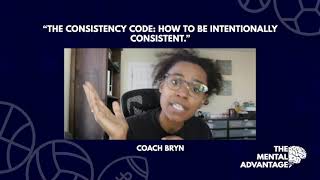
Coach Bryn Drescher breaks down how to build intentional consistency by starting with self-awareness of your habits, then picking one skill to focus on and breaking it into weekly and daily targets. He emphasizes celebrating small wins to reinforce dopamine pathways and setting up support structures like accountability partners to avoid context-switching and overwhelm.
Chapters
Awareness is where you start for anything, okay? Almost everything I would ever tell my athletes to do when I work with them, we start with awareness in my 8-week program because if we're not aware of what we're already doing, then we can't— you cannot change what you're not aware of, right? So if you're not aware of it, you're not working on it. So we got to become aware. Where are we already consistent? Are we procrastinating? Are we snoozing? Are we, um, you know, are we having the kind of talk that, you know, discourages us? I'm excited for you to see this week's episode, but before we get to that, I have a message for you. If you're a parent of an elite athlete or a coach of a high-performing team and you want— you're looking for some help or assistance with making them more mentally resilient, perform with more confidence, be more consistent, anything like that, then this is for you. I have an 8-week program all designed to address exactly that, to help your athlete be at their best on a more consistent basis and not get tripped up by those little voices in their head and getting down on themselves for mistakes, but performing like we know they can. So what I want you to do is don't delay, schedule a— just grab a time on my calendar through this link and let's set up a time to talk about your specific situation and how what I'm offering in my 8-week program can help. Okay, so it's Brynn Drescher, www.theresa.com/freeconsultation. So click this link, grab a time on my calendar. I look forward to talking to you. And now on to this week's episode. Hello, hello, hello everybody. Welcome back to the Mental Advantage Podcast. I am so happy that you are here joining me on this episode. Okay, this week we are talking all about consistency. Consistency. Everybody wants to know the consistency code or a consistency blueprint, something that's going to help them be consistent. And that is what we're going to be talking about— the steps to be more consistent. If you are having challenges with showing up and make— accomplishing your goal, staying motivated um, you know, stopping before you get there, different things like that, this is going to be the episode for you. Obviously, my name is Coach Brynn. I am a mental performance coach, and I help elite athletes accomplish their goals in sports through the mastery of mental skills to win the mental game of sports. Now, Let's talk about consistency because I want to tell you a secret, okay? And this is a secret that you may or may not already know, so get a little closer. All right, here's the deal. We're all consistent. That's right, we're all consistent. Everybody wants to know how to be consistent. The thing is, you're already consistent. The question is What are you consistent in? What are you consistent in? So what you really want, first and foremost, to realize is that you are asking the wrong question. Not how can I be consistent, because you're already consistent. You're already consistent in several things. Maybe it's procrastination, maybe it's, uh, you know, self-sabotage, maybe It's, you know, phoning in effort, different things like that. Things that you're like not really aware of that are affecting you in pursuit of your goals to be the best on the team, to, you know, get that PR, to best your last performance on the field, on the court, on the ice, in the arena, et cetera. So the question really is, How do I be intentionally consistent? Intentionally consistent. So I want you to take notes, make sure you write this down, because I'm going to be giving you the 5 steps, the 5 steps to be consistent. Okay, consistent today. Now we already said that everybody's consistent, and the better question to be asked is, how am I intentionally consistent? So the first thing you want to do is you want to start with awareness. Where am I consistent? How am I already consistent? Now, there's some good consistency habits that you have and some maybe not so positive consistency habits that you have. For example, maybe you're a consistent snoozer, okay? You know you have to get up and put in some extra reps on the court. You got to put some extra reps going out for a run in your conditioning, your strength and conditioning. Maybe you got to put some extra reps in just, um, you know, getting your mind right in the morning, different things like that. But you're a snoozer, all right? So that's a pattern that you have, a habit that isn't helping you, but you're consistent in it a lot. You set the alarm, okay, tomorrow I'm gonna get up at 6 o'clock and I'm gonna do this thing, right? I'm gonna go to the court, I'm gonna put some shots up. I'm gonna go into the gym and, you know, work on my arm strength, okay? I'm gonna go to the field and I'm gonna, you know, work with my buddy and do some catches, right? Work on my catching, whatever it is. But when that alarm goes off, what do you do? You press the snooze button. Ah, technically I don't need to get up at 6. I can do this, right? You're a procrastinator. You're putting things off, right? I need to work on this, but I'm gonna put it off. Okay, or you're in practice and you're kind of only at about 80%. So you have these habits and patterns. So first, awareness is the where you start for anything. Okay, almost everything I would ever tell my athletes to do when I work with them, we start with awareness in my 8-week program. Because if we're not aware of what we're already doing, then we can't— you cannot change what you're not aware of, right? So if you're not aware of it, you're not working on it. So we got to become aware. Where are we already consistent? Are we procrastinating? Are we snoozing? Are we, um, you know, are we having the kind of talk that, you know, discourages us? These different things— where are we already consistent? So that's step number 1. Okay, step number 1. Now there's a 1A because there's deeper awarenesses. There's surface level awareness. Okay, now that I'm aware of those habits and patterns Now maybe I need to be on why am I doing these things, or, you know, so where— what areas is it showing up, right? Like, so my, my procrastination is showing up when it comes to strength and conditioning, or my procrastination is showing up in, uh, completing the amount of shots that I need to put up weekly, or my procrastination is showing up when it comes to honoring my commitments, you know, uh, kind of putting things off, um, delaying, that type of stuff. Okay, so once you see like, oh, this is the— these are the places that I am doing those things, right? Because procrastination— why are we procrastinating? Maybe I'm not that passionate about that thing. Maybe I don't— I have some, uh, some gaps in knowledge of how to improve my shot, so I feel like I'm not really making progress because I don't really know what I'm doing. Okay, and then, uh, maybe it's just that I'm scared. There's fear there. So you kind of want to take a look at all of those things, and this is where a coach comes in. A coach is a really good person, whether it be someone like me, a mental performance coach. Maybe it's a strength and conditioning coach because you're plateauing somewhere, and because you're feeling discouraged, you're not taking, uh, steps. Maybe it's a hitting coach, like a specialty training coach in a certain area of your sport. Maybe they work on that specific skill. So having a coach to be able to work through— when you're talking about your, your, your, you're talking about the mental things that are getting you, the mental blocks and things like that might be having you be consistent in self-sabotaging, procrastinating behaviors. A mental coach is a really good person to kind of help you do that work, to become clear on what's showing up for you in those areas. Okay, so that's very important. You want to get clear first on what are my habits and patterns of, you know, where I'm being consistent. Then you want to kind of go deeper. Where are— what areas are, are these things showing up? And then maybe even a deeper level, why, why is this happening in these areas? And then, you know, you know, maybe 1D is getting somebody to help you, you know, do that work, do that work so that you're not constantly coming up against, I know I'm doing it, but I don't know why I'm doing it, so I'm continuing to do it. Also, some of the habits and patterns that we do is we, you know, like how it manifests and why we're not consistent is that we, when we find something difficult, so we're going along, we find a little bit of a roadblock, maybe it's a mental block or, you know, knowledge, ability, fear, etc., then, you know, the behavior that we then go to— what's the behavior that we go to when we're scared, when we have fear, doubt, and worry, that type of stuff? So in other words, maybe I go and I, you know, I decide like, oh, I don't have to work out, I can go do this, or what's one more episode of Netflix, what's one more, uh, you know, 5 more minutes with my friends when I know I need to be going to do this, oh, everybody's going out and I want to do that. So what are the distractions that we either conveniently go to, like our go-to distractions, or what are we allowing to get in the way, um, in order to, like, you know, stay loyal to our friends or do something else? So you want to become aware of that. All right, so that's the awareness part. That's in the beginning. Okay, now we say, okay, now I'm going to ask a different question. How do I be intentionally consistent? Because obviously these habits and patterns are not leading me there. Maybe I have some good consistency habits in some areas, so I can look at— so step number 2 is maybe reflect on where do I have good consistency habits, and then how many of those do I want to uplevel, right? The other thing is you want to look around you at success leaves traces, okay? Success leaves traces. So who around you is having the success that you want to have, and what are some of their habits and patterns? You want to become observant of the people around you. So if there's a hitter who is hitting well, do we know what their workout is on my team? If there's someone that I know in my area that is doing well, have I, have I even searched their stats to find out how they grew? What's the difference? What numbers are they putting up? What area are they killing the game? And I want to do that same thing. Now, this is— now there is a, there's a caveat here, a kind of a cautionary, you know, warning here. We don't want to compare ourselves to the point that it gets discouraging because So we want to pick somebody who's maybe just a rung up the ladder in, in, uh, results than ourselves. Someone who is consistently putting up good numbers and just emulating their habit, their, their processes, not, not trying to necessarily emulate their results. Does that make sense? I want— that's really important. So we don't want to pick maybe the best player in the state who's like outperforming us by certain amount of percentage because that is going to maybe make us discouraged, and we don't want to do that. But we want to look at their habits and patterns. So we want to study the process, not necessarily the outcomes. Okay, this is very important. We're going to be talking about this on a future episode, but process versus outcome, right? It's very important. So as we see, like, okay, I see this person seems to go to the gym every day at a certain time. I see this person has a meditation practice. Oh, I don't know anything about meditation, maybe I need to get some know-how there. I see that this person over here has a good, you know, conditioning exercises that they're doing. I see this person is putting up so many reps in the gym when it comes to shooting, when it comes to hitting, when it comes to catching, when it comes to throwing, etc. So depending on what sport we're doing, we want to find somebody who, you know, find who's got the stuff that we need to work on. So where are the, where are the areas of my game that I want to be proficient in, or I'm already showing some proficiency, and what habits and patterns do I need to have to be successful? Okay, now we've got this whole list of things, right? So it's like, okay, if I'm a basketball player, I need to work on my dribbling, I need to work on my defense, I need to work on my shooting, I need to work on my rebounding, I need to work on my defending, um, my ability to, you know, be strong in the paint, I need to work on my free throws. I mean, this is a list of things. So we're just going to use basketball as an example That's a lot of things. So then we're like, okay, okay, okay, great, I'm gonna do this practice, I'm gonna do all these things. But if I try to do all of those things at once, the chances of me becoming proficient at any of them is very slim. So now that we have all of this list, this sort of buffet of options— rebounding, you know, dribbling, um, you know, footwork, all the different things that go into being an excellent basketball player Then we have to pick one thing. That's right, I said one thing. That I— you got to pick one because sometimes it can become overwhelming. Like, oh my gosh, all these things I could do. This— I could do the strength and conditioning, do all that. And so then we have to pick one thing that we're going to start with because this is where we sometimes become— the self-sabotaging behaviors come in usually because we feel overwhelmed. We feel like a lack of— like, I don't know how to do that. I don't know where to begin. How do I— how do I begin? So if we just pick one thing, okay, the thing that is going to change my game the most, or the easiest task that I can get started with that will get me up and in action, right? So you ain't pick— you— so you're gonna choose. Sometimes it takes essentially knowing, being specific about the goal, because sometimes what happens is we have all of this, this ideas of the things that we can do. But if I take the, the goal that I want, which is to be all-conference, let's say, or an All-American, depending on where you're at. Okay, so I want to be all-conference, All-American status, right? That's my goal. I see myself being, you know, reading my name in the paper, all that great stuff. Then it's like, okay, in order to be all-conference, All-American, where do I need to be in 6 months, right? So that's my goal in 12 months, let's say. Okay, 12-month goal. Then I want to say, okay, what's my 6-month goal?? All right, um, in order to be on track to be All-American, where would I need to be in 6 months to be on track for my 12-month goal? All right, and then where would I need to be in 1 month to be on track for that 6-month goal? And then where would I need to be in 1 week to be on track for that 1-month goal that leads that 6-month goal that leads that 12-month goal? And then where do I need to be in 1 week to accomplish that 1-month goal, right, to the 6-month goal, to the 12-month goal? And then where do I need to be today to be on track to accomplish that one-week goal, right? So now when you bite-size it like that, it becomes better. So you pick the one action and then you work backwards so you know what activity to take. The big thing about consistency is that our brains need little rewards along the way. We need benchmarks, signposts, some way to kind of keep the goal in focus and to feel like a little bit of success So if we celebrate ourselves along the way, then we can be consistent. So that's really important. That's really step 3, is to pick one, okay? Pick one task that I'm going to focus on. So, and, and you can do multiple in one practice, but you got to work on one at a time. So right now, my focus as I'm dribbling is about the, you know, my, my, my eye-hand coordination, right? I'm maybe not focusing on my footwork just yet, because if I try to focus on my footwork and my eye-hand coordination and everything within that task, I might get a little off task. So I want to know, okay, what am I focusing on? I'm focusing on my ball handling ability, okay, with my dribbling. So as I'm dribbling, I need to know, like, you know, my right hand, my left hand, what am I focusing on, right? Where's my focus in this particular activity? So I pick dribbling. Now I work backwards. I know that I need to work on my left hand is my weaker hand, but I also know that my competition knows that I'm more comfortable going right, so I need to be comfortable going left. So I want to work on, you know, my, my weaker hand and being able to work so I can go left. Okay, so I can go left. So how do I work on at least being able to go left? Okay, so now that I have this goal and this thing and, you know, this task, and I've broken it down to bite-size it— I'm working on left— how many reps am I going to do in that? Okay, I'm going to work 20 reps. I'm going to do, you know, I'm going to work 20 reps in within 20 reps within one set and I'm gonna do 3 sets of 20 reps of doing a movement to go left. Okay, for example, as I do that, right, as I'm bite-sizing it, then I'm, you know, I'm thinking, okay, now sometimes where your focus is, you have to keep your focus throughout that task. You got to keep your focus throughout that task because what's going to happen is all of a sudden you're going to notice that your footwork is getting in the way of you going left. But your goal is to focus on just, you know, like moving the ball from left to right. And when you put your goal, your goal on something else,, oh, did I make the shot at the end, right? Sometimes when you're doing that, you're going to lose focus. There's something called context switching. Context switching. So one, you want to make sure that you're, you, you're, you know what your focus or your aim is within this task, okay? And you want to make sure you're not context switching to, okay, I'm working on ball handling, but then I also want to work on shooting at the end of this drill, and I want to work on my footwork, and I need all these things to be proficient. And yes, but you can only— the thing is, a computer— our brain is like a computer— can only actually work on one task at a time. As you become more proficient at a task, you're able to have all of these things together, because obviously, yes, footwork, shooting at the end of the drill is important. But right now, maybe my focus only needs to be on going left and making sure that the transfer from my strong, my dominant hand, my right hand to my left hand is smooth, and I'm able to do that in a way that I know that I want to go left and I need to get 3 steps on my defender. And that's my goal in this task— moving to my left, getting 3 steps on my defender, moving to my left, getting 3 steps on my defender. And then we're going to add something on top of it once we got that down to the different stages, which we'll talk about in another episode of, you know, like, of change, right? The 4 steps of change. So as we get there, we want to be aware of context switching. What context switching does is we think that we only have 100% of, of ability to focus in any specific task, like the amount of energy, effort, time that you can devote on a task. But then we try to put so many things on our plate that this is where overwhelm happens, and this is what helps causes us to self-sabotage, to procrastinate, because it feels like too much. Okay, but your brain also, when you try to switch tasks, there's a— there's like a delay, right? A lag time, if you will. Kind of like when you know, a web page loads. So if I'm trying to focus on, you know, dribbling, shooting, all the different things, then when I switch to the other thing, my brain takes a moment to catch up. So I'm only now, let's say, 40%. So I went from 100 to like 40% availability for the next task. Okay, all right. Then if I switch to another task, then I— that half that, 20% available. Then I'm only my, you know, like the ability to be there is only 10% and then eventually no percent. So you want to be careful about putting too many things on the menu. Like, it's like a buffet, right? You can go get a bunch of stuff on your plate, but you can't eat it all at once. You have to, you have to kind of have a plan of attack of how you're going to do things on that plate. So you want to add good behaviors to your plate, but then once we, as we said in step 2, we got all these things, but we got to move things around in our plate and decide what's best for us. Okay, so as we do that, you want to make a plan. So step number 1 again is awareness. Step number 2 is, uh, you know, what, what new, you know, awareness and then doing all the deep work. Then step number 2 is, uh, what new habits or patterns do I want to adopt that I do want to be consistent in that would be good with my goal? So I'm going to work backwards to know what those tasks are to support my goal and my vision. Then step number 3 is to pick one pick one that I can focus on today and then be specific about that focus. Okay, and then step number 4 is set myself up for success. So I set myself up for success and to avoid context switching. And to, you know, is one is I want to pick one, I want to know where my focus is, then I want to also know that I'm not going to switch tasks or focus, right? Because I know that less of me is available to actually, you know, fuel me in that direction to see the results. Okay, so, and I also want to pick a frequency that's going to work for me. So if I'm like, I'm going to work on this every day for an hour a day, and I've never done that before, you might want to baby step up to it. So 20 minutes on that task, or 2, 3 times a week plus 20 minutes on that task, right? So 3 times a week at 20 minutes, that's what I can do right now because that's what I've done. Because if I'm watching the best of the best and I'm seeing that they're doing this, I might, I might be setting myself up for failure because I've never done that. So what I need to do is baby step it up and know that it's not about like throwing— it's kind of like I use the example of I'm a vegan and some people are like, I'm just gonna stop eating meat. That may be too drastic for you. You may need to say, I'm going to go in the gym and put up shots Monday, Wednesday, and Friday, and I'm going to put up like— I'm going to put up 500 shots. That might be too much. You might not have enough time, focus, energy. You don't have a rebounder. There's so many things. So 100 shots a day, um, on in, in, you know, in these different areas. And I'm going to work on my release. That's my focus, my release, right? So as I go, and I'm going to say I'm going to work on this many days a week because I can keep that. I can keep a promise to myself so I don't break agreements. Because as we break agreements with ourselves, that's where things become more difficult, okay? And then once we've got a pattern of success, we have those benchmarks of keeping track of our results, okay? That's like 4B. So that we have an ability to celebrate our success. Like, yes, I got the 100 in, I did the thing. So you need to celebrate your success. I call it CAW— COIN, celebrate all wins— something that kind of gives you that little dopamine hit to be like, man, I'm making progress. So I mean, I went today and I got it up, or I got up out of bed, I didn't snooze, and I got to the gym early and I was able to, you know, stretch, do a full warm-up, and then set myself up for process has to go into that workout. You should be working, you should be stretching all the time, okay? It's very important. All right, and then the last thing is what supports can you give yourself to, you know, to support you in that goal? So you're, you're, you're setting the plan, you've come up with the task, you're focusing, you're going to do the things, but how do you set yourself up for success, for consistency? So you're going to set an alarm and you're going to turn off the snooze feature there is no snooze feature, okay? So, and I'm making a commitment to myself that I will not snooze, okay? I will not snooze. So I'm going to turn off the snooze feature, and now that I know there's no snooze, I won't even use that, okay? I won't even rely on it, okay? I'm gonna set a reminder in my calendar to know that on Mondays are shooting days, Tuesdays are dribbling days, Wednesdays are, uh, you know, uh, footwork drills, Thursdays are— so this is my primary focus on these days. So sometimes batching and thinking of what days you're going to work on certain tasks for your sport. Now, of course, you have a coach, you have practice, you need to do that. But this is when you're doing work outside of practice, because guess what? Just doing what they ask you to do in practice, which admittedly is how I was in track— I thought if I just did what the coaches told me to do in practice, I was going to always be great. But the best of the best always do a little bit more. They do outside of practice. They have certain habits and patterns that support them. Even when the coach isn't around. That's how you learn, because when you don't have a coach on the summer or you don't have a coach at home, this is how you set yourself up for success, to have these habits that you're just used to. And then you're not relying on the coach, which means like, oh, I gained weight during the offseason. I'm not even— now, rest is important, don't get me wrong, but we need to also make sure what patterns are we setting up. If I know I'm getting up at 6, then I need to set an alarm that I need to go to bed at a certain time. So I have to set my day up so that it supports that bedtime. Okay, so because I need a certain amount of rest to be able to get up and have the right energy to do that workout in the morning, to do that extra practice, to do that. And this is helpful for a team as well. This is helpful for a team as well. So you have that accountability, that goal. And remember, your coach is a good ally in this. Okay, having a coach that you hire privately, that you invest in yourself as well as the coach that's been assigned to you, your club, your team, your high school team, your college team, etc. Okay, so it's important because nobody works without a coach. There's literally no one that works without a coach. No team that has ever wanted to go for success has ever wanted to— has ever done it without a coach, right? You need a coach. You need a coach that's going to help you, you know, and then you got to tell them the plan. You got to— yeah, and they might have their own designs, and so you work within that. And how do you define your wins? And those different things. So there's a lot that comes into this whole being consistent. If you're doing— that was on most of what I gave you was on a personal level. As a team, you can follow the same things, you just change it to, we want to win. And I was saying that, that everybody wants to win. You're not original by saying you want to win the championship, you want to be the best. You know, everybody wants that. Everybody wants to be the best player on their team. Everybody wants to— well, they want the prestige of being the best player on their team. Based on the outcome of the results— based on the results, I mean, not the results, excuse me— based on the process, I'd say not everybody actually wants to be the best. Some people want to win, they want to be the best, they say these things, but then their activities and actions have to back that up. And when you are consistent and clear and focused and have the right toughness to get there, those are the things that actually support your, uh, results being what you want, your outcomes, okay? Having favorable outcomes in, in alignment with your goals, right? If I just, you know, I'm, you know, if I'm just firing off a bunch of arrows but I don't have a target, right, I could have a lot of action, okay? So having that focus, and really that helps you be consistent because you know where to be right? Helps you stay the course if you get off, you know, you kind of fall off a day, you have mistakes, you have challenges, you lost a game, you had— you made a mistake in the game. When you are focused on a specific goal, that really helps, and you don't let the outside influences that are gonna come in to do that, so to get you off course, to throw you off your game. So that is the Consistency Code, just a consistency blueprint. Basically, be aware of where you're that are already consistent and what habits and patterns, and are they the habits and patterns that are leading you to where you want to go. Study those that are already successful in the field that you want to be successful in, whether it be baseball, basketball, soccer, hockey, maybe your position, defense, offense, uh, you know, shooting, whatever it is, right? Um, throwing, pitching, whatever the case is. Um, study those that are doing well in that field. Find out what their process is. Like what habits and patterns do they have that are supporting them having the results. Don't compare yourself to their results, just focus on the process, okay? Work backwards. What is your goal specifically for you based on what you want to commit to? And are they something that is a stretch for you but not necessarily trying to be like, you know, Tom Brady? You know, if you're just, you know, you're a high school quarterback, right? Maybe look at where Tom Brady was in high school, look at his numbers, that type of stuff, but don't look at, you know, him now. All right, and then work your way backwards to bite-size it, to make it something. Pick one task or one area of your sport or a particular drill that you want to focus on. Get enough reps in. All right, focus on your feedback, get some wins in there, some benchmarks to celebrate, you know, evaluate, rinse, repeat, that type of process. Then you want to set yourself up for success. What's the frequency that you're willing to commit to that activity, right? Because your plan has to be something that's doable for you, because sometimes we're trying to go too hard, right? Like throwing all of our meat out when we're just starting the, you know, trying to eat healthier or more plant-based. Okay, not, not, not, not pushing a plant-based diet on you. Okay, all right. And then last but not least, what supports are you going to do to support this plan? So no snooze, uh, getting an accountability partner or a coach that you hired to help with a lot of this work, right, to hold you to what you say you're going to do. Making sure that you're informing your coach, your head coach, about your plans so that they can support you in that and give you feedback and let you know when you're on course and not on course. Also, you know, what do you have to set up systems as far as calendars and reminders, maybe posting your goal somewhere so you can see it, so it's in vision, so you know, like, oh my gosh, um, because there's something about being able to kind of break through certain barriers in our minds when we can see it, right? It's sort of that whole thing when you say like they've done the thing where you put your arm, you know, take your arm right now and put it behind you, right, as far as you can go. Now see yourself putting it further, then you do it again, and now your arm goes further than it did the first time. A lot of times we're putting these like false barriers in front of ourselves, okay? So those are the various ways in which to support yourself to more consistent. If you follow this step by step and know that there's going to be moments of adversity along the way, but you've set up supports and people that are in on the plan and giving yourself the right, uh, blueprint and framework to be able to stay within, I promise you, you'll be more consistent, more successful, and be able to rinse and repeat this process for your whole career, no matter what the outside noises are and things like that. If you stick to this. Uh, that has been the Consistency Code. Please share below what were the best parts of this, what was really helpful for you that is— you're going to be able to take and apply. Share your results and hey, let me know what your goal is. I'd love to, uh, be a part of your accountability system. All right, thank you so much for watching this week's episode of the Mental Advantage Podcast. Next week we will be back with another episode of interviewing one of the greatest people in sports, and I look forward to seeing you in that one too. Thanks for watching. See you next week.
More from Bryn


Who else hype for this upcoming season with Caitlin Clark and the Fever with all these great adds?







How to be nicer to yourself: Stop putting yourself down either out loud or in your head


Winning At The Net Game of Sports & Life No Matter The Score - Episode 60 w/ Jordanne Scott