The High Performance Mindset : Know Thyself & Self Mastery Episode 28 w/ Michael Gervais
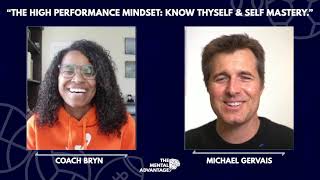
High-performance psychologist Michael Gervais credits his wife as his primary mental advantage, providing accountability and shared purpose across business, parenting, and spirituality. He describes his legacy goal as helping people live more in the present moment, and shares an online course distilling 16 core mental-training principles.
Chapters
Our ancient brain is scanning the world to find danger, right? And when you flip on social media and you look at some of the comments about your performance or your lack of performance, that it is triggering an ancient brain that our modern software is having a hard time working with. And that ancient brain is all about survival, and part of survival is fitting in, right? Part of the tribe, even if it feels make-believe, like somebody's that you don't know, it still touches that.
I'm excited for you to see this week's episode, but before we get to that, I have a message for you. If you're a parent of an elite athlete or a coach of a high-performing team and you want— you're looking for some help or assistance with making them more mentally resilient, perform with more confidence, be more consistent, anything like that, then this is for you. I have an 8-week program all designed to address exactly that, to help your athlete be at their best on a more consistent basis and not get tripped up by those little voices in their head and getting down on themselves for mistakes, but performing like we know they can. So what I want you to do is don't delay, schedule a— just grab a time on my calendar through this link and let's set up a time to talk about your specific situation and how what I'm offering in my 8-week program can help. Okay, so it's Brynn Drescher, www.melanniebarbera.com/freeconsultation. So click this link, grab a time on my calendar. I look forward to talking to you. And now on to this week's episode. Welcome, welcome, welcome back everyone to another powerhouse episode of The Mental Advantage Podcast. I am extremely excited to have this week's guest. Of course, I think I feel, I feel like I say that every week, but I am very excited to talk our guest this week, Michael Gervais. You name a person in sports and I bet you he's worked with them. He is a high performance psychologist and we're going to get into all the fun stuff and geek out all about the mental game. So I'm super excited. How you doing today, Michael?
Fantastic. And thank you for the kind introduction and, and being a small part of your community. So thank you.
Thank you. Thank you. So Michael, I know that you've been doing this for a while. Tell me how you got started in high performance psychology because I didn't even know that was a thing you could major in or specialize in. So how did that come about?
Neither did I. And so it started when I was 15. And this is me looking back. Yeah. You know, at the time I didn't know there was such a discipline of even psychology. And so when I was 15 years old, I was a young athlete and surfing was my sport of choice. Nice. And there was a difference between free surfing and competitive surfing. And so free surfing is more kind of, it's a hardcore sport where you pull into the heaviest situations. You don't talk about it. You don't brag about it, but you just, you do it. And then competition surfing on the other hand is there's judges and there's people watching and there's scores. And I couldn't bridge the two. And so when it came to be a competitive surfer and the competitions were on, I was a shell of myself and I could not access the skills that I knew I had control and command over. And so it was one day where it was a competition. It was beautiful conditions. It was about head high. It was around 8 in the morning. It was glassy conditions. I was playful surf, and there's only 3 people out in the water. And one of the gentlemen that was in the heat with me— and again, I'm back at age 15, he's I think he's about 18. And he paddles by me and he says, "Jervais, I surf with you every day out here. And I'm telling you, you got to stop worrying about all the things that could go wrong." And he just paddled away. And I thought, how does he know? How does he know that I'm like in my head thinking about all the scenarios that could play out negatively? And he didn't tell me what to do.. But in that moment, I thought, well, okay, he knew that. Well, let me flip it. And so I started thinking about the way that I wanted it to go. Now, looking back, that was like my first amateur, you know, cognitive restructuring. It was the first time that I, you know, went from a negative mind to a positive mind that I was at least aware of. And it made a difference. Now, that wasn't like this lightning bolt moment that was like, I need to get into psychology. It wasn't that. But it was an awakening that, oh, there's a thing here. And my— which I'm talking about the mind— I need to figure out how to get right. Yeah. And so it led me down the path to be interested in the inner life. And so that was— if you— if there was an origin, it would be that.
I love that.
I—
that's so interesting because the last episode I did of my podcast was The Gratitude Effect, and we talked about playing the what-if game, but instead of worst-case scenario, playing it in the positive, which no one does, right? Everyone's doing what if, what if, worst-case scenario. But I'm like, what if you did best-case scenario or better-case scenario? Um, so, and I love that you call it cognitive restructuring. You have all the terms that I don't have because obviously not a psychologist. Um, and I did have Scott on the show and he gave me a lot of other terms too, Scott Goldman, which was an amazing conversation. You— so in that, you figured this out, you had this moment. What was the result? You said it worked. So you said you were a shell of a person. I have surfed one time. I don't even think I barely got up. But it definitely is a psychological thing. And even just as that wave's coming, things are coming at you fast. So what— tell me a little bit about what you think it takes to be— I mean, you know, but to be like a mentally sound surfer, to like really help with that?
Yeah, I think it— I don't think it has much to do with surfing, this part of the story. I, I can answer the question, but I think you know what it feels like when you can't find the words, when you're a bit too nervous or rattled by something, and you're not authentically yourself. And, you know, I— we all relate to that. Yeah. And so that's essentially what took place, is that I had a moment and I said, I'm a mess. Okay, how do I want to use my mind to get into a better frame of mind? And so it's, that's essentially what happened. So the output is that I felt more grounded, more connected. I was more in tune with the present moment and I was able to access my skills. So there's only 3 things that we can train. We can train our craft, we can train our bodies, and we can train our mind. And the best of the best of the best, they're not leaving one of those up to chance. Now, I, as a 15-year-old kid back then, I didn't have any of these frameworks. But now spending time with world-leading thinkers and doers, they are deeply investing in all three, independent whether it's sport or business or arts, all three of those matter. And psychological skills training is, you know, is exactly what it sounds like. Just like you train your body, you can train your mind and we can do sets and reps. And there's another part of psychological development, which is self-discovery. And so that's the beauty of this science is that there's a self-discovery aspect and there's also a skills development and not to be to simplistic or reductionist, but when you, when you do both of those bits of work, knowing who you are, self-discovery work, knowing your purpose, having a clear sense of your vision of the future that you would like to inhabit, that work becomes the big rocks to get in the container. And then the mental skills work, like being calm, requires skill. Being confident is a skill to develop. Being— having the ability to refocus to the present moment is a skill. And so then this beautiful, complicated science is showing, like, what holds up in the library— library— the laboratory for these skills to play forward. And then how do they work in the real world is where I spend most of my time.
I love that. I love that. And you said the big rock, so I'm thinking of the experiment where you put the rocks in the sand and all that in the container. So that it can hold it. Now, when— and that was one of the questions I was going to ask you, Michael. When you— you've worked obviously with top names in sport and business. And with Pete Carroll, you guys have expanded beyond sport. Do you find there to be something distinguishing between an athlete and an executive? And I know some executives have been athletes. But if they hadn't, do you find anything to be different with that sort of mindset? Because you said the top minds regardless. But do you find anything to be different?
The, yeah, let's parse that out a little bit. The 1 percenters or the half percenters, the true tip of the arrow, tip of the spear folks, they independent of gender, they are more similar than dissimilar. So, and I know that what I'm saying is maybe, um,— I don't want to say controversial, but I'm stepping into, you know, I'm tripping a wire for people when I say that gender and ethnicity and they— I'm just— this is my experience that they tend to be more similar than dissimilar. And now they are more dissimilar than the 99%. Right. So there's this homogeneous kind of mapping that takes place of best in the world. And Part of what that is, is they know themselves and they commit to being themselves and they commit to the vision that they hold of what the potential could look like if they and their teammates were to pull in the same direction. They are uncommonly relentless toward it and they are not as interested in having favor or being liked than they are being true to authenticity and the mission. And the 99% of us, you know, are— people don't agree to this, but this is— I think it still holds up— is that we're more interested in fitting in and looking good and sounding good than being absolutely authentically true and pure to the shared vision of potential. And so that's why sometimes we don't like them. Yeah, that's why they don't fit in, because they're not trying to. And there's an interesting blend between narcissism and empathy that the half percenters struggle with. And so there's a bit of a struggle there because they know that nobody can do it alone, but they think they can. They're the ones that make that— let me say this better— they know that nobody does it alone, but they think that they're so special that they just might be able to. Oh, okay. You know, and so there's a tension in this narcissistic empathy place, um, and they are uncommonly, um, living in the present moment more so than others. And so those are just some of the threads, but I, I could keep going on and on, but those are some threads that keep emerging, certainly for the 1%.
One of the questions that came up for me when you were sharing was, how do— so obviously we're all striving to be more authentic, or well, let me say not all, but I think most people want to be themselves. That's what they say, right? They— we want to be ourselves. And so as an athlete, as a coach, as a, you know, a high performer, how do I initiate that self-discovery process, or what would be the best way to get started, you know, to get to know myself better so I can be authentic, to find the groove, to unlock any potential or anything like that.
So it's from clarity to conviction, you know, is kind of this mapping, if you will. And mental skills are the things that stitch in between. So once you have clarity, which is what your question is about, yeah, then to live with conviction in even the most stressful, hostile, rugged, high-pressure scenarios, that's where mental skills show up. So how do we develop clarity? There's 3 ways that I'm aware of. One is mindfulness and being quiet and still and, you know, creating the space to to truly know who you are and to know how thoughts in your own ecosystem work and how emotions work and how thoughts and emotions work together, like to really know yourself is the ancient practice of mindfulness. The second is journaling, writing. It's an enforcing function to get clarity. And then, the third is conversations with wise people. And those are the 3 practices that I found that hold up. And when I say hold up, the litmus test always for me are those that I'm fortunate enough to learn and work with that operate in exact environments, you know, sometimes the most exact environments, fast-paced and exact. And I'm also equally fortunate to be able to share those best practices with people in the business world.. And those are the 3 best. There is no shortcut. There's no hack. There's no tricks. There's no tips. There's no shortcuts. Like I said, it's the long yards and the hard yards of doing the internal work to know who the fill in the blank am I.
Yeah. I love that. Uh, there was, I've heard you say that before. There are no cheat codes. You know, everybody's looking for hacks. Give me a mindset hack. Give me a tip. Give me something so that I could get my mind around it so I can unlock that. And a coach friend of mine said consistency is the only cheat code, which is— but, and also it's an over-life thing. It's not an overnight thing, right? It's because we're ever-evolving. Like the LeBron James of the early parts of his career is not the LeBron James of today.
So you're going to have different consistency. How did you put it? It's an over-life thing, not an overnight.
Yeah.
Yeah.
So that's not mine, but I love it. And I was like, he's using it in a different industry. So I was like, I'm totally taking that for sports.
Yeah, that's sure.
Yeah. You know, because I'm like, that's amazing. Like, that's so true. Because with the mindset, right, everybody thinks like, oh, I just got to get that quick fix. How can I get to have the mindset of a Kobe Bryant? And it's like, that was developed with years and years of dedication and fierce focus, I would say. And practice.
Yeah. And practice. One of the things that, you know, um, that greats like Kobe, as an example, they were very— he, let's just use him right now, was very clear. He even named it, you know, Mamba Mentality, and put an emblem to it like a snake, you know, like, and it sounds almost childish to do, but it was a way for it to be concrete and real. And the, the potency behind practicing turning on the blank mindset, right? Your ideal competitive mindset. The first order of business is you have to know what it is. Yeah. So he put an emblem to it, a name to it, and then would practice switching it on. And it's easy to be in that mindset when everything's going well, when you feel comfortable and you feel like you've got an advantage or whatever, right? But can you switch it on when the plan is not working? And can you switch it on when you're bored? And, you know, can you live in that mindset in an eloquent way when it's called for? And that takes practice. But the first, to your question, is to be very clear about what it is.
Yeah, I think that's really good. And I mean, uh, you probably know about Todd Herman's alter ego effect, but if you don't— yeah, and then you have— I mean, because it's kind of similar, this idea, and it's different for everyone, of course, right? But it's like some players need figure out how to get calm. Some players need to figure out how to get, like you said, like more fierce. It's just what persona do you need? And this comes back to what you've said about authenticity. I need to know what I need to unlock, what's necessary to, you know, perform at the, at the level that I need to in that moment.
Yeah, I think—
oh, sorry.
No, no, go ahead. If I could just add. No, please. I want to be like really clear that most people want that. Yeah. But then, you know, wanting and practicing are totally different. And this is where, this is where this very beautiful science of sport and performance psychology is so exciting because the science is showing us how to practice it. And you know this. Yeah. Psychology is on Front Street right now. Yes, it is. And, you know, like, it is having a hopefully extended moment, because without it, we are going to feel like the world has extracted from us. Because that's, you know, this is a philosophical position, right? But the work that I'll share with you is that the world is, has bad actors in it. There are people that are not safe, right? There are systems in place that do not care about the individual's experience. Some would say even whole institutions. Yeah, I would imagine you would nod your head too, for sure. Yes, that, that is not interested in human flourishing. And so in that respect, the world can be very hostile. Yes. And will take. And I am not suggesting that we need to play defense. But what we do need to do is take up our space and to live in alignment with the principles that matter most. And when I say that, I say that with such regard for those that did that, that ended up being killed for it. Yeah, that ended up like making a difference, but paid ultimate price for. Yeah. And that's why I get fatigued and frustrated by those that go, yeah, yeah, yeah, I want to be authentic. And then they just go ripping beers and, you know, like listening to the greats of others or talking shit about other people and like, you know, flipping through Instagram. It's like, come on. I just get fatigued by it. And I don't see that in the half percenters. Yeah. As much as you might think is as common in your circle. Yeah. I'm not talking about you, Brynn, but like—
No, yeah, I know. I understand what you mean. Yeah, yeah, I think it's important to pay attention to that because I, you know, in this day— and so many coaches say this, right? Social media is the biggest, one of the biggest banes of our existence, you know. And obviously I'm not speaking on the pro level so much, but in college and younger sports, they're constantly saying, oh, it's social media, it's this new age, and players not really knowing who they are are constantly looking to like answer to this public that they have. And then you have these young guys like a Mikey Williams who already has hundreds of, maybe even a million followers and different things. He hasn't even played made one second of college or pro basketball. And so what do you feel that we can do as people like mental performance coaches and people in the mental game to help those athletes get— and I know it's like you're talking, it may come back, like you said, to the authenticity moment, but how do we do that for younger people that are so wrapped up in that culture? And if, you know, or what would your recommendation be if you haven't worked with that?
Population. Oh yeah, Brynn, it's a real deal. You know, in the pros, halftime, yeah, people are on their phone.
That's amazing to me. I'm hearing this and I'm like, I can't even imagine being on my phone at halftime.
Crazy, crazy. You know, um, half game— I'm sorry, at the end of the game, once the game's over, I mean, it's one of the first things that people check into. There's usually a team huddle, like a, you know, some sort of gathering, right, to either celebrate or clarify, you know. And And then after that, it's like there's some media, but before media, it's checking in on the phone. And so your question is about social media. And I don't want to sound old because it is a powerful tool. I feel like I understand the physiological cost to it, but also the behavioral cost, but also the upsides. There's some incredible upsides that come with it. I just don't know. Athletes that are properly prepared to have it be a two-way street. Even the generation that is coming up and they're native to it. When it's a two-way street, I think it's an incredibly dangerous proposition to think that they can handle and manage something that our ancient brain is not ready for. So our ancient brain is scanning the world to find danger. And when you flip on social media and you look at some of the comments about your performance or your lack of performance, that it is triggering an ancient brain that our modern software is having a hard time working with. And that ancient brain is all about survival. And part of survival is fitting in, right? Part of the tribe, even if it feels make-believe, like somebody that you don't know, it still touches that. So if it's used as a one-way street to share perspective If it's used to engage in curious conversations about topics, right, then that would be, I think, a good, healthy starting. But to check in to see if you're okay, even when you don't think about it that way, what you're essentially doing is externalizing your self-esteem. So you're giving your self-esteem, your self-confidence, your self-power, fill in the blanks, to them. Yeah. And even if you don't fully abdicate it to them, you're leaving room for them to influence it. So I just think it's, um, there's a real challenge in there, and folks like you can, can help give context and some strategies to make it work.
Yeah, I was talking to one of my NBA athletes, and, uh, he, he was just like, yeah, but it doesn't affect me. I'm like, it affects you. You don't understand. You're reading these things. I'm like, why do you read it? Like, you know what I mean? These are people that don't have one ounce of basketball talent, most likely, and they're sitting here and, you know, but it's like, well, but it makes me stronger to read it. I was like, maybe. I was like, I understand where you're coming from. What do you say to that? It makes me stronger to read it.
It makes me stronger to know it's out there. I'd say, Brynn, same thing you said. Maybe. Yeah, maybe. I would also like, um, I'd be very clear that there's, there is also another cost, which is the cost of dopamine. There's a cost of attention. There's the cost of distraction management. And so, one of the things that happens that social media and the scientists that are behind it, the psychologists and the scientists that are behind it, is that they are masterful at grabbing attention. And it is 3-second attention or, you know, half a second attention. And that is actually training and conditioning our minds and our brains to want new stimulus that is not deep. And on the playing field, flow follows focus. And so deep focus is the entry point into flow state. And flipping through social media, Instagram, with quick hits of fractional moments of focus is actually detraining and deconditioning away from the most optimal state we can be in. And so those are the hidden costs.
Yeah, thank you. That's so good. I never thought about how it might be affecting them on the court. I mean, obviously the psychological component of taking the opinion, but the very nature of social media actually making it harder for me to focus in the game because of the way that I'm training my brain. I love that. Thank you for that clarification. That's good. I'm going to use that with my athletes. When you talked about externalizing self-esteem. I think that's so important because I call it pretty girl syndrome, right? Some of the people that have the lowest self-esteem are some of the most attractive people in our society because they've constantly gotten, um, edified, I guess, or, you know, reinforced their esteem based on someone else's opinion. And so they don't have enough time to develop an opinion of themselves. And so while it, you know, it could be called pretty person syndrome to be gender neutral, but The point is that it seems to be that, and this is with athletes, right? You see Naomi Osaka who's talking about, "I don't know who I am." She's struggling with her own image as she's the number one in world's tennis. So tell me about when you become number one, Simone Biles, Naomi Osaka, LeBron James, multiple names in sport, What, and you're talking about the half percent, but what do they need to do to handle that better? Like when she says, I can't talk to the press, what are your thoughts on that? And then what do we do to help them? Or is it something that the press needs to change? Do we need to change the way that we handle those athletes?
No, it's not our responsibility. You know, like the, the masses are going to, um, ask for what they want. You know, I don't— if I take the athlete's perspective, um, I hear one athlete in particular goes, I cannot stand fantasy. It's like they— it's the most dehumanizing thing. Like, I'm a real person, right? So, um, I don't think that the path forward is to educate, you know, media on how to treat the athlete, you know, or fans on how to treat athletes. I feel like that's like throwing pebbles in the ocean, you know, while it could make it be beautiful, right? You know, the philosophy of humanity was to be more interested in humanity as opposed to just output, right? But it's complicated. I think for, for the athletes, most of the half percenters know that they are a half percenter before they're crowned, right? And so it started well before that. Their identity was foreclosed at a young age, right? That I am a fill-in-the-blank only. Exactly. You know, I am a tennis player, right? You know, like, you ask, you ask an 18-year-old or 17-year-old, like, oh, tell me about yourself. And if they say, oh, I'm a football player, yeah, oh man, that, you know, we're gonna—
that's the first thing you said, right?
We're gonna pay for that later, you know. And so, uh, long way of me getting to, um, When humans are— let me start over with that. Humans are multifaceted, very complicated, dynamic, psychological, spiritual, physiological organisms. Like, it's, it's so complicated. And to reduce it down to just a performer, just somebody who is like a entertainer, then it becomes super complicated. And when that becomes threatened, then their entire existence is threatened. And so, you know, the best thing we can do to support those athletes, and if you're a parent of one or a partner to one or you are one yourself, is to answer the question, who am I? And then answer it again. No, really, who am I? Right. And then answer it again, like, okay, I'm more than that. So who else am I? Like, what? So you keep going. And if you did that practice and say it was a 20-minute practice, right? Who am I? And that's all you did. And you did that for 20 years. You get somewhere.
Yeah. So I mean, you know, good news, everybody.
Yeah.
You go somewhere. Yeah. That's all it takes. No, I think that that is so helpful. I do an exercise similar, not 20 years, but an exercise similar with my athletes, which is I have them list out all the things they are, and then I make them cross off anything that's external to them, like as an activity that they do, and then say, okay, what are you left with? Right? And it's, you know, it's just a way of trying to get to that, like you said, that more authentic identity. And, you know, they're like, wait, I can't be this? I'm like, well, I'm not saying that. It's just, you know, that's what you do. So what kind of person signs up to play a sport? What kind of person is a good, you know, is a son, a good son, you know, that type of thing. Like, let's get to the essence of who you are versus—
there you go. That's, yeah, that's the good stuff right there.
Yeah, it's so— it's, you know, but so we know that the identity foreclosure is huge. And, uh, how do we help them? I know you're talking about get to know each other and the multifacetedness as athletes transition out of sport. And this, and we know, and I think this needs to be said because you also work outside of the world of sport, this happens with CEOs, this happens with anyone who over-identifies with any particular thing other than, like you said, the multifacetedness of their beingness. So how do we help people? And if it's just that exercise, and that's what it is, but what do we do to help that athlete as they're, or that person, when they're transitioning out of that role?
Well, I think your exercise is brilliant. And I think that there's probably 50 ways to get at that exercise, you know, but that's a first principle, which is let's really understand who you are and how you identify with being you independent of what you do. So the, the work is to go from the being and let the doing flow from there. So that's the work, right? There's lots of ways to get there. And then the second bit is when you ask and you're in conversation with these folks, and I'm not talking directly to you, but like moms and dads, and you know, like when we're in conversation with them, ask questions that are not about the doing, you know, ask about the being. And what my son has just turned 13, and I think you would recognize that the, The reason sport— I'm sorry, the reason kids leave sport is the car ride home.
Yep.
And so our conversation on the car ride, just knowing that science, is that it's like, uh, what'd you enjoy? What was it like when you went for it? What part of the game scared you? What part was really fun? Where'd you laugh the most? You know, what, what, what did you end up learning that you can carry into practice? You know, what— does something surprise you?
It's all about the experience as opposed to— you're getting real answers here.
Oh yeah, well, as a 13-year-old, like, it was good, Dad. It was good. That was good. Yeah. You know, but I'm, I am relentless, you know, like, you know, and so I'm trying to be as clever as I can, and he's like, Dad, I'm fine. It's good. It's good. But it's setting, it's setting the foundation that I am, I am more interested in the being as opposed to the output. And as a, uh, hopefully important figure in his life, he's getting that messaging that the way I experience me doing things is more important to my dad than whether I scored, what the score was, figure, you know, fill in the blank.
So yeah, that's— I love that. I, when I was running track, my mom used to time my races. She was like, you know, her own stopwatch, and she had her thing. And I was like, oh my God. And then she asked me, why do you think this girl didn't run this way? And I'm like, I don't know. Like, you know, these are the things after the meet. And I love my mom, and she came to every meet, and I— she was very supportive in that way. But yeah, that's what I didn't like was like, I don't want to revisit what happened in that race. I don't want to think about it right now. Right. Like, like in, in the sense of like what happened, why didn't this happen, whatever. But yeah, no one ever asked me, did you enjoy the race? What were you feeling like, you know, when it was over? Like no one ever asked me those kinds of questions. And I think, you know, I just, I was so focused on achievement when it came to track and field. If I wasn't good, you know, if I couldn't win, then I didn't feel like it the same, right? It wasn't as enjoyable. I got all these medals of my time in track, but you know, the things you remember is not those races. It's the time with your teammates.
It's the, you know, in the moments, no matter what level of sport you play.
What was your event? I was 200, 400. More 400 though.
Let's be real.
Oh, more 400. Yeah. Yeah. More 4, more 4. I had run 3 a meet usually, and I was not the most mentally tough athlete, Michael. I was more focused on the fast girl to my left. I even still remember their name. Well, one of them's still my friend, but, uh, she was Hallie on the right and Lindsay Martinson on the left. Oh, didn't mean to say her last name, but anyway, uh, but those two, those were like my biggest competition that I remember from high school. And I just remember thinking, oh, she's so fast. And my coach said, did you ever think that maybe they're thinking that about you?
And I was like, no. I know, it's, you know, and they're, they're their technique and speed and reputation have nothing to do with your lane. Right, exactly. Unless you bring it in there, you know, and that now, now we've got two people trying to run your lane, you know, it's, it's so easy to see when we've got distance on it, right? Um, but, and that's one of the gifts I think that you're giving and providing to your athletes is the relationship. It, you know, the relationship matters for 60 to 75, maybe even 85%, depending on the research you look at. Of the impact for the change. Yeah. And so, um, so yeah, it's cool.
I think I remember you on Clubhouse telling a story about an experience with a coach that wasn't very kind to you when you were coming in to talk to his team. Um, yeah, yeah. Okay, I wanted to talk to you since you are in the mental space, knowing that some coaches are not so— okay, well, let's say this, uh, everybody says, or a lot of people say, sports is 90% mental, 10% physical. Yet if you pull up their practice Show me where you devote any time to the mental game. You won't find much. So as you go into these places, what do you feel like— how could— and I think I asked you this. That's what it was. I asked you, what do you do to help a coach, or what advice do you have to people to help a coach kind of get on board where they don't feel threatened, kind of in the Ted Lasso sense?
Isn't that a funny— it's a fun movie, isn't it?
Yeah, it is.
It is. My experience is, first of all, is that that's not what sports psychology looks like in the, in the pros. Yeah, you know, just for reference. Okay, like, that is full comedy. Okay. Um, all right, so the question, the question is, um, I lost the question.
I was thinking of Ted Lasso. That's okay, I know I distract you with Ted Lasso. Uh, what advice do you have, uh, to gain favor with the coach so they don't feel threatened by your presence or to at least give them the leeway, to give you the leeway to make the difference for their athletes?
Hmm. You know, I think the last time I worked with a coach that wasn't genuinely curious and interested in wanting to learn and add to was that first coach experience. And I learned so much from him because You know, and I'll share that story in a second, but I don't know how to answer it because I've been— I think I've either been lucky or I have been really selective with the coaches that I think I would be a good fit with. And I'll share two stories. One is it was a world-class surgeon. He's a neurosurgeon and he's got an incredible reputation. I was, um, we were in business together and it was this beautiful business that we set up and it did really well. And I'm very thankful to be a partner with him. And I asked him, I said, how are you so good? And he said, um, I think I'm, I think I'm good technically, but I think I'm far better than just about anybody selecting great patients. So I said, what do you mean? He says, Mike, I know who's going to have a good outcome based on their psychology, based on their history, based on their kind of vibrance about wanting to get back to the thing that, that their— the surgery is pulling them away from, right? And like, I'm looking at their physiology, their physical nature, their structural, you know, nature, and I'm also looking at their psychology. And I don't make decisions for money, I make it for outcomes. So I, I'm selective with my patients. I was like, oh God, that's awesome. Yeah. And that, that early on informed me to be very thoughtful about— coaches are not my patients, but they're the partners that I go into business with, essentially, on a team, and/or CEOs or artists or whatever. Like, I want to be very particular because I am interested in what could be. Yeah. And it— I can't do it alone, and hopefully he or she feels like they can't do it alone, and we need each other. And then we use our intelligence and our scrappiness and our creativity and our togetherness, you know, to, to get into the foxhole to sort it out. So, um, the second story is when I first got into pro sport, right? Um, A coach, like, I was so set up and the coach kind of bagged the athletes. It was in hockey, bagged the athletes, got them sweaty and agitated at the end of practice, like extra sprints, if you will, on the ice, brought them into the locker room, had them stay in their gear while he and I had a 3 or 4 minute conversation. This is the first time I met the coach. The GM kind of force-fed this relationship. So, so I didn't, I didn't know better. I was like excited to, you know, have a team that I was going to work with and they were doing pretty well in the league and, and I just figured everyone was like me, like, let's just be humble and get after it and figure it out. And, and so he bags the guys, I'm walking in kind of bright-eyed, doe-eyed. I have no idea what's happening. I go into the, into the lion's den and he's having this 5-minute conversation with me about really nothing. Yeah. And I'm kind of like trying to be eager and sort it out. Like I'm listening, like, you know, with— right, like I said, big eyes. And I'm, you know, trying to be as thoughtful as I can. And he goes, all right, let's go. Let me go and introduce you to the boys. And I was like, oh, okay, that's what's up. Oh, that's what's happening. Okay. And I'm trying to gather myself, you know, and, and like, here I am, like, I'm gonna say something. Like, what am I gonna say? And the coach walks out and he's got this massive presence and guys are looking at him like they want to kill him. Like, why am I still in my—
have you ever smelled hockey gear?
Like, I have not. I'll tell you, like, once you smell it once, you're like, okay, like, that's a smell. And they're in their gear, wet, now cold, right? And, and smelly and agitated. You know that feeling when you haven't eaten and you're all nasty. And so And they're looking at him like they want to kill him. And he goes, all right, boys, appreciate you. Here to introduce you to Gervais. He's our shrinker. So if you're effed up in the head, go talk to him. Are you flipping kidding me? So I'm standing there, I felt like I was like 2.5 feet tall, completely naked, right? You know, and the boys are looking at me like, oh, you just got you just got sent one. Like, dude, how do you come back from this? And so, um, I can finish the story, but it feels like I brag at this point, which I don't want to.
Like, that was— go ahead, I want to, I want to hear the whole story.
So that was— but that's the essence of the story. Like, I was absolutely blindsided, right? And, um, I'll tell you how it— I'll finish the story here, but I didn't need the gig.
Yeah, I remember. This is the, yeah, the spin, right?
I didn't need the gig and I didn't have money, right? I did not come from— I don't come from money. No one in my family went to college. They didn't. And here I am, like, in graduate school and a PhD. Nobody in my family, you know, we're like, honestly, like, we got issues, okay? Yeah. Well, that's why I'm in this field, probably.
So, so we teach what we need to learn.
Oh yeah, yeah. And so there I am, and I was like, I definitely got a degree in— and this is going to sound like I'm hard, but I'm not— but I grew up in surfing, okay? And it's a punk, off-access counterculture. You got to come strong with like the real stuff or you're laughed out of the crew, you know? And I'm not talking hard like tough guy, but like be about it. And so No chance was I selling my essence for this clown. No chance. Right. And so I was going to get bounced right out of there because I could not be leveraged by money because it didn't matter enough to me. And so, and I'm going to say it again, I needed the money. Okay. Okay. Let's be very clear. So I looked over, I looked I looked up and over at him. He's a large human. Yeah. I said, great, coach, my door's open for you. I remember. Yes, that's it. Right? And so the locker room erupts. You know, the Gatorade bottle was like thrown in the middle of the room. Boys are hooting and hollering like, coach, what are you going to do? You know, it's one of those moments. And he stops midstream. And I didn't know if he was going to turn around and choke me or if he was going to like, you know, bark me out of the room. And he kind of gives me this look like, good for you, kid. You know, like, I think you just made the team. You know, so, so anyways, that's like street psychology before sports psychology, you know. And I say street like from the surfing world.
Yeah, I got you, I got you. I love that, I love that story. I think there was a moment too with your mentor too that told you never to take a job that, um, I think you had another part that you told about, not maybe not that particular story, but it was something about your mentor telling you?
No. Yeah. So I called him. I called my mentor when I got my first gig in pro sports. And, and he was like, you sound really excited. And it was, it was this gig I was talking about. And so you've got a good memory. Yeah. That's cool. And so I said, I said, yeah, you know, pretty excited. But and he says, call me after you've been fired 3 times, because you've stood for something. And I was like, Okay, dude, like you've been fired. So that's your way of rationalizing it. Okay. And now looking back, I'm like, yeah, that's cool. Yeah, I love that.
Be about it. Yeah. You have to be able to. I had a situation where I was working with a college team and I was doing one-on-ones with their athletes and the coach is like, who said that? And I was like, I don't, I don't want to tell you who said that. Like, you know, like, that's not, you know, right? So we had this big thing and the coach was like, well, I would have never let you meet with my players if I knew that you weren't going to. And I was like, well, I would have never met with them if I knew you were going to ask, you know.
This is the worst place for like coaches to put our profession. Yeah. And that, that's got to get so clear up front.
And that was a learning lesson for me because I did not establish it.
You gotta establish it right up front. I learned the same thing. And, and so here's, here's another good story, right? So coach says to me— this is in a different franchise, different sport, even, uh, one of world's best— and, uh, it was day one, and he, he says, okay, Mike, what's the plan? Let's go! This is great, I'm so excited you're here. Like, let's go. Yeah, because what's the plan? I said, I need, like we talked about, you know, over dinner, I need like 3 to 6 weeks, somewhere in there, just to understand, right? Like, to know where the bodies are, to know what the tension points are, to know where the strengths are. Like, I need time. And he goes, yeah, yeah. Oh God, that's right. Yeah, that's right.
Okay.
Um, let's just circle up at the end of the day though.
I was like, great.
Okay. So we get to the end of the day and he says, he goes, he goes, okay. So, um, Mike, what'd you learn? What'd you see? I go, "Coach, I thought we talked about this." And he goes, "Yeah, yeah, yeah, yeah, but just give me something. Like, you're full day. Like, I just, I wanna—" And I was like, "Coach, like, give me some time, you know, like, give me some perspective." And what you described was like the individuals, like what did he or she say? And the same, what I'm just saying is, yes, I've been burned there. And the same holds true for like the organization. What'd you see at the organizational level? And I— damn it, I did it. Yeah, I did it. I said it. Yeah, I wanted— I knew, I knew it, I knew it. I shouldn't have, like, and I said it. And now I didn't betray a person, right? But I betrayed my code, and my code was I need time. And so I shared the thing that I thought was the easiest thing that would kind of get me out of this bind that I was in. And I'll, I'll never do that again. I'll stay true, you know, to what I said I would stay true to. And I said like, hey, you got real challenge between this department and that department. Yeah. And I'm sure you know that, coach. And he goes, what do you mean? I was like, oh, oh yeah, I hear. What am I doing? Right. So he says, you know, what do you mean there's a problem there? I said, are you serious? Like, is this new to you? Right. And he goes, I don't think there's anything. And I was like, okay, um, I just need more time then, coach. And he goes, no, now you started. And I was like, oh wow, I'm in now. And it ended up being, it was a major issue. And his resistance to hear it that first day was an indicator of his resistance to actually, yeah, for sure.
Yeah.
That's so, yeah, I thought what you're describing that moment where, when I was being asked and then feeling like, yeah, I definitely felt like I betrayed my code as well in that issue because I was like, you can't get the locker room back if all of a sudden you're like, oh, the dude is the gal or the dude or the person that's running up the coast, like, you can't— you might as well give them your shoes back, right?
I was like, what do you think I'm having conversations with them about that you can't trust? I was like, I don't understand. Like, this is— but it was a learning experience for me because I had never, you know, I just assumed that, you know, it wouldn't be asked. And then, you know, in sharing, just like, hey, we have some general situations here, you want to like, you know, I was like, who said that? I was like, what? Why do you need to know? You know, like, that doesn't matter. It's like, no, well, I'm paying for it. So it was a learning lesson. And actually this coach has come back and understands now. And it's just like, if you can give me the general principles that you'll be talking about with the players, I don't need to know who said it. And now we're on the same page. But before I didn't establish that. So that was a great learning lesson for me. And I'm so thankful for that. And because it was, you know, it was on me, like, you know, I'm always practicing 100% responsibility. What could I have done differently? It's not about blaming. And I, you know, obviously we talk to my athletes about this as well. So because, you know, it's all about responsiveness. So you've worked with Pete Carroll, and you, you probably are familiar with Trevor Moawad, who I just read his book about neutral thinking. And I, you know, I gotta say, my only criticism is I'm like, I don't know if that's neutral. But what do you think about that neutral thinking? And I'm not to criticize Trevor, but like this idea of bringing everything because I do, I like his analogy of you can't go from negative to positive, you got to go through neutral. So I like that, but I still feel like a lot of what he was suggesting was still positive thinking. Like, if I think I'm going to the Super Bowl, to me, you know, or I'm playing in the Super Bowl and I'm going to execute my game plan, I don't think that's a neutral thought. I think that's a positive thought, but I could be wrong. So semantically, how do we help athletes shift into that mindset from negative to positive or to negative to neutral to positive?
Well, I think that there's an underlying principle that's really important, which is there's two ways that research has suggested to, um, that have good evidence to work with our thoughts. Okay. One is cognitive behavioral training, and there's decades of research around how and what that is. So cognitive behavioral training really is about becoming aware of your thoughts and emotions and having and employing specific skills to work with them, to guide them, to shift them, to nudge them, to wink at them, you know, and, and so that's very much a cognitive behavioral approach. And then the other is more of a mindfulness or an acceptance-based approach. So acceptance, meaning like accept and commit to action. And mindfulness, both mindfulness works across both of them. But one is more of an eloquent judo, to use your earlier language, to work with thoughts. Like they're just thoughts. It's just a thought. And it's not quite working the way I would like. That's interesting. And then just kind of moving to the next, right? So that's more of an acceptance that there's a thought. I am not my thoughts. They're just things that are there. And one of my friends says, one of our colleagues says, yeah, everybody would like to have good thoughts, productive thoughts. But what are you going to do when you recognize that one's not quite working for you? And so the acceptance commitment approach is saying it's just a thought. And then the cognitive behavior approach is saying that thought, I know this thought, this thought is not ideal. Okay. Let's replace it. Let's, let's let go of it and put something else in its place that's more productive. And so both have really solid evidence that support it. There might be a little bit of a nod to a greater efficacy for the acceptance approach. And so it is, this is what's really fun about the science and the art is when you know your client and you've got 2, 3, 4, 5 different ways that are theory-evidenced, structured-based to help them, you know, that part of the quote-unquote magic is finding the right fit. And so if somebody is really dogmatic, let's say, and like, no, I don't want room for negative thoughts, right? I don't want like, and you know, when I start up negative thoughts, like, man, it's like a drop out of an elevator. And all of a sudden, like, I mean, I'm in a spot that is like Mike, I'm telling you, I'm a mess. Okay, we're not doing probably the acceptance bit, right? They say, right, let's catch it. Let's be ahead of it. Let's front load it. Let's be on top. And that just requires a lot of work, you know, Mr. Mrs. Athlete, like, what do you think? Okay, good. Let's do it. So I'll just go to the science and I'll stay there.
I love that because it also speaks to the knowledge of your client, right? Because relationship is so important. Um, so many people say, what can we do for these athletes? And, you know, there's a whole thing with sports psychologists versus, you know, or psychologists, psychiatrists versus mental performance coach versus somebody who read a bunch of books or whatever. And then the harm of all of that. And I'm not against any credentials, but I do believe that there are certain people that can reach people regardless of credential. What do you say about that? Obviously you have a different language than I do, and there are certain levels where it is going to be outside my pay grade. But outside of that, what do you say to people that are like, it's got to be a sports psychologist?
Okay, I think there is— the relationship is at the center. And I think that there's not one solution that is ideal. Now, that being said, I am favorable to being the most trained we can be because it's so complicated. And so part of the training, wherever we are on the spectrum of care and the, and the, like the responsibility we have, right, is to know when we are out of scope and to recognize the difference between general anxiety and thin-slice performance anxiety. You know, like to really recognize that because it's not as easy, you know, as it might sound on paper. Right. And to recognize, like, to be able to spot bipolar or borderline or obsessive-compulsive versus overworking, you know, and so, you know, there's, there's, I just say we've got to know kind of where our scope and practice is. And then that, that takes care of so much. And there is a right fit between psychology and mental skills, you know, psychologist and mental skills practitioner. There's a good fit there. Yeah. And, um, so I, I, you know, I don't get caught in that conversation, but I will wave my arms a lot when somebody is not clear about what scope looks like for them and those that don't want to be in a community, but think that they hold the secrets and the answers, and it's my relationship or whatever. Like, I start waving my arms pretty, pretty flagrantly at that point.
It's that whole thing of patient-centered care. If you care about the person that we're treating, then it doesn't matter if it's not about you. And like, you know, and I think this comes back to the coach conversation too. Like, it can't just be about like, this is about me and this this is mine. It's like, how can we help? Now, I have said this before, and I'm curious what your thoughts are. If you are not tapping into your mental skills or your mental game, you are leaving potential on the table.
Do you believe that? Oh yeah, flat out. Unless you're a narcissist. Say more about that. So if you truly are narcissistic personality disorder, All you gotta— or even— so NPD is rare, you know, but if you have high narcissism, but you're not a full-blown narcissist, and you have— but you have high narcissism, they don't need mental skills. They just need to have the lights turned on and people pay attention to them. And they are finally at home. Got it. So mental skills work for just about everybody else.
Got it. Yeah. Okay, okay. Let's see, there was— oh, what is one thing that you do not like about this side of the game?
The psychology part of the game? Yeah. Okay, there's actually— there's lots of challenges. You know, for context, it's a beautiful science. Yeah, I think it's one of the most complicated, beautiful, nuanced science. Like, I love it. Yeah. And I love because the challenge is that it's invisible. And but you know what, physics is invisible too. We, we know gravity exists, right? You can't see gravity, but you know it exists because you see the artifact of it, right? We can't see the mind, but we see the artifact of it. We see output, behavioral output. And so I love it. And I will, I'm happy to rattle off from that perspective. Some of the things that, you know, challenge me. You know, one is that I think we've set up— you know, when you— when you— when the boat launches the dock and it's 5 degrees off of its heading, the compass is just kind of just 5 degrees off. Yeah. Well, once we've been sailing for, you know, 24 hours, that 5 degrees has turned into, you know, 15 degrees, right? I think we launched from dock as an industry 25 degrees off. And what I mean by that is that we set it up that, okay, um, we are going to diagnose and we are going to work from a deficit model because that's the medical model, right? We're going to work from that model. And the second part of it, which there's a place for that, right? Please, you know. But the second part of it is that Somehow we have adopted the best practice that we're going to go to a private setting where nobody can know what we talk about, and we're going to have a special little safe relationship in here. Yeah. Holy shit. Like, that means no other folks are like part of our team. And hey, listen, as soon as it stays in that comfy little couch poorly lit room. And, and we're as, as mental skills providers and for as a sports psychologist, we are hiding underneath that veil of privilege and confidentiality and secrecy. And I added that third word that we will never move out of the shadows because we're purposely putting ourselves there. Got it. And so to be part of the team and to have very clear boundaries between what is the inner sanctuary of our conversations and what our team collaborations— that is where we get a flywheel effect. And I do not— I never want to work on in a team setting where, oh boy, there comes Gervais, he's working with the headcases, and you know that, right? So we've got to set it up. Yeah. As we launch from the dock that, you know, we are pure and true to the mission of helping people become their very best so that we can do that together. Wow. And so that, that's how— that's, that's one of the challenges I have with the field.
No, I'm right with you. And when you mentioned diagnosis, I talked to Scott about that too. So we were on the same page. But like you said, there's a time and place for it. But I love what you said because I'm all about the proactive approach and being a part of that team environment, like you said, because that's the idea. They always think like, you know, a lot of teams like, we have a sports psychologist, go talk to them if you need to, versus we're working with the team, we're doing activities, we're doing whatever. And this is also available to you. And so I definitely think it needs to be a multi-pronged approach as well, and it needs to be out front and it needs to be championed by the coaches. Et cetera. So I love that you said that. Do you believe that the coach has to live the principles for the players to follow suit? Yes. Full stop. Nice. And how do you do that? Do you mean like the coach too? I mean, are you like having to have like, I mean, I obviously those are separate, but yeah.
How does that, how does that work? Yeah, sometimes. Yeah, you know, I think that there's a dual role challenge that sometimes presents there. Like, who is the client is really important. And so, you know, if the coach wants to do the work, cool. If not, they need to be about it, do it with somebody else. They need to— maybe they're already a Zen master and, you know, they're teaching Yoda lessons. Like, I mean, but they need to be full stop authentically them. And And they need to fundamentally believe in the value of investing in the interior. Now, for, for coaches, let's call it the non-progressive 30-year-ago coach, right, that did everything from life skills, psychological skills, technical skills. They did massage and stretch and strength and conditioning and, you know, strategy and mentorship. They did everything. Well, they haven't— those coaches that are still around today, um, that might not really understand the applied science of sports psychology. Those are the ones that either, like, just don't know better, and I don't see— I don't mean to be rude, but they just don't necessarily know what we have to offer, or they really are more interested in control and ego, you know.
And so those are not good partners. Yeah, absolutely. So I love that about being selective too, like you said, like, yeah, finding the right people. Because yeah, in the beginning you think it's about the money. All right, so we're at the 1-hour mark. I have one more big question and then we'll get to the thing, uh, well, two, but we'll get to it. Uh, what is the number— what's a question no one ever asks you that you wish people would I know that's a weird question, but yeah, what's one that's been interviewed a thousand times?
So I'm just curious. I don't know, I've really enjoyed your conversation, our conversation. You know, I think, um, let me just think for a moment. A question that— one that I always get nervous about when I ask people, like, right, you know, like this question is, uh, what would you name your boat? You know, like a silly little fun, like, you know, okay, if you were a WWE wrestler, you know, like, what would be your name? You know, like, every once in a while throw those kind of really— yeah, you know, like, whatever questions.
Like, I might have to add that to my, uh, what would I name my boat? Well, you know, mine would probably be Brynnergy because that's what people know me as, like, my energy. It would be Brynnergy.
So That's too damn easy.
I get all like— S-S-Brennergy. I don't know. Well, the first thing that came to me was advantage, but I'm like, that's not real. That's not true. I don't know if I would. So, but Brennergy, I think that's something that I really, I don't know, like everywhere I go, people are like, I love your energy. And I don't necessarily have to be the fullness of who I am all the time, but it's always something people have noticed about me. And so, and I didn't coin the term. I didn't start saying, call me Brennergy or anything like that, but people started saying it. So I was like, I love that. Yeah, I'm going to keep it. So yeah, I think it would be burn energy.
What would yours be? Yeah, I don't know. I've asked it a few times and I have a hard time thinking about what it would be. So that's why I brought it up.
Like, it's a hard one for me. Yeah. Okay. Well, when you figure it out, you let me know.
I'll send you a note. Hold on. Let me ask you, let me answer this really quickly. I know we're up on time, but the other, the other bit that—
Oh, I'm not in a rush. I just don't want to keep you.
So let me know if you're good. Yeah, that's cool. Is that folks I've been noticing that I've been answering this question much more lately, which is like, okay, so Mike, what are like some of the common threads of, you know, high performance? And we, you and I kind of talked about it earlier. And the one that is, I think, the most true in my life, yeah, not necessarily in their lives. And I'm not saying I'm a half-percenter. I'm saying in my life, I do feel like I am working as hard and smart as I can to explore my own potential. I wouldn't be enjoying the fruits of those labors if I did not have the deep commitment and love from my wife. So, my life partner has my back. And, I can't tell you the freedom it's given me. Wow. At every time when I've been scared or nervous or unsure, or because there's so many decisions that, you know, as a, you know, just as an adult that, that I'm making, like, and she is the one. And so like, that safety net has been radical for me. And so I wish that for everybody.
I really do. Does it have to come in a romantic sense? Or you just mean like having somebody who has your back?
You know, I think it's— I'm super fortunate that I get to have all of that under one roof. Nice. And, um, so that, that part I think is incredible, that I get to have this full dynamic. We, you know, we've got shared lives in every part of the human experience together. And so, um, meaning business and parenting and romance and finance and spirituality and, you know, like, all of that We're solving the hard problems of humanity, of humanness together.
I feel like in a roundabout way, you answered my last question, which is what is your mental advantage? I think you just did.
Your wife. That's it. Yeah. Yeah.
Nice. Love, like unconditional love. I love that.
That's so great. And that does not, at least in my, the form it's taken for me, both from a mentor standpoint as well as my wife, It's not easy. It's not like, yeah, it's soft. It's like accountability. It's— there's compassion that it's rooted in it and empathy. But there's also like standards that, hey, we promised each other and you promised yourself. And yes, at the same time, like smart questions like, so What are you feeling about this, Mike? You know, like, right? So it's having somebody that is like just, quote unquote, feel— has my back.
And, um, I just feel super blessed by that. I am gifted by a partner of the similar, and the biggest thing I think is having someone for me is that, that, that holds me to the standards that I hold other people to. Like a lot of times I'll say something and they'll be like, "Don't do that to me. Don't turn my words around." It's like, "Yeah, that's true." Someone said, "How you do anything is how you do everything." I'm like, "Okay, yeah, I do say that, but don't." So yes, absolutely. I agree with you. Okay. Well, Mike, to be respectful of your time, we're going to get to the rapid-fire questions. I'd love to have you back sometime because I'm sure I could talk to you ad nauseam about all of these subjects. Thank you for the fun. Yeah, absolutely. Okay. These are the hard-hitting questions, really personal. You probably haven't been asked them very much. Uh, what is your favorite snack?
I have not been asked that question. Uh, yeah, favorite snack, let's go in my head. I'm going like, is it salty or it's not sweet? Is it savory? It's popcorn. Regular popcorn, like just butter and salt and all that good stuff? Yeah, I don't even need butter. Like, I just like something about the texture of it.
Okay. All right, popcorn. I like it, but then there's a point in the middle of the bucket where I'm like, I don't want any more of this.
I, I recognize that point. It's usually— but, and then I, I take another 2 or 10 bites, and then I pay for it afterwards, and then that's it, right?
Yeah, exactly. Yeah.
Okay, uh, favorite flavor of ice cream?
I'm not an ice cream fan.
Not an ice cream fan. Okay, I go from— I go vanilla though. Um, you know, no, strike that. Like, it's some sort caramel, salted caramel, something.
Yeah. Are you a dessert person, like cake, or do you just not like sweets?
Yeah, sweets don't really kind of—
yeah, yeah, you're one of those. I know you're kind. I'm in a relationship with one. It's terrible because I can't share.
I'll eat it, but it's not like— that's not the thing that gets me excited. I like— but like a properly, um, masterful meal. Yeah. Where somebody has really taken their time to put stuff together and you can tell, like, the way that the whole thing is prepared and like, yeah, I think that, that chefing and not, not that I love that.
Yeah, I love that part of it. Nice. Nice. Yeah. And you can, you can taste it in the food. So yeah, absolutely. All right. This question. Oh, favorite superpower or superpower you've always wanted and why?
Okay. Favorite superpower that I've always wanted. If you've ever won. Well, I'm more of a fan of Batman because he's a normal dude, you know, that cracked it and had resources and really put his money where his mouth is and was like pure in that sense. And maybe I don't really know Batman very well, but I like that one. And if there was a superpower of like, Getting to the truth. Yeah. Because I think that the truth for folks combined with like being present, like I think if those two, like if there was a superpower, like, okay, we're going to get to the truth and we're going to be present with that. I feel like people would, we'd alleviate suffering. We'd get to some real stuff and we probably wouldn't need all these other superpowers.
Okay. I think those are one of my favorite answers. Okay. All right. You didn't say read minds, which I always think is weird when people say that. I'm like, do you really want to know what people are thinking?
Thinking, but okay. I can already—
yeah, I can already do that. Yeah, yeah, that's true, right? I was like, hello, I do that for a living.
This is what everyone— like, what? Like, they do this to you all the time. Are you reading my mind? Like, at dinner? At dinner? No. Like, one, it's not possible. Two, you're not paying me. We're supposed to have a good time. Like, what do you— oh, so this whole conversation is about you now?
Is that— is that what we're doing? It's almost like they want you to, right? They're like, oh, you're not gonna like look into me, are you? And then it's Well, why aren't you looking into me? What are you getting from me? Yeah, exactly. Okay, this one is one of the more personal ones, and I thank you for saying Batman. A lot of people do like Batman. I am more of a Superman fan, but I understand why a lot of— I always think that there's— you could do a whole psychological profile on why people pick Batman versus Superman, because I think that people like that he's attainable, that you can get to Batman. You can't access where Superman comes from. So it's like, I think that's why more people like Batman. That's my thought. But anyway, uh, because, you know, when they have the whole conversation, uh, the next question is really personal. You have toilet paper in your house, I, I imagine, uh, and, uh, I don't imagine, I, I, I, I, I believe it's true. You know, that's to be true. Yeah. And, uh, do you like it?
It's got the roll on the down. Yes. It has to roll like from the outside down. Like, what are we talking— why would you have it against the wall? Honestly? Okay.
You know? Yeah. Do you change it if it's wrong?
Yeah, I change it.
In my home? In your home or anyone else's? Do you change it in your house? Okay. If you come to my house, will you change it?
No, I'm not changing that. Okay. Like, I got way better things to do, but I look at it like, oh, poor things were in a rush. They must not know better or they're in a rush. I'm joking, but yeah.
No, I love that. I love that.
That's so— okay, got it. Go back. And which way, which way is it for you?
I'm over the top as well. I'm with you. I haven't found too many people that are, are, uh, too many athletes that are, um, under the bottom. There's some that don't care, but I haven't found almost every— everyone I've asked has been an over the top except for, I don't— it doesn't matter type person. Um, okay. Who is your personal hero?
Yeah, I'm going with the obvious. Um, my wife. Okay. Like, nice. You know, she— not that you're asking, but I'll just take it there for just a moment. Her family are immigrants. They came here with $20 in their pocket. You know, they cracked the American dream. They believed in it. They didn't speak the language. And she has her first principles are clear. My wife's first principles are clear and established, and she works from them. And she's demonstrated this beautiful gift of love that I work my ass off every day, and I fail to do in return the way she's loved me. And so, flat out. That's so beautiful. We've also dated since we were flipping 16. Like, really?
Oh, because I was just about to ask, where did you meet? But you were high school sweethearts.
Yeah, so we dated on and off, you know, in high school and college, and much more on than off. And then Yeah, we got married right out of college.
Nice. Oh, that's beautiful. How many kids? Just one or one? Yeah, one. Nice. Okay. And last question. Uh, why did I just forget it? Sorry. What do you want to be remembered for, Michael?
I mean, I'm not interested in legacy, you know, like at all. So I— but I appreciate the question. What if I were to entertain like I think when people think about me is that I was earnest and I really wanted better for them and others. And that better is it came through like this radical acceptance of who they are and who we agreed that they're working on becoming. And so there's that like wholesome earnestness. You know, kind of approach to a committed, relentless, uncommon commitment to helping people become. And so my life purpose is pretty simple, which is to help people live in the present moment more often. That's it.
And so, you know, that's kind of how it goes for me. Fantastic. Any last words that you want to say, or do you feel like that's pretty good?
No. Yeah, you took us all over the map. All right.
So where can people connect with you, Michael, and anything you're working on that you want people to know about?
Yeah, I think the favorite place for me is the podcast called Finding Mastery, and you can find that on all the players. And social media, you know, has been a way that I've enjoyed sharing some very pithy ideas, you know, so we have fun doing that. That's Michael Gervais, G-E-R-V-A-I-S, on all the handles. And then No, I've got a new book that's coming out, and that'll be dropping in March of next year. So I'm still, I'm still getting that together, but I'm excited about that. So Finding Mastery is the best place. And, you know, if I could say this, yes, if there's folks in your community that are like, gosh, where do I start on this? Yeah, I, I took all the best practices and put them in an online course, and that online course has 16 core principles to show you exactly how to train your mind to become your very best so that you can help others do the same. And that can all be found on findingmastery.net. There you go. Hey, can we, can we give a— can we give one away? Yeah, sure. Can we have a little competition on, on online? Yeah, let's give one away. Okay, you pick. Okay, it's somebody that, that can make the case that training their mind is going to be an important unlock for their future. Okay. And, um, tag me, tag you, and, and then a little bit of explanation, you know. And, um, and then let's— it's $500, we'll give it away, uh, you know, um, no cost to anyone that you choose.
All right, so you heard it here. If you are interested, you're going to, uh, basically Follow Michael, follow me, tag us in a post, and let us know that you're the right person to get this Finding Mastery course. I gotta say, if you, if you've enjoyed any portion of this, you can only imagine how much value is in there. And I know it's not about Michael because he wouldn't want it to be about him, uh, because it's about you. And you know there's going to be lots of value. He's just amazing. So absolutely, uh, looking forward to that. Thank you so much, Michael. This has been such a pleasure, and hopefully we can have you back again sometime soon.
You created a really fun space for us
More from Bryn


Who else hype for this upcoming season with Caitlin Clark and the Fever with all these great adds?







How to be nicer to yourself: Stop putting yourself down either out loud or in your head


Winning At The Net Game of Sports & Life No Matter The Score - Episode 60 w/ Jordanne Scott