The Law Of Attraction : The Missing Link In The Mental Game Of Sports Episode #30 w/ James Coppinger
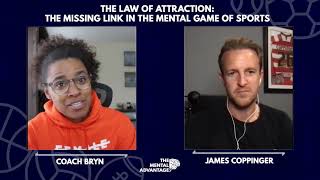
Former footballer James Coppinger played at elite level until age 40, seven years past the typical retirement age. He credits a deliberately cultivated mindset, positive visualization, and focused self-talk for staying injury-free and performing at his peak. He's now coaching young players and releasing a book called Head of the Game: A Professional Mindset.
Chapters
It's about developing strategies that work for us. It's so easy to rely on strategies that don't work for us and think that that's just the way we are. So the big thing is thinking differently to get a different result. You know, self-talk, how you speak to yourself, was a huge one for me. I decided that, you know, if I was talking to myself a certain way and it wasn't working, then I wasn't going to do it. So I started to change it and I started to understand what worked for me. You know, I never ever, ever, ever speak negatively towards myself because I know deep down that I'm trying to do the right thing 99% of the time.
I'm excited for you to see this week's episode, but before we get to that, I have a message for you. If you're a parent of an elite athlete or a coach of a high-performing team and you want, you're looking for some help or assistance with making them more mentally resilient, perform with more confidence, be more consistent, anything like that, then this is for you. I have an 8-week program all designed to address exactly that, to help your athlete be at their best on a more consistent basis and not get tripped up by those little voices in their head and getting down on themselves for mistakes, but performing like we know they can. So what I want you to do is don't delay, schedule a— just grab a time on my calendar through this link and let's set up a time to talk about your specific situation and how what I'm offering in my 8-week program can help. Okay, so it's brindresher.com/freeconsultation. So click this link, grab a time on my calendar. I look forward to talking to you. And now on to this week's episode. Hey everyone, it's time for another episode of The Mental Advantage. We have the incomparable James Coppinger. And you're going to notice he has a bit of an accent for those of you that are American listeners. He's from across the pond, as they say. I know, why do they call the ocean a pond? It's far bigger. But anyway, James is just recently a former professional soccer player, football player as they call it overseas. And we're going to get into his journey. Hi, James, how are you?
Hi, Bryn. I'm really good, thank you.
That's fantastic. That's fantastic. So tell people a little bit about, uh, when, when— obviously it's, it's nighttime there, so thank you for doing this. Let's talk a little bit about, uh, I'm always interested, right, when I get started with someone, when you have such a career arc like as you, who went all the way to the professional and the Premier League and all that. Did you start with soccer or, or football, uh, or was it a different sport at first? Because I know it's all football over there, but was or something else that caught your eye before you found your love of footy?
Yeah, it was, it was always football, but it wasn't something that I aspired to be, you know, growing up. My dad wasn't a professional player. He liked playing football. He liked watching football. My granddads, both granddads were exactly the same. But yeah, I was more or less introduced to football, 1990 World Cup. Italia '90 when England sort of got to the semifinals against Germany. But Bobby Robson was the manager, so I sort of fell in love with football when I was 9 years old. So yeah, it was more or less that love for the game that sort of attracted me to it.
Nice. And I think it's important that you do have a love of a sport when you play as long as you did through it. So when you were going through at 9 years old and falling in love with football, when did you discover that? Would you say that it was a talent that developed over time, or would you say that it was just like kind of apparent that you had some natural skills in that department?
Yeah, so I'm not a believer of natural skills. I believe that sort of the love that you have for a certain thing, whether it be sports, whether it be something else, I believe that you can, you develop, the love that you have develops that talent. So I believe that I grew up with the love and it gave me the opportunity to develop. I never went to an academy, what they call an academy over here. I wasn't at a professional club until the ages of 16. So I learned a lot of my my footballing skills, my technical skills from out in the streets, growing up down the park, playing for my school, playing for my local team. While all the players around me were going to academies and everything, I just wanted to be a kid. I wanted to enjoy going out with my friends on my BMX, doing kid things. And yeah, I was never pushed by my mom and dad. I was never forced into doing anything like that. So yeah, I reached the age of 16 and never thought that it was something that I could do, be a professional footballer.
I love that. Now, obviously having a different arc, because we know that maybe you don't know this about the United States, but they're kind of professionalizing sports at a younger and younger age, which I think is the same thing as what you're referencing over there, which is, you know, like, oh, we got to get into these clubs and we got to, you know, got to be on this track, right? So with you being a kid and doing kid things, as you said, what would you say would be an advantage over the academy players that you maybe noticed, if anything, when you started to play amongst them, or just whether it was over them, but just an advantage that you brought to the richness of, you know, your career?
It's a great question, and it's a question that I think, you know, I always feel like I was never the one that was put on a pedestal. I was never put on a pedestal by anybody. I believe that I created character. I created resilience. I created courage in them years. A lot of people doubted me. A lot of people told me I wasn't good enough. A lot of people told me I was too small. A lot of people told me a lot of things and it never really deterred me. I was, I was quite naive in my understanding of football. I never got caught in a rat race of wanting to compete against anybody. So by the time I was 16, there was a lot of players coming out of academies, getting released from academies, and I had a hunger and a desire and a love to want to keep playing football. I'd not played football regimented day in, day out. So I was hungry. I played really well in my sort of Sunday league team, and at 16, I got offered the chance to join a professional club when I went on trial, and they offered me a 2-year scholarship.
Nice. I love that. I think it's important to highlight that for the guests, for the people listening, because it's it's, it's having— like, you're talking about people almost getting burned out at 16, right? Like, you're talking about being released, right? So maybe they got picked up at 9, like, when you kind of fell in love, and then by 16 they're being told, yeah, you're washed out, man, you're done. And whereas you're just starting to have like a natural progression of ramping up. And then, like you said, I wasn't comparing myself. I just love the game and I did whatever was necessary. I had a hunger for getting better, and that gave me the ability to come in and make a real impact. So I, I love that. Now, obviously getting offered a professional, you said you were never angling for it for a career. What would you say was like your experience when they said, okay, you know, hey, we're thinking about you for this professional? Was that a shock? Was that like, oh yeah, I mean, I kind of saw that. And not that I saw that this was a career, but I could see where that was coming. Or was it, you know, how was that experience for you?
I was brought up in a small town, so I had sort of a small town mentality. My mum and dad worked 9 to 5. I never sort of had any aspirations. I never believed that I could aspire to anything. That was the mentality of the majority of the people, 95% of the people where I'm from. So that's why I never had that sort of them aspirations. But when I got offered, it was a scholarship, so it wasn't the professional terms. What it is, is you have 2 years to more or less justify a professional contract, but you're training every day, you're in and around the first team, and you're part of sort of the under-16s to under-18s team. It was a real sort of opportunity for me because again, I'd not thought about it. I'd not thought about what I wanted to do when I left school, so I just threw myself into it. And yeah, in the first The first 3 months I got offered an England trial, so I went on an England trial with people that had been in School of Excellencies and academies. Some of them had been at Lilleshall Academy, which was where the best players went. I went on an England trial and I got picked, so I got picked and to represent my country against Poland. So I flew out to Warsaw, played against Poland, and then I managed to represent England in the European Championship qualifiers. And this was from somebody who had been at Sunderland, the league team, to then represent his country. And then 6 months into that YTS, I got signed by Newcastle United for £1.8 million. And that was sort of, I think that was the moment where, you know, it's like, why me? That was the thought behind that.
Yeah, $1.8 million. So before we get to the $1.8 million contract, because I definitely want to know, like, that moment, and I think you've alluded to it a bit, when you were on the plane on the way to represent, you know, the country with Warsaw, what were your thoughts? Were you feeling like, I'm ready for this? I mean, because like you said, it was just a natural thing. These things were just happening for you because you were putting in the work and you got picked and that, but Were you feeling a little bit like, holy cow, I'm about to go play for England against another country? Or were you just like, hey, it's a soccer game, I know what to do, or a football game?
I was quite overawed. You know, these players, the likes of Joe Cole, Gareth Barry, you know, who had fantastic— Peter Crouch, Michael Carrick, these players that had fantastic— went on to have fantastic Premier League careers. I was sort of in and around these players that almost set their sights on becoming professional footballers from 8, 9, 10 years old. They were expected to be Premier League players and I enjoyed it. I did enjoy being in and around them. I learned a lot. But, you know, the trial before I got picked, the trial, the first 2 days, I was sort of— every time I went on a trial as a young player, I sort of just sort of blended into the background. I let other people take ownership. I didn't want to be that person that made a mistake. And then at that trial, the first 2 days I didn't get seen, and I got put with a group of players that were just playing. And the night before that game, um, I prayed that I scored a hat-trick. And I wasn't religious, um, but I prayed that I would score a hat-trick and I would get picked. And I went out and scored a hat-trick and I got picked.
Um, I love that.
Oh, since, since then, obviously I've done a lot of work on the law of attraction and, um, sort of almost thinking into things into existence, and I've done a lot of that as my career's gone on. But that, that was definitely something that, you know, was down to that. Um, I ended up sort of scoring a hat-trick, getting picked, and then representing my country and getting a move to Newcastle on the back of a lot of things that I almost thought into existence. Wow.
Now, James, you don't know me very well, but I am a huge fan of the law of attraction. In fact, I bring it into my coaching with my athletes. I'm all about— I do a thing called mental rehearsal scripting, whereas like you create your own reality. And I mean, I say that to them, I don't know how much of them actually buy into it, but like this idea that you create your reality. So I love that you did this prayer about, you know, scoring a hat trick, then you have the result. So then you're like, hey, there might be something here. So like you said, you did it later, but you didn't— did you put the pieces together, or were you just like, oh, that was just luck, and then you kind of like thought back on it at a later time?
That's exactly right. I, um, at the time, I, I honestly didn't want to tell anybody because I knew that people wouldn't believe me. Um,. And I honestly thought I spoke to a few religious people and they think that obviously it was, it was God. But then after, after reading about the law of attraction and studying it and doing the same thing, I've scored, I've scored other goals, I've done things in games, things have happened to me in my life that I've thought into existence. So I do, I do believe that it is the law of attraction. I do believe that I have attracted that. Um, but yeah, like you said, it's something that I've done after that.
Yeah, and obviously, as you said, you started studying it, so you were able to start to use it purposely at that point. That's fantastic, I love that. Okay, who was your— who were your influences that you went to for the law of attraction? Would they be names that were, you know, known in both the UK and the US, or just, uh, you know, you just maybe were doing Google searches? How did you know? Who were your go-tos when you started finding out how to use this.
Yeah, so I would fast forward, but I, I ended up, um, having a life-changing experience around 22, 23, um, and I met somebody who transformed my thinking completely, um, in, in instantly. Not on the law of attraction, but in, in sort of in my footballing career and, and my off-field life. And then I just started studying, started reading. I read The Secret, books like that, that again put it into perspective for me. And then I was able to then go back, like you said, and sort of think, yeah, you know what, that was because of that, and that was because of that. And a lot of the stuff that's happened to me in my life thus far is because of me, is because of my thought processes.
Yeah, yeah, absolutely. Oh my gosh, love— I started with The Secret as well. I think The Secret is like the training wheels to the law of attraction, and then you like really go in and it can become quite formulaic. So I love that. All right, so I don't— I do want to find out about this person, so we're going to get back to the 22-year-old epiphany. But before we get there, was the $1.8 million before the meeting the person or after?
Yeah, so it was, it was before. So I signed for Newcastle when I was 17, £1.8 million. Yeah, one day I went into training with Darlington and then the manager told me that Newcastle were interested and I traveled up with my mum and dad. We signed a 3-year contract and Newcastle were top 4 team, top 4 Premier League team at the time. And it was a big deal, you know, I'm from the northeast of England where Newcastle is. My dad and my granddad, they were from Newcastle. So it was a massive thing for me and my family and everybody associated with me. And what comes with that is the burden of expectation. And I found it really not easy, but I really enjoyed it to start with. I was in the under-17s, under-19s. And then I made my Premier League debut at 19 under Sir Bobby Robson, the guy that basically made me fall in love with football. He was the manager of England in the 1990 World Cup that I said. He gave me my Premier League debut. I ended up thinking that I'd made it at that point. And yeah, I left Newcastle with a year left in my contract and I went to try and sort of kickstart my career. You know, it's so easy as a young player to think that you're a professional footballer at a big club like that when you're not actually playing football. For me, I never wanted that tag. I wanted to carve my own career and I made a big jump to do that at Exeter. I moved 360 miles away from home for the first time. Had no support network around me. My mum and dad had just divorced, and I just lost my granddad to cancer. Um, so I had a lot of things going on off the pitch as well as on the pitch. Um, and in the first season, I got relegated out the Football League. Um, so I went from Sunday League at 16 to Premier League at 19, and then getting relegated out the Football League at 21.
Wow. That's, that's quite a lot at a young age. Right. And you said like, I went with my parents too. So when they pushed the contract in front of you, did you already know it was going to be for £1.8 million? You're talking about £1.8 million, right? I'm correct on that.
Yeah. Yeah. So it was, it was, it was, it was a big, it was a big price tag at the time, 1998, '99., but it was just, it was just unbelievable. Um, yeah, again, going back to the, the small town mentality, I never, I never thought, I never genuinely believed that I should have been there.
That was, that was the frustrating thing. Yeah. All right, obviously the mental game, uh, is a big part of this, and we're not talking about mental health yet, but we know that this is coming into play, right, when you're talking about not feeling like you belong there, not, you know, not having that support system. But was there obviously in that '16 to '19 to '21 any development of your mental game from the league's standpoint or like having that influence?
No, nothing. Back in '98 to 2002 when this was going on, there was nothing within football. There was no support network. And again, off the pitch, my mum and dad had never been in that position. My mum and dad were going through their own problems. Right. Um, I didn't really have anybody that— I'm not blaming anybody by any stretch of the imagination, but I never had anybody there that, that I could really sort of, um, could almost mentor, mentor me, um, or give me the advice, whether I would listen to them or not. Um, it just wasn't there for me at that time.
Yeah, when you, when you said, obviously with all the things going on outside, and you were talking about the gentleman that you saw that was big that kind of made you love soccer. The gentleman who gave you your Premier League debut, did he give you— not, not necessarily the mental game, but did he give you anything that was like a big takeaway? Because like, obviously it's one thing to see the man on television and to, you know, to like, like him as a coach from afar, but having that ability to play for him, uh, or I think— yeah, what would you say was that experience like? Or any big takeaway from him?
Yeah, he was, um, one of the best managers of all time, one of the best English managers of all time, Sir Bobby Robson. He, he was charismatic, he was infectious, enthusiastic. He was 67, 68 at the time, um, and every time you were around him, uh, you knew that you had to be on your game. You knew that he did— he demanded standards. But also he made you feel special. He definitely sort of rated me. He compared me to Gianfranco Zola, who obviously played at Chelsea. He was a fantastic player at the time. And, you know, it was a really good experience for me. But I look back and I wasn't in the right mindset. I definitely didn't appreciate the opportunity that I had at Newcastle. Which a lot of young players, I imagine, say the same thing. But yeah, I wish I'd known what I know now, which is obviously easy to say. But yeah, it just wasn't meant to be.
That's the book we're all going to write, right? The things I wish I had known, right? Because yeah, I mean, come on, right, James? Like when we get older, we're like, oh man. But when you say you didn't have the right mindset, Do you, do you attribute that to folly of youth, or do you say like, that was just all the stuff I had going on at the time, or I just felt like there was— like you said, I wasn't playing football, so was it more just that I wasn't on the pitch and I wanted to be on the pitch?
I, I just don't think it was something that I could control. I think there was a lot of, uh, I let a lot of people control my actions. Um, something obviously when I met Terry, who, who I met at 22, 23. It sort of gave me back control of my life, um, both as a player and as a person. I was letting agents, friends, uh, family, um, yeah, all sorts of outside influences affect what I was doing and what, what my results were. Um, and I, and I genuinely at the time, I don't think I could have ever affected that.
Yeah, that makes sense, that makes sense. All right, well, let's talk about Terry. We just talked about him. Like, uh, what are the circumstances with which you came in contact with him? Because obviously you said you've been relegated, you're not, you know, you're not at the pinnacle anymore, you don't feel like you're on the rise, you may be having a bit of a dip. And what are the circumstances that put you and Terry together?
Yeah, so I, I joined Doncaster, um, where I've spent 17 years. So if we rewind all the way back to the first or the second year there. First year I didn't score a goal. I was performing really well in training, but I was struggling to perform on a match day. And the manager sort of got approached by somebody who could work on the mental side of football. This was 2003-04, which again is quite early in relation to that sort of thing back then. And he didn't believe in it. So the manager didn't believe in it, and he said, look, you've got 10 minutes to work with this one player that you know, he's struggling, and if you can do something with him, I'll believe you. And Terry tells me that he packed his bags and went to walk out, and he was like, what are you doing? He was like, well, you've called me in and now you're telling me you don't believe in it and you're going to give me 10 minutes? So he said, look, I've got this one player, James Coppinger, one of the most talented players we've ever seen, but he just can't perform on a match day. So I went down to the ground to meet him. I just got told by the manager to go and see him, but I went in thinking and like with an open mind. I wanted the help. And within the first session, you know, it was life-changing because I broke down, I got emotional. He put me in a position where I was sat in a chair and he took me out the chair and he told me to look back at the chair and he said, look, look at, look at James. So look at James sat in the chair. Um, what, what would, what would, what would James's granddad be saying about him? And I, it was the first time I'd ever looked at myself from that, from that perspective and that point of view. And I, I broke down. I just said, look, he, James, he feels sad, disappointed. Yeah, he's going through a hard time. And it was the first time I'd ever thought about it like that. And it was almost like a massive, I don't know, a massive weight off my shoulders. And, you know, when I came out of that room and I got in my car and I drove home, my girlfriend was in the house and I walked through the door and I was just like, oh my God, my life has just changed because it's exactly what I needed at that moment in time. I was ready to stop playing football and, you know, meeting this person and finding out that I can change the way I think to change my results. I can, you know, control my emotions, which is something I found really difficult. I can do this.— was a massive turning point in my life.
That's so powerful, putting you back in the driver's seat of, like, seeing yourself. I think that's something that I work to do with my athletes as well, because I think a lot of times they think it's just happening to them. And we've lost countless amounts of talent and potential through moments like that where we didn't take that person into the fold and give them back that ownership or that ability to feel like they had control. So, That's fantastic. Um, so great to hear that that made a difference, and it's okay to be emotional. I can understand. I have those same memories of moments in my life where it's like, put yourself back in that moment, it's like, whoa, right? When you talk about it. So thank you for your vulnerability in that. You mentioned something, and I just want to get your perspective as being on the other side of it, and I do want to talk more about what Terry gave you besides that first session, but you said, I played really well in practice and I didn't play well in games. I would love to know, or matches as you guys call them, what would you say is the biggest thing that you feel? Because a lot of times players don't know why that happens. What, now that you're on the other side of it and obviously played 17 years of successful career and having that, you know, maybe epiphany with Terry, but what would you say would be the biggest thing that causes players to feel that way?
Yeah, so since, since that day, since working on my mental performance, I've played— I've averaged 40+ games for, for 17 seasons, 18 seasons. So I played over 800 career league games, and it's down to being or getting into an unconscious state while performing. I was playing conscious a lot of the time. I genuinely believe that, like, getting in the zone, losing yourself in the game, getting into an unconscious state and knowing how to do that has allowed me to perform consistently well for the last 17, 18 seasons. You know, I retired at 40. I got promoted. I captained Doncaster to promotion at 37. I got in Team of the Season at 37. And this is all down to the way I was thinking, the way I built up what I call a professional mindset. So that would be the standout, the standout sort of strategy that I use to create consistency would be to get unconscious in terms of trusting what you do every single day. You know, I trained every single day really hard to make sure that on a weekend I could trust what I've been doing, what I've been doing since I was 8 years old. I've scored goals, I've done things in games that I can't even remember because I've been in that much of a heightened state. But understanding how to do that, because again, I know I'm talking a bit, but it's almost like you have to trust and do the opposite of what you almost should be doing. Because I wanted it that much, I wanted to work that hard. I wanted to perform that well every single week. I got myself into a state where I was trying too hard and I was tensing up and I was hearing things and I was— people were affecting me. Whereas when I, when I started to perform a strategy where I did the opposite and I didn't get nervous before games, I used to just trust, put my trust in getting to an unconscious state and almost things just happened for me. Things, things happened in games that I can't even describe to you.
Yeah, I love that. I think that's so important, exactly what you're talking about. I just put on my Instagram this week, you don't rise to the occasion, you fall to your level of preparation. So what you're talking about is I did all the work and then I just let that— yeah, I trusted in my skills, I trusted in the work that I did, knowing that everything would go according to plan, right? Or, you know, as best as we can, right? Like you said, there's certain things we can't explain, But I also love the thing about, like, because I was going to ask you, how do you get into that state, right? So trying too hard— so many people are like, it's all about effort, it's all about effort, it's all about effort. And that's when you bring in the law of attraction and the flow state, which is trusting that I've already set the stage for what can happen, and now I'm just gonna trust that everything's gonna, you know, kind of fold out, you know, unfold the way that it needs to. So I love that. Any other tips that you have for players that might be listening or athletes that say, well, how do I get unconscious? How do I do that? Or how do I not get nervous before games? I know that that's a more complicated question, and I know you wrote a book, so maybe you go into that in the book, but would love to, uh, any other tips that you might have.
Yeah, I genuinely feel like it's a, it's a work in progress. You know, what works for me might not work for somebody else, but it's about developing strategies that work for us. It's so easy to rely on strategies that don't work for us and think that that's just the way we are. So the big thing is thinking differently to get a different result. You know, self-talk, how you speak to yourself, was a huge one for me. I decided that, you know, if I was talking to myself a certain way and it wasn't working, then I wasn't going to do it. So I started to change it and I started to understand what worked for me. You know, I never ever ever ever speak negatively towards myself because I know deep down that I'm trying to do the right thing 99% of the time. You know, my body language was a huge one as well. So how we communicate with people, it's probably 7% words. And when I heard that, it was mind-blowing because, you know, when you're on a pitch and you've got 35,000 fans surrounded by you, they can't hear what you're saying, but they can see what you're doing. So I changed my body language consciously to model somebody who I thought had really positive body language and give off that he cared and he tried and all the things that I wanted to be. He was confident, so I started to model that. And I think when you put the combination together and you sort of— I genuinely believe you can design your own mentality. You know, you had Kobe Bryant who, who, who, Mamba mentality. Yeah, you've got a player in, in the Football League who's got Beast Mode mentality. You've got, I call it a professional mindset. There's so many different things that you can do to improve the way you think, and a lot of people in this country especially, they don't understand that they can work on it, they can develop it, they can improve it to improve their performance. As soon as you, you mention the word mental in this country people don't want to go anywhere near it.
It's— I had Rohan Ricketts, I don't know if you're familiar with him, but he played— he's a soccer player, and I had him on the podcast recently. His episode hasn't aired yet, but he talked about that, like renaming it, because we know about— and we spoke about the British term mental, like, are you mental? And that means, are you crazy, right? And so this idea that people just already, you know, associate that— and I mean, I don't think it's that much different. We don't obviously say mental here, but we do You know, people hear mental skills, mental performance, and they automatically think, oh, there's nothing wrong with me. I don't have anything going on mentally. So you're good. And you're like, well, no, this is proactive, you know, like a proactive approach. So I agree with you on that. I did want to say one thing that I want to highlight something you just said, which is really powerful because it all starts with knowing self, like you said. So I can't take everything that James said and just wear it and be like, okay, it's going to work for me because it worked for James. I have to find what works for me. There's definitely going to be some crossover, self-talk, you know, like you said, modeling, these type of things. But who I model might be different than who James models. Who I identify with might be different. What I need to do to get in the zone is different than what it takes the next player to get into the zone or to the flow state or whatever the case is. So I think that's really important is Michael Gervais, who I had on the podcast as well, he talks about about that, like the, the journey of discovering self and how important that is. So absolutely fantastic, um, uh, those tips. Now you said Terry changed your life from that session. Um, how long was Terry a part of your life, or was it just that year? And then did you start to invest your money in developing your mindset, or was it the lead kind of grew with the resources that they were giving with you, or it could be both, obviously.
No, it was, it was— we became friends, um, we're still friends, we're business partners now, we, we, we buy businesses together, um, and he's just a fantastic human being, you know. He's, he's somebody that, um, yeah, that I look up to. And, you know, the, the biggest thing is you know, it's changed my life, but then it's changed my kids' lives and it's changed my wife's life. And I don't mean to sound like too over the top when I say that, but I genuinely believe that this has a knock-on effect. And I obviously started a company 5 years ago working with professional footballers in mentoring them, in working on mental performance, and the amount of players I've worked with, teams I've worked with that have benefited from, from what Terry has done. Um, obviously I've put my own spin on it. Like you said, I've almost normalized it, right, to the point where you've got to be careful what language you use around footballers, around sports people, because it— because it's invisible, because you can't see the mental side of it. People don't know what it looks like, and they're so scared of it. So, you know, if you— in my opinion It's an everyday thing. You know, every day you have an opportunity to improve mentally, physically, technically, tactically. And that's all it is. That's all it is. And the one that controls the whole thing, the one that controls everything is the mental bit.
Absolutely. I think it's so important that people get that. It's the foundation of everything we do, yet it's the last thing people invest in. Teach me how to kick a ball better. Teach me how to score. Teach me how to be faster on the pitch. Teach me all of those things. Okay, but do you realize that you're limiting your upside if you don't have this mental foundation? Because that is what's keeping you limited, that you're, you know, because everybody has the same size field, same kind of soccer cleats, same access to the same equipment. You know, they say in basketball all the hoops are 10-foot, you know, whatever they are. So, you know, 90 feet of the floor, you know, everybody's got the best trainers. And then what? And then what, right? What's going to be the differentiator? And that's definitely going to be your mindset. That's definitely gonna be the thing. The next question I was gonna ask you, and you kind of alluded to it just now, which is I've mentored athletes. Before you started your company, 'cause you said 5 years ago, right? You've been doing this. Tell me about a case of a young teammate, because you obviously were a veteran when you retired, that you kind of took under your wing and started like giving this, or maybe some of the resistance when you were giving it to your teammates, like when you were gung-ho. 'Cause I know sometimes when we're new, we're excited, we wanna share it with everybody. And they're kind of like, I don't know. So tell me, tell me about your experience with that.
Yeah, so I did an 8-day course actually, um, on sort of, uh, a few different things. And after I came off the course, I wanted to change the world, um, like what you just said. Um, I calmed down and, you know, I decided to put my, my sort of, um, efforts into trying to communicate in the right way because I've had a lot of psychologists, a lot of people come into, to my football clubs and do it the wrong way, where they sell it to players where, you know, after 10 seconds you just think you might— you're wasting your time. You know, you're trying to get these players to buy into it and you're going to buy it the wrong way. So again, what I tried to do is normalize it. A specific player would be a player that joined Doncaster at 22, 23. He'd been released from Manchester United when he was 16. He then had a few clubs prior to coming to Doncaster. A really, really good player, but a really good character. I worked with him almost every day because I was training with him. We'd speak. He then became captain of the club and then he went and moved to the Championship for about £1.7 million last summer. And he is the epitome of everything we're talking about, you know, tactically, technically, physically, and mentally. He has invested time, he has invested money, he has invested energy, and I genuinely believe he will go on to play in the Premier League. You know, but it isn't always the case with other players. You know, I've worked with players that you give them, you give them the tools, you give them the information and for a week, 2 weeks it works, but yet they always, or a lot of the time, they revert to type and they can't keep doing it. They struggle with consistency and they struggle with almost recreating and building new habits.
Yeah. Have you read Atomic Habits? Yeah, it's a great book. And obviously, yeah. Tell me about Atomic Habits. Has that factored into, or do you feel like it was just For me, it was a little bit of confirmation and a little bit of an enhancement. What was your experience?
Yeah, I think for me it was, uh, again, it was a realization that I, I don't think everybody— I don't think everybody can do it, you know. I genuinely feel like it has to be within you. You have to be able to want to do it. And that's the biggest thing that I see from players is I almost offer them, you know, I say, look, I'm doing this, if you're interested, let me know. And then a lot of the times players come to me. I almost let them come to me, whereas if I'm constantly going to them, constantly going to them, it's harder for them to take it in. It was the same when I started with Terry, you know, he would ask me, look, I'm available at this time, and then he would leave it, and then I would go to him, and he knows that I want it then. So again, I want to start and develop new habits. I want to get rid of habits that I've almost formed unconsciously. And again, not, not down to me. I believe that from 3, 4, 5 years old to 16, you're a product of your parents or the way you were brought up, because you don't have— you don't really have a choice. They make a lot of choices for you. So up until that point, a lot of the time in this country especially, you become a product of your parents. And then after that from 16 to 18, if you get offered a scholarship in football, you're literally thrown in with the wolves because you're leaving school, you're leaving your parents, and you have to perform consistently well every single day. You're under the microscope every single day.
Yeah, absolutely. I think that's so important. I don't know if you've read The Four Agreements, but they talk about that, the domestication of humans. Interested in all about like how we are a product of our parents and then they pass down what they got to us. And then it's our job to kind of shake some of that off. And I find it interesting because I 100% agree with you. When I work with athletes, it's similar. Like, I don't want— like, the parent may be excited about the work and they may want to, you know, like, oh yeah, this, this one wants to do it or whatever. But I always have a meeting with the athlete. Like, is this something you want? What do you think about this? Because obviously I don't want to waste my time with someone that is doing it for the sake of just doing it, but knowing that they're not going to apply it. Like, and like you said, the ones that you get excited about are the hungry ones that are like, give me more. And that's what it sounds like you were like, like, you know, he came and you, you said that when I met with Terry, cause you could have easily been like, he said, I'm one of the most talented. Why is this guy making me talk to this guy? You were like, I'm open-minded, whatever I need to do. And I think that's been your trade all along. You were always hungry for how to get better. You were never just like, I'm the best, or I belong here. You were always wanting to earn whatever you got and, and show that. So I think that that seems to be a theme throughout your, uh, situation. Uh, but I wanted to ask you, um, and I know this is— I'm not— I don't want you to mention any particular people, but you said they did it wrong. And maybe you already felt like you answered this, so you could just tell me, but when psychologists, sports psychologists, do come in, or they're brought in Like, what specifically did you see them say that turned the player off versus when you talk about normalizing it? So speak on both ends. How does one normalize it, and how do we do it wrong when we're talking about professional footballers or guys in general? Because it's definitely a different approach.
Yeah, it's a different approach, and I probably phrased it wrong because when I say they do it wrong, they're obviously doing something right because they're they're qualified psychologists. Yeah, yeah, yeah, yeah. Um, but what, what I mean is when you come into a different environment like football, especially professional football, um, there's a preconceived idea to what psychology is. And, you know, I've had again psychologists come in. I spoke to psychologists recently. I've spoke to Liverpool's first team psychologist who worked with me at Doncaster. Um, I've spoke with a couple of championship psychologists, I've spoke to Manchester United's academy psychologist, and it's so hard to get players to buy into that because all they want to do is play football and it's unrelatable. They can't relate to big words, they can't relate to a lot of stuff that, you know, seems a million miles away from what they're doing. Whereas what I try to do is communicate it so it's relevant to the players. You know, I've played professional football for 24 years. I tell my story, I tell them what I've experienced, my highs, my lows, what I, what I had to do, what I have done. Um, but I'm massively conscious of making sure that it's, it's black and white. There's no gray areas, there's no sort of, uh, mumbo jumbo, what I call it. Yeah. Um, and I think that's where they get it wrong because I don't, I don't understand how you could expect players to buy into it unless, you know, the ones that'll buy into it are the 2, 1 or 2 or 3% that will buy into anything, right? It's the other ones that you're trying to appeal to that are struggling that wouldn't buy into it, if that makes sense.
No, it 100% does. And I think in talking to different sports psychologists, because I wasn't in any way trying to, you know, put down the sports psychologist or say that you were putting them down. I was just saying, if I was listening to this and I'm a sports psychologist, I want to know what do I need to do differently to have that in, do you know what I'm saying? So I think the big thing is relationship too, because like you said, if I know I'm talking to James, right, and I'm talking to him in the UK, I shouldn't be saying soccer, I shouldn't be saying, you know, certain terms because I'm talking to a different market. So I think it's important that I find out what does James want, what is James interested in? And then I can say, I can just have a conversation. Like my wax on, wax off karate of mental skills doesn't have to be me sitting down and going, okay, James, we're going to work on mental skills now. Right? Like, you know, it's just, okay. Oh, what are you struggling with? Okay, got it. You know, let's talk about that. Let's talk about how we can, you know, like you said, like if somebody told you to go sit in that chair and they were going to work on mental skills, you might not have sat in the chair. But the fact that you were sitting down and he said, do this, you were like, okay, that— yeah, okay, I'm with you. And I like this guy. I— Terry obviously didn't have you talk to, to James the first moment.
Yes, it was the first session, but he spent some time building a relationship with you first. So 100%, and building rapport, building a relationship, building trust is the biggest thing, um, because without that you'll never get to know anything about anybody. So that was huge when I first met Terry, having that conversation. And I now, I know he was getting me into an unconscious state. Yeah. Because, you know, I went in there wanting to, wanting help, and I never, I never stopped talking the whole, the whole session because I wanted to get it off my chest. I wanted to talk to somebody. I wanted— he asked the right questions. And I just wanted to talk and talk and talk and talk because I'd never, I'd never spoke to anybody like that before. And especially, you know, he wasn't emotionally connected with anything that, to do with anything that I had problems with. You know, he talks about, he talks about a diamond. So we're all, we're all born and we're all brought up as a big shiny diamond. And, you know, when things happen to us, if you don't deal with them, then just layers of dirt cover this diamond. And I believe I went in there, you know, with, with this, with this diamond that was covered and you couldn't see it. And then I started peeling away at these layers, and all of a sudden I started to shine brighter and brighter and brighter and brighter before, you know, now I'm constantly shining. Because I genuinely, when everything, anything happens to me negatively, I deal with it, or I don't think of it as something negative. I find a solution for it. I find ways of dealing with with it. Um, so I, you know, and the analogy like that, it was, it was massive for me as well.
Yeah, 100%. I use something similar, but I always use it as, um, uh, I think it's Michelangelo, whoever did David. I'm always like, is it Leonardo? Is it Michelangelo? But anyway, whoever did David, uh, he apparently saw David in the stone, the big rock that he carved him out of. So it's like, that's in there, and yet we get all this stuff. It's like chipping away, like challenge in your life is the chisel that put some stuff on because we're listening to other people, and then we have to take off those layers. We got to figure out, you know, chip away at what is underneath that's been there all along, right? The masterpiece within has always been present, but most of it's covered up by our own false beliefs about ourselves and all the different things. So I love that. Uh, one of the things that you talked about is you mentor athletes now, and you're, you're starting a company. So tell me more about— do you have a framework or anything that you would want to share that's the biggest thing that helps you? I mean, obviously you're building relationship and you're coaching them, um, and— or how do you identify what— let's— I guess just what do you want to say about mentoring athletes, and then I'll ask you my follow-up question.
So yeah, so again, the hardest part, or the hardest part that I found, um, is, is getting players, clubs to buy into what I'm doing. Um, you know, I'm not a clinical psychologist, I'm not somebody that professors to be. I don't want to be a psychologist, right? What I want to, what I want to try and do is create a better understanding of what mental performance looks like and what it is so that people can improve their performances. That's all that I want to do. Um, so I set up workshops, I set up, um, online mentoring, especially 12 months ago through COVID, which allowed me to get all through the country I did a Scottish Premier League team last year, first team, which is really, really good for me because I was playing at the time. But, you know, it's been unbelievable in terms of the feedback that I've had from everybody. I'm working with Championship players, League One players, League Two players. And the biggest thing for me is, like you said there, Having a framework, I think putting some structure to what they're doing, that the majority of the people that I work with have never— or don't think this is possible, you know, they've never worked on, on the mental side of the game. So when I ask them and they— and then I say, what, put a percentage on what you think or how important mental performance is, it's anywhere between 60 and 90%. But yet none of them are working on it. And I just, I just, then they look at me to go, wow. I had, I had one player a few weeks ago say, as we were talking at the beginning, saying, you know, I wanted, I want to maximize my career. We were talking, we were goal setting. I'm, I'm doing everything I can. I'm, I'm, I've turned every stone. I'm doing everything. And then I said, are you doing anything around mental performance? And he went No. And I was like, so how can you be doing everything possible to be maximizing your career? And then by the end of it, after we'd had the session, he messaged me and says, I can't believe that I haven't been doing this. Yeah. Um, but you only know what you know, and if there isn't enough stuff out there, you know, I tried to find books, I tried to find things on, on football, on soccer. Yeah. Um, in, in this country around mental performance, and I found nothing. I found one book and it's called The Stupid Footballer Is Dead by Paul McVay, who, who was a professional footballer. He's now a psychologist, and he was the inspiration for me writing my book because there's nothing out there. There's genuinely nothing out there that speaks a footballer's language around mental performance because, again, I'll say it again, For me, mental performance is learning to control your thinking to get the best possible results.
That's all it is. Yeah, absolutely. And I, I've— there's so much that you said there, but it is— I've always said, people say it's 90/10, 90% mental, 10% physical. And there's a colleague of mine here in the United States, and I always attribute it to her because I don't want to say that I thought of this, but she said she used to work with a professional basketball team and she pulled up their practice schedule and she was like, show me where you guys work on the mental game. Like where, what portion of the practice or where in the week are we working on? And it was not, right?
Nothing.
So it's that everybody says they know it's mental or if, you know, it has to do with the mind, if we don't want to use the word mental, but yet we're not working on it. So absolutely, that is phenomenal. And like you said, getting them to buy in, the fantastic thing. And then, oh, that was the other thing I wanted to talk about. You saying, I'm not a psychologist, psychologist. This is such a big thing because so many sports psychologists or people with the, with the credentials are kind of like, well, you know, and I mean, there is a different animal that a psychologist can answer as far as if someone's dealing with some, uh, more deeper issues. There's definitely some areas that they can go in that we can't, us non-credentialed folks. But in the very basis of giving people to, like you said, help of decision-making, being able— and first of all, you coming from the world of soccer, you have all the credential you need, James. And you know that. But I hope you know that, that you have everything you need. Because I think 24— would you say 34 years of professional soccer? 24. 24. Sorry, that would make you older, right? 24 years of professional soccer. I think you have enough of a credential there that you can talk from this point of I've been there, I did this, and I have results. You have receipts, as we call it in the United States. I got receipts. I played, I did this and this worked. I did this and this worked. So that's awesome. And I think that we need to speak to that because it's like, it's more like you said, getting them to understand how it equates to what they're trying to accomplish. Right? So the biggest issue with that we have as mental performance people is selling it to the player, to the coach, to the team on how this is going to help them achieve the aims that they want, which is more wins. More better results, right? And so once we can convince them of that, then they don't care what you package it in, right? They're like, okay, cool, you can come in and do that. Would you say that's accurate or no?
I would say it's accurate, but I would say that, you know, they— it's quite a short period of time, so if you're not getting instant results, true, it can be hypercritical and say, well, this isn't working. Well, 'Wait there, you've got to give this time.' You've got to— and that's the hard part about it because if you want to go and practice shooting practice, you go out with a bag of balls and you can hit the back of the net and you can see the difference. If you want to get stronger physically, quicker, you can go and do it all. But with this, it's really, really difficult. Financially as well in this country, they don't spend a lot of money on personal development, on sort of anything to do with this sort of thing. It's frowned upon to spend, especially funding budgets with football clubs. It's really, really difficult. Again, if I could show them, if every single player in their mind sees something going on, then honestly, it would be mind-boggling to think how much clubs would spend on this. Um, yeah, but you just can't.
That's the frustrating part. Well, you can't yet. Now you can't obviously show them the results, right, in the sense— I'm not saying CAT scan them or anything like that, but I think the powerful thing is, um, and this is what I work for too, which is like, okay, what if we have some sort of assessment in the beginning, assessment in the end, but then it also has to show up in their match play, right? It has to show up in their results, in statistics, something they can measure. And so that's one of the places that we all have to get a little bit more versed in because that's what they're looking for. Like, I need— if I'm going to invest money in this, I need to know how is it the same as showing— because I mean, obviously I can show a guy how to kick in the, you know, like put the ball in a certain part of the net on a regular basis, but if he's not doing that in a match, I spent all that money on a trainer, you know, maybe I get rid of the player, I get rid of the trainer. But like you said, and like you said, a short— like, even Terry's example, it so reminds me of a story Michael told similar, where they're like, yeah, you have 10 minutes, and you're like, I can't create a result in 10 minutes. One, I can't even get a relationship in 10 minutes. I could probably get them to like me in 10 minutes, but not enough to create instant results, right? Like you said, so definitely something that you're up against in the mental game. Uh, in the— but you, as you continue to get results, that's going to speak for itself, and you're going to be a pioneer. I know that it's been happening for years, but they're going to be like, James revolutionized football, and that's what's going to happen. And I'm speaking it into existence. I hope you are too, because, uh, you know, I, I, I don't have your background in football too. I, I don't believe I— I wouldn't say I don't need it, but I know I can go in there and still make an impact, but not quite the same as a guy who's been there and been on the pitch and been able to say like, hey, this is tough when you're going through a 40-game season and stuff like that. So Absolutely. What is— you talked about your lows, and we talk about mental health, and as we're kind of rounding the hour here, I want to make sure that I keep us on track. What— when we talk about mental health and you talk about all the money, there's a lot of— it's funny because with the budgets, you talk about the budgets and there's so much money put into these players. So do you— uh, I forgot what I was— the other question I wanted to ask you. I'm just remembering that. Sorry. Anyway, when you're talking about the mental health side of things, and when we first connected, a friend of yours was putting us together because we were talking about this, and he was saying these guys are making millions of dollars a year, they're on magazines, people are wearing their jerseys, and they're not happy. Can you talk about that a little bit? Like, even though people are making all this money, they're doing all these things, what do you think contributes to them not being happy or struggling in that— in that once they get to that level?
I personally don't think it matters what level you're at. I don't care whether you're a multimillionaire or you're paying to play football. Mental health for me is life. You know, it's an everyday challenge for every single person on this planet. So it's not, it's not money relative. You know, it's, it's so hard because we talk about you're a byproduct of your parents, so we don't know what people have been through growing up. We don't know what people are going to experience from 16 onwards. You know, people that have a talent and they're really good and they get paid really well for it. You know, we've seen a lot of players struggle to to deal with that, with drugs, with alcohol, you know, going bankrupt. You know, you've just got no idea what people are going through. So I genuinely feel like mental health, you know, I've recently done my Mental Health First Aid course, and for me it's life. You know, everybody experiences at some point, and a lot of the time it's every single day. And, you know, the mental performance and the mental health are, I believe, linked because you know, it's a very similar thing. You're having to deal with disappointments, setbacks, but also successes. You know, Sir Kenny Dalglish forwarded my book, and he played for the best Liverpool and Celtic team that has ever been. And I was talking to him about the book and dealing with disappointments and setbacks, and he said, but what about dealing with successes? Because, you know, I played for the best team arguably ever, and we had to turn up every single week and perform every single week after winning title after title after title. And you had to learn to deal with that. There's a big pressure, there's a big expectation, and you have to learn to deal with that. And a lot of people can't do that. You know, I've seen players that I've played with who have had fantastic games and then they've not been able to recreate them games and, you know, they've ended up falling out of football. I've seen players win things and never be able to get back to where they were when they won things. So there's so many different things that integrate mental health with mental performance.
Yeah, absolutely. And I think that's so important that it's, it's yours. It's dealing with the stress of success and the, you know, like you said, the setbacks and the losses, because a lot of people do focus on the mistakes that don't produce the results. But what, what, yeah, what about, you know, and we see this in music too, like people have this great album and then they're like, I can't reproduce the magic of that album. Lauryn Hill is a good example here in the United States. Like, she's never reached the pinnacle of what Miseducation of Lauryn Hill was. And it's just a— it's, it's a thing that people go through. Like, how do I go back to that? How do I recreate that? Am I good enough, or was that a fluke? Right? And these are the kind of questions that they have in their mind. And, and I, and I 100% agree that mental health is something that we all need to pay attention to. It gets highlighted through sport because of the platform, but everybody needs to focus on it and recognize that, like you said so eloquently, it's not about the money. It's, it's the money adds a, a layer to something. And you think that because he's making or she's making millions and billions of dollars that they're happy, but it's definitely like you said, the foundation, childhood, lots of contributing factors. What do you think, um, When you say it's life, what do you think that— since you do work with athletes, what do you do to help them with that portion of it? Because yes, it's mental performance and they do go hand in hand, but most of the time when you, you know, you're— when he had you talk back to James, that was a moment to like give you some release, right? That allowed you to go into that and recognize those things. But a lot of people kind of like, like when you're talking mental performance, they kind of like, whoa, this isn't— what's this got to do with sport when you're talking about off the pitch, right? Or you're talking about home and you can, you can draw the parallel. But what do you do to help those athletes that may struggle with over-identifying with as a football player, or, you know, those type of things? As someone who's transitioning out too, how are you handling that? How are you handling mental health? Because a lot of people struggle with that.
It's a good question. Um, you know, for me, it's exactly the same, uh, dynamic as when I was younger. You know, I speak to players— I've spoke to a player recently about things that have been going on in his personal life, and he did a very similar thing to me, broke down. And, you know, he was carrying a burden of something that was going on and it was affecting his performances. He was behaving in a certain way that, you know, was out of character for him. And as soon as we addressed it, as soon as he almost came out and said it, he was like, I've never told anybody that before. And, you know, it feels better. And then all of a sudden down the line, his performances start to improve and he becomes a better player. And that's what it's about. It's absolutely massive that you can build trust and rapport with these people early doors. If I sit down and say, look, I'm going to do a Zoom session with you, and as soon as we get on the Zoom session, I go, right, what's the problem? Right. It's almost like, yeah. It's a soft approach. It's understanding, getting some background on the player from the club or the manager or whoever it is that set the meeting up, and then just working as slow or as fast as you think. You know, that is the skill, I believe, is understanding what that individual needs. Every single player is different. Every single player thinks differently. But that is the beauty of it. That's what I enjoy about it is is, you know, when I look at these people, when I look at these players, a lot of them, I feel for them because I know where they are. I know where they're at. I've been there myself. I've experienced what they're going through. And I also think it's important not to give them too much of what I did and what I've done and how I felt, because it's totally different for me. Yeah. Because, you know, they're going through something totally different. So I let them talk a lot. I very rarely talk or find it beneficial to just ask questions and not talk. But as for me, you know, going through the transition, I've been ready to transition since I was 27. Like, I started planning for retirement at 35. I got my PFA pension at 35. I set goals and targets. I wanted to play till I was 40. I've set up 3 businesses. So I've been consciously doing things that have taken me out of my comfort zone and allowed me to learn and develop as a person, as a human being. I'm married. I've got 3 kids. Yeah, I'm really, really happy with how life is after football. I've parked it. I'm happy with my career. I don't miss it. The only thing I do miss is competing to win.
I love that. I love that you planned for it. So many athletes don't. We call that diversifying— I will— I call it diversifying of identity. You started doing that at an early time. You were like, okay, here's my plan. And that's what we talk about, a multi-phase plan. Like, okay, I know that I want to play up until this point, and I, you know, there's other interests that I have, so I'm going to start doing those early. I'm going to take this money and I'm going to invest I'm going to make it into something so that I see that I can be more than a footballer. And then you have this passion for giving back, like, "Hey, I learned this stuff. What if I helped other athletes do the same?" So, I love that. And then, like you said, in your mentorship, it can be more than just the mental performance. I do think it's interesting though that you said competing to win because one of the things I talk about with athletes is you just have to find a new way. Way to, uh, define winning. And I know it's different on the pitch, running and scoring, but there's so many ways to compete to win off the field as well. So obviously you'll be able to figure that out.
Um, I have, I, I have done that. Um, I've joined a squash club, which I never thought I would do, um, and the tennis club. And yeah, I found so many ways of recreating that emotion and that feeling, right? Uh, But yeah, I'm just really competitive and yeah, I just love that feeling. There's no better feeling than winning, being successful.
Yeah, it is a little different though without the 35,000 fans.
So yeah, there's no fans when I play squash.
Yeah, exactly. Not right now. Maybe there'll be a professional squash career in your future. I don't know. Uh, one thing I wanted to ask you, I have a few more questions and then we're going to go into the rapid-fire questions. You played till you were 40. You said you wanted to do that. You were ready since you were 27. Um, and perhaps you are aware Tom Brady is playing over 40 in a sport that has a high injury rate of football and doesn't normally have a career that spans that long. It could be the same for football. I don't know the statistics quite the same. Do you attribute a lot of that, and I think you already said it, but I just want to highlight it, to your mindset to play that long? Because a lot of people feel you're washed out at a certain age in certain professional sports. Like, you know, um, so you played professionally competitively up until you're 40, and you chose your terms on when you wanted to leave. So talk about that, how the mindset helped with that.
Um, yeah, 100% is my mindset. You know, I decided I wanted to play till I was 40, from 35 when I got my pension. So when you're a professional footballer, you join the Footballers— the Players Football Association pension. I got that at 35, so that is the retirement age, is 35. I got Player of the Season at 35, I got Player of the Season at 36, I got in Team of the Season at 37. I think I was close at 38. And, you know, I constantly strive to improve and get better and justify my position and my place in the team. I was not handed contracts by any stretch of the imagination. So it was— and I enjoyed it. I enjoyed that feeling. And it came from a mindset. Nothing changed. You know, from 35 to 40, physically you should be getting worse. I made sure that I got better. Tactically and technically, it was exactly the same, but it was all driven by the way that I was thinking. You know, I wasn't getting paid what I was getting paid when I was 25, 30, but I wasn't motivated by money. What motivated me was being happy. And, you know, playing football made me happy. So I made sure that every day when I went into training, I hit the standards that I needed to hit. I was captain of the club. I made sure that everybody else came with me. There was loads of different things that motivated me throughout them 5 years from 35 to 40, but it was 100% down to my mentality that I got to 40.
Yeah, awesome. I love that. Yeah, I was just thinking like, yeah, when people say like, you know, oh, you're, you know, like people always say that, oh, a career has a certain amount of shelf life, but I think it should be, like you said, up to the player and not up to the fans to decide when you're done, you know. So I think leaving on your own terms, minus injuries that happen, but even then, like, what do you think about that? I know that injuries can happen, but how much do you think mindset plays into that? Because I almost say, and I know that this is controversial, but we're talking about the law of attraction, that you can almost play virtually injury-free if you have the right mindset. What do you think about that? Or do you think I think that's poppycock what I'm saying there, and I know you probably—
not from poppycock. Um, no, I actually agree, but I, I don't like to say it. Yeah, because, you know, when people get injured and things happen, it's hard to justify it again because you can't prove it. Of course. Yeah. Um, but I, I genuinely believe it. I didn't get injured. I never had a serious injury throughout my career. I never once honed in on thinking, oh, don't get injured, don't get injured. You know, my focus was on all the other things that, um, that were positive. And, you know, you could argue against that. I did pick up 2 or 3 injuries, but it was nothing that was career-threatening, right? So it allowed me to play till I was 40. But I genuinely— I'm with you. I don't know whether you agree with that, but I genuinely think that— no, 100%— you make your own luck in terms of injuries. And depending on how you— depending on what you think has a huge bearing on that.
Yeah, and I don't think it's a way to shame the player because I think it's from the point of like sometimes our injuries manifest because we want a break. We need a break. Our mental is going, you know, like we're stressed out and our body just— I had an athlete that basically manifested an injury because she was feeling pressured and, you know, just the weight of the season. And I was like, your body cries the tears you won't let your eyes cry. So basically, next thing you know, she's got an injury. She gets her break, right? But, you know, like, now we have to find a healthier outlet for that so that it doesn't have to manifest as an injury. I'm not suggesting it's the player's fault. I'm just saying if we have a different mindset, we're less likely, you know. And I agreed, I would not bring that up to an athlete, you know, just like, you know, that's your fault, you know, like, if you just change your mindset. But no, absolutely not. But definitely something that I think if we looked at the statistics of the mindsets and the injuries, there would be probably maybe correlation. We couldn't necessarily prove causation, but correlation indeed. Okay, my last two questions is, you, do you have a, you said that there's things that have happened in your career that you can't explain. What's the craziest thing that happened in your career that you can't explain? If you— I know you probably don't remember when it happened, but you obviously saw the replay, so—
No, yeah, I think I scored the winning goal, um, on the last day of the season to win the league. So 46 games. Um, I went on loan for the first half of the season. I came back and the season boiled down to this one game. Away at Brentford, and the night before the game, I was reaming with one of the teammates, and I said to him, look, it would be amazing if one of us scored. You know, we'd become cult heroes at Doncaster. And I visualized scoring. The game was nil-nil. We got a penalty— they got a penalty in the last minute. If they score the penalty, they get promoted. And we, we go into the playoffs. They hit the crossbar, the ball comes out, the ball goes down the other end of the pitch, and I end up scoring in the last minute. Wow. You know, again, this, it gives me goosebumps just thinking about it. Shirt comes off into the crowd and then don't get my shirt back.
And then, yeah, we go up as champions. I love that. And please pay attention, listeners and viewers. He said he visualized it happening. And no, he couldn't have predicted that it would come off a penalty kick that would hit the crossbar and then would go the other end. But he planted the right seed and therefore it came true. So that's fantastic. All right. Last question I always ask all the guests before we go into the rapid fire questions. What is your mental advantage? You probably have already shared it, but I'm just, you know, how you want to succinctly capture it.
What is my mental advantage? Yes. Um, yeah, I think it's a good question. I've never actually thought about what my mental advantage would be, but I think the biggest, the biggest thing is, is obviously the way that I think. Um, and it's something that I've created over, over the last 17, 18 years. Again, I call it a professional mindset, and it gives me the, the big, the biggest advantage because I look around and there's so many people that aren't doing this. And it's, it's— I've always felt like I've had the edge. And like you said there, I always felt like I've had the advantage. Yeah, because I'm the one that's working on it, I'm the one that's doing it, I'm the one that's improving it. Um, and to the point where it's made me feel empowered It's given me the edge.
It's given me that, that bit extra that I need. That's fantastic. I lied. I know I said it was my last question, but I just realized, what is the name of your book and tell us what made you want to write it?
Yeah, so my book's called Head of the Game: A Professional Mindset. And yeah, I was inspired by a lot of people. A lot of people that, you know, that have helped me along the way in terms of developing my mental strength, my, my character, my mentality, my whatever you want to call it. And like I alluded to earlier, when I looked for books on this, there was nothing out there. So I want to try and help young players, aspiring athletes, parents, people that don't know or know very little about mental performance. And give them a better understanding of what it takes to sustain a professional football career.
Love that. I'm so glad you wrote the book because so many people look for something, they can't find it, and then they just go, well, I guess it doesn't exist. But you created it. So everybody, please, when does your book come out? So we know when— I mean, we're not done, but go ahead, tell me when it releases.
Yeah, it's 3 weeks' time. So we haven't got a release date, but it's in October. But you can, um, you can buy the book on, on my website, which is, uh, promindset.co.uk.
Okay, all right. And we'll make sure that that's in the notes— promindset.co.uk. Perfect. Okay, cool. Got it. I want to make sure everybody heard that because in case they don't understand the British accent, because you know you guys are so, uh, hard to understand. Yeah, no, I'm joking. Have you seen Ted Lasso?
The show?
I haven't, I haven't, no. Oh my God, you, you, your accent is bang on for the character of Jamie. And some of the things you've talked about, I'm like, oh my God, like, I feel like they wrote it for James Coppinger, like, off of— probably not, he's younger than you, he would have been a 20-something version of you. But he's— yeah, so anyway, when I'm watching it, I'm like, okay, Richmond, like, you're talking, I'm like, Oh my God, this is Jamie. All right, rapid-fire questions. Are you ready? Yeah. Okay, these are really hard, so hopefully you're ready. What is your favorite snack? Chocolate. Anything chocolate, got it. I'm assuming then the next question, what your favorite flavor of ice cream is, is also chocolate? Or— Correct. Okay.
All right.
Awesome. Where do we go to get the best ice cream around where you live? Pasitos. Okay. All right. Do you have a superpower you've always wanted and why? Invisibility. Why would you want invisibility? Because we're always curious of the invisibility people.
Just so you can, yeah, go under the radar when you want to.
Okay. Usually people who want to rob banks want to be invisible. Just saying, James. I'm not saying that's what you want to do, but I'm just— it's not a general rule. Okay. And this is a question that may or may not be something you feel. Some people are passionate. Everyone has toilet paper. Do you like it over the top or under the bottom? Do you have a preference when they put it on the roll toilet paper? Like, some people like to pull it from the top. Some people—
you like it?
Yeah, from the top. Okay. Do you change it if it's wrong at your house?
I don't think I do, to be honest. I will now.
Yeah. Now he's like, now I'm going to be paying attention to it. It may not be that important. Some people even change it, James, at other people's houses. That's how passionate they are. No way. Yeah, I do not, but I swear there are people that will change it at other people's houses. I am an over-the-top as well, but I'll only change it at my house. I don't change it anywhere else. And even probably changing at my house is still a bit much.
Who's your personal hero? My personal hero? Yes.
Um, I'd have to say my granddad.
Why? Why your granddad? Um, because when I was younger, he, he was the one that made me feel, um, different to everybody else.
Yeah, I like that. And as far as, uh, what do you want to be remembered for? When you leave this place, whatever it is?
Um, yeah, I want to be remembered as somebody who, who gave everything, um, and tried to make a difference, tried to help other people. That's, that's a big thing for me, um, a big thing that motivates me every single day is trying to have an impact on other people's lives positively. So yeah, if I can have that or be remembered as somebody that has done that, then yeah, that'll satisfy me.
Do you talk about in the book how it's impacted— you said it changed the life of your wife and your children. Has— do you talk about that in the book?
Yeah, I think I speak about it in the book. It's, it's again, it's inspiration is a huge part of what I speak about. And to be inspired when you're younger, uh, again, for me it was a huge reason why I fell in love with football. Um, and I have a, have a young, uh, football academy that I run, uh, from ages 2 to 6, you know, to try and give and help young children. Um, to want to play football for the right reasons.
All right, so do we go to promindset.co.uk for all of that, for the football academy, to buy the book, and to connect with you?
Yeah, on there is, is, uh, everything. Again, it's, it's, it's a website, again, used for or trying to create a better understanding of what mental performance is.
When you go on there, there's a lot of things that relative to, to football. Nice. Absolutely wonderful. Well, I am so grateful. Obviously, we can also connect with you via— if you want to follow him on Instagram, he'll be sharing more of his journey, I'm sure, as the book comes out, different things like that. Uh, and I'll link all of that in the show notes. I think it's absolutely wonderful what you're doing with football, revolutionizing it, not just in the UK but around the world. Love it. Thank you. All right. Thank you so much. Absolutely.
More from Bryn


Who else hype for this upcoming season with Caitlin Clark and the Fever with all these great adds?







How to be nicer to yourself: Stop putting yourself down either out loud or in your head


Winning At The Net Game of Sports & Life No Matter The Score - Episode 60 w/ Jordanne Scott