The Measure Of A Man: How To Play To Your Strengths - Episode 13 w/ Dr. Scott Goldman
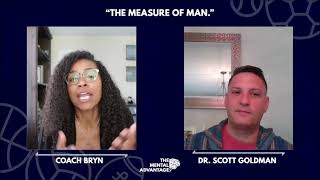
In this episode of The Mental Advantage, host Bryn Drescher interviews Dr. Scott Goldman, a dual‑PhD sports psychologist and co‑creator of the Athletic Intelligence Quotient (AIQ). Goldman recounts his journey from semi‑professional soccer and a childhood interest in child psychology to developing a sport‑specific cognitive assessment with partner Jim Bowman. He explains the AIQ’s foundation in the Cattell‑Horn‑Carroll theory of intelligence and outlines its four assessment buckets—Physical, Experience, Intelligence (AIQ), and Personality—emphasizing that the tool is descriptive, not predictive. The conversation delves into the limits of labeling, the complexity of human behavior, and the distinction (or lack thereof) between mental health and performance psychology. Goldman shares how AIQ data can inform coaching decisions, scouting, and player development (e.g., spatial awareness, play‑book learning speed, injury risk mitigation) while warning against using scores as sole go/no‑go decisions. He stresses authenticity, transparency, and the need for holistic, individualized support, advocating for better training standards in sports psychology. The interview concludes with rapid‑fire personal questions, offering listeners insight into Goldman’s philosophy: introspection, tailored mental advantage, and a commitment to helping people positively.
Chapters
I think it's not so much that I think we're over-labeling. I think what we're doing is we're undervaluing the complexity of human beings. Like, that's why I'm not really a fan of like the 5 personality factors or the, you know, like anytime you see a personality inventory that identifies an individual as one of 6 types or 5 types or 10 types, like I just, I think human beings are way more complicated than to be one of five.
Hello everybody, welcome to another episode of The Mental Advantage. I'm so happy to have Scott Goldman, PhD. Not just one PhD, that would be impressive, but he has two, and he's a certified performance mental, uh, certified mental performance coach. Excuse me. He has also worked with the Lions, the Wizards, the Dolphins, as well as currently consulting with the Golden State Warriors. And if you know your teams, you know some of that's NFL, some of that's NBA, but the point is he is quite accomplished. In addition to, he's worked with several universities, one of them being my arch rival from college, the University of Michigan. I went to Michigan State, but welcome, welcome, welcome, Scott. How are you today?
I'm doing well. How are you?
I'm doing fantastic. I really appreciate you being here. So obviously I'm more interested— I'm interested in all the things that you've got going on with, uh, your company as well as your testing that you do with the NFL, the NBA, and all the different professional leagues. But before we get to that, I'm interested in the man behind the resume. How did you get started in all this? Were you a former athlete? And what kind of drew you to this space?
Oh man, that's a good question. Uh, let's see. Uh, I played competitive soccer, uh, got as far as playing semi-professional in New York. And while I was in grad school, I originally wanted to be a child psychologist. That's why the two PhDs— one's in school, one's in clinical— and I really just wanted to work with children. And, um, it was playing soccer and having a passion for that and having a passion and understanding human behavior, um, that it was almost kind of like putting peanut butter and chocolate or chocolate and peanut butter. Like, oh wow, this, this is kind of a neat combination. I wonder if there's a way to work these two worlds together.
That's awesome. I, that— yeah, so I've listened to a few of the podcasts that you've been on before, and you talk about your company. I don't want to get it wrong. I, I know that the acronym is AIM, but tell me what it stands for.
Athletic Intelligence Measures.
Athletic Intelligence Measures. And so you developed this with a colleague, and, uh, his name escapes me at the time, but 15 years ago you guys were both in school together essentially, or studying under, uh, a really, uh, great mentor in Albert Ellison, I believe is the name. Yes.
Yeah.
Dr. Cabrerales. Dr. Cabrerales.
Yes.
And what you did was, is you guys, you know, like I, what I loved about one of the things I heard you say on a previous podcast was the richness was not just in the faculty or being with this amazing mentor, but the people you were going on this journey with. And so you guys got together and developed this whole model. So tell us more about that.
Sure. I mean, I gotta think how to phrase it. Like, right now, COVID and everything, I think that there's kind of an interesting phenomenon that's happening, which is everybody's starting to talk about wanting to work from home and doing everything virtual and, and all the luxuries and benefits of kind of remote business mindset and model. And there's a part of me that wonders if what's going to happen next is people are going to go, yeah, I feel like something's missing. And I think the stuff that's missing is, you know, the water cooler conversation or the walking down the hallway between meeting conversation. And so in that regard, my partner, Jim Bowman, he and I were fellows at the Albert Ellis Institute. And it was just one of those kinds of days where I was telling him about this vision I had. And he was like, oh man, I could completely execute that with some of the professors that I'm working with at St. John's. And so the two of us just started to brainstorm this idea of what would it look like and what would it be like if we were to measure sport-specific cognitive abilities.
That's awesome. And I agree with you on the water cooler conversations because obviously, yes, there's so much magic that happens in the business world, in the work world, in the world world, in the conversations in between, the things that you couldn't have scripted or predicted. It's just, you know, you mentioned something and then the magic happens. Now, you said it took you 15 years in previous, you know, times of talking about this to bring it forward. How familiar were you with other models in this aspect, and how much was it about like improving upon those models or completely detracting from them, so to speak?
Sure. So my partner, Jim, he's a school psychologist by training and trade. You know, like I said, I have that degree. And so one of the common languages that we had was the Cattell-Horn-Carroll theory of intelligence. Now, not to get super nerdy about the CHC theory, but most predominant forms of intelligence testing use or have been augmented by the CHC theory. So the Wechsler scales, the Woodcock-Johnsons, the Stanford-Binet. So if you think about, um, learning or identifying a learning disability, discovering a learning disability or discovering giftedness in children, what they often do is they have, they have two measures. One is an intelligence measure and one is an achievement measure. And technically, a learning disability is when an intelligence measure is high and the achievement level measure is significantly lower. And they're just going, hey, for some reason, this person's not digesting the information in this subject manner in a more traditional way. To be honest with you, I'm not really a fan of the term learning disability because it suggests disability when really I think it has more to do with a learning process or a processing style that is just different than say mainstream. And so if you think about that concept and now apply it to sport, the idea that we always had was, or me as a sports psychologist, I've never met a coach who loved yelling at players. And I've never met a player that says, "Man, I just love to be yelled at." And I think sometimes the mechanism and the reasoning for why that frustration occurs is a misunderstanding, not just in communication, which would be more of a personality thing, but also in a processing. Like, you wouldn't ask an offensive lineman to race a wide receiver and beat him in a 100-yard race. Or 100-meter race. You would just, you would just look at those two body types and say, oh, that's, that's a no-brainer. That wide receiver is going to win that race every time. And so it was a similar kind of thing, which is sometimes the expectation, like when it comes to teaching, installs, coaching, et cetera, is that everybody who's in the room should be learning the same way. And that's not always the case. And then similarly out on the field, the idea is, you know, it's like, why is that guy always in the right place at the right time? And sometimes that has to do with the amount of effort they put in practice and rehearsal. So it's really just rote and it's just executing what they've done 10,000 times. And other times it's them having to kind of solve the puzzle in live time.
Oh my gosh, you've said so much there that I'm like loving. I mean, of course I'm thinking of the quote, never judge a fish by its ability to climb diagrammetry, as well as I'm thinking of the love language thing, right? We got to find how they learn or how they like to receive information so that we can then get the desired result. I mean, there's so much there that I think is important. And like you said, like, no one ever makes a mistake on purpose or doesn't want to perform at a high level. So it's like, how do we find the way to unlock them? So, and I, and, and There's no accidents, right? You coming from, you know, your friend coming and you coming from that school psychology space, you had that thing of like, wait, maybe there's some different learning styles. And, um, and the athletic— and the thing you said about disability, my brother is, um, uh, special needs or whatever label you want to put on that. But yeah, I think that even our ability to quantify what is possible for any human being is, uh, lacking, you know, in some ways. Because it's like you can't really measure the totality of a person.
Um, I mean, I just remember back when I was working in a clinical psychiatric hospital with a young teenage boy who had some really significant trauma, and part of what he was noting was, um, he said, gosh, I just wish I was like a shark, you know, like shark sharks eat their weak, they eat their, you know, those that can't keep up and all that. And my response to him in processing that experience with him was also kind of like, you know, if Stephen Hawking was a shark, you know, like if, if we start to look at some people who have contributed to our society in brilliant ways in different kinds of situations or circumstances whether it be because of their mobility or skin color or race or religion or any other kind of way to label somebody or potentially ostracize them, becomes a missed opportunity. And I think something that I get really excited about is we're the only species to have ever made it to the moon. Like, you know, some species are barking at the moon and we're the ones that have actually landed on it. And I think there's something about our collective That is how we've accomplished that. And I think one of the ways is we connect with people, we engage with people, and we try to understand people. And that's what, that's what the AIQ, what we developed, was it was meant to be a mechanism to help understand how people do what they do.
Now, I know that, you know, in the past interviews I was watching, and I understand people just want to understand what the AIQ is all about, but people just really just want to, you know, I know from a fan perspective, they're like, is this guy going to be good? Is he going to take us to the next level? And then you have the organizations that are like, is this a good investment, you know, based on what we're feeling? And you're reaffirming all that. How do you balance? Because I know you have a professional way of responding to those questions, what I've seen in the past, but you can, and you can speak to that. How do you balance like, you know, the integrity of helping to understand versus giving data that people just want to sort of pigeonhole that person and go, okay, good, I know exactly what to do with this guy?
Yeah, that's a good question. So our approach has really always been one of authenticity, transparency, and truth. So when someone says, hey, can this guy be the next Joe Montana? My answer to that is, I don't know. Like, because I don't know. Um, yeah, if I had that kind of answer, I'd probably go to Vegas or something, or I'd charge a lot more money. I think the other reality to it all is, um, think about like the stock market, right? Like, if you've got a financial advisor, or if you've got enough cash that you're storing it away in some form of savings or in the stock market, that's just another form of gambling. But you got to ask the question, if my financial advisor is such a genius, what does he need my money for? Shouldn't he already be like a retired billionaire? So I think one of the consequences or conceptual sort of like flips that I try to offer people is our goal throughout a lot of sports and life is to just make well-informed decisions that We can't ever operate with 100% certainty. I mean, even with, you know, the weather, if the weatherman says there's an 80% chance of rain and it doesn't rain, that doesn't mean he was wrong. It just means that there was something that happened in the, in the climate that wasn't factored into his algorithm that pushed it, or did was factored into the algorithm that pushed it into the 20%. Of not raining. So from a similar standpoint, we've always talked about the AIQ being a descriptive test, not a predictive one. So this is where things get kind of interesting because our database is now large enough where we have found statistically significant correlation with on-field performance, like, um, rushing yards and running backs, or ERAs and pitchers, and you know, whether or not you go, uh, to the NBA or to G League or international play in basketball. And, and so though we have that stuff, I've always pointed out to the teams that I work with, just because you have a high score doesn't guarantee success. You know, I'm a 47-year-old dude who's pretty overweight and short and has a surgically repaired ACL. If I scored great on the AIQ, I don't think that that's somebody you want to draft as a wide receiver in the NFL. And the opposite too, which is like, you know, you could have somebody who scores low on the AIQ, but they could look the inverse of me. They could be 6'5" and they can run like the wind and have a catch radius and a wingspan that makes them practically indefensible. And that's somebody you go, you know what, we can figure out ways to work with him and his athleticism to minimize or offset some of the deficits that the AIQ has identified. So it's not a go/no-go type of instrument.
I love that. I'm so glad you said that because that, that, that's the one resistance I have is that feeling that we're pigeonholing these guys or telling them. But like you said, descriptive, not predictive. I think that's important that people pay attention to that. You're like, look, I'm giving you data and use that data to bring out the best in this gentleman, but also know that even with all the right tools, it's still up to that player to do the best they can with that information. And sometimes we're wrong, and, and we, we do the best we can to gather all this data, and maybe we can do something with this guy, or this guy surprises us, or whatever the case is. Now, so that the people listening have some sort of context, I know that there's more to the test, and— you know, like, and you usually describe it in the 4 buckets. Could you give the 4 buckets to our listeners to give a better idea? What does AIQ stand for, and what are the 4 buckets, so they get an idea what these players and organizations are looking at, or you're looking at?
Sure. So AIQ stands for Athletic Intelligence Quotient, and most people think intelligence is knowledge or knowledge-based, and it's not really. Um, So it's, it's interesting, right? Like, you'll hear this a lot in just layman terminology where they go, oh, that guy's got a great football IQ, or that guy's got a great basketball IQ. And the reality is, is like, no, I think what they're really referring to is more like experience. Like, he knows the answers to the test. And intelligence, by its simplest definition, it's our ability to acquire, process, and apply information. So if knowledge is experience, knowing the answer to the test, intelligence is how you go about navigating to find that answer out. So sometimes I give the example of like, most people know that 2 2 4, but there was a time in your life where you didn't know that and you had to figure that out. And part of the way you figured it out was like somebody gave you 2 apples and then they gave you 2 more apples and they told you to count them and you went 1, 2, 3, 4. You went, oh wow, 2 2 4. I see that now. And so, uh, the 4 buckets that you alluded to is just an old-fashioned description of a comprehensive athletic profile. Um, it's not based off of any science or rigor or anything. It was just my sort of anecdotal observation of trying to understand what I was listening to in the last 10, 15 years of being in, in the space where talent identification was key. And what I kept hearing was. Some kind of quality or description that fell into one of the 4 buckets. And the 4 buckets is physical, you know, are they big? Are they strong? Are they fast? Then the second bucket is experience. Like, you're always in great shape taking a point guard from Arizona or taking a linebacker you know what you're kind of getting there. Then the third bucket is the IQ bucket, the AIQ bucket, and then, which we've talked about. And then the fourth bucket is personality. And, um, I think it's the fourth bucket that's the real mystery. That's the real one that everybody's going, how exactly do you capture it? And, and to be honest with you, um, I think that's, that's a really hard one to measure. I mean, what's nice about the AIQ and intelligence in general is it's a, it's a genetically stable trait. It's one of the most genetically stable traits that we have. Have and happens to be one of the better predictors of success across a wide variety of, um, of, uh, careers and career paths. Excuse me.
Hopefully you can edit that out. All good, all good. Hey, people cough. I like to keep it in because just like everything, the show must go on. Mistakes happen, things happen, and it's all good. Um, fair enough. I think so. I love that. And I agree with you on the personality, right? Because you just never know. I know they're always like, you know, it's funny, I was watching a TikTok video and it was about a lady talking about the stuff they say about the draft players. And they're like, he seems like a real locker room guy and that kind of conversation. And she's like, or he's a real— this guy's a football player. She's like, aren't they all football players? But it's like the conversation and the rhetoric that goes around sort of, you know, labeling these guys in the media and how you actually quantify that to data. So what is it that you find that the GMs are really like, you know, they do well and how does the AIQ really like help them even further?
Yeah, so I think the GMs do a lot of things well. I mean, again, that's the art and science of this all. I mean, think about if you could really identify and predict human behavior, I mean, we could end wars, we could end terrorism, we could, I mean, we could do so much great work beyond just, you know, trying to win a Super Bowl. And so I think it's just one of those things where we have to accept and kind of embrace the ambiguity of it all or the uncertainty of it all. I think that's the paradox, right, is everybody wants the answers to the test. But if they had the answers to the test, I think they would be bored. They would just go, oh look, Team X is always going to beat Team Y, why even bother watching the game? Because their variables beat their variables. So, you know, I think what's really kind of fun about sports is it's, it's whether you want to call it like cops and robbers or a game of chess, but every time we get better at something there becomes a reaction to it. So if we want to go— like in football, for example, let's say we will go, gosh, our philosophy is to go big, we want to be big, we're going to be the biggest, strongest team, we're gonna 3 yards and a pile of dust kind of thing. Well, some other team's going to come along and go, we're going to be fast, and we're going to be so fast that your bigs can't catch up with us. And so there's always this kind of like twist and wrinkle. And I think something that's happening right now is you're saying, and I'm hearing a lot of, well, we want our guys to be smart. We want them to process. We want them to be a hybrid so that way we can have them play multiple positions. We want them to be able to understand the playbook.
And that's where intelligence kicks in. Gotcha. Okay, that's good. So it's, uh, the other thing I wanted to talk about, because this is the mental advantage and I focus on the mental game with athletes, of course you hear the 90/10 rule, and I know that there's the 4 buckets. How does the mental game factor into the success of an athlete, or how does it measure by the AIQ in your opinion?
Or, I mean, not your opinion, your expertise. Um, well, I think that's just it, right? So it factors in in about a million ways, and then, and then some. Because going back to that 4 buckets— physical experience, intelligence, and personality— they're not isolated and they're not independent. They actually, um, interrelate. So for example, the more intelligent you are, the quicker it might be for you to learn the playbook. The faster it takes you to learn the playbook, the less it might impact your body from taking more reps. If it takes the average person 10 reps and you have a high level of intelligence, it only takes you 5 5 reps, that might save 5— those 5 reps that are saved could be the 5 reps where you tear your ACL or you rupture your tendon, your Achilles tendon. So if you think about that kind of stuff, or, or talk about personality, like, I always find this to be kind of an interesting one where— and this is what really drew me to working with children and the whole dual psych degree path— was You know, when you see somebody who's frustrated like a kid and they're labeling him oppositional defiant disorder or attention deficit hyperactivity disorder or a learning disability, and it's like, well, which one of those things could it be? Because all I'm seeing is somebody who's fidgeting in their chair and getting into trouble. And it could be like, you know, it could be that there's an oppositional defiant, could be ADHD, could be a learning disability, or it could be like he's supremely gifted and understimulated by whatever's going on classroom setting. And so I think that's where you go, all right, so intelligence can impact physical because it can minimize injury. Intelligence can impact personality because now we're figuring out what kind of bandwidth this person can manage. And personality can impact experience because less effort to get more information—
you don't need 40,000 hours, you only need 5. Yeah, I love that. I mean, absolutely. I, I, I, um, I want to ask you, and of course I'm, I'm not asking you to go against your profession, but do you feel like we are over-labeling kids at this point? Because I feel like, you know, every day some kids like, oh yeah, I have ADHD, and they're still saying it as an adult. But it's like, at what point are we managing that or changing it or reversing course?
If that makes sense. Yeah, it does. I think one thing that I would look at is when it comes to diagnostics, you got to think about what's the purpose of diagnostics, right? So you use the word label, I'm going to use a more clinical term, diagnosis. And the purpose of diagnosis is really only twofold. One is to provide a great depth of knowledge, i.e., symptomology, in a really succinct package. So instead of going through the list of symptoms as one professional talking to another professional, you go, hey, this person has, um, schizophrenia. The other— but so it's really just about saving time. It's like a shortcut. The other benefit is for insurance reimbursement. So I think what's interesting is to label anyone with a diagnosis outside of those two purposes is really pointless. I think it's not so much that I think we're over-labeling. I think what we're doing is we're undervaluing the complexity of human beings. Like, that's why I'm not really a fan of like the 5 personality factors or the, you know, like anytime you see a personality inventory that identifies an individual as one of 6 types or 5 types or 10 types, like I, I just, I think human beings are way more complicated than to be one of five. So I tend to go with the idea of, to really understand human beings, I think is complicated. To understand human interaction is even like, it's a multiplier of sophisticated complication. And, and so the idea of what I do with the AIQ and what I do as a psychologist with working with teams is really the idea of trying to observe, listen, and interpret some of that human behavior and human interaction.
Oh my gosh, uh, undervaluing the complexity of people. I just want to highlight that because that was so powerful, and I think I agree. I mean, 100%, I don't think, I know I agree with you. I think that, you know, my thing is, and you may disagree with me on this, I think science can't touch certain things and aspects of the person. Like, there's just some things we'll never be able to measure. And I saw your— on your Twitter, you said that you retweeted that thing of like, everything important can't be measured and everything that can be measured isn't important, or something to that effect. And I thought that was really powerful. I wanted to sort of talk about Is it possible— this was the question that came to me, and it may be a silly question— but is it possible, or have you ever had an instance— and of course I know you're not going to reveal the person, I'm not asking for the name or anything— for a person to just be like, yeah, this guy you don't want? Is that possible to be measured by the AIQ, or do you avoid with that? Because we're not talking about predictive, we're just giving you like, this is what it came up with, you make your own decision.
Yeah, I think there has been times where a GM or a head coach has asked me, can we take this guy off the board because of the AIQ? And my answer to them is, you can do whatever you want. It's your team. You know, like, it's all right with me if you take them off the board. And they go, yeah, but should we? And I go, I personally would not take anyone off the board because of an AIQ score. And they look at me like, what? That, that surprises them because they would think, of course I would stand on the table for my test. And I say, look, like, it's one piece of data, you know, going back to the 4 buckets. As over simplified as that is, to truly understand and measure and study each bucket in its depth and the way that they interact with each other is just— it's like staring at the sun. It's near impossible. I mean, it really is complicated. So I, I always say to people, you can do what you want with the data and you can value it however you want to value it. I think it would be foolish to value any piece of data as being the sole rationale or explanation or potential predictor.
I am so glad we're having this conversation because like that was one of the questions I had, and you really are helping me understand this even better. Because I think a lot of people get a measure, and I agree with you on the personality profiles, I've always not liked them. I'm also not a person person that's into horoscopes, but for people to tell me they know who I am based on some test, I'm like, you don't know me, you know what this test told you. But like you mentioned before, there's— even if you vary the questions, there is a degree of me answering the questions in the way that I think I should answer them. So there's— there's— it's not an exact science. Like, you know, nothing is exact. It's just like, how do you measure the measure of a man or a woman or any human? And like, that's not something that is 100% possible, I don't think.
So, well, and just about adding this other element to it, because you're 100%— I'm in total agreement with you. And so I think another kind of twist to all of that is what happens when you get married? What happens when you have children? What happens when you have the death of a loved one? What happens when you've gotten fired? What happens in the Mike Tyson statement of You know, no one really knows what you're going to do until you get punched in the face. Like, I think that there are things in our lives that can change who we are and how we do and what we do on macro and micro levels. I can tell you I'm different as a father and how I interact with my sons than I am as a son and how I interact with my parents. So is that a personality difference? And personality profile exchange. And so I think what's really interesting, to your point, is not only when taking some of these personality tests are we extrapolating to a whole person, but there's some research that shows up to 50% you can get— um, you can test somebody within, I think it was 2 to 3 weeks, and 50% of the time you can get a different output or outcome. On the same exact personality measure.
All you needed was 2 weeks. That's crazy. Yep. So exactly, exactly. So there's— yeah, so we, we— I think it's good for people to hear that. And it's like, take those things and use that, like you said, as a descriptor, not a predictor. Use that information as, you know, towards your athletes. Even the Grit Scale by Angela Duckworth and all of it, it's great information, and it's going to help you to better reach that athlete or to better know how to use the skill set and the expertise or athleticism or, you know, strengths of that person, but don't necessarily use it as I know everything about this person and I know what they're capable of or not capable of, so to speak. Sure. So the other question I had for you was in regards to, um, when you have athletes that are not doing— so do they come back to you? I know you're helping with the draft and sort of that, and you've been consulting ongoing with that. So how— you talked before— sorry, this is— I'm formulating the question in my mind. You talked before about how this helps coaches. So talk a little bit more about that because I'm really passionate about, you know, like not like you said, measuring everybody with the same stick or coaching everybody the same.
So speak about how this can help with that. Yeah, so it helps in a lot of ways. Sometimes it's about why is it that this guy seems to always be like 3 yards in the wrong location? And it's like, oh, well, his spatial awareness score is low, his ability to kind of know where he is in relation to key landmarks. So what do we do about something like that? Well, what you want to do is you want to have maybe some concrete touch points, or you create different kinds of mechanisms. So here would be a concrete example: a wide receiver or running back on a comeback route, one where they catch the ball with their back to the end zone, they now have to rotate 180 degrees after catching the ball and recalibrate where they are in relation to space. That's a cognitive ability. And if you can do that better than somebody, if your cognitive ability— sorry, if your cognitive ability is higher, then catching that ball and going 180 degrees and recalibrating shouldn't take as long to recalibrate. So now comes the question of, what if I've got somebody who's absolutely incredible across all the other buckets and domains, but when it comes to the spatial awareness bucket, he's got a cognitive deficit. Well, don't have him catch a ball with his back to the back to the, to the end zone. Seems pretty simple, right? And they go, but we need that kind of stuff in the playbook. Okay, well, can you have them catch the ball at a 45-degree angle or a 90-degree angle where they only have to rotate so much? Versus a full 180. Yeah, we can do that. So for example, as a running back, instead of it being a screen pass catch and then identify your blockers, it's maybe some kind of like circle route where you catch it with your body still kind of facing somewhat forward.
Ah, so be more— yeah, learning how to better employ based on the strengths. And I know, um, Gary V talks about this, and I think he's the first person I heard say it, but he, and he talks about like, don't work so much on your weaknesses, but work on your strengths. You do give this data to the athlete as well.
Am I correct on that?
Yeah, if they want it, if, if they're interested, right? So do you advise the athlete, or do you think it's possible? And I know we've talked a little bit about this, so I think you do, but that they should work on those deficits or they should just play to their strengths?
As for time factor and whatever, like, you know, yeah, why not take a holistic approach? You know, why not be both? I don't know if this is an either-or scenario because here's another part of the aspect of that coaching skill acquisition dialogue, which is, you know, at the professional space there is a constant debate about time on task. You know, coaches would love more time, players would love less time. And so it's like, all right, now comes another decision. Do we simplify the playbook and be very predictable but execute at a high level? Or do we make the playbook more complicated so we're less predictable, but we might be a little bit sloppy and prone to errors? And so one element of the AIQ can be, hey, if I've only got 1 hour to provide this lesson plan, this install, do I have the way to coach this player most efficiently? Like, hey, this player would learn better watching film. This player, it's like you're really going to need to get them out there on the field and, and kind of wrap them up. And it's that kind of dialogue. So I think there's that other kind of mechanism to it too that can help improve the process.
Learning something new— time on task. Thank you. I've not heard that before. Before. Um, so that's really helpful. And I do know coaches do want more time, and the players definitely don't want more practice, although sometimes they do. And but they want more attention, right? Like, not maybe sometimes one-on-one depending on the, the skill. If you have an athlete that is, you know, performing well on the AIQ, but like you said, it's not a predictor, and they're struggling within the regime, um, is that something that comes back to you where they're like, hey, the AIQ said this, or is that where you're still working with them and saying, well, based on what I'm seeing, this is where you could counter, you know, counteract that, or, you know, address it in a different way? Or how does that work when it's an ongoing consulting?
Yeah, so sometimes I'll use the metaphor about like, let's say you lost your keys. You're like, I don't know where my keys are, and you're looking all over the house. If you were to thoroughly look inside your kitchen and they're not there, that's just as valuable information as where they are. Like, knowing where things are not is as valuable as knowing where things are. So if you go, man, this, this player is— he's physically gifted, he comes from a major program where they teach the exact same kind of offense we run, his intelligence is really high, but he is not performing well. And this has actually happened a few times at different levels with different teams that I've worked at. And I'll say, have a heart-to-heart conversation with them. And they'll be like, really, why? And I go, well, we know it's not— it's not in this bucket, we know it's not in this bucket, we know it's not in this bucket. I think the last place where your lost keys are is in the personality. So just have a heart-to-heart with the player. And almost every time that scenario has happened that I've described, the player breaks down crying. I don't love the game anymore, kind of thing. So I think, again, not to oversimplify things, I think all behavior has meaning. And trying to digest and understand what the meaning is behind a behavior is really hard. But if you can crack that code, then you can either increase the, um, increase the amount of time that behavior engages. You can decrease the amount of time that that behavior engages. So, and that's really kind of simply what we're doing with human interaction, whether that's with our spouses, our boyfriends, girlfriends, our co-workers. Like, all we're trying to do on this planet is, is get people to do more or less of something.
Yeah, that's really— yeah, like, right. Then let's not ever forget, um, the human aspect. I heard you say on a different interview that you did that, you know, even at the end of the day, these are someone's son, someone's brother, someone— you know, this is a human being inside the, you know, inside this test. So it's not just like, oh, let's look at their stock and, you know, like, you know, move them like chess pieces on a board. Like, we're talking about people here. And that's the part you just, you can't necessarily always account for.
I was on the sidelines with an NFL team, and I was standing next to a wide receiver who was a really stand-up guy and was doing some things that I really respect and admire, um, from a social activism standpoint. And the fans at a particular stadium we were at were saying things to him that I just couldn't imagine anyone would say to anyone. Like, it was so— it was just venom. Like, it was just pure venom. And so standing next to this guy and supporting him, and him kind of going like— he actually says to me, and what a great insight on his part. He goes, you know, I wonder what it would be like for them. It was almost like an empathic statement because I wonder what it would be like for them if you and I went to their workplace and started to say some of these things that they're saying to me while I'm trying to work, kind of thing. How would they react to that? And it got me really thinking, why is it that we can— is it because they're on TV so they feel less real to us? What is it that makes us feel like we could say the kinds of things that people say to athletes and coaches without remorse. Like, you would never tell your, your wife or your husband or your mom, or like, you would never say, 'You suck,' you know? Like, even if they did something that you were really frustrated and disappointed in, like, they would let you down. Like, you know, my wife might let me— like, let's say my wife cooked a really bad dinner You know, like, she's an excellent singer, but let's just say for a second she cooked a bad dinner and she goes, hey, what do you think? It would be insane for me to be like, honey, you effing suck. I would just eat the dinner. I would just eat the dinner and smile, right? And so it's like, why is it that we have this pseudo relationship between fans and athletes, which is a good thing? Like We, you know, fans, they love their teams. They have this passion. And I get the disappointment of when the team doesn't play well. Like, I really can empathize with that. But I still don't quite understand why do we say that this is an acceptable, permissible thing to say, you suck, or worse?
Yeah, I cannot agree with you more. Like, I, I find it very fascinating that because, you know, they get paid enough, they can deal with this as part of it, you know, like that's part of the job. And I'm like, but why is it part of the job? Like, you know, this is a human being. I was watching the Vince Carter documentary and what he went through when Toronto kind of turned on him. And, you know, but I don't think people think about that. It's just like, look, guy's got money, he's fine, you know, like he let us down. And like that, there's a personal investment for these people too when they play for these teams and they play for these coaches. And at the end of the day, they're human beings. And so I think that we could have a lot more compassion and empathy, which leads me into my next point, because you are a psychologist and I know you're measuring all these things to help the player. How much— because you come from the performance psychology piece, but I know mental health is a passion of yours, um, where do we, you know, is that something that's measured in the AIQ, or how do you advise organizations to to sort of address that or to keep that at the forefront for these athletes?
Yeah, so I think this is something that's a little bit problematic in our profession, and I'll take ownership on it as much as anyone. I don't know why we've bifurcated the difference between mental health and performance. Like, I, I just, I don't understand how people draw that line between what's pathological or clinical versus what's performance-driven. Like, I've worked with some athletes that— like, there was this one person who had the third fastest time in the world, and they wanted the first, you know. And I asked them what the difference was between first and third, and they said it was like 3/100 of a second, which is like the length of a sneeze, right? And so that's really rarefied air. And I said, you know, let's work on that. And in the nature of working on that, there was no intention or diagnostic element to it. Wasn't like, oh, they have obsessive-compulsive personality disorder or anything of the sort, but they definitely had anxiety and depression and, you know, guilt. Um, like, you know, there were all these emotional invested kinds of, of elements to their process. So I just, I think that's something that we've made a huge mistake. I would love it if our industry were to correct this. I don't know if it ever will, but we seem to think of it as this or that. And I think it's really this and that. And I think here's where things get kind of problematic and tricky is Well, where do we puncture the membrane between mental health and mental well-being? And then is performance on one side and is, you know, clinical on the other? Like, all of these, it's just word soup. I'd rather us just focus on the individual and help the individual wherever they're at, and then be well trained enough to support the individual in whatever quest and concept they go for. Because my experience is when you're really trying to do something elite, like break a world record, win a gold medal, win a Super Bowl, national— like, anytime you're on a quest to excellence, you're going to have slings and arrows at your back. You're going to have trials and tribulations. Like, there's going to be heartbreak, there's going to be sacrifice, and all of those things come with a need for emotional support. So I don't know why we separate mental health and performance. And other— so sorry, that's my soapbox. I should get off that soapbox. Going back to your question at hand, which is, you know, does the AIQ help with that stuff? I think it does, because again, the AIQ— sorry, not the AIQ itself, what the AIQ measures does Because intelligence can help you generate creative solutions. Intelligence can help you discard a calcified way of doing something. Intelligence becomes a resource that you have. So a lot of times I'll use this metaphor of height helps you get the thing that's on the top shelf. It doesn't prevent you from getting it, it just makes it easier. But if you don't have height, you have to get a step stool or a ladder or something to get that off the top shelf. Intelligence can help you solve complicated puzzles and challenges. If you don't have it, you might just have to tap into some other resources.
That's all. And I'm— I don't want you to get off that soapbox. I love exactly what you're saying. We've talked about this, um, using the example of the NFL player, the Seattle, um, forgetting the name of the team for some reason right now. Um, but Chad, his name's Chad Wheeler, I think. And, um, I was— I, I've only had one post ever go viral, just being 100% transparent, and it was about him. And it was about the fact that this guy needs some help, you know. And people are like, but he did this thing to this woman. And I'm like, it's not an or, it's an and. And I think that And I'm like, and he's an elite athlete and he's got all these different identities— white, male, you know, all these different stuff. But it was— people just really just want to put, this is the thing. And I think that's the same thing they want to do with your AIQ sometimes, like, this is the thing. And you're like, no, there's so many things and we need to take the whole of the situation. And I couldn't agree more how mental health— because oftentimes even when you say you're a mental performance coach or you work on the mental game, people people go, oh, but I don't have any like things that I'm like struggling with. And you're like, but that's not what we're talking about here. We're talking about mental health and mental illness are two different things. And one just requires, like you said, a diagnosis or a label. But even so, it doesn't mean that you're not able to perform or to function in some way.
So, well, and it's also— there's some cultural context too, because for example, um, eating larva might be something where people go, what's wrong with that guy in America? Because we don't really serve larva at restaurants here. But you go to a place like in Mexico and they have that as a, as a staple in their diet in certain regions. So I, I think the context of what is considered abnormal and abnormal behavior, because that goes another element to it, right, is Anybody who's got a level of mastery in a sport could be somebody else's label of obsessive compulsiveness. Because a guy who's shooting hoops to the nth degree in order to get it to sound just right and get the, you know, get the net to, to whip and make just a crisp kind of sound, you might argue that that's not a healthy behavior. But he could lead the league in free throw percentage.
And do people really care about his mental health when he's performing? It becomes more of our challenge when they cease to be athletes, and then, you know, or there's some event that happens, sort of like the Chad Wheeler case. So what, um, what do you feel that, you know, like you said, as a, as a, as an organization or as an industry or a profession, we could do more to sort of, you know, make sure that those lines that are all blurred kind of get erased in some way so that we're addressing the whole human. What do you see as far as the identity piece? Because that's a huge part of what I've encountered in my work. I'd like to know what you think about that, and what do you think would be a better way of addressing it as we go along?
Yeah, that's a good question. Um, I think if we recognize that we have a tendency to oversimplify the complicated, that human behavior is incredibly complicated and human interaction is even more so, if we really appreciate and respect that, then I think we can start to appreciate and respect the kind of training that is required to be able to understand human behavior and human interaction. That it's not something you can read from a book. It's not something, you know, that you can just hang a shingle and all of a sudden just go to work being an expert in human beings. I think if you recognize that it's hard work to do this stuff, then maybe a place to start is really with training and education and even coming up with a more homogeneous population of care providers. There, there's a lot of clarity when you go to a dentist. There's good dentists and there are bad dentists, but there's a lot of clarity in what to expect when you go to dentistry. But I think when it comes to sports psychology, performance psychology, whatever we want to call it, there's a high level of ambiguity, or there's a lot of diversity in how you were trained, what you were exposed to, what areas you have a level of mastery or expertise on and what levels you don't. And so I would love, as a place to start, is if we homogenize the training of the industry, then we would have a more comprehensive and holistic level of care so that whether we were working with a team, a coach, or a player, we could go on the journey of growth and discovery with them and as it mutates. So if it's like going back to, let's say we're starting with an Olympian who's got the third fastest time in the world and they want the first, and that's where the journey starts, but it migrates to say some form of disordered eating, that you can stick with the person as they're going on the journey.
Right, so you don't have to have a separate expert to come in because it's part of that— like, you spend all that time building that relationship, and then, you know, you've got somebody else's hand that's in the pot and somebody else's hand that's in the pot. So yeah, that makes a lot of sense.
So the flip side to that would be you don't add another person, but you think that that's something I can handle when maybe I wasn't trained to handle Yeah, that makes sense as well, right?
Because like now I'm out of my depth and I'm not equipped, and this person only wants to talk to me, but I'm kind of like flying blind here. Yeah, absolutely. So, uh, the last question, because we're going to go into some rapid-fire questions real quick here because I want to be respectful of your time— the, uh, my last question is, you— I think you've already addressed it, but I just want to make sure that we sort of anchor that When we talk about— one of the questions I ask all the guests is, what is your mental advantage? And I think you would say intelligence, but, you know, just so that people understand, once again, when you're saying intelligence, you're not talking about knowledge, you're talking about how we process information. And you talked about the different ways that we do that, but say a little bit more about how, if someone is listening and they're like, how can I be more mentally tough? How can I be a better athlete? Athlete so that I can get recruited or I can do well on things like the AIQ? What would you recommend that they sort of look at themselves and do? Or messages for coaches, however you want to look at it.
Yeah, see, I think this goes into sort of what I was talking about a little bit, and I like the fact that you're asking that kind of question because this is what I noticed, something that we do. We get hooked on a phrase like grit And so, like, you mentioned Angela Duckworth, for example. What a wonderful scientist. What a great practitioner. Like, her research and the depth of what she was talking about with grit is phenomenal. And then it starts to migrate and mutate a little bit to where now all of a sudden, people talk about grit in a way that kind of references the complexity of what she put forth in her work. But has kind of been also a little bit diluted, almost in some ways replaced with, yeah, I'm just going to use grit because I'm the kind of person who believes in long hours and hard work. So it reinforces a construct I already believe in. So what happens is, right, we, we start to bounce around from terminologies to terms of grit to mindfulness to— I think like the new one that's now starting to come around is mindset. What's your mindset? And, and I'm going like, for me, um, this is complicated. And so if there is a coach who's listening, or if there's a player who's listening to this podcast, I'm not going to tell you grit's the answer, or mindfulness is the answer, or mindset's the answer. I think this is not about a one-size-fits-all universal truth. I think there's very few universal truths in this world, and to say here's one that would work could actually do more harm than good. So I would say in a paradoxical way, the one universal truth is that there's no universal truth, is Where— so if I'm asked, if you're asking me to, to address your audience of what would be the mental advantage or the competitive advantage, it would be have some introspection, think about what resonates with you and what you feel like is might be missing, or what you feel like you might want to lean on and, and rely on, and work with that. And then find somebody who helps augment those strengths, offsets those deficits, and can go with you in a holistic care.
I love that answer, Scott.
You're my people.
I didn't know you were my people as much as I do now, but I'm like, oh my gosh, yes, like that one-size-fits-all. I've been— ah, this is so needed for people to hear this because there is this thing of like, oh, I'm doing this, I'm doing that. And then you have people demonizing positive psychology or demonizing these things like, that's not it. And it's like, it's not any of it alone, it's all of it and then more, right?
So I think that's important. Well, I think it goes both ways, right? Because as much as people want a quick pill type answer is as much as we're trying to give people quick pill type answers. And so I think the real thing to appreciate is We should stop saying there's a quick pill, and people should stop seeking a quick pill. And if we did that, then it might be like, oh wow, this stuff really is complicated.
Hmm. Yes, yes, yes, yes. I know Michael Gervais talks about that. There are no hacks or shortcuts. There are just, you know, the process of working on oneself, right? As a man thinketh, so is he. And so we really just need to work work on ourselves and find people that help us deepen that process. And that is where we're going to find the depths of optimal existence, I suppose, or performance if that's the case.
Um, figure it out, something will happen that'll change the whole, the whole chessboard.
That's true too, right? Like, like you said, life events. Because yeah, when you, when you mention the death of a parent, like, that happened to me and it was like, you know, you're like on rise and then this happens and then you're like, you know, sort of fumbling around for your foundation.
So absolutely, 100%.
Yeah, there's this old proverb, man plans, God laughs. Yes, absolutely, absolutely. Okay, so here are the rapid-fire questions. Thank you, Scott. We got some really deep diving questions.
What is your favorite snack right now?
Rice Krispie Treats.
Nice.
Do you make them at home or do you buy them at the store or both? Make them. Of course. I mean, you're a purist. I mean, I would assume so anyway. All right. So next question is, what superpower would you want, or if any, and which one?
Why? I would like Professor X's ability to read minds and everything. I think that would make my job a lot easier.
Now, you're the first person to say that that I'm like, that makes sense. But when I hear my athletes say it, I'm like, you're just trying to figure out what other people think about you. But you, that's your profession. You kind of need people to be straight with you. And sometimes getting to find out what's underneath the thing could possibly help in a lot of ways.
So fantastic.
Can he move? He can just read minds or can he— no, because Magneto moves metal, but does Professor X move things?
As well? I believe he's got the whole shebang. He's got telekinesis, he's got, he's got all that ESP stuff.
I'll take it all. Okay, fantastic. All right, so this is— I always say it's the most personal question, but, uh, so some people are very passionate about this. You may feel similarly. Uh, toilet paper comes on a roll, and some people like it over and some people like it under.
And, uh, which one are you? Uh, I am whichever way it's, it's set up, but I did read somewhere that if you do it under, it actually uses less toilet paper so that it's a more economical. So I believe that there is some science behind the over-under question, and so I would say whatever, whatever makes better sense for humankind.
Okay, and I am going to ask you to add that to the AIQ. I think it gives you a lot of data. Okay, Scott, so I know that it's been 15 years and you've got statistical significance and correlation, but I'm just saying this toilet paper test really tells a lot about personality and could mean the difference between a star and not a star.
It might be everything that we were missing. We could double, we could double the cost point on the AIQ if we added the toilet paper question.
That's it. Or at least, I mean, you know, I'm sure you guys do a lot of fun things, but you know, it's just a fun question that you throw out, you know, to start them off. Sure. Um, so the other question is, who's your personal hero?
Um, probably my dad. Why? Because I think he gives generously I think he's a world-renowned physician who helps heal people. He cares for people deeply. He's kind, he's generous, he's intelligent.
I think he's just a great role model. Nice. And no doubt with such a wonderful son. And last but not least question— He's probably 6th generation. No, I don't think so. I don't think so. You seem pretty awesome. And yes, technically I don't know you that well. Anyone can be great in an hour, but I have a good sense of feeling, and you're a good guy.
So I appreciate it.
That's kind of you to say. Thank you. All right, so last question, uh, what would you like to be known for or remembered for on this planet if you're not already doing that thing, or you don't feel like that's solidified? What would you like your legacy to be, or to be remembered for the most?
That I contributed and helped people in a positive, meaningful way.
That's beautiful. I think you are doing that, but, uh, you know, I know that you, you will decide that, but I think you're doing a great job. Uh, okay, so where can people find you and connect with you? Teams want to work with you. Uh, is it possible to work with you in a nonprofit? Nonprofit aspect, if there's like high school teams or younger teams?
I mean, you know, tell us more about that. Um, with the AIQ, it's 16 and older. With me, you know, I just want to do cool stuff with cool people. And so I'm very fortunate where I'll go wherever there's opportunity to do something cool with some cool people. So I'm always open and willing and honest to work with anyone who's kind of going on a quest.
Fabulous. And where best to connect with you, on the social media channels or website?
Sure. I mean, I'll be honest with you, I'm not, I'm not really hip on any of that stuff. Like, I've got a LinkedIn account, I've got a Twitter account, but I'm not really sure I even know what I'm doing on that stuff. So, um, I think— I don't even know what my Twitter is. Like, I think it's like @ScottGoldmanPhD. But so you can reach, you can reach me there. You can reach me on LinkedIn.
You can email me. It's goldman@athleticintel.com. Fabulous. So thank you so much, Scott, for being just so great as well as the work you're doing and this wonderful conversation. I look forward to connecting with you further in the future.
Yeah, no, I appreciate it.
More from Bryn


Who else hype for this upcoming season with Caitlin Clark and the Fever with all these great adds?







How to be nicer to yourself: Stop putting yourself down either out loud or in your head


Winning At The Net Game of Sports & Life No Matter The Score - Episode 60 w/ Jordanne Scott