The Power of A Pep Talk: How to Motivate Your Team - Episode 18 w/ Johnathan Flowers
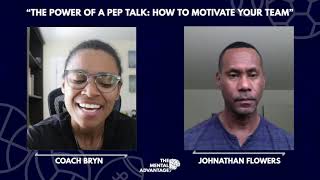
In this episode of the Mental Advantage Podcast, host Bryn Drescher interviews former football player and coach Jonathan Flowers. The conversation covers Flowers' athletic upbringing, his transition from player to coach, and the origins of his viral 32‑million‑view pep‑talk video. Flowers explains his team‑first philosophy taught by his father, his stance against punitive coaching in favor of accountability, and the importance of mental health support for athletes. They discuss racial representation in football, the role of emotional leadership, and how lessons from sports and military service translate to his current career in integrated marketing and life coaching. Flowers also shares stories of high‑school championship moments, NFL experiences, and the impact of his speech on fans, charities, and personal growth. The later segment reveals his personal hero—his father—his desire to be remembered as someone who always shows up for others, and provides ways to connect with him on LinkedIn, Instagram, and Twitter. The episode emphasizes the power of authentic communication, empathy, and community in motivating teams.
Chapters
My dad always grinded into us that whatever goals you have in life, even if they're purely selfish, you just want to look out for yourself, if you put the team, the group, the unit, the family, and the community first, your odds of achieving those goals are going to increase exponentially. I mean, it's just you, you can't do things by yourself to that level. You never will. And so if you put those things first, in order to do that, you have to be able to be vocal about it. You have to be able to say things. You have to be able that change in the best way you can, you have to accept accountability. And when I don't see people doing that, it just drives me nuts, especially if you're doing it and you complain. That just drives me nuts. So it came at an early age. I would have to say it had to come from my father.
That's awesome.
I'm excited for you to see this week's episode. But before we get to that, I have a message for you. If you're a parent of an elite athlete or a coach of a high-performing team and you want you're looking for some help or assistance with making them more mentally resilient, perform with more confidence, be more consistent, anything like that, then this is for you. I have an 8-week program all designed to address exactly that, to help your athlete be at their best on a more consistent basis and not get tripped up by those little voices in their head and getting down on themselves for mistakes, but performing like we know they can. So what I want you to do is don't delay, schedule a— just grab a time on my calendar through this link, and let's set up a time to talk about your specific situation and how what I'm offering in my 8-week program can help. Okay, so it's Bryndresher.com/freeconsultation. So click this link, grab a time on my calendar. I look forward to talking to you. And now on to this week's episode.
Hey everyone, welcome back to another episode of the Mental Advantage Podcast. We are gifted today with an amazing guest, Mr. Jonathan Flowers. Couple of facts about him. One, he has a video on YouTube that has over 32 million views. Okay, I'm trying to get to 32 views. I'm just kidding, I have more than 32, but 32 million, that's amazing. And so we're going to talk to him about that, but He's also a proud girl dad, also a boy dad, but also a girl dad. And he is just someone that loves to pour into athletes. How you doing today, Jonathan?
I'm doing really great. Thanks for having me here today.
Absolutely. Oh yeah, sorry to talk over you. I apologize. I had the privilege of being on a podcast last week with Jonathan, and he— we were just so in sync with what we were talking about with athletes. So I just knew I had to have him on my podcast. So Jonathan, I, you know, I always want to start because I talk about athletes being like superheroes, right? And I don't know about you, do you love superheroes? Are you a superhero fan?
I'm a huge geek. Marvel, DC, everything.
Okay.
All right, nice. Um, and I love the origin story, right? And since you were a professional athlete or a high-caliber athlete, let's talk about how you got started. What was your first sport? How was it introduced to you? Tell me a little bit about that journey.
Well, I came from an athletic family. I had an older brother, I had some older cousins, my dad, my uncle, they've all been professional athletes. I have, um, a great-great-grandfather who was one of the first Black, um, athletes inducted into the Boxing Hall of Fame. Um, we have Olympic athletes in our family, so it was just around us. Um, the first sport I was really into though, got introduced to, believe it or not, was baseball. That was, and you're a little kid, it's not real baseball, it's like T-ball and then they have like coach pitch and all that kind of stuff. And then you kind of gravitate. And I was actually pretty good. I didn't like the outfield for some reason. It was super, super boring. Like you'd fall asleep out there and be looking at butterflies and things. And then from there, it just gravitated into everything you wanted to play. You just, hey, we're gonna play basketball, which you did around the neighborhood. And you went to play rec league. And then, um, you know, I dabbled in soccer because we had it at school, but it was not a sport I'd love to do. Um, believe it or not, I actually played lacrosse too as well. Oh yeah, because I think, I think our coach put us in that because it's like, it's not football season, this will keep you in shape and keep you out of trouble. So let's play lacrosse. And so we did that, and then it was always like football, lacrosse, basketball, baseball, that kind of thing, and then track. Gotcha.
Well, I'm also a track runner, and I know that most people are not huge fans of track because that's Once that person said, I saw a TikTok video that said, the reason I hate track is because it's the punishment for every other sport. Running, right?
It's funny because it's the truth. It's like, go run sprints or go run a mile. It's either the conditioning portion or the punishment of every other sport.
Exactly. Exactly. Speaking of that, since you come from the world of coaching, we'll get back to your football early origins. What do you think about that? That punishing piece, right? Like, because there are some schools of thought that say you're not supposed to negatively incentivize your athlete.
Athletes.
What do you think about the whole thing of making people run or penalizing yourself if you don't hit a goal or a mark or an objective that you thought that you should, or the athlete or coach thinks that they should?
Well, it's weird because I come from two worlds of thought there, because I come from a military background, athletic background. And in some cases, I get the whole idea of let me break things down so that you model and become the kind of athlete or kind of soldier or soldier or person or Marine that I want you to be because you have to execute a certain way, and if you don't, there are consequences. However, when it's youth sports, I don't— I have a real hard time with the whole, um, punishment thing. Like, what I would normally do is this: if you messed up, um, you're gonna help clean up. Like, more than conditioning, you're going to help the coaches, you're going to help clean up things, put equipment away, do that kind of stuff because you're not paying attention. Or something's wrong, right? If you continue to be a disciplinary problem, rather than just give up on you, let's say you're a wide receiver. Next time I'm punishing you and the wide receiver. So you're starting to pass that. If you do it a third time, then the whole offense is going to get punished. If it gets to a fourth time, I'm like, dude, you obviously don't care. The whole team's getting punished. So I'm hoping that the team will manage you and monitor you themselves. How to get you back in line. But that's for an immediate, like, just, hey, you know, punishing you just for the heck of it. I'm sick and tired of dealing with you. I was never a fan of that.
Yeah, yeah.
Because kids— I don't care how bad you messed up, I know when I messed up. And the only time I think it's appropriate is when it's a disciplinary problem. Like, you're speaking back, you're talking over the coach, you're fighting or anything on your teammates, then it's a disciplinary problem.
When it's about activity and accomplishment, mental errors, I'm not doing that Yeah, I love that. I think that's really important. I think a lot of coaches need to hear that because I think it, it is interesting that people think like kids make mistakes on purpose, right? And nobody's harder on themselves than a high-caliber athlete. We don't want to mess up. We don't want to make mistakes. And so to punish us only further kind of does more damage, I think, than, you know, than any good. But different when you're not paying attention, you're not locked in, you're late for practice every day, and, you know, those type of things. Because then that's more of a, maybe we need to teach them some discipline, we need to teach them a little bit of accountability and that type of stuff. So I like the— I like your approach in that regard. So getting back to your career, um, when you discovered, or I mean, you were playing multiple sports, like I said, everybody played whatever, right? I mean, I did soccer when I was a kid, I did track, I did, you know, whatever I could get my hands on. I did basketball, and then eventually you find that sport, right? So once you found your groove in football, what was it that you loved about the sport?
It was kind of the way— and honestly, it was a place where you can get away from the world. It was, you know, there's things going on in the neighborhood, or there's sometimes there's family issues, dynamics, there's personal things in your life, there's things at school, there's all kinds of things happening. But out there, it was, it was a bunch of kids. Like, yeah, obviously we're competitive and we would talk to each other and getting each other's grill a little bit, but we had the same goal. And like, literally, like, one of my favorite movies is Remember the Titans. Literally, like, I knew kids that were white or Puerto Rican or Black or Asian or whatever, and once we hit that football field, that crap didn't matter. It just did, you know. It, it, we left that stuff, um, off the field or out there in the neighborhood or whatever. It didn't matter, you know. It just didn't. And I love that aspect of it. This is our little dynamic. And then obviously there's an aggressive physical part, that's fun. Yeah, you just have to run around and tackle and hit people. You're a little kid, there's a reckless, but I'm here, I'm doing this, doing this, and it's not serious yet. When you get older, it got a little serious, then it was a bit different.
Yeah, absolutely. So what was the first, um, position that you found yourself drawn to, and was that where you ultimately found was your zone of genius? Or, you know, tell me a little bit about that.
Believe it or not, my first position I was drawn to was being a quarterback. And it was a Black quarterback that was, believe it or not, was the Steelers quarterback before Terry Bradshaw took the job named Joe Gilliam. And that was the first time I saw a Black guy at a quarterback position. And I thought, God, this is cool. He gets to touch the ball. He gets to control everything. This is great. Obviously, not to be disrespectful of where we are in history, but back then, coaches did not encourage kids to be Black kids to be quarterbacks. That was not the case. If you were an all-Black area, all-Hispanic, yeah, of course you were a quarterback because there was no other option. But when you got to high school, that position was always white. Always. It was, for whatever reason, stereotype, we're not smart enough, we can't have leadership, whatever the reason was, they put that. That was not the case. And it was, you saw it in the pros, you saw it in college, you didn't see those people. So what happened is he always— I was tall, I was fast, so he kept trying to make me a wide receiver, which I understand that idea in coach's head. Like, he looks like that kid kind of trying to do that, but that was just not my flavor. I wasn't feeling it. And one time our quarterback threw an interception and I was running around on the other side of the field. I took off, ran back, cut this kid off, and just lit him up in front of our bench. And the coach said, hmm, You want to come play on the defense side of the ball? And I never saw the offense side of the ball again. Wow.
That's great. I love those pivot moments, right? Like when something happens and all of a sudden it's like, I thought I was going on this path and then not. And then obviously addressing the historical context. I took a sociology class in college and I never realized— when you're a kid, you're not aware of these things. I never realized how— commentators would talk about Black players versus white players, and they would always talk about how they addressed the athleticism of the Black athlete and the intelligence or the smarts of the white athlete. And so all of a sudden, once I recognized, I was like, wow, that's so crazy. And I still look for it today. You know, like, how are they talking about, you know, Cam Newton versus Tom Brady and things like that? I think it has gotten better, but I'm sure sure it's still there. I don't watch a ton of professional football. You'd probably be a little bit more versed in that. Um, so I thank you for bringing that to people's awareness where we need to do some changing around the way we think about people because the position of quarterback has both skills— athleticism, and some of the best quarterbacks are the most athletic, but also that ability to have that field vision and make smart decisions. But that's every athlete on the field. It's not just athleticism, it is intelligence.
It's both. Yeah, I mean, I still hear it to this day, like when people talk about Patrick Mahomes. I mean, Jimmy Johnson was the head coach of the Dolphins and the Cowboys and coach at University of Miami. I was a total fan. And one time he was describing this, you know, I think the greatest quarterback in the game right now is Patrick Mahomes. He can make all the throws, he's athletic, he's very mobile. He's very sharp. Not once did he say Oh my God, he's a great decision maker. He understands how to manage game and control. He didn't say that. You know, he completely talked about his abilities physically. And I know Jimmy's not like that, but that's the way he was speaking.
Yeah. So that's good for people to have that awareness. How we change— let's change the way we're talking about our young athletes because that message is going to, you know, because representation matters. We see that, that, you know, Patrick Mahomes is one of the few Black quarterbacks that's ever even made it to a Super Bowl. Well, had he won, he would've been the first one to win it twice. So that was a big deal. And it's very important that we recognize that, you know, there needs to be more exposure, more, you know, awareness about how do we can represent athletes differently. And so I'm glad we're having this conversation. Absolutely. So you found the defensive side. What position were you? I apologize, I don't know. Is it linebacker? 'Cause that's what it sounds like.
No, no, safety.
Safety. Okay.
Yes.
The guy that lights up the receivers. Right. Okay. So you were in the middle, right? You're in the middle covering the flat. Yeah. Okay.
I'm in the middle of the field. Or sometimes they roll you down there. Do two of us in the back up there. Like there's two— I call it a cover two because there's two safeties back there. Sometimes a cover three where I have two corners outside of me or they roll a safety over. There's multiple ways to do it, but you're basically the last line of defense. And yeah, you're the big guy who sees the biggest things and the coverages shift based on what you're doing, what you say or call most of the time. You're like, You're the opposite of what the quarterback is on the other side of the field.
Ah, hence the term safety. Look at you teaching me things.
I—
my brother played football and he was the corner on the defensive side, but I did not know why the safety was called the safety. But now it makes sense. You're the last line of defense. So yes, and you have to assist with all that. And yeah, you know, some of those feats that corners safeties as well as wide receivers do when you're just like catching that ball with one hand or stopping him from catching the ball is pretty phenomenal. So as— when does it become— so you light somebody up in front of the bench, you're on the defensive side. What was your favorite high school moment in football?
Oh, easily when I was a senior, our high school won state championship, and the way it was, there was a kid— there was a school. And it was very, it was pretty much a very private school, all-white school, and it was called St. John's Academy. And they were just a powerhouse. They just, they had money, they were very affluent. We'd see these kids in Pop Warner, or what we called Youth Rec Football at the time, and you know, they had all the gear and everything. So they've been like, for lack of a better word, beating the crap out of us on the football field since we were kids. So we get to high school and I don't think, I don't think we ever beat them until our senior year. Like, we, we never beat them. They were always like— sometimes it was close games or rival games. And then we went into our senior year and I was like, man, this can't happen anymore. So we got them in a weird way. We got them the very last game of the season, um, and we were already undefeated. And it didn't matter if you beat them or not, we were going to the playoffs. Didn't matter, right? The coach was going to rest the seniors and rest a bunch of us players and let a lot of underclassmen play. And we were like, No, you aren't. No way, Coach. We're not ducking these guys. Like, you know, this is some of us, our last chance to beat them. Yeah. And so he reminded us that they realized that if you lose to these guys, you'll play them again next week in the first round of playoffs. So we'll see them back to back. If you beat these guys, you won't see them. No, excuse me. Let me rephrase that. If we beat these guys, you'll see them again next week or two weeks from now in the first round. If you lose to them, we wouldn't see them until the championship game, which is like— so we could kind of avoid them in our trip to the champ by just losing. And we're like, no, we didn't care, we're not doing this. So we get out there, literally no joke, and my 3 closest friends growing up— my next-door neighbor Sean Gassaway played corner, right across the street was Chris Eason, he was the other corner, and then Mike Borneo was next to his house, and Mike played, um, strong safety. So it was 2 safeties and the 2 corners. The 4 of us grew up together just being friends. Nice. So we went in that game, they ran the opening kickoff back, so now it's 7-0. Um, we're struggling a little bit, they get a field goal, so we go in the locker room, it's 10-0, and you could just see the attitude of, oh, here we go again, they're better than us, we can't beat them, blah blah blah. We started heading toward the locker room and the coaches are walking behind some of us and some of the seniors, me being one stopped and said, coach, we got this. They said, what? No, we got this. Like you said, when we lose, we won't see him until championship game. Doesn't matter. There's nothing you can tell us that we don't already know about what's going on out there. The seniors got this. And the coach, our coach was Coach Lester. He's a former Marine Corps officer. Let him have it. We shut the locker room door and we just went off. Like the leaders just went off, got in people's face and we're not doing this. This is not going to happen. We came back out the second half. Those guys didn't cross the 50. We beat them 24-10. They never crossed. Wow. And I told people that to this day. Now, did we win the championship that year? Now we did that. You can never take those moments away from somebody. I told kids, you get a moment like that in your life, even in your adult life, where you could just say you did something and through, um, pure force of will, determination, and focus, you change the outcome of something. Yeah. To me, it's still the greatest moment I've ever had. Sports.
Wow. The greatest moment. Didn't you play all the way up to the pros?
Yeah, that still was the greatest moment. I mean, I can tell you, like, the first time I put on the NFL uniform, that was an amazing feeling. It was a great— like, oh my God, this is awesome. First time to walk on the practice field. But by that time you were a grown person and the excitement was there. Yeah. But the excitement, what was to come, not what you've done, right? And this was just the excitement of, look what I did. Look what we did. Look at my friends and I did. I mean, I still talk to buddies that I went to high school with. We still talk about that. That's awesome. To this day. And we're all grown with kids, some of us are grandfathers, and we still talk about that moment.
Okay, now I feel like we have to talk about this because the video is all about a pep talk that you gave. And we had a funny moment on the podcast last week because I said that there I believe that there is no— and I think maybe that's where we need to make the distinction, but nonetheless, I said that when you're going into a large competition, there should be no difference in the approach than it is a regular conversation. But the way that it was said to me was that there is no special speech that one makes going into the big game versus the other game because they want them to think this is business as usual. You apparently are now not only the $32 million pep talk man, but you started this in high school. So I want to know really quickly, minus any expletives that were shared, do you remember what you guys said in that locker room? And absolutely. Okay, what— give me a little glimpse of it.
So we came in and basically, look, there's a bunch of us on this team that have seen this, and we've been dealing with these Guys, since we were kids, this is our last shot at it. And I'm like, if you're not going to go out there and give everything you got and do it, then don't leave this locker room. Because I'm telling you right now, you're not going to like what happens. You're not going to like how we handle this if you come out this room and you're not giving some of your best effort. Just, just, just get that clear. Anybody got a problem with that? Every senior stood up. Anybody got a problem? Let's settle this right now. And it was pin-drop quiet. And I said, don't come out this locker room And a bunch of like Sean Prather and JJ Thompson, like, these are big dudes. Like, I was like, we're just like, don't come out this locker room unless you got your stuff together. Just don't. And we were just— and obviously we were being a little more supportive and a little more yelling.
Yes, of course, of course.
A little more verbal about stuff. But they came out, the look on these guys' face wasn't, we're scared of you, it was, dang, I've never seen these guys this upset. Yeah, I've never seen— we were not a team that was like that. We were very confident. For the most part, and they had never seen a snap like that. And that was it. I mean, we just really got into— it was very clear. And it's like, I distinctly remember yelling at one kid because he was, he was trying to talk while we were talking, and I remember snapping and going, oof. So it was on.
It reminds me a little bit of the Billy Bean moment in Moneyball when he's like, you think, you think this is funny that we lost? You know, you think that, you know, this is, this is Funny, this is fun for you. Yeah, uh, absolutely amazing. And I think everyone needs to recognize, anyone listening, about if you're a coach, if you're, you know, giving your captains that type of accountability, that coach trusting the seniors and giving them that opportunity, knowing that if the coach came in and gave a speech, it would have been more of the same. But hearing it from those seniors, hearing it from their peers, and knowing that they're like 'Cause there's something about, they say that women bond before battle, men bond in battle. And I don't know if that's 100% true 'cause I don't want to stereotype, but I think that obviously there's evidence that shows that your team responded to the fact that we're not going to let our brothers down. We're going in there and we know they're serious. Look, we can see the look in their eye and it's different when their teammates say it versus when their coach says it. So kudos to you for having that sense of leadership already and showing what kind of athlete you were gonna be throughout the rest of your career. How many more pep talks did you give on the way up to the accidental, and we'll talk about that in just a moment, $32 million viral video, 32 million views, sorry.
Honestly, I don't think we said anything the rest of the playoffs because after we beat them.
No, I mean throughout your career. Before you became a coach, any other moments like that?
Oh yeah. Oh man. I mean, at San Jose State, there were, there were times when we were like, you knew you weren't going to beat this team. Like this team is a Division I powerhouse. Right. Like in SEC, we, it's really funny. We'd never beaten in the history of San Jose State until last, 2 years ago, 2 years ago, 2019. We never beat an SEC opponent. Like, you know, we beat LSU. Auburn, those guys down there, that those guys, you never beat them. Yeah. And I remember going into a game one time and we were playing an SEC opponent. It was a preseason game. Wasn't part of our regular schedule, but it was a money game. Like they give you money to come play us and we use it for television rights and all that kind of stuff. And it goes into the athletic department. And I've always been very honest with myself. Like, okay, coach, this is a money game. You don't need this rah-rah speech right now. We got it. Right. No illusions about what's going to happen. But we were just getting— we weren't getting handled per se, but we were just— you could see guys were just going through the motion out here. And I snapped in the huddle one time. I said, dude, you need to step up your game. Like, this is going to get somebody hurt. Like, it's like you're not playing your best game, but your brother hurt. But that's cool. Get the heck out of this huddle. And we were walking back to the locker room. And I remember somebody said something just out of earshot. I don't remember the whole thing, but it was something like, I don't know why we bother playing these kind of games. This should be— this is just— this is just practice to them. So coach should pull the starters so we don't get hurt. And I remember stopping, turning around and saying, what did you just say? And that— because we're on TV. Let me— like, yeah, you're— you want— you have an opportunity— people on this team have an opportunity to play in the NFL or whatever. This is your last shot at football for the rest of their life, right? And you're going to say something like that out loud? I don't even care if everybody felt the same way you meant it. You shouldn't say it. And I snapped and I went off in the halftime about that. So those kind of moments have happened plenty of times.
Yeah. So where do you feel like that came from, that awareness of like the mental game, or at least like, you know, taking advantage of these opportunities for you? I understand it was a collective senior effort in the moment in high school. But for you, where do you feel like you developed this idea? Like, I'm just different. When did you start to be aware of that, or who introduced you to it? That type of stuff.
I think I got it from my dad, and I started being aware of it like in middle school. Um, I didn't like bullies, so when someone would say something, I was the guy that would just sit in there and watch. Like, you've seen the coming-of-age movies where everybody kind of watches all the bully gets on the kid and somebody stands up? I was the kid that would say something. Yeah, you know, like, even to my boys, like, dude, why are you picking on business for it. And like, you know, it's not even— yeah, it is my business because he lives in our neighborhood. That's not how this works. That's not the way it is. And my dad always grinded into us that whatever goals you have in life, even if they're purely selfish, you just want to look out for yourself, if you put the team, the group, the unit, the family, and the community first, your odds of achieving those goals are going to increase exponentially. I mean, it's just you, you can't do things by yourself to that level. You never will. And so if you put those things first, in order to do that, you have to be able to be vocal about it. You have to be able to say things. You have to be able to affect change in the best way you can. You have to accept accountability. And when I don't see people doing that, it just drives me nuts, especially if you're doing it and you complain. That just drives me nuts. So it came at an early age. I would have to say it had to come from my father.
That's awesome. As you navigated the different pivot points of your career, What was your pinnacle moment in the NFL, or when did you realize you were done? Whichever one feels the best for you.
I can tell you exactly what had happened. I was coming off of an injury and we were in scrimmage, and I got really injured the week after, so that really kind of, that did it. But I was in scrimmage and we had this little tailback named Jay Relin, and Jay was really fast. A fast kid. Um, there's— you, if you, if you missed him, he was gone. There was no touching him. And he was, um, got replaced by Napoleon Coffey.
Okay, yeah.
But we were just doing this, we were doing a scrimmage drill, and we had this one linebacker, um, some low end cap. And then at this time, um, Dana Stubblefield had come over from the 49ers, and he was a D tackle. And Jay did— like, people who know football know what I'm talking about. There was a counter play, and the guard slipped him, and Dana slipped past the guard in the center, and the linebacker came. I'm coming at this kid. I think, oh, I got this kid, I'm gonna make the tackle. Um, Dana and linebacker hit him, it's like simultaneously, and it was the first time in my life I was watching football, I'm there, someone gets hit, and I went, oh dude, are you okay? Not like I was excited, but it was so loud and so powerful that I was like, whoa dude, are you okay? Like And I was like, trainer, come check on this kid. And that's when I'm like, wow, this, this is really violent. Like, yeah, like mortality had kind of clicked in. Maybe it's because I had injuries at the time. Yeah. Um, I was starting to have a family. There was things that were more important than just me playing. Um, I don't know, but that was the one, that was the pivotal moment for me. And then a couple of years after that, I was trying to play in NFL Europe for a while. And I remember I got done with that and then I was trying to send me for football. And my daughter Jordan was just being— was just born, and I went to go put her in the bassinet, and I didn't want to drop her, but my arm kind of seized up and my neck seized up, and I went, whoa! And I was trying to call her mom to come get her out of my arms, but Jordan was sleeping. I don't want to wake her up, so I was whispering, whispering. Finally yelled, woke Jordan up. Her mom came and got her out of my arm right when she was about to slide. She would have flipped over and landed face first. Wow. I don't know if it would have hurt her or not because it was a blanket, right? It scared me, but it scared me because I partially tweaked my neck and fractured it, and I didn't know. And it numbed my whole arm up. I was like, I'm done. Yeah, there you go. There's a, there's a longer, there's a longer life ahead of me than this moment.
I had, uh, Greg Camarillo from the Miami Dolphins— I'm not sure if you're familiar with him— on my podcast, uh, and he talked a a little bit about the situation with the NFL and kind of like that whole thing about what you're physically demanding on your body and how football doesn't really prepare you for those things. Like the NFL isn't really talking about that so much. And I was also watching, what's that? Last Chance University football. And I remember I heard the coach say, I need you guys to be really violent out there. I need it to be like, you know, like the way that they talk to the players. And it's all about hyping up that violence, hyping up that physicality of the game, but like saying it in a way that's almost like, whoa. So when you look at that, where do you feel there's a place for that kind of talk and also how that affects a player body, you know, in mind after they're kind of leaving the sport, or how does that serve them, or what, what would you say would be— should be different, if anything?
So I have to preface this with two things. One is I'm a former combat veteran, so I understand what real violence is, like lethal and deadly violence. I know what that is, and I understand. I'm gonna tell you, and we didn't get talked to like that for missions. Nobody needed to yell at you about how you're going to kill person and do stuff like that. That was stupid. Um, because we knew it was going to happen in a few hours or a few days. You could have, right? So the flip side is I don't think there's ever a need for a coach to reference mortal, violent danger when he's giving his pre-speeches, when he's talking about— it's okay to hype you up, it's okay to touch on your emotions, and you have to know the players you're talking to, you know, where they're coming from. Um, but at the same time, some kids— like, I didn't need the pregame speech. I personally, I give them. Yeah, I personally didn't need it. I could put my Walkman on and I was— or watch Dave and stuff.
He said a Walkman, y'all. We'll reference in the show notes what a Walkman is. I'm just kidding.
I'm with you, John. It's so funny, but I used to put those on my head, listen to my music, and I was good, you know. Yeah, same thing. In fact, Coach, don't talk to me right now. I'm focusing. I'm dialing in. But I do know that some people, some people need you to touch that emotional state so they can let go. They basically— I'm not my— I'm not Billy the dad or Billy's mom or Billy's whatever. I'm not this dad at home or person or this— I'm this person, football player, right now, and this is my job. And my job is really physical. And if I'm not physical enough, I mean, let someone else get hurt, or I might get hurt. So I understand. So you have to kind of push that button.
No, I appreciate that. I think it's important. I like what you said. Touching on the emotional piece, but not having to necessarily reference violence. And then we've already brought race in. So of course I want to talk about the implications of training a sport that is full of men of color, not quite to the extent of the NBA, but pretty, you know, still, I don't know if it's predominantly or if it's pretty even. I don't know the demographics. It's about 70%. 70%, right. So we're talking about largely still men of color, right? And then you're teaching them, which they are now being conditioned and also treated and viewed by society as such, as these violent people. How do you turn that off, off the field? Or what did you do to be able to turn it off? Or did you find there to be sometimes it was difficult?
It's, it's really funny because you don't turn off the competitiveness. Like, you just don't. I mean, like, yeah, my kids and I, when we play Uno or we play Jenga or anything, we have rules. Like, if we do something competitive— because my kids were very competitive. Yeah. Um, we were like— and we would— we basically said, look, there's no titles here. I'm not your dad, it's not moms, this is us playing a game. So you can have at it. Then the game's over, it's— we're back to normal, right? So my— and let me tell you this, my daughter and her mom and I dated, and my ex-girlfriend, like, they were, they were good winners. Trust me, they let you know when they won. But as far as turning off stuff and leaving the field, it's, it's— you just really have to be— it kind of goes back to how you're raised and being around people and the society you're in. You know, we were able to realize that this is what you did, it's not who you were. You come home, you still I'm still John and Shirley Flowers' son. I've got older brothers and sisters. I'm their little brother. You know, when you get older, when you come off the field, there's kids looking at you, people looking at you, fans that are talking to you. And I'm not thinking I'm in the grocery store, I'm gonna run down the street and just tackle somebody. You know, that just doesn't occur to me. But you learn to tailor it. Like, how can I get my competitive energy out without having it be a physical thing? Okay.
And you mentioned it, this is you, this is not what you, who you are, this is what you do. And a lot of athletes don't necessarily have that, but it's good that you have that awareness, right? Because a lot of athletes do struggle with that. And I, and we see particularly in football, um, men having violent incidences off the field, maybe because they are struggling with that. Did you see that with your teammates? And what kind of What support did you offer or what did you feel like the team or the NFL could have offered more?
I definitely think that there's like, there's a TV show called Ted Lasso where there's a counselor on, they brought in a counselor on the team too. I think you mentioned that the last podcast. I think the teams need to do more of that. Having a counselor, having a mental health professional that's working with it, understands like, I know that I'm getting the physical information from the team doctors and the medical professional there, but there's also a mental person talking about that. So they're working in conjunction. I think they need to do a better job of that. There's just days where like, like I laugh when people like watch like these behind the scenes documentaries like Hard Knocks or spend the day with the Dallas Cowboys or like you said, Last Chance U and people go, oh my God, it's all these fights at training camp. Yeah, every day. Like there was like, wow, very hyped up physical people. Fighting for a job, something very important they've been working on since they were 6 years old, and someone's pushing and shoving you and you're just having a bad day or you just got in an argument with your girlfriend, your wife, or some— your mom is sick and then you're out there trying to play and you're in it. Sometimes that perfect storm just hits. I'm having a bad day. I don't feel well. I'm sore. Afraid of losing my job. So I'm going to pay through the pain and pay, tough it out. I'm having problems at home, off the field with my kids. Someone's sick. Whatever, financial difficulties, and then that's going to boil up. It's just going to work. So I think having a mental professional counselor around— you can call them, you can call them an assistant coach or a mental coach, whatever one, whatever takes the stigma off to make it. Yeah, having someone ask, having access to that would be great.
I love what you said in the sense of, I mean, everything was good, particularly what struck me was this idea that I think we need to drive home, which is let's think about ourselves when we have a bad day and we blow up on our job. Let's think about the, you know, with all the stressors we have going on outside of the job or outside of the field or whatever it is that we're dealing with that comes to bear in lots of situations where all of a sudden I'm more upset about something at work that isn't really what I need to be upset about. And then, and then you add on that football has this physicality component where you, you know, like I said, the guy hits you harder and you're like, yo, you don't got to hit me that hard in practice or something like that. And it's just like you said, the trigger, perfect storm. So thank you for that awareness. I think a lot of people need to hear that. And I, I had this situation with Chad Wheeler and I'm, I don't know if you remember, but he was a member of the Seattle Seahawks. And I did a video about it because I was like, you know, everyone always focuses on the victim or the crime and makes them criminal, right? And I was like, and there's also a component where this guy needs help. And people of course dragged me and it was, oh, do you know she was, you know, Black and this? And I was like, I understand all of that. You can be held accountable for your actions and still need mental health. Help. And a lot of people just think it's an either-or, zero-sum game. And I want to get us to a place where we recognize it's an and conversation, not an or conversation. Because nobody, no healthy, mentally healthy person chokes someone within an inch of their life. No mentally healthy person makes themself a meal next to an unconscious individual. No mentally healthy every person does that. And I, and I think people don't ever have compassion in those situations. It's just like, well, I'm— I would never do that. Now you— that's just not what men do.
And I'm like, yeah, well, I hate when people say I would never, never do something because I, I have a really good, um, coach that told me something one time, and he was not a football coach, it was a life coach. And he just said, never say never when someone is hurt enough, scared enough, angry enough, upset enough, or mainly frightened, or is impaired by something else like alcohol or drugs. Never say never, no matter who that person is. You know?
Yeah. No, that's powerful. I think that's really important. And it is that compassion and empathy, and not empathy like you're excusing something. You can have empathy and still say, let's hold this person accountable. And there needs to be something else, because eventually, as I was saying in the video, that person will get out of jail, and then you will have still a person who has not possibly dealt with their trauma and could be a re-offender. And that is where we lack compassion. I think it's time to talk about your pep talk. Okay? I want to know, obviously, many of you may be like, "Huh, his voice sounds familiar," or you may think, I don't know, I feel like I've heard about this, and maybe you didn't see it because I know some people just listen to it, but it has 32 million views. Tell us the story behind you picking this particular game or occasion, and then you can tell me the story about how it accidentally ended up on YouTube. But I'm more interested in why this game, why now, with this lovely, you know, thing that you architected for this moment?
Well, it was the— we were already undefeated at the time, but this school is a school, Wheelan High School, out here in the Bay Area in California, Alameda Valley. And some of these kids on this team, I had known them and they played with my son since they were in Pop Warner. So we were, we were undefeated and I was having a really tough, tough week. My dad had been— my dad had passed away from cancer prior to that, and I was just the team knew. There was kids on the team, specifically one kid, Vinnie Gianetti. His family, um, Lance Gianetti, I coached both him and his brother Lance, and it's their parents, Lance Senior and his wife Dodie, are like family. And Vinnie could just tell something was off. I was a little quieter. I was not, I was not hearing people. I was asking people, I'm sorry, what to say. I was doing that. And my dad had never seen me coach. He'd never seen me coach ever. So he was going to fly out to watch me coach for the first time. And he had passed away the weekend before that. And I was just not feeling it. I was having a really tough time. I was at the house and I happened to have the last of the Mohicans on TV and it was just playing. And I was looking for things to inspire me or get me back in this, like, whatever. And so part of that speech is the Ranger's Creed from the US military. So I was thinking about things that Rangers I was saying, I heard from my instructors, I was trying to find things. I was literally looking at— no joke— looking at this on this old Motorola flip phone. I was like, you know, God, universe, please give me a sign that something's gonna get better. Like, what do I need here? And coincidentally, Vinnie called me on that phone, like, right after I said— like, literally 2 minutes after I said that out loud. Wow. Vinnie asked me, like, are we okay, Coach? What are we doing wrong? Do your captains need I didn't say anything. Hey, what's going— what's happening, coach? And I kind of told Vinnie what was going on. He goes, and I was gonna let— I was not gonna finish the season. I was gonna let the coaches finish it and go to the playoffs, whatever. I was gonna walk away. Yeah. And then he was like, no, coach, we got you. Just, just— you're there. We need you. Your presence is all we need. We got you. And he goes— and then he literally said, you know, open the door. And I opened my front door, and there was some of the teammates out there, and he was calling me from the street. Oh wow. So we sat and talked. I went back in the house and The Last of the Higgins was still playing, which is the music from the video. And I said, I just started writing. I just started writing notes down. I didn't write the speech out. I just wrote notes, like things that was important to me, like bullet points. So if you watch that speech and I look at the thing, I'm not reading the speech. I'm looking at bullet points, looking to remind myself how this is going to go. And then after that, everything in that speech was completely organic. I hadn't rehearsed it. I hadn't read the thing out loud. I just wanted to talk and the music kept me focused because it was, I picked that music because I love that movie and I love the scene and it just got me going. It reminded me why I was doing it. And so I just, that moment for that was just, it wasn't about winning the championship. It was just, guys, we're in this together. I got you. And I'm sorry about this week and I wanted you to know what was going on. And one of the players, Taylor Hubbard, His dad, Kevin Hubbard, was filming it apparently. I didn't know he was filming it.
Yeah.
And then a bunch of kids saw it and then I think one of the other kids named John put it up on YouTube. And football season ended, I was coaching the cross batch and people kept stopping me and saying, oh my God, coach, that was incredible. What have we talked about? I got stopped in Safeway and some lady said, oh my God, I saw that speech. It was around. I said, I go, huh? And I'm like, and it took me like, it was literally a whole week before I realized. Someone said, you know what we're talking about, Coach? They go, Coach, really? And they said, and they went through a classroom. The kid pulled it up and said, you're on YouTube. And I'm like, who put this up? And then they told me what happened, and it spiraled from there.
Wow. Okay, I have to know, was it this, the scene where Daniel Day-Lewis says, I will find you? Was it that part when they were running?
It was the scene when like, um, he's, um, Ankus is going after the younger girl and the Magua is leading the Iroquois up that, that thing on the cliff. And then Hawkeye and his, um, um, yeah, he's the father, are running to get up there. Yes, get the music going. And they're getting there and they're shooting and they're fighting and tomahawking, you know, I'm not going— you're not getting away from us.
That's right. It is such a powerful scene. I just got goosebumps just thinking about how powerful it is. So, and I don't know if the listeners know or the people watching this on YouTube know, but that's why they score movies. If you watch the scene without the music, you don't have the same emotional attachment. You don't have— I mean, you know, you've got— and, and And for those of you that don't know, they're not on set. They are watching the scene and then they are playing it to record the score. And so it's really a brilliant process. So the fact that you had music playing only adds to the emotion and then hearing the story behind the speech, it's almost better than hearing the speech. Not that the speech doesn't have amazing content because it does. And, but it's this, this camaraderie, this brotherhood, which is what you were talking about, because it was more like they were rescuing you. Like, you know, in that moment they were rescuing you. And I think that's absolutely beautiful.
Well, it's really funny. My son David, he's no longer with us, but he was in, he's in the military, in the Army, in the criminal investigation division. A bunch of guys, when he was training, a bunch of guys were listening to this speech in the, in the, um, in the team room. And he walks up and goes— they go, oh my God, you love this, this guy. And they walked in, yeah, that's my dad. And they were like, what? And so it was just things, those kind of things. And I've gotten emails like that or texts. I mean, I literally, on YouTube, I get a text or a comment or email at least once a week from somebody. Wow. I went through a divorce, I was watching Thank you, man. When are you going to make more speeches? Oh my God, I played this for my team. You know, there's an actual group in Utah called Addicted to Athletes, and they are helping athletes compete. They don't necessarily just help athletes, but they want you to say you're an athlete against your addiction. Your opponent is your addiction. And they use that speech as the rallying cry for their meetings. Like, who's going to be a champion today? And I was on one of their podcasts and she reached out to me weeks after— actually, she reached out, my son saw it and said, Dad, these people are trying to reach you. And so I contacted them. I got on the podcast and talked to them about where the speech came from and everything. And I said, anytime you want me to come out and talk to people, let me know. It's a great thing. There's a vehicle to get to know other people. At that time, I met Jason. Jason from the 140 Athletes Podcast. I met them because they saw the speech.
Wow. So many great opportunities have come as a result of this. And I am— I'd be remiss if I didn't mention that this was all born out of loss and that it's almost as if your dad was letting you know, like, there's a mission for you here. Like, you know, because you said it flowed out of you like you were just writing notes. But then as you were speaking it, I imagine because this has happened to me as a speaker, that you felt like it was speaking you, if that makes sense? Like you were being spoken through. Did you have a moment like that when you were doing it, even though you didn't know you were being filmed and all that?
It was funny because, I mean, there was things that came out of my mouth when I rewatched it and I went, I don't remember saying that, or why did I say that? Or, right, I mean, and like people ask me all the time, like, what is your favorite part of that speech? Because like I said, some of it I took from the Army Ranger Creed. And I've actually broken it down because some people said— I've had people saying, I hope people who are listening go, oh, he just copied the whole Creed. No, I didn't. I literally went through word for word and gone back to that speech. There was less than two-thirds of it— less than a third of it's the Army Ranger Creed.
The rest of it—
wow. Yeah, I just took notes and I put notes down. But though my favorite part of that speech from— for myself is when I said— and it just timed out with the music exactly right, it wasn't planned. Where I said, "History will remember me. I will not worry about it being kind. I will write my own praises." And that's the line I always tell people I love from that speech more than anything else.
Yeah, that is the moment that I also loved when you said that and not being judged, you know, just like making up your own story, not worrying about, what other people think. And I, I was— I just thought it was really funny when we were on the podcast and I was like, yeah, I don't believe you need to have a special speech before. And you're like, funny story, I have a 32 million view video that says otherwise. That's not how he said it, but it was like, oh shoot, like I had no idea. But I think that's better, right, that I didn't come in like, oh, this is the 32 million view, because I think that's when the magic happens and you you get a different perspective and you get to see something different. And I think those young men and everyone in that room and everyone, like you said, that's ever been touched by that video, it can feel, it's palpable. What you were experiencing transmutes through that screen, comes through that speech. It's not just the words. And that's why I said I like the content of the speech, but the power and the delivery of it is what allows it to emanate it out. And so if you're looking, if you're like, what is this video? You keep talking about it. It's I Am a Champion, Jonathan Flowers. Just Google it, YouTube it, I mean, and you will find it and you can become the 33 million viewer. Okay. Um, you may become a regular frequent flyer of that video, which is why it has so many views because people use it all the time. He's obviously more than a one-speech guy. Uh, you've mentioned obviously your service. Your, your NFL career and your coaching. Are you still coaching or what is your main thing that you're focusing on now?
Well, my actual career is I actually do marketing and I classify myself as an integrated marketer of corporations, businesses, and obviously I live in Silicon Valley in Northern California. So working in the tech industry is kind of what you have to do. It's just by association. Integrated marketing, for those who don't know, is like you have 3 big buckets and you have like messaging, branding, value proposition, PR, communications. Then you have like web, the digital, and the man jam, which obviously helps draw in sales and communicates to people and allows you to interact with your customers more directly. And then the third bucket is marketing operations, which helps you capture the data and reporting analytics that you need to make adjustments. Consumers on what your company does, what's the product, the messaging they send out, and then creative services, which helps create content for it. And that could be an agency or internal. But what integrated marketing does is you take— I take those 3 buckets, which is like your offense, defense, your special teams in football, and I make sure they're working together. So things are going out that are all touch points are making connected, the brand's the same, you're getting the same information. Um, like the customer experience you get and I get on our phone or desktop is similar. It's easy and we can help talk to them. So that's what I do for a main living. But on the side, I do a lot of life coaching and private coaching with either kids or adults, and I, I tailor it to what they can afford or what they do, what they want to do. And, um, especially like young kids, I like mentoring them. I do a lot of charity work for the NFL, whether it's golf tournaments. Um, there's a camp that we have here annually. We didn't get to have it last year because COVID, but it's called Angel Tree Football Camps in their neighborhood city. And all the kids that come to this camp, it's free for them to come, and we get people to volunteer food or, um, equipment. And it has a bunch— and NFL alumni come there, we all coach the kids, and then at the end we have a barbecue and sit down with them and let them talk and have questions and autographs, whatever they want to do. But every kid that's there either has a patriarch, a matriarch, or mom, dad, or a a leader person in their family, whatever that may be, in their family is incarcerated. So they may have been in a foster care system. So it's very humbling to be around these kids, and you can see that dynamic. Like, some kids, you can't even talk to them for 10 minutes and have them take over. And some kids are just like, oh my God, whatever you say, and they're listening to every little thing, you know. Yeah. And, and not to bring race into it, I do, I do tell people sometimes But actually, I am very racist. My apologies. Um, I tell people all the time, like, I've had people say, you know, I have difficulty talking to kids of color sometimes. They don't want to listen. They get defensive. It's like this. Well, dude, let me back you up for a second. You got— depending on how you talk to them, are you helping them and actually asking questions like, hey Johnny, what's going on here? Look, I know you can take this kid, but I'm gonna be football with you. You're not listening. You're being stupid. No, no, we can negative comments about ourselves our entire life. Radio and ads, walking around, just in general. The last thing you want to do— I want to hear is when I'm in a place where I'm supposed to be escaping and I'm focusing on my friends, you're embarrassing me, you're putting me down, not intentionally sometimes, in front of my peers and my boys and my buddies that I live in the community and neighborhood with, right? So what do you think he's going to do? Go talk to your wife about that, see how she responds, right? Go into a business office and say that. And see how a person responds. Why would you think it's gonna be different for a young kid who hasn't even matured enough to learn to control his emotions? It's just, it's— in a logical way, it has nothing to do with race. It's context. Yeah. And I just wouldn't feel— if there's coaches listening, keep that in your head, man. You start off with something acknowledging that person— you're fast, you're this, you're this— and then say, this is going to help you be better with this, as opposed to commenting on them as a person, their intelligence, other, or attitude and then try to get them to listen to you. Nobody's gonna do that. When on this planet have you ever seen anybody walk up and say, you know, Bren, I hate the fact you do this, you're pretty stupid, you're pretty dumb, this is why you need to listen to me? Oh, that's going to go over real well.
So absolutely. I think my next question was going to be what you kind of already touched on with the marketing aspect. I was going to say, what are skills that you took from football and being a service member and that you now apply in the various different roles of your life. And because I think a lot of athletes don't recognize that what they got from football or from their sport and what they get from any other major thing like combat or, you know, even being in service how that can translate into other areas of their life?
Well, I think every ex-athlete needs to realize this, and this is something I've told my sons and my daughter all the time, is if you can memorize a playbook and you can do film and video study to improve your game, you can, you can read a textbook, you can read a manual, you can practice something to improve your way of life at a job or work. So what I've, I got from all that was work ethic. If you you do something enough, you're going to get better. You do something, you're going to be more successful. You know, that's being trained. Eating right, going to practice on time, studying, filming— same thing. Get up at work, take care of yourself, listen to your boss, talk to your teammates, be more collaborative. Those are the whole things. You don't break the hallways, I'm gonna do whatever the hell I want to. That's not what happens. Yeah, you know, same thing at work. You can't go, I don't like what the boss is saying, I'm gonna just do it my way. That's not how this works. Right. You know, and it's weird because between the military and professional sports, I mean, those are high ultra team environments. And you get to corporate America and you realize it ain't like that. Yeah, corporate America is not a team environment. People always say that stuff, but it's really not.
A lot of cutthroatness.
Yeah, yeah. I, and I realized it, I told people, it's coming from the top. Now you see a great team culture, look at the boss. You see a crappy team culture, look at the boss. It's that simple.
You know, all about that personal responsibility. And I think that's important. And I was gonna, the next thing I was gonna ask you was what message do you have? And you gave it already about treating athletes with respect and recognizing what they're dealing with. And I don't know if a lot of people know this and you should know if you're an ex-athlete. Ex-athlete or an athlete that transitioned into another place, because I know sometimes you don't ever really lose the identity of an athlete, that athletes get into sport as an escape for usually other things that are happening in their lives, particularly the big sports, basketball, football, those type of sports are typically, it was the only thing running that wasn't running on the corners or running with the the bad boys of the neighborhood or whatever the case was. So what advice do you have for coaches since you've been in that space and you played as a player and a coach and you're mentoring people, even, you know, people outside of the world of sports, but what advice do you have for coaches or do you feel like coaches make a big mistake that they could do a better job of besides communicating obviously cross-culturally?
I think the biggest advice I would give coaches always remember that. Then that is a corny phrase, but it always fits. Nobody cares how much you know until they know how much you care. You know, I, I know you want to get in the bowl game. I know you want to win. I know you want to get a job. I know you want to coach at this level. I know you might get fired. I mean, I understand all that. It's— I get that. But at the end of the day, if you want me to listen to you and sell out for you and sacrifice for you, I gotta know you get— you actually care about me. Yeah. Why am I Why am I listening to you? So it's just simple as that. They don't care how much you know, how experienced you are. They know how much you care.
Absolutely. And I think it's important to recognize that those are the coaches that get the most out of their players. Like, you know, you'll walk through a, you know, they'll walk through a, run through a brick wall, they always say, right? Like, you know, if you want that guy to run through a brick wall for you, he needs to know you got his back. She needs to know that you get her, that you care. And a lot of coaches get caught up in this, it's my team, it's my regime, it's my way. And like you said, looking at that leadership, right? Like that leader, it's all about, you know, take that responsibility. Like this is our team and I'm helping guide us in this journey, but it's a collective effort. And we also have to kind of let go of that, you know, it's about me thing, right? Like, and it's a reflection of me.
And I think that would be the second thing I think to get the most value outta sports. Mental thing is, is if, if your kid doesn't get anything else out of team sport besides, in my mind, giving them distractions to keep them out of trouble and keep them focused on things, keep them busy— because too many things kids can get into. That's not, that's not even being a bad neighbor, it's just there's the opioid epidemic, there's being online. Yeah, all kinds of bullying, all kinds of just keeping them out of their space. But the number one thing I think your kids can learn is it's not just about me. Yeah, that's gonna make them a better father or mother or a better family member or a better community person, um, it's going to make them even more susceptible to being maybe public service, something like that, because it's not just about them. Yeah, you know, I, I think that I don't mean segue too much, but one of the things I can't stand is people who post something on social media and go off on this political tirade. And I go, okay, I go, okay, so what is your answer? You're not voting. You're not— you didn't vote. Or if you did vote, good for you. Or you don't— were you going to your councilman? Did you look at the proposition of the bill? Did you read it? Did you go and petition for it? Did you go lobby for it? Are you walking the neighborhood council and having conversations with your neighbors to see why they might not tell them what they think because you agree with this? No, find out what they think so you educate yourself more about what's happening, right? You know, that just drives me nuts. Like, they are— you have this Albert Einstein authoritarian because you saw one link on a, on a, on a post or a blog. You think you know everything. It just drives me nuts.
Yeah, it is a lot of snap judgments in people. And I think, you know, when we know better, we do better, or when we know different, we do different. But most people just aren't aware, and that self-awareness is so key. And like, you know, it's easy to be, uh, that armchair quarterback on Sunday, to really think about like, oh, you know, just everybody's opinions about like Simone Biles, obviously, and all the different things Amazing. So two last questions before we get to the rapid-fire questions, because I want to be respectful of your time, of course.
No problem.
Uh, mental— what do you think is the hardest part about the mental side of a sport? What do you think is the hardest part about that for the athlete, um, to navigate?
I think it's learning how to stay mentally focused and control your emotions. That's the hardest part there, because Because when you're down or you're having a bad day or you're upset or you're just angry or you're just fired up and you're not thinking, you know what I mean? It's the epitome of what trash talking is for. I mean, if I'm talking to a guy and he's distracted emotionally and he can't focus better, I'll do it all day. Yeah, I'll do it all day. But I also know that happens to me. I've had guys talk to me and I just lost focus and I've snapped, you know, and I've gotten into that with them instead of thinking about what I'm Yeah, absolutely.
When that emotion goes up, your intelligence goes down, and you don't have all of the capacity that you had before that moment. And that's why the teams do that. They know if they talk trash to you, you're gonna be a little bit off. So I like— I— we already talked about it on the 4D Athletes podcast, but I love that moment with Kobe and Matt Barnes because it's such a good example of just being locked in. Because you can be be whoever you want to be in the face of me, but I always have a choice of how I respond. And if we can teach athletes to be better responders, much better outcomes. And last question I have for you, speaking of that, when we are getting our emotions and getting the best of us and struggling with the different sides of sport and seeing what happened with all the different athletes and how mental health is coming to the forefront, uh, what do you say to people that, you know, have, you know, like these athletes, they don't really like— they don't get it. They're soft, they're complaining, they get paid all this money. What do you think about that since you've been on that professional side and high-level side and you hear this? What is that? What's your response to that?
I always look at this way. Unless you're going to physically take care of me and my family and me physically, my well-being, it's none of your business. There's— I know, I know CEOs, I know C-level managers in this world that have done nothing, but they got stock options, they make six-figure living, million-dollar homes and stuff. They didn't make the world a better place, they didn't improve anything. And like, where were you when I was sleeping in my car trying to make it to college? Where were you when my family was on the street and I lucked out? What about my mom who's sick? You're not going to take care of this stuff? Don't worry about how much money I make, right? I'm on that court or that field, you have the right to criticize my performance as a fan paying a ticket or supporting team, that organization. No problem with that. The moment I walk out that locker room, it's none of your business. Yeah, not contributing to me, it's none of your business unless I'm doing something to hurt people or illegal. It's none of your business.
That is such a good point. Exactly. Uh, and yeah, because I mean, it's so easy to criticize people, and I may disagree that they even have a right to criticize your performance. Of course you can, your right to an opinion, but I'm not going to say that, you know, I'm like, my thing is like, how has, you know, as if you haven't been in that shoe of being that high performance athlete, you have no idea what they're going through in those moments of adversity on the field, in addition to what they're, what's happening off the court and off the field and off the field of play. But I am absolutely just like, I couldn't even imagine what it's like to Naomi Osaka, Simone Biles, LeBron James. Like, I love that they're so high profile and using their platforms, but I don't know what it's like to be number one in the world, you know, all those things. So I have no idea.
I tell people all the time, like, I got a taste of that world, but I couldn't imagine what— I mean, I've met Kobe a few times. His daughter, his older daughter, and I've gone to the bathroom with him. His older daughter played volleyball on the same level as my daughter. Oh, okay. And stuff like that. So it's like, um, yeah, so we've met him several times and talked and talked about it. You know, you know, other dads want to talk to you guys once they see that, you know, you're in these sports. It's— and it's the best— the law of averages that you're going to run into, right? Parents were professional athletes. Absolutely. And they want to talk to you and everything, but you understand, like, most people are very respectful about it. But I've also gone to games where I'm watching the game and people are screaming and yelling at me like I— like I'm personally responsible for what the Raiders are doing. I'm like, dude, I'm a fan like you. I'm not in the locker room with these guys.
Right. That's the one good thing about being on the field. At least you can't hear most of what they're saying. When we were, I was at NBA Summer League a couple weeks ago and it was like, there was a big arena where you couldn't really hear what people thought about your performance other than the, it is amazing hearing the collective, oh, when somebody misses a shot or when something goes wrong on the court and everybody's like, I'm like, I can only imagine what athletes hear in those moments. 'Cause I mean, when I was running, you know, it is excitement and maybe when they're cheering for one person, but it's usually not a collective, uh, unless there's a big mistake, like you fall or, you know, something like that. And, but we were in the small gym, you could hear everything and people being like, put this person in, take them out, you're wasting your time, you know? And so, very interesting. Interesting to navigate all of that. So definitely we are both fans of mental health. And, uh, so what do you think is an athlete's, um, mental advantage? What do you think is their mental advantage if they want a mental edge? What's your advice to that person?
Is take what you learn about focusing, because, you know, once the game starts, I don't hear the crowd or something. You are so dialed in. Yeah, it's not even funny. So that advantage that you have is that somewhere along the line you've learned to go boom and be dialed in. Switch goes on, I'm focused. Same thing with your kids, or you're hanging out, boom, you dialed in, be focused. Yeah, not different, just the goal is different.
Yeah, I love that, I love that. Okay, it's time for the rapid fire questions. Are you ready? Okay, question number 1: What is your favorite snack or Favorite snack?
Yeah, favorite snack. I'd have to say they're not healthy, but I like frozen grapes and Nutter Butters.
Frozen grapes are bad for you?
Well, they're a lot of sugar.
Oh, okay. All right. I was like, what? It's a grape. I mean, you know, I mean, you know, it's nature's sugar. At least it's not white sugar, you know, that— or whatever, you know, the processed sugar, let me say. Um, all right. Uh, what is your, uh, favorite superpower that you would want and why?
I'd like to be Captain America, like just peak athletics. I would just like to be that, that kind of guy. Everyone wants to fly and be invisible. No, dude, I just want to be the most peak athletic person I can be. Run fast, jump, and almost be immortal about it.
You have literally been the only person that has ever said that. Everybody picks— you're right, flying and yeah, those other ones. So that's good. Yeah, Captain Captain America, right? Because he was such a scrawny dude, and then all of a sudden he was like— Yes, yes, absolutely. So I'm assuming Captain America is your favorite superhero, which would usually be my follow-up question.
No, actually the Black Panther. I was a T'Challa fan back when I was a kid.
Really?
Yeah. Obviously identity, right?
Representation. Yeah, absolutely. When I was a kid, so I always was that person.
I don't want you to be upset with me, but I was raised in a predominantly white household. I did not know about the Black Panther until more recently, but absolutely love the representation and the things that you don't know. And I mean, kudos to whoever wrote it. I don't know if it was Stan Lee, but do you know if it was Stan Lee?
It was a combination of Stan Lee and Jack Kirby. Okay. They were feeling— they were very socially conscious about the '60s and stuff. They were trying to be something like that. So They wanted to create a character about that, so they did. Okay. They didn't want stereotypical character that, you know, like the gangster or the hood or this kind of character they want. So that's why they made him a leader of his own country.
That's amazing. All right. Well, okay, Stan, I see you. All right. So what is your favorite flavor of ice cream?
Banana ice cream. I love banana ice cream. Banana ice cream? It's hard to find in the stores. You usually have to go purchase it from somebody. Ice cream shop where they make ice cream for you, but I ordered online.
There's a new brand, uh, of made of frozen bananas. Have you seen this? Okay, all right, because I know that's at Whole Foods.
I have an ice cream maker at the house where you take frozen fruit and shove it in it. It comes out all natural. There's no dairy, so I do that.
Oh, nice. Okay, all right. Uh, this question I ask everybody just because I've always found it fascinating, but you may not have an opinion about it. Some people are very passionate about their toilet paper. They want to know if it's either over the top or under the bottom. How do you feel and why do you feel the way you feel?
I want it under the bottom because when you pull it, you just pull and then it was over the top, either flipping it or even tearing it wrong. So I just, for some reason, like it under the bottom. Plus I'm long arm, so when I reach out, it's down there.
It's supposed to Okay, all right, so we've got our first almost, I think, under the bottom. Okay, now question, because this is the psychological aspect of this survey: do you change it at your house if it's put on incorrectly? Yes. Okay, okay. If you come to my house, will you change it? If you come to my house, will you change it?
Um, no, because your house—
because it's my house. Okay, most people feel that way. Most people do feel that way. They were not going to change it, but there's occasionally people that are very passionate and will change it in other people's bathrooms. Okay, uh, your— what, um, who's your personal hero? You may have already referenced him. You talked about your dad, but is there— is it your dad?
Yeah, it was my dad growing up. I mean, yeah, absolutely. I mean, yeah, so to this day. If I'm 10% the father he was, then I'm doing great.
That's awesome. And what do you want to be remembered for, Jonathan?
If I could be remembered for anything, I think it would be just that, you know, when that— if, if you knew me as a coach or as your brother or your son or as a sibling or a cousin or as your father or just whatever, or a neighbor, if you dated me, whatever, is that when things go down, I'm I show up, you know, you need help, you move, I show up. If you had to speak to me or speak about me at my passing of life or celebration of life, you would say, yeah, you know, that guy was always there, he showed up. I didn't always like this or like this, but he shows up and he's always there.
All right, uh, where can people connect with you?
You can always, um, look me up on LinkedIn, Jonathan Flowers. You look up LinkedIn. Um, you can also find me on Instagram as Coach Flowers. Um, you can also find me on Twitter as Coach Flowers.
So anyway, and obviously, as he mentioned, he does coaching on the side and mentoring. So if you are in connection with any of that, looking for coaching, as well as looking for, uh, you know, any other mentoring opportunities, or know of any, Jonathan, uh, will be interested. And we'll put that in the show notes, of course. And as well as, of course, check out his video, but he's far more dynamic in person. I mean, it's a wonderful video, but that was a moment in time that will be, uh, there for posterity's sake. But the awesome thing is getting the real in-the-flesh person, and I'm gifted that you were here today. And it makes me feel like there's so much more I want to talk about with you, with like recovery from injury, how to move on after loss, and things like that. So I'd love to have you back on the podcast some other time.
Yeah, anytime. I'm really honored to have you here. Had a great time. Looking forward to talking to you in the future, and thank you.
Absolutely. Thank you so much, Jonathan. And that is a wrap.
More from Bryn


Who else hype for this upcoming season with Caitlin Clark and the Fever with all these great adds?







How to be nicer to yourself: Stop putting yourself down either out loud or in your head


Winning At The Net Game of Sports & Life No Matter The Score - Episode 60 w/ Jordanne Scott