The Road Less Traveled To The Dream : From D2 To The NBA - Episode 46 w/ Haywood Highsmith
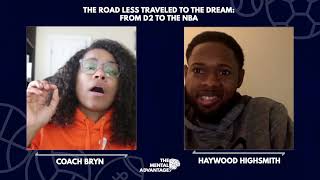
Haywood Highsmith Jr. went from Division II basketball to the NBA through summer league, G-League, and 10-day call-ups. He credits a "mental advantage"—confidence without cockiness—and relentless work for his path, and says becoming a father has matured him and shaped what he wants to be remembered for.
Chapters
I think mental health is very important for, you know, any sport, not just basketball as well. So, you know, I think my challenges has always been being, you know, as my challenge has always been, you know, just getting out of my own head, you know, just putting, just, you know, letting it— my coach that I'm now with right now, he has a saying that says, let it fly. Like, just let it, let it go, just let it go, let it fly. So, you know, I'm still working on my mental health as well. You know, I'm better obviously now, but I'm still doing other things and stuff stuff.
But yeah, yeah, it's, it's definitely a challenge, uh, particularly when you are a high performer like yourself. I find that a lot of you guys have a hard time separating your worth and value from what you do. That's not uncommon, uh, but it's, uh, it's good that you had those resources. Um, now obviously she was helpful, and— but she— was she a sports psychologist or was she a psychologist?
I think she was a psychologist.
Okay, I think so. What do you think are the good qualities of someone that you work with in the mental health space? Because a A lot of athletes will sometimes say like, they don't really understand me, right? Or I went to them and this can happen sometimes, obviously, and then other times like, oh, they were great. So what made her great besides the fact that, you know, obviously she helped you, but like, what, how did she develop the rapport with you? I'm excited for you to see this week's episode, but before we get to that, I have a message for you. If you're a parent of an elite athlete or a coach of a high-performing team and you want you're looking for some help or assistance with making them more mentally resilient, perform with more confidence, be more consistent, anything like that, then this is for you. I have an 8-week program all designed to address exactly that, to help your athlete be at their best on a more consistent basis and not get tripped up by those little voices in their head and getting down on themselves for mistakes, but performing like we know they can. So what I want you to do is don't delay, schedule a— just grab a time on my calendar through this link, and let's set up a time to talk about your specific situation and how what I'm offering in my 8-week program can help. Okay, so it's brindresher.com/freeconsultation. So click this link, grab a time on my calendar. I look forward to talking to you. And now on to this week's episode. All right, all right, all right. Welcome back everyone to another episode of the Mental Advantage Podcast. As per usual, I've got a powerhouse guest with me and just an amazing person in Haywood Highsmith Jr. He plays for the Delaware Blue Coats in the NBA G League, but he's also just an amazing human being. How you doing today, Haywood?
I'm good. How about you?
I'm fantastic. I mean, I'm out here in sunny California, you know, can't be too bad, right?
That's, that's, that's— I'm really jealous of that because I'm out here on the East Coast. It was just a lot. It's cold. Just snowed the other day, so—
Oh, I remember snow. I grew up in Chicago, so I do know what it is to be in snow, but I don't miss it. I definitely don't miss it, except for during the holidays. I like a little white Christmas. How about you? How do you feel about Christmas? You like the snow? You like the no snow?
I mean, well, growing up it was always cold. I mean, it would snow sometimes on Christmas. I mean, either or, you know. Yeah, nice weather or cold. I'm used to both.
Yeah. Yeah. All right. Cool. Cool. So I usually like to find out, was basketball the first sport that you picked up, Heywood? Because obviously you're playing at the top level of the game. Was basketball the first sport for you or was there another first love and then you kind of fell into basketball?
Yeah, I picked up— I think I picked up basketball first, but I also picked up football as well. Like, I played football growing up a lot. You know, I played outside with my friends a lot. I think I gravitated towards basketball more because my father played, so it was easy for me to like learn. But, uh, I played both sports growing up. I played a lot of sports growing up, but basketball and football are really the ones that stood out. And, uh, yeah, I mean, I made the decision to stick with basketball, but there's a lot of reasoning behind that. Uh, football, you know, it's an outdoor sport and I don't like the cold sometimes playing outdoors. So that is true that I chose basketball, but, uh, I mean, yeah, football's fun as well though. I love it.
Yeah. Did you choose pretty early on, or did you play all the way through high school with football?
I played football until I got to high school.
Until you got to high school.
I was trying to like pop on a little league stuff. Played quarterback. I was really good at it and stuff. I mean, if I would have stuck with it, you know, maybe who knows. But, you know, I chose— I think I chose basketball once I got to high school.
Yeah. Yeah. Because you got to specialize, right? Especially if you want to go— Now, did you have dreams? I mean, I think every kid has that picks up a basketball or even a football has dreams of the NFL or the NBA. Were you already thinking that way, or were you just like, look, I really love this sport?
Yeah, uh, I mean, growing up I watched the NBA all the time, so that definitely was my dream always, to play in the NBA, the highest level of basketball possible. So yeah, I've had dreams of playing in the NBA when I was a kid, for sure.
Nice. Who was your, like, main guy that you used to emulate in the backyard? Was it Kobe for 3, or was there somebody else?
I think I had a mixture of a lot of different guys. Um, growing up I watched LeBron a lot, Kobe a lot, and Kevin Durant a lot. Kevin Durant's kind from our area, so I watched them a lot. So in the backyard, I would definitely try to work on the, you know, the Kevin Durant hesi pulls or the Kobe fadeaways or LeBron, you know, dunks and stuff like that.
Right.
A lot of mixture of those 3 guys, probably.
Nice, nice. I always think it's so interesting, like, right, who we idolize and then how it helps us, you know, in our game. Uh, when, when you were playing basketball, um, obviously it's not— it's always told, you've probably heard that sports is 90% mental, 10% physical.
Yeah.
Was, was there a lot of talk from your coaches about how to handle the mental side of the game, or was it just like, get your head in the game, you know, it's a mental game, like that kind of stuff?
Uh, I don't think they really talked about that until I got older, about the mental side. Um, growing up it was always just fun for me, so I was just in there just playing, you know, not caring about, you know, how, how I was thinking and stuff like that. But I think once I got to college, more and more they, you know, tried to help out mental, you know, with the mentality and stuff like that. So I think it was taught to me at an older age, not a younger age.
Not a younger age, right. Now you said it was fun. And I hear there's a lot of talk about the NBA being a business, college being a business, right? So, and I know you had a non-traditional route to the whole basketball process, right? Like you didn't get recruited right out of high school right away and you still had your dreams and you did what was necessary. Is it still fun for you, or how do you keep it fun? Because I hear so many people emphasize that it's a business, so I was like, how do you balance that business and fun?
Yeah, it's definitely a business once you get older. You know, a lot of different colleges, you know, recruiting these guys before they even, you know, eligible to get recruited and stuff like that. A lot of stuff going on, people doing wrong things, stuff like that. So it definitely has a business aspect to it, but, uh, For me, I just always just love playing it no matter where I was at, what I was doing. You know, it's just been, you know, something for me to just, you know, it was a hobby, now it's my job, which is amazing. But like, it's always been fun for me no matter what because, you know, it's nothing like just, you know, shooting the basketball or dunking the basketball. Like, it never gets old for me, you know. If it ever, you know, gets old for me, obviously it's my time to, you know, just take a step back from the game. But I always love it no matter what, you know, because it's just, you know, growing up that's what I did, you know. Now I'm doing it, you know, as my job and You know, that's why I dreamed of, like you said earlier, so.
Yeah, absolutely. So I know that you went to the AAU tournament or showcase after you graduated. And I know I watched you in a podcast recently, which I thought you were very transparent. I thought it was amazing. And I'm gonna recommend people find this podcast. What was the name of that podcast again? Do you know?
The mental health one that I was on?
Yeah, yeah, yeah.
It's like, it's I Am Brand.
Yeah, the I Am Brand, but I think they spell it E-Y-E, right? E-Y-E-M. Yeah, yeah, yeah.
Yeah, I can pull it up on my phone if you need it, but I Am Brand or something like that.
Yeah, I'll link it down in the notes. But definitely want people, 'cause I think you gave a lot of transparency about what it is to go through the mental side of basketball in that interview. So I thought it was really great. And that's what we talk about here, the mental side of the game. So super excited about that. But when you said that, I remember you saying like, it was tough, like seeing other people on signing day and not having that moment. How did you keep your head in the game, so to speak, right? When you didn't have that and you still didn't know if playing in that AAU tournament was going to produce anything. Did you know, or were you just like, you know what, I hope, right? Where would you say your mentality was at in that process?
Well, my parents helped me a lot, you know, through that process. You know, they already knew I was disappointed in myself, you know, not getting, you know, the scholarship that I wanted. And, you know, they just made sure, you know, that I, you know, stayed ready. And, you know, they always told me that, you know, God is— God's plan is in God's hands, you know, just keep working, it's going to happen. You know, it definitely happened for me. I appreciate that. And, uh, yeah, I mean, watching some of my classmates in high school sign, you know, was tough. You know, I wanted to be— I was happy for him, you know, for sure. I don't hate nobody, whatever, you know. But it was tough for me because, you know, I know I put in a lot of work, you know. I was wondering when my time was going to come, but, you know, it doesn't— you know, your time always comes, you know. Good things come those away, and I was just patient, you know, played in the tournament and, uh Good things happen after that. So, you know, I thank God for everything, and, um, you know, it was a blessing.
Yeah, absolutely. Talk a little bit about— now you ended up getting recruited by a Division II school, right? Which, um, the pièce de résistance of college basketball is thought to be Division I. Tell me a little bit about your perspective of going Division I versus going Division II, like some of the caveats of both, right? Like, because people think, oh, it's all about Division I, but you could also not play at Division I even if you are on a Division I team.
So yeah, I think the main thing is always go where you want it, you know. Don't just go because it's a big-time school and you feel like, you know, you can go there and, you know, this and that, and coaches promise you this and that. Like, always go where you want it and a place that fits for you, you know. I felt like my D2 was, you know, perfect for me because it wasn't too far from Baltimore where I'm from, but it was also far enough where I could grow, you know, outside of, you know, who I was back in Baltimore as well. So, uh, you know, Actually, when I was at my D2, I had the option of transferring to Division 1, I think after my sophomore year, my junior year. And I was thinking about it and I was just like, do I really want to go to Division 1 school and, you know, lose, you know, everything I got going on down here at the Division 2 school where I had a lot of, a lot of power, a lot of, you know, that team ran through me. I was a leader, you know, not whatever I wanted, but, you know, I could, you know, I ran the team basically. So, right, you know, I didn't want to give up that power, so I just kept working and I stayed with Division 2 school, but Yeah, definitely go where you want it. You know, it's a lot of good D2 players out here, you know, not just me, that's also in the G League and the NBA overseas, you know. Yeah. You know, it's not all about the big Division I schools.
Yeah, I think that's important that athletes hear that because I think a lot of times everybody's just so attached to what it looks like, right? I've had a previous young lady on here that went to UConn and she talks about the difficulties that you can encounter at a school like that. And it's like, man, if I would have gone to a different school, maybe I wouldn't have gone through some of that. And so you just never know, right? And I didn't know you had that opportunity. So that's really cool that you still evaluated how it was going to look. Cause you know, do I want this? Cause I, cause it's D1 or like, look, I got, I got, I'm running the team down here. I've got a lot of playing time and who knows where you would have went if you would have went Division I, right? So awesome. That's really great. So as you went through the whole college process, you said they did talk about the mental game. Do you remember anything of like how— because I know a lot of people talk about the 90/10, but they don't devote a lot of practice to it. They don't actually teach you how to do the mental game. Was your college different? Were they actually doing meditation, different types of things, or were they just kind of like, hey, look, it's mental and we've got a sports psychologist here? Because this is usually how I envision it. We have a sports psychologist here if you need to talk to somebody.
Yeah, I think my college didn't do it, you know, a lot as other colleges. I think we had an assistant coach like my freshman and sophomore year, who like helped us meditate every now and then. And, uh, it was kind of helpful sometimes and stuff, but, uh, we didn't do it a lot. I think I really started to get into the meditation and like, you know, the calmness and using the apps and reading books and stuff like that when I got professional. Because, you know, it was definitely, you know, it's like a business. So, you know, you got to take some step— some time away from the sport, you know, and get your— get your mental right. Because, you know, if your mental's not right, you're not gonna be right on the court. So I don't think my college really, you know, I don't think my college had the resources to actually really help me with that because it was a Division II school. So it was kind of tough, but we did. I think they did the best that they could, honestly.
So yeah, no, that makes sense. And I, you know, I think it's funny that you say Division I schools may have more of the resources because I don't think it's too different. Like, you know, I mean, some coaches— I think it more depends on the coach, what resources they're willing to devote. So whether they have the resources or not, right? Like most coaches can't teach what they never learned, right? So even at these top Division I schools, it seems to be more of a reactive approach, which is like I said, we got a sports psychologist here if you need to talk to them.
Yeah, I think it depends on the coach for sure. 'Cause my coach in the G League puts a lot of time into the mental stuff as well. So for sure.
Exactly, exactly. So I think it is what the coach wants to focus on. Well, so, okay. So as you finished college, like you said, you, well, you've told before As you were getting ready to go, was there any schools showing interest in you? Is that typical of a Division II player, just to let the audience know, like to look down at, you know, not down, I don't wanna say that, but look at Division II for NBA guys, or was it just kind of like, you didn't know if that was ever gonna happen, but you didn't give up on your NBA dreams?
So you're asking, I'm sorry, say the question again.
Sorry, I didn't ask the question very well. You're good. When you were coming to the end of your college career, were you being, were you, did you have any interest like, obviously you may have had interest in the NBA, but did they show any interest in you?
Um, uh, not really. One team, they may have shot for real, Philadelphia 76ers. So, um, just went to that summer league training camp before they went to Vegas and made the most out of that and got on their G League team. And then the rest is just— I mean, you want me to tell the story? I'll tell the story, but we can talk about it.
Yeah, no, I do, I do want to, I do want to hear that story. I was just curious, so when Like when you say they gave you a shot, they called you and invited you to their summer thing, or how did it go?
Yeah, they— so, so I knew I was well connected in Baltimore with a lot of people, and somebody I knew in Baltimore actually knew Elton Bryant personally. And, uh, so we kind of— he kind of hooked me up with him, and, you know, he watched, I guess, some games. And I think he watched the game where we played West Virginia University, which is Division I, like a scrimmage exhibition game. Yeah, Division I school. I did well, and then, uh, yeah, so I guess he took interest in me, invited me to the training camp. I didn't make it to Vegas, unfortunately, but I played well enough where he gave me a shot in G League and made the most out of that.
And then, yeah, then the rest is history. Well, that's nice. So when you're coming, like, what would be your best advice to a Division II player in the event that, like, let's say someone, like, they don't know an Elton Brand? And I know that's your experience, but if they, if they don't know somebody What— how do they get like on to— like, is it, is it well publicized when these tryouts are happening? Can anyone go? How does it work?
So my advice would be, I mean, it's really tough. I mean, if you're a Division II guy and you're trying to pursue NBA, I'm not gonna lie, your numbers have to be pretty, pretty good from the start. So my advice would be, you know, definitely, you know, the first, first step with me was finding an agent that wanted to do the same thing I was doing, pursue the NBA. My agent that I found he felt like I could pursue the NBA, the G League, get there. I was a good enough player. So if you don't have the agent that's got the same, you know, goals as you, it's not gonna work. Because, you know, some agents want you to go overseas, some agents want you to go here and, you know, work out here and stuff. Like, you got to make sure you got the right agent. And then from that, you gotta, you know, try to get some of these pre-draft workouts, you know, start talking to a few teams, you know. Because, I mean, I think teams nowadays, but like Like after I came out, I actually listened to more Division II, you know, All-Americans and stuff like that because I've seen— I don't know how these other D2 guys that I know in the G League got on. Yeah, but they, they probably went through the draft process, got some draft workouts, and you know, they showed out, got on the summer league team, and they ended up with some like G League team or whatever. So my advice, it all starts with the agent. And then after that, you know, talking to the teams, showing them some film, you know, and really performing in these draft workouts that you got before the draft. Obviously it's going to be tough to get drafted as a Division II guy in the NBA. So you just got to try out, show out in summer league and get on the summer league team and you just got to take advantage of every opportunity you get because you never know you're going to get it again.
You just never know. Right. And I love what you said about the agent because I think a lot of people don't really like— it's so exciting to get an agent, I bet. Right? Like, oh my God, somebody. Right? But like you said, they got to have the same vision for you. That you do, because if not, they're going to push you to their dream or what they think is possible for you, right?
Yeah.
So if they think that you should just go overseas, no matter how much you talk about the NBA, they're like, oh, well, just go play overseas for a little bit and then maybe we'll talk about the NBA later. Because really they just want to get paid, right? What's the fastest path to cash for them? So how did you know to get an agent? Like, who was talking to you about that? Because like, you know, like, because obviously you maybe you knew that was the process, but how did you know?
Yeah, I had— I actually, well, me and my parents— my parents with me through this whole process, thank God for them, you know, because I don't know how I would have got through without them, right? I met with at least 4 to 5 agents, you know, just at my house, just talking to them about, you know, life, basketball, where do you see me at, what's your plans with me, you know, questions like that, right? My parents asked a billion questions, you know, those type of questions. But, uh, you know, we, we met with a lot, you know. The guy also that hooked me up, I was in Bryan, helped me with some of these agents as well because he knew some of them as well. My guy, Robert Grant Weese, I'll say his name, shout him out. But yeah, I think the one that stood out for me was, you know, I could just tell by his energy that he was, you know, a hard worker. He had, you know, he wanted to get me where I wanted to be. And, you know, I could tell he was just a trustworthy guy, you know, because some of these agents, you just don't know. You don't know these guys very much. You know, you got to trust them. You know, you, you depend on them for your careers and getting you jobs and stuff like that. So, uh, just got to meet with them, you know, get to know them, and, you know, pray about it as well. And, you know, just make the best decision for yourself.
I was literally going to ask you, the next question was about your faith. Obviously you mentioned God in prayer a few times in this interview. Um, how does your faith help you in this process of pursuing high-level basketball and, like you said, navigating all the various you know, I guess phases of the process?
Yeah, I mean, I grew up in church since I was like 5, you know, my parents took me to church. Thank God they did, you know, and, you know, God has been with me every step of the way. You know, I don't think none of this would be possible without him, obviously. So, you know, anytime this stuff is getting hard, stuff is getting, you know, too tough for me, I always, you know, take a second, say a prayer, thank God for what he's doing for me, what he's going to do for me. So You know, stuff like that really helps me, you know, be at peace with stuff, you know, because, you know, I know that I'm doing everything I can and it's in God's hands at the end of the day. So, you know, I think being— having your spiritual side is very important as an athlete. Like, you know, some guys, you know, you never know what's going on behind closed doors and stuff like that. Like, it's tough being an athlete, professional athlete sometimes. But, you know, just making sure God— you have God in your life, you know, reading the Bible. And stuff like that really can go a long way.
Yeah, yeah. It's just to have that anchor, right? Because like you said, there's all these temptations around basketball, so much out there, especially if you have a lot of downtime and there's a lot of people pulling at you, right? So speak about that. Speak about how, like, um, you know, when you, you see that you're on the come up, right? Talk about, um, and you know, no names or anything, but like what that experience is like with the hanger-onners or the people that kind of all of a sudden like kind of want to be a part of the the posse, the squad?
Yeah, I mean, I just, I just try to just, you know, just stay, stay to the people who was loyal to me from the jump, you know. My friends that I've known since I was 5, 6, 7, you know. My parents, my family, you know, people, you know. I have a lot of support, you know, but it always is those, you know, guys who come out nowhere like, yeah, I knew you since blah blah blah, like, you know. But you just gotta just, you know, stay focused, keep level, and, you know, just, you know, just do what you gotta do. Um, my support system actually does a great job of making sure that, you know, nobody comes in with that, what comes in within the circle that I got going on. So, uh, you know, they do a great job of blocking them all, blocking the, you know, the bandwagon, and, you know, people trying to hop on the train and stuff like that. So, and I've always been a humble guy no matter what, so I don't get big-headed no matter, you know, how much money I get or how well I'm doing or where I'm at, you know. I'm gonna be the same guy no matter what, you know.
But yeah, is it hard, I mean, like, to, to, to stay humble in that experience? Because I know, like, there's a lot of ego that goes into kind of like, you know, I'm in the I'm kind of, you know, or I know like you've had, you had a call-up as well. So like, what is, how does one stay humble? I know you said you've always been that guy, but do you ever feel that like kind of the pull to be like, yeah, I'm the ish, you know?
Yeah. I feel like sometimes it's okay not to be humble, like in the right moment. Like sometimes I'm definitely not humble. Like I like, like confidence is always key for me. So like me, like I'm on the court talking, talking trash, stuff like that. That's just me just being confident in myself. But that's the right time to be unhumble, like on the court. But like, you know, but for me, you know, just trying to stay humble as far as when I get, you know, the call-ups and stuff, you know, I think it's all about just remembering, you know, that you have bigger goals than, you know, just being here. Like the call-up was great, you know, but I also want to stick in the NBA. I don't want to get a 10-day contract. Like, so, you know, my parents always taught me from the jump, always be humble, you know, and they know I'm the humblest person in the world. So You know, but I just try to just stay level-headed and, you know, just keep playing.
That's so awesome that you have such a great support system, like you said, in your parents, and they've been there throughout that period. So as you've gone, like, you're on the G League now with the Delaware Blue Coats. What's the hardest part about playing professional basketball, in your opinion?
The hardest part? Hardest part about playing professional basketball? I mean, being away, being on your own a lot, being away from your family a lot is kind of tough. You know, we travel a lot, and, you know, my parents— I have a daughter, have a girlfriend, have a, you know, big family as well. Being away from my daughter is definitely tough, you know, even though she's coming next week to see me, but it's very tough being away from her. She's just— she's a newborn, so she's growing, you know, every second. So, you know, I miss, you know, little moments every now and then, but, you know, being away from your family is definitely That's actually a big, a big tough part about being a professional athlete. We're on our own a lot, you know, we, um, have a lot of downtime and we travel a lot as well. But traveling is pretty nice actually. But, uh, yeah, just being away from your family, you know, being away from your kids and, you know, your loved ones and stuff like that, it's pretty— it's tough. But, you know, you're doing it, you know, you love basketball because you don't— you don't know.
Yeah. So at— how do you take your family onto the court with you? What's one way that you take the family onto the court with you so that you could kind of like feel closer to them?
Yeah, well, I just, I just started this ritual this year because I just had my daughter in October that, you know, before every game I call her. You know, she doesn't talk yet, she's so young, but I, I talked to her a little bit. You know, she's not talking back, she smiles and stuff like that. But, uh, that tradition, you know, it really is nice for me because, you know, it just gives me a sense of, you know, what I'm doing this for, you know. I mean, obviously I'm doing it for me, but I'm doing it for her as well. And, um, you know, I take my family to court a lot of different ways, you know. Um, also when I get to the free throw line, I do a couple dribbles for my, for my aunt and my grandfather in heaven as well. I just— free throw line. So, uh, you know, I just, just try to do little things like that, you know, just help me remember, you know, while I'm doing this as well, you know. It's not just me, it's the bigger picture.
It's the bigger picture. Yeah, absolutely. So you talked about the call-up, right? Or we, we referenced it, uh, like, uh, the 10-day contract. A lot of people don't know about this, right? So you have 10 days to prove yourself, essentially, right? How many games can happen in a 10-day contract typically, you think?
Yeah, the NBA, uh, so they play a lot of games each week, so it can be like, you know, it could be a game every other day. So it could be 5, 4, probably 4 or 5, I would say, because it wouldn't be 3. That's too— not—
yeah, is there some type of incentive in the contract that says in order to get another 10-day contract or to get an end-of-season contract, you need to perform like this? Or is it just 10 days, we'll see what you do?
It's just 10 days, see what you do, for sure. Yeah. Yeah.
How's that work for you mentally? Like, what is the— like, how does— how do you respond to that?
Yeah, I mean, there's a lot of pressure. A lot of— you got 10 days to, you know, prove what you can do. But I mean, I just— it's just basketball at the end of the day.
Yeah.
You know, no matter where you at, it's like you're in the back— it's not like in the backyard, but it's kind of like that. Like, it's basketball, just hoop. Have fun, you know. And yeah, just, you just gotta hoop. Yeah.
When you, uh, one of the things I loved when you talked on the other podcast was you telling the story about like it finally happened, right? So you saw it, you know. So talk us through that moment of the call-up and just like the walking into the first experience.
Yeah, so, um, this was about what, 3 years ago, 2 years ago with the Sixers. Got a, got a two-way contract with them in like January, I think. So I played a G League game. I was on the Delaware Blue Coats back then. Played a G League game the morning. And then after that game, I went to the Sixers training facility, signed the contract. My father was there, uncle, a couple other friends, some friends. My mom actually wasn't there. So when I signed the contract, it's like midday. The Sixers played later that day. So I signed the contract. So I'm on the Sixers. You know, I'm taking pictures of Elton Brand, all this stuff. My agent's there. You know, good moment, but a lot of pictures, a lot of happiness. So they called me up for the game later against the Washington Wizards, which is kind of significant because I'm from Baltimore. That's the closest team.
There you go. Right.
Kind of significant. I watched the Wizards growing up. I wasn't really a Wizards fan, but so they called me up later for that game and my mom came up, my brother came up and, you know, they're so excited, you know, and I'm just like, oh, wow. I mean, like, this is kind of nerve-wracking for me. Like, I'm about to play, like, I'm about to get on the NBA court, warm up, you know, shoot. Might get in, you know, never know, gotta stay ready. So, you know, I'm pulling up into the facility. It's my first time getting to the Sixers arena. So I pull up in my— no, actually, I rode with somebody. I rode with my other two-way guy, Shake Melton. He's on the Sixers right now. And, you know, they're taking pictures, you know, like, like we're on like a, like a fashion runway or something. You know how they take the pregame pictures?
Yes, yes.
Pretty cool. I had on like a regular like sweatpants, sweatpants, like I just got the Sixers stuff. So and some Ugg slippers or something. So we get to the game. Well, I walk in the locker room. This is when Jimmy was on the team. My locker's right next to Jimmy Butler, which is actually significant as well. I got called up by the Heat. He was on the Heat. So me and Jimmy go way back, but whatever. So I walk in there, you know, got superstar Joel, Ben Simmons, you know, JJ Redick, guys that I used to low-key watch on TV, you know, when I was in college or high school, whatever. So, you know, it's just a surreal moment. You know, I'm taking it all in, you know, going to court warm-up. You know, and I'm just, you know, this is crazy, you know, felt like I was dreaming. One of the greatest days of my life. So when the game time come, the Sixers playing the Wizards, they blowing them out. So somebody told me, start warming up, you know, you're going to get in in a second. I'm like, oh, you know, I'm getting a little nervous, my heart beating fast and stuff. So, you know, I get in first play, almost turn it over, didn't turn it over. But then they run an action for me called Floppy, which is actually a pin down to like a 3-point shot. So I come off the screen. I'm open, see the rim, shoot it. First 3, first shot, good, make it. You know, my parents going crazy, you know, the bench going crazy. First NBA bucket. So, you know, special moment for me. So, uh, you know, that whole day was crazy. You know, after the game, saw my family. My mom was crying. You know, I hugged her. You know, it was a very emotional day. She was, she was so happy for me. You know, I'm just glad I got to experience that with them. So, uh, you know, that whole day was just amazing. You know, I got so much love on social media, Instagram, Twitter. Had so many messages I didn't reply to. I don't know, I replied to them till this day, but I did my best. But, uh, you know, that whole day was just, just a great, great day filled with love. And, uh, you know, I remember that day the rest of my life.
Yeah, I'm sure. And I remember you saying, like, even just, like, uh, I think you said you shed a tear after you—
Yeah, I think I shed a little tear. A little— Yeah, I didn't cry like my mom did.
Yeah, no, right. But you could hear your parents after you shot?
Uh, yeah, they were loud. They were loud.
They were loud. Yeah, yeah, yeah.
I kind of heard them because the Sixers arena is not quiet.
So it was kind of—
it was like, because I shot the ball on one end of the court and like their seats were on the other side.
Gotcha.
I kind of heard him run when I was running back.
But you knew where they were, so you also could look and see.
They got the video and all that. Yeah, they were screaming.
Of course they're gonna show your family, like, hey, what's family is, you know. Okay, gotcha, gotcha. Cool, cool. That's awesome. And I think, you know, it's like you never can get that experience back, right? Like, that first time is so amazing. So how do you keep it fresh of like, holy crap, I'm in the NBA? Like, you know, after like 10 of those experiences?
Yeah, I mean, I mean, the goal was I was to get to the NBA, you know, and I got there. So, you know, it's like, what's next? You know, like, I'm trying to, you know, I'm trying to stick here. I'm trying to get like a real contract. So, uh, You know, I just, just got to keep working. You know, I got to remember that, you know, this is not the end. This is the beginning. And, you know, I just got to just keep working and keep grinding. So, you know, after that day, you know, I just had to just make sure I just stay focused on, you know, stuff and, you know, that, you know, all my hard work is paying off. So just keep, you know, keep doing it and keep, keep doing what I'm doing.
So with the first 10-day contract, because you've been up more than once, correct?
Yeah. Okay. Twice. Twice.
Okay. So with the first 10-day contract and what you're saying, right, like they were blowing them out and then they played me. So since they control how much playing time you get and depending on how well they're performing is whether they're going to play you or not, that's got to be a little nerve-wracking because you're like, I've only got 10 days to prove myself. And if you don't play me in those 10 days, how can I do that?
Yeah, well, the first contract I got with the Sixers was a two-way contract. Wasn't a 10-day. The two-way is like you go back and forth. With the G League.
Okay, my mistake.
The second one was a 10-day with the Heat. You're correct on that.
Yes, got it.
So the two-way is more, you know, you're on the team for maybe— you're on the team longer than 10 days for the two-way contract.
Got it, got it. So how many, how many games did you play in that two-way?
Uh, I think I played 5, I think. Okay, 5. Yeah.
Okay. And is there a, is there like a conversation that happens if they're gonna like be like, like, uh, yeah, so we're gonna keep you down with the, the Colts now, we're not gonna keep you up? Or is it more just like, uh, you know, all like maybe you played as many games and then they went into the playoffs? How does that work exactly?
Yeah, so the two-way, basically, I mean, they call you up and down. Like, it could be at any point. Like, they literally call you while you're at home in an apartment in Delaware with the Colts and say, yo, we need you tonight. Or, you know, they're gonna call— or they might call— they might send you down to the Colts you're up with them. Like, it just depends on them. Maybe, you know, they got some injuries with the Sixers, so they call you up. Or maybe they got some COVID issues, they'll call you up. So like, it just depends, it varies.
Gotcha.
Uh, so yeah, I guess it's kind of on them.
It's kind of on them. Yeah, yeah. So how does that feel, feeling like, you know, you don't have the control over— like, it's awesome to be wanted, but, you know, like, they call you up and it feels great, and then, you know, you don't know if the next game it's going to be an up or down. So how does that feel kind of being in that space?
Yeah, you just got to just stay ready when your moment's called, you know, just got to just stay ready so you don't got to get ready, you know, because, you know, just got to stay ready. That's all I can say.
Is it ever discouraging?
Not really. Not really. I mean, you just got to stay patient, stay ready. You know, your moment's coming.
That's how it happens. Okay. So when— let's take it to the second call-up, right? How much time between the two-way and the 10-day?
The two-way was in like 20— 2019, I think. 2019. Then the 10-day this year was what, 2021? So it was like, what, no, 2022. So it's like 3 years, 2 years.
So this is your first 10-day that you got called up for. Um, how was that experience? Like, same thing, signing a contract, 10-day, or is it there's no contract for the 10-day?
Uh, yeah, it's a contract for the 10 days. So the Heat has some COVID issues and, um, they needed some players. So I was literally in my apartment just chilling and my agent called me and I had to like rush to the airport like quick. Like, I, I barely made the flight. Okay. Wow. Yeah, it's a contract for the 10 days. I got the— they flew me out to Houston and they had a whole road trip and stuff.
So yeah, nice. Jimmy— is Jimmy playing for the Heat at that time or no?
Yeah, yeah, this was, this was this year. Yeah, Jimmy.
This is this year. Yeah, exactly. So was it like, did you get a chance to talk to Jimmy both on both occasions? Like you said, you've known him from before. Like, what was it like, you know, being back with Jimmy Butler and like, you know, taking him under his wing or what?
Yeah, Jimmy's a funny personality guy. I mean, he brings a lot of different things to the teams and stuff. Uh, we played one-on-one and playing and stuff, you know, he's like playing games with him like that is even funny. Well, because he just wants to win so bad.
Yeah.
But, uh, yeah, I mean, me and Jimmy, me and Jimmy are pretty, pretty tight. You know, he's a, he's a very cool guy, you know, he's a good leader, and, um, you know, he just wants to win.
Awesome. So at the, um, you, do you remember, and now you said that this was this year, the 10-day, so that's nice. Uh, how many games did you get to play in that 10 days? Do you remember?
I played 3 games. Yeah.
How did you, how did you feel like you did?
I feel like I did solid. You know, I had to learn the whole offense and learn their defensive stuff, but I think I came in there and did some good things. You know, I hit some threes, played some defense, you know, hustled, rebounded. So, you know, I did some good things. I feel like they thought I did some good things too. They told me they like me a lot, you know, they wish they could keep me and stuff like that. So, you know, they also said stay ready. So I never know, they might call me They might call you again.
Okay, cool. So you did make a good impression, but sometimes you don't get signed because they don't have enough room for you. Is that— okay, got it.
Yeah.
So it doesn't matter if I perform super well, they're not going to sign me to an extended contract if my other guys are coming back and they don't have the salary cap or the room, right?
Yeah, it's basically, it's basically like about timing. Yeah.
Yeah. Yeah. But you made a good impression and that's what's important.
I mean, I did all I can do, so. I'm satisfied.
You did.
Yeah.
And I think that seems to be the theme, right? I did everything I could do and then I let the, you know, God, universe, whatever, take care of the rest, which is—
leave no regrets. Yeah.
Leave no— yeah. So I think that's really awesome because you can only control so much. And I think you seem to have an art form of focusing on what you can control. So that's good, right? Awesome.
Yeah.
Okay. So obviously, as you said, you did play overseas for a little bit and I think people don't really know what it's like to to play overseas, and you talked about being away from your family, but talk about like the difference between being away from your family in the NBA on a road trip and being overseas.
Yeah, I mean, I can see my, um, see my family, and then when I'm in the NBA and stuff, you know, I'm in the country, they can come to the games, you know, and, uh, we're on the same time zone, you know. I don't gotta worry about, you know, me being just waking up and stuff like that. But yeah, overseas, it was definitely a different experience for me. My first time over there, played in Germany. Um, was on my— was on my own a lot. This is during like when COVID first, first started, you know, going crazy. So, um, everything was on lockdown for real, so it really wasn't nothing to do when I got to Germany. And, um, you know, me and my teammates actually, you know, we hung out a few times, we didn't hang out a lot. So we was on our own a lot. And, uh, you know, it was just— it was tough. It was tough being over there. Different food, different culture, different, you know, just being on different time zones, you know, feeling like you know, you're going crazy. You know, I had to teach myself how to cook, you know, a lot, uh, because, you know, they don't really have a lot of fast food places like we have back here and stuff, you know. So had to cook a lot, but, uh, you know, I mean, I got through it. Definitely a tough experience, but, uh, you know, it definitely taught me a lot about myself.
Yeah, like, like, and I've also heard that sometimes they don't like you, like your teammates don't like you because you're an American, or the country men don't like you?
Because I think, I think sometimes that's the case, but in Germany I think my teammates were pretty cool.
So you were good? Okay. Yeah, because I know it can be tough, like, in addition to not feeling very welcome other than you're a basketball player and it's really cool and all that, but I think it's also the one-year contract situation where you don't really have time to bond with these people because you're only going to play with them for a certain amount of time and then you're going to be back home and things like that. So, but you had spoke that your girlfriend helped you through that process by coming over and spending some time with you as well, um, because it was like a saving grace. Yes.
Yeah, she, she definitely came at the right time. You know, I was, I was going through it for sure. You know, I was definitely having a rough time, but she came through, you know, made me feel like I was back at home cooking meals, making, cleaning, you know, helping me out, you know. And while we doing a lot of things together, spend some time together, you know. So it was nice.
That was nice, like a little taste of home, right? Like in so many ways it was just like at she brought the home with her.
So, so yeah, exactly.
Yeah, for sure. So when you— one of the things you also spoke about on that podcast, which I don't think it's talked a lot about, we've already talked about, you know, like you said, you got more into the mental game on the professional side and your coach actually does emphasize it. What are some of the modalities and like when he does talk about it, what is he bringing you guys through? What do you find really helpful? I know you talked about meditation and the apps. But is there any other exercises that he's doing or anything like that?
Uh, he does like a lot of different things. We did like a family tree one where everybody goes to the board and like, you know, draws like your family, you know, your, your group that supports you and stuff. Um, yeah, like I said, before games we kind of meditate. Sometimes before practice he like, you know, takes— we do like breaths and like visualize and stuff and like closing your eyes and like, you know, You know, but yeah, I mean, he just— I guess he's like a big— like, I think he said because when he was a player, he didn't focus on the mental side enough that he's trying to help us out. So it kind of makes sense. But, you know, he does it. He's kind of like— I don't know how to explain it. He's kind of like, you know, like a pro at it at this point. I don't know how he does it. Like, he just helps. It helps the team, definitely. But, you know, he does a lot of different things. Like, we'll come in tomorrow and there'll be a question on the board like, What do you notice about somebody when you first meet them? It's just like, like he just gets us thinking about different things. I don't know.
That's awesome. That's really awesome. Because one of my feelings as a mental performance coach is that they don't take a proactive approach enough in most of the sports, right? Like, so it's always reactive, like, which is like, hey, you know, go talk to somebody if you need it. But it's like, what if we gave you the right foundation so you didn't have— not that there's anything wrong with going to get therapy, But what if we gave you the— because people tell you to get out of your head. They tell you to focus. They like words like consistency, but nobody teaches you how to do that. They just go, you know, get out of your head, Heywood. And you're like, I'm trying.
Right, right. That's what I'm saying. Exactly.
Yeah. Yeah. So, so talk about that because obviously you have— you're an advocate for mental health for athletes. Tell a little bit about your experience with that. I mean, obviously, thank you for telling me about what you're doing with your coach. Um, but also how therapy also factors in, because it's not necessarily one versus the other. So sometimes they can work in tandem. And like, what— let me, let me ask this instead. What predicates, or like, uh, has the need for the therapy? Like, what kind of made you feel like, man, I gotta go talk to somebody?
Yeah, I think my frustration and my, my anger level really, you know, made me just think that, you know, it wasn't— my mind wasn't right, you know, and I just need to just talk to somebody about what I was feeling, you know, and how I was feeling and stuff like that. So, um, actually, like, the G League, we had a meeting about, like, you know, mental health, I'm pretty sure. And, like, I was thinking in my head, like, you know, maybe I need to, you know, go talk to somebody because this is— it might, it might help me in the long run. So, uh, yeah, I mean, this is, like, around the time my second year in the G League, I was— I wasn't playing, you know, my best basketball. So, um, you know, obviously as an athlete, you know, you're thinking to yourself, like, I mean, man, like, I gotta get it together or, you know, it's going to be, you know, a long season. So, you know, I'm, I'm one of those guys who put like a lot of— I don't like— I put a lot of pressure on myself to be the best I can. I want to be great. I put in the work, you know, obviously. So, you know, when I— when it doesn't work my way, you know, I start to question, question myself sometimes. So, you know, I definitely felt like, you know, that was a reason to talk to somebody as well. So, you know, I was, I was thinking, you know, terrible things about myself as a basketball player. And I was like, you know, thinking I was a bad basketball football player and stuff like that, which obviously I'm not, you know, I'm a professional athlete, so I got here. But, you know, um, the, the, um, the, the Blue Coats really helped me. The guy, his name was Steven, he doesn't work here no more, but he, um, hooked me up with somebody like a therapist in the Philly area, all paid for. I didn't have to pay for anything. She was, she was, um, she was talking to me about a lot of different things about just me, just, you know, not, not, you know, not being so tough on myself like I was, uh, So, you know, when I, when I would miss a lot of shots, you know, I would think like, wow, you know, you're not a good shooter, Hayward, and stuff like that. And she would just, you know, put me through different exercises that would help me, you know, get through that stuff, you know, like, you know, I'm like, that would help me think I'm doing the best that I was doing. So, you know, so sometimes, you know, you don't have a good game, but, you know, you got to keep playing, stuff like that. So, uh, you know, I think, I think therapy can help a lot, a lot of people, you know, like, like you said, teams should obviously have, you know, different different stuff as well that can help players on the mental side, you know, because I think mental health is very important for, you know, any sport, not just basketball as well. So, uh, you know, I think my challenges has always been being, you know, as my challenge has always been, you know, just getting out of my own head, you know, just, just putting, just, you know, letting it— my coach that I'm now with right now, he has a saying that says, let it fly, like just let it, let it go, just let it go, like let it fly. So, um, You know, I'm still working on my mental health as well. You know, I'm better obviously now, but I'm still doing other things and stuff.
But yeah, yeah, it's, it's definitely a challenge, uh, particularly when you are a high performer like yourself. I find that a lot of you guys have a hard time separating your worth and value from what you do. That's not uncommon, uh, but it's, uh, it's good that you had those resources. Um, now obviously she was helpful, and— but she— was she sports psychologist or was she a psychologist?
I think she was a psychologist.
Okay. So what do you think are the good qualities of someone that you work with in the mental health space? Because a lot of athletes will sometimes say like, they don't really understand me, right? Or I went to them and this can happen sometimes, obviously. And then other times like, oh, they were great. So what made her great besides the fact that, you know, obviously she helped you, but like, what, how did she develop the, rapport with you?
I think she just, she just tried to just figure out what I was going through in different, in different ways. She would do different, like I said, different exercises and stuff. So like, we met in person a few times and she would, she would ask me, you know, questions and stuff that, you know, that, that I would have to answer. But, uh, we met over on, um, video chat because it was COVID. So like, when— well, this is before COVID hit. When COVID hit, I think we had to, we had to do like meetings on, um, on video and stuff like that. So she had me like write down stuff that, you know, I was proud of and stuff that I've accomplished. And, you know, and she would make me look back at that type of stuff when I was going through a rough patch. And, you know, she would be like, now look at all that you accomplished, you know, don't worry about the stuff now. Like, you know, because, you know, that stuff that I accomplished wasn't easy, obviously. So she would, she would do that, those type of things, you know, making me look back at that type of stuff. Or she would, you know, make me think about just, just, just keep going, you know, don't never give it up and stuff. And always telling me that, you know, I'm motivating other people and stuff like that. So I think she had good qualities, like her qualities were always just, you know, doing, doing different things that would help me mentally. She, you know, the exercise, like I said, but yeah, I mean, she was just a good person overall. I think she also had like kids and stuff that she could relate to with me. Yeah. So because I was, I was like 20, 22, 23 back then. I think she had like some older kids as well.
So gotcha. And she listened to you, like, which I think is a big thing because sometimes some people try to tell you how you feel and you're like, no.
Yeah, she would let me, let me talk a lot for sure. Like, yeah, that's good.
That's great. Uh, the other question I wanted to ask you is, did you tell your teammates, um, that you were going to get this help? Um, or was that something you guys talk about?
No, I didn't tell my teammates. I mean No, I just didn't tell them. I mean, I wasn't like I was hiding it from—
I just didn't. Yeah, no, I got you. It just didn't come up in conversation.
Yeah, they would ask me, I would have been like, yeah, I'm just, you know, I told my cousin and stuff, so I mean, I told my mother too, so I'm sure you weren't hiding it.
Yeah, yeah. So, and, and, but, uh, as far as the mental health aspect, it's even though your coach kind of emphasized it, nobody's talking about it. Nobody's going, hey man, I, I feel like I need to talk to somebody.
Right now on this team?
Yeah, well, yeah, just in any of your experiences. Yeah, as it— on that level.
Yeah, I think— yeah, I think nobody's really talking about it enough, for sure, especially overseas. Like, I don't think—
yeah, and they're not offering anything overseas from what I—
yeah, overseas they don't— they don't even care. Like, I mean, they might— like, if you're— if you're not doing what you're doing on the court, they might just cut you right away. They don't even care.
Like, yeah, yeah. So it's— and that's got to be nerve-wracking as well. Like, I gotta— like, you know, I'm overseas and they're just gonna kind of like like, yeah, you're not working out, we'll get you.
Yeah, it's tough overseas. I don't, I don't—
yeah, it's really tough. Yeah, yeah, yeah. So, uh, so now that you've been in the G League, had your call-ups, you know, you're making good impressions, what's your ultimate goal with basketball?
Uh, just be the— to be the best, the best player I can be, you know. And, um, obviously I want to get back, get back to the NBA. With some, you know, more call-ups, but staying with staying long-term more. Um, yeah, I mean, I got a lot of left in the tank. I'm still young, 25. So my ultimate goal is just keep, keep grinding and be the best basketball player I can be, you know. Hopefully that'll lead me to the NBA.
Yeah, absolutely. And, uh, is there any fear, like, is it gonna happen, anything like that?
No, no fear at all. When you put in the work work, you know, you just, just, you, you know it's coming when you put in the work. You can't, you can't cheat the game at all.
Yeah, you gotta just put in the work and like you said, let the rest of it take care of it.
Yeah, control what I can control.
Yes, absolutely. So one of the questions I like to ask on this, because it's called the mental advantage, what is Haywood's mental advantage?
My mental advantage? I'm just confident. I'm confident. I feel like I can do, do anything that I I'm on to. Nice.
How do you distinguish between— because I think people get confused about this, I don't— I'm not saying you do— confidence and cockiness? What's the difference in your mind?
It's a good question. It's a very good question. Uh, I think, I think they're— they are similar in a way, I think. But, uh, I think cockiness is more like an arrogance. Like confidence, like you just like you're just doing it just to show off, I feel like a little bit. But confidence is like, you're just like, you know, you're just confident in yourself. So it's like, but it's kind of— that's a good question. I don't— I low-key don't know how to even answer that.
So like a little bit. Yeah. Yeah. Well, you know, a fun fact for you, if you ever get asked again, confidence means to— it comes from confide, to trust in oneself. Whereas cockiness, like in my opinion, when you're cocky, like you said, the arrogance, but it's built on putting other people down typically, right? Like, I'm better than you. Versus confidence is just like, yeah, like you said, it comes from within.
It's coming from— that makes sense.
Yeah. Yeah. So you have that, that ability. All right. So we're— we've gotten to, uh, the rapid fire questions. Okay. The rapid fire questions. They're really serious questions, Heywood. So hopefully you're ready for them. Okay. And by serious, I mean they're, they're not. Okay. So, uh, the first question is, what is, uh, your favorite snack right now?
My favorite snack right now, it's a great question. I like, um, Lifesavers. The gummy Lifesavers. I don't really know the flavors, the ones that's like colorful, like, yeah, different colors.
Yeah, yeah. Well, sometimes people like the tropical ones. I don't know the gummy side, but like, you know, whatever. But like Is he like, if you go through the colors, are you a red? Are you a yellow?
Are you a— I think, I think I like the, I like the red.
The red.
Yeah.
I figured that's the one that I ever, I think most people like is the red, like kind of like the starburst, right? The pink and the red versus the yellow. All right. Uh, what is, do you have a favorite flavor of ice cream?
I don't really eat ice cream like that, but I do like, I do like vanilla.
I know you said you've been eating healthily. Lately, uh, yeah, well, right, it's a process. But at least, uh, you know, every once in a while, if you did have ice cream, you like vanilla. Okay, I always call that the gateway drug of ice cream, right? We all started with vanilla because none of us, you know, most people didn't bring home like Rocky Road on our first, you know, home visit.
More of a cookie guy than the ice cream guy.
Oh, cookie. So you, are you a chocolate chip, oatmeal raisin?
Chocolate chip is, uh, it's crazy. I think I'm addicted to chocolate chip cookies. Like, if they're warm, it's a wrap.
I might just eat them all. Yes, right out of the oven. Did your girlfriend make them at home for you?
She does every now and then, but I'm more— I probably like, when I order them, I order them like Insomnia Cookies or like Subway or like Panera Bread or something like that.
I know, I do love a Subway cookie. Yes, I'm vegan now, so I don't think their cookies fall under that, but yes, I do know what you're talking about. Okay, uh, so this one is, uh, oh, favorite superhero. And, uh, do you have— well, no, no, don't, don't answer that one. What is this? If you could have any superpower, what would you want and why?
Everybody asks this question every time on the podcast. Trying to think, uh, superpower, I think I would I would want to— I want to be super strong, I guess.
I don't know, super strong. Super strength. See, you didn't want to fly. Most people want to fly, so this is great. All right, super strength. Nice.
Do you have a favorite superhero? Yeah, I mean, I watched a lot of Justice League growing up. I like Batman.
Oh, a lot of people like Batman. See, I'm a Superman person myself, but yeah, I like both.
I like— they got They're two different characters.
They do. I find more people like Batman because he's technically— like, he's like, he's rich but he's just a human, whereas, you know, like Superman's an alien. So it's like, well, I can't be an alien, so at least I can, you know, maybe get all the gadgets and be like—
yeah, it makes Batman so cool because he's not even like— he doesn't have like a power.
It's just— yeah, he just has anger. The dark side of Batman. All right. Okay. So this question is a question you may not feel any type of way about, but some people have an opinion when it comes to toilet paper. Some people like their toilet paper over the top and some people like their toilet paper to come from the bottom on the roll. Right. And so do you have a preference and why?
I don't think I have a preference. Okay. See, there you go.
As long as there's toilet paper.
Okay. Okay, no problem. Yeah, as long as there's toilet paper.
As long as there's toilet paper. Okay. Yeah. See, I'm an over-the-top myself, uh, but at the same time, uh, you're not the first. Most of my athletes were over-the-tops, but you are not a person that has a preference, so that's fine. Uh, everyone has their own thing. And yeah, when you say over the top, you mean like the toilet paper comes from like— so yeah, so like basically on the roll, if I pull it, it comes from here versus if I pull it, it comes from here. Does that make sense?
But what's the difference though?
Uh, some people just— right, it doesn't really matter. It still works as toilet paper, but some people feel like, uh, it just like, you know, like it just— they like the way that it comes off the roll.
But no, I mean, ultimately I think in my life I've did more over the top.
Yeah, yeah. But you don't have to have a preference. It's okay. You're like, I don't care if it's on the roll, so it's good.
I've never got asked that.
That's funny. I know, I know. When you go to the bathroom, you'll notice for the first time. Yeah, you'll be like, oh my gosh, it is a thing, right? No, but me, I will change it in my house. Not in your house, but I will change it in my house if it's not on the right way. Yeah, yeah. But not everybody cares, so, you know, it's okay. Uh, all right, next question. Who is your personal hero?
I'll say my parents, just because they just— they raised me, they raised me well, gave me a good life, and, you know, they've always supported me no matter No matter what, for sure. Our parents.
And if you could be remembered for one thing, you know, when it comes down to, you know, like the legacy of Heywood, what do you want it to be?
Just being a great, great person, great father, a great basketball player, just being a great overall person. Great father for sure though.
Yeah, I forgot to ask you about your daughter. So you just became a dad and obviously, like you said, you spend time away from her. Now adding this to your sort of roles of basketball player, right? Boyfriend, son. What has becoming a father been like the most, like with most biggest change in you?
Yeah, I think I've become so more mature, like as a person. Like, I mean, I've always been, you know, young and, you know, been one of the youngest people in my family and stuff. So now I'm all grown up, I became more mature. And, you know, I think about her a lot and I just try to just be better for her no matter what. You know, call her a lot, see her a lot. Just, you know, just trying to become a better overall person, like I said earlier in the show. But, you know, she has my heart and she's my daughter for sure. And, you know, I love her, love her to death.
Absolutely. Well, this has been a fantastic experience. Thank you so much for your time and just your amazing thing, uh, for people to connect with you or to sort of follow what's going on in your world, where would you like them to look or connect?
Uh, they can follow me on Instagram, uh, HaywoodJr24.
Uh, yeah, I mean, I mean, I don't really be on Twitter like that, so yeah. Yeah. Okay, so you heard it here, you can connect with him on Instagram, follow his, uh, journey, uh, to becoming an NBA, uh, All-Star. And, uh, yes, because I, I see it already, Haywood.
We're just gonna speak it into— speaking into is fruition for sure.
There you go. Absolutely. All right, awesome. Well, thank you so much for being on the cast. We, we love having you.
Thank you for having me.
Appreciate it.
More from Bryn


Who else hype for this upcoming season with Caitlin Clark and the Fever with all these great adds?







How to be nicer to yourself: Stop putting yourself down either out loud or in your head


Winning At The Net Game of Sports & Life No Matter The Score - Episode 60 w/ Jordanne Scott