The Shift: From Passion To Professional - Episode 24 w/ Rohan Ricketts
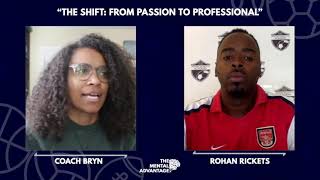
Former footballer Rohan Ricketts talks about racism he faced in European stadiums and how he responds with confidence and humor. He shares coaching philosophy on mental resilience and slowing the game down, and discusses his current work running an academy, coaching courses, and keynote speaking.
Chapters
For me, it's about developing the person first and then the player second.
Yeah, I love that.
So, so whether you're gonna go the recreational route or you're trying to go the elite route where it's competitive and high performance, I think you're going to learn a lot of skill sets and there's going to be a lot of life lessons along the way. And then some of the stuff, whether it be character building, learning to work in a team, um, self-development. These are things that they can take and use and apply in the rest, for the rest of their lives.
I'm excited for you to see this week's episode, but before we get to that, I have a message for you. If you're a parent of an elite athlete or a coach of a high-performing team and you want, you're looking for some help or assistance with making them more mentally resilient, perform with more confidence, be more consistent, anything like that, then this is for you. I have an 8-week program all designed to address exactly that, to help your athlete be at their best on a more consistent basis and not get tripped up by those little voices in their head and getting down on themselves for mistakes, but performing like we know they can. So what I want you to do is don't delay, schedule a— just grab a time on my calendar through this link and let's set up a time to talk about your specific situation and how what I'm offering in my 8-week program can help. Okay, so it's brindresher.com/freeconsultation. So click this link, grab a time on my calendar. I look forward to talking to you. And now on to this week's episode. Welcome, welcome, welcome everybody to another episode of the Mental Advantage podcast. This week we have a special treat. We are finally in a new sport. We've done basketball, we've covered football, We've done hockey, snowboarding, uh, volleyball. We've done a lot, but what we haven't covered is one of the world's biggest sports.
Number one.
I'm sorry, the number one sport. Uh, it's called football everywhere except for America because of course we have to be different. Uh, and today's guest is Rohan Ricketts, who is a former professional softball— I'm sorry, I don't know why I said softball. I apologize, I don't know what that was.
Football player. You said it on purpose.
Yeah, exactly. I just wanted to throw a little bit of curveball there, but no.
I like that.
So hey Rohan, how are you today?
I'm wonderful, thank you very much. How are you doing? ¿Cómo estás?
Ah, bien, bien. ¿Y tú?
Excelente, yo estoy muy bien. Siempre estoy bien. Ah, muy bien, muy bien.
All right, so Rohan's gonna try to throw a lot of Spanish at me because he knows that I know a little Spanish, so you guys bear with me for my poor Spanish, he'll be of course fluent. You know, actually that reminds me, Rohan, I wanted to ask you because obviously you are from, you have a British accent, you also are fluent in Spanish, you do salsa dancing, which is interesting because, you know, dancing is about footwork. So we'll get into that because obviously football is all about footwork as well. But where are you actually from, if that's okay to ask?
Yeah, so I'm born and raised in London, England. My parents migrated from Jamaica, and so they're from the capital of Jamaica, from Kingston. I grew up in a Jamaican household, eating Jamaican food, listening to reggae music, all of those stuff. And yeah, that's my story up to now.
Nice. Now, do you speak Patois too?
Yeah, man, what do you mean? Every day I speak in a Patois with my bredren them.
I was like, yeah, if he does too much more of that, guys, I'm definitely going to have to put some captions down because Patois is one thing that, you know, like, I think I got it. And then every once in a while they lose you and you're like, I'm not sure. I probably would understand Spanish more than I would understand Patois. But that's— yeah, there's— so there's a lot of Caribbean people that are in London because of the Great Migration. Is that part of— and I know we're talking about sports here, Um, what is it called? The generation— you know what I'm talking about? The people that— there's that controversy in England about citizenship and things like that. Do you know what I'm talking about? It starts with a W. It's something, uh, maybe you don't know about it. It's fine.
What is it regarding the Caribbeans in a certain era when they came over?
Yeah, I guess there was a— so there's a mass migration in, uh, England of people that, like, England, I guess, was sort of recruiting people, saying we need people. Say it again.
West Indian?
It's not West Indian. It's a, it's a, it's, it's like a, I don't know, it's like a something, uh, word that starts with a W, but I don't remember it, so I shouldn't have brought it up. But it's basically something that happened where a bunch of people went there, and then England all of a sudden was like, to the ancestors, like, you know, to all the people, because it's been generations of people that have basically built England, kind of familiar to a story that happened here in America. And then kind of giving those their descendants trouble because, and you know, like, because some of them have been here their whole lives, but you know, so they would probably consider England home more than they would consider the Caribbean home. But anyway, it's, it's, I, once I find it, I'll, I'll send it to you. Uh, all right, so you are originally born and, you know, uh, in London. Tell me how, I mean, because I'm, I guess, is football big in Jamaica too? But how does that, how do you fall into that? Because it's just, I mean, that's just what you do when you're a, a Londoner coming up, that you find football?
Yes, in Jamaica, um, football's huge. Okay, it's in— like you're saying, in certain countries, um, football is not the one number one sport, but globally it definitely is. Okay. Um, Jamaica, I think football used to probably rival cricket. So my dad grew up a big, big cricket fan, although he loved football. So he used to play cricket. So when I was a young boy in England I, I was exposed naturally to football because that was what was playing every day. But also I would go to my dad and he'd play for a local team because we're from South London, a place called Brixton, and he used to play for the Brixton West Indies. I used to go along to all of these games. So I played a bit of cricket, played a bit of football at the same time. So yeah, it was just something that was natural, you know, because every day in England, like, football's been played on the streets. Yeah, due to the proximity of how England is set up every 10 minutes. You— there's a football pitch. So I mean, you can go and play, whether it's concrete, grass, um, um, as we say in Spanish, cancha sintética, like astroturf, synthetic field. So there's always somewhere to go and play, and there's always someone playing. So after school, every day, we're playing football for free.
Nice, that's beautiful. I love that. I mean, you know, because obviously, interestingly enough, in this country soccer is gaining momentum, you know, and unfortunately it has its own, you know, obviously it's got plenty of momentum here, but not quite what the world is doing, right? It's still the sport that everybody's kind of like, I don't know, like my kid's going out for, you know, especially if it's an African American child, right, in America that's interested in soccer. Some parents kind of struggle with that because they got basketball, football. I talked to a dad who was like, you know, football player, and his son's like, I want to play soccer. But I think that's great. I think we need more color in soccer. So I'm excited for more, you know, more young men and women of color finding that sport so we can diversify it. And this is true of hockey, of soccer, of a lot of sports here in the United States. What is your favorite thing about football as you're, you know, sort of discovering it? Because you could— you had a choice between cricket. And so How did you maybe take— make that choice, or was it never really a choice? It was like, I always loved football, I just did cricket because other people did it.
That's a good question. So, um, I've never even thought about that. I think because football is more predominant in England, like people playing it more. Yeah, more readily available. To go and play cricket, you have to go and find a certain niche of people that play that. Um, you need, you need You need definitely more equipment because you need a bat, you need a ball, you need the pads, and you need wickets, you know, a few things. And then so football is just more readily available and everyone was playing it. And I love to create, and, and I'm very creative as a football player, and it allowed me to, to maybe be me, you know, with a ball.
I love that.
And yeah, it allowed me to be me with a ball, and I just became really good at it because I'm a bit of perfectionist. I'm very technical, and then I'm very creative, and then, and sneaky, like cunning. I am— I can be very cunning, sneaky. It's also— that translates into my footballing personality or my football identity. And then that just kind of— when I started to play, my friends were very competitive. They just kind of took on like a little bit of a momentum of its own. And then at 19 years old, I got spotted by this club, which is one of the biggest clubs in the world. Yeah, they just developed me from there. And nice.
Now, wow, so we— what you're saying is, is there's like a minor league in a way. I mean, it's a development league, but you're saying that basically Arsenal finds you and then they groom you to eventually hope that you'll become one of their professional players. Is that correct?
Correct. So yeah, yeah, so professional clubs around the world, football clubs around the world, um, conventionally they, they, they, they have categories. Some— I've heard that they're starting even younger now, so probably from 8 years old, where they will have scouts that go all over— let's just use England for example— go all over England and they'll be looking for players. So they'll be looking for these small players and then all of a sudden They'll be looking for these small players, and then what they will do is they will place them together, put a coach there, have a weekly schedule, sometimes 2 times a week, 3 times a week, where they're coaching these players. But these young players will also play still— let's call it grassroots— um, with their friends, and so they can still have fun. Because you don't want too much coaching— is not good, it stifles creativity, right? So you allow them to still be with their friends and be playing where they're not going to be coached. And then they just start to develop you. But there's a standard, right? There's a standard every year, and they want people to adhere to a certain standard and improve, because if not, what happens is they'll make cuts every year if they find better. And then if you stay in the system, which I did, and you stayed in the academy system all the way up until you get a professional contract— because in England we leave school at 16 years old— if you can stay in the system You eventually get a professional contract, which is when you start getting paid, and then you'll be really in the eyes of the, the manager at the top, right? Eventually he's gonna maybe say, okay, he's good enough, or they might sell you, or you might leave on a free transfer to go and have a career outside of that club.
Huh.
It's—
so it sounds a little bit like the minor league baseball kind of situation, except they groom you a little bit sooner. Although with the club, sports here in the United States. They're saying it's getting interesting, younger and younger. You already spoke about killing creativity. What do you think are other possible detriments to it? Because like you're saying, getting cut, and if somebody comes better, so like the having that fear already at like 10 years old that some 8-year-old's gonna come and unseat you, um, what do you think for like fostering the love of the sport, you know, and the joy of it, or professionalizing it at such a young age? What do you— what's your— what are your thoughts on that?
That's a good question. I, I feel that there's a, a— there's a, there's a difference between recreational, having fun, and then elite, where you're having fun but you're competing because you want to get to the top of that, that industry., and some people just naturally built for that, to go into that. So it— there's no problem on either side. So if you want to be recreational and just have fun, I coach kids in the Raw Wreckers Academy that come there, they don't really have the goal of becoming professional, they just love it, right? And, and I say cool, because what, what I think can happen through that, and it can happen both ways, For me, it's about developing the person first and then the player second. Yeah, I love that. So, so whether you're gonna go the recreational route or you're trying to go the elite route where it's competitive and high performance, I think you're going to learn a lot of skill sets and there's going to be a lot of life lessons along the way. And then some of the stuff, whether it be character building, learning to work in a team, um, self-development these are things that they can take and use and apply in the rest— for the rest of their lives. And so I think that it's not— being early in those, um, kind of, you could say that in those categories where they're gonna get cut, I don't think it's detrimental because I think from that you can also learn, depending— this is very important— how the parent and the club or academy support that child, right? So that's why for me, I, I'm a big believer in is me, the player, and the parent. Like, a lot of people over here in North America, what I've seen, they only focused on them and the kid. They're like, they don't want the parent involved. Yeah, I found that after that you might get mixed messaging to the child. Yeah, but if everyone's on board, when the child goes in the car of the parent The messaging is— and the narrative is consistent, so the child doesn't think, oh, it's the coach's fault why I didn't improve. No, they understand, look, this is where you are today, this is where you want to get to, this is what you need to get there, this is the rate of intensity you need to work at. So it's consistent with the parent that if you don't reach your goals, you can look at yourself and say, you know what, I wasn't given enough. I can see— exactly, I like to use this term called SMART goals. And smart, intelligent goals, so they're measurable goals, they're attainable, but we're measuring it on time. And if you can— if you don't get to your goal because— and you can see, ah, I didn't put the time in, you look at yourself. Then moving forward, whether you're 10, 12, 14, you're going to be more responsible in life when it comes to, to achieving certain goals.
That's so good. It's really important to obviously help athletes take full responsibility for their situation. So What you're, I guess, saying, and just to make sure I'm summarizing this correctly, is by being on the same page as the parent, like you said, no mixed messages, we're on the same team, and we're helping this, you know, young person develop their own process of going about these goals so that they can rinse and repeat whether they do it on the pitch or they do it in their lives. Is that correct?
Correct.
Okay. Awesome. Who were your soccer heroes growing up? Because you said, you know, recreational versus professional. So the first thing I think of is everybody wants to be a pro, but how do you know you want to be a pro or if you're just idolizing a professional player? So who were your soccer heroes and how did you make that shift to, I'm playing with my buddies in the backyard or on the field near the house, to, no, I'm going to be one of those?
Good question. So my idols growing up, um, my dad, he, he watched a lot of old school games, so he would show me— no, he would show me a lot of old school games where people in Brazil, from Brazil, were playing, whether it's Pelé, the people from Argentina, Maradona. He's just shown me the Dutch national team, that's from Holland, the Germans. So he's shown me a lot of World Cup and European Championship games but like stuff before I was born, right? So I grew up watching these technical players, skillful players. And then I started— I supported Manchester United, which is one of the biggest clubs in the world. I supported them as a boy, and I started to like fall in love with players like Paul Scholes, Paul Ince, Roy Keane, Ryan Giggs. There was a lot of players just growing up Paul Gascoigne. And then as I got older, there was players like Ronaldinho, Ronaldo— not the Ronaldo, the Portuguese one, this was before him— okay, and you just see these players playing and you just fell in love with them. And then you just play in the street and have fun, and we, we all tried to imitate them, say, yo, I'm Ronaldo! Yo, yo, no, no, I'm Ronaldo, I said it first!
I'm Maradona!
No, no, I said Maradona. Oh man. And then you just fell in love with it. Then we played football so often, we became better at it. And the ones that are more competitive and want to improve their craft— so I just spent a lot of time by myself before professional clubs just trying to improve certain parts of my game. And then when I got picked up at 10 years old in a professional kind of atmosphere and kind of, um, industry, um, Arsenal, this club. It then was, um, it wasn't fully clear to me that I wanted to be professional, because wanting to be professional is one thing, then working like you want to be a professional is a whole other thing, right? So a lot of people can say, you know what, I want a Lamborghini. Oh yeah, brilliant. Yeah, yeah, we all want Lamborghini. Then someone goes, you know what, I want a Lamborghini and I'm gonna do this, this is how I'm gonna get my Lamborghini. Because this is a sacrifice, right? Initially, at 9, 10 years old, when Arsenal picked me up, I never had the mentality to be professional. And interesting story, my dad told me— this is when I'd made it as a professional— my dad said to me, do you know that you got released at— I don't know if I was 11, 12 years old, I got released. I— he never told me because they released me and re-signed me within a 3 to 6 week period. Okay. And then they changed the whole staff. A coach that some of your listeners might have heard of, his name is Arsène Wenger, one of the biggest coaches in the history of the Premier League and Arsenal's biggest coach ever. He came to the club, he was a Frenchman, he came with a whole different philosophy and regime. And the type of players that he wanted to recruit from the ground up were players with my type of attributes. So they called me back in. And then a coach came in, and that coach, his name was Neil Banfield, helped change my mentality, shifted. And then from then, I really— something clicked to me, and I started to work differently, like I wanted to be a professional for real, right? Bam! And I just started to develop at a crazy rate.
Nice, I love that. Now you mentioned, which I gotta go back to just for a second,— that there's a difference between, like you said, wanting to be a professional footballer and, you know, actually doing the work, which you made that shift. When you mentioned also, like, you put in extra time on your craft, you got interested in how to do these extra tricks and developing on your own. As someone who develops talent now and thinking back over your professional career and all the various talent you've seen over even your rise And, you know, now would you say that other than a difference of hunger and work ethic, that there are some— like, everyone has the same opportunity to be a professional footballer? Good.
That's great. You're asking some really good questions. You're on fire today. You got really early in the morning, but you're really on fire. So cool. And so I think, so first of all, you need— I like to use the term a hard drive. So there's a thing I, I use, a term I use called player hard drive. So the player hard drives for me are receiving, manipulating, and releasing. This is in the football world. Yeah, receiving is control of the ball, right? We need to have good control. You need to be able to manipulate the ball well. And, and last one was release, whether that's a pass, a shot, or a cross. Okay, so these things we need to get to a very— like, it doesn't need to be exceptional level in every area, right? But you need to be at a certain level that's very respectable so you can compete under real pressure. So everyone, I feel, has the, the, the same kind of opportunity to bring these things up, right? Right. And then you can look at someone's bigger, someone's faster, someone's stronger with it. But those areas need to be brought to a very competent or just a bit over-competent level. And everyone has the opportunity to do that. Some people are naturally more coordinated, so the manipulation might come easy to them, right? So they can, so they can make that a super strength quicker. But then you might have somebody that naturally just has a good feeling for touch, and so then he just knows where to feel the ball just naturally, just innately in him or her. And that person that can improve their touch and take it to an exceptional level— that's what I did, um, then, because like I said, I'm a very deep and very intricate person. But then you have people that I've played with that made it um, at the top level that didn't have good feeling, but they were just more aggressive. And so, so I feel that everyone has the opportunity to take these things to a high level, to become professional, but I don't know if they spend enough time in the— on these— the hard drive skills to get them to the right level. Yeah. And then, and then spend enough time on the area that's specific for them.
Yeah, I wonder in when you're saying that, because of course what is speaking to me is about the passion, right? I have to have the drive, the hunger, because if I love the sport, that's one part to get me in the game. If I'm, if I'm somebody who's like, yeah, I'd love to be out, you know, on the grass kicking the ball around with my friends, and then I develop some, you know, I notice I have a certain skill or I'm developing that skill And there's that level of, if I want to work like a professional footballer to have that trajectory, there is going to be some sacrifice. There is going to be some real dedication that has to be in place. And this is what separates the men from the boys, to use a very cliché term, because obviously young ladies play soccer too as well. But to separate the top from the bottom is this idea that if I put in that extra work. How, if anything, do we spot that as a parent or as a coach and not necessarily, you know, confuse it with our own drive for our child or whatever to be that person?
That's a good question. Yeah, I think it's very simple. Um, you just need to look, use your eyes. You can see how the child is I watch children from when they first come into my training. Most of my sessions start— no, yeah, I mean, most of all of my sessions, depending on the age group, will start with a player and the ball by himself. So I get to see how that player, his body language is by himself to do some very simple basic tasks, and you get to see if that person looks— sees it as tedious or if he enjoys it. And you just can really just see, okay, this kid is really driven naturally, right? So I don't have to force it. You set a goal, I see how they work to this small goal in a certain place of time, a certain time, and I can just quickly separate who's serious here, who's not. And then I, I try to— what I try to do to help them— because I know this is going to be away from your question— yeah, I try to Because I want to try and help everybody, right? Not everyone's going to be the leader, but I want— I try to use the, the, the, the— that's called the standout child to inspire the child that's maybe a bit more, you know. Yeah. Or, or— and I— and when once I do that, you see them react through sometimes pride. Yes. What they want to do better. Because sometimes I think that the children sometimes have small things Some things that, uh, they say nature and nurture, right? Yeah. So through nature, sometimes they inherit things from the parents genetically that are in them. It's hard to fight them off. And then sometimes it's through the nurture, so the environment that they're in, we can kind of push them to another level. But I think parents— and I tell parents this all the time— you don't need to bring your child to my academy. My academy prices, they're high in Toronto, Canada. But they're high for a reason. And I think if you want to get value, you come to me. But if your child is not ready for that, look at that child, you can see it, and then don't fight against what they're naturally doing. Give them a couple months, you'll see. You ask them, hey Johnny, Tyrone, Kelly, do you really want to do this? They say yeah. And they say, well, this is not the, the kind of actions of person that wants to do this. If I see this for the next month, you can do this. Very simple. And once you do that, you'll see them improve or not. Or if they don't, you take them away. Yeah. Um, and I think parents have to sometimes make these decisions sooner rather than later and, and don't feel bad when you're doing it because it's very logical.
It's common sense. I love that answer. It goes back to the square peg, round hole. A lot of times we're supplanting our own passion for it and maybe even a talent that we see in our child. But without passion, you won't have progression. It doesn't matter. The work ethic won't be there at some point. Regardless, there's going to be a divergence, right? Where you're going to be. And like you said, the sooner or later, the sooner rather than later decision If you can help the, you know, like you said, I do an exercise with my athletes in my coaching program called the A player, B player. Like, let's talk about the characteristics of an A player. Let's talk about the characteristics of a B player. Which one are you? And don't lie to me. Just tell me which one you are. I'm fine with it. Whichever one you want to be. And if you're telling me you want to be this, then this is what should be, you know, present. And if I'm not seeing that, then, you know, I'm going to say, okay, well, based on your goals and based on your output, they're not matching. So we gotta talk about whether this is really what you want or we need a shift in that behavior, right? 'Cause I'm not trying to make you an A player. If you don't wanna be an A player, I'm okay with that. I just want you to be, you know, focused on that. When you were coming up in soccer and you started developing and having that professional track, What was a pinnacle moment for you or a pivotal moment for you when you started to recognize, I mean, yeah, they told you you were a professional soccer player and they told you how to work like a professional soccer player, but when did you like really, it really clicked for you that like you were going to be there?
Like you, you saw yourself on that pitch. So when did it click for me that I was going to become a professional and it was, it was real? So It's never— it's never really— even when I was close, when I made my— I made my debut for Arsenal because we leave school in England at 16 years old. And at 16 years old, I made my debut for Arsenal's first team in a friendly game. Okay, maybe some players like Patrick Vieira, Robert Pires, guys that won the World Cup for France. Nice. They won the top team, Arsenal, at the time. Was one of the top teams in the world, and I played— it was a friendly game. I was still in the youth team. So how it works, um, how it worked then, you have the first team, you had the reserves, you had the under-19s, and then you had under-17s. So I was an under-17 player. Okay. But I pushed up and they had me involved because I was a hot prospect. Did really well, but didn't really mean anything. Just mean that, okay, you're a prospect, the coach likes you. I still had a long way to go because like I said, they had World Cup winning players in the team, right? Moving forward, moving forward, I got my— made my official debut against Manchester United at 18 years old. Did really well. Still didn't mean, okay, I've made it. And because you have to break into the first team squad and stay in there on a regular basis, so I had to leave Arsenal and signed for Tottenham, who's their rivals, which is another team in the English Premier League. And then when I was at Tottenham still, I had to— I was on the fringes of the first team because I was 18 years old, right? So I had to break down that door, and that takes a lot of patience and hard work. At that point, you have the talent. I already created a name for myself, one of the hottest prospects in England. I was already playing for the England youth team, but still it's not guarantee that you're going to be a professional at the highest level, because there's people that get there and they just fizzle out the game, right? You have to be patient, um, stayed ready. So when my opportunity came, I was ready to grab it. Then I had some people in my corner that, that, that played for the first team. They were big stars, international stars, that was in my corner telling the coach, look, coach, we know you love him, 'But we think you should just put him in now, he's ready.' And then it wasn't until I got my foot in the door— I think I was 19, 20 years old— I am— somebody got injured and I was ready. I came on in the first half of the game, grabbed my opportunity with both hands, did extremely well, and from then I never looked back. So it wasn't until that moment, I think, where you realize Wow, like, I could— I, I, like, I already knew I could do this, but once I'd done it in a, in a, in a game against men, that's when I was like, okay, I got this. And, and then after that, the coach loved me, and then I just went on, right? I, I kept going and started in the team. I never came off. And then the coach unfortunately got sacked after that, but it was— it wasn't up until then. You can never be too sure, and I tell young players now, don't rest on your laurels.
'Cause it could easily be taken away from you. When you were going through that process of being on the fringe but not getting that 100%, what— actually, I want to take it back. When you played in that friendly and you were literally on the field with some of the guys that you had been, like you said, they won the World Cup. Do you remember, I know you were just 16 at the time, do you remember your mentality in that? Like, were you scared? Were you nervous? Were you ready? Like, you know, what was going through your mind as you're watching one of these guys just run past you and you're like, holy crap, that's like, I'm on the field with the same uniform as this guy. Like, we're not—
I'm not watching him, you know, like I'm with him. So yeah, I, I don't think I was nervous. Can't remember exactly after, but I don't think I was nervous because you're playing with the best, right? So, so, and then you feel confident in yourself, you know what you're good at. Arsenal, they teach you and develop you to play a certain style. Okay, so it was, it was quite systematic and very systematic how we played. So it's kind of easy because we're playing against a team that was very inferior to us. I was really good as a young player, and I'm playing with guys that are also very good or high level than myself. So it wasn't any nerves. I was very confident, and I played extremely well for 45 minutes, played half the game. So I wasn't nervous and I just— opportunity. And but I was fortunate that I was playing with these players. And when I say fortunate, I was fortunate because it made things easier for me. Got it. Yeah. So anyone listening to this, you're not always going to play in a scenario where, okay, I'm playing with the best. You might be playing for one of the worst teams and then you get an opportunity and then your style and their style don't work out, or there's no real clear system that is cohesive with your style. So then you've got to really go, okay, how am I going to adapt to this kind of non-systematical team? Yeah, I wasn't in that, so I wasn't even nervous.
It was kind of easy. You spoke earlier about the, the, your creativity as a player, and now you're talking about a system. Now I know that systems equal freedom, but the word system to most people doesn't mean that. And so it's nice to have a confidence of knowing that this is how they play so I can be. How do you find yourself within a system? And like you're saying, when there's non-systematic, it can be a little different.
But how do you adapt your style within a system that is a certain way? Brilliant, brilliant question. I, Roel Rikkes, personally, I'm not really a system guy because I'm a free spirit. Yeah. Like, I'm like, I'm me, I'm Jamaican, so Jamaican, I'm gonna like Jamaican, I'm gonna like system, right? So, so when I deal with the system thing, but at that time in my life, I really wanted to be a professional football player. I was naturally very talented and gifted, right? And I was playing for Arsenal, and Arsenal, one of the top teams in the world, and they had a clear system and philosophy, so I had to adhere to that system. Right, to get through at that point. But then there were moments in the games where I could be a bit more creative, but it had to be in that framework, right? And I, I, I was very clear of that. There was other players that weren't clear, so they didn't get the same opportunities I got. Even they were, they were very talented, as talented, but they didn't want to add hurt to the system They just wanted to do them. Yeah. And even though they were beautiful, aesthetically pleasing to watch, they just didn't want to follow the system and the rules. So, and the principles, better word. So moving on from, from, from that club, when I went to Tottenham, they had a system, but the system where he put me in the system was a role that allowed me to be more who I, who I was in April, which is to go and create be skillful, break people on the edge of their seats. So I think it's important to understand that some, some people won't have a system, then you've got to adapt really quickly to chaos. Okay, actually, you've got to navigate in that. And then if you're on a team that has, um, a system, respect that. And then, and then know, try and smell the areas where you're going to be allowed to be creative within that. It's very important to be okay, I'm playing in this system, but who are you? So everyone needs to have a show, okay? For you to be you, you need to have a show, right? You need to be who you are authentically. But at the high level, when you're working in certain teams, they have a system, so you want to adhere to or, or understand and respect those principles of the coach. Or, or it could be in a workspace But then when you get moments to be you, yeah, go and do that because that's why you're selected. You're selected for you, but you just got to know how to kind of distinguish the two.
That's powerful. I was just at NBA Summer League and I know that's basketball, but one of the things, there was a gentleman there, he was one of the prospects. I won't say his name, but I was like, well, he won a national championship, you know, like it's really good. Why isn't he, you know, already signed or drafted? Oh, his game's not special enough. Like, you could play really well, but you don't— you have to have some sort of nuance or character to your game. How does a player figure that out? And, and to what degree does the coach have to meet that player? Or— because I think some coaches, like you said, can stifle that, that character or that signature. How does a coach foster it? Or how does a player find it even with their coach that doesn't? So I know that's kind of a two-part question.
I don't know how you know. It's a brilliant question because it's something that I'm working on at the moment within my academy. Um, so there's a thing called player identity, or you could use the term player personality. So we all have a personality. So for example, yourself, when you're on the morning meetup, you're, you're entertaining, you're informative, you've got energy. You got the smile, the curly hair, you got all these things, right? And I think, um, especially like speaking-wise, you show that. Yeah, right. You don't just come on and go, bam, bam, bam, and no, you do it with your personality. So in, in sports and in football, it's important that we know who we are as a player, what our strengths, what our weaknesses, what do we do instinctively. We have to be very aware of that because those are the things that are expected of us on the pitch, aside from the basic principles, which is, okay, teamwork, you move here where this guy moves there, defensively work as a unit, right? Brilliant. But other than that, when you get the ball or the puck or whatever game we were talking about, like, what makes you unique? Why are we picking you over him? So the guy or the, or the lady or the person who knows, right, how to— to— who has the confidence to show that when it's time more will be the one that's going to get picked most of the time. And then to address your second question, is it the— is it on the player to, to notice this, or is it the coach to meet him there? I think it's both. Reason being, sometimes you don't have coaches, yeah, with enough emotional IQ to, to come and, and take time. Yeah, to have a conversation with that player because they might be dealing with 10 to 20 players. So who has enough emotional IQ intelligence to go, he's really good, I'm gonna make him brilliant through conversation, go for a coffee, talk with him and make him see that I believe in him and highlight the things that I know that he needs to do? That goes a long way. That's more important than any drill you can do. Right. But I love coaches, if I'm being honest. I've talked to coaches that were my coaches that coached to the top, some of them, and I asked them now because I look at them as mentors, and sometimes mentors for how not to do it, how to do it. Yeah. How have you developed over the last 10, 15 years since I've seen you? How have you developed over the last 6 years? And I want to say 95% of them say they're developing their interpersonal skills an emotional IQ to understand how am I going to get the most out of a person. Because back in the day, most of the time they're like, this is what we need you to do, you're not doing that, and that's it, you're on the bench, that's it, right, you're out. And they might say— I remember one coach said to me, he goes— I always, every time I, I talk about him, I have to put his voice on. He's a Dutch guy, his name is Martin. Yo. And he said to me, hey, little man, he goes, you have all the talent, you're a special player, most talented player here, but something, something, the bird is flapping in your head, the bird is flapping. What are you talking about the bird is flapping? He goes, you gotta have your own show, you gotta cheat sometimes. And he was saying all this stuff to me, and I was like, okay, he was saying 'You gotta have your own show.' Didn't really get it what you meant, like, like, understand what I mean? You, you got to have your own show. Um, yeah, you got to cheat sometimes. I, I kind of got what he's saying, but he didn't make me feel the level of, um, understanding and maybe confidence to cheat. So I'll break it down quickly what he meant by that. I was naturally very gifted, but then at some, some points I wasn't as effective as I should be. No, I wasn't as effective as I should be. I made it to the top, very talented, my peers respected me, right? But was my output what my talent— did my output reflect my talent, right? No. Why not? I don't know if I had, let's say, Ron Ricketts or somebody, or even someone like yourself I could have spoken to, to understand and look at myself and go, whoa, whoa, okay, okay, you're talented, but You got way— a long way to go, buddy, to realize your potential. Even when I was earning a lot of money, there was a long way to go. So if you were to come to say to me and say, look, what is your show? Who are you? What do you do good? Rowan Ricketts, you can dribble, you can go past people. We need to see that irrespective of whether you're going to lose the ball here and there, right? You need to be showing that and really run with that strength. Why? Because you want to score more and shoot more. Brilliant. So we need to get that up. Okay, then I would have gone and watched video and go, okay, I'm not shooting there, I'm not dribbling, I'm passing. Why am I passing when I can dribble better than all of them? Brilliant. I didn't— he didn't make that really, really clear for me because I was a young boy who wasn't self-reflective enough, right? Brilliant. He should have seen that and just give me that bit more attention. Brilliant. Then he said, you need to cheat more. What does he mean by that? He meant— he said to me one day, Manchester United— I played against Manchester United and he said to me, I found out after the game, the bet— one of the best coaches in football history, Alex Ferguson, he coaches Manchester United, brought through Ronaldo, Ryan Giggs, Paul Scholes, David Beckham. This guy was an admirer of mine. I found out he was an admirer for a game that I played against him and he told one of my friends, Jermaine Defoe, Jermain Defoe told the coach, who was our coach— no, no, no, the coach told Jermain Defoe, Jermain Defoe told me, and we was getting a massage together, and Jermain said, 'Alex Ferguson likes you.' I then come to find out why he liked me, because he saw me working my socks off. He said, 'Look, that kid's talented,' but it was the work ethic. So that same day, the coach said to me, my coach Martin Lio, he goes, 'Alex Ferguson liked you, but I don't know what he saw from you in that game because you were just running around like a headless chicken.' like an Englishman. And I never really got what he was trying to say. He said it, we just laughed about it, and I left the office. But what he was trying to say was, you're so gifted, but you're exerting all your energy running around like the player that's not that gifted. So when you get the ball, you don't have enough energy. So he was saying, I need to cheat a bit, meaning I need to find a way in the game. And this goes back to what you said earlier about creativity and systems. So I was trying to adhere to the system so much, so I was running around, and then my creativity, um, went down because I didn't get the balance right. Okay, you know what, I'm not gonna run so hard here because I need to save some of my energy because we're going to get the ball soon and I need to be fresh because I'm the difference maker. And he didn't make that really clear for me. And so, so sometimes coach leaves things to figure out. Why? That's why I said I want to put the onus more on the player. So any player that's watching this, or a coach that's coaching young players, older players, go and instill this in the players. But players, if you're listening to this, go and do your own work because you don't know if the coach you're going to bump into emotional IQ to help you, right? And you don't have a story like me where I'm saying, well, I made it, but I could have been this.
Yeah, absolutely. I always say if you don't tap into the mental game, you're leaving potential on the table. 100%, right? Yes, absolutely right. And interestingly enough, that coach didn't learn your language and he wanted better performance from you but he expected you to understand what he meant. And I always say, like, when we talk about love language— you said that— you got to find the love language of that player, to me. Because if you don't, you're not— you know, it doesn't matter. You can give them all the feedback in the world, but if you're walking around like, I have no idea what that guy's talking about, then what's different? I mean, yeah, now you have the wisdom because of your own, you know, coaching and stuff like Oh, okay, I get it now. Or, but it's too late. So I agree with you that there has to be a journey of figuring out who you are and picking your moments and understanding that coaches aren't going to necessarily adapt themselves to you. I do think there is an onus on the player. And I think the coaches, like you said, it's both. They have to figure out, like, are you understanding what I'm saying?
Because if I say it 5 times, yeah, I got to change what I'm saying. Exactly. Check this out. So there's a guy that's my mentor, and when I was talking to him to learn some stuff, he was telling me there's a place in Holland, um, I don't know where it is, place in Holland where they color code the players. So I think there's 4 colors— was red, green, yellow, blue— and that way they kind of have it sussed out to a degree The Love Languages, but I don't know if it was Love Languages, right? It was just what, um, personality type to play, right? You're saying it was hows, whys. So how, why, what, and one more. I don't know if it's— and I think it was a who. Yeah, right. So these different— so once you can know that, okay, these guys are the reds, these girls are the blues, and so forth, you start to go, okay, cool. So you just kind of easily can know how to speak to that person, right? And then it's going to be very effective. So I'm still trying to find out, can I find— can I see within a 9-year-old— come talk to kids as young as 7, 8, 9, right? Once I start to see elite ability or, or top level quality at maybe 8, 9, can I see in a 9-year-old what makes a person— can I see a who, a why, and that age?
He's still kind of forming himself, you know. Interesting. Yeah, it is. It's fascinating. I want to create one myself, like a scale, because obviously we talk about being able to gauge the mental toughness. And of course we have grit, and, uh, everyone is really focused on this toughness aspect of mentality. And I'm not a huge fan of the term mental toughness. I do understand it has its place and it is important. And the stressing only toughness is where you get into to the mental illness or the, you know, the kind of the, the difficulty.
That's crazy. I never— and I know you're interviewing me. Yeah, I got a flip on you. So yeah, that is very interesting. I never ever heard that in my life. So why don't you like the term mental toughness?
I think it's important to have mental, you know, fortitude and strength. Right? I don't, I don't disagree that you have to have it. It's this idea that some people have it and some people don't. And I think it's developed just like everything else. It's a muscle. And if we only stress the muscle of the mental toughness, then you run into the challenge of, you know, not really helping them with the vulnerability aspect, which makes them actually stronger. If we're only emphasizing— and you played with some of the top men in the world making more money than anybody, and you know they're not happy. They're not happy. They're not able to express when they're having these moments. And when a player is not happy, equally, you're limiting some type of potential. And there's a great Netflix documentary that's out called Untold. And it's about a tennis player, and this is a tennis player that was developed through an academy, much like the system with Arsenal and all the stuff with soft— sorry, soccer and baseball here, and I'm sure football in some respects in America. But they only emphasize mental toughness, and it was all about you got to be able to handle the rigors of competition, you got to be ready for the professional levels, you got to do this. It just doesn't humanize the player to teach them that there's going to be moments where there's going to be a lot of pressure, and it's okay if you're having a hard time with that. But it sort of, I think, plants in the player's mind that something's wrong with me because I'm not handling this very well.
As opposed— I, I love it— as opposed to, um, it's okay to show your vulnerability and admit to feeling like this, and then we adjust that.
Yeah, exactly. Well, you have an ability to speak to that and give them some coping mechanisms and some tools. This isn't like, let's cry on the pitch and have a moment in the middle of the field. That's not what I'm saying. But we're not allowing that feeling to come to surface, to be talked about, to then be able to speak to it, to give the tools for that, because it has nothing to do with the quote-unquote physical aspect of the game.
I like that, Brynn. Nice. That's a— that's powerful, guys. That's really, that's really good because I, like I said, when I'm coaching these kids, I see like— I'm speaking to a kid, I'm saying, hey, go faster, do this, be more aggressive. And it's really— that's really— because I'm like, the reason I'm— yeah, it's because I'm a person, I love to learn new things. Yeah. So when I hear something that's a bit profound, like, because it opens up a whole new kind of, kind of, uh, conversation. And then, and And I can look at the children differently because I might think this kid's ready, this kid's not ready, but they just might not be ready. And they're not.
Well done, Bri. Love it. Thank you. Well, I think it goes— and obviously this isn't me as a guest, so I don't want to keep talking about me. But given your situation, it's really important as a coach to recognize that, right? If we're, we're saying we care about the person more than we care about the player,, but most of us are only coaching the player. And that's the thing, you got to coach the person in the uniform because they're going to spend time out of that uniform, and there's always an end date regardless of how good, how amazing. And if we're not helping them develop as people, then it's going to manifest in the sport, but it's also going to manifest out of the sport, which is when you see all the detrimental behaviors Or you see these young players that aren't handling all of the stuff and then their careers fizzle out so soon, or injury happens, which I believe injury can be avoided in most cases with some psychological adjustments. I'm not saying that you, you're just not going to get injured, but I think that sometimes things happen because it's sort of the body's way of expressing the tears that you won't let your eyes cry.
I like it, I love it. I hope you can stay on par for that because we just went—
yeah, I know, I know, but it's okay, I got it. We'll come back, we'll come back to— yeah, yeah, for those of you listening, uh, we'll get back to Rohan Ricketts. All right, one of the things that we're, you know, we're talking about the player, we're talking about the coach. When you're out on the field with these, you know, you're having these powerhouse moments. One of the things I wanted to ask you, when you were sort of on the fringe, um, did you get frustrated in that process of being so close and, you know, you finally got your crack on at 18, but before that, where you kind of, as you're, you know, being told, okay, like, you're there, you're there, and people are always telling you, man, you're right there. Did that get frustrating for you, and how did you keep it if at all, did you do a good job of keeping it in scope?
Like you said, not resting on your laurels. Well, frustrating is an understatement. You, you, because it's a dream, right? You're working every day and you're so close, and you, you can perform really, really well, but sometimes it's not good enough. And yeah, I was, I was fortunately at one of the biggest clubs in the world, and unfortunately at one of the clubs in the world because the education we received was first class. The facilities and resources that we had at our disposal, world-class, next level, right? But the competition also was next level. So to put a boy that is 17, 18 into the team ahead of a guy that just won the World Cup, it's not happening, right? Right. But you have to keep working knowing that they wouldn't happen. And then sometimes they were buying in other players that had more experience than you because they were playing in other countries where they didn't have World Cup-winning players ahead of them, right? So there was the World Cup-winning guy, then there's me trying to break in, and also they buy a guy behind them that's more experienced than you. So it was extremely tough. That's what actually led to my departure in the end, um, my agent came down with one of his friends. They were Jewish guys at the time, and he said, look, would you like to play for Tottenham Hotspur? And I said, yeah, yeah. Even though I love that Arsenal— and Arsenal were bigger than Tottenham— I just wanted to play football, right, at team level. It, it was bigger now than— it was just for fun. Yeah. Now something that you, you want to become, it's your livelihood, the opportunities to earn more money and, and go up in, in the food chain. It was, it was, it was, so it was very difficult, very, very difficult. And not just at that time, you have a lot of stages in your career depending on how it's going. Yeah, where you're the guy and you're playing and the coach loves you and everything's going great, then you have moments where it's not going well for you and the coach is not going to play you. Yeah. What are you going to do? And, and if I'm being honest with you, Bryn, that was one of the areas that I didn't really excel in, dealing with my frustrations. Yeah. And I, I didn't look at me enough I was always pointing the finger at points. And, and don't remember when I was pointing the finger, I was right, right. It was justifiable, but I would have got more, right, and been more productive if I would look to me, point the finger there, but then go, what are you gonna do now, right, about this? And that is where I, I I fought it. Yeah. And I try to let children know, okay, cool, that might be happening because of this, but what are you going to do now? The coach—
yeah, go, go, go, go. No, no, no, I don't want to cut you off. I'm saying that there's what's happened and then there's how are you going to respond to what happened, because there's nothing you can— there's only certain things, as you know, that you can control.
So absolutely. Yeah. So I wish, I wish, I, I wish And that's why the mental side, I think there should be— and this is in all sports— yeah, a mental program that's mandatory. That's mandatory. Yeah, I know. Yeah. Oh, you have it?
Good.
We gotta talk about that. Yeah, for sure. Because that can be something— it's got— I think it's got to be because, you know, the word mental Yes, and it scares the players. Yeah, yeah, just that, that word mental, even when I hear people talking about mental— what's it, mental health? Yeah, Jesus Christ. Like, it has this connotation that it's not really— this isn't nice to digest because it's kind of like mental or something wrong. And right, but if you said technical, no one feels too bad. You said physical. No, first of all, but mental, so it needs to be not necessarily rebranded, but maybe if you need to be re-educated or maybe rebranded in a way where people can see the, um, in a different light. So yeah, and then people might be more like, oh, I need to go for that.
Now it's kind of like mental, I'm okay. Yeah, yeah, we're not, we're not. I've had the opportunity to work with some teams and yeah, when you say something— I'll give some context for America and give context for the UK. First, the UK. There is a term that it is like, "Are you mental?" And that just means, "Are you crazy? Is something wrong with you?" Like, that is the way that they say that there, right? Now, here we don't use that. We don't say, "Are you mental?" Right? That's not something someone would say in America, right? But the term mental, anything like you said with mental, which is— this is good context for people to understand because a lot of organizations have a sports psychologist, but players like Rohan who might be on the professional level may not feel comfortable going to that sports psychologist because they're concerned they're going to go back and tell the coach of whatever they share, which could then somehow limit what happens with the team, make them less valuable, tradable, as we know, because they're using that 18-year-old that's coming up through the ranks to keep Rohan on his, you know, on his, on his toes so that he's playing, right, at his best. But I will say, but anyway, what I was saying was I have players who I've said, I've come in, I've told them what I do, and they're like, no, I think I'm good with mental health. And I'm like, no, no, no, that's not what we're talking about. We're talking about mental skills, and that's different. And it's proactivity versus, you know, because I mean, mental health, the term mental health has the word health in it. So we're talking about the health of your mental, and, you know, mental illness is different. But when we get to the other side, right, it's just this idea. But anyway, I, I 100% agree with you that it needs a better marketing campaign. I don't know that we need to change the term, but we definitely need, uh, more people to speak to it in a way that educates, right? And, and to be fair to you, I don't think it's possible that it's, it's totally your fault, right, that those things didn't happen because we didn't know how to give you the language to teach you. I mean, we use words like consistency, focus, but we don't teach kids how to be consistent. We don't teach them how to focus. We just tell them to do it and they don't know how, just like you. Like, yeah, just get the bird flapping, get it out of your face. You're like, okay, thanks. What I wanted to ask you though, to talk about. Yeah, so I definitely think there needs to be mental coaching and we can get into that and other time because this isn't about me. And I mean, absolutely. I want to know, speaking of the mental side of football, when you get up to those higher levels, you're talking about a very, very passionate fan. And it is no secret that soccer for a long time has not been a very diverse sport, particularly overseas. The fan is very passionate. And as a player of a darker complexion and a different race, than perhaps your David Beckhams. Can you talk about the mental aspect of that, and how do you handle that from a race perspective, and while it's just going out and playing your game? And did you have any incidences where racism, you know, reared its ugly head that may have affected your performance, or they tried to anyway?
Yeah, so from the age— I want to say from the age of 10, 11 years old, I've had situations where players might said something to you like, 'Black this,' or, 'You're a n-word,' and they would say stuff. And it got worse as I got older. And then you— I'm obviously being in England, which predominantly, even though London is multicultural, right, predominantly England's a white person's country. So you would feel it in certain areas that you go into and You know, even when I was playing professionally, probably earning more than the average person, I was in situations where a white person would be treating me as if I was a thug or I was a criminal walking the street, kind of holding their bags tight. Well, I walked out of restaurants, um, in like very plush areas, right? The Black taxi driver— because we have these Black taxis in central London— that's waiting for me he comes and sees a Black guy and he just drives off. It's happened to me more than one occasion, right? So, or I was sometimes in a group of 5, 6 friends, all Black, taxi driver drives off. So I used to see that. Then I'm in a crazy situation when I was playing in, in, for a team called Shamrock Rovers, an Irish team, was playing in a European Championship kind of competition. So it was a European Cup competition called the Europa League. We were playing as a team called, um, PAOK Salonika in Greece. It was in Greece, and I remember it was a crazy story. I wrote an article on it. This— so what happened was I was on the bench, and every time, like, I got up to go to the toilet, they would start to— no, no, before I got to— I was just warming up on the pitch and I could hear them, ooh, there's booing, there's booing. So I was like, are they doing these monkey noises for me? And then halftime came, I went to the toilet. So when I got up to go to the toilet, the toilet, you had to kind of, from pitch level, you had to go downstairs. And every time I walked by it, it just— around where the stairs were, there's loads of fans. So I went, okay. So I came back out again, so I sat on the bench. Wow. Then Then I, I went downstairs again, and then that time I got a banana because I thought, okay, because I, I, I, I, I— you could deal with these things two ways. So you go crazy—
oh, three ways.
You can go crazy, right? Ignore it, or, or you can act in a way where it doesn't even bother you and you make them look like Right. And so I actually went upstairs, went toilet again, came back, got banana. The banana was in the changing room. So when I came out now, back up the tunnel, they're obviously waiting for me. There's like 30,000 in the stadium, but there's this portion of the fans are there. I have my banana in my mouth and I was just walked up with the banana and they were like, oh! And then they started going even crazy. They didn't even start to go, oh! They said, hey! They started to scream, right? So then I went out with the banana and then there's a— so then I went on a pitch because it was halftime and I was warming up with the ball. I think I had the banana and I was just warming up. Those same people, when the game had finished, they was putting their hands through the fence trying to grab me, to touch me, saying like— it's the same people, the same people that I saw. They was like Hey, so what I saw was, first of all, they were against our team, so they, they would have used this, this moment to express themselves. Yeah, um, they're supporting their team, but they're also expressing hate, trying to discourage the opposition. So they're trying to do that whatever way possible. So they're trying— and obviously it's really bad when you're looking to say, oh, that is racism. That's racist, correct. But I don't know if these people actually dislike Black people, but they express— they're so emotionally low and intelligent and uneducated that they just say whatever. But they actually probably got Black friends, they love our culture, but for this moment they're against us. So me doing that, I kind of took the kind of focus away from my color and show my personality that you didn't even get—
you didn't bother me.
I don't give a damn, right? Yes, yes, I am the same color as some monkeys, and I love that. Yeah, I love that. And I don't care. So they didn't change, start to want my autograph. The same people. Yeah, they were trying to grab me through the fence. Anyway, so fast forward, I, I'm a person that I deal with racism in a certain way where I'm not going to allow you to get me mad. Don't get me wrong, yeah, there are times when you kind of push to, but I'm not going to allow you to, to get mad at me for being the color that I like. Like, that's your problem. Yeah, that's like, like, oh, you don't like my color, or you think that— okay, yeah. So I, I try to deal with things in that way because the other way way, it's the Jamaican way, and that ain't the way.
Yeah, that makes sense. I like that you used, um, like you said, use that, show your personality, but also show them that they can't get in your head by, you know, like just showing like, this is not a thing, this is who I, you know, this is who I am, so I see what you're doing and it's not gonna work. That's basically your message to them, and you're not excusing it. You're not saying that it's okay that that's their— but like you said, and again, it doesn't make them any more enlightened, but it shows that that's the, the reductionist, you know, thinking is like, oh, that's what I can do to get into his head. And it's like, you know, you're gonna have to do worse than that, you know, if you think you're gonna get in my head, you know.
Yeah, there was another story, quick story. I used to live in, live in Thailand, and I played in Thailand, and I remember being on a beach with my close, close friend. He's from the States, he's from Connecticut. He used to play with me, Johan Smith. He's— he'll be something really good for you to interview, like really, really good. Okay, awesome. And he's now gone on, he's now coaching. He actually— he actually living where you're living. Oh really? Yeah, he just— is there a university?
What's the big university over there? It's called Stanford?
Yeah, Stanford's in Northern California, but yeah. Okay, I think he just went to Stanford. This is a guy that played professionally. Yeah, retired, and now he's going back to school. I don't know why. I said to him, bro, I don't I don't know, but he wants to do something. So anyway, we lived in Thailand, and I remember us being on the beach. It was on his private island, and these people never seen Black people, I think. So they saw it, they were just staring at us, and he was staring, they're staring. They got close to us, they wanted to take a picture of us, they wanted to touch us. Yeah, my friend Johan, he was so offended. He was like, no, because back in the day you used to hang us on walls and laugh at us. Yeah, pictures. And he was doing it, and then he's like, how come you're so comfortable with this? And I'm like, well, listen, they have never seen any Black people, or that's what they kind of seem like. They've never seen any. So this might be the chance that they've seen one or two. So I'm gonna leave them with an impression of us that's fantastic. Hmm. Not thinking they're gonna have— I don't care. I don't even know what they're gonna do with that piece. Right. But I know what they're going to say about us when they talk about how they— we really interacted and responded to them. That's what I mean. I can't— I'm only doing the joke and joke. And then we argued for about an hour on this speedboat. It was on a speedboat. Yeah. And then in the end, he didn't say I was right, but he understood that, okay, you're right. Instead of you getting your backup, that's cool. Take a picture of me, smile. Touch my skin. You might be the first one of us melanin beautiful black people that you see. Touch my hair. My hair is different. Like, like, if that's what you want to do, because— and I tell you why, right? We're in a multicultural, um, society, but I've lived— I've gone to play— I lived in India. I've been to places in India where you see Indians that don't look like Indians. They look like Chinese. And I'm like, well, I'm— exactly, exactly. Oh wow. And I'm looking at the guy like, oh wow. I took a picture of him. Yeah. So am I wrong? No, right? They're not exposed to us. I wasn't exposed to these people. They were like this— Chinese eyes, everything. And they're Indian. They're living up in the northeastern part called Sikkim, where they produce probably 70% of the world's tea. I was there. These people were different. The cleanest hearts you've ever seen. I wanted a picture of them because I've never seen them. So am I wrong? No, I'm not. And then, so I just think that we've got to combat racism. Yeah.
But I understand how we react to it is, is gonna create a narrative also. Yeah, no, I, I love that. I will say that anyone's listening, please don't touch a Black girl's hair. Rohan is speaking for himself, okay? Like, just in case somebody gets the wrong idea, I just want to be clear that no, I'm— of course it's— it— I think, I think also And also what that speaks to is it's different for everyone. But I love your perspective of you could leave that person with an impression because everybody has sort of a caricature of what they think a Black person is when they actually meet one. And this is the same thing for almost every community. This is why representation matters because people have certain policies and beliefs until they meet someone of this other that they feel like they're against, whether it be sexuality, race, religion. It's, it's the one way that we can bridge that gap in some instances, because people say, wow, I thought, I thought Muslims were like this. And then you meet someone who's, you know, Muslim, and you're like, oh, not what I thought, right? So similarly, that— I think that you, you're on to something there as far as bridging that gap. All right, my next two questions, and then we're going to get to the rapid-fire questions because I know I've taken up a lot of your time away from your beautiful family. All right, uh, one question was, when you're on the pitch or on the field and everything's coming at you so fast, how do you slow things down? How do you slow things down so that you can be in the moment or capitalize on the moments where you can shine? Or how did you do it? Not how does everybody do it, but how did you do it?
Maybe slow things down. So the more prepared I was, sort of technically, physically, mentally— yeah, the more prepared I was, the easier things were. So it wasn't something where I would— could just go on the pitch unless I'm playing against lower level people, right? Which, like, now that I'm retired, um, I go and play with some friends recreationally and it's relatively easy for me, right, because I'm at a high level technically and my touch and right IQ. But physically I'm not at the same level I was. But so at the height, at the height of my career, I had to go into a game and be really well prepared, be really relaxed, and then things would be a lot easier for me. I, I also think, like I said to you, that the understanding who you're playing with as well helps that. So going back to the mental side, and I have a mentorship group, and, and I try to tell the children to, to make things a bit easier and a bit more predictable. So when things are a bit more predictable, they're a bit smoother and a bit more tranquilo. As it's been Spanish. So how can I do that in a team setting? Have good relationships so there's a bit more predictability. They understand when I'm here, these are the one or two things that might— that, that I may do. And then, and so from the technical side, you need to prepare yourself individually physically, you know, individually, but then tactically and I put that in with the mental thing there, that is something that needs to be developed and constantly kind of refreshed. And you need to talk to people, and that will help you making things more easier. It's similar to when you're on the morning meetup and David, um, Shan speaks about finding your whos and stuff like that. You want to know who's who and what you're expecting from that person. And if you can do that, it becomes a lot easier. If I'm playing— I used to play central midfield for Arsenal growing up, so we had a system, but within that system I knew, okay, my central defenders, the two defenders, they have the ball. Where am I going to be? How quick I expect you to get the ball? Why? Right, the ball comes to me quicker. My job was easier. But flip the switch, I don't— you're playing in a team, you haven't spoken to the guy, you're technically prepared, it's physically— you're in good shape, but the guy gets the ball and he doesn't really know where you're going to be, and you don't know if he's going to go that way because you haven't spoken to him, or he goes the other way, and then, oh, I've got to run there because I've— why didn't you do this? Oh no, we want to avoid that., and we want to have good communication, create relationships with people that are close to us in a team setting. If you're playing a team sport, and then it becomes easier.
I love that answer, Rohan. It makes me think of, yeah, just being in sync, right? And if I— and so when you look at players, I guess it's my follow-up question. When you look at a team now, you can tell the relationships of those players based on— yeah.
Yeah. Oh yeah, you can see, you can see it. That's a great point. Yesterday I was watching a Champions League game.
It was PSG against—
that's Paris Saint-Germain, for those of you that don't know. I love that. I love that. She said Paris Saint-Germain. I said PSG, and I was thinking— I thought, I wonder if he knows what it is. I literally thought that, and then you came and surprised me. Lovely. PSG played against Club Bruges. Club Bruges are from Belgium. PSG got 3 of arguably the best players in the world.
They have Mbappé, French international.
So good. Yeah, I love him. Yeah, young player, probably the best young player in the world. Neymar. Yeah, superstar, top player, Brazilian international.
And then Messi.
They just got Messi. That's right, that's right. Arguably the best player that's ever lived. So they've got the three of them, and they didn't, they didn't play well yesterday as a team, and they wasn't the most productive, right? I saw a lot of scenarios in there that when you get to that level, in this certain level of respect, sometimes you don't need to talk too much because Messi's played with Ronaldo, right, at Barcelona. No, no, no, sorry, Messi's played with Neymar at Barcelona. But I saw a lot of scenarios where I'm watching the game, I'm like, he's moving in there, he's there. And then you see how they would use one another for the betterment of the team, but to help their, their individual game to eventually come out. So they would lend the ball to one another in certain areas, right? And they, they would get the ball back from each other. And you could see that was something because they have a relationship. Got it. So something that was probably developed at Barcelona, and because of their friendship off the pitch This is why I tell players to don't just go on a pitch— or I say pitch, don't go into the pitch, the court, the field, as you say in the States— and say and have the quick conversation like flippantly. Yeah, on the fly. Hey, get— look for me today. No, no, no, no, no. This is a conversation you want to have prior, when you're in the locker room, even when you're on your way there. You just want to have conversations about, hey, you know, we should start to love each other because you see, when you're here, this and this, and you let them know how it's going to benefit them. Because human beings, we like— we, we always thinking about ourselves. So how does this benefit you? Like this. And then all of a sudden, you start to see that when that person, um, it's like it gets the ball or the puck. He kind of gets it, and then He sees something there that he's already spoken about, so it's second nature. If I want dinner, if I want dinner from my wife— my wife cooks all the time, old school Colombian woman— but if I want dinner from my wife and I haven't let her know that as to what I'm expecting from her, we've just got to go together, I walk in the house and I'm hungry and there's no food, should I be upset? No, she's not really aware, right? Because I'm Jamaican. Jamaicans, we We, we were big on our dinners, right? We love dinner. Colombians, they're not. Colombians big on their lunch. Ah, I can't get mad when there's no food. I can't do that to her, right? I said, mi amor, a mí me gusta comer en la noche. I love— mi amor, my love, I love to eat in the night. Yeah. And then she goes, okay, baby. And so it's just very simple, and I think that's why communication is a huge thing, but you have to create little, um, scenarios for them to practice. And you, like, you have to create little scenarios. The mental side, like you said, just speaking to you today is even gone. Like, you brought about the mental side. I'm, I think I'm gonna have to spend like 20 minutes— oh no, 10, 15 minutes because they're young—
just talking. Yeah, or get them talking.
I think—
no, no, not me, not me.
Oh yeah, them. Yeah, yeah, yeah, yeah, yeah. In groups, that's that. You just, you just, you just, you just added another arm to my business.
I'm very happy to hear that. I, I think that, yeah, just what you're talking about, that relationship piece is so important. Obviously, coach to player, player to player, parent to player. I mean, it's all about relationship and If you happen to be listening to this and you're not an athlete or you, you know, aren't, it's the same thing in business. It's the same thing, right? You're not, you're going to be able to get the better thing out of every relationship you're in if you invest in it, right? And like you said, looking for that who and what is the strengths and like, you know, a great analogy or example about your wife and the dinner, because a lot of times in relationship we assume, I assume, you know what I'm going to be on the field. And so if you're not passing it to me, You must not care about the fact that that would have been a good spot for me when it's very likely that your teammate had no idea and it's not personal. So excellent, excellent example. All right. Last question, and this is a silly one in a way, but I was talking to my brother recently and I was thinking about this, right? And there's a lot of talk about men's and women's sports. And you obviously come from the world of men's sport, which is very privileged. You know that. And soccer, to my understanding, and please correct me if I'm wrong, the pitch is the same size and the nets are the same size and the ball is the same size. Now, I did answer this question for my brother, and I'll be happy to tell you what I said after you answer.
Can men and women play together on the same pitch? I think I've heard something about this the other day. Can they play together on the same pitch? Yes. But are you talking about in a professional level? Yeah. Listen, I definitely think they can, but obviously it's going to be— it's going to be football. Yeah. Obviously you gotta have— I think you're gonna have to have— and this has been extremely respectful to women. I think they need to be— whatever way you do it, whether you want to have— because in football we've got 11 people on pitch. Yeah. So whether you want to have 6 women and like as a— right, how many you have to have, a limit, and it's 5 men or vice versa, right? I think that part may need to be controlled because I feel— and maybe I'm wrong— if you have, if you have 11 elite men, same skill level. Yeah. If you play the best 11 players in the world, men level, against the best 11 women, I think the men are going to comfortably win the game just because of the physicality of it. So, so that being said, you don't want to have a team where you just go, okay, it's co-ed professionally, and then you just throw everyone on because then you're going to have the people talking about, oh, why did they make it less women or less men? And then So I think that has to be controlled. But why not? I think that would be interesting, actually. Yeah, that'd be— I think that's where you never know, things, things might go that way.
Yeah. Well, I, I, I, I, my thought was the same as yours, which is, you know, there's all this talk about men's soccer is, or men's sport in general, but men's soccer. A friend of mine, he's a fan of men's soccer. He's like, they're just faster. It's more exciting. It's It's just, you know, like, I guess, end-to-end action in his opinion, right? And I said, okay, well, women physically can't run as fast as men. We know this to be true. It's nothing that we can change about the biological mechanics. Now, there are women that can run faster than men, but the fastest man is always going to be faster than the fastest woman just because of biological, I think, and I could be wrong. Please write me a letter if I'm wrong. But the physicality of soccer, it could be very dangerous for a woman. To be out there with 11 elite men. Regardless, if she's, you know, good, she's gonna have to be crafty because men, you know, physicality is a part of soccer. We see it, we see concussions, we see all kinds of crazy stuff, and that happens on the pitch. So I'm just, I'm just, for that reason, I'm not sure men and women could play together unless, like you said, it was controlled, um, to the degree of how much you would have on either end.
Yeah, so I, I feel that, like, I coach young girls, young boys, and sometimes I put girls into groups of boys, and, and, and I tell the boys, and I tell them, because my training is very— like, over here in Canada, um, because football is not the number one sport in the country, it's definitely growing. Yeah. And it's probably the most— it's probably the most played sport at, um, youth level. So for the most part, a lot of the, the coaching in and around Canada and where I live in Toronto, it's not aggressive and competitive enough, it's not hostile enough, right? So, but my training, because I've been at the top, I know that that's the bare minimum that it needs to be like. It needs to be competitive. Brilliant. So that being said, when there's girls that I put with boys, because I think they skill level and they're similar. Yeah, I tell them this needs to be rough, so don't hold back on her because she's a girl. And don't think, okay, I'm a girl, these boys are rough, so you pull out of certain tackles. No, all guns blazing. Good. And then the woman will find a way to— and sometimes it's on the— the girls are bigger than some of the boys. Yeah, sometimes there's a boy in the group that's a little bit bigger than her. You're gonna find a way to fight because he's gonna also play. Obviously, like you said, men were naturally a bit more stronger, but you're gonna find girls in your— let's say a girl playing against a girl, that's just— he's so— there's a girl that's way more aggressive and you might feel like it's a man.
Yeah.
So I, I feel that women at the elite level, for sure, they can handle that. Yeah. And they'll know the guy's stronger than you, just like they know that a stronger, a more aggressive female is stronger than you. Yeah. That being said, they'll know how to deal with it, or if they can't deal with it, ciao.
Yeah. Okay. All right. There we have it. One more question that I always ask all my guests.
What's your mental advantage? My mental advantage? Ooh. My mental advantage is that I am always learning. So I, I, I said this only the other day when the parents said, Ron, you, you blow my mind. So why? Because I feel that you know more than everyone here, all the coaches here. Actually said to me, I feel you do. Your playing experience is higher than most here, but you're saying to me you're still a baby. Because I find that Like, astonishing. I said, yeah, well, I am, because I played for 20 years professionally. I've been coaching for 4 years. I've got high licenses, like, as a coach, but I'm a baby. I'm 4 years old. Yeah, I'm a baby, and I'm always going to be a baby because I'm going to be learning from different people, different situations, because I'm not coaching one person forever. So I like, I'm, I meet you, right? And that's why I told— I even talked about this to, to couples. Yeah, couples together, you've known each other 6 months, you've broken up, like, well, slow it down. Yeah, they slow it down. There's so much things to learn. Some of them don't even know themselves. Yeah. So I, my mental edge is that I'm open to learning from different people, people that have had less experience than me. I might see something 'No, that's interesting. I've learned from you today. I just met you. You never played professional football, right? But I learned something that's useful, not for just for my kids that I coach, but for my life.' So I just think my mental edge is the fact that I, I'm, I'm just learning.
I'm a thirsty for knowledge. Love that, love that. And, uh, just so you know, I did play in up to 4th grade, so I want you to know I'm very experienced.
In soccer. So I was gonna ask you this before you move on to—
we got to the rapid fire.
We're about to, but go ahead. This is a quick question for you. What— why— why— how come you do middleweight?
I don't know what— like, you do— I'm a former D1 athlete. I ran track and I love athletics. Yeah, so I was a track runner all the way up to college. I didn't get to the pros like yourself. But yeah, so I am a runner, but I do this because I think that athletes just are the fiercest at determined to make things happen. And so when you work with people, you want that mentality, that sort of that foundation that you could kind of plant, you know, that soil you can plant your seed into. And so that's, that's, I think that's why I'm hungry to work with athletes and people around sports more than anything. But ultimately high performers. But yeah, I think that's where I'm coming from in that regard. What did you run?
What did you run? 200, 400. 200, 400.
So you're probably quicker than me. You're probably faster than me. Maybe then. I don't know. Soccer players are pretty fast. In fact, in high school, when not boys, because, you know, I don't remember any boys coming out for the track team, but I may have also not been very focused on on that because I wasn't on the boys track team. But I know that we could have been an even more powerhouse sprint team if soccer wasn't the same season as us. Because there would be girls that would come out for indoor, but then they wouldn't come with outdoor because soccer season was then. So we could have been probably even faster if our soccer girls would stay with us. But they were like, no, we're going to soccer, obviously. So, and I don't blame them. I mean, that's their sport. So I wouldn't have wanted to do anything but run track. So I understand. All right, rapid-fire questions, Rohan. Obviously, I have to have you back. I didn't even get to the dancing. I didn't get to all the other amazing things you're doing, uh, but we did cover a lot of your coaching, which is good, which we'll get to the Rohan Ricketts Academy at the end here for you to, uh, you know, tell people how to get in contact with you. First rapid-fire question, I hope you're ready. These are very serious questions. All right, uh, first one is, what is your favorite snack? Oh, Jamaican patty. Oh, okay. Now is this a— yeah, tell me what— tell me what a Jamaican patty is. Is it what I'm talking about, like one of the things I like to go get at the, at the, at the Jamaican restaurant?
Yes, Jamaican patty. It's like the pastries, yellow. Yes, yes, I love that. The most known ones to Jamaican people, right? What are the best patties? Or Tasty's patty from Jamaica.
Delicious, but I need a spicy one. Okay.
Does your wife know how to make those? No, she doesn't know how to make them yet. She makes mainly Colombian food. She now loves the Jamaican food and she's got a palate that can take more of the Jamaican spices. Initially, she said, "No, mi amor, muy picante. No, mi amor, muy picante." But now she can eat the jerk chicken, the oxtail, the curry goat.
So yeah, so my favorite snack, Jamaican patties. Uh, in my meat-eating days, I was quite a fan of oxtails, uh, but I am a vegan now, so no oxtails for me anymore. But I do like a vegetarian, uh, or, you know, whatever patty, so I can have those. Those are very good. All right, favorite flavor of ice cream, if you're into that.
If not, your favorite dessert. Favorite, favorite ice cream? Vanilla, but I need it to be melted, so I like my ice cream very melted down. Like, so if you give it to me on a plate, I'm not going to eat straight away. Hey bro, there's your ice cream. I leave it so it's really melted and then a little bit's left there, and that's when I start. I'm, I'm very unique, I know.
Yes, creamy, it's just delicious. So favorite flavor of ice cream soup, I understand. Okay, I'm just kidding. I'm just— it's ice cream soup. I call vanilla the gateway drug of ice cream because we We all started on vanilla and then we branched out, but I like that vanilla is good. All right, uh, if you could ever have a superpower, uh, which one would you want and why? Wow, superpower— to teleport.
Yes, I'm with you.
Where would you go? Everywhere where they need help. Oh, nice, nice.
Do you have a favorite? Oh, go ahead, sorry. Yeah, that's, that's what we're here for, right? I think we're here to give whether that be time, knowledge, or like some of the most memorable moments in my life that have been, uh, tear-jerking moments were when I was living in countries where people didn't have a lot of financial resources and I was able to give. Whether I lived in Bangladesh, I helped the kids there, um, India, I've been to Africa, I'm living in Ecuador, and just being able to give and share, that is the most— that's the I've played in stadiums of 50,000, 60,000 people and stadiums that sung my name, but what's moved me most throughout my life wasn't those moments, were moments where I could help another human being and touch them, and that's been the most important. So if I could teleport, because I do what I do, my ultimate, ultimate goal is to have enough time, which is going to happen because you have enough revenue streams coming in that you can kind of do what you want, and then you have systems in place to keep everything running. And then I can go and do what I feel fulfills me— well, no, I know fulfills me— which is help human beings around the world, you know. And I don't think money— money is needed to help certain situations, but sometimes you just need to go somewhere and help people, you know. Like, just go around and fly, who needs help, let's just go there.
Yeah, I love that. All right, this next question is not as, uh, serious, but some people are serious about it. You have toilet paper in your house. I imagine they do the same thing in Canada.
Over the top, under the bottom, do you have a preference? Great question, mi amor, because I just— listen, I'm like I said, I'm not into systems. I'll put the thing on the other day. I got told off. She said, she said to me, hey, why did you put the paper like that? And I'm like, I just put it on. You're taking it off. This is mad. Like, like, what are you talking about? But so what the majority do—
like, no, to answer your question, I just put it on. That's good.
So you don't have a preference? That's good. No, like, too much preferences. I think sometimes too much preferences and some unnecessary stuff.
Yes. Yeah. That's fine. That's awesome.
All right. Next question. Who's your personal hero? My father. Why? Why is my dad? Because where he came from. So do you have children? No. Okay. So I have children now. And I realized that that's my most important, um, uh, how I say, most important objective is to grow them. Now anything, okay, well, what do you like to grow them? Okay, and then what does that entail? Feeding them and giving them like clothes and stuff, taking them to school, information. Brilliant. That is very demanding. Like David Shands was saying, he's dealing with it now, he's acting like he's a bit of a single parent for the next couple days. Yeah. That being said, I gotta look then at who raised me and then what he went through. And then my dad's— my dad's— not everyone is going to be a professional athlete or actor, or some people won't even be a parent, but the ones that are, it's a constant. This is constant job. It's non-stop. Yeah. So my father came from Jamaica young. Parents left. So his mom and dad were— I don't even know if they was really together. My granddad flew to England, left my grandma with my dad. Then my grandma left. He was left at 5 years old living with his grandparents in, in Denham Town. That's ghetto, ghetto in Jamaica. So it's a real, real ghetto. So he left there when he was— he— no, they left him there when he was 5. He was living with his grandparents. One of his grandparents left him without him knowing, and then he had to go live with the other one. So he had a very crazy upbringing and never had his parents around. He then moved to England, was living with his dad for a little bit, right? Just came from the islands, had an argument with his dad. Bam, his dad kicked him out, punched him, he said, and kicked him out. So there was no communication, no nothing. He then wasn't taken in by his mother, who's my grandma. I love her dearly. She— he wasn't taken in as like one, because she then had other kids, right? She wasn't taken in as the first— often as the first or second son, and taken in and said, son, don't worry, come live with me. Because my granddad and my grandma both migrated to England. And then they brought him there. My other uncles and aunties, my dad's brothers and sisters, they were born in England, but my grandma never took him in. So he was by himself, I want to say from like 18 years old, by himself trying to figure things out. Then meets my mom, has, has kids. No, he met another woman, had a kid with her, who my brother, he lives in the States, Mark, he lives in Florida. Then had my— then met my mom, had 3 kids with mom. And this guy who didn't have his mom and his dad was thrown from pillar to post. Tough Jamaican, um, he made sure he did right by us children, that he was there, present with me all the time. When I was going to these football training when I was young, he was the one driving me, picking me up. When my mom and dad, um, split up, and she made it easy— no, she made it easy kind of in some ways for him to be, be a dad that doesn't live with the kids. He took us, dealt with us, picked us up Christmas. He was just the real deal. But bathed me, like, buffed me, had to tell me off. And he just was— he was just really present in my life. And great, it wasn't true. No, he didn't shower us with gifts. I didn't have the latest trainers, as you call them, sneakers. Yeah, I didn't have the, the latest clothes, earrings. I didn't have a bike. But I had a lot of substance. Yeah. And my dad is my hero, so if I can be like him, then I've won. And he helped people, he helped us, and he's still like that to this day. Even when I made money, this guy really— he didn't even want a penny. Oh, and that's why I say that my dad's very rich, not because he has a lot of finances. My dad's rich because he doesn't need a lot. The richest man in the world is not the man who who, who, who has the most is the man that needs— no, it's not like that. It's not the man that has the most, it's the man that needs the least.
So if I don't need anything, I'm rich. Yeah. Wow, Rohan, it sounds like your dad's an amazing person, and he raised an amazing son, and now a father himself who's going to pass on a lot of that to his own children. All right, so we come to the plight, the part where you let people know What are you working on and how do you want them to get in touch with you?
Okay, the floor's mine. So for those of you that have been listening, or you might just saw the last part of it, my name is Ro Ricketts. I'm an ex-professional soccer player, to use it in North America, but we call it football in England. I played for Arsenal, Tottenham, Toronto FC in MLS, Wolverhampton Wanderers. I also represented England. Now I'm a professional coach. I have my own academy, as you can see behind me. My logo, the Ro Ricketts Academy, which is based over here in Toronto, Canada. But I also provide programs, coaching courses, courses also for players so they can help develop themselves through our methodology. And I also have my own podcast, which is the Ro Ricketts Show, where I interview different people, whether they're players, ex-coaches parents, so we can learn more about the game we call football. I also do keynote speaking. At the moment, I've been in speaking engagements online via Zoom. I've spoken for a lot of colleges, universities, high schools over here in Toronto, in Canada. I've also spoken for schools and universities and colleges in England. So if anyone's interested in that, I also do it for businesses. But, um, I've been very, very active in the college university space during the pandemic. And what else do I do? I have— I, I'm, I'm an agent for the commer— in the commercial sports world. So if anybody, um, knows a brand or work, um, in a brand, I merge partnerships with big brands, international brands that are trying to develop, um, their, their exposure in new territories. Through creating partnerships with big teams from the English Premier League, La Liga, because I speak fluently Spanish, and also in MLS, which is the league in North America. So a company, for example, you could have Dunkin' Donuts. They— I helped them do a deal with a team in England, Liverpool. And so you— there's different things. So I do a lot of different things, but most importantly, I like to focus on my coaching and helping people develop.
Nice. And where can people reach out to you if they're interested in finding out more about the coaching or any of the other things that you mentioned?
So you can contact me on my Instagram, that's Rohan Ricketts. You can contact me on my Facebook, Rohan Ricketts. Twitter, Rohan Ricketts. Snapchat, TikTok, Rohan Ricketts. You can find me on all of those platforms. And send me a message. Send me a direct message if you was inspired by something that me and Brynn spoke about today and you want to touch base with me with it or with Brynn.
Shoot us a message because we, uh, we're open to, um, help all of you.
Absolutely.
Thank you so much, Rohan. This was such a great conversation. I appreciate so much of your time today.
More from Bryn


Who else hype for this upcoming season with Caitlin Clark and the Fever with all these great adds?







How to be nicer to yourself: Stop putting yourself down either out loud or in your head


Winning At The Net Game of Sports & Life No Matter The Score - Episode 60 w/ Jordanne Scott