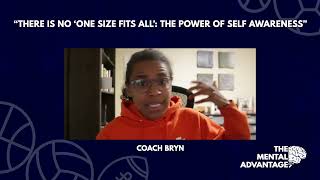
In this solo episode of the Mental Advantage Podcast, Coach Bryn Drescher opens with a brief promotion for his 8‑week Mental Athlete Program, inviting parents and coaches to schedule a free consultation. He then delves into the central theme: the myth of a "one‑size‑fits‑all" approach to athletic excellence. Using the metaphor of clothing sizes, Bryn argues that athletes, like people, are uniquely shaped by their personalities, circumstances, and goals, so a single formula for success cannot work for everyone. He illustrates this with contrasting examples from basketball—Kobe Bryant’s relentless early‑morning workouts, LeBron James’s physical dominance, and Stephen Curry’s skill‑focused style—showing that each elite player reached the top through different pathways. Bryn also references recent tragedies, such as the suicide of Stanford soccer player Katie Meyer and the death of a Miss America, to highlight the mental health toll of rigid success narratives and the pressure to "never quit." Throughout, he emphasizes self‑awareness ("know thyself") as the first and most critical step toward mental resilience, consistent performance, and personal fulfillment. He advises athletes, coaches, and parents to use role models as inspiration, not templates, and to tailor training, mindset work, and recovery to the individual. The episode concludes with a call for listener feedback, a reminder to like, comment, and subscribe, and a teaser for future episodes.
Chapters
We have athletes who are feeling the pressure of staying, keeping up, and, you know, the rigors of academic balance and athletics. And then there's this whole rhetoric or narrative around, you know, people, you know, winners don't quit, and like the best of the best just, they just push through and they just make it. And again, I'm going to say there is no such thing as one size fits all. It's really important that you get to know yourself. I'm excited for you to see this week's episode, but before we get to that, I have a message for you.
If you're a parent of an elite athlete or a coach of a high-performing team and you want— you're looking for some help or assistance with making them more mentally resilient, perform with more confidence, be more consistent, anything like that, then this is for you. I have an 8-week program all designed to address exactly that, to help your athlete be at their best on a more consistent basis and not get tripped up by those little voices in their head and getting down on themselves for mistakes, but performing like we know they can. So what I want you to do is don't delay, schedule a— just grab a time on my calendar through this link, and let's set up a time to talk about your specific situation and how what I'm offering in my 8-week program can help. Okay, so it's brindresher.com/freeconsultation. So click this link, grab a time on my calendar. I look forward to talking to you. And now on to this week's episode.
Good afternoon, good evening, and good night. Good morning, wherever you are watching this. Welcome back to another episode of the Mental Advantage Podcast. Just Coach Brynn this week with another solo episode, and today's topic is all about one size fits all. Do you remember when you were a kid and, uh, you would see things, and maybe this happens now, but I feel like I don't see it as much as an adult, but you would look at the tag of something and it would say one size fits all. And, you know, I don't know about you, but I would think like, how is that possible? I mean, people come in all shapes and sizes, and it seems like it would be difficult to find something that fits everyone. So in order to make it fit everyone, it has to be in a lot of cases too big for most people. So why are we talking about this? Because obviously this podcast is not about clothes and sizing and stuff like that. Well, it's important. I had someone ask me recently about, um, Kobe Bryant and sort of like, how does one truly become the best in their field or become the top of the top or truly become excellent? And you know, when you follow the blueprint of other players or other people in the world of sports you might think, like, is there a right way— I'm gonna put that in quotes— right way to go about pursuing excellence, you know, um, mastery, etc.? And I was asked this on a podcast I was on recently, and I said, you know, obviously people talk about Kobe all the time. They talk about how, you know, he's known for being in the gym early on a game day. And he was also known for staying, going back to practice after dinners in the famous story told by Allen Iverson. And, you know, he was absolutely dedicated to his craft. And yet there were other people who ascended to the tops of the tops who didn't seem to have to do that. And then, then, you know, may perhaps on your end, you may invoke the argument of, well, yeah, but like, you know, Kobe is the best basketball player of all time. And, you know, I honestly think that that is a fruitless conversation because, you know, it's sort of like when you get to the part of the Bible that talks about begat, begat, begat. You know, like, if there was no Dr. J, there would be no, you know, maybe, uh, Kareem Abdul-Jabbar, no Magic Johnson, and then no Michael Jordan. Like, it goes on and on and on. And who was before Dr. And so on and so forth, right? So I think it's really important to really talk about this concept of, you know, what is the best way, the right way to go about anything. And I want to talk about how there is no one-size-fits-all. Um, everything is different for each person, and this is why I want to talk about this, like, this power of self-awareness. Uh, you know, Kobe knew himself best. He knew what he wanted to do, the way he wanted to go about pursuing becoming the best basketball player that he knew he could be and wanted to be, and have his name mentioned in the same sentences as a Jordan, as a Magic, as a, you know, Larry Bird, you know, and all the bests that you want to talk about in that sport. And there are several examples of excellence all across the board. And yet I still want to say there is no one-size-fits-all. There is no one-size-fits-all. So it's— I really want us to get that, is that, you know, you see a LeBron James who is good, is great, is definitely going to be mentioned as one of the greatest basketball players of all time. And Steph Curry, and they don't seem to have the same— not level of dedication, that let's be clear, I believe they are just as dedicated— but the way that they show up for their sport is different than someone else and, and another person. And, and even Steph and LeBron aren't the same. So I think it's really important that when you're someone who's coming up in the sport of basketball, football, soccer It's great to emulate your heroes, to really be inspired by them, to truly want to be like them. But it's also important to know that you have your own way of doing things. And just like you wouldn't wear someone else's shoes, you don't want to wear someone else's journey, someone else's process, someone else's feelings. And this is especially important, you know, as of late we've had, we had a recent suicide of a college player named Katie Meyer who played soccer for Stanford, and they had just won the college national championship for women's soccer. I mean, you know, by all accounts from the outside, she has it all, right? And now she's gone. We also lost a Miss America recently who, you know, took her life jumping off a building. We have athletes who are feeling the pressure of staying, keeping up, and, you know, the rigors of academic balance and athletics. And then there's this whole rhetoric or narrative around, you know, people, you know, winners don't quit, and like the best of the best just, they just push through and they just make it. And again, I'm going to say there is no such thing as one size fits all. It's really important that you get to know yourself, you learn to listen to yourself. The main thing that I teach in my program, the Mental Athlete Program, and teach my athletes is that it's really the first step to anything is awareness. You have to know yourself. Know thyself, right? And so, and you know, as a man thinketh, so is he. And when we have this process of getting to know ourselves, we can find what works best for us. So absolutely use these people as inspiration, use them as, um, use them as lessons and, and, and, um— in some cases even cautionary tales. And know thyself. If for some reason you're not loving your sport anymore and it's causing you great mental strain and you need to take a break, know thyself. Ask for what you need. If you are someone who is pursuing the sport and you're following the blueprint of one of your heroes and it feels like you can't necessarily keep that pace in a way to also be happy, know thyself. If following in the footsteps of this person feels just right and it's clicking and it feels amazing, know thyself. And also, if you're finding levels of mastery and, uh, you know, joy and not doing exactly what they're doing, know thyself. So I really just want to make sure that we get this. Self-awareness is so powerful, and there is no one-size-fits-all. You— my way of creating balance and going about something is not your way. You can learn from mine, you can take tips, you can, you can ask questions, and ultimately you have to find what's best for you. And so when I was, you know, asked that question, it was just like, yeah, there is— I can't say, you know, the answer to almost everything is— and this is, you know, that whole thing about binary thinking— but, um, you know, what's the best way to do this and this? And my answer is always, it depends.. And it depends on you. It depends on you. You know, value— you know, they say beauty is in the eye of the beholder. Value is in the eye of the beholder. So ultimately, I just want you to know that if you are in the world of sports and you are having a moment and you need to take a breath, but somebody you admire, you look up to, doesn't take a breath there, that doesn't mean that's not a place to take a breath. It's all up to you. And yes, there is definitely going to be hard work on the path to excellence. There's definitely going to be discovering new parts about yourself, and it takes grit and resilience and all of these wonderful things that we talk about in the testing of your wills and strength in the world of sports. And as we talk about the mental game, there is something to be said for really understanding what there is to really pushing through pain and listening to your pain and telling you what is best for you. What is best for you. So know that these, you know, I don't know what you want to call them— heroes, idols, you know, the, you know, predecessors, those that came before us— they had their path to walk and they chose to walk it in the way that was best for for them, and we honor that because they left, you know, these breadcrumbs of, you know, uh, I can't tell you how many times I watch a Kobe clip and I'm like, oh my God, I mean, he was so wise. He was— he really had his mental game on lock. And as we discover how to do the same, really learn what it is to truly know thyself, to really have that self-awareness, to get to know you and what is going to work for you. And like I said, just borrow. Just, just study, borrow, keep what works, leave what doesn't. Because I want there to be a happy, healthy athlete is far greater of a master than anyone that is in pain that, you know, and, and suffering a journey they feel is the only way for them to get to the top. There are many, many different ways up to the top of the mountain. Find the path that works best for you and ask for directions, ask for tips, ask for guidance. But ultimately, just like life, we must decide what we— what we resonate with, what we identify with, and know that there is no one-size-fits-all. There's just what size fits for me. So I'm gonna put on what my size, and I'm going to maybe wear something similar to what you're wearing, but I'm gonna find the size that fits me. All right, so that is today's, or this week's, uh, Mental Advantage podcast episode. I hope you enjoyed it. I hope you learned from it. I mean, every time I'm bringing you this stuff, I'm thinking about what you might be thinking. If you have questions, if you have other areas that you'd like me to cover, questions you have as an athlete, as a coach, as someone in the world of sports, let me know so I can cover that. Okay, so leave a comment below as to your biggest takeaway. Make sure you like, comment, and subscribe. And we, and we look forward to seeing you next week when I bring you another powerhouse guest. Go back and watch some of the other episodes, and we'll see you next week.