Work Like A Walk On: How to go from walk on to the NFL - Episode #2 - w/Greg Camarillo
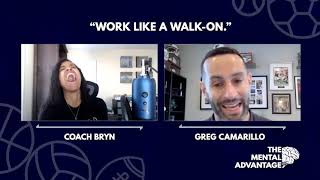
Greg Camarillo walked on at Stanford, earned a scholarship, and made it to the NFL as a receiver. He caught a game-winning touchdown for the Miami Dolphins in a winless season, then built a second life as a broadcaster and athlete development coordinator. He talks about his immigrant parents' work ethic, the mental-health stigma in football, and why preparation matters more than talent.
Chapters
Hello, hello, hello. I'm here with Greg Camarillo, former amazing NFL player, awesome all-around person. And today we have Greg. Greg has had a career in football all the way up to the pros. He started at obviously in high school being a two-sport athlete, went on to Stanford, turned down Harvard— definitely gonna ask him about that— as well as played for a few teams in the NFL and is notably known for more than one thing, but one of the things that I think is amazing is scoring one of the only touchdowns in a very tough season with the Miami Dolphins. So Greg, how are you today?
I am doing well, and thank you for having me on.
Absolutely, absolutely. So, so happy to meet you. So I want to talk a little bit about, you know, this podcast is called The Mental Advantage. I'm really, you know, focusing on the mental game. I want to know a little bit about you and your journey in sports. So tell me a little bit about— because I saw that you were a two-sport athlete, which seems to be something that helps people with their mental game. But, um, you know, when you're deciding between basketball and football, tell me a little bit about that. How did you get introduced to both sports? How did you know which one was going to be the one that was going to take you to the next step?
Yeah, it's a great question. Um, I played basketball, uh, pretty much, pretty much my whole life. Uh, my dad played a little bit of college basketball and had me grow up on the Lakers during the Magic Johnson era. So clearly I liked watching, watching and playing basketball. So I played that from 3rd grade all the way through the end of high school. I picked up football for 1 year in the 5th grade after begging my mom to let me play enough, she finally let me play. And I wasn't mentally prepared for football in 5th grade. So I I didn't really enjoy it, stuck with it the whole season, but then picked it up again in high school. Played both because I enjoyed both. And that's what I love to see about youth sports is if you enjoy it, play it. Simple as that. You know, don't play a sport 'cause you think that's your opportunity to make money. Play it 'cause you like it. And I like both of them. So I played that. I also liked soccer, but in California high school, you have to choose between basketball and soccer.
Same seasons, huh? Yeah. Yeah.
And basketball was— I enjoyed it more. So I played both of them. And I was just better at football than I was at basketball. And that was my only chance to continue playing was to play football. And I loved it, so I went for it.
Got it. Awesome, awesome, awesome. Now, I know that you've had— now, I really want to touch on you talking about enjoying stuff. Because I mean, like, there's science that states that the more that you enjoy a sport, the better chance you have of excelling at it. Obviously you enjoyed basketball, that's how you got started. You thought, hey, I'll do this football thing. And you said you weren't mentally prepared for football. Tell me a little bit more about that. Like, what does that mean, you weren't mentally prepared?
Yeah, well, I'd never really been through conditioning for a sport. As a kid, you just kind of play the sport and you get in shape for the sport by playing the sport. So I go to my first day of football training camp and my dad had played through high school, played football through high school. And he's like, look, you're not gonna like the first day. You're gonna wanna quit. And I'm like, dad, I've watched football. I played in the yard with my brother. This is gonna be fun. The first day involved no football. There was not a football. There were no pads. It was literally just running. And I was not, I was not ready for that. So the team takes off running around the park. It's a big old park. And I'm immediately lagging behind. So much so that I saw one kid stop and go get ice for something. And so I told the coaches I had a headache. And this is as I'm about to get lapped. And this is before concussions. So this is, you know, or before we knew about concussions. So I told the coach I had a headache just so I could sit down. And that is the opposite of who I would become later on in my career. But one, I took the easy way out. I was not prepared for the physical struggle, the mental struggle. I was soft. And so I was not prepared for football, and that kind of determined where I was going as a youth football player.
Gotcha. Okay. That makes sense. Yeah. And I definitely know running is a huge part of a lot of sports. It is definitely not most people's favorite. I was a track athlete, so I eventually—
I enjoyed the running.
I leaned into the running because I found out I was better without the ball. I tried to play basketball.
No, I need a ball.
Yeah, exactly. Yeah, right. Ball makes it a lot more comfortable.
You're—
I looked— when I looked up your background, one of the things I thought was interesting is that your parents emigrated here from— well, you're from the line of immigration from other countries. How much do you think— I mean, granted, the football example notwithstanding, how much do you think that shaped who you are today or the way you kind of think about your mentality in sports or in life?
A lot.
A lot.
So my background, I have grandparents that immigrated from both sides.
My dad's dad came from Mexico the first time when he was 9, and then eventually I think as in his young teenage years came to work, came to find his dad, one who had come earlier, but came to work.
And I couldn't imagine coming at such a young age to a new country immediately going to tough work. So that mentality of being a hard worker, of trying to earn everything, having to earn your opportunities came from my dad's side. My mom's side, her dad came to the United States from Hungary, a Jewish Hungarian man, also in his teens.
Yeah.
And I couldn't imagine getting on a boat and crossing a gigantic ocean in your teenage years. In search of opportunity. So he came to New York and found opportunity as a tailor, which a lot of Jewish people did, but then also harped on education for his family to improve their situation in America. So you combine those two of education and hard work, and that's pretty much what my parents instilled in me and what I will do for my kids as well.
That's fantastic. That's fantastic. Are you already a parent?
I am. I have 3 little girls that you'll probably hear in the background of this podcast at some point.
Girl dad. Awesome. Awesome. I am wondering if people— if the term came about because of Kobe or if it was something that guys were saying before then, but now everybody says it.
Yes, it was around before Kobe, but it became vastly more popular because of Kobe.
Because of Kobe. Yes, yes, yes. OK, so going into— you spoke about the Magic Johnson era, and we spoke a little bit about your not being mentally tough. Tell me about a time that you you kind of realized what you needed? Because I mean, you were obviously taking basketball all the way to at least high school. So tell me about a time maybe that you were mentally tough, um, in your younger years, or maybe somebody had to talk to you about your mindset and how that helped you kind of—
Yeah, well, um, that Pop Warner experience, um, it wasn't just that one day that shaped my whole experience, but the mentality. And I did not like football. I didn't bond well with my teammates. Uh, I didn't like the coaches yelling at me, which is a whole nother, another form of, uh, of mental toughness. Uh, but the same thing started happening in high school. We had, um, a guy named Coach Parks who was legendary for coaching football players but also being really tough, came and he would do our conditioning. And the same thing happened. I didn't feel like conditioning and I got stung by a bee. And which is enough to go get some ice or something like that. The trainer asked me, Greg, are you allergic to bee stings? And I was not, but I was like, I don't know, all worried. 'Cause I knew they would allow me to sit out. And I had like flashbacks to Pop Warner and I saw the direction that was going to send me. You know, my teammates are still running. I'm the soft guy on the side whining about a bee sting. And I think that was the change of my mindset. Don't be that guy that's sitting on the side while your teammates are fighting through things. You need to be out there fighting with them. And, you know, I can't say it snapped him to me like that, but that was more of a change of my mindset of, okay, I can't be this guy on the side anymore. I need to get it together. But also from my Pop Warner experience, had a better idea of what to expect. My dad would take me to the park. I'd condition. I was a little more ready for football at the high school age.
Why did you decide to pick it back up in high school after— I know, like, obviously, but was it just like, hey, there was something in you that was pulling you towards football? Or was it just trying to, you know, like, because your dad loved it so much and you, you know, or what do you think?
I just wanted to play. I love watching football. I love playing football at the park. I just wanted to play. And high school is really that time where it's like you either play or you don't. It's not so much optional. If you want to be a football player, you play in high school. Right. And that was, I also, my brother who was 3 years older was also already at the high school and knew some of the guys from that and looked up to those football players and wanted to be like them. So it was football time.
Awesome, awesome. Okay, well, this is great. So I know that you had some pretty great seasons in high school, ran for almost 300 yards a couple of seasons, or maybe that was in Stanford. Sorry, it might be Stanford, but it doesn't matter. But you obviously, so when did you, do you remember the time you scored your first first touchdown? I'm just asking. I don't know.
Oh, that's a great question. No, almost. How about I can tell you the story of the almost first touchdown. So I was, I was, I was never the fastest guy and I was a little bigger in high school. So I was a tight end for 3 years and then our team needed more receivers. So they converted me to receiver without much thought as to how well that was going to work.
Right.
I think it was our very first game. I hadn't been getting the ball very much, not much love. And then at the final play of the game, we were down, we were losing, it needed a touchdown to win. And so the last play of the game, they throw the ball to me. I make an excellent catch, think I scored a touchdown. The ref says I'm out of bounds. To this day, I'd love to find that guy and go back and get credit for my touchdown. But the quarterback trusted me. I made a great catch. I was technically inches out of bounds, but that— what that did was tell the coaches that if they needed me, I was there as a receiver. Like, I could, I could come deliver for them in the clutch. And that was the catalyst to getting much more action in the offense, which then led me to actually getting some attention from colleges. Um, and so it was not a touchdown, not my first touchdown, but it was, uh, an almost touchdown that was a big in my career.
Yeah, and I think that that's a big part of like the belief process, right? Because if you haven't had that taste, you don't really know. And then you have that moment, you're just like, oh yeah, and then the other people get to see what's possible for you. And that's amazing. Yeah. And you became a pretty clutch guy. I, from what I read, all the way up to through the ranks. So you're going for college. Okay. You, you said, like you said, you saw the path to football being the one that was going to take you. Now, did you already know you wanted to be? I mean, of course, every kid dreams of being professional. I'm sure you like at one point wanted to be a professional basketball player and professional football player, but did you already think, yeah, I want to go all the way to the NFL at that, you know, younger time?
I had no, no dreams of playing in the NFL. I'm sure as a kid, like, yeah, that would be cool, but at no point was that ever like a target of my life or my career. I had looked at college football, um, Like, you know, like, okay, linebackers are 220 pounds. Maybe I can get there. And I'm at like 165, 175. Like, it was a dream.
Right.
So I looked at college football as like my dream of how to continue. Never did I ever look at the NFL as a realistic goal or even a like 2% chance goal. It just wasn't, it wasn't on my radar. And I wasn't concerned about it.
I'm always interested because, you know, I think people think like, you know, what takes you to the pros? And it's just good. Probably I think for people who are listening to hear that it's not necessarily, doesn't have to be your end goal for you to get there because sometimes it's like, it takes that, that graduation in belief. Right. So you get to a level where finally you're like, hey, I guess this is possible for me, but we'll get there. Of course.
I can, I can, I jump in there though. I actually, and this is, this is from my, my personal situation and my, my perspective on it. I actually don't like it to be that person's goal from a at a young age. If you're in college and you're a step away, I get it. From high school, I think you should be looking at the next step. It doesn't hurt to be like, oh man, it would be cool to be an NFL player. But I think if you're in, if you are a high school freshman and you are approaching every day like, I need to do this to get to the NFL, I think that's like too big of a jump to be looking at. I think you should be looking at, well, how can I be the best JV player? How can I be the best varsity player with college as that next step? But, you know, if a kid gets motivation from dreaming the NFL, then more power to him or her.
I think there's a lot of— no, I 100% agree in the sense that the data of the long-term vision is great for pulling you, but it shouldn't be your thought on the day-to-day, like you said, because incrementally I think you're going to get lost if that's— that's so far in the future, like you said. And so like for you, it was like college was pulling you a little bit, but really, like you said, it was just being the best. On that day, being the best, being the best. And I had a boss that said something like that to me. It was like, I wanted to get promoted to the next level of a job I was in. And she was like, what if there's no promotions available at the time that you're ready to go to the next level? She's like, just concentrate on being the best and it'll be a, you know, like a self-fulfilling prophecy essentially. And I was like, ah, that's a great way to get the promotion. I actually found funny story, Greg. I actually found that I did not want it. Yeah, because who I would have to be to be that. And I actually ended up exiting that job and pursuing my real dream at that time of being an actress and moving to Los Angeles and all that. So, um, but yeah, it was at the time, it was just because I knew like more money, more, you know, more responsibility. I thought that was going to be what I want. I think it was probably the money more than anything. And then when I got there, it was like, oh, this isn't really me. Like, I'm— they're asking me to be somebody totally different. So, but I'm sure you've had those moments too where getting to a certain level, there's a point where you have to make a decision. And I'm sure we're about to come to that. So you went to Stanford, which is a great academic institution, which brings back your, like what you're talking about. You were raised with hard work and education, you know, pursuit of higher learning. How do you turn down Stanford? Talk me through that position of like, like, you know, was it because football or was it just like, hey, you know, Or was it a decision point? Yeah. Yeah.
So turning down Harvard was actually— and I'll explain why this, because it's going to sound bad— was actually an easy decision for me. I was not recruited much to play football. Zero Division I's, a few Ivy Leagues, and not like, we want you to come play. More like, well, if you're going to be here, we'll give you a chance.
OK, gotcha.
Only recruiting trip I took was to a Division III school in St. Louis. And I had no desire to go there. I just took it because I wanted to be cool and take a recruiting trip.
Got it.
So I was going on spring break to visit Harvard because I got admitted and I wanted to see what it would be like to play football there. My brother was at Penn. I got admitted there and wanted to check that out. Then I was meeting a couple buddies in Miami afterwards. So I'm a California guy. I figured, okay, I'll just pack a hoodie. I survive anywhere in California with a hoodie. I show up in Boston at Harvard and they have 6 AM football practice. It's in April and it's cold. And I'm standing on a, literally on a frozen field. The ground is frozen solid. And I am dying in my hoodie, like just so cold. And I'm thinking to myself, there's no way I could wake up this early and be this cold and enjoy football. So that was it. Like that was literally my decision maker. And then I got a chance to walk on at Stanford because I'd already been admitted there. One, I didn't want to freeze my balls off.
Right.
And two, I didn't want to pass up an opportunity of playing high-level football. And I understood as a walk-on, I may never play, but I wanted to be part of a big program.
So I love that you said that you were a walk-on because I was a walk-on in college, Division I, Michigan State. And—
Yeah, walk-on pride.
Yeah, walk-on pride, right? And I have a coach friend of mine who said, work like a walk-on. So tell me a little bit about that process of walking on to a Division Division I huge program like Stanford.
Yeah.
You know, what it was that kind of, you know, clicked for you that it was possible to go to the next level?
Oh man, I could, this could be, I could spend an hour on this topic, but I will give you the short version. Yeah. So I show up day one, as you've learned a lot of day ones in my football stories don't go that well. You show up and the first part of it is like an NFL combine style. They want to get your numbers on everything. We have a strong recruiting class my year, 18 guys, probably at least 10 of them were highly recruited guys. I'm talking big, strong, fast, look great without a shirt on. And I'm just, I'm looking around like, why am I here? Like, these guys are impressive. So we run our 40s. Oh man, I don't know what I ran. I went with like a 4.8 or something bad, like something really bad for a receiver. So that was embarrassing. And this is not football related. This is just pure athleticism, which I never excelled at. We do a bench press test, which is 225 pounds, as many reps as you can get. I knew I could not get one rep, but everybody else was getting one rep. And so I was like, all right, I got to try. And I tried and I didn't get one.
Right.
And that, I mean, that hurt my feelings, you know, but I knew that, you know, from I learned before with my little bee sting incident and my headache incident that you got to power. Fortunately, I'd learned you got to power through those moments and be tough. Um, and my first job was the punt block dummy. That wasn't the technical name, but I would— I was also a punter, punter/receiver. I would punt the ball, guys would block it, run into me, knock me over. Coaches didn't care. It was just like, Greg, get up and punt again. The job sucked, but I loved Being part of a big program, I loved it. Gone to the Rose Bowl before, the thought of going to a Rose Bowl, right? And I was willing to do whatever it would take. Teammates would, you know, blast me as a receiver running across the middle, but I enjoyed being out there. I enjoyed the process of trying to get better, of process of trying to improve. And the one good thing about being with the team of highly recruited guys is that you are getting a chance to play against great talent, and that's how you're gonna get better. If you play against crummy people, you're not gonna get that much better, but when you're playing against really good people, you have to improve.
You have to, right? That's awesome, that's awesome. So tell me about when you transitioned from the punter to the wide receiver, or—
Yeah, yes, um, I can tell you the exact moment. Um, so my freshman year as a walk-on, a true freshman, I think we had 1 or 2 guys actually playing. The rest of us just knew we'd redshirt and, you know, hopefully play in the future. Our senior punter was not good and was doing terribly in games. In one practice, he shanked one off to the side, and coach blows his whistle and yells, "Hey, Cam Murillo, get in here!" And I'm barely paying attention because there's no chance I'd play. So he puts me in there with the first-team punters, the first-team punt team. And I'm nervous as hell. I don't know what I'm doing. Don't know how to do it. My first kick is terrible, low line drive, not something that would get you playing time. I get one more try. Second one shanks off to the side, terrible. He sends me back to the sideline, calls the senior back in there. And I had a moment right then and there to play as a true freshman walk-on, to see the field, And I failed, totally failed. I was down on myself. And this is not so much a lesson about not being a punter, but it was more of a lesson of opportunity. I was handed an opportunity on a platter, like, here, Greg, take full advantage, and I failed. I told myself I would never fail when another opportunity like that comes up. And I guess this doesn't really answer your question, but I knew it also at that time that—
I think it does.
I was more passionate about being a receiver. I kind of just was a punter because that's what got me on the team to start with. But I didn't really want to be a punter. I wanted to be a receiver. And so I put more, way more effort into being a receiver than being a punter.
Got you. So when did that— okay, so obviously you're in, like you talked about, that's so important. You get those opportunities. And like you said, of course you're down on yourself, all that stuff. Do you remember, I know when he called you, you were barely paying attention. Do you remember when they are about to snap the ball, what was going through your head for those kicks at all?
Yeah. The first, yes, two thoughts. The first one was, don't mess up. And then, and it was the first punt was mediocre. It wasn't like horrible, but it was mediocre. And the second one was like, I'm going to destroy this ball. And I'm not sure what sport— the only sport I can relate it to is golf, where it's like if you swing like controlled, you have a good chance of hitting it well. When you try to crush it, you ruin it.
Yes.
I guess baseball might be the same way. But I tried to crush it. And when you do that, all your form goes out. It's just your chances of crushing it are low. And so my mindset was, don't screw up. And then destroy it. And I didn't destroy it and I screwed up.
But I love how you also brought it back to the passion. And you said, one, I think it's good to, to acknowledge that that moment became a moment of clarity for you, which was, yes, I got a walk-on at Stanford, but it's not good enough to just slot myself into a position I'm not passionate about. When I got my opportunity, I wasted it. I'll never waste another opportunity again. So for me, I think it is a good example of when you kind of decided. So walk me through when you actually did start or did you go to the coach? How did you get to the receiver core from the, you know, the kicking?
Yeah, from day one they had let me do both.
Okay.
Just figuring you're already here, you may as well try. We could use an extra body. So they let me do both and I just, I did a lot more receiving and so I was, I practiced it more and worked harder at it and so I got more opportunities as a receiver than as a punter.
Talk me through your first game where you're in as a receiver, subbed in, started, doesn't matter to me, whichever one you want to tell, but like, and what's going on for you at that moment or how has your mindset graduated?
Yeah, my very first catch, I remember it to this day, it was 3rd and 4 and I got 3 yards and I didn't get a first down and I didn't care because I got a catch. So my, I mean, my whole goal as a walk-on was to, get a stat, was to do something that showed up that I actually played in a game. And so they put me in late in the game. I didn't align properly because I was so nervous. I was close, but not close enough. I ran, I ran around, I caught the ball and got tackled, and the punt team came out and I didn't care. I was super excited. And a local reporter even interviewed me like, you got a catch? And that was just, it was like we talked about those day-to-day goals. Some kids may be aiming for the NFL. Like my goal was to have a stat. And at that moment I had accomplished a goal.
That's fantastic. I love that too. I think that's important for people to know. 'Cause it's not about always the first, you know, like a lot of people focus on the outcome. Did I get a first down? Was it as successful? It was like, for me, the success was I got in the game and I got a stat.
Okay.
Then we make, then we move the chains, right? Like to use a football analogy. The chains, but your first down was getting a stat. You got that. So, um, obviously I think I was correct that the Stanford stats were that you did run for 300-yard seasons or close to 300-yard seasons, um, your junior and senior year or something to that nature. And you were kind of known as a pretty clutch guy. So how did you graduate from that, getting that one stat to—
Yeah, um, just improvement, you know, like I mentioned, going events going against really good guys allowed me to get better. And then, you know, clearly working hard in offseason and all that stuff as well. But improvement opportunity also popped up where, you know, we didn't have that depth at wide receiver, so there were some more chances to play. And then I got a scholarship just from working hard and being a better receiver. So they were more invested in me as well. And also that gave me a better belief in myself that I was no longer, you know, the afterthought walk-on type of guy, but I was actually a scholarship athlete, which meant I could eat dinner with the rest of the athletes. And so I was never a great receiver in college. Sorry. But had a decent career. And then we— my teams were not good. My final 3 years, we won 10 games through 3 years, which is poor. And so that, it kept the flame and fire to try to continue to play alive. I wanted to have more success in football as far as a team and individually. And so I wanted to keep playing even though I could no longer play in college.
Well, I always love how like, you know, things happen the way they do to let, you know, someone like you have the story and the arc that you did. Because if Stanford's, you know, like an amazing team, maybe your story takes a different turn. Like I don't walk on and Michigan State if they're in a year where they've got stacked sprinters, right? But because I have— when I came in, that's not what was going on. It was something I was able to do. Now, my story doesn't end with me getting a scholarship, but I love that you got a scholarship through hard work, determination, and just staying with it. Because I think so many people stop that 3 feet from gold. And like, you know, you hear so many great stories about like walk-ons and your work ethic being the way they are because you're so hungry. How much do you think you attribute to that? I mean, well, no, I think you just Like if it's not that way, and partly because the team was struggling a little bit, that drove you through the—
Yeah, it was what I call the underdog mentality.
Yeah.
I was never the guy in the front as far as expectations to do well. And like we mentioned, I was a tight end in high school and just became a receiver out of necessity. So it was never like, oh, this is Greg's year.
Right.
I just showed up and had to work harder than others to get noticed. College, I was a walk-on, and it was never like, okay, Greg's gonna start this year, um, maybe he'll lose his job. It was more like, Greg's way down here in the depth chart. And what that did to me mentally was it told me that I have to work way harder to get those opportunities, to, you know, to be, to be seen. Uh, and I actually enjoy that. To me, it's, it's like, uh, and I don't know how this works in track, but I feel like if you're in front and someone— and you are being chased, you don't have the same vision on a goal as if you're behind. I got to catch this person, and you get just— you can see yourself catching them. It's easier to me to be that underdog fighting to climb up than it is to be somebody at the top just fighting to stay there.
It goes back to what you said before, actually. It's twofold in track and field. Uh, one, the drafting on the person in the front, if you're smart. Long-distance runner, right? Let them kind of take the elements and you kind of tuck in that. I'm not a distance runner, I was a sprinter, and we were running in our own lanes. But that— the time that I ran the fastest split ever was when I was behind. And so there is something for what you're talking about, to use your, your situation. These amazing guys, top recruited guys, sort of drive you and pull the best out of you. And the fact that you're an underdog just keeps you hungry through the process, which allows you to excel on a team that, you know, maybe otherwise you wouldn't have been, had that, you know, story. So I think that's amazing. So you're finishing up your college career. Talk me through how the transition is going. Are you preparing for a post no football life? When does the idea that you could play in the NFL happen?
I was going to chase football.
Okay.
At least I was willing to play wherever for whatever money, for whatever reason.
I just wanted to keep playing. So I actually had a tryout with an arena football team in New York. I think my parents even bought me a plane ticket to New York to go try out with this team. I spent 3 days there, and they wanted to sign me for $26,000 as a potential salary. And when you're in college, that sounds like a gold mine. I was like, oh my God, I'm rich.
But I hadn't graduated.
Right.
I still had one class.
Until you got to New York and saw the cost of living. No, anyway.
Yes. Oh, that's the point.
Yeah.
The owner owns an old abandoned, it's like a ward, like a hospital ward with ivy growing through it straight out of a horror film. And the guy, the team lives for free in the buildings behind it, which was scary enough.
But that, I mean, that's just part of the decision.
I couldn't go make $26,000 playing arena football without graduating. That just didn't add up. So I figured, all right, let me go graduate and then just try for the NFL and see what happens. Happens. Um, and fortunately I got a tryout chance with the San Diego Chargers because my teammate's dad was the receiver coach for the San Diego Chargers and would watch our games and like to give Stanford guys a shot because he was also a Stanford guy.
Nice.
Through that personal connection, he gave me a chance to try out at minicamp, and, uh, I did enough to get, to get signed.
That's fantastic. That's fantastic. So you get this tryout, um, which by the way, you hear so much about the network of the Ivy Leagues, and here's an example, right? Like, being a guy gets you into, you know, gets your shot. Here's an opportunity, you don't waste it, you get signed. But tell me a little bit about that whole process, your mentality through the process of like being there and being like, I mean, you're driven about it, Yeah, yeah, I mean, I, I was just so excited.
I go, I show up, uh, you people like me have portable lockers, so you're not— you're in the locker room but you're not really part of the locker room.
I didn't care.
I took a picture, a number 4 jersey, which is an ineligible number for a receiver. You cannot play at a regular season game with that number.
So that kind of gave me an idea of where they wanted—
what they were expecting from me, right? Uh, my very first rep of one-on-ones, a receiver versus DB, was went poorly.
Like, the guy beat me up, pushed me out of bounds.
Like, it was bad.
Yeah.
But I came back to the opportunity as a punter where I was granted this great opportunity and I failed. Literally thought about it, and I was like, I cannot— this— I cannot fail. This cannot be.
I cannot go out like that. Um, fortunately, there were 5 total practices, so I had a bunch more reps. Uh, settled in, got comfortable, was able to make an impact.
But also a big part of that is you have to learn a playbook in 5— in 3 days. You have 5 practices over 3 days. So my ability to study, my ability to learn helped me play better football to the point where I could help other guys out. If they didn't know what was going on, I could put you here, I could help this guy out. And coaches see that. So not only a combination of getting better at football, But being able to digest things mentally and learn helps you out.
Got it. That's awesome. And this— what I'm loving about your story so much is like how it's all interweaving together, all your strengths come together. Because when we talk about athletes don't really realize that there's these wax-on, wax-off karate life skills, as I like to call them, that are going to serve you so many places. And like you being indispensable to your teammates obviously made you valuable to that team. And then they see the leadership in you. Now you've proven like, hey, we should keep this guy this guy around. He's amazing. He's helping everybody be better, and that's, you know, rising tide lifts all boats sort of stuff. So do you remember your first successful moment in that process of becoming a San Diego Charger besides getting signed? I mean, of course you can talk to me about that day too.
Yeah, so I spent my whole first year on the practice squad, and then going into my second year, it was, it actually very related, the ability to learn a playbook got me a job. So I was, I was doing more on special teams. So I would, you know, go run into people. I would do whatever the coaches need me to. And, and that was part of it. But as a backup wide receiver, you need to be able to play multiple positions. You know, if one receiver goes down, you need to be able to plug in here, here, here. If tight ends go down, then we could plug you in there. Running back, you just need to know. The more you know, the more opportunity you have to jump in when they need you. And so in a meeting, offensive coordinator calls me up to the whiteboard or, yeah, must've been a whiteboard. And he's, and we mimic a huddle. He calls the play and then you got 15 seconds to go draw up that play. And I'm, I am, this is my second year. I've never played in a game.
Right.
In a room with Antonio Gates, Philip Rivers, LaDainian Tomlinson. And he calls me to the board. To diagram a play. And he calls the play, and thank God he picked the play that I know inside and out. And I go up and I diagram everything. I'm like, I'm just— it's like Good Will Hunting when he gets to the board and starts writing it. I mean, I was, I was, I felt really smart at that moment. So it showed to my teammates, it showed to the coach, it showed to everyone in the room that Oh shit, Greg, Greg's gonna be all right. If we need him in the clutch, it'll be okay. Like we don't need him to go be our star receiver, but if we need him at any random moment, he's prepared.
Right.
And so that was a big moment for me to then go off the practice squad and get on the active roster. So I was a backup wide receiver and I played special teams. And if they needed me on a random play, I knew where I was going in that moment.
And that's super important, obviously, when there's stress, etc., out there on the field. So I want to take us to the season with the Dolphins. I mean, obviously you're with the Chargers, then eventually you go to the Dolphins, um, and you're having, um, another one of those underdog seasons, right? 0-16, possibly going to be the team that officially becomes the first team in NFL history to have a 0-win season. But not because, but not for some reason Greg Camarillo is the guy that catches the touchdown that changes everything. So talk me through that moment.
Yeah. And you'll, you'll like how this all comes back full circle. So I get cut by the Chargers. They want to put me on their practice squad. The coach in that meeting who called me up to the board to diagram named Cam Cameron was our offensive coordinator then, was the head coach in Miami. I sent him an email, hey man, I just, I just got cut. Do you need anybody? Because I think I can help you out. He responds and brings me to Miami. Um, and so I'm out there as a backup wide receiver. I'm the 6th receiver of 6 guys, barely playing, a little special teams here and there. Our season sucks. We're losing every week all the way through week 14. So we lost 13 in a row, but gradually I'd moved up the depth chart, and not so much because I had been playing well, but just One guy gets hurt, one guy gets traded. Next thing you know, I'm 4 of 4 receivers. I don't think there's anyone still below me. But in that, this is 2007. It was very rare that you played with 4 receivers then.
Yeah.
On the field at the same time. Now it's more common. But I was the same mentality. If an opportunity comes up, I am going to be prepared. Most 4th receivers would be on the bench, like sipping Gatorade, chewing sunflower seeds. But I had my helmet on, chin strap strapped, mouthpiece in. It's that helmet right there.
Yeah, I see it, I see it.
And he calls 4 wide receivers, and I go running in there. And to this point in my career, I had 1 catch for 2 yards, so I like literally had done nothing, right? And he calls the same play that he had called for, for me to diagram in San Diego before. I love the play, I know the play. Play in and out. I run it, I get a catch, I get a first down. Next quarter, sends me back in, same play. I run it, I get a catch, I get a first down. We go to overtime, same play, calls the same play. I know it, run it, get a catch, we get a touchdown, we score, we win. It's our only win. It's my second, third, and fourth career catches ever. I was so much a nobody, the radio announcer didn't know my name, called me Rich Camarillo, which is a former punter.
Got it.
And so it was like a culmination of everything that I'd done. Like, I had told myself, be prepared for opportunities. And here I'm handed this golden opportunity, and I was 100% prepared. And it was the catalyst for a longer career. After that, I actually became someone who catches footballs as opposed to just a random guy on the sideline.
Exactly, exactly. I love that. So as you're running now, you say you love to play. As you're running towards that touchdown, do you remember what you were thinking?
Absolutely. I rarely was ever in the open field. Like, I just was never a speedster. So I'm looking over my shoulders scared, like, oh my God, they're going to get me, they're going to get me. I actually think somewhere around the 30-yard line, I think to myself, we're in field goal range. If I get tackled, it's fine.
Yeah.
And then I score a touchdown and I hadn't been in the end zone since high school, which is a very foreign feeling. It had been so long. But it was just a moment of celebration and not like— it's the closest I've come to celebrating a championship. We celebrated like it was one just from the relief of being defeated every week and finally not having that feeling. We celebrated.
That's awesome. I mean, just, that's huge. I'm— your story is amazing. I'm so glad that we're doing this because I'm finding out so much about you that I would have never— that Wikipedia could never know, right, if they don't meet the guy. So, because, you know, like, a lot of people get relegated to their stats, but there's so much power in your story. I mean, you basically went, you know, like, did everything you needed to do to, you know, have this art But like, you know, just from the Stanford connection to getting on the team, working hard, making yourself indispensable, going to San Diego, having that moment at the whiteboard, you know, going here. Oh, I'm just loving this. Okay. All right. So I'm a fan. I'm fangirling. All right. So now, now you're, you know, you have your time with the Dolphins. You then go to your next team, which is the Saints. Yes.
I got traded to Minnesota.
Oh, Minnesota, the Vikings.
I'm sorry.
Okay, so Minnesota. And, uh, talk me through the process of like you maybe kind of getting to the end of your football career and what's going on with you mentally in that point.
Yeah, so I spent 2 years in Minnesota and then I became a free agent for the first time, uh, in which I was really excited about that because you get to pick where you go and get to see like your value, how much does a team want you, which I had never experienced. And it was the polar opposite experience. So I was expecting phone calls. I got zero phone calls. Months go by with zero opportunities. I reach out to an old GM that I had worked with. He basically told me like, Greg, this is a sign that nobody wants you. Just, it's time to move on. Didn't really want to accept that. I had spent the offseason working out with Drew Brees because he was in contract negotiations. So he was in San Diego. And it just happened to be the Saints had a massive amount of injuries with their wide receivers, and he told them, hey, I know a guy. So I go in for a tryout with them, and like we talked before, if I was given an opportunity at this point, I was going to take full advantage. I caught every pass they had thrown to me. I ran the fastest 40 time, and this is at 30 years old, fastest 40 time I've ever run, was in good shape. I was ready. Yeah, they signed me. I spent a couple weeks in camp, and then I'm on and off the roster all season based on their needs, based on injuries. So I never really felt part of the team. My body was hurting, my wife was pregnant, and it just was— everything was pointing to it's time to hang them up. And I also wasn't that passionate because I'm not I didn't feel part of the team. I didn't feel bought in. I didn't really, like, I want to win, but I didn't really care that much if we win because I was probably going to be at home next week anyway.
Right.
So all of that combined to, well, and like my head was hurting, like all kinds of, it was just time. So my opportunities in the NFL were pretty much gone at the same time where I was like, okay, you know, my passion and my body aren't really agreeing with this. But it is more so the NFL was done giving me opportunities, you know, because if another one had come up, I would have taken advantage. My body was giving out at the same time opportunities were.
Right. How much do you think, like, you wanting to stay in the sport has to do with that you hadn't done anything else? Because like you said, your, your passion had been waning, you weren't really part of the team, or were you just kind of chasing those highs from earlier? Or do you just think, like, I didn't really know what else to do?
Chasing the highs. And not just the highs of the sport, everything that comes along with it. Like life in the NFL is attractive. It's rewarding financially and emotionally. And it's easy to just go back into what you've been doing. As opposed to taking a next step into the unknown, which is a Frozen 2 song. But anyway, that's Dad Life.
I love that song.
It was just— so I became a dad January 5th after my final season. So I got to put my energy in that. I applied to graduate schools knowing that would buy me some time just in case the NFL called. Right. And so I was able to put my eyes on things in the future without being 100% gone from football. If football had still called, I I could tiptoe back, but I also wanted to start paving the road forward as well.
Okay. So we're going to talk a little bit about like, you know, your transition. So what are you doing now? And how has football helped you in that way? And where do you feel like football kind of like didn't help you? Yeah.
I guess I got a three-pronged answer to what I'm doing now. I'm a husband and a dad. Part, I don't know, well, I guess full-time, but I work part-time. And so I'm home the other part of that time. So that's a big role. I'm the coordinator of scholar athlete development at the University of San Diego where I work part-time. And then during the football season, I do local broadcasting on a post-game Sunday Night Football show in San Diego. Where football has helped as far as parenting, it just gives me something cool to talk about with my kids and they like to play football. And put on my helmets and run around with the ball and play catch.
Nice.
With my career, it was more of, well, it just allows me to connect with athletes. I identify as an athlete. I enjoy connecting with other athletes. There's always something to talk about if you're in and around other athletes. And also I achieved what a lot of them are hoping to achieve, and that's play at a high level.
Yeah.
I also was an engineer. While being a student athlete, so I understand their grind and struggles and can connect with them that way. And then with broadcasting, it is, you spend so much time learning football that there's a lot of information about football in my head, and that's my way to get that out.
Absolutely, absolutely. And where is football, like, so we talked a little bit, one of the reasons we connected is you did this tweet that went viral, tweet thread, let me say, on Twitter about just football and what it does to the person and the Vincent Jackson situation where you actually were roommates with him. I know we recently lost him, unfortunately. Um, so tell me a little bit more what you want to say about that and, you know, talk about how football kind of can be a, a hindrance to a person. Yeah.
Um, so the— a big part of it was the identity struggle of, you know, you have been a football player pretty much your entire and suddenly that's gone. That's difficult. I mean, look, look, just look at my background. Like, everything up here is pointing towards a football identity, which at home up here, it's like nostalgic. Those are good moments, successes that I like to share, but it just shows how much of my past was wrapped around being a football player. And then suddenly that's gone. That's difficult to cope with. You're, you know, we put professional athletes on a pedestal in our country, which is nothing wrong with that, but then you come, you were totally off that pedestal quickly. You know, people don't, you know, you don't have the same things to talk about. Your job isn't as exciting as your, you know, no one, I tell someone, oh, I'm an academic counselor. It's like, oh, that's cool.
Let's move on.
When you tell someone you're a football player, you have a conversation for another hour. And then the regimen you have, you wake up every day with a goal, the goal to make this team, the goal to go to the playoffs, to go to the Super Bowl. And I know when I go into this weight room, I bust my ass. I'm doing that to achieve this goal. This schedule, these meetings, this practice, these teammates are all towards achieving a goal. We bond together to achieve a goal. When that's gone, one, that you might not even have a goal, like when you retire, there's nothing to wake up to and say, you know, this is my purpose for today. You don't have those people around you pushing in the same direction. You don't have that passion. And then also the, the thought of, you know, I was, I was 30 when I retired. I've played this game in front of 80,000 people, millions of people watching. Barack Obama said my name on TV, like these, these emotional life peaks.
Yeah.
And at 30, you're thinking, you know, am I ever going to be able to replicate like that.
Yeah.
The rest of my life is going to be boring. And that's, that is difficult to cope with. And the hindrance part is in the football world, we are taught to suck it up for the benefit of the team, which works fine in football. And that's like injuries. Your knee hurts, that's fine. Get up, go out there. You got a little, you know, you got something going on at home, suck it up for 5 hours. Let's go practice. This, let's go win this game. And that doesn't work in real life. And I'm not saying don't be tough, because if you got a hangnail, suck it up, you're fine. But, you know, we see, and this comes up with Vincent Jackson, and I don't know the exact cause of his death, but the reports are that he had alcohol problems. When it comes to substance abuse problems, when it comes to mental health issues, the suck it up for the benefit of the team or don't talk about it, that attitude does not work. And that's where where football is a hindrance, where guys don't want to reach out for help because we've been taught, don't reach out for help, suck it up. And that's, that's the problem that really makes it difficult for football players going forward.
So, and I, by the way, I just want to say that while if you don't do that tweet thread, we don't have this conversation, but I definitely think what you do for athletes and the student at the counselor level is super valuable. You know, working with youth a lot, my career with athletes and such, I know I'm planting seeds and I think it's about addressing the whole human as we're sort of talking about. So I just want to thank you for what you do and even what you've been doing in even speaking out and telling your story because you're making a difference. And I know it's not the same as having, you know, thousands of people screaming your name and cheering for you, but the lives that you're changing in, you know, that touchdown made a lot of people feel happy and maybe somebody had a moment that season. You know, I'm sure there's lots of people, but the lives that you touch, you'll never know the magnitude and the gratitude.
And I didn't even, I didn't even realize that. I was just kind of tweeting my feelings and realized that I was sharing something that people don't talk about.
Yeah.
Because I'm comfortable talking about it. And I've got a lot of positive responses about people saying, thank you for starting that conversation. It, you know, just having someone else say it and make one person comfortable seeking help or talking about it.
Have you seen Ryan Leaf's thing about the Players Association after Vince?
I have. I've had a good chance to chat with Ryan Leaf in the past. A great guy. I love the fact that he's using his, his story, which is fascinating, to help others as well.
Yeah, it's great. I mean, it's just good because that's what, you know, people like me who work in the mental performance space always want is more athletes to talk about this. 'Cause I kind of think of as, you know, they talk about coming out if you're, you know, of a different sexuality, but we need people to come out of the closet when it comes to mental health. Because obviously a lot of athletes, your whole career is about this thing, like you said. And I love when you talked about the pinnacle moments, because I think that people don't really realize like how devastating that can be to go from every day is this amazing thing to now no one's asking you. And I think one of the messages that you talked about, which is reach out to your people and talk to them more about than anything, don't just talk to them about their sport. 'Cause like now it's like, oh, you're not playing football anymore. How are you adjusting to life? And it's just like, but I was just a football player in a uniform. I'm still Greg Camarillo in and out. So I think that's so important. All right, well, any last words before we go into the sort of fun part of the interview?
No, let's dive in.
Okay. All right, cool. Um, so I like to ask some rapid-fire questions. These are super personal, so, you know, we'll see how you do with them. What is your favorite snack?
Cookies and cream ice cream.
Nice.
More of a dessert than a snack, but that— I mean, it's okay.
No rules for snackage, okay? It can be anywhere. We can't, we can't have rules because, I mean, snacks aren't supposed to be meals anyway. If you could have a superpower, which one would you have and why?
I want to fly just because it sounds fun.
It sounds fun. Yeah. See, mine's teleportation because I don't want to deal with the time it takes.
Fly fast.
Right. I just want to get there and then, you know, deal with the fun stuff that happens. Okay. Who is your personal hero?
That is a great question. I mean, I'm going to say my grandfathers just because of these stories that, um, I never met them and I'm fascinated by their stories.
Yeah, absolutely. I love those stories. All right, this one's probably one of the most personal. Um, some people are really passionate about it. For your toilet paper, do you like it to come over the top or under the top?
There's no other option. Over the top.
Everyone else is wrong.
Okay, everyone else is wrong. Do you change it if it's wrong on the roll in your house?
Absolutely, immediately. I cannot function without changing it.
Okay, do you change it in other people's houses?
No, no.
Okay, all right. There are people that do that, but not everybody does. I'm an over as well, but I don't change it. I change it at my house, but not anyone else's, because I'm like, hey, I'm not gonna adjust your stuff. All right. So the other question I wanted to ask you is favorite thing about being a father to girls after playing such a masculinized sport?
Yeah. I think, well, in the world of sports, I think that I enjoy watching them want to play all of the sports and wanting to play football. And they say, Dad, can we watch? And why are there no women playing football?
Football.
Can I play football? Oh yeah, you can play football if you want to play football. And so have— watching them get excited about something I used to do is fun, and I like to teach them that. Just like, you know, if, if, like, my daughter is in second grade learning math— I was an engineer, math is my world— sitting down and helping her with math brings me joy. That is my world. Watching them play football with me and get excited about that is It brings a lot of joy.
That's awesome. That's awesome. And what do you think the mentality of football prepared you more for being a parent? Like, what do you think— or just mentality in general, what is the different mentality you need to be a parent?
Grinding when you're sleepy. That training camp mentality. You wake up early and you do not want to get out of bed, but you grind through it anyway. That is parenting in a nutshell. You're exhausted, but you got to grind through it anyway.
Awesome. Awesome. Awesome. Well, I just want to thank you, and one, for highlighting obviously the identity piece like we talked about and how important that is to be a full-fledged human being. Because sports amazing, but it does have an end date. Even if you play to the end of the lifespan of a career, there will be a post-football or sport life. And, you know, and the good things that I'm just— you're— the lessons that I heard from you were hard work, take opportunities when they come, don't be that guy. And just be indispensable and, you know, and be valuable and go after what you want. I mean, just all the stuff, you working out with Drew Brees, you calling that GM, you, you know, making those phone calls to those coaches, you know, really kept your dream alive for a long time. So I'm just, I think it's amazing. Any last words?
No, you nailed it. Preparation and opportunity. Be prepared when that opportunity comes.
Absolutely. Well, thank you so much, Greg. This has been amazing.
Awesome. Thank you.
More from Bryn


Who else hype for this upcoming season with Caitlin Clark and the Fever with all these great adds?







How to be nicer to yourself: Stop putting yourself down either out loud or in your head


Winning At The Net Game of Sports & Life No Matter The Score - Episode 60 w/ Jordanne Scott