Wrestling With Your Mental Game: How To Be An All American Wrestler - Episode #8 - w/ Jathiya Isaac
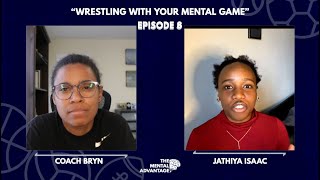
In this interview, host Bryn Drescher talks with 7‑time All‑American wrestler Jatia Isaac about her unconventional journey from high‑school dance to collegiate wrestling, the mental tools that propelled her success, and the challenges she faced along the way. Jatia recounts how watching her brother’s wrestling practice sparked her interest, how a single JV‑to‑varsity takedown thrust her into a varsity role, and how she navigated high‑school competition, eventually earning district, regional and state titles. She describes her recruiting process, choosing Wayland Baptist University, and the dramatic increase in training intensity, weight‑cutting, and double‑practice days in college. The conversation delves deeply into her mental game: pre‑match visualization of a perfect double‑leg, daily affirmations, and consuming motivational content from speakers like Eric Thomas, Tony Robbins, and Gary Vaynerchuk. Jatia explains how these practices became "mental muscle memory" and helped her recover from a serious shoulder injury and surgery, using visualization to accelerate rehab and maintain confidence. She outlines her All‑American achievements across Nationals, Body‑Bar, and U23 tournaments, the "game of inches" mindset required at elite levels, and the impact of training with world‑class athletes at Junior World Teams and the Olympic Training Center. The interview also includes rapid‑fire personal questions that reveal her favorite snack, superpower wish, and her core mental advantage – a relentless love of learning. Additionally, Jatia introduces JTY Fit, a virtual library of wrestling techniques, calisthenics, flexibility, and strength training resources, and shares her social media handles and involvement with the Morning Meetup group, inviting listeners to connect and access her upcoming platform. Throughout, Jatia emphasizes the importance of mindset, support from coaches and teammates, and turning setbacks into growth opportunities.
Chapters
I would lay down in my bed, and this is part of my pre-match routine as well, or pre-tournament routine as well, and visualize, literally close my eyes and see myself hit a double leg perfectly. So I'm like, wow, okay, I'm in on the leg. I'm taking the shot. My stance is low. I'm pushing her arms up, making sure I get in good position. I'm putting my pressure where it needs to be. I'm driving through and my finish is perfect. When I get to this perfect finish, I already know what to do next. I'm trusting in myself and I'm placing that belief so that when I do get on the mat, it's like muscle or mental memory. It becomes muscle memory to just do it right.
Welcome, welcome everyone. I'm so excited to have this amazing guest today, Jettea Isaac. First and foremost, I'm really excited about today's interview because it's the first time I've ever had a lady wrestler. Now, I'm sure she might take exception to that. So of course, we'll get into how she prefers to be referred to or what is the proper way. But I am absolutely committed to making sure I'm bringing you a wealth of guests from lots of different sports. And we definitely haven't explored the world of women's wrestling yet. 7-time All-American Jatia Isaac, as well as found out she's a cat lover, owner of 3 cats. So they may be making some cameos during the interview. But Jatia, how you doing today?
I am blessed and unstoppable. How are you, Brynn?
How are you? I love that. Blessed and unstoppable. I'm doing great. I'm doing great. So really happy to have you today. I'm sure a lot of people are not as familiar with the world of women's wrestling. Of course, There's professional wrestling, which is the WWE and stuff like that. But as far as the world of college wrestling and sort of the journey to it, I'm excited to dive into this. So tell me a little bit about, was wrestling the first sport you got into? Or like, you know, how did you come into this world? Or you can just tell me like, how did your journey in sports start? Who introduced you to all this?
Of course, of course. So excellent question. Wrestling was not the first sport I went into. When I first heard about wrestling, I thought it was a little weird. I didn't know exactly what it was or how, how it was, but I knew that I wanted to stay active. So the first sport you could say in school I ever did, starting with high school, was dance, right? So I danced all 4 years. I was on kick company. I did some of the fun elite groups that we had, and my school actually performed at the Super Bowl with Beyoncé. The year after I left, so I was salty.
Oh, the year after you left. OK.
Exactly right.
This close to Queen Bee.
What? That close. But I mean, I did dance. I was captain of the step team. I did step in middle school and high school. I did plenty of sports in middle school and below, but my family as a whole was just active. So I was always doing sports. I was always joining clubs. I was part of the SAT club. I was after school every day until about 6 6 o'clock until my mom could pick me up. So I was there and involved. My introduction to wrestling was I was in dance and dance was ending early and it wasn't time for me to go home just yet. So I'm looking around, kind of seeing what's going on. And my older brother joined a sport called wrestling. And so I would go to his practice and just sit and watch. And they'd ask me, hey, join, come out, come join the match. And I'd be like, no, no, no, I'm good. And I know I look all nice and pretty and stuff, but I was, I was getting into trouble. I was getting into fights, maybe getting a little too, too hot outside of school. And I figured, you know what, if I'm going to do anything, I'm going to learn how to defend myself so that the situations that I'm getting in, I'm more well prepared for it. Right. And so that turned into me finding something that handled my anger management, that helped me handle some of my aggression, that helped me come into control of myself and learn not only my body and not only my mind, but learn how to handle and deal with others as well. So that's kind of the introduction into how I got in.
Yeah. Yeah. No, I love that. First and foremost, I just want to say, like, getting into a sport to help you have a leg up in fights— OK, I know that's not the total story. I know that's not what you just said. But I'm just saying, for any young athletes out there, that's what I call motivation. Like, hey, you know what? I'm thinking this might be a good way to make sure I'm not losing these fights that I'm getting into. Okay. So, all right. So that's so interesting. And yeah, of course, I'm thinking about this whole— I don't know, maybe paradox isn't the right word, but the word's not coming to me. This juxtaposition of a dancer and a wrestler. Now, I know there's some moves to wrestling and we've seen some dancing around rings with boxing and wrestling. Yeah, but that is interesting, right? Because you think of dancers as more, you know, graceful and elegant, and then you think of wrestling more as grappling, right? And they used to call it grappling, right? So tell me about your first time on the mat, if you can remember it. And, you know, because you decided to dive in and you were just attending your brother's practice because at this time they did not have a girls wrestling team. Is that correct?
They did have girls wrestling. My, my school was fortunate enough to have women as well. So wrestling is a growing sport. There are schools till today that just have men's and don't have women's. There are schools still today that don't have wrestling at all. And this is a sport that goes to the Olympics. So to me, it's mind-boggling, but it's super important that we get the message out there, that we share the sport sport in that we, we bring people in because it's, it's definitely amazing. But yes, we had, we had some women.
Okay, so that is first, yeah, thank you for saying that because I think people need to know if you have a, you know, if you're listening and you are a young athlete and you're kind of like, you know, maybe the sports that are offered are not that great, talk to your school about maybe adding a girls wrestling team or adding wrestling in general. And secondly, it goes all the way to the Olympics, and I think it's just good to have a wealth of opportunities for athletes and people to know that, you know, however So see, there's one of our babies. Cameos. That's our first and second because the other one's right there. Okay, so tell me about your first time on the mat.
Oh, yes. Okay, so I kind of watched our girls, and my weight class when I came in was 128. So that's a normal girl, right? A normal girl is going to be like 130, 135 at that age range. My height, 5'4", 5'5". 5'5" on my license, but 5'4". And I come in, and I'm watching these girls go, and I just jump in. So I'm not exactly sure how or what to do my first time on the mat, which is normal, right? Right. Anything to start something new, it's going to be different. And my coach was like, you know what? If you don't do anything else, just go for the legs, grab two of them, and don't stop running. And that was, that was what I did.
Wow.
That was my first experience.
So you took the girl down, basically?
Yes. So it actually happened a little bit more than that. Um, I, I— that is a takedown, yes. And, and within the first week of just taking his advice, grab the legs and go, I'm still gathering that awareness of other people. And so unfortunately the girl that was varsity in my weight class, um, we— I took her down and she headbutted another wrestler that first week I was there and was out for the remainder of the season due to a concussion. So that, that is one thing with the sport where you have to be aware of your body and others to make sure that injuries are limited, if not, you know, limited and reduced so that you can continue continue fighting, continue moving forward. And so that was extremely unfortunate for her. But for me, that took me from being in a space of JV to varsity immediately within a week. Wow.
Okay. So, and you're— and I have to ask just because I know someone is thinking it, you didn't do it intentionally.
Oh, no. Oh, no.
I know. I know. Like, okay, so she's in my way. And the only way for me to be varsity— I'm just kidding. I'm just kidding, Titia. I know you didn't do it intentionally. But I know somebody was thinking it. So we had to ask just in case she's watching. She's like, I've been wondering this for all these years. OK. Yeah. But what I think what I really want to focus on is what you said, which was awareness. That's so powerful. And not just mat awareness, but that awareness of self too, right? Because you're just like, OK, this is a thing. So when you go from JV to varsity, like you come from this dancing world where you were obviously probably a top dog and doing well, and then you come over to wrestling and it's a new thing and you're going for the gusto, this happens. Now going from JV to varsity, that is in itself a jump, but then in a new sport. And then also the fact that you had this person who's now out for the season, how did that affect you mentally?
Man, made the team look at me, right? It made the coaches look at me because now they relied on me to fill that spot and to succeed. So that put pressure on me to do better. And that pressure, of course, pressure makes diamonds. So that's how it affected me.
Now, so coming from the world of dance and you have this experience with wrestling and you're like, okay, pressure makes diamonds. This is how I respond. This is because I'm tough, right? I'm already kind of getting battle tested outside of school. I'm after-school pro because I'm involved. So, um, how— when, when I say the word mental game, or the, the phrase, is this something that's new to you at this point, like this idea? Or are you— because, you know, you said you were having challenges outside of school. Like, where were you first introduced to the mental game, and how do you feel like, you know, that maybe shaped your transition into wrestling or your rise in wrestling, which we'll get to more about? But Yeah, in general, of course.
So I had such an amazing and excellent experience in high school, but if I'm gonna be 100% honest with you, I really did not focus on my mental game until I got into freshman year summer. Um, and so throughout high school, it wasn't really a strategy for me mentally. I think it was just natural for me to do something, to just find something to do. And no matter what happened, keep doing it. So if we're talking about the mental aspect of it, it was more of just commitment and consistency that really just came natural to me at that time. I love my team. I love hanging out with them. I love rolling around with people, being able to push people in practice, like, you know, being able to get out there and just be, be one and be friendly with people and not have to worry about, oh, Am I going to get in trouble or are they going to take this wrong? Wrestlers are tough.
Like, yeah, tough.
Like, it's, it's, it's amazing to get in that environment where you don't always have to look over your shoulder or think twice about what you say. It was just, it just felt natural.
Yeah, I love that. And I think that's, that's what happens for a lot of athletes. It's not something you're consciously thinking about, but when you think back, you're kind of like, I was really kind of like on to something there, but didn't really understand it until somebody started teaching me it. Like in college when they have somebody that kind of talks about it a bit more because you have coaches that are a bit more advanced or they have the resources to have a sports psychologist. So now you said that you got into— and I think this is also cool because a lot of people do get introduced to sports because of their older siblings or their parents or whatever. So did you ever like learn moves and like practice with your brother? I mean, I was in a different weight class. I know that you, you know, you kind of got introduced through the boys team. So, um, did— was there any of that where you were kind of like, these girls are great, but I also want to kind of get battle-tested by the boys? Or were you just kind of like, hey, this is tough enough of a challenge over here?
Um, I, I think I may have wrestled with him maybe once or twice. Okay. But our coach was very good at keeping us to our weight class, and because my brother was maybe 20, 30 pounds heavier than me, I, I really didn't go with him. Only when he really wanted to pick on me.
Right.
When he grabbed me and be like, "Hey, let's go." Yeah.
Gotcha. That makes sense. That makes sense. Okay. So you're now on varsity. Do you remember your first meet as a wrestler? And can you walk me through what you remember about it and what was the outcome?
Yes. So, and man, this is, this is an emotional story for me and it happens multiple times during my career. So don't get upset at me just yet.
Okay.
But I remember getting on the mat. I only had one match here. I remember my team, we all circle up, put your hand on the head of the wrestler and, you know, say their name. Jitijah on 3. 1, 2, 3. Jitijah. And then I go out and I step on the mat, right? So shoes laced up. I have headgear on. I didn't have knee pads at this time. I didn't have anything else, but we're wearing a singlet, right? So, girl, I thought I was cute in my singlet. I was ready to go. Okay. Step on the mat. Of course, we're all about teamwork and connecting with other wrestlers. So immediately, first thing you do is shake the other wrestler's hand. And that definitely has a psychological impact as well. But we'll talk about that later on down the line. So we'll shake the other wrestler's hand and it's go time. So of course, first thing I'm doing, I'm going for two legs. I immediately shoot out, right? I get the double leg, I take her down, I get her on her back.. And the purpose of the match is two things. Either you're going to pin the other wrestler, getting their shoulder blades on the mat, both shoulder blades, or you're going to tech them, means you outscore the other wrestler. And because I was not in a position to outscore anybody, I'm still fresh. I was going for the pin. So I get the girl on her back, right? Double takedown, ready to pin. And she reverses me. Oh, mind you, my teammates, coaches are screaming in the background and she reverses me and pins me. So I did take an L my first match and that repeats itself.
Y'all should see. Okay.
Okay.
So again, no. So really quickly, before we go any further, I think this is important. This is your first match as varsity. You're like, you know, pressure makes diamonds. The whole team is like, you know, come on, you know, like, right. And so of course we're going for the gusto. We're new at a sport. We're going for the pin, right? I mean, naturally. But there's always those things where we leave ourselves to vulnerability and there's something you missed. So as you get pinned, what's your immediate thought afterwards? And then how do you grow from that? And I know there's stories along the way, but I want to know specifically about this one.
Man, I was disappointed. It hurt, you know, emotionally it hurt. And I did not like losing. That's one thing about me. I do not like losing. I'm not one of those people who can just, man, that happened. All right, I'm gonna move past it. Like, I think I had dreams about it. Like, I literally, it bothered me that someone would beat me.
Me?
Do you know who I am? Look, that was in my head, right? Because My mother is Nigerian. She raised us to believe we're royalty, which we are in Africa. And my father is from New York. So I already got that dog in me.
I'm like, me?
Me? So it's that in itself, just like, no, that's— I'm coming back. And I mean, I did and had an excellent experience there.
Awesome. Awesome. And I think that's important that when you are an elite athlete and someone who strives for your best, and you've got obviously all of this DNA in you, that is all, you know, that sets that precedent. The losses stay with you, right? The losses stay with you. You think about those moments like, man, if I could have that moment back, what would I do differently? And obviously, of course, everything is so clear in hindsight. But okay, so tell me about— so I definitely want to get to your college experience because I know that's like the greatest hits of Jatia, but obviously the road to get there is super important. So what How does it grow from there? What are your peak high school experiences that you remember or would think that would be something that a future wrestler would want to know about, especially, you know, as they navigate the high school world? Yes.
Yes. So my experience with high school, I joined halfway through my junior year, so I really didn't get to compete as much and I didn't go to district regionals or state. But my senior year, when I did get to compete in those tournaments, I was all district, first at district, all regional, and third at state, meaning I won one— lost one match at state. And that, that matchup as well is very emotional to me as well as my coaches. Um, and so just being a first at district, first at regional, third at state is a, a battle in itself, right? So I had to improve so much from halfway through junior year to senior year, ready to fight with people who've been doing this all 4 years. Um, and so those are pretty much my biggest highlights from high school. Um, the only other thing I would state is the connections that my school had that was super important. So I was not the only all-star to come from my school. Um, other people like Tarkia, Tamira Mensah, who Tamira just won the Olympic team trials that I got to watch live— shout out— that, I mean, they came from my school. So I'm looking at their pictures on the wall as I'm running around the room. Yeah, I want to be like them. And they're coming out and doing camps and watching us. And my coach is pushing me towards going to this college because he knows they're there. So I'll have people there that I can connect with. I mean, just, just not only having where I was currently, but also seeing where I could go was super important in paving that road for me.
Yeah, no, I think that's so important. Okay. So I really do love like, there's like, you know, there's certain kinds of mindsets that like, okay, you know, regular meet versus district, state, regional. So you're having all this success your senior year and you're in the state tournament. So first of all, being all district, what is your most memorable match? And I think you said it was the one at state, but you can tell me, what do you remember about that experience or that whole journey like that, you, you know, you want to like share and, you know, would be your big takeaway?
Sure. So the most memorable thing would be the, the girls and the women I wrestled. I mean, these were girls that had been fighting and all year, right? So these are girls I see at meets and tournaments and duels, and then I come back and see them in districts, regionals, and state. So it's more about learning your opponent's style and being able to respond to it regardless of the previous match. And that's another strength that wrestling provides to to its athletes is that you have to recover immediately. You have about a 45-minute window in between matches in high school before your next match. And you may have 5 or 6 matches in a day. So if you lose, you still have to recover to get your mindset ready within 45 minutes to win this next match because your team is counting on you. I love that.
I mean, first of all, 5 or 6 matches in a day. And I know there's lots of sports where it's end-to-end action. You know, you're on the court or you're on the field for a long time. But there's something to be said for like physically grappling with another human being to the full extent of your strength, right? Because they're, they're giving their all, you're giving your all. I mean, in the best matches, and you're— they're not over in like 12 seconds, although there are some that go really quickly. So like you're saying, you're not just physically exhausted, you're mentally exhausted. And then you have to like, you know, it's— you're going all the way through regionals. How many matches? You said 5 to 6 matches, right? So you 5 to 6 matches of like good top talent. 'Cause as you get, the matches get more difficult. So that state meet, and I really want to go to your college experience in a moment. Tell me about the state meet and that one match that you lost. And like you said, it's memorable. How do you, you know, like obviously it's emotional, but how do you feel? Like, do you still remember it or are you just kind of like, hey, you know what, it's just another loss and you know.
Of course. So my high school coach still brings it up to this day. Literally, we were talking about it just a week and a half ago at the Olympic team trials. We talk about it to this day. So I'm out on the mat, and I'm winning, right? So a tech in high school is 15 points. And so I'm up like 11 to 3. Wow. And I gas out. And the girl comes back and beats me like 13 to 11. Wow. And so my coach to this day reminds me like, hey, if you didn't do dance, you would be state champ. And I'm like, oh my God, like, Coach, I'm already a national champ. Can we let that go?
Yeah, I think maybe we did it right.
Like, I did it, you know? But no, no, he brings it up to this day. Like, hey, if you had stayed focused, if you had that discipline in just one sport, if you concentrated all of your efforts, you might have been way further than where you were. And I mean, in my head I'm like, I'm all district, all regional, third at state, you know, that's something. I did all right, right? But no, it— when concentrated effort, will, and real discipline meet each other, it's, it's amazing. And so I mean, I have to agree with him, um, for that match I, I just gassed out, man. It was it hurts to talk about.
That's okay, because, you know, like, I always think that everything happens for a reason, right? You don't experience that— that hunger for what happened after maybe isn't as, you know, like, unsatiated, if that makes sense. But I think that's really powerful what you said there about the, um, you know, single sport, because obviously high school, most of us are multi-sport athlete. I played basketball, ran track. I've got an athlete that I coach that plays 3 sports, almost 4 sports. Because of club and things like that. And I have been preaching this. You cannot be a master in one when you are split across three, regardless of your ability to excel in those sports. So I think that's really good for people to hear that, you know, like the difference between third place at state and first place in state is probably just that extra inch of focus, you know? So yeah, absolutely. Okay. So you're coming into wrestling late. Obviously you've excelled at dance all this time. It's a love for you. So when you found this love for wrestling, talk to me about the recruiting process and the college experience. Like, are you getting noticed in junior year and being like, "What? This is a— there's an upside to this?" Or do you already know that? And talk to me how you kind of transition into this college experience as far as being discovered by these coaches and how do you decide where to go and, you know, talk to me through that process.
Man, I feel like, and this is something I realized with the sport, it's so similar to life. Every position is a battle. You know, every position is a battle. So there's a super, I mean, there's so much that happened just in that transition alone. Here in Texas, we have an HBCU called Prairie View. And so I did a summer program at the ACCESS program where I got to stay at Prairie View for a few months and really learn about Black history. And really put my mind to what a college experience is, right? We stayed in the dorms. We were taught under the professors. I got to have some of those college credit courses, which helped me skip math in college because I did it in that summer. And just having that experience, even though at wrestling tournaments, you have some coaches running, walking around, right? So at state, we had college coaches walking around, handing out flyers to girls after they won a match, like, hey, "Excellent job. Come out, see the campus. Come out and do a tour." If they're really looking at you and really watching you, yes, they're going to be out there soliciting their college. And so I had that. But I also had, again, Tarqiyah and Tamara Mensah, these amazing girls sitting in the stands with me and my team coming out to support. So I'm looking to the side. I see these beefy— I mean, beefy college girls, you know, talking, joking, laughing with the high school girls, having a good time. And I'm like, whoa, like, okay, let me make friends. And so I'm being social with them and I like them and they're telling me about their experience and that one-on-one connection just really, really sold me to Wayland alone. And so I actually decided not to go to college for wrestling. I believe that my scholarship for wrestling was much higher than the scholarship I earned for Prairie View, but Prairie View was closer to home and I really felt like my parents maybe have wanted me close. And so at the last minute, I think it was maybe less than a month out from the start of college, Prairie View let me know they didn't have housing for me. So I had to make a decision and I decided, you know what, this wrestling thing, I mean, the scholarship's much bigger. I should probably check it out, maybe do one year. And of course, I went and they tracked me.
They got you. I fell in love.
So that's really my transition.
It wasn't— I love that. So you were actually going to follow your love of wanting to be closer to home. And I think this is important because a lot of people think, of course, you're just going to go to college and you're going to do this. But you were like, I love my relationship. And as you've highlighted throughout this interview, and I think that's important, I think there's themes in people's lives. Relationships are super important to you. And so you had a relationship with Prairie View and Prairie View didn't come through in the end. So they missed out on the gem that is Jatia in the long run. Okay. Because then you ended up going to school for wrestling because I guess wrestling had a plan for you. You didn't have a plan for wrestling. Kind of, you know. Okay, so you start, you get, you go to, yeah, sorry, you go to Wayland. Wayland is in Texas as well, or where is it?
Yes, it's right, it's 45 minutes away from Texas Tech.
Okay, and do both of the girls go there, the two that you are friends with? Yes.
Okay, go ahead. They did. Tarkia Mensah, which was in my weight class, she went at the time of my freshman year, Tamara Mensah went off to the Olympic Training Center to go train and of course prepare and all that fun stuff. So she came back, I believe it was either my sophomore or junior year. So I did get an opportunity to train with her as well. But initially it was just Tarkia.
Okay, got it. So you've got these world-class wrestlers that are coming back mentoring you in high school. Then they sort of like, you know, are, are, are they're grooming you, so to speak. Then you end up going to the college Tell me what the difference was for you or what you noticed about the difference between high school wrestling and college wrestling, the regimen, anything.
Everything. Everything. So mind you, wrestling is one of those sports that you have to cut weight for, which is a whole other mind psychological game there. And so everything was different about college, right? In high school, it was much more of a family, as a home. In college, these are girls' dreams. These are their goals. Some of these girls want to go to the Olympics. So it's a battle. It's much more of a battle. And so when I got into school, Tarkia, this girl that I looked up to, she was my practice partner every single day. And she whooped me for a year, if not more, straight. I just was taken.
Else.
And then not only having to deal with that, but to cut weight and to get comfortable with the practices. And so in high school, it's much more relaxed. In college, you're, you're wrestling for 3 hours and you're lifting weights, and this is a daily thing. And sometimes you may have 2, if not more, practices in a day.
Wow.
And then you have to cut your own weight as well. So it's, I mean, just the transition in itself was like, I'm in practices that are much, much harder than it was in high school. And I'm around girls that I don't know, or I'm not familiar with who are a lot better than me. So I obviously have to improve. And then I have to deal with the aspect of just being away from family, away from home, getting used to schoolwork, which is another transition. It's just, Freshman year is a lot for people. So once you get through that, if you're in college or if you're thinking about going there, once you get through that first year, I promise you it gets better. Just grind. Just get through that first year. It's definitely worth it.
Oh my gosh. You've said so much there. That's so true. Like, the first year of college is such a wake-up call. And especially being an athlete at the same time and balancing all of that. It is crazy. You know, I ran track in college, so I do know about the double practices and the weight room being a whole different session. That is not practice. That is after practice. That is not, you know, like you're going to do something crazy, then you're going to go to the weight room. So I feel you. I feel you. But I think it's important for athletes to hear that is that because a lot of times it is kind of like if you can make it through freshman year, you can make it through college. And I think people need to hear that, especially if you're an athlete and you're kind of struggling a little bit with the transition, maybe the coaching staff. There's a lot. Then you got to kind of like, okay, let me just make it through this because then you're going to get the lay of the land. You're going to be a lot more familiar. So definitely awesome. Okay. So you're training with this amazing wrestler that you've looked up to, but now she's whooping your butt every day. So, and you talked about the mental game is when you first kind of started thinking about it was in college, like really more intentionally. So tell me a little bit about that first introduction and how that helped you with this new journey that you're on?
Of course, of course. So again, my college is Wayland Baptist University. It's in this town called Plainview, Texas. It's exactly as it sounds like, plain. And so the entire diameter or circumference of the city is 15 minutes. You will leave Plainview if you drive in any direction more than 15 minutes. And so coming from Houston, which is what, fourth, moving up to third largest city in the United United States to Plainview, one of the smallest cities with the population of around 20,000 people. It was a huge difference. And one of the advantages— and I do mean advantages— I put myself purposely through was staying every single summer. So in summer, there's nobody there. It's just me and the coaches and maybe the 5 other girls that dedicated to the sport. And so I was on YouTube one day scrolling, and I found this video that was like— I think the, the tagline was like a little aggressive, like, um, if you don't do this, then you will fail, something like that. I was like, hmm, you know what?
Oh, I don't want to fail.
Let me click on this, right? So I'm just scrolling on YouTube And I find this, literally, this gem of motivational speaking. And the first person I click on is Eric Thomas.
Oh, I knew you were going to say it. Oh my gosh. He's a hip-hop preacher.
Oh my gosh. And going from Eric Thomas and expanding through that. And I'm telling you, there's nothing to do all day. So I'm watching these videos for at least 3 or 4 hours at a time. Going through Eric Thomas, Tony Robbins, um, TD Jakes. When you go through some of these people like Grant Cardone and you're just going, and Gary Vaynerchuk, going and going, it changes your mindset. And that in itself catapulted me to a lot of the success, if not most of the success, in my mindset that I have today. So thank you.
Oh no, for— yeah, I mean, yeah, hello, thank you. Hip Hop Preacher. Thank you, Gary Vaynerchuk, Tony. I mean, all those names, so many big hitters. We got to get some more women in there. I know there were some, but I'm just saying in general, in the motivational speaking world, it's kind of a dude fest. So we've got to get that. I'm determined to be one of them. But in general, I feel you. Yes, thank you. Thank you.
Thank you.
But I love that you were hungry for it. So it's like you're just going through YouTube, you're bored, you get on this train, and it is a rabbit hole because then you're just like, you just pumped up. But I, 'cause I think a lot of people think that's going to come from your coaches, but sometimes the coaches don't even know like this kind of stuff. They're definitely focused on the expertise of their sport and it's gotten better. I mean, coaches are getting a little bit more hip to the game in general because the culture of sport has changed to really focus on the mental. 'Cause now we're talking about mental health and then now it becomes like, hey, we need to look out for this. But I love that you sought it out. 'Cause that speaks to your hunger So I'm like, you must have been ready to run through a wall and you have nowhere to go. You was just like, let's do it. Everybody's like, we're just going to eat, Jazia. We're just going to eat. Let's relax a little bit. Okay. All right. So how does that translate onto the mat? How do you notice? What do you notice now that you fed yourself full of this amazing information? Information does not become knowledge until applied. So tell me about the transition of incorporating that. Into your actual activities and effort?
Of course. Of course. So the first thing I started doing was listening to videos while I lift. Right. And so I was listening to these videos. I'm getting motivated and I'm starting to apply the things that they say. Right. So having that focus, staying focused. And I did a lot of videos on just focus.
Right.
Just focus. Then you do a lot of videos on discipline. So then staying disciplined in your stance. Making sure that you're staying low, you're getting into those good positions, you're putting the pressure where it needs to be regardless of how your body is responding to you. And so fighting past my body into my mind was something that those videos helped with tremendously. And I was blessed to have coaches in my life that came and did teach some of that mental game and psychology.
Great.
Utilizing some of those coaches that taught me about visualization and taught me about affirmations, even while you're wrestling, resting, and even while you're doing some of these sports. I'm using these as I go. I'm telling myself these affirmations as I go. I'm strong. I'm graceful. I'm powerful. Next rep. I'm strong. I'm graceful. I'm powerful. Next rep. Then just utilizing those 3 for me were game-changing. Other things like coach letting you know, okay, when you tie up your shoes, leave everything off the mat. As soon as you step on, it's just wrestling. So not thinking about my outside problems as I'm on the mat or pushing myself past my 100% so that my new 100% or my new normal is what, you know, what used to be my max, you know? So pushing myself past the point of comfort so that I'm uncomfortable and that's where change happens. Just all of these little tips and tricks that made me move farther, do more, get better., and wow, it was life-changing.
That is— oh my gosh, you said so much there. I'm really like, we're definitely going to clip that part out because people need to hear that. Leaving everything off the mat. I'm strong, I'm powerful, I'm graceful. Not just as she's lifting, but as she's wrestling and as you are wrestling. So I think that's really, really important. I don't think people think about their mindset in the process sometimes, right? They're like, yeah, I mean, I'm getting— I got my game face on, I'm going into the match, and then I don't really know what happens. But having that presence of mind to even have that intention every move, every, every step, every moment, and getting uncomfortable— like, oh my gosh, you said so much there. I just— I could go on all day, but obviously we don't have all day. You have— so we're trying to keep it on. Okay, so So fabulous, amazing, sports psychology changes things, or just applying that idea of mindset and expanding is just, like I said, game changer. So you are, you know, you've got this amazing, these competitions with, you know, everything's changed with college. It's not the same level of like, it's all love. It's like, it's a battle, like you said. So tell me about your first college match, or tell me about your first memorable college match if you want to tell me that, like, you know, what, what, when do you kind of feel like, man, this is definitely different? Like, the competition is different, too, because I'm not just on my own team, but other teams, too. Of course.
So I told y'all earlier, don't get mad at me. But I do remember my first college match. I went against a girl who was— I mean, she was one of the better girls in my weight class. And immediately, I'm out there like, look, you don't know me, but you're about to know me. And so I'm strapping up my shoes. I'm putting on my headgear. And college headgear is not required. Required. But if you see a lot of combat sports—
cauliflower ear—
and I didn't want that. So I was like, you know what, I'm gonna still wear it. So I'm strapping up my shoes, I'm putting on my headgear, I'm getting out onto the mat, and I'm shaking the girl's hand, ready to go to war. And so first thing I do is that double leg, right? Now it's gotten better, but I'm still going for two legs. I hit the double I turn her over on her back and she reverses me and I get pinned again. So now I'm taking an L. I come off the mat and I'm embarrassed and I start bawling. I mean, crying, right? So my coach brings me to the side. And this is something I have to say is extremely important, especially in wrestling. After every match, my coach talked to me. Literally, like, I'm stepping off the mat, and he's like, hey, you know what I'm saying? Here's what I thought you could have done better. What do you think about this? How did you feel? You know, what was going through your head? It's that immediate focus, that immediate review so that you can have that moment of improvement. And then he runs off to watch the next match to do the same thing with the next girl. But coming off the mat, I'm bawling. I'm like, coach, I want to quit. I'm done. I can't do this no more.
I'm done.
And he's like, you know what, just calm down, cool it off, go sit somewhere, get some water, get something to drink. You know, it's been a long, you know, whatever. And that was my first college match. So I was ready to be done with it. But after, you know, thinking it through, all of my teammates being so supportive, coming back like, hey, you did really good. I mean, that's a badass wrestler. 'You're really good. You just need to work on a few things. I'll help you next practice.' That kind of stuff where that just camaraderie was so helpful in getting past that losing mindset and back into, you know, that was a lesson, not an opportunity to quit.
Hello, right there. Oh my gosh. I did not use the term 'bar,' but mic drop moment. That was amazing. Okay. So, I think yes, it's always— and yeah, there's no such thing as losing, there's just learning, right? And I know we don't like losses, especially if we're competitive like you are, Jatia. Um, but I think that's so important. Ah, like, and I love that your coach was talking to you. I call that reviewing the game film, like, you know, like what happened in the match, let's go over it. And I think immediately doing that is helping you sort of capture because A lot of times we miss the moments that we were good because we focus on the overall outcome, which is I lost. That's it. I'm done. I suck. This is terrible. I don't like that feeling. Deuces. But it's like, actually, you were just a few inches from the victory. And somebody helping kind of put that mirror and that lens up to you helps you realize, and your teammates and everybody kind of like, Jatia, you're literally wrestling this amazing person. And hopefully you learn something from that experience that you can take into the next match. No, I know you did, but I'm saying that's what they're saying to you. So fabulous, fabulous, amazing. Okay, so now you are a 7-time All-American. Tell me what that is, the first All-American or first amazing moment of your college journey and being named All-American. You can, you can put them all together, but like, tell me about that. What is that like? You know, you've got this mental game strategy, obviously. I'm sure you would credit some of it to that, but me about that first experience.
Of course. So in, in college, there are 3 opportunities to All-American. One is going to be at Nationals, which happens on an annual basis. A second is going to be at Body Bar, and another one is going to be at what's now called U23s. And so these are tournaments where anybody— it's an open tournament, anybody can enter. Um, for U23s, obviously you have to be under 23, but these are, these are opportunities where where you're going against junior world team and senior world team members. And so you have that exposure to not only just college and not only just your district, region, or state, but everyone who's anyone is entering into these tournaments. And so my first year, freshman year at nationals, I went 2-0, right? You lose 2, you're out of the tournament.
Okay.
And I took those L's. And so of course my dedication to stay during the summer provided me an opportunity do body bar and U23s, and those are where I first got my, my first, uh, All-American title. Um, and so I don't remember each and every single one. Yeah, it was 4 years, but I do remember just being in the match and knowing that, hey, if you win this, you're an All-American. So you work this hard to say you're this good, you have this this belief about yourself. And so I had to do that on the mat. And I mean, it's such an exhilarating experience where you prove to yourself and others that you are who you say you are, that it builds your self-confidence, your self-esteem, your self-worth. It does so much for you in the long run. And I would recommend to anybody, if you're claiming something about yourself, Prove it. Love it. Prove it. Put in the work to prove it.
So basically, if y'all have never watched a wrestling match, and I don't mean, I mean, I guess it's the same in the ring on the professional wrestling, but for high school and college wrestling, they do lift the hand of the victor. They put the hand on both people. You probably saw it in Karate Kid if you didn't ever watch wrestling, but essentially they raise your hand if you win. So when they raise your hand and you realize you've accomplished All-American status. And like I said, that's okay if you don't remember all of them, but what is that— any of those moments, do any of them stick out to you like, yeah, like I finally did it? I'm, you know, that now really everyone knows my name, man.
So I, I wish I had more that stuck out to me. Yeah, the only one that really stuck out was my Nationals match because I was just in awe. Disbelief.
Like, what?
Are you sure? Like, but I mean, those matches, when you raise— when you get your hand raised, it's always like, what's next? You know, what's next? What's next? Like, I did it perfect. I did what I said I was going to do. What's next? Because there's so many matches in a day that you can't really get stuck on that one because you have another one. And if you don't have another one, then it's back to cool down and recovery. What we eating after this? And, you know, all that good stuff. So it's usually when you get your hand raised, it's like, what's next? What's next? You know, don't get stuck on your wins. Don't get too big of a head. Don't get stuck on your losses. Don't beat yourself up about it. Just look at what's next.
Keep moving forward. I love that. I love that. I think, I mean, of course, as a mental performance coach, I do want my athletes to celebrate their wins. But I think that's also important not to get too high off of them. Because anytime emotions are too high or too low, that's typically when we are defeated already. So fabulous, fabulous advice.
What's next?
We call it next play speed in basketball, but same thing. What's next? Next match. We gotta, but you know, you gotta have that presence of mind. But when you finally get to the pinnacle, right? Oh yeah. That's when you're supposed to really feel it. And sometimes it's still a what's— All-American now, you only have 4 years in college last time I checked. So please help me out with that. How do you achieve 7 All-American titles?
Yes, ma'am. So like I said, there are 3 events that you can all-American at. So I believe I all-Americaned at maybe 1 or 2 my freshman year and then sophomore year, maybe all-Americaned at 2 or 3. And then, you know, it just adds up that way. I wish I had these already, like in my head of exactly what year that was. But the most, most important to me was, was not all-Americaning. That was my first goal. But after that, it was like, OK, I did this.
Now I want to be a national champion. You were just saying— we had a little bit of a technical difficulty. And you just said something really powerful that I think we need to hear again. So what did you say?
Just like anything what? Just like anything else, you adjust.
That's right. That's right. I want to make sure people got that because that's really important. Like, things are going to happen in life. You're going to have moments. Some of y'all see a bandage on my finger. You're going to have things. But it's more about what you do with it than what actually happens.
If that happens to you, of course.
Yes, of course. Of course. So, all right. So you were just saying it's— you don't remember all of the specific, like every year, how many whatevers. Okay. So you're a 7-time All-American. You said your most memorable was one of your national matches where you were like, you know, kind of in disbelief and awe because this one was kind of like I didn't think I was going to win this one, or this one was maybe my most challenging. What about that day do you remember? You know, obviously the moment they raised your hand, but like even walking into that match, what did you do? I think sometimes it's important for people to realize— sorry, I'm getting my question formalized. Is there a different mindset going into those kind of matches, or do you think it's like, hey, it's business as usual?, but maybe I'm a little bit more aware, you know, that kind of thing.
It's a whole different mindset. So something I've heard you say multiple times on this call, which is 100% true, is that when you get to the top, when you start getting to these higher successful levels, it's a game of inches. Everybody's good, right? Everybody knows what to do. It's more of a game of inches. You're not going to run across someone who's confused or isn't defending in a position. Everybody's defending, everybody's moving. And so really my mindset in that match, I really had to put my trust in my coaches, put my trust in my training to really— I did a lot more affirmations, a lot more visualization. My pre-match and post-match routines were, I mean, just streamlined. And that's a whole nother video that we could talk about pre-match and post-match routines. But I mean, it was more about— less about being stressed about the outcome and more about having fun, being in the moment, just being happy that I'm here, just feeling just blessed and in awe, just having fun. It got to the point where I was just having fun. And that is where it helped me loosen up, didn't make me force so many things, and allowed me to wait for my moment to succeed.
Wow, man, Jatia, you're just full of so much good stuff. First of all, I love your energy. You know, I love what you said there, having fun. I think that's something that gets lost in the pursuit of excellence in a sport, or it is the first thing sacrificed. It's like, this ain't about fun, this is about winning. This is about going out there and being your best. And you know, you hear those motivational speakers and they're giving you all that stuff. And the coaches, you know, similarly can be very like, you know, alpha. It's about this, the energy. But there's so much to be said about that, that present moment of finding the fun and the joy, because that's actually where the expansiveness happens. Because when you're so focused on the outcome, like you said, those forced errors are so true, like so powerful, like so many moments So I love that. I love that someone gave you that presence and you had that presence to like adapt to that. So having fun in your most memorable match, that's right there. Like, that's something that I think athletes need to know, coaches need to know. Like, how can you keep that fun in the sport for your athletes? Because that's where they're going to succeed. So you're nearing the end of your college career. What's happening in your mind? Like, are we, you know, like, because you've got some some mentors who are going national, um, and national team, junior national team, and to the Olympics. So how's that shaping up for you? Where are you looking at that?
So we skipped over— I mean, I skipped over something. No, no, no, you're fine. We went in a perfect order, but I, I wanted to make sure that I got across that my journey was not perfect, right? So I, I had a shoulder injury. I had shoulder surgery. And freshman year I competed, sophomore year I competed, sophomore year towards the end of the year, summertime. Actually, sophomore year what I did was I, I placed high enough in the one of the all-American, um, challenges in body bar that I had the opportunity. I given the opportunity. Actually, I placed 4th. So the top 3 people in that tournament got to go to Junior World Team. And so one of the girls in the top 3 said she didn't want to go. So that gave me the opportunity to be next in line to get in. So I just sort of kind of slipped into the Junior Worlds and boom, I had another opportunity. From there, they flew me out to Peru. I got to compete in Junior World Teams. I placed there, I think it was like 5th or something in junior worlds. And then we had the opportunity to do camps. So not only did we do a camp with all of the coaches and athletes that are on the Olympic teams now, but we also got to be at the Olympic training center and compete there as well. So I, sophomore year summer, I was in Peru I was at the Olympic team training center in Colorado. I was in, I think it was like Ohio or something, competing with all of these other coaches and athletes that are top level, top notch from around the world. And so having that opportunity to do those practices was another mind change. Meeting people like Coach Emma Randall, meeting people like Miss Marissa Chun, meeting people like Forrest that are, I mean, just All of these women, Adeline Gray, I mean, all of these women that I'm not just seeing on TV or watching, I'm rolling around on the mat with them. I can ask them questions. I'm seeing people who've done amazing things like Kennedy Blades. Like, she just— I mean, she's a junior in high school that just went to the Olympic team trials. Like, if you— just getting the opportunity to be in those circles, being in an environment environment of excellence is amazing. There is where I messed up my shoulder permanently and had to get shoulder surgery. It was really my fault, which was a whole other story. Coming from that environment of excellence, I was out my entire junior year. I did not compete. Coming out from being zero junior year to winning it all 100%, 0 to 100 senior year. There's, there's a mental game that comes from recovering from an injury and not only pushing past that injury, but winning everything. And that in itself was a battle.
So no, no, no, I'm glad you brought that up. Thank you. Because I think this is important. And it's interesting because I just put a video out on TikTok about injury recovery. Tell us a little bit about that process. Like, because That is, for some athletes, that is like endgame for them. Like an injury takes them out and it's like, it's hard to recover. Like you said, because I mean, you got the coaches, you still got your scholarship, you're still coming in and doing rehab with the team doctors or trainers and things like that. But that mental game, that mental aspect, talk me through that whole year for yourself if you can.
Of course, of course. So the first thing when I went to the trainers and they had me sit down, they were like, look, you cannot wrestle on this. It popped out maybe 6 or 7 times, just this one shoulder. Both shoulders have popped out. Sorry, my cats are having a blast. Both shoulders have popped out. And so when my right shoulder got to that point where I would just push up off of the bench and it would slip out of place, my trainers were like, look, you need to get this taken care of. I'm, I'm beforehand, I remember, um, dressing up really nice one day. It's just one day I just had time. I dressed up really nice. Um, I, I looked good. I made sure I smelled good. I was in a good mindset. I went to go and I had— at this time, of course, I'm doing personal counseling with a counselor. And so she's helping me through personal as well as sports psychology. So I'm having all of this outside side help. So I'm taking time, and this is when I started doing my personal video diaries. So I, I dressed up nice, made sure I had a great breakfast. I'm going out. I went out to a field and watched track practice. Shout out to track. And I'm watching these people work, and this is before surgery. So I'm like, look, Jia, you have to make a decision. Are you going to give your 100% and push after this surgery, or is this going to be the end for you. And I really had to consider all options, right? Parents were telling me, look, do you want to be able to hold your babies later, or do you want to wrestle? You know, extreme cases, right?
I still have an arm, but yeah, yeah, wait, so you can't hold your shoulder surgery, or—
okay, got it. Yeah, extreme. But I mean, getting all this feedback, hey, you need to slow down, you need to stop, this is getting serious, versus hey, you're right at the pinnacle level of success, you need to keep going. And really deciding where I wanted to go. So I mean, I have videos of me just sitting outside and coming to terms with, hey, what does Jatiyah want to do? Not what everyone's telling me, but how do I want to proceed? And when I made the decision to move forward, it was like, it was smooth. After the decision comes the action, right? So getting through surgery and—
thank God. Hold on, hold on, hold on. Say that again.
After what? After the decision comes action.
Yes. I'm sorry. I had to highlight it. I was just like, in case anybody missed it.
OK, so go ahead. My apologies for interrupting. Of course. No worries. And getting through surgery and moving past that and the 6-month recovery. And I mean, I didn't like my trainers. My physical trainer is for recovery, but it helped me get past it and, you know, trying to push back to get on the mat as soon as possible so I can get to the closest tournament. And just, you know, having that whole year out was such a mental, mental game. That was the mental game for me. But being able to fight past that and get through it to the next level, ah. I would do it all over again if I had to.
Yeah, because I mean, like, if you don't go through that, maybe senior year isn't as successful. Like, again, these losses, these moments, they're buildups, they're buildups, you know what I mean? It's that, it's that breakthrough, you know what I mean? People call it a breakdown, but it's almost a breakdown to breakthrough, whatever you want to call it. But like that moment, okay, so you talked about visualization, and I just want to touch on this really quickly. When you had that moment and, you know, like you said, you, you're wrestling with these top talent, you're like, oh my gosh, this is it. I'm like, I'm rubbing shoulders with the best. Forgive the shoulders analogy. But then all of a sudden something happens to your shoulder and you're like, ah, probably a little bit sunken. But I love that you sat there, you made a decision, because I think— and also that you knew how to block out the noise. Like, you knew that your parents meant well, and you knew that everybody's like trying to give you the best advice, but you had to come and sit with self and decide what was best for Jatia. And I think that's powerful 'cause I think a lot of athletes don't know how to do that or struggle with that, I'll say. And so finding that way to like hone in on what do I want? And if I do this, am I willing to do what it's gonna take to get back into the, you know, game shape, right? Or, you know, match shape. So how much does visualization play an aspect on your recovery? And you said getting back as soon as possible because they give you a prognosis, right? They're like, hey, you're going to be out for 12 weeks, you're going to be out for this. And then you have athletes that use these tools to actually sort of cut that off. And I just want to know, and it's okay if you didn't, but did you, did you come back quicker? And how much of that would you attribute to visualization?
Oh, I'm sure if my trainer was here right now, she'd tell you all types of stories. I, I Of course I pushed. I felt like, okay, I could take off my little shoulder brace. I don't have to squeeze this ball anymore. I ain't got to do this work anymore. I can get back on the mat. Watching the girls train and get better every day was burning me. I can't stop moving because somebody's going to catch up. I have to keep moving. I have to keep getting better. Then I was going back to the videos that I have from the Olympic team training center when I competed and recorded from these coaches and I'm watching them and I'm visualizing myself do the moves.
So I'm hearing the coach on the video.
Okay.
Another technical difficulty, but that's what happens with technology, y'all. This is what happens when you're competing. You've got to play through it. You know, there's going to be challenges and nothing ever goes 100% according to plan. Okay. So Jetea, you were just telling us about your, you know, like seeing the girls on their matches and listening to the Olympic coach give the instruction on the tape to the girls on the mat.
Take it from there. And visualizing it. So to put this in action words, I would lay down in my bed, and this is part of my pre-match routine as well, or pre-tournament routine as well, and visualize, literally close my eyes and see myself hit a double leg perfectly. So I'm like, wow, okay, I'm in on the leg, I'm taking the shot, my stance is low, I'm pushing her arms up, making sure I get in good position, I'm putting my pressure where it needs to be, I'm driving through, and my finish is perfect. And when I get to this perfect finish, I already know what to do next. And I'm trusting in myself, and I'm placing that belief so that when I do get on the mat, it's like muscle or mental muscle memory. It becomes muscle memory to just do it right versus having to think about where everything goes. That visualization made it a mental memory as well. Even if my body doesn't remember, my mind does.
That's what I wanted to get across. No. First of all, thank you so much. I have taught my athletes the same method. One of my athletes did it and said it was like déjà vu. Would you say it's the same? Yes, 100%. Yeah, so I think that's really important. I hope everyone heard that, like how important visualization is when you're recovering from an injury. And this is exactly what I said, that was step number 2 in the video. You could do mental reps of your sport so you're not down, because there's science that suggests that the entire time you're actually still working your muscles. Like you can improve your strength mentally me over that course of that time. So like you said, you get on the mat and it's almost like you didn't lose time at all. Yeah, your body's still kind of catching up, but there's something to be said for the mental game, like actually kind of closing that gap that you may be feeling. So fantastic, amazing. Okay, so, um, you— thank you so much. I want— I definitely probably want to have you back to tell more about your transition, but we do have a few more questions. These are just rapid-fire questions. They're super personal, so I hope you're ready, Jia. Okay. Okay, number 1: what is your favorite snack? Um, current—
oh, this is rapid fire, sorry.
Um, my current—
well, I'm fasting right now, but my current favorite snack is avocado toast.
Ooh, avocado toast. Yeah, I still don't know how they get away charging $12 for 2 pieces of toast and some avocado at restaurants. But yes, okay, I'm with you. I'm with you. I love avocado. I love toast. They're a great combination, especially— have you had it with the, um, the, the hot pepper flakes on it?
Like with the salt and pepper? That sounds good. I've been doing like either a fried egg in the morning or like a filet in the evening.
And with that, well, if you ever want to try, if you like spice, just put a little pepper flakes on it after the salt and pepper. Seasoning.
Oh, so good.
I'll try it. Okay, so next is— all right, um, what is your favorite flavor of ice cream? I think this is important because vanilla. Huh? Vanilla. Vanilla. I call that the gateway drug of ice cream because we were all introduced to vanilla first. So yes, I love vanilla. I'm, I'm vegan, so snickerdoodle, that's my, that's my jam. Okay, that's nice. So Uh, this one's, uh, really important. Um, your, your favorite superpower that you would want to have and why? Hmm.
Oh man, I just watched a movie on this. So the ability to not— well, I, I wanted to say like not die, but, um, immortality, be resurrected.
Yes, immortality. Okay, so immortality. So even if somebody does, you can't be killed.
Come back.
Like, they do have those moments where they pass out, but they come back all the time because, of course, like, you get multiple lives essentially.
Almost like—
did you see— what was that movie? Um, Charlize Theron one where they like just come back?
Oh, wait, wait, wait. Ah, can you— I would have to—
I'mma text you. That's okay. Text me, text me. Okay, cool, cool, cool. All right, so this one, some people like, you know, have it, some people don't, but like toilet paper. This is always— I feel like there's a personality aspect to this, but do you like your toilet paper over the top or under the bottom, and why?
It has to be over the top so that when you pull it, you see how many pieces you're getting. Which, now that I say that out loud, it really doesn't matter, but I just like to know.
I have yet to have an athlete on the podcast that has chosen anything other than under or over the top except for one who just said it doesn't matter. But everybody else— and, and, and first of all, isn't like wrestling over the top a thing? Or no, that's, that's actually, um, arm wrestling. So yeah, right, that's arm wrestling, but kind of, yeah. So over the top. Okay, yeah, that's, that's so on brand for you, Jatia. But okay, so, and last, uh, but not least, uh, what is your, uh, who's your personal hero?
My personal hero. That's a strong one. You know what? I'm going to start off saying my mother. If you think I'm a beast, you need to meet that lady.
So that's, that's what I'll put this to. My mother. Okay. Awesome. And the last question, which is probably the most important. What is your mental advantage, Jithea? What is the thing you want to leave the guests with?
My ability to learn. My love for learning, the fact that I'm always learning something new, the fact that even though I'm learning, I'm still learning and I continue to learn and it doesn't matter how much I learn. I just love to learn. I read like, like, well, in the last 2 weeks I finished like 3 books. Like I'm just learning all the time. I'm always, doesn't matter what I do, I just learn.
So yeah. So what are you working on now? What do you want to leave the guests with?
Where can they find you? Yes. So, um, the, the thing I'm working on now is JTY Fit, right? So this is something that I've developed so much excellence in the wrestling and athletic arena that I want to make sure that I'm sharing this with others. There's so many athletes that go to great heights and they never provide that value to other people. And so JTY Fit is a virtual platform, a library, if you will, of wrestling techniques and not just Wrestling. But, um, and of course it is in product development stage, but we're going to have videos explaining each and every position in wrestling. What a single leg, what a double leg, where you should be putting your body, how you should be reacting in certain situations, as well as videos. I have a calisthenics expert on there for people who want to do things with no weight. I have a joint expert on there for flexibility. I'm having personal trainers come on and show gym work. It's really just a virtual library for athletes to come to and experience royalty in working out and physical training in a virtual fashion. So that's what I'm working on.
That's what JTYFIT is. And where can we find you?
As of now, you can find me on Instagram, J_TIA1, on Facebook, Jetea Thomas. And of course, you can hit me up at any time on either one of those platforms. If you have any questions, hit up Brynn. Also, if you want to find me— side shout out— I am a member of the Morning Meetup group with David Shands, which is where me and Brynn connected. Yes. If you want to find some excellence, please join that group.
It has definitely changed my mental, and I hope it does the same for you guys. Awesome. So thank you so much, Jatiyah. You heard it here. Obviously link her handles and every— her information in there. If you have a young wrestler or any, you know, if you are a young wrestler or you have access to a young wrestler, please connect them to this amazing young lady. And looking forward to seeing more from you, Jateah.
Thank you so much for being on today. Thank you. Thank you, guys. Have a good one.
Bye.
More from Bryn


Who else hype for this upcoming season with Caitlin Clark and the Fever with all these great adds?







How to be nicer to yourself: Stop putting yourself down either out loud or in your head


Winning At The Net Game of Sports & Life No Matter The Score - Episode 60 w/ Jordanne Scott