Your Highlight Reel : Thinking Ahead with an Athlete Resume - Episode 40 w/ Frederick Guions
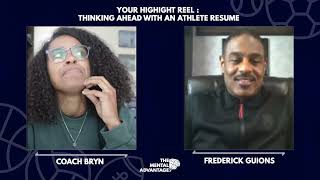
Frederick Guyens played football starting freshman year, went through junior college, and landed at Division I-AA before becoming an author and stock-broker. He argues the D1 label matters less than building an athlete resume with transferable skills, and that talent alone fails without hard work and a post-sport plan.
Chapters
This is so important, athletes. Don't get caught up in D1. Don't get caught up in D1 because it's so important. What do you say about that, Frederick? You on my same page?
If, if, I mean, obviously I, I had a number of friends, uh, attend D1 schools, and certainly the experience is at a much higher level.
Yeah.
However, if you are good And if you work hard, it does not matter where you are, because the NFL and these pro leagues, they are leagues and businesses looking for talent. So if you're at a school where your— where your talent can be on full display, that works in your advantage. There are a number— even if you're playing at a D1 college, there are still many of them that don't make the pros. So if, if you are good and you continue to work, it does not matter where you are. So yes, was I disappointed that I did not fulfill my dream of attending a D1 institution? No question about it. But I made the most of the opportunity that was given to me. Considering all the adversity I've gone through to get there.
I'm excited for you to see this week's episode, but before we get to that, I have a message for you. If you're a parent of an elite athlete or a coach of a high-performing team and you want— you're looking for some help or assistance with making them more mentally resilient, perform with more confidence, be more consistent, anything like that, then this is for you. I have an 8-week program all designed to address exactly that, to help your athlete be at their best on a more consistent basis and not get tripped up by those little voices in their head and getting down on themselves for mistakes, but performing like we know they can. So what I want you to do is don't delay, schedule a— just grab a time on my calendar through this link and let's set up a time to talk about your specific situation and how what I'm offering in my 8-week program can help. Okay, so So it's BrynDrescher.com/freeconsultation. So click this link, grab a time on my calendar. I look forward to talking to you. And now on to this week's episode. Hey everyone, welcome back to another amazing episode of The Mental Advantage. Podcast. Today we are visiting the world of the gridiron. We have one of its gladiators, right? Because I mean, let's think about it, like football players kind of seem like gladiators to me. I'm just saying. So, uh, today my guest is Frederick Guyon. He played football on all the levels, right, from high school to college to pro. And he's coming here to bring back some lessons for us to learn from in the world of sport and life. So I'm excited. Without further ado, Fred, it is— is it— you want me to call you Frederick?
Fred?
Let's make sure we get that clear.
Frederick is fine.
Frederick. Okay, so Frederick, good to have you here. How you doing today?
I am doing wonderful. First of all, I want to say thank you for the privilege of just inviting me in your space. It is so good to be here and I'm ready to go.
All right, awesome, awesome, awesome. So Fred, obviously football is a sport that has its moments of controversy, particularly these days with the mental game and the concussions and all the stuff. But let's start in the early days when we didn't think about any of that and we're just playing in our neighborhood and all that. What drew you to football out of all the sports that you could have chose from?
You know what? That's a, that's a great question. I don't remember consciously the moment that I was drawn to football. I mean, obviously, I didn't begin playing football until my freshman year in high school, but I've always enjoyed the freedom of the game, the excitement of the game, and the intention that people gave the game. I mean, back then, football was the most dominant sport, so I excelled at it and I developed a love for it. That's how I really got to the game.
Now, that's interesting because you said you started freshman year in high school, and you know, there's some athletes that I think get concerned that And if they don't have that early leg up, they didn't play Pop Warner ball, for example. I know that's what it's called in a lot of places. I think for my brothers, it was Paffa, which was Palatine Amateur Football Association where I grew up. So you started freshman year. Did you feel behind, ahead? How did that, you know, did you notice any of that when you're starting against kids that have been playing longer? Do you think there's a deficit when you start a sport later in your life?
No, I, I think that the deficit begins as you progress and go higher. However, you know, although young people have been playing Pop Warner football and things of that nature, um, they haven't perfected their craft, you know. So if a person is talented enough at that point, they can come in and mitigate the gap. So I, I was pretty much talented, uh, I didn't know how talented I was, but obviously I discovered that I was talented and that I was able to play with those who have been playing for years, pot water and things of that nature.
I love that. So just, you made it so clear, right? We got it. We got our talent is good. It can keep us in the race, right? But we can't get concerned about, you know, where we, what we didn't do because we can't go back and change it. Right. So I love what you said there, which is just like, hey, we can mitigate that gap. We can make it up. We just got to put in the effort. So that's fantastic. Obviously football takes a lot of physical strength. What did you find in, you know, playing football in the early days? And I know maybe nobody was talking to you about the mental game, so you don't have to say it in that context, but what did you find really helped you sort of mentally, if you thinking back, maybe if anything, when you, you know, playing football in your high school days?
Well, I, I was always a, a small guy. I'm about 5'11", 175 pounds. So for my position, it didn't really require physical strength. Um, I would say I was probably playing the mental game back then but did not know I was playing the mental game. So a lot of my success was as a result of thinking ahead of those who were ahead of me. I mean, certainly it takes talent, you know, at my size to survive, but you have to be smart as well. And you have to have that mental edge, as you say, in order to succeed at the level that I was playing on. No question about it.
I love that. See, exactly. It's there. And I'm the same way. You know, I was a track and field athlete, as we've discussed prior to this at Michigan State. But I didn't know anything about the mental game. That word wasn't in our vocabulary. The only thing I get frustrated is when people like us who don't actively participate in our sport anymore often say, "Oh, they didn't have that in my day." I'm like, "No, they didn't have the term, but we were doing it. We just didn't know we were doing it." And we didn't have some of the capacity that the kids have now to even talk about it in the way that they do, which I'm grateful for. This is a good change in sports. Despite what some people might say. Um, okay, so you obviously, as you said, were talented. You started to discover that. How did you stay— before we get to you being recruited, because we know you went on to college— but how did you stay humble? Or do you think you did, thinking back? If you're good, how do you keep that under wraps? Like, how do you channel all that to being good but not too— because a lot of people confuse Confidence and cockiness.
Mm-hmm. I think that playing high school football, uh, there, there wasn't a measure of humility. I would say it was probably cockiness, and that the humility didn't come until I really began to compete against people that were better than I was. So I would say high school, uh, being on a successful high school playing with other people who are successful as well. You know, certainly I wasn't grounded as I should have been. So there was a measure of cockiness in my high school years, no question.
Yeah. And it's tough, right? Because a lot of us in high school kind of come into this, like, you know, you're obviously competing against your local competition and not to make any light of them because some people actually raced against, like in my case, right? Like, you know, I mean, not contemporaries age-wise, but Jackie Joyner-Kersee, for example, or they were against Michael Phelps in the pool or whatever. That was their local competition. So I'm not making light of local competition, but most of us don't have a Michael Phelps in our swim pool, right? Most of us don't have a Barry Sanders or, you know, a Deion Sanders or any, you know, a Tom Brady in our local competition. Okay. So that kind of brings us to our next point. You're a big fish in a small pond, and then you start to get recruited. Tell me a little bit about that whole recruitment process and anything that you kind of learned through that or you think would be a good lesson for the kids to know about. So you can just talk us through what it was like being recruited and then what was it kind of like once you got into the actual being, you know, being a college football player?
Yeah, actually, during my recruitment, there was some excitement and there was also some disappointment as well. And there was some excitement because I was a pretty good football player. I played the cornerback position, defensive back position. However, because of the success and popularity, I lost sight of other responsibilities. So actually, during that time, my SAT scores were great, but I allowed my GPA to slip. So I wasn't eligible my first year, and it cost me some opportunities. So actually, I had to go on to junior college first, um, because of my circumstances. Again, a great opportunity. I took great trips, was exposed to, to opportunities as well, but I blew those opportunities because I didn't have the discipline that I needed. So it cost me early.
No. Oh my gosh. Okay. So you already know this. I know I'm preaching to the choir, but for our listening audience and any of you that were athletes, I think we'd admit, and I said this on a podcast previously, we were, we're called student athletes, but we kind of feel we're athlete students. Athlete first, student later. Some of us, right? Now there's some out there that are like, no, I'm a good student and I'm a good athlete. And that's great. But I think a lot of student athletes or athlete students, they kind of get a little more focused on, like, I might— grades had to be good enough just so I could— for example, for me, one time I was not doing well in math and they said, okay, well, you can't do track. And I got an A like the next semester because it was like, oh no, you're not going to take track away from me. So what was your advice to, you know, you talk about that discipline, like, you already— everyone telling you, man, you got, man, you're going off What if— so thinking back, speaking to these young high school students, but maybe classroom or the other responsibilities, because it's not just about the school, um, the schoolwork. What's your advice to them to keep it humble, to keep it focused? You know, obviously in hindsight, learning from your experience.
Well, let me just say that they, you know, high school athletes have not played their best competition So there can be an ego issue early on. At the same time, you know, high school athletes have to realize that only a certain few go on to be compensated for their talent. Hmm. I didn't have that mindset because I thought I was going pro. So, so the best thing young athlete can do is, is to keep in mind— and this is not to diminish the dreams that young athletes have. But Tom, you have to be sober about the opportunity, have to excel in the classroom as well.
I love that. It's so good because, um, and you, you said that only a certain percentage. So I'm going to give some statistics here that I've been privy to because obviously everyone's got D1 dreams, okay, but not necessarily D1 discipline and D1 work ethic and D1, you know, uh, staying power. So let's talk about that right now. Over 55% of high school athletes identify— I mean, as— I'm sorry, over 55% of high school students identify as high school athletes. Okay, so they identify as athletes. Then now, now we're talking about what Frederick is getting after. 7%, 7% of that 55% will go on to play a college sport. This is not football. This is not just basketball. This is 7% of all sports. That includes your rugby, your tennis, your everything. Okay? Even esports now is a sport. Gaming, for those that don't know. 2% will go on to play D1 of that 7%. Okay? So 5% make up the bulk of the Division II, Division III, and NAIA, and any private schools that don't have any designations that I don't know about. 2% will go on to play a Division I sport. So you went the junior college route and you were one of, you know, so how, now you said you didn't have the discipline. What helped you get back on track so that you could, you know, follow your trajectory that you wanted?
Here's what it was. And one of the reasons why I had to go the junior college route, I was in the gym playing basketball at a time that I should have been taking one of my high school final exams. And my teacher was actually one of the football coaches. So he actually failed me, which caused me to lose out on scholarship offers. And that, that taught me a tremendous lesson. And sometimes it's, it's, it's learning from lost opportunities. And taking those situations and getting better as a result. So when you ask me how I got better and what got me, uh, what got me straight is that, uh, you know, I'm, I'm living in low-income environments and here I am, you know, being egotistical, non-disciplined, and, uh, he, he fails me. And, uh, I had to really begin to grow up and find my way because after that nothing was guaranteed.
Yeah, I mean, but here's where I got a question because so many students, right, if their teacher fails them, right, not only are they angry at that teacher, but as you said, you lived in an impoverished environment. So there's a lot of influence around you, right? Now you are a big man on campus. Everybody knows your name. You probably had that kind of talent when you go places, people are like, oh, Frederick, what's up, man? We saw your game last week, right? Everyone knows you, and so you are also attracted to the elements of the neighborhood that maybe aren't going in a positive direction. So speak to how you kept your head on straight in that regard, because you could have easily just been like, bump this, they don't want to give me the opportunity, he failed me, not take responsibility, and then you could have ended up in a whole different way. So talk about that a little bit.
Let me just say that Being gifted with football talent actually saved my life because there were a number of things that I was doing at the time that wouldn't serve me later. And, uh, as I became a junior, then I went on to a senior, talking to my high school coaches, I really realized the opportunity that I had. So as a result, I began to wean myself off of some of those activities that do happen in low-income environments. Yeah, but the— I mean, a lot of drug selling, a lot of drug usage, theft. I mean, it— football really gave me a focus. It really, really did.
Yeah, a lot of people do say that if not for sport, they don't know where they would be. So you had already you made that shift, that decision that that wasn't the life for you anymore. So even though your D1 dreams didn't come exactly when you thought they were going to come, even your junior college, you know, detour, so to speak, and nothing— and here's the thing, I'm in no way disrespecting JUCOs, okay? Because a lot of kids make the JUCO leap to D1. It's possible, right? It is possible. So I'm, you know, we got some living proof. But what I want to know is Um, like, what I like is, is that you're saying, like, I made the decision before that, so I didn't— that wasn't a— yeah, yeah, I was upset with myself that I did that. Or I'm, I'm sure you had a little bit of anger at that coach because you're like, you're my football coach, don't you know what you're doing to me? Right?
Oh yeah, yeah.
So, but you didn't, you didn't let it stop you in that regard. So when you went to Juco, were you there for the full 2 years, or did you just do 1 year? What happened there?
Yeah, here's what happens. And again, here's where I was playing the mental game as well without knowing I was playing the mental game, right? The opportunity was there for me coming out of high school. A lot of those schools, uh, said they would continue recruiting me as a result of going to junior college. And everybody's good, people get better., and some of those schools forget about you. And then I wound up going to junior college, and I had a starting position my freshman year, but there was a transfer from Kansas, which is a Big 12 school. Uh, a guy played cornerback, and for some reason he— I don't know what happened to him there, but he was a D1 talent that was sent back down to JUCO, and I didn't start my freshman year in junior college. So here I am, uh, scholarship offers available, doing some things I shouldn't have been doing in high school, uh, thinking that junior college was going to be okay because there's schools who said they were going to continue recruiting me. And then there's a D1 kid that comes to take my position just before the first game. So, so, so here I— you talk about humility. So here I am at a junior college. The, the other corner was in his sophomore, his second year, being recruited by Division I schools. He went on to play in the NFL as well. Wow. So there's another guy that comes and takes my position. So now I'm at a junior college, uh, humbled. Yeah. And, uh, I don't even play my first year.
Wow, that is tough. So when— because I know if you're used to starting, this is your like real first, uh, I mean, obviously you're experiencing things as a kid, you went through adversity growing up in the environment you grew up in, but when you get used to starting, you get used to hearing the crowd say your name and all that good stuff, and then you have to go to the humbling of I'm about— I'm not maybe number one, I'm not even number I might be number 3 now because I got these guys coming in that I didn't expect. Tell us a little bit about, like, I know you said it was humbling, but tell us about, like, that experience. Like, I know it sucked, I'm sure, but how does one make that adjustment to— or is there, like, or do you have a moment of, like, I'm gonna use these guys to make me better? I mean, you can tell us the truth because I don't know. What that's like. So tell me. I mean, I did go from being top of the food chain in high school to bottom of the food chain in college. But I would, you know, I would love to hear your story on that.
Well, certainly, I thought that I was very competitive and actually better than the guy that transferred from Kansas because he had that D1 flavor already with him. Obviously that went in his favor. I just simply made the decision that I was going to compete, uh, the whole year. I did play and I did get solid playing time, uh, so much so that I did have good film and I was still in that recruitment process. Again, I just made that decision to work harder and compete, uh, because at that point, that's all I can do.
That's all you can do. So that's great. See, some people— and this is so important for any athletes or parents of athletes or coaches, anyone anyone watching, some people when faced with competition crumble, some rise. So in this instance, Frederick, I love that you made the decision, yo, I'm gonna compete. Like, I— hey, okay, fine, I'm gonna show you that this D1 moniker does not mean everything, okay? And, and so, and that's the cool thing because you kind of feel— you kind of got a cool perspective that you wouldn't have gotten had you not had the path that you had because you would have been one of them. Like, you know, these, you know, and then you see also, I love the story of the kid that was D1 and then he comes down to Juco because something happened. And that's kind of like that, um, I forget that series about football, you know what I'm talking about, where a lot of those guys were D1 and they go back down. So speak, since you kind of experienced it, and maybe you got to know him, and maybe you don't know this or not because you didn't go D1 back to JUCO. But what do you think is one of the main reasons why these kids are not being successful and having to come back down when they get recruited by these top schools?
Well, I, I think that you have to be, you have to be mentally, mentally tough because as, as you progress, I mean, even on the junior college level, I took a leap to competing against better talent. And you can't lose a sense of self. And it's not just that we talk about the environments being a team environment, but actually they're competitive environments. Those environments— division. Everybody's not sharing for you because everybody knows that I need to be on the field as well. So you have your cliques, you have your coach's favorites. I mean, there's just so many things you have to deal with So if you're not a grounded person and mentally tough and confident in what you can do, then you can lose yourself. And I've seen so many talented people lose themselves because of, of, of some of those things that happen in those environments.
Mm-hmm. Man, you talking good. See, this is good stuff because you just don't— everybody thinks like, once I make it to D1, I made it. But you got these stories, so everybody doesn't— yeah, so what percentage, so You, you went— so you did get recruited, you had good film from your year at JUCO. Did you go to the next level then, or did you do one more year at JUCO?
Okay, I, I did one more year at JUCO, and here's what happened. Uh, again, it reminded me of my senior year experience going into camp and going into the fall. I was the man. I was the highest recruited player on that team. A lot of the freshmen looked up to me, so I had a D1 scholarship in the bag. Actually, I got better as a result of the competition because I was playing with two Division I athletes at my position. So there were schools that, that weren't recruiting me in high school that were now recruiting me out of junior college. Oh, nice. Now here's what happened. Uh, on the way to fall practice, I was in a car accident and I missed— and I missed all of camp. Wow. I missed the whole camp. And then in the second game of the season, I sprained my foot and I missed like 5 games.
Wow, that's a lot for a football season.
Yeah. And that was my second year, and that was the year that I expected to put some of my best film because I had gotten better and I was so much looking forward to just dominating my second year. That car accident and the injury set me back. So at the end of the year, I had only two offers. One was from Rutgers, which at the time they were a Big East school and a Division I school, and they recruited me from high school as well because New Jersey was my home state. So they actually stayed with me Okay. And the only other offer that I received was a Division I AA offer, and that was the University of Maine. Okay. So it was some more adversity and some more humility, things that humbled me that I had to go through. However, I never lost sight of my ultimate goal.
Nice. So let's end the suspense for those of us that didn't Google you.
Where did you go? I wound up choosing the University of Maine. Nice. And here's why. Because I knew I only had 2 years left to prove myself. My freshman and sophomore year were over, right? I wanted to go into a situation where I had guaranteed position and more of my talent can be on display as far as returning punts and things of that nature. Rutgers had some returning starters and things like that, so I wasn't in love with the idea of going to compete and jeopardizing my junior year and only having that senior year to prove myself. I was in there, my dream. So I wound up choosing, uh, one AA school, and that was the University of Maine. Which was in hindsight the best decision for me at the time. So I had those D1 dreams, but because of all the adversity, I wound up at a Division I AA school.
Hey, Division I AA is still pretty darn good. And spoiler alert, you ended up in the pros. So I guess not too shabby. Now, I just want to talk a second about this, the, the injury situation. And like you said, is adversity. And well, one, let's just address what you just said. I love that you were strategic in your decision. You already knew, I've had my freshman and sophomore year are done. So like some everybody, some people do expect to sit their freshman year, but you're coming in as a mid, you know, mid-college transfer. So that's different. I got to make a different decision. So if I get caught up in the gloss and the glitz and the glamour of saying I'm a D1 top-ranked school recruit, but I'm sitting on the bench, I'm not able to show my stuff, then my dream stops there. So if I take a lesser designation, which this is so important, athletes, don't get caught up in D1. Don't get caught up in D1 because it's so important. What do you say about that, Frederick? You on my same page?
If, if, I mean, obviously I, I had a number of friends, uh, attend D1 schools, and certainly the experience is at a much higher level. Yeah. However, if you are good and if you work hard, it does not matter where you are, because the NFL and these pro leagues, they are leagues and businesses looking for talent. So if you're at a school where your— where your talent can be on full display, that works in your advantage. There are a number— even if you're playing at a D1 college, there are still many of them that don't make the pros. So if, if you are good and you continue to work, it does not matter where you are. So yes, was I disappointed that I did not fulfill my dream of attending a, a D1 institution, no question about it. But I made the most of the opportunity that was given to me considering all the adversity I've gone through to get there.
Yeah, I love that. And I think, you know, I think, yeah, sometimes we get so caught up in the label rather than the— and I think your story, like, is amazing because— and I've said this on previous episodes with other athletes— but what I am fascinated with by the journeys that I've had the privilege of recounting with the athletes is that if that accident doesn't happen, you don't hurt your foot, right? Maybe you don't end up in the pros. Yeah. Let's say you get everything you want, we think, and as you said, going D1, having that does not mean that you will make it to the pros. But because of that, you got— you had made a different decision that puts you on a higher, you know, a higher plane of visibility in that area. So like you said, your talent was on display. You didn't have to play behind somebody. You came in and you were able to go out, show what you do, create the film, and they find you. And now you go to the next level. So I think it's all divine intervention. A lot of times it's pretty amazing.
Listen, let me, let me just say this. And we, and we never know what would have happened, right? Going to a Division I school at that time could have cost me the opportunity to be a pro. When you get to that level, it's not just who you compete against on the field as far as opposing institutions, but the competition there is so fierce. It's not just the competition as far as recruits, but college football is also a business. There is so much turnover amongst the coaches. I mean, they, they are coaching not to win championships, but they are coaching for their livelihood. So there's a lot of politics— who recruited who— there's turnover, there's competition. So it is, it is not what you think it is. They're rolling out the red carpet for everyone. Everyone gets the recruiting visit, everyone gets the home visit, everyone is being sold on the same idea. But when you get there and you don't have the right mindset and you don't have a lot of confidence in yourself and cannot handle the adversities of big-time institutions, I've seen it happen to people. Some have gone on and some have transferred out to lesser schools. So these are just some of the things that— I mean, obviously everything that shines or glitters is not gold. You have to be in the right environment for yourself.
Thank you. Oh my gosh, this is so good. I just, I'm thinking about like, if I was a high school athlete hearing this, how great perspective it is because as we said, some people feel like they made it and that's it. And of course they know they're going to have to put in work on the field. But like you said, there's so many things, so many environmental factors that you may not have considered And that was what really sparked me wanting to have you on the podcast is because you talked about this thing of being so like this red carpet, like they roll out the red carpet for everybody. But as you said, when you get there, ain't no red carpet. It's a bunch of red tape sometimes. And it's not to say that people don't have wonderful experiences with college football. We're not taking away from those experiences. But the reality of the situation is, like you said, it isn't all rainbows and flowers. It's like, it feels great. I'm going there. I'm this. I even have a family member that was recruited by Michigan. You know, I mean, definitely would have been on target to be an NFL lineman. I mean, he's like 6'10", you know, all that stuff. Didn't make it, washed out, like, because he just got too focused on the extracurricular activities and relationship and things like that. And you know, he didn't—
he doesn't play football anymore. There's, there's this thing that's very popular in Division I sports, especially Division I football, that was not popular when I played, and that's called the transfer portal. There are so many athletes in that transfer portal, and back then when I played, you can transfer, but it wasn't as pronounced as it is today. So looking at— I am not surprised at how many 5-star recruits, 4-star recruits, 3-star recruits are in transfer portals because that is simply the nature of college football. Everyone is good, but because of the environments, the politics the competition, many people find themselves in the transfer portal just simply looking for the right opportunity.
Yeah, exactly. Because they're like, hey, I got here, now I'm behind this guy. I got to find this other place that I can go to shine. But they have, they have to give up an entire year, right, of eligibility. Am I right about this?
So listen, yeah, go ahead. Most of these Division I colleges the football program brings in the majority of the money. So there's so much money invested in these programs, and they will over-recruit to have the right players in position. Like, you, you can literally be an afterthought. Wow. Because college football— it's not just pro football, but college football is literally a business. And if you don't fit the profile, then you can really be considered an afterthought. No matter what was said to you prior to getting there. And here's the thing. Colleges over-recruit. You really have to know your talent. There are so many— like, you would rather go 4 years to develop and start than to wait 2 years to start at a Division I school or possibly not even start at all.
Hmm.
So these are just some of the things you have to consider., you know, prior, prior to going. You have to understand the competition, who else is being recruited. I mean, there's so many things that most athletes are being recruited from single-family households. A lot of, a lot of the moms in these households don't know a thing about football, don't know the right questions to ask. All they know is my son or daughter has an opportunity to go on to college. Yeah, you really need people there that can really govern that recruiting process, or that can set up, uh, an athlete to really be— I wouldn't say scarred for life, but to really, uh, have some traumatic experiences even after college. Yeah, these are the things that are never talked about.
No, I, I'm glad that you are talking about it because I don't think that, like you said, we get caught up in the glitz and glamour. I got recruited, I'm so proud. But then I could be in a situation that, like, and we're talking about this, right? Obviously the mental advantage, the mental health aspect of things, right? Because if I think that this is going, you know, of course my, my mom, my family wants me to go to college. I'm first in the family to go to college, and that's the dream. But then, you know, we have situations where, like you said, kids wash out or they go back home and then their parents are like, what happened? But it's like, you don't really know about all those factors and nobody's preparing you for the most part because the school is, I mean, they'll give you study hall, they'll give you that stuff. But what they don't prepare you for is we might not play you. And if you get recruited, we might take away your scholarship. If you get injured, we might take away your scholarship 'cause we need that money for this, right? You said the coach to keep their job and this and this and that and that. And it's interesting 'cause my brother was recruited by Michigan State and I wanted him to go there because I went there, right? But he said, no, I'm going D3 'cause I wanna play all 4 years. And, you know, and he obviously made the best decision for himself and was able to play and do what, but I didn't understand that at the time because, you know, and the over-recruiting and given his talent and his size, I don't know if he would've ever played at Michigan State, like you said, but he would've missed out on his opportunity to play somewhere else.
So, you know, no question at all. Let me just transition for a minute. One of the biggest challenges that athletes have to overcome— everybody's good in college. If you're D3, D2, D1, you belong there and your talent has served you. The biggest transition that most athletes struggle with. Everything I've attained up until now, I've attained because of my football, basketball, track identity. Yep. I got the scholarships, my name is in the paper, my family, uh, has a certain expectation. Everything is going my way. That's— if you're 22 years old and you are not good enough for the professional ranks, you are a young person traumatized without, without being clear on what else you can do. Yeah. And what kind of value you can bring to the world. People will give up on you. Your family will look at you differently because it's like you failed them. I mean, so these are some of the things that are not talked about. And that's why I said earlier, you know, certainly, uh, my football coach costing me opportunities for D1 scholarships was one of the best things that ever happened to me because I also began to see myself and see some of the value that I can add outside of sports. And for a lot of athletes, that's a very traumatic reality. I've never lacked confidence. I've never been afraid. Um, I've, I've found all of my self-worth in what I can do on the football field. So the esteem and the confidence can go from here to here real quick, real quick, real quick. And if you don't have the proper support, you can really get lost because many athletes have, have— there are a number of Division I athletes, great athletes who are at home right now underachieving because they never found who they were outside of sports. So half of them go on to half of them survive and they go on to professional occupations, and then there's another half that are today still struggling with, I didn't make it, what can I do? So it's, it's, it's very important to begin to identify and to have that plan B. And this is again not to diminish dreams, but if this doesn't work out for me What else can I do to be successful in life?
Well, you know, Frederick, you played obviously at the pro level, so I know you said if this doesn't work out for you, but even if it does, there will be a post-football life because you're in it now. You're not currently playing football, correct? I didn't, I didn't take you off the practice field right now, right?
So I'm, I'm not playing football, but that did happen to me. Yes, I, I wind up, uh, because of, because of the opportunities I had after college, I did not finish my degree at the time. So I left school like many athletes do nowadays, pursuing that professional career. I wound up playing, uh, one year or a— no, I played a preseason in the NFL and then 2 years in the Arena Football League. So the competition, uh, I didn't have the right mindset. Uh, I, I was very intimidated. I think that cost me, um, at that point. But I played 2 years in the Arena League against NFL players. Kurt Warner, for example, who's a Hall of Fame quarterback now, he played in the Arena League at the time as well because it was just used as a stepping stone to get back to the NFL. Gotcha. So when that didn't happen, I did go into a depression. Yeah, because I couldn't go back to school. It's amazing how, you know, they won't continue financing your education because you're no longer there. So I didn't have the money to finish my degree even though I was close. And all I saw, my— everything I did was about playing in the NFL. Yeah. So there was a depression, you know, there for a long time before somebody else saw some things in me that I didn't see on my own. So, and actually, here's what happened. There was a gentleman that I knew who was a stockbroker and He said to me, you know, man, I think you would make a good stockbroker. I just had to borrow somebody else's vision for my life because at that time I had no vision. Hmm. Now, later on in life, so I went on to work for two major Wall Street firms, but I was always competitive in those environments because I took some of the same skill set and mindset and I incorporated that into my professional career. So, you know, later on, I mean, obviously right now I'm an author, um, I, I have my own business, I'm an entrepreneur, but, uh, I didn't find out about those things until later. So even though there was a gentleman that came to me and said, hey, I think you'll make a good stockbroker, that was still borrowed vision. The reason why I went that path is because he suggested it Yeah, because I had nothing else for my life. You had nothing else. So as a result of, you know, counseling and coaching and things like that, I began to seek what was expressing it and pay attention to what was seeking expression coming from me and not coming from someone else.
Hmm. Oh, that's powerful. Okay, so I actually, you know, I We spoke about it briefly, but I do address the identity piece. I don't call it a Plan B because the athlete will freak out, but we call it a multi-phase plan. Football is one part of that plan, right? We need to— and it's not a phase in the sense of— because I don't necessarily think it should be football and then this. It should be also this. So in other words, you as a football player, understandably, you as a college athlete, right? And as someone who was a college athlete, D1, yes, a considerable amount of time is dedicated to your sport and then your student— your academics. However, for anyone that says, but I don't have any time to do anything else, and I'm not suggesting you don't have fun in college, but you could sacrifice a percentage of your recreation time to fill in by just one of your interests, like something else that has nothing to do with your sport. It gives you a perspective. When, as Frederick, you said, you, when you went through that injury and you went through that, that gave you some perspective because like you said, your coach cutting you and you not being able to play, you had some time. And we had Stephanie Watts on the podcast, she was in the, uh, WNBA draft and plays overseas in Australia. She said the same thing, like you become too aware of you're not what you do because you're not doing it anymore for a little while. So those are gifts wrapped in like these weird circumstances that were like, why is this happening? Because I need focus, I need perspective. But you said something to me that you said, focus creates blindness.
Say more about that, because this is what you were talking about, about this identity piece. Yeah, like, uh, if I'm, if I'm focused on the left, you know, if I turn to my left, then I can't see, but some my right. If I turn to my right, I can't see what's on my left. So whatever I'm focused on creates blindness in other areas. And because, you know, people are so sports-focused, it just creates blindness to other talents and gifts that, that they may have and that resides in them. So I, you know, but at that time, that is the focus. Yeah, you know, we are driven. But my advice to an athlete, a young athlete, is to, to really understand that concept. Yeah, because I don't want to be blinded to other things that I can do. I, I have high-income skill sets, entrepreneurial skill sets. I mean, there are certain things that I can do, but if I'm so focused here, then I won't see it. And I think that is what happens to most athletes, that we really lose sight of who we really are. We are not just student athletes or athletes.
Yeah, absolutely. It is so important.
Go ahead. No, I mean, we have the potential to be— we have a world-class talent, you know. I know athletes that their hidden talents have took them all around the world and not their football talent. You know, they're known for their brand and for their skill set. So there's something special that we have that we are so athlete-driven that we'll forsake it and not be the beneficiary of it.
Given a lot of value, man. I'm, I'm so glad we're having this conversation because people are— I know the listeners and the viewers are benefiting from it. As you said, you went through, uh, we've already mentioned mental health. We've talked about how it affects one when they're done with their sport because most athletes do go through this dark night of the soul, mostly because of this focus creates blindness and over-identification. Feeling that their value and worth only comes from the juice of sports, which they've been getting it their whole life. So it's conditional, right? I got the message over and over that people love me because I'm good. People love me because I'm good and because I'm a football player, because I'm a basketball player, whatever their sport is. And then they don't play it anymore. So as you said, you found someone. Sometimes we have to borrow someone else's confidence or vision for ourselves until we can find the one that is coming from within us. What advice do you have for us on who to listen to when someone does come and say, hey, you, you could be good at this, and also how to better listen to ourselves?
It's the same, it's the same thought process and the same thought model that we have as athletes. Most athletes have a hero. Uh, if you're a quarterback, you're modeling somebody. If you're a wide receiver, you're modeling somebody. If you're a point guard, you're modeling somebody, and you're crafting your game after who you resonate with. Take that same model and same attitude, you know, have an idea of what you want to do in life and get a picture of who you want to be in life, and then find out who's the best at it, who, who's doing that. And then begin to model your craft, your mindset, and your behaviors after that person. Now, you may not get to— like, most athletes or, or amateur athletes, you know, don't meet professional athletes more often than not. But you can connect with the person doing what you would like to do, and you can do it so many different ways. You can buy their material, their books, their YouTube videos, listen to their content, and execute everything they say. And by simply doing that, there's a high possibility that you will probably come across and eventually meet that person. I love that. So I would, I would— that same model. Who's your hero? As far as an athlete and find a hero outside of or in the business world or wherever your gift or desires take you.
Okay, nice. Right, because then, yeah, what do I do? I'm like, if I don't— if, if, if my hero's still playing and I'm not, then what do I do with that information? So finding somebody who's like, hey, I also have an interest in this vein. So who's that person, right? Who's my Jeff Bezos? Who's my You know, because like Jeff Bezos, Elon Musk, these are like the Tom Bradys and the LeBron James of the business world right now. So those are the names that you're hearing over and over, the Warren Buffetts of the stock market. You know, like these are the heavy hitters. And not to say that you have to go in these financial or tech realms or e-commerce, but there's so many things, right? Could be a Teacher of the Year. It could be Anyone. It does not have to be a titan of industry. It just needs to be somebody that inspires something in you. Because the interesting thing is they have us choose majors. They give us, you know, allegedly the idea of college is to educate you so that you are armed for a career. But unfortunately, so here's, here's the other thing I want to ask you, Frederick, because since we know that college football and football even and the NFL, it's a business. How do we stay focused with our head on straight when they're kind of letting us pass? Like, you know, how does an athlete keep that focus? Because we can be caught up, like you said. We know that less than 1%, okay, less than 0.01% goes on to play at the professional level of, you know, football, if you want to, you know, deem it down to one sport, right? It's very little. And then the longevity of an NFL player is 3 to 5 years max. Yes. Yes. So you gotta have a post-career plan because 3 to 5 years puts you at— if you graduate at 22, puts you at 25 years old. Yes. And now you are retired.
Yes. Here's, here's what, you know, again, it's following the same path that most athletes take. It was not just your own efforts, but it was also coaching as well. You know, coaching has helped you to get to where you are. Coaching is not often talked about outside of sports, but as me and you know, I have coaches, you have coaches as well. Coaching outside of sports is also available as well that most athletes— I didn't know at, at that time that coaching was available for me at that time, but that can really help you gain clarity. It can, it can, it can really accelerate your process and eliminate so many mistakes, save you so much money. So it's, it's finding a hero, then also saying, hey, I'm used to coaching, let me see what's available out here and let me see what's available to me. And more often than not, your athletic reputation can still get you indoors that, that normal people cannot walk through. Yeah, well, if you are a tight end from Clemson or from a D2 school or whatever, and you had that on your resume, there are some people who are going to want to work with you regardless. Yep. So you can use that in your favor as well. Always, always use your athletic resume in your professional life. That has gotten me speaking engaged. I mean, that— I haven't played I haven't played football, professional football, in over 20 years. But there— but, but my reputation for playing still opens doors for me. So you'll always have it with you. Yeah. Even though you're not playing any longer. So you'll always— I'm sorry. So you'll always have it to leverage.
You know, it's like we're on the same wavelength. So I have this whole thing that I was talking about, about an athlete resume. Resume, because a lot of athletes don't get a chance, uh, you know, to work a job, like, right? So as a college athlete, I, I, I did— I was on— I was not on scholarship, so therefore I was in work-study and I had a job. So I had work experience, not necessarily to— in the career that I wanted, but I had been working, and I was working in high school as well. A lot of students who are doing club and, you know, competing at the highest levels don't have the time to balance schoolwork and a job, you know, a school job and school athletics and a job. So the big thing is I was talking about this and this goes back to the identity piece having— I want, you know, part of my program is helping athletes with their resume, but like in the sense of what would look good on a resume because they don't recognize that they have a lot of these transferable skills. First of all, you know how to work within a team environment. You, uh, a lot of adversity and high stress, you know how to communicate if you did, if you thrived in this environment. So now instead of you going into a job interview or a, a whatever it is, filling out an application, whatever, and going, well, I don't have any work experience, like, no, I have 4 years of, or 12 years, you know, if you've been playing since you were a kid, even high school, college, and then on to the pros. I've got years of experience of actually being in those environments. No, I don't have the commensurate industry experience that you might be looking for, but I've got a lot of soft skills that you can't teach that, you know, are, are going to make me a great— and so it's teaching athletes how to sell themselves.
What do you say to that? Every athlete, no matter what level they're playing on, has a success story, or they would not be where they are. Every athlete has a level of production. If you were an unknown offensive lineman and maybe you were part of a team that had the second-best rushing offense in the conference, maybe you weren't All-Pro, but you contributed to that. If you played with a running back that made the NFL— I blocked for Johnny Smith, who was the first-round draft pick. There, there are so many different success stories that a person can put on their resume, and that can be high school or college. Everyone has production. Everyone has production. You just have to lift it right, not discount it. Listen, here's the mindset. Most people athletes— okay, take the Olympics for example. There are 8 lanes in a track meet, or, or the 100-meter dash, they're 8 lanes. Yeah, the first 3 finishers are prioritized and looked at as winners. If I would— if I finished in last place, I'm the 8th fastest person in the world. If I finish in last place in the Olympics, see, the mindset has to be I'm still a winner. Yeah, I did not get a gold, silver, or bronze medal, but I am the 8th fastest athlete in the world. Yeah, how can I leverage that? To me, that's a success story. So that's what I'm talking about. What did you do to get to the Olympic trials? What was your competition? What were, what were your times? Who did you compete against? Just to say I competed in the Olympics is a story. I competed at a D1 level is a story. Who did you compete against? There are, there are athletes who have photos on their book covers. Uh, there are wide receivers who are unknown and they have Deion Sanders guarding them at the line of scrimmage. And they used it as their book cover. So there are a number of different ways that you can leverage successes and moments from the career you've had as an athlete and have, have those things transferable out in the real world. No question about it. Don't feel bad because you finished 8th or because you didn't make All-Pro. I was the 8th fastest person in the world.
You know, that was, man, maybe you saw this, but that was what Sha'Carri Richardson said was like, I'm still the third, you know, whatever, fifth fastest, whatever she finished in that race after she came back after her suspension. She was like, I'm still the fifth fastest person in the world. Like I've ran, like I think she ran a world record or something, you know? So she's like, I'm still up there. Like I still have the fifth fastest time ever in history, which she does. And so it's like, When you look at that and then you put it in perspective, and the people like, she's bragging. I'm like, no, she's telling the truth. She is giving herself self-talk because she just came back from being out of the sport, missing out on the biggest competition of her life. And that pep talk that everybody said was bragging was her talking to her like, yo, I'm still good out here in these streets.
I'm still okay. And people should not judge her for that. Because I'm sure that her experience was traumatic. Yeah. And, and, and self-talk is therapeutic. So what other people see as bragging, reminding myself of who I am and what I did is going to help me leaps and bounds because of what I've gone through. That's right. So never judge a person or an athlete that hangs on to their accolades because that is, is the very thing that gets them through during, during these challenging times. No question about it. I've done it.
I've done it. Yeah, we gotta— and no, but I think this is good because people don't know this stuff and they're like, yeah man, that was 20 years ago. But it's like, but for some people that was their heyday. That's what that— that's what gives them, you know, like life. Like, hey yeah, but it was, it was a time.. And of course we want to always put one foot in front of the other and make new experiences. And that is a piece of helping that athlete come out of that identity. But like you said, sometimes I have to remind myself, I was a— I'm a gladiator. Like I competed with Deion Sanders so that I remember when I walk into this room of this arena where I start to feel small, I need to remember that. And so I love that reminder that using that 'Cause you gotta use whatever you got to get yourself to feel like you deserve to be in that room. And so don't judge what another person uses as long as they're not hurting other people, right? By putting people down, like, I'm better than you. But I'm just saying, and when sometimes people hear that, right? Even if I go, hey, I played with Deion Sanders. Oh yeah, we get it. You played with Deion Sanders. I didn't say you didn't play with Deion Sanders. I did. There's a difference, right? So I'm, and you don't know what I need inside of me. Like you said, that's what's helping me hold on. So we're coming to the end of our conversation. Now go ahead. What do you want to say? I can tell you got something to say there.
Go ahead. No, to your point, many people will count you out, but you have to continue to count yourself in. I still have my state championship ring from high school. That means a lot to me. I still have my first paycheck from being a professional athlete. Now, am I still getting paid like one? No. But that's a reminder to me that I was one of very, very few people to actually receive compensation in exchange for my talent. Many people receive scholarships in exchange for their talent. I actually received a check. I got paid. I was a professional athlete at one point in my career. Now, am I a Hall of Fame athlete? No. So you have to continue to lean on some of the things that you accomplished in life. So to your point, yeah, here's a story. When people count you out, you have to continue to count yourself in.
Look at what you've done. Mm. Yeah, because we forget all the time, right? I'm not where I want to be. So it was like, look at all that stuff behind you. Look at all the amazingness that's in your past. So that's fantastic. All right, so Frederick, we got— we're at the point in the interview where we kind of wrap it up, where we want to do the rapid-fire questions. But before I ask you a rapid-fire question, I want to ask you one last question, which is: right now, in the arena that you are operating in, what do you find is your mental advantage?
Wow, that's a great question. I— where I am in life right now, understanding talent, I understand that talent is not enough. The reason why I know that I succeed or get to the top of my industry, because I know that the most talented people aren't going to work like me, so Confidence comes from repetition and consistency. I'm going to work to be the most confident person, and that's what gives me the mental edge. Same with football. Everybody's talented, but who has that mental edge? So it's, it's my mental edge is I know I did more work than you did.
Hard work beats talent when talent don't work hard, y'all.
And that's the thing.
Exactly. You have to have that mental edge to know what is the extra that you're going to go that extra mile. And a lot of people, of course, talk about the physical effort you got to put in, but that mental effort is just as important. You got to bring both. So thank you so much, Frederick. Okay, so here's our rapid-fire questions. These are very serious, Frederick, so I need you to have your serious face on. Okay. All right.
What is your favorite snack right now? Uh, man, I hate to admit this with a serious face—
red velvet cheesecake. Oh, that sounds good. Where do you get it from? Are you a Cheesecake Factory person, or do you have another place?
Cheesecake Factory person.
Red velvet cheesecake. Red velvet cheesecake. Oh, That sounds decadent. Okay, I'm a vegan, so I can't have it, but I'm sure it's delicious. I love red velvet. Okay. Your favorite— now this goes hand in hand because I just always want to know, what's your favorite flavor of ice cream?
Or are you an ice cream person? I am an ice cream person. I don't eat much of it. Butter pecan ice cream, but it has to be a certain brand. Okay. Friendly's. Friendly's butter pecan ice cream. Can't be Breyers or Turkey Hill.
It has to be Friendly's. All right, you heard it here, y'all. Friendly's, uh, butter pecan ice cream, uh, for Frederick if you're getting him any gifts or anything like that. But like I said, he doesn't want to eat it all the time, okay? And you can also get him a gift card to, uh, Cheesecake Factory. Okay, next thing I want to ask you is, if you could have any superpower, which one would it be and why?
Any superpower? I believe the ability to, to go into the future and come back. It would just minimize my unnecessary worry and fears. I think more often than not, if we add up all the time that we spend in fear— like, your boss tells you, hey, I want to see you at noon, and he wants to give you a bonus for your good work, but I spent 3 hours in fear imagining something else. That was just 3 hours, but 3 hours here, 3 hours here, 2 hours here, it begins to add up. So how much of my life have I actually spent in fear of unnecessary— unnecessarily? So I think if I had the superpower to go into the future and come back and say everything's going to be all right, I can spend less time in fear and more time happy and enjoy.
Oh, I love that. I love that. That's good. That's good. I love the, the hour, uh, cost, like 3 hours here, 3 hours there. I'm definitely going to steal that from you, Frederick. I'm just telling you, just like I, I, I borrowed focus creates blindness, I'm taking that too. All right, this guy's full of so much goodness. I hope you guys are enjoying this. Okay, next question.
Oh, do you have a favorite superhero?
Uh, actually, I don't know. You don't? Okay, no problem. All right, so now, uh, this question is, you know, some people have a thing, but so far all my athletes have had an answer. You have toilet paper at your house.
Are you an over-the-top or an under-the-bottom on the roll? I think I'm under-the-bottom on the roll.
What? You're like the first one.
Okay, why, why do you like it the bottom? Uh, I think it's just habit, and I think that most women like it under the bottom, so I just make adjustments.
Okay, all right, fair. You're very con— you're very accommodating. Now, like you said, it's just habit. If I put it on over the top at your house, does it— do you notice it enough to like want to change it, or are you just kind of like, it doesn't matter?
You know what? It actually depends how smooth it comes off. If it comes off real smooth and I like it, then I might say, okay, I can stick with it.
Okay.
But if it doesn't have that under the bottom feel, then I might have a problem with it.
Okay. There you go. There you go. And believe this or not, Frederick, some people change it at other people's houses. Are you going to have that same feeling and thought at someone else's house? You're going to change it?
Or you gonna leave it be? Nah, I'll leave it be. I'll leave it be.
I'll make the adjustments. Okay, yeah, yeah. I, I am an over-the-top, and I will change it at my house, but I will not change it at your house. But there are people, believe it or not, who are that adamant that they will change it. So I'm always curious what the answer is on that. All right, so you say you don't have a superhero, but who's your personal hero?
Man, uh, wow, that's a, that's a really— I have, I have so many personal heroes. Uh, there, there's a guy, there's a gentleman. I mean, obviously my mother, um, personal hero, but there's a gentleman by the name of Dr. Will Moreland. I, uh, resonate with— he's a mentor of mine. I resonate with him at a very, very high level. He did the foreword in my book. He inspired me to write the book. Uh, just who he is as a person, his thought processes, the adversities he's overcome, how he handles adversity. He's one of the most orderly men that I've met in my life. I mean, everything is just systemic and orderly. He's a high producer in life. He's, he's a hero of mine. Yeah. And actually, I actually thanked him for saying yes to becoming a hero because a lot of things that happened in my life were as a result— a lot of the great things that happened in my life as a result of his personal yes.
Mm. Very wonderful.
Okay.
Will Moreland. I'm gonna look him up after this. Because I don't know about them and now I need to know. All right. What do you want to be remembered for?
I want to be remembered for simply reminding powerful people how powerful they are. I think each one of us has the ability to make a difference, and at times we just simply need to be reminded. You just simply need to be reminded. There's a— I'm sure many of us saw The Lion King, and here is Simba, uh, who drifted off into— he took on an identity for whatever reason, crisis or whatever. He was running away from who he was. And, you know, there was a— another lion that just simply showed up, not to condemn him or to beat him up or to say you're wrong, but just to remind him of how powerful he was. And sometimes being reminded of who you are is all you need to hear to position yourself where you're supposed to be in the world and where you can make the biggest difference. So I would like one day for some man to walk their sons to my casket and say, here was a man— I am the father I am today, I am the example I am to you guys today because he just simply reminded me of how powerful I was in life.
That is beautiful. All right, well, uh, you just mentioned that you are an author, so tell us about your book and where to— how can we get in touch with you? What do you got going on that you want to— this is your floor to talk about the stuff you got going, to share, etc.
Yeah, I, I wrote a book called, um, The Gold Standard, and, uh, it's just simply a book how to achieve one big goal and do it again, again, and again. Once you learn the system of achievement and the skill set of high productivity, you'll always have that skill. You'll be able to achieve anything you want in life. Um, you can find the book on my website, frederickguyens.com, thegoldstandardbook.com. I have some virtual things coming up real soon that's going to be out on all my social platforms.
So anybody wanted to know, they can simply find out. Fantastic. Oh my gosh, you are an amazing, amazing guest. I'm— you overserved as I thought you would. I'm just like, man, I could listen to you talk all day. I'm like, I'm reminded how amazing I am just listening. No, actually, I'm more reminded how amazing you are listening listening to you. I mean, that too, but I— this has just been fantastic. Uh, anything else?
Any final words before you say goodbye? Yeah, I want you to know, uh, Coach Bryn, that the work that you do is very— and I'm speaking— I wish I had you when I was an athlete. Thank you. Let me just The work that, that you do can be the difference between an athlete making millions of dollars and securing his family generationally, or maybe even wind up back at home underachieving in life. It is that mental work, the mental edge, the high performance, the identity. Athletes need mental coaches or high performance. The work that you do, athletes need that because many have failed because they didn't have that. And never believe they can get that from a Division 1 coach making $5 million a year. The value that you bring to athletes is absolutely priceless. Thank you. So that is my final word, and I wanted you to know that.
Thank you so much. I believe you've done the job of reminding me how powerful I am now. So mission accomplished. Thank you. I truly, truly, truly receive that. I don't think I often think about it that way. And so thank you. Thank you. Because I obviously do it because I care about the person more than I care about just their athletic career. But yes, like you said, just like the difference that I'm making for a family and, you know, just the legacy of that player. So thank you, Frederick. It was an absolute pleasure. Thank you so much.
This was an amazing— wonderful.
Thanks for having me.
More from Bryn


Who else hype for this upcoming season with Caitlin Clark and the Fever with all these great adds?







How to be nicer to yourself: Stop putting yourself down either out loud or in your head


Winning At The Net Game of Sports & Life No Matter The Score - Episode 60 w/ Jordanne Scott