Improv Lessons for Business from The Second City
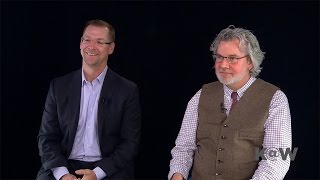
This is a YouTube video titled "Improv Lessons for Business from The Second City" featuring a discussion between Laura Huang, an assistant professor at the Wharton School, and Kelly Leonard and Tom Yorton, authors and members of The Second City. The conversation explores how improvisational theater techniques and mindsets can be applied to business, focusing on soft skills like listening, collaboration, and handling failure. The discussion also touches on innovation, resilience, and practical exercises from their book to improve workplace dynamics and leadership.
Hi, I'm Laura Huang, an assistant professor in the management department here at the Wharton School. I'm here today with Kelly Leonard and Tom Yorton, authors of yes, and from the Second City.
Hi.
Thanks for being here. Welcome, welcome. Absolutely. I'm going to start with you, Kelly, and I'm going to kind of ask. This book had me kind of laughing and cringing and taking notes all at the same time. You know, there are so many useful kind of tidbits in there and also some really humorous kind of anecdotes. Can you tell us a little bit about the MOT for writing this?
Yeah. I think if 15 years ago you'd say Second City was going to put its name on a business book, we would have been like, you're insane. But when Tom started with the company, which is about 16 years ago, he brought with him a kind of a fresh light to the way Second City was working with clients and really expanded upon the business. And so the collaboration here was interesting because I've been at Second City 26 years, and so it's really stage meets business. Because Tom has a business career and I'm a sort of a theater guy. And what Second City is, all right, we're a 56 year old theater, but what we really are is an innovation laboratory. Because over that 56 years, we have had groups of people working together to create something out of nothing. We are a content creator and we never stop. And they keep doing it in these groups and we're very, very successful at it. And at a certain point you go, that's got to be translatable. Look at all the famous people who've leapt from the stages to the screen. It's not just. I'd like to think it's my great eye for talent, but it's not because I wasn't there when Alan Arkin started. I was there when Tina Fey started. But there's this long sort of tradition of building talent out of these groups to have success. And then when we started taking it into businesses and having more and more success, we kind of turned to each other, this is like two, three years ago, and said, God, we're idiots if we don't write this book.
Yeah, absolutely. I think for me, business is an act of improvisation. For all the planning and all the controls and all the governance and all the things we try to do to keep the variables down. Business doesn't cooperate. The world is a gray place. And this improv toolkit that we talk about is really important. It's never been more important. Than it is now. So that was all part of the motivation for writing the book.
Yeah. And you hear so much about teaching students in terms of business and all of these kind of hard skills, accounting and models and that sort of thing. What I was really struck by was kind of the way you were able to put this framework around teaching these soft skills. And so can you talk a little bit about these soft skills and what is it about it that you're able to teach and how were you able to actually do that?
Well, it's funny, I don't think in any part of my education anyone ever taught me to listen. And listening is kind of important, it turns out. In fact, it's vital especially.
And it's one of the key chapters.
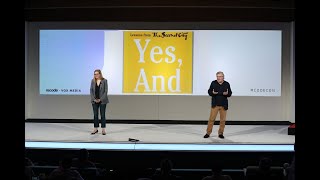
Of your book, because people don't practice it. And when you improvise, you do practice it. You have to. So there are specific exercises we offer in the book that people can take home with them. Listening exercises, but you got to put into practice. I mean, I think everyone understands the need to go to a gym to work out your muscles, but where do you go to work out your social skills? And so improvisation is yoga for your social skills. It puts you in a mindful present place where you're concentrating with eye contact with the person in front of you. You're not thinking about before or about after. And when you're operating. Yes. And which is the title of our book, you're not saying no. You are in agreement and affirming and you're building something with someone else. And the way you feel after you do that, especially after, like a three hour improv class is the best. And so if we can bring that best self into our workplace, everything gets better.
Yeah. And we talk about the soft skills that separate the stars from the also ran in business. It's how to listen, how to read a room, how to work collaboratively on teams, how to respond to failure, how to be nimble and agile and adaptive when the unexpected happens. Those are really foreign skills to many people. You could have all the quant skills and you could have all the strategy skills and all that other stuff. And they're important skills to have, make no mistake. But unless you can work well with an ensemble and create something out of nothing and respond to to the unexpected, you're only going to go so far in business.
Yeah, I like that you kind of mentioned this ensemble nature. Right. And the two of you are, in a sense, this ensemble that kind of created this very comedic, artistic work. And a lot of it touches upon this Innovation question that you brought up, have you seen innovation changing over time? You've both been a part of this for a long time. Has that definition changed for you over time? And can you talk a little bit about what innovation has meant in the past and what it means now?
Yeah, it has changed and luckily the world has kind of come to us. So if you think about what Second City is good at, we are good at short form content and interactive content. We create the shows with our audience. Well, welcome to today. That is welcome to the world. Completely in vogue in the thing. Oh, and also our work is rooted in games. So the idea of a gaming sort of mindset. So all these things that are completely sort of taking over the innovation sphere are the stuff that we've been cooking and playing with for 56 years. And yet we live in a country that says no failure. And we live in a world where business like you can't fail. But the reality is we all fail every day and we're going to fail, and especially the people who have success. Every success story, right, is rooted in all these little failures. So what we at Second City do is we have a failure methodology, we have a failure format. The two act scripted review that you pay your good money to see. Everyone's going to love. And they laugh because we've tested it out. The place we've tested it out is in the third act, which is free. It's late at night, many people leave. A lot of college kids line up to come see it. That's our improv set. That is our failure laboratory. We try out material, it doesn't work. It's okay, I didn't pay anything. And that is a failure model. And it's not just that we have this to test out with the audiences, but for the employees, in this case the actors, they get to model failure, they get to survive failure, they get to fail and bring something back. And so learning how to fail elegantly and learning how to incorporate failure into your daily activities so it doesn't beat you into the ground, you're not going to meet your sales goals. Am I beating into the ground? No, that happens. This is a process. And so we have that model. So what we recommend for businesses is find your improv set places where you can fail fast and where you can fail free of fear. And not everyone has a stage, but you can create things like a stage inside your business.
Yeah, so I work with a lot of early stage startups and this failure is kind of intrinsic in what they're doing. So the Question is also how do you know when you should continue pivoting on your failures or when you should kind of throw in the towel and say this is not working, it's time to move on to something else, let's try something new altogether.
Yeah, that's a tough one. And there's no stock answer to that. I think especially in the startup world, a lot of other factors. Did you run out of money?
Right, right.
Sometimes there are things outside of, outside of your own control that kind of dictate where need to go. But I think for us, we are more resilient and we are more willing to go the next step and try it again and give it another shot. So I think when you think you should bail, try it another time or two and see what happens before you throw in the towel.
And if you create a model where you're yes, handing at the start, which every idea gets a little love, you have an abundance of ideas. So that means the failure can move much faster because you can throw away, throw away, throw away. And no one is holding onto things in such a precious, precious manner. So really if you act out of yes and early create abundance, then you might not have that problem. You might get to the truth and the good idea more quickly.
I want to talk a little bit and just pick an idea. Came to my mind when you were just saying that dishonesty in business, and I don't mean like malicious intentional dishonesty, I mean petty, unintentional dishonesty. And that is where, you know, where we refuse to acknowledge a failure, where we all kind of walk past it and pretend it didn't happen and whitewash over it and still put the slogan up. And you know, we get together in the all hands meeting and clap, but we're not really acknowledging what's broken. And when companies do that, when organizations do that, it causes everyone else to check out because they know there's BS going on and there's a high cost to not being real and not being authentic. So when we talk about failure, it's not like we are as kind of, we're blithely saying, yeah, it's okay to fail. We are a very high performance culture. We have high standards and we don't like to fail any more than anyone else. But we know that it's okay to talk about it. We want to create conditions where people feel it's okay to be open about it because then they'll keep staying in the game, they'll stay fully engaged and you're good to Go.
Yeah, I think that's a great point. It kind of reminds me of one of the examples you had in the book about Superman.
Oh, yeah.
And can you tell us a little bit about that failure and how that failure turned into this immense success?
Yeah. So there's these classic scenes from the Second City archives, and one of them is the Superman scene. And it was shortly after Christopher Reeve had fallen off the horse and was paralyzed. Tragic, tragic situation. And the cast really wanted to create a scene around that. And the idea they came up with was that they were set in a sort of cartoon world and there was an evil villain, and then Superman came out, but he was in a wheelchair. And the response that the audience gave was groans, if not worse. Martin Short came to a preview and just yelled no. When he saw it, it wasn't working. And so the director took it out of the show, the two act show, put it back in the improv set, the place where we can fail and it's okay because it's late at night and we're in trouble. And was playing around with it, still wasn't working. And then finally came up with an idea of writing a song for Superman that he could sing about how he wished he could fly again. And it was kind of a lovely bookend that when he put it back in the scripted show, we still got that terrible groan. But after he sang the song, everyone's like, oh, I'm okay with it. And it became this iconic, well reviewed, classic scene. The director was Mick Napier, the actor was Rich Tallarico. And it would never have happened if we hadn't had this little failure module to fool around with it. Because we want to risk and we want to create content that is challenging and edgy, but it doesn't work if everyone's upset. They could be upset for a little bit, but we want to bring them around again. So a lot of our work is testing the edge. And we talk about this in the book, which is a lot of people are practicing comedy without a license. We have studied this stuff, we have researched and modeled it and all that. But everyone else thinks they know how to do comedy, and that's why everyone gets in trouble on Twitter. You got to understand your context. Part of the book is also talking about that for businesses, is that if you want to use comedy, there are kind of rules that you might want.
To like the authenticity kind of, you want to be authentic.
And another one, you don't want to use those in power using comedy to belittle those with lesser status. It doesn't go over so well.
Don't punch down.
Yeah, don't punch down. There's a few like that.
Yeah. And I think that the practical exercises in the book really hit a lot of those concepts home. So, you know, I personally really liked the String the pearls one where you give one phrase and another phrase and the two are not connected and you have to get from one to the next. Do you guys have a favorite? Tom, do you have a favorite?
Yeah. We do a lot of work with listening skills in business because it is so unpracticed. And an exercise that we cite in the book and we use very successfully is something we call last word response, where we instruct people to pair up, talk about anything, have a conversation. Doesn't matter what you're talking about. The only stipulation is you have to use, when you respond to me, you have to use the last word in my line as the first word in your response. And you go and you have these conversations, and sometimes they're funny and nonsensical, and it doesn't much matter. The point of that exercise is it's difficult to listen all the way through because we are generally taught in business, critical thinkers are taught to listen, to respond, not to listen, to understand. And we draw that distinction. We think it's really important to listen to fully understand someone. You might miss some information. You might miss a meeting if you check out halfway through what they're saying. So you can prepare a response. Yeah.
And Callie, how about you?
Yeah. Here's the thing I think people should do. Take one day and don't say no the entire day. So even if you're in a situation where you have to say no, you have to find another way to get there. It will change your view. It will change how you feel. It's hard. It is not easy. I have done it, and it is problematic, especially with children. But it is ultimately very rewarding because you have put yourself out in a far more positive way. And the other thing is, is you start to make that list of how many times you would have said no. And it's a lot. And you recognize that, really, out of the 25 times that I would have said no, 23 of them, I didn't need to. And the people around you notice it as well. When we were working on the book, I would come in in the morning early and write from 8am to 10am and my ensemble members, my staff around me, always said they knew when I was working on the book because I was a much better leader. And because I was modeling it, I was putting it in practice, I was saying it, I was writing it, I was touching it. And they were like, it's remarkable. Like, we all know now we have this game to catch you when you come out of a writing thing, because at that point, we're going to be able to make things happen.
That's interesting. All right, so one thing I'm just curious about. So Stephen Colbert said that at least half this book is going to be good because he knows one of you. So was he being facetious, or does he only know one of you?
He knows him.
He knows him. He doesn't know me. What are you going to do?
Yeah. Stephen was in my very first cast as a producer at Second City. He was my wife's roommate in college. We got engaged at his rehearsal dinner.
Wow.
He's a great old friend and an amazing Second City success story and someone who so embodies this work. Tina Fey is another. They both really believe in improvisation and took it with them. So Colbert, if you look at his staff, it's a lot of Second City people. Same with Tina when she's on 30 Rock and Kimmy Schmidt. I mean, there's a lot of Second City people. So it's. One of the things that's interesting about Second City is that we let talent go. When we talked earlier about ensembles in an ensemble, that's just fine, because the ensemble is always there. Sometimes when it's teams, it's like, oh, the team falls apart. It's like, no, this is never falling apart. And we've never closed for 56 years. We've never closed. The show has just kept going on and morphing into the next Second City ensemble. And that's why so many people who are so proud of calling themselves alumni of the Second City know that it's a very rare group that they're a part of.
But my mom liked the part I.
Wrote, so she liked half of it as well.
Tom's mom, Stephen Colbert, you know.
Well, thank you so much, Tom and Kelly, for being here. Just such a fascinating glimpse into the world of improv and the lessons that we can take from that into the business world. So thanks again.
Thank you.
Sam.
More from Carina




Friday Foundations: How to Get a Seat at the Table w/ Carina Clingman, CEO, Recruitomics Consulting