Grow Your Business with SEO for Therapists and Coaches w Krista Walsh [EP 31]
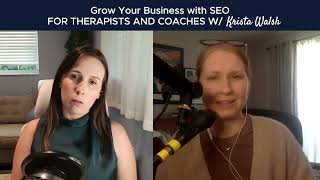
A podcast episode (Thriving Therapeneur) featuring Carly Hill interviewing Krista Walsh about SEO for therapists and coaches. Krista explains SEO basics (keywords, local vs. global search, domain authority, backlinks), differences between private practice and coaching SEO, when to prioritize a website vs. social media, blogging’s role (audience-building vs. immediate lead gen), realistic timelines (traffic results in ~3–6 months, broader ROI 6–12 months), content creation options (DIY, AI-assisted, freelancer/agency) and ballpark costs for blog content ($400–$700/article; common packages ~$1,200/month for two articles). Krista offers a free “website elevation checklist” and can be found as Krista Walsh, copywriter on Instagram/LinkedIn.
Chapters
Hello and welcome back to another episode of the Thriving Therapeneur podcast. I am with Krista Walsh today and we're going to talk all about SEO. We're going to talk about a lot of other things, but this was really our main intention for today, as we were just even talking off camera. There is so much we could talk about with SEO, whether you are building your private practice or you are evolving into a coaching business. And how this is going to help you attract more clients, build more revenue, have more flexibility and freedom and security in your life as an entrepreneur. So before we get into that, Krista, I want you to introduce yourself, tell us who you are, and you kind of have an interesting story about what even led you into this world of working with clients in this way. So tell us why you do what you do.
Yeah. Thanks, Carly. Yeah. So I am Krista. I have been an SEO website copywriter for a long time, which means writing the content that goes on your site and also your blog content, if that's something that's wanted with an SEO and conversion focus in mind. Recently, I've partnered also with a couple of designers too, to do the full setup and just make it an easier full process, end to end. Yeah. How I got here, essentially, I applied it to my own business. I applied SEO to my own business. Most of my clients still find me through Google Search. It is a misconception that people on people who are googling like, aren't ready to hire or they don't want to like pay high ticket prices. But, you know, hiring a copywriter isn't like a $500 investment. Right. Even though my prices are competitive, it's still in the four figures. And I routinely get people that hire me for that website project and then stay on long term. Um, so I'm not a coach, but I've worked with coaches, worked with private practices, and we've seen that with the right strategy, which is what we're going to talk about today, and the strong website on the flip side, it can really work for you as like a passive source of lead generation.
Mm. Yeah. But what, what led you to work with therapists?
Oh, that's what you were alluding to. Yeah. I mean, so like most business owners, like, I'm sure the, the people venturing to coaching, listening to this, you have like the business reason, right? Which is like, you gotta find a niche, you gotta find people you really love working with to make marketing easier to like shape the offers to serve this client, um, and everything. But at the same time, you're probably somebody who's like, I'm putting my life force into this thing that I'm doing. Because otherwise I would just, like, work for a company, work for an agency, whatever. Um, so you want it to mean something? Um. My experience with a therapist really changed my life. I was somebody who was experiencing pretty debilitating panic attacks. What I now known as, like, classified as panic disorder, where I became pretty afraid to do basic things. Like, I stopped driving because I was afraid I would have a panic attack, and it would trigger these really intense physical symptoms, including my vision kind of like inking out where I couldn't see. So I went to the doctor like a primary care, and they're like, this is a panic attack. Go see a therapist. I found an amazing therapist. And within that first six months, I was went from, like, severe panic attacks to rare panic attacks without having to take medication, which is something that I personally cared about just through, like, understanding what was going on in my body and my mind and tracking that. Tracking those thoughts, really, and slowing them down. So, yeah, I mean, that is something that really fuels me today, that this can really change people's quality of life pretty quickly. If you need someone you connect with.
Yeah. So why not help the therapist, help more people and have this ripple effect in the best way possible? Because you know how much it impacted your own life. I love that when you wrote that in your application to be on the show. Because we have, you know, a vision for our own life and we have missions in our own business, but there's tons of SEO experts out there. But you're not just any SEO expert. Like, you really care about these therapists that you're dealing with on a deeper personal level because they. You have seen the impact that these therapists have made in your life. I just think it's a beautiful thing and part of your introduction that you probably don't talk about enough. So let's go into SEO. What is SEO for anybody who's listening, maybe they know what the acronym acronym actually stands for, and maybe they don't. But even if they know, okay, it stands for search Engine optimization. What does that actually mean?
Yeah. So for instance, like, in my experience that I just shared, I found my therapist because I was googling for a great therapist in my area. Right. Related to what I was dealing with, which was panic attacks. And SEO is the process of making sure when somebody's in that position, they're in this position of, like, urgency. Less so for coaching. Coaching tends to be more like they're in this, like, zone of, like, optimization. Like, I want to get really. I want to fix this problem, do something better in my life. But whatever it is, they're in this, like, wanting, needing position, and they're going to Google to find somebody. Because it's what we do, you know, today. I mean, we. We do a lot of other things, too. Maybe some people search Instagram. Some people are brave enough to ask their friends for recommendation. Um, but a lot of people go to Google. Uh, so SEO is making sure that Google knows to show your website to those people who are typing in the types of things that you can offer them.
Mm. And taking it a step further, how would Google know to show your stuff to your types of people? Is that mainly done through. I know this is a loaded question, but most people think of the keywords. In SEO, it comes down to your messaging and your copywriting that is on your website, for example, that Google's gonna pick up, oh, this person just Googled this keyword. Show them Krista's website, for example.
Yeah. So it is a lot about the keywords, but it's more than just, like, finding one keyword and, like, writing that a million times in your site. Right. It's. It's like Google is a little bit smarter than that. It's an algorithm that picks up on, like, keywords, like, synonyms that mean kind of the same thing, really. Similar phrasing, and also location. So even if you're not saying, like, your city in your website or, like, in your search, let's say. Let's say I was, like, searching for, like, anxiety therapist near me, and I don't even tell Google that I'm in Los Angeles, but Google will show me results in Los Angeles anyway, because it looks at what the searcher's IP address, where it's located, and we'll assume that you want results close to where you are, because Google's whole job is to serve the searcher because that is their customer. So, yeah, I guess. I guess just sharing that it's a little bit more than just the keywords. It's those keywords, plus making sure Google knows where your business is located, plus using other phrases in there naturally to capture these people that are typing in things, like, slightly differently, because not all humans are the same, and just doing what you can to tell Google's algorithms that, like, here's what I do, here's who I do it for. Here is where I'm located, and here is why you can trust my website. So part of it is, like, Google has This score that they essentially assign every website domain called a domain authority. It's a number between 1 and 100, and it just means, like, how authoritative, how trustworthy Google thinks your website is. And it's an algorithm that places that score based on some things that are out of your control, like how long your website has been around. So if you're a really old website, like you're.com boom website, you probably have a really high domain authority score just because you've been around for so long. You've been in business for so long, Google trusts you. But there are other things like Google reviews, like how many other websites are linking to your website? Because that tells Google, like, hey, other websites know about this site and they think it's a good website to send their traffic to. So that comes into play as well.
Yeah, the backlinks. Yeah. So what about if somebody has a coaching business and they're not just local and they're worldwide and somebody does type in something near me, or they're not typing in near me, but it's picking up in their IP address and they know where they live. How can we still make sure that we're going to show up on Google when we have a coaching business where we can get ideal clients worldwide?
Yeah. So I would say fewer people, if they're searching for a coach or like specifically, like using terms like near me or like searching on a map like Google Maps, they're probably not like expecting to walk into like a coaching office in the same way that you would with like a private practice. So that comes into it. And then certain keywords are just by default more global because there aren't a lot of local businesses, you know, trying to rank for that. So something like a dentist, like there are like 500 dentists in a city like Los Angeles. Right. So it's going to go with the ones that are closest to your IP address.
But.
But if you have a really niche coaching practice, you might be one of like 20, you know, so it's just gonna show you versus there's probably like, not that many, like in somebody's local area. So Google is gonna branch out a little bit more. Um, so, yeah, I wouldn't really worry about local SEO with a coaching type of business unless, honestly, I can't really even think of an example that would be like, locally focused for like an online coach. But if you have a business that is for some reason hyperlocal, maybe like an acting coach or someone like that, I don't know. But that's not the type of thing that you do. So.
Right.
I mean that's a good example though.
Yeah.
Where there's tons of coaching businesses where they are more maybe brick and mortar style, where you are meeting with them in person or you have a hybrid model of in person and online and you would maybe want to focus on SEO. But generally speaking, coaches are doing virtual coaching and they are marketing themselves globally.
Right.
And so you wouldn't focus on SEO, local SEO for that. So let's talk about the difference between SEO, maybe for a private practice and for a coaching business. What are some of the main differences that somebody would want to focus on?
Yeah, so the big one is definitely that local piece. So private practices. It's a lot about like creating a Google business profile, which is a, which is like the thing on, if you're searching in Google Maps, like you'll have like locations on a map. Right. That's huge for local SEO. Things like that. Like obviously using your local keywords in your website to say like here, you know, here I'm based in Chicago or I'm based in Minneapolis list or wherever you are coaching, all that is less important. Coaching is more about like it's the wild west of online business. So you got to figure out, I mean business wise, your niche. Right. I know you talk about this a lot, Carly, but once you have that, then it's making sure Google knows that you serve this niche.
And so it's more about your messaging.
Yeah.
And the keywords or the key phrases versus just relying on location because you can't rely on location. So you have to be really crystal clear in your messaging and phrases, which is why hyper niching is important.
Yeah, exactly. Yeah, exactly. I mean virtually nobody is going to rank for something super broad like coach for women. You know, like it's, it's got to be something that people are, they know what it is, so they're googling for it. And it's specific enough that you have a shot at ranking because otherwise it's just, you know, you're trying to compete against like masses of people and most of those masses of competitors and most people searching probably aren't your ideal client anyway. Right. I will also add something.
Well, that's like I was gonna say when clients get, I call it flowery, they get a little flowery with their language. Right. Where they'll say and. Or they have like platitudes and cliches where any sort of coach could say this, a business coach could say this, a weight loss coach could say this, a women Empowerment coach could say this. A menopause coach could say this using phrases or words such as find confidence, set boundaries, find balance. Or they are just calling themselves like a women empowerment coach. Right. Like, those are things that are considered more broad. Where if somebody were to Google that, that probably wouldn't work out in your favor.
Exactly. Yeah.
Correct.
Yeah. So, yeah, the finding the niche. This is something that you do with Carly through her programs and coaching, right? And depending on your niche, it could lend itself really, really well to SEO or potentially not so much. So you kind of have to do some digging to see, like, is your niche something that like a bunch of people know about existing and want? Or is your niche something that like, people want it? But first, like, you have to sort of spread the word about what this is. Right. So for example, like a dating coach for men, that's something that is like, people understand what that is. People are probably googling for this. So like, that's something that lends itself really well to SEO. You know, dating coach for divorced women or some, you know, something like that that is like a clear niche that people are probably like googling for. Makes a lot of sense. On the other hand, if you have a niche that's a little bit more like, I don't know, what's the word? Like, like you sort of created it and it's like strong from. You're good at marketing. Like, you can get the word out when you talk about it. People want it, but they're kind of like, oh, I didn't know the thing existed until they like learn about it and then they really love it. If that's your boat, then you probably want to go the route of blogging versus, like just trying to rank your foundational pages. Because people probably aren't like googling for that thing you do. I'm kind of struggling for an example here. I don't know if you know anyone in your program that might fit that bill.
No, because I lead them in a different direction so that they don't fall on deaf ears. Because it's difficult to make yourself. I call it being the Beyonce of your space when you have something that is maybe a nice to have or in addition to their life. Like, we want people to be searching to have an urgent need where they are going to eagerly pay you versus them not even knowing they have a problem.
Totally.
Okay, so then, not to mention there's a solution to their problem they didn't even think about or know about until be stumbled across your blog. But this is a good Example, this is a healthy conversation that we're having to shed light into how important it is to have really specific messaging. It doesn't mean to say that you can't pursue this type of niche if you're falling in this boat, like Krista said, but just know the barriers that come along with it, and your, your growth path may look a little bit different than what we're speaking about today.
Yeah, that's awesome then. So it sounds like you're kind of, you know, if something is recognizable to the general public, it's probably Googleable too. Like, if you told your, like, best friend like, hey, I'm a blah, blah, blah coach, and they're like, oh, cool. And not like, what then probably it's something that people are looking for online as well, which is where you can try to rank those foundational pages, like your homepage, your possibly your sales pages, your about page, things like that. But there's also another avenue, especially if you're in a really competitive space, which is blogging. So this is where, because you can serve people anywhere, you can create blog posts to answer questions that are related to what you offer. Or if somebody is maybe a little bit earlier on in that, like, they're problem aware, but they're not solution aware, so they don't really know that a coach exists yet, but they know they have the problem. So you can create content around the problem, like the symptoms they're having or the thing that they really urgently want, and create blog content around that, around those types of keywords which tend to be a little bit longer. Like, they tend to be in question format or in list format or like ways to blah, blah, blah, type of format. And that's like a backdoor.
You said you get this question a lot like, do they have to blog? Do they have to blog? It's a way that they can get more attraction. But when people think SEO, I think they automatically think blogging and they tie the two together.
Yeah.
How do you answer that question when somebody asks you, like, do I have to blog?
Yeah.
And then if I have to have a blog, do I have to write the blog?
Okay, so.
And if I don't have to write the blog, how much do I have to pay for somebody to do this blog for me? Like, that's what everybody who's listening is thinking.
Totally. Okay, so do I have to blog? No, you don't have to blog. I would say my. The first course of action for somebody who's interested in SEO is to create a strong website and try to rank your foundational pages for keywords. So these are these keywords that have like, we call it search intent. So the person who is searching is in a hiring mindset. They're like, I need this. I know the solution exists. I am just trying to choose the right person to deliver that solution. So these are probably keywords like blah, blah, blah, coach, right? Like things like that in your niche. And that would be the first course of action. And then making sure your website copy is dialed in and is speaking the language of your clients is making it clear why your services are the best fit for them compared to the next person. The Google search results, because it's a cold audience with Google search. Like they do not know you, they have no trust in you. So your website has to do a lot of heavy lifting to make sure that they can like feel like they trust you enough to like fill out your form or book a call. However, blogging can be a great option for those people who have a like online marketing system kind of going. So if you have freebies, if you have like email funnels, if you have like lower ticket offers that like then upsell people eventually, you know, in a very ethical way into like higher ticket coaching. If you have all of that going, then blogging can be a way to build your audience and nurture them over time to become clients. And because it helps you get in front of people who have the problems that you solve, but they're not necessarily ready to put down their credit card information because they, it's, it's a huge lift to go from like, I have a problem to I want to spend a thousand dollars a month to solve the problem. So these people can find your blog. If they feel like they've really been helped by their blog or they resonate with your style or whatever your thought process, then maybe they're like, okay, I want to join their email list or I want to get this like free worksheet that's going to help me or I want to take their quiz or at the bare minimum, like I want to follow you on Instagram or TikTok or something where then they can like get to know you over time and sort of. So I sort of view blogging as like an audience building venture versus like a lead generation venture. So you don't have to do it, but you can do it just like view it a little bit differently. Like it's not going to be something that like, even if you get traffic like right away, you're going to get clients from that traffic. It's, it's more of a super long.
It'S not a quick cash strategy, let's put it that way. Yeah. So when we think about the order of operations and growing your business, blogging can be part of your marketing ecosystem. But is it the very first thing you should start with? Probably not. Let's go here for a second. Because personally I have launched so many things and not had a website. So my signature program is therapist to coach accelerator. When I first launched that, I did not have a website. I just had a social media presence and I made thousands of dollars. I have been, you know, running this program for, for years and have scaled it to seven figures and literally just started SEO in the past year myself. So I'm a firm believer that somebody doesn't need a website to make money. They could just have a social media presence. There's a time and a place for SEO. I love SEO. It's great, it's not cheap to me, it's a long term game and I'd love to hear from you, like, realistic expectations. I always say like six months to a year is a safe bet for SEO return. I think it's a wonderful asset in your business just as your website is. People need websites, they need good quality websites. But a lot of people when they're like, okay, I'm starting my coaching business, I need a website, they think that's the first thing that they need. And then they think because they have a website, they need SEO, but they don't even know what to put on their website. They don't even know what they're selling, they don't even know what their niche is yet. Sometimes they need to take the social media strategy route just to even do market research and figure out their messaging, dial that in to even know what they should place on a website. So can we talk about, like, when do most clients start working with you? Where are they in their stage of business? Do you agree or disagree with me on anything I just said totally fine to have a conversation around this, but this has been my own personal lived experience with SEO and the, and the kind of order of operations that I have taken in my own business. That has worked well for me.
Yeah, yeah. So I don't disagree. No. For coaches, especially in those early days, like I do think it'd make things easier if you had a site like just some like central hub where people can go like to read everything in one place. Because social media, pretty much every platform is pretty disjointed and it's hard if you're the type of buyer who needs to like read it all, think deeply about it, and you're not somebody who's gonna see a story and be like, I'm in, which there are those people having some sort of site I think can be helpful just as like, or even like if you wanna be really low tech about it. I have launched offers with like a Google Doc, like just like something written.
Down for sure, a Google Doc, a Facebook group leading them to a sales call and then giving them all the information.
Yeah, right.
I've done all of the above myself.
But do you need like a super fancy web, like website? No, like there are like super low cost ways to like launch a website. Like when I did my business, like it was like a template and I chose my own colors and I just sort of like, it's just like hanging a shingle out. Right? Like just something I think, like, I think it is helpful to have like a central place, a little domain on the Internet where you can be like, here's all the information if you're interested as you're doing all these other things. But when it comes to like investing in a professional website. Investing in SEO. Yeah. You have to have a clear niche. Like you have to know who you're speaking to, who you're serving and what way you're serving them for SEO purposes. Because as we've talked about, it's like, well, what keywords are you even trying to target? Because it doesn't make sense to do any sort of SEO work if you're targeting something super broad, like coach for women, you know, or I don't know, like just. That's probably the most common one I see.
Yeah.
And you won't know what to tell a copywriter, like who you want to attract, like what your goals are, anything like that. And then design, you know, you're just gonna, I mean you could do it if you really just like hate doing any design and you want the website or whatever. But I think you can do a lot with like a template, like a one page simple template that you set up for yourself or do like the Google Doc thing that I talked about until you figure it out. And then yeah, it's basically like, like any sort of strategy. Like it's, it's akin to like ads or doing like pr, like any sort of investment like that. SEO is a visibility engine. So it's when you're at the point where it's like things are working, I know who I'm serving, people are getting good results they are referring me, you know, business isn't struggling, but I want to get bigger. I want to like dominate the online space. You know, an SEO is certainly a piece of that. And so then you start to look at all these different options, like, do I run meta ads, do I do Google Ads, do I like hire a PR firm? And the answer is like, if you can't do all three, it's just sort of like, well, what do you feel like is the best channel for getting people to your site and the benefits of SEO? It's like if you love to write, I mean blog. If you love it, you know, blog and then like work with an SEO to figure out topics to write about. Or if you're somebody who like, ads can be a little risky because there's a lot of like upfront investment and a lot of other little pieces you have to have in place, like landing pages and like sometimes like tripwire products and things like that. SEO is more of like a foundational long term investment that you can let go. It's not always ongoing. Like I don't do a ton of like ongoing tweaking of your site every month. Most people don't need that. Yeah, I feel like I rambled.
So when we talk about long term and we talked about realistic expectations is six months to a year. What can, what can people expect when they are in the scale phase of their business? They. I love how you worded it like that. People want this, it's working. But I'm just ready to go bigger. I'm ready to dominate the online space. I'm ready to become, I call it like omnipresent in the online space. And yeah, you can do it through ads. I love ads. I use them in my own business. I'm now using SEO in my own business. I use PR in my own business. Like I do all of the above. But if you can only do one and somebody says, okay, I'm going to go to SEO SEO route. How long? And I know this is a nuanced question, but on average, can they expect to get a return?
Yeah, so.
Or see results.
Yes. See results. I would say like three to six months results, meaning like you start seeing traffic numbers. Like this is where you can go into your Google search console or Google Analytics and like literally look at that, that graph that shows you impressions on your site and the organic search and you'll start seeing it like shoot up and up and up and that shouldn't go away. Which is the beauty of SEO. Like you can make a one Time investment. And even if you stop spending money, it should continue to grow as your site matures and gets more authoritative. Like what I talked about earlier. Unless something goes horribly wrong, like your site breaks or something like that, but results in terms of like those clicks, those visitors becoming clients, this is where the other piece of your business really matters. So like with foundational SEO, so this is like trying to rank your homepage, for example, for keywords related to those people who are searching to hire. That can be really fast. So you could start getting visitors to your website. If your website looks professional, if it differentiates you with your messaging, if it makes people feel really safe, you could start seeing results within that three to six months, like right away, those people could be converting into high ticket clients. I mean, right, I'm saying right away because in SEO land, three to six months is like as right away as you can be with blogging. This would be, the results that you would be looking for would be like, how many of my email list subscribers came from my blog posts? So you kind of, you want to have things set up to track those clicks to make sure that it's working to see where those people are coming from. And then it's going to be a longer ramp from there from blog reader, email, a subscriber to paying client. Right. And that I can't really give you a number. That depends on, you know, how strong your marketing is and everything like that.
And you could do both at the same time. Yeah, right. You, you can do the blogs and you can do the strategy where I like the visual of just climbing up the ranking and that not changing.
Right.
Especially getting a lot of.
Okay, so for someone who has decided they're going to write blogs, or they want blogs to be part of their SEO strategy, but they either don't want to write it themselves. So they're at this crossroads of do I have AI write it? Can I even have AI write it? Should I write it myself and just suck it up? Or should I have a copywriter or my SEO strategist write the blog for me? What do you see most often? And do you see all of the above? Like, what do you advise people to do in this situation?
Yeah, I think the biggest hurdle for a lot of people is the SEO piece. Aside from just like, I don't have time to write, I don't like to write. That's obviously a different type of hurdle. But even if you are like, you self identify as a writer, you really want to write your articles, I think where people will struggle Is like, well, how do I do this for SEO so that I'm not just like publishing into the void. So this is where working with somebody to figure out, like, what topics make sense for your audience, for your business goals, for whatever like, marketing ecosystem you.
Have going.
Are, like, what topics to choose related to what has, like, pretty high search volume and like, you're able to rank for that. And also providing you with a list of keywords to incorporate into your content with some guidance about how to do this. Like, you know, some of it's like here, this keyword should probably be its own section. Like, we should make that into a headline. Here's what the section should be. Here's what your page title should be, what your meta description should be. Here's how to, like, put this into your image data as well. So I think it's pretty doable, like, if you have someone doing that piece for you to take that and then write it yourself. If you are somebody who gets joy out of writing and you know that you will do it consistently. If you are somebody who really hates writing, which is a lot of people, like I or somebody who is just really busy and you know, this is not where you want to spend your time. Like, you'd rather be like, showing up on, you know, stories or something. There are different ways to do this. You could use AI to help you. I do not, do not recommend full cloth having AI write an entire article for you and just like posting that a. Because it's weird for readers. Like, elite surveys have come out that like 50 of people, which I think depending on your audience could be really low for, you can recognize.
They can tell.
Yeah. And it just, it feels weird. It's a weird experience. It doesn't really make them. Doesn't like, make you trust that person all that much because you're like, well, I don't think they really wrote this. And it also means that you can't put any of your client experience in there because, like, AI is just like generating from everything everyone else has posted. So, like, you really miss out on this, like, opportunity to do something where you're sharing your real thoughts and like, your real experience and your real expertise. Like all these things that you'd want to do in your marketing anyway. But I'm not against using AI if it helps you. So if you want to, like, use AI to help you, like, think of examples for a certain piece, or if you write a paragraph and you're like, oh my God, like, I know what I want to say, but this like just is coming out like all crazy. And like you can't afford to have a computer like a human editor. You can say like hey, like ChatGPT or Claude or whatever. Like can you just make this clearer? Like little baby sections like that. And even if you do that, like I would probably go back through, read it aloud and make sure it doesn't sound super robot. Y', know, if you don't say ensure and the rest of your content, like don't use that word but it'll tell you to use it anyway. Yeah, and I'll just, I'll just say like Google's algorithms have announced that they're like downvoting essentially content that is clearly AI produced because they want to keep people using Google. And if people stop using Google, they're going to lose money to all of the people that use that advertise on Google. So they really want to prioritize high quality content. So if they are suspecting that something is low quality created with AI, they're telling their algorithms to not rank that page. So even from an SEO perspective, like I wouldn't completely rely on it, but use it, you know, if you want to use it to like organize your thoughts, if you want to use it to come up with like titles, things like that, like absolutely. Like use it as a tool but don't use it to like replace your human brain.
Right, yeah, that's a great way to put it. Use it as a tool but don't completely rely on it. Use it to optimize what you're doing already or use it to fast track what you're doing to get your wheel spinning to brain dump to organize your thoughts.
Totally.
Something's coming back to me from the beginning of our conversation around investment and you know you said around a four figure investment you have competitive pricing. Like what if somebody is listening and who is wondering, okay, if and when I get to the stage of my business where I want to hire out for SEO, I do not want to write the blogs myself. I want to have blogging be a piece of it. What would an all inclusive SEO service run me? Do I pay monthly? Is it like a package deal? What do you see most often? Or if you want to speak to any of your offers, can you give, can you shed some light onto what people can expect on the investment side for SEO services? Yeah, quality SEO. Because you can always get cheaper SEO. Yeah, right. But you're going to get what you pay for and I'm sure you come across that all of the time. Right. So yeah, you know, I even hear that too, like, oh, I hired this SEO person for $200. I'm like, good luck. You know, what are they actually doing for you? So can you speak to quality SEO investment?
Yeah, yeah. So what I do, you know, focusing on your blog content, like setting aside the website project. Let's say your website is good, it's working for you. Now you just want to focus on the blog content. So articles typically range, like, depending on whoever you hire, from 400 to 600, 400, $700 an article. This typically does include all of the writing, all of the SEO keyword research. Possibly could include going into your website and actually uploading it, uploading images as well, if that's something you want to pass off. But that's what I would expect to pay most people, myself included, recommend like a minimum of one article a month. So that's what you're looking at per month. Most of my clients do my two article a month package, so it's about twelve hundred dollars a month. And I would look into, like, what your marketing budget is and where you want to allocate that. And if SEO is that place and that fits into it, it can be a really great investment for you. If you're hiring, like, this is me as a freelancer, as like an individual. If you're hiring an agency, expect significantly higher rates, but they might be able to do more volume. So, like, I could not work with somebody to do 10 articles a month. Like, I just don't have that capacity. So if you're, if you're like, I want to, like, be like the Neil Patel of my space or something and like, crank out these articles. Like, that's where you need somebody with a bigger team, where they have multiple, multiple writers so they can do that kind of volume for you. Um, a lot of times what I see is people hiring SEO agencies to like, do SEO and they don't really understand what's being done. And it's like an ongoing package for them that might include some content writing, but it also includes this, like, ambiguous, like, technical optimization thing or like backlink gathering, which is where you like.
Go.
Out and try to get the site, like, featured in somebody else's blog or something like that. I typically don't recommend that just because I don't think you need months and months of like, technical optimization on your site. Unless it's a huge site and it's a mess and you have to like. And it was just built really improperly. But for most coaches, you're not Dealing with that. Like, most coaches have fairly simple websites, so anyone selling you that sort of like optimization package, like, just look a little closely at it and make sure you understand, like, what's being done. If it's a content writing package, that's different. That's like you're producing content every single month for your blog.
Yeah, it's a good point. I think that it's the same thing with paid advertising. When something is so new to you and it's a big learning curve and you want to just outsource it, you. You can get taken advantage of pretty easily if you're not hands on or you're not working with somebody who you can trust who comes recommended. Right. Because there's so many things that you. You don't even know the questions to ask if it's working or not. And they do sell you on this, like, ambiguous package, if you will. So get second opinions. Work with somebody that you trust. Try to learn as much as you can so that you can ask powerful questions and analyze your results to the best of your ability as you're continuing to learn this new process. But expect somewhere around $400 to $1,200 to double, triple that, depending on how fast you want to grow. But the question you really need to ask yourself is, what is my marketing budget? What is realistic for me? What are my profit margins? So assessing all of your business finances, but then asking yourself your business goals of how fast you want to grow as well. And do you have the budget to grow that fast?
Yeah, yeah, exactly. Thank you for organizing my. My answer.
Yeah, well, I was just kind of recapping for myself as well. I'm sure it's helpful for listeners. So we covered a ton today. Krista, where can everyone find you if they're interested in your services? They want to learn more about SEO. Do you have a free gift for anyone?
Yeah, so you can find me either on Instagram or LinkedIn. So those are the places I'm at. Krista Walsh, copywriter, is my handle in both places. If you search there, you should find me. But I can share it with you if you want to link it.
Yeah, I'll put it in the show notes. That's. Say that again. That's your Instagram handle.
Instagram and LinkedIn.
Okay. Say it one more time. You kind of cut out for a second.
Christa Walsh, my name copywriter.
Yeah, got it.
Okay, perfect. And I'll link it in the show notes.
Yeah.
And then do you have a free gift for anyone?
Yeah. So I have a checklist. It's a website elevation checklist. So this kind of goes through the key pieces of creating a strong website. Your user experience, your SEO, your message, and your design. Mostly just made to address some problems that are really common in this space. And just making sure, like, if you can check this off, you don't got that problem. You're good. So you can feel confident that you're, quote, unquote, doing it right.
Okay.
Amazing. Well, I'll include that in the show notes as well. And thank you so much for all of your SEO knowledge today. Everyone, go follow Christa on Instagram or LinkedIn. That's where she hangs out. And you can download her free checklist. And I will see you in the next episode. Therapreneurs. Take care. My love is with you. Thanks, Krista.
Thank you.
More from Carly


How Therapists Can Use Mentaya To Get Private Pay Clients Reimbursed (Without a Superbill)



How a Seven-Figure Therapist Actually Builds Wealth (It's Not What You Think)

“There was always this idea in my head, but I didn’t know how to formulate it until I met you.”




