How Therapists Can Use AI To Work Faster With Lindy Drope [EP16]
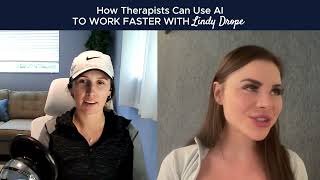
Lindy Drope built Lindy Medical Scribe to transcribe therapy sessions and auto-fill clinical notes in SOAP, DAP, or biopsychosocial formats. It works without recording audio, keeps sessions client-present, and costs $99 a month. HIPAA and PIPA compliant.
Chapters
All right, welcome back to another episode of the thriving Therapreneur podcast. I have Lindy here with us and we're going to talk all about therapists using AI to work smarter, not harder. Save you so much time when you're writing your notes in your private practice. This is such a hot topic as we're really moving into the AI Renaissance era, if you will, and you're going to get left behind. Kindly I say that if you're not keeping up with all of these trends and AI and if you've used ChatGPT like you already know how much time it can save you, especially just in a brain dump process. So Lindy and I have been working together. She actually came inside the therapist to coach Accelerator Facebook group and she did a live demo for everyone. A few therapists have signed up. A really close colleague of mine actually signed up and she was like, where has this been my whole life? This is saving me so much time. So we're excited to shed some light into how you can work smarter, not harder, using AI. So Lindy, can you kind of tell us, and this is funny too, because your name is Lindy and the AI is Lindy. Tell us who you are and tell us about Lindy itself as a company.
Yeah. Awesome. Awesome. Thank you, Carly. So I am Lindy, the infamous Lindy at Lindy Medical Scribe. And we actually built Lindy almost as the, the framework to be sort of like an executive assistant. So Lindy was really great at joining meetings, joining just like any time where you'd want a conversation captured and action being taken after that. So whether it's notes, whether it's updating specific things within documents and the therapist use case and medical use case actually came to us because for physicians and therapists and psychiatrists were doing these lengthy conversations that require so much mental energy and focus and they essentially have to do two jobs at once. They have to be with their client, plus typing and documenting all of this. And Lindy was superb at this. She can take the transcript, take word for word, everything that was captured in the conversation, but also understand the nuance of that relationship and what a client means when they, they say they're exhausted or if they apologize for coming 15 minutes late. So, yeah, long tangent for Lindy. Lindy excelled through, through medical scribing. And I think it kind of expanded from there to how can we help therapists update their emr, write medical legal reports, write documentation, write referral letters, follow up letters, communication with the client. And yeah, so now we have thousands of Therapists using Lindy today and are growing rapidly just for this exact purpose.
Yeah, it's so needed. Let's. I mean, that's like the number one. One of the number one challenges we have as therapists is the admin work, because we don't get paid for that. Right. And we dread our notes. Like, there's so many memes about therapists dreading writing their notes, but it's something we have to do. Let's talk about the transcription for a second and how Lindy actually works. Because if you're the type of therapist who is used to. To writing handwritten notes or I remember, like, I used to like, voice note after my session and dictate it myself, like quickly. And then I would turn it into my. My notes later. It can be a little odd or feel uncomfortable to press record and have your whole session dictate it. And then also, like, how do you even describe that to a client? I know you have ways that you teach the therapist to describe this to the client. Like, this is a new technology we're going to be using. And this also leads us into the conversation of compliance. So can you shed light on the change of workflow for a second?
Yeah, your connection did break up just a little bit there, but I think I'm going to take each bit, like, piece by piece. The one thing it's. It's funny you say how you used to do the dictation in your phone because some therapists come, they start using Lindy, they press record and they start talking about a client or. Yeah, a client after the interaction, and they go, comma. Then they did this period line break. And it's humorous to us because Lindy doesn't need you. It's not actually just taking word for word. You don't need to add the verbal punctuation. You can almost. Yeah, you can actually go, we say off the rails. You can start talking about your Starbucks and actually be like in a drive through being like, oh, can I add this to my order? And then the client needs to come back three weeks later. And the benefit of using AI is it's filtering, it's doing the punctuation, it's making it grammatically correct, it's formatting it in the way that a client note needs to be formatted for your emr. So it just takes off all that extra work.
Yeah.
So I wanted to make that, that.
Point when you said, that's funny that you said that. I remember when I was doing dictation, somehow, some way it came out as that I did refrigerator therapy with a client and like my supervisor was reading my notes and was like, carly, what the hell is refrigerator therapy? And I was like, oh my gosh, this was my dictation error gone wrong. So yeah, that's incredible that it just, it's, it's doing all the work for us.
Yeah. And so we actually use a transcription model. This is super important. I think this, what does make us sin stand out is we use a medical transcription model. So any term of like medical terminology, prescriptions, medication, just like context related dialogue that will all be like, it's pre filtered. So it is different than just recording on your phone or recording on your notes app. You almost have to think of it as if you have a medical student in the room with you taking notes. But medical student has context of like, what's happening? And they're not going to write refrigerator notes. They'll, they'll know. What, what was the word you were trying to say, by the way?
I don't know. I have no idea. Some type of modality that I was using. And it, it read refrigerator. Yeah. Yeah.
So again, that's just kind of another benefit of leveraging artificial intelligence. And it truly is intelligent, arguably. I don't know if I'm allowed to say this, but maybe more intelligent than an intern or a student. Just because the sheer speed it produces notes and it produces outputs faster than a human could. And we can't argue that at this point, anyone who's used Chachi BT will see that it is that truly magical experience.
Experience, yeah. And we can put our templates into it. So Lindy can do biopsychosocials for you. If you're the type of therapist who likes to do soap notes, dap notes. Like you can have your templates plugged in, then you click dictate. Whenever the session starts, it takes all of these notes, organizes them and like spits them out into your template where you could literally copy and paste into whatever EMR you're using. Right?
Yeah, that's exactly it. And we have a lot of therapists who do questionnaires, for instance, especially with like an initial consultation and sometimes even with a follow up, it's like, hey, did you do this? On a scale of 1 to 10, there's typically these questions that are being frequently asked. And I think the benefit of Lindy is we like to say it's infinitely customizable. So if you wanted a human to write your notes in a certain way, that human is very nimble. Like they can adjust their writing style. So it can be the way that you want. With Lindy, it's even easier because you can just again, copy and paste that template and click save. When Lindy gets that template, she's going to adhere to that template, whether it is a dap note, whether it is a questionnaire, that's going to bullet point, answer the questions and then maybe rank things on a scale or add ICD10 billing codes, add reasoning and rationale as to why she's giving those codes. So, yeah, it leverages the AI side of things and then it leverages, hey, you gave me this requirement. I need to follow this strict format. I, I'll use my knowledge, I'll use your preferences and whatever transcript or whatever dialogue or patient information you give me to give you that output within seconds.
And you have templates that are already in there that therapists can sift through and use themselves.
Yeah, we have so many. We have psychotherapy, psychiatry, therapists, counseling, follow ups, progress notes, diagnostic app notes, soap notes, client email notes, like you name it.
Yeah, awesome. So how does a therapist tell their client that they're going to be dictating the session? Is that weird for them?
There's two. Two things. Therapists use Lindy in two ways. So, so they can dictate after the session is over, or they can actually click record during that interaction. The most important thing, and this is something that we really emphasize is you're not actually recording. It looks like you're recording. You press record. But it's not like what we're doing right now where it's recording a podcast. And once you click stop, there's this like, recording and this audio file that's stored, stored forever. That can make a client, especially when they're really like, opening up and feeling vulnerable, feel like a little eerie. And it definitely would psychologically, kind of maybe make the client hold back. And what we've found really helps is Lindy doesn't take the recording, it just transcribes. So similar to that voice to text feature on your phone, when you just click, click that mic and you're talking, you see the text appear and you press stop. There's no audio file. It's not a voice note. It's not a recording that you can find on YouTube so long, answer for it's a transcription, whatever. If the therapist chooses to do it after the session or during, it's just text. Now that text is in the Lindy apps. You, you can think of that as the notes app on your phone, the transcript and the Note as soon as it's deleted. So we always allow all of our users to go and permanently delete. And when I say permanently, it's permanent. We've had some people be like, oh shoot, I didn't. I accidentally deleted it. Can you bring it back? And we're like, no, it's gone from the database. There's no, no way to retrieve it. And the reason for that is when that therapist goes and opens up, let's call it the Lindy app or as if it's a notes app. It's every day it's blank. Or if they choose to delete it. And why that's important is as a client, I know that that text, the therapist is going to write it anyways. Like they're putting it into simple practice. They're putting it into the emr. This is text that the therapist will type by hand at some point and it will get put into this medical record. That's what I'm paying for as a client. This is a provider. Right. And this is part of their job. So the way that a therapist can bring talk about it is exactly like I said, this is text that I'm going to be putting into my emr. And then it's gone. And at the end of the day, it's helping me be a 10x therapist because I basically just got a free, like an intern sitting beside me doing 70% of the job. That does not give back to the client. The client really just cares about their session and how that interaction is and if there's eye contact and that, that bond with the therapist and that has nothing to do with taking notes.
Right? Yeah. And they can, you know, the therapist can add this in their informed consent, they can have a conversation about this with their clients, but they can also explain like it takes away as a therapist when you have to focus on writing your notes from being so present in a session. Like this is truly a win win. Right. Because one, it's going to help you write the notes so much faster. Therapist. But you can put more attention into your session and be more present just listening and being in the moment with the client because you don't have to worry about, hey, can you repeat yourself? I didn't get to write that down. Like notes or like you're trying to multitask. Yeah.
So the biggest thing we hear from providers is my, I can make eye contact again, like full blown eye contact. And that's, that's a really intimate experience. You think about like being at brunch with someone or at lunch, you're Very rarely are we in these situations where you can just sit across from someone and just like really listen and make eye contact. And that's arguably, I think, why there's so many benefits to like going to therapy and going to counseling and. And then you add in the mix. Like now you have this device that you have to be typing into. And like you said, like looking back and forth and what did you say there? It breaks that authenticity. Not saying, not trying to like, say it's a bad thing. Everyone should do what they can to do the best of writing notes. But it definitely helps just taking that burden off of the process of the session.
Right. I mean, that's why I always did like the dictation on my phone because, you know, I would write like handwritten notes. But I almost felt like. And maybe this was just me, but I felt rude, like pulling out my computer and like typing during a session. It felt more authentic to me to have like a pen and paper and then I would transfer it into, you know, text later. So, like, right nose.
Yeah.
I would like hand write like little bullet points and notes and then I would voice note them. I mean, this is many years ago, right before any of this technology existed. But yeah, I just think it's going to be a huge time saver and it's actually going to benefit the client. And so if the therapist can feel confident explaining that to the client, it's going to take all quote, unquote weirdness out of it. But I do know that a big concern is going to be compliance for anybody who's listening, HIPAA compliance. Can you talk about that?
Yeah, both. So we're stock two compliant, PIPA compliant and HIPAA compliant. So all data is encrypted and at rest and at transit. And that's the most important part is we. There's no access to patient information, terms of like ppi, there's no actual name in the note. So the transcript gets sent to Lindy and the note gets generated almost with like a placeholder. And if the therapist chooses, they can, they can add that name. But then again, once it's deleted, the way that we structured our software is that it's completely white. So that. That's super important in terms of. All healthcare providers were used with clinics all across North America.
Yeah. And group practice owners can use this too. Not just individual practice owners. Right?
Yeah. And we also have like group plans. So if the group practice owner wants to talk about that, we typically offer some sort of discount. And yeah, it's great because as a group practice owner, typically your providers may chart a similar way. They all use the same emr. So we can have these templates that are for the practice that can be shared across every provider. So huge value add there. Whoever the owner is, they can make updates to these templates. They can for example, add a line that says like the client gave consent for provider X to use Lindy to assist with note taking. So there's some cool things that we can do with the, the practice templates. Yeah, and one thing I did want to mention you, you mentioned kind of consent. We, we have a pre made consent form that when you sign up to Lindy you can get access to this. Again, you don't have to have a client sign off on it, but we do encourage it and at the minimum just get like a verbal consent and you can we give you a template on even how you can phrase it, like how do I even say this? And in three sentences. We can take the awkwardness out of that if a provider finds like, just like a new kind of how do I bring this up? Conversation.
Yeah, that's awesome. What about, I mean all of these AI platforms are popping up now and there's, there's a ton of AI note takers to help therapists write their notes faster in their private practice or group practice, etc. Would you mind just kind of like bragging on yourself or tell us like why Lindy? What makes you guys so special? We've had this conversation before and I can't remember everything that you listed out, but I was impressed on your points of difference.
Yeah, I'd love to. Number one thing. And I, I totally agree there are AI. My Instagram is, is full of them. They're, they're out to attack me, the ads. But so the, the biggest thing is the customizability and I think you'll find a lot of AI scribes out there. What they typically do is take again, this is actually a flaw of AI. If you've used ChatGPT, you'll notice it talks in a similar way. Like certainly Carly here is this. And that's actually A downside of LLMs, like AI in general, is it? I don't want to say it's biased, but there's a certain way it's going to deliver an output. So you, you try a different AI scribe, you'll notice you get kind of these like very general soap notes, these very general therapist notes. And the difference with Lindy is because these templates that you can create and customize and you can actually give Lindy examples of your client notes, take out the names, take out any information you have. Lindy 3, 4 examples of your handwritten client notes. And Lindy's going to be learning and adapting and mirroring your style structure, what you want your headers to be, what fields of your EMR you need to check off. If it's someone with SSRI medication, like, is there a snippet of text that you usually include with that prescription? If it's an anxiety patient, does that note you usually follow a different structure than the one that comes in for work related stress? So all of these nuances to the note and again, the way that the provider would actually go about writing that note, Lindy can adapt and tailor to that preference. Versus here's a soap note, certainly Carly, here's a soap note. And I think that's, that's where you'll get a sense. It just feels like chatgpt versus like an actual assistant sitting beside you learning with you every day.
Right. And then once it gets to know you and how you write the notes, then it knows you and it.
Exactly. And you can update examples. You can keep kind of like infinitely. I, I talk to our users on a weekly basis and they're always going in. They're like, it's so cool. And he's like my little assistant learning from me week to week. And a humble brag. But this is why we keep all of our customers, they continue to use Lindy because when you have something learning with you for a month, there's like a lot of investment almost. It's like. To get rid of that. Yeah, to get rid of that. It's like I'm getting this custom tailored experience that continues to improve. I don't want to go for generic notes anymore. Yeah, yeah, that was one of the things. So that was the customizability. And then my other humble brag, I guess, is Lindy's very fast. So because there's no actual recording of the audio, and I don't know about every AI scribe by any means, but typically they, they do record the audio. So it's a recording audio and it gets sent to a third party, it then gets transcribed and then it gets sent back to the AI scribe. So with that becomes this like processing time and then you take this chunk of text and you send it to the LLM, the AI again. So all of that can take like a long time to get your note. With Lindy, it's, it's done in seconds. Anyone who's used the product you have, it's. You really like, press send and it's like almost shocking. It's like, oh, my notes there. So that. That's a big one as well.
Yeah. And also Lindy can do much more than just be like a medical scribe. Like, we've had side conversations about how I'm running my business and what could I have Lindy automate for me and just save me time in general. So if we want to think outside of the box for a second on any processes that you have, not only client notes that could be streamlined, Lundy can probably do it for you.
Yeah, yeah, most definitely. I think the easiest way to like tip your toes into that is like meeting notes, business notes, also just formatting emails. Like communication. You could even start with client communication, like client follow up notes, summaries, business meetings, scheduling. There are a lot of things that Lindy can do outside of the realm of just client notes. It does take a little bit more tinkering because there's a little bit more nuance with things like that. But yeah, very flexible product.
Mm. But when you're tinkering and you need help, that's where your customer service comes into play. And I know you're like Frontline. I don't think I've ever seen somebody reply as fast an email as you like. I swear you have to be like constantly in your email. But I've been so impressed. And anytime I do any sort of, you know, partnerships, I really, like, vet out and get to know you the brand. But I'm always looking for customer service. And I know that, that you didn't even say this. I'll say it for you, is another big point of difference for you guys.
Yeah. Thank you. It's so funny because my name's Lindy. The products like this, AI Lindy. And I respond, I guess, like accidentally. I'm very responsive by nature. Like 5am till 10pm Like, I'm just always glued. That's just what I do forever. So people always think I'm AI. And it totally makes sense because, like, I usually respond very promptly. I. I feel like I work with AI, so maybe I'm like starting to talk a little bit, but they're like, wait, is this Lindy right now? I'm like, yes, I'm very human. I just got. I finished a run. Like, I have to make sure people know that, like, I am not AI. I'm like, I'm on the spin bike. Trust me, you're talking to a human. Hilarious. Yeah, but we do. I Do respond really fast and to that point is we actually do on small like aspects of our product. If someone's learning how to customize a template is you can actually chat with a customer support Lindy, which I know there's a bad like connotation to that, but if you're looking for just like guidance, we have direct support and you can even like talk to Lindy to schedule time with the team and Lindy goes ahead and schedules like a consultation for you. So it's kind of a new experience. It's cool. We, we're always using the product in small ways like that.
Yeah. So everybody has to be curious like what is the investment in this? Is it price friendly? Is it something some like people are always already paying for? Some emr, like is this an easy add on? It's totally worth it in my opinion because it's going to save you so much time. Like time is money in my eyes. But can you talk about the different options you have, the different tiers?
Yeah, absolutely. So most important, I always recommend like if you haven't tried it out, try it out. It's free. So you get a seven day trial and then after that we have two plans. So we have like a standard plan and we like to say it's like unlimited amount of client notes. Like you would never really need to worry about it. The reason we don't say unlimited is because if you just like press send all day every day for a month straight, you may run out of like, we call them credits. But that's our standard plan. It's HIPAA compliance, PIPA DA compliant. You can create as many templates as you want. It's $99. And then we also have this pro plan which is for like either really, really big power users that they're using lots and lots of notes. But most important value of the pro plan is if you speak different languages with your funds. So if you're doing French and then your next visit's English and then your next visit Spanish and then you want a French note and then there are some power features of that plan. But I, if, if someone's super interested, feel free to reach out to me. But most, most of our users and clinicians are, are using our standard plan.
Right.
And, and I will plug this in. We do offer group discounts, team pricing actually have. So I'm, I'm from Canada, I'm from Vancouver, so I have a few clinicians that we're working with in British Columbia, Canada and they just came in as friends. So it started with like five of them. It went to 15 of them. We ended up going for dinner. It turned into like 30, 40 of them. All just friends. Like, hey, can I add her to my group plan so we continue to like discount and give extra perks that way. So if you are part of like a Facebook group, a network, and you have friends that may be interested and want to come in all together, we're more than happy to like work with you and put something together for the crew.
I love that everyone go get their therapist friends and huddle together and at least just try the free trial of Lundy. I was very impressed when I tried the free trial and we did the demo. I was like, wow, is there anything that Lindy can't do? So I will link that for you guys in the show notes so you can have the free trial. You can reach out to Lindy herself and where can they find. Is it. Just remind me the website, is it Lindy.com? lindyai.com?
Yeah, easy to remember. It's Lindy AI/Carly.
Okay. Lindy AI/Carly. I don't even know my own link and code.
Oh, I have a name there. Yeah, yeah, it's basically like our co branded URL. Lindy and Carly.
Yes. I love it. It kind of goes well together.
Yeah.
Well, thank you so much. Any. Anything else that a therapist should know about Lindy? Any last words?
No, honestly, I. It excites me talking about this. I think all therapists, all healthcare provider, everyone should be leveraging AI the way that you started the podcast with, like, if you're not, you're missing out. And I don't say that in a bad way, like trying to create fomo. But to me, AI is just so exciting and what it can do for people just in time saving alone is. It is magical. It's this like magical experience with to use it. Once you get the value, you understand it. So if you have not tried, it may not be client notes that you find the most magical. And I say that in like a humble way. Maybe it's not Lindy, but go, go learn about AI. Go try it. Go. If it's ChatGPT, go ask it questions. Go learn. Expand your knowledge. I think your kids will be. It's going to change the school system, it's going to change the healthcare system. It's going to change the way that we record podcasts and do show notes and write blog posts and write newsletters. So yeah, educate yourself. It's so cool. It's an amazing time that we're in. And it's going to change so much so fast over the next three years.
Yeah. Well said. Thank you so much, and thank you for everyone listening until next time.
More from Carly


How Therapists Can Use Mentaya To Get Private Pay Clients Reimbursed (Without a Superbill)



How a Seven-Figure Therapist Actually Builds Wealth (It's Not What You Think)

“There was always this idea in my head, but I didn’t know how to formulate it until I met you.”




