How To Pitch To The Press with Dina Berhman [EP 14]
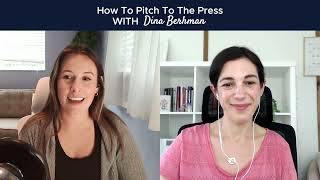
Podcast episode (host: Carly Hill) interviewing Dina Berhman, a former journalist-turned-PR strategist, about how small business owners (therapists/coaches) can secure earned media without paying for PR. Dina explains why PR is a fast way to build authority (third-party endorsement) and reach new audiences, describes how to research target outlets and craft win-win pitches, and presents a five-step process: 1) create a targeted media list, 2) clarify your story and 2–3 expert topics, 3) write a short pitch or press release (press releases for newsworthy launches), 4) contact the right editor/host and follow up, and 5) leverage published publicity (share, create press page, use social proof). Episode concludes with a CTA pointing listeners to dinaberman.com for a PR checklist and membership.
Chapters
Hello and welcome back to another episode of the thriving therapyneur podcast. I have Dena Berman with us today. She is a former journalist turned PR strategist and we're going to talk all about how you can pitch to the press, you can generate more publicity. This is going to help you attract your perfect fit clients without having to hire an expensive PR firm. So we're going to talk about why PR is one of the quickest ways to reach more of the people you're here to serve, how you can stop being a slave to the algorithm, how you can leverage other people's audiences and be featured in publications or maybe even on podcasts just like this. And then Dena has a five step process for pitching to the press and getting featured in your dream media outlets for free. So we're going to talk about that as well. Dina actually came in to the Therapist to Coach accelerator program and did a masterclass for my clients and went over her five step process and I thought it would be incredibly helpful for her to share all of her wisdom and teach you guys how you can get more publicity. So welcome to the show, Dina.
Thank you so much for having me. Yeah, very happy to be here.
Well, your introduction is not doing you enough justice. So can you tell everyone a little bit more about your experience when it comes to being a journalist, publicity, and how you're so well known as an industry expert when it comes to getting free publicity? I think this is such a huge thing. Right. Oftentimes we have to pay to play, or we think we have to pay to play to get more publicity, and you take a firm stance against that. So tell us a little bit more about yourself.
Yeah. So I started my career as a journalist and I did that for about 10 years. So I'm based in the UK and I have written for virtually every newspaper, sort of national newspaper here in the UK and lots of magazines. And initially, I set up my business as a side hustle, sort of doing bits of PR and copywriting. And it was after I'd had my eldest daughter, I came back to work. I had this renewed sense of purpose. I was like, right, I want to go all in on my business. And I have always really loved helping business owners, therapists, entrepreneurs to learn how to do their own pr, because not everyone's ready to hire a PR agency. And the thing that I struggled with the most when I was first starting out in my business was that I just wasn't getting in front of enough people. And because I'd come from that background of Working in the media, I had a bit of a light bulb moment where I realized I need to walk my talk like, I need to do PR for myself. And honestly, going out there and getting visible and getting featured in the press was the biggest game changer for my business. And that enabled me to grow my business to six figures. I got hired by industry experts as their publicist, and I would never have been able to do that if I hadn't have put myself out there.
Right. So it's through your own journey of, well, you knowing how to do this because of your background as a journalist, but when you went all in on your own business, you're like, this is what I need to do. And then it worked. You had your dream clients coming in, and naturally you went on to teach that to other people, as most of us do. I always say we usually walk ourselves through a journey first, and that makes us able to guide people so much more seamlessly when we have walked the walk ourselves. Awesome.
Yeah. Yeah, definitely. And I think being able to sort of experience the power of PR because it is such a powerful thing as well. And now having worked with clients, so it's been about nine years or so that I've been running my business, and I've really been able to see firsthand, you know, the impact that PR can have. And I think so many people maybe don't even consider PR as an option. And actually, it is such a powerful thing and can really help you to uplevel your business.
Right. Or people think it's a later thing. Right. They. We were just talking about this off camera that we. You think maybe you have to be further along. You have to be already well established for people to. To even answer and get published. But you talk about how this is one of the fastest ways that you can actually grow your business, and this is what helped you take off at your initial stages of business. You were in year one when you really started pitching to the press for your own business, is that right?
I probably had a couple of years of floundering in my business, and then I kind of realized, right, I need to start getting myself out there. But so many people, like you say, feel that they need to be really well known, have a really huge following, or be like, super, super experienced. They need to be like the most experienced or the best at what they do, and that's really not the case. And I think that the great thing about PR is there's so many different media outlets out there. There's so much potential, and there's Room for everyone to get amazing publicity. So it's not one of those things where it's like, oh, well, it's only going to be for that person because they're really well known or they're, you know, they've got a huge following. Journalists need people to feature, they need stories, they need content, you know, podcast hosts, they need guests, blogging platforms, they need articles and blog posts. So there is so much potential out there. And I think the biggest thing that holds a lot of people back is them thinking that it's not for them.
Right. Why do you feel like it's one of the fastest ways when you're first starting off and you're growing your business, whether you are at year one, you've been floundering for a while and you're like, all right, I'm ready to put my foot down and stop being this buried treasure trust and let people know that, hi, I'm here, I exist. This is what I do. This is what I'm good at. Why do you think it's one of the fastest ways to grow your business?
I think there's two things, really. One is that I think PR is the most effective way to really position yourself as an expert. And I think that being seen as an expert in your field is so important. I think now more than ever, people really need to feel like they can trust you when they're going to hire you. And I feel that you even just in the past year or the past couple of years, the kind of economic situation has changed, the coaching landscape has changed, and people need that extra layer of trust and reassurance before they make those purchasing decisions. And so being able to see that you're an expert helps people to feel that they can trust you and that you are going to be the person that can help them. So. So pr, I think, is one of the most effective ways for positioning you as an expert, because they call it third party endorsement. So obviously we could all, you know, post on social media and say how great we think we are, but when you have a third party that's endorsing you, so that's essentially the publication is, you know, seen to be endorsing you when you get featured in that publication. Third party endorsement is really, really powerful because it's not coming from us. So to have someone outside of our business, you know, saying that you're an expert or that you're great at what you do is really, really powerful. And it does give people that reassurance that, okay, this is someone who has obviously been featured for a reason. And that's also where the sort of pay to play sort of argument against it comes in. Because when you're featured in the press, and we call it earned media, where you're featured for free, you're not paying to be featured, you're not paying for advertising. Consumers find that a lot more reassuring than if they see that you've paid for advertising. So when you get organically featured in the press, you pitch them and you get featured, it helps people, people to be able to view you as an expert. So I think that's the first thing that's really, really powerful and it can really help you to stand out above the competition as well. So that's the other thing when you're first starting out in business, if you want to really stand out, if you feel like it's quite, you know, there's a lot of noise in the online space when you can show that you've been interviewed on podcasts, or you've been featured in publications, or you've written guest articles, that really helps you to stand out. It really helps with the authority piece and the credibility piece. But also PR gets you in front of other audiences. And I think that so many of us, when we're posting on social media, we just end up talking to the same people. I know, I've definitely felt like that where, you know, you feel like you're having to battle the algorithm even for people to see what you're posting. And it's just the same people like seeing your stuff. And so with pr, you're getting in front of other audiences. And these are ready built audiences. So these are ready made audiences that the podcast or the publication or the radio show or whatever it is, they've built up that audience. They've put in the time and energy not only in building the audience, but also in creating a relationship with that audience. So they have built the know like and trust factor with, with the audience, the audience, know like and trust, the publication, the podcast, whatever it is. And you get to tap into that. And that is really, really powerful. And you don't really get that from many other types of marketing.
Yeah. And when we talk about third party endorsements, it also just makes me think about how testimonials work so well. Right. And coming back to trust. People need to know you, they need to like you, they need to trust you, they need to know that you can solve their problem. People are going to do their due diligence, they're going to check you out, they could be shopping around. And so to your point, these third party endorsements are going to help build trust. Trust is what is the foundation of sales. They're going to check you out, they're going to do their due diligence. It's an intimate decision to work with you, for them to choose you as their coach, especially in high ticket sales. Right. And that's what I specialize in, creating a curriculum. They're going to pay you thousands of dollars. You better bet that they're going to check you out. And I know that most of the listeners here, they're not new to their work. Right. They've maybe done been in practice for decades and maybe they are well known in their community and they have a warm network and they can get word of mouth referrals. But when they're tapping into the coaching space and they're starting to see clients worldwide and there's a lot more strangers out there, these third party endorsements are going to really help you see, stand out. I call it being the Beyonce of your space when you can be known as the expert in your field. Let's talk. Yeah, let's talk more about leveraging other people's audiences too, because you, you segued into that being the second reason for PR working so well, especially when you're starting off or working so fast, rather. And I think that when you are starting out your business from the beginning, whether you're year one, year three, you're not that established yet, right? Wherever you are in your journey and you're feeling like you're not that established yet, when you can leverage other people's audiences, it's like a shortcut to becoming established because your ideal client is all gathered in a hub together. So you got to think about where are they hanging out online or offline? And how can I get in front of this already gathered hub of potential clients and prospects instead of trying to just post on your own social media where you don't have that hub? Where can you go to get in front of this hub of people that are already created for you to shortcut your success? What are some ways that they can leverage other people's audiences?
Well, I think what you've said is, it's so interesting because you were saying about, you know, thinking about where can you find these hubs? That's exactly what I get my clients to do. It's to think about, you know, who is your ideal client and where are they hanging out. So what are the podcasts that they're listening to? What magazines do they like? What radio shows do they like? And so if you don't know that, you can ask them. That's a really good starting point. So speak to your audience, speak to your networks and find out from them what are some of the podcasts that they like, the blogs that they read, things like that. And sometimes, you know, you can really take an intuitive guess. And if you are, you know, a parenting coach, then you can think about. Well, there are tons of magazines aimed at parenting, you know, at parents, that focus on parenting topics. So it's going to be that mix of, you know, doing that research and asking people in your network, thinking about, you know, intuitively, like, where do I think my ideal clients are likely to be hanging out in terms of the media that they're consuming? And also think about, you know, where would you love to be featured? Where would you love to be interviewed as well. So then, in terms of how do you get to tap into these audiences, the biggest piece of advice that I can give you is to try to think about how you can create a win win situation. So, so if you are going to, and it comes back again to this idea of not having to pay for pr, how are you going to secure free publicity? There's a really big popular newspaper here in the UK called the Daily Mail, which I know has a really large following, like in the US and Australia as well, really huge website. And I remember a little while back I looked at their advertising rate card and they sell advertising for thousands of pounds, the equivalent of thousands of dollars. And so if you were to take out a double page advert in the Daily Mail on a Saturday, which is one of their most popular days, it's going to cost you in the region of 80,000 pounds, which is, you know, similar amount of dollars. But you can get that same amount of column inches for free. If you pitch them something valuable because you're creating a win win situation, why should they give you $80,000 worth of column inches for free? Like, why would they give that to you when they could just charge you? Well, they give it to you if you offer them something of value by creating a win win situation. So the biggest piece of advice I can give to you is to always be thinking, if you are going down the route of wanting to get featured, how can I make this a win win situation? How can I get some incredible publicity that could genuinely be like tens of thousands of dollars worth of publicity? How can I do that? Like, what could I offer that would make that publication or that radio host or that podcast host want to give me that amount of publicity. And the way that you can do that is by offering value. And the way that you offer value by sharing your stories where you share, like, your experiences and you share like a really inspiring story or a really, like motivational story and, or sharing your expertise. So that's where you're sharing your tips, your advice, your hacks, your insight, your opinion even. And if you focus on those two things, then you will create a win, win situation and you will be able to generate tens of thousands of dollars worth of publicity without having to pay for it. And I think people sometimes don't realize that that's how it works. And sometimes people will think that they just need to write a press release about how great their business is and send that off to a journalist. But actually, why should a journalist just write about your business for free? Because these publications often, they do rely on advertising, so why would they give you that space for free? Well, it's when you're providing them with something and if you do that, you will get access to their audience. Like that's the fair exchange. That's a win, win situation. You get to get in front of their audience and share your message with their audience because you're sharing value.
People are always wondering what's in it for them? Right, so this is where doing your due diligence comes in. Because journalists are always looking for articles and people to publish and feature. But what do they need and why do they need it? Right? So even when I'm, you know, pitching to the press, like, I will go and I will see what type of articles are they publishing, who do they like to talk about, is there a common thread in the storylines that they're posting? And then I can tailor my pitch to them and what they may be needing and what they enjoy to write about. Therefore, it would be a win win for them and of course it would be a win for me. So if you can play devil's advocate and be like, okay, you know, how can I make this a value to them, knowing that they are thinking in their head, well, what's going to be in this for me? And this goes for anything when it comes to marketing.
Yeah, right, yeah, yeah, exactly. And what you said is so important as well. It's like doing that research. If you can go to a journalist, having done that research, they're going to be so happy to hear from you. Like, having worked as a journalist and I was in, in a position at one point, I worked as a commissioning editor for newspaper magazine and I was like, inundated with pictures and press releases, you know, every day my inbox was filled with them. And so someone who could come to me who had done their research and could really offer something valuable, I would just be so grateful, you know, to receive that email. That's the one that's going to get my attention.
Right. And you have to follow up, too. And I can't tell you because like you said, from your point of view, like, you're getting flooded and inundated with all of these emails of pitches, pitches, pitches. It's easy to get lost in them or just delete them. So you have to stay consistent. You have to follow up maybe at least once or twice. It's not about just sending an email one time and crossing your fingers and hoping that they'll pick it up.
Yeah, 100%. And I think sometimes the idea of following up, it can feel a bit uncomfortable because none of us want to feel like we're being a pest and none of us want to feel like we're, you know, being that annoying person. But like you say, you know, journalists are so busy. I mean, we're all so busy, our inboxes are all overflowing. So you really have to take that into account and not be scared to follow up. And I've had clients where, where, you know, I will have said to them, they might say, well, I had, you know, I haven't heard back. And they'll be like, well, that's the end of that. And I'll say to them, like, have you followed up? And I'll encourage them to follow up. And they've literally secured publicity, you know, in a national publication or an international publication purely because they followed up. And I mean, it's like with anything, the fortunes in the follow up. But I've seen it happen so many times with pr. And sometimes if you write a picture, especially if you put your heart and soul into it and you send it out and you don't get a reply, sometimes you can start to make that mean something and you can create these stories in your head that they didn't like my story, they're not interested in me, no one's interested. Like, I've seen this before where people spiral and they're like, making it mean something and all it is is that they were busy and they missed it. And following up, obviously you don't want to be a pest. Like, you want to do it in, like, really polite, respectful way. But when you do that and you know, you're not annoying them because you are, you, you know that you've offered them something that is going to be a great fit for them because you've done your research like you said before. So then when you're following up, you're simply flagging this opportunity for them to be able to have this great feature, this great interview, whatever it is. And there is so much publicity that I've secured that my clients have secured because they followed up.
Right? Yep. The fortune is in the follow up and you have nothing to lose. It cannot hurt. It is only going to help you if you do follow up. But let's go back to the first step. Let's talk about your, if you don't mind your, your five step process. Because you laid out so clearly, if somebody is listening and they're like, okay, like I'm ready to land some publicity, I'm, I'm gonna, I'm confident I'm gonna be featured in the press, how do I actually go about doing it? What is step one in your five step process?
Yeah, so step one is to make a list of your target publications. So that's where that piece around, knowing who your ideal client is and having that idea about where do they hang out, how do I get in front of them? Because if you're going to do pr, you really want to be intentional and strategic with it. You don't want to take a scale, scattered approach because you're going to get scattered results. So you don't want to be, you know, writing impressaries and firing it off to like a thousand different places. You really want to be very tailored and intentional in your approach. So having that clear idea of which media outlets are going to get you in front of your ideal clients is the best place to start.
Right. So this is where the market research comes into play. Also, like a virtual assistant could help you with this. I would recommend creating a spreadsheet, a media list, and you'll have everybody's first name, their last name, their email. Is it a podcast? Is it a website? Where is it that you're trying to be featured? And then once you have this big master list, then you could maybe say to yourself, okay, I'm going to send one pitch a week, I'm going to send three pitches a week. And you can just kind of go down your list and you could then spend the time deeper diving and customizing your pitch by looking at, you know, what, what have they talked about recently on their podcast or what articles have they written. And it kind of breaks down the process. Okay, so that's one is creating your media list. What's two?
So the second one is getting really clear on your story and your expertise, because those are, like I say, the two main things that are really going to be of value to any kind of journalist, podcast host, radio host. And so you just want to be clear on, you know, what's your story. And, you know, there'll probably be more than one story, but starting off with that origin story, like, how did you come to be doing what you do now? How did your business come about? What's the motivation behind your business? That's a really good starting point. When you're starting to think about your story and what you might be able to share in terms of your story in the press. And then you just want to be really clear on what your expertise is. Like, what is it specifically that you are an expert in? And what are some of the topics that you would be really happy to be interviewed about or to write about. Because when you do pr, you want it to feel fun. Like, you don't want it to feel like a chore. So you want to pick topics that you just really enjoy talking about, writing about, that you feel passionate about, that you feel, feel confident to talk or write about. And so especially if you are someone that's, you know, like, you say, been working in a practice or whatever and just thinking about, you know, what have you learned over the years? Like, what are some subjects that you just know so well, maybe you've done training on them or you've got certifications or whatever, and those are going to be your expert topics, and they don't.
Have to write a whole novel. Hero's Journey. And their expert topics can be literally bullet points. Right. Because they're not gonna.
Yeah.
Like, if they open a massive email and it's your whole entire story and it's pages long, like, they're not gonna read it. Right.
So, yeah, yeah, brief is good.
Yeah. Keep everything short, sweet, to the point. What are your three expert topics? And if you do have a really long bio or brand story, Hero's Journey, copy and paste it into ChatGPT and be like, hey, make this into five sentences. Right?
Yes, yes, definitely.
Okay, perfect. So then, what's step three?
So then you are going to write your pitch or your press release to send to the journalist.
And.
And so a press release is something that you would use if you are. If you have some news that you're announcing to the press. So if you have a book coming out, if you're launching an app, if you are maybe doing some kind of like a retreat or an open day or something like that, or maybe if you've won an award, that kind of thing. Then a press release you would use because it's got going to announce your news to the press. And a press release, you would actually write it in the style of a news article. So you're actually going to write it in like the third person as though you're writing a news article. And press releases are really great if you are looking for any local or regional publicity. If you are pitching to any local or regional newspapers, for example, say sometimes if you send them a press release, they will literally copy and paste it and run it as is in the paper. So that's why you want to write it up like a news article, so that if they want to, they can use it or you know, they might read through it and say, right, we want to interview you or just ask you some extra questions, something like that. So press releases, like I say, are only going to be used for those very specific instances. Otherwise you're going to do something called a pitch, which is where you're essentially pitching, pitching your idea for an interview or an article to the journalist, the podcast host, whoever it is. And so that would be instead of writing like a, with a press release, it's like a whole page and you're writing it like a news article with a pitch. It's shorter. You're going to write an email with some bullet points and you're going to pitch your idea for a feature. So if it's a podcast, for example, you would give them your idea for what the interview would be about, like what the episode would focus on.
Yeah, those are my favorite to do because they're short and sweet and easy. Right? So it's like, hey, so and so. I've been loving and enjoying listening to your name of podcast. I especially loved your recent episode on XYZ topic. And then you could explain a little bit about who you are and then it's your expert topics. This is, you know, what I specialize in. These are things that I could talk about. A quick bio about you. And I thought that this would be of interest to your community. If you are looking for more, if it's a podcast, if you're looking for more guests, I would love to be on it. If you have any questions, let me know. Short and sweet like that, right?
Yeah, yeah, definitely, yeah. Because I think again it comes back to whether it's a podcast hosted journalist, whatever. Like everyone is getting so many emails and they're so often overwhelmed with sort of messages and things like that. You just want to make their lives as easy as possible because ultimately it's about creating this win win. So even from the moment that you first contact them, it's like, how can I make this easy for them so that they want to feature you?
Right. And when do you have to write your own article and when do you not have to write your own article?
That's such a good question. In general, I would say you typically don't write the article because a lot of places when you pitch something to them, they will then say, you know, we'd like you to put an article together, and we want this number of words and we want this headline and we want it in this style. So you wouldn't want to write the whole thing first before getting that information from them. And, you know, there's so many different ways that you can get featured in the press. Sometimes you may be quoted as an expert in a magazine article. So you're not actually writing the whole article yourself. You're being interviewed. The journalist may send you questions on email, or they may do it over the phone, and then they're going to mention you in that article as, you know, an expert in xyz. And these are your thoughts. So in general, you don't want to put all that time and effort into writing the whole article unless you know for sure that that's what they want. So sometimes, which is even better, all.
You gotta do is do the. Just do the pitch.
There's like, no reason to not do it. Yeah, it's like, write a nice quick pitch and get it out there. And I think this is the other thing that put people off because, you know, they think it's going to take ages. And I have to put so much into it and it's really not the case. And I, you know, I work with so many business owners who are super busy because, let's face it, we're all wearing like all the hats. So you really can fit PR into your schedule. This is the other thing that, you know, I think so many people think that they don't have time to do it. And honestly, the way that you talked about it at the start, where you were like, you know, you can just get a spreadsheet together, get a VA to help you. If you have one, do one pitch a week, whatever it is that you can fit into your schedule, you can make it work for you and you can get incredible results doing that. You don't have to be doing this as a full time job. So yeah, there are maybe a few sort of online blogs or online publications where they will actually ask you to submit a fully written article. But you will see that on the website they will actually state that if they want you to submit the whole article and if that's the case, they will actually normally have some kind of writers guidelines on their website where they will say, you know, submit the fully written article. It needs to be this number of words, do it like this. But aside from that, the majority of the time you're not going to write anything until you've made contact with the, the media outlet, whatever it is. And there's so many different ways that you can get featured. It might be that they do, you know, a profile style piece about you and they're gonna do like a Q and A, or they might interview or, you know, there's so many different things that don't even necessarily involve you having to write a full article. So yeah, don't ever let the thought of it taking too long or you having to do too much put you off because it can be something quite quick and easy that you fit into your week to week schedule and you can have this as an ongoing thing that you're continuously getting featured in the press.
Right. I love it so much. So what's number four and five? After they were on number four, I believe. Right. So they, they send the pitch. They write up the pitch and they send it and then what?
Yeah, so the fourth step is to connect with the journalist or the podcast host or whoever it is that this is where you're actually sending your, your pitch or your press release out. So in general, I don't recommend, apart from a few exceptions, I don't recommend using a generic email address to contact a journalist. Sometimes you'll see the email addresses, you know, news, whatever. There are a few exceptions, but on the whole you want to look for a specific person to contact. So obviously if it's podcast, you want to contact the podcast host and there's either going to be an online form to fill out or there's going to be an email address of who to contact. And then if it's for, you know, a publication or like a blog or whatever it is you want to, as far as possible look for the person that would be in charge of the section that you want to pick. So if you are pitching a news story, then you can look for a news editor. If it's a feature idea, you can look for a features editor. If you're writing about, like I said, you know, like parenting, relationships. You know, you'd look for a relationships editor and it's going to be different for different publications. But that's the best starting point is to just start doing that research and thinking which part of the publication or which, you know, journalist would it make the most sense for me to contact?
Makes perfect sense. So for example, if you want to be on Psychology Today, don't go to the Psychology Today website and just get their generic email. Actually go through all of their different segments, right. And find somebody, find an editor who writes on the parenting segment and then find John's email instead of just emailing info Pychology Today, it's John at like, it may take a little bit of digging. And again, this is like where your VA could come in and help you kind of do this research, but you'll have a higher response rate is what I'm hearing you say.
Yeah, yeah, yeah, definitely. A lot of the time with the generic email addresses, you're probably not going to get reply because they just get so many emails coming in. And it may be an inbox that's monitored or it may not be. So as far as possible, you want to try and look for that individual person to get in touch with and then what's next?
What's the last step?
So the last step, you've obviously sent off your picture, your press release, and because you have taken that time to really craft it really well and include, you know, think about your story and your expertise and all of that, then you get a yes back from them and they're like, yeah, we want to feature you. And the article comes out. The final step is to leverage your publicity. And this is the bit that so many people forget because I think that you obviously put that work into securing that publicity and that article, that interview, whatever it is. And I think so many people, you know, the interview comes out, the article comes out and they're like, oh, okay, that's it. And you know, if you're listening and you've ever attempted PR yourself, you may have even experienced that where you do it and it comes out and it feels like a bit of an anti climax because you kind of want waiting for something to happen. And you know, there's a few reasons why that could be. It might be that you didn't pitch the best place to get in front of your ideal clients, which is why we want to be really, really intentional with the actual places that we're pitching. It might be that what you shared didn't speak to your idle client. So that's why we want to be really clear on our story and our expertise, because those things are going to be really appealing to the journalist, but ultimately we want them to be really appealing to the audience, which is going to have your idle clients in there. So I had a client who's a relationship coach, and she shared a first person essay in an online publication that's aimed at millennial women, because her audience is millennial women. And she brought in 1500 new leads from that one article because she was very targeted, not only in the publication getting her in front of the right people, but also in what she shared. It was an emotional first person essay. She shared her story, her experiences, but then she also shared, you know, her expertise and how she works with her clients. So all that is to say, you want to make sure that you're really focusing on all of these elements, and that's going to help you to secure the type of publicity that moves the needle. But the final part that so many people forget is leveraging the pr. So, so when that article comes out, when that interview comes out, you really want to make sure that you're sharing it as widely as possible. You know, send it out in your email newsletter if you have one, share it across all your social media channels. You can post it into different Facebook groups, if you're in different groups that allow promotion, tell your clients about it, like, tell everyone about it. But then also you can add it to your website. You can start creating a press page on your website and you can have all of those articles and all of those interviews. And then people who are coming into your world who are new to you that don't know you when they land on your website and they see, oh, okay, she's been featured in here and here and here. That's really going to help with that know, like and trust piece that we were talking about earlier. So you really want to make sure that you're capitalizing on each and every piece of publicity because, you know, you've put in that time and energy to do it, and you don't just want to kind of let it go to waste. So you want to make sure that you're sharing it and sharing it more than once as well. Because we know what social media is like. Not everyone's going to see it if you post it once. So you want to make sure that you're really putting it out there and sharing it, putting it onto your website. You can create a as seen in strip of logos. So when you start getting featured in a few different places, you can say as seen in. And then you can do something very simply. In Canva, you can create a little strip and put all the different logos on there. And that is so powerful. It's such an instant visual indicator that you are an expert. You're someone who knows your stuff. You've been featured in all these different places. You can put that on your website, you can put it on all your marketing materials, on your Facebook banner, like everywhere sales pages. Then the final part is you can actually use any publicity that you get. You can use that to help you to get some more PR opportunities. So when you've been featured on a podcast and you want to pitch to a slightly bigger and more well known podcast, you can use your podcast interviews that you've done to be able to say to them, here's somewhere that I've been pitched before. Like here's, here's an example of an interview just so that they can hear, okay, this person speaks. Done this before. And it's the same like if you write an article and that gets published, you can use that if you want to start to pitch to bigger and more well known publications and you can give them that social proof almost that okay, this person knows how to write. They've done this before.
Right? Yeah, I'm an experienced guest. I was just recently on Blah blah blah podcast. You can listen to the episode here. That's a really good secret. So let's challenge everyone to go send at least one pitch this week and get out of your comfort zone. Get into the habit of sending out pitches and practicing following up with people. I think it's not as hard as we think it is.
Yeah, it's not as hard as you think it is. It can be. You could be one email away from getting that piece of publicity. I've had clients where their articles have gone viral and they've ended up being picked up by like all these different publications in all different countries. You know, you're just one email away from that happening. And even if you send out a pitch and you don't get the response that you want, it doesn't matter because you can pitch them something else or you can take that picture and you can send it somewhere else. So it's never like this one time thing that you just do it once. You know, you get to. I love helping my clients to get consistent publicity because then it creates that compound effect where you're the person that suddenly people are seeing them everywhere. So yeah, you get to do this sort of over a period of time and, you know, it doesn't need to be difficult. It is something that any business owner can do.
Absolutely. And you work, I know you're based in the uk, but you work with clients all over. You have tons of clients in the States, you have membership programs. So where can all of the listeners find you and get all of your valuable resources?
So if you head over to my website, it's dinabarman.com I've got a PR checklist on there that actually takes, takes you through that five step process and it has action steps and prompts for you to follow. It's a fillable booklet. So if you download that, that is the best starting point because it's going to lay it out for you exactly what you need to do if you want to start going out there and pitching the press. And I also have a PR membership if you want to have that support from me, to know, you know, which media outlets to target and how to find the journalists and what news angles to use and all of those kinds of things. So it's called the PR Power Membership and you can find more information about that on my website as well.
Incredible. Yeah. I will also link all of this in the show notes for everyone. So thank you, Dina. You are a wealth of knowledge when it comes to all things pr. Everyone go ahead and get your PR checklist and start pitching. You can totally do it. Thank you, Dina.
Thank you so much for having me.
More from Carly


How Therapists Can Use Mentaya To Get Private Pay Clients Reimbursed (Without a Superbill)



How a Seven-Figure Therapist Actually Builds Wealth (It's Not What You Think)

“There was always this idea in my head, but I didn’t know how to formulate it until I met you.”




