Overcoming Limits and Coaching Success Strategies with Carly Hill
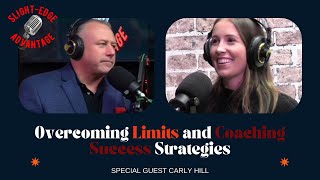
This is a recorded in-studio interview between host Jeremy Torsk and guest Carly Hill (LCSW). Carly recounts her path from community mental health and private practice to launching an online coaching business serving therapists (especially women). Key tactical topics: legally/ethically adding coaching as a clinician, moving from 1:1 therapy to one‑to‑many group/cohort models and recorded courses, hiring revenue-driving roles (VA, appointment setters), pricing strategy (move toward higher-ticket offers), leveraging other people’s audiences, and daily social posting. Hyper-specific milestones mentioned: first year revenue ~$80,000, and approximately $1,000,000 in revenue in 11 months; started private practice three years ago and has been coaching therapists for two years. Carly’s mission is helping therapists beat burnout and gain freedom, and she runs CarlyHillCoaching.com and authored a book called Therapreneur (≈1,000 copies sold).
Questions this video answers
About three years ago (from the interview date).
Two years.
Approximately $80,000.
About $1,000,000 in 11 months.
CarlyHillCoaching.com.
Chapters
Foreign.
Welcome to the Slight Edge Advantage. I'm Jeremy Torsk, your host and I want to know in the comments what we got the year coming up. The it's ending. This is November, I don't know, 29th. What are you going to do to finish the year strong? Because your, your competition's taking it off, they're putting it on cruise control, they're out at the malls, they're shopping, they're on Amazon getting their cyber deal on. Your Slight Edge Advantage is to get more done. So tell me in the comments, what are you going to do in the next couple weeks to really set yourself off for January 1st? Coming off hard today, we have a really cool guest. Today's guest on the Slight Edge Advantage built a successful and sustainable online business. An LCSW and business strategist. She helps female clinicians venture into the coaching world by teaching everything from learning the difference between therapy and coaching to dialing in your niche. Marketing, sales, branding and of course mindset. It's all with the focus on helping clinicians impact more lives and live a freedom based life. Welcome to the Slight Edge Advantage. Carly Hill, how are you doing today?
I'm doing fantastic.
I'm glad to have you here in person. You know a lot of people come in here and they do the zoom thing or the, the stream yard thing but nothing beats the live in studio conversations and the energy right down the street. Isn't that great?
Yeah.
And you're moving a little further away though.
But I'll be back eventually.
Good, good. I'm glad you're coming back. So tell me, tell us a little bit about yourself. We're, you know, we talked about being clinician and, and coaching and really it's taken off but really briefly background. How did you get there? Because I know that your story is you're going to relate to a lot of people. A lot of people need to talk to you.
Yeah, absolutely. So I'm a therapist by trade. Lcsw. It's licensed clinical social worker.
Licensed clinical social worker. Makes sense.
Yes. Yeah. So then I did the whole therapy thing, started my private practice. I've been in community mental health and then I got into the coaching industry and that's where it really all took off.
Boy, you know, that's. I found the trick to making a small fortune in coaching a couple years ago and I started with a large fortune. I spent it all and I had very little small fortune left. So the trick was you got off to a really well, you've had incredible results over the last 11 months and we're going to kind of go into that. Part of being a coach is. Is walking in the footsteps of the people that you're telling what you've done. So I subscribe to the, to the school of. I'm never going to tell you what to do. I'm just going to tell you that if I woke up in your shoes tomorrow, this is what I think the top three things I would concentrate on because I've probably been there. But I'll never say you need to do A, B or C. Yeah. So tell us about your little journey. A little journey. I didn't mean to say that, but your journey of going through your getting expertise in the clinic world, the therapeutic world, because I think that there's a lot of value in. You've earned your stripes, you know, And I want you to tell a little bit about that.
Yeah. So I would say 90 of us are our own ideal client, to your point. You know, we had to walk ourselves through something. We had to hit some type of struggle. And then it's only natural to guide and teach. We attract those people who are a couple steps behind us. Right.
Okay.
So to my story. I mean, I started out as a social worker. I was doing the community mental health. I was going into homes and schools. I was doing.
I liked what you said about a lot of the. The pickup truck tailgate.
Oh, yeah.
Therapy on the hood of the cars.
Denny's parking lot.
Yeah.
I mean, I was banging on their.
Windows because you were going where the people were.
I had to hit my hours. Right. And so like, if she was sleeping, she better wake up because I need to do my therapy session and get my hour.
That's great.
Right? I mean, seeing 30 clients a week, it was not suspended sustainable whatsoever. But I went through the trenches and I got great clinical experience straight out of college. I mean, I definitely recommend it, but I needed to move on to make more money.
Yeah.
I was making 18 an hour with a master's degree.
Wow.
It's an insult, you know.
That'S crazy. Yeah. 18 bucks an hour with a master's degree. That is surprising. A lot of work. Was that eight years of.
Well, I got my master's in a year because I was in an advanced standing program.
Okay.
But yeah, you're labeled an intern when you graduate with your masters. That's how many more of an insult. Right, right.
And now you're. And now you're going out beating the the ground, trying to get your hours with people who you're almost pulling their teeth to get the therapy that they need.
Yep. Then I got licensed and I marched in to hr and I'm like, I deserve a raise.
And how'd that go?
Not well. Not well. So I needed to move on, so I did. I got a different job. I worked at a brain performance center. I was doing QEEG brain scans. Cool.
That sounds interesting.
It was so cool.
I mean, much different environment. You're working with people with some brain. What do you call them, anomalies?
Yeah, I mean, it was all sorts of stuff. I mean, we did peak performance with athletes. We had people who had strokes and they couldn't speak. We had kids with adhd.
So now you're seeing A, people who really want the treatment that you're working with, and B, you're seeing results in real time. Within a couple of weeks or months, you can see changes happening in people's behaviors because of the work that you're doing. Way different than working with clinical therapy with people over hoods at Denny's.
Yeah, I was still doing therapy there in addition to the brain scans, but it was a totally different vibe. I mean, different population. It was. I could park my car and go eat my lunch at a table and stay there the whole entire day. I mean, everything was different about it. It was awesome. But they shut down when the pandemic hit.
Yes. The plan so that the pandemic is a big hit. I mean, hit every single person. It's my. My industry, actually, we did $80 million that year instead of 60 million, because there was. We were digging in Virginia and West Virginia and Texas, and there was no inspectors, there was no traffic, there was no permit issues. And so for our industry, we actually did had one of our best years ever. But in the large scope of the world, a lot of people had to make some changes because they were not a place in their life where they could be at a job where they could work from home. So they took a big pay cut, like maybe all over their pay cut. And most people are only a few paychecks away from Dire Straits. And the government did their best to help people keep them in their homes. But you still didn't. You still had the arrears.
Yeah.
So the pressure. How did that. When you started going. Changing gears to helping people, did you work with that? A lot of people, like, stressed out from changing their. Their industries as well.
Absolutely. I mean, everybody was seeking therapy at that time.
Yes.
You know, shit was hitting the fan in all different corners. I mean, for myself as well. I mean, when I got laid off, I What did I do?
You're your best client. Right.
I went and I panically got a job on BetterHelp for $30 an hour. That didn't last very long, but I was like, I don't have a job. You know?
But you learned something there too, right. While you were there, you saw some big.
Yeah. It was the best thing that ever happened to me. I mean, scary at the time, but 30 bucks an hour in hindsight.
Yeah.
Yeah. Looking back at the changes that it helped me make.
Right.
Helped therapists make to work smarter and not harder. I mean, you recognize all of the gaps.
Yeah.
Right. And it was something I always wanted to do, was start my own business. So that's what it led me to, was starting my own private practice.
That's huge. So I'll give you one of those for that because that's. That's big. Starting your own business is life changing.
Yeah.
Now that was how long ago?
That was three years ago.
Three years ago you started your own being your own, a therapist on your own, looking for your own clients.
Correct.
Okay, so for. For two years or so. Is that about how long you did that, building that practice?
I did it for a year.
And you did it virtually.
Yep.
And only with people in Florida, because that's all your license covered you.
Correct.
For. So you're. You were limited geographically to people that you could. I mean, there's plenty of people in Florida who need you. Yeah. And you're only one person.
Yeah.
So you've got a limit.
Yeah, I was full.
Yeah, you've got a limit. You're working from home a lot because you can dictate your own hours. And the more people you help, the more money you make. But you can only work so many hours in the time, and you don't have a family yet, a children yet. So you could really not feel guilty about working those 10 or 12 hours.
Yep.
But what did that tell you as far as. Did you do some math and went? You know what?
You're capped on your income. Yeah. You're trading dollars for hours. It's not the best business model. Right. I mean, if you're taking insurance, forget about it.
Right.
You're only getting paid if and when somebody shows up. And again, you want to make more money, but you don't want to take more clients.
Right.
So then what do you do? You have an option to start a group practice, but a lot of people don't want to do that. I did have therapists under me for a little while, but I didn't Love it.
Right? Yeah.
I moved on to the coaching space.
Now that's. That's a. There's a big pivot there. How long ago was that on the timeline?
So at the year mark, I had a realization that I was actually doing coaching the whole entire time in my, quote unquote, therapy practice. That's cool, because I'm a therapist by trade and I had a private practice, so I was doing therapy.
And the people you were working with were people who transitioned a lot of them or were they professionals? For the most part.
So at the time, this was just clients. I mean, they were. I was doing women empowerment coaching. I thought I was doing therapy, but they had a divorce, they were moving. They were going through life transitions, and I was helping them with these situational, non clinical, less severe problems. And I'm like, wait a minute, I'm coaching, I'm not doing therapy.
How did you realize that you were dealing mostly with women?
It's just what happened.
One of those things that happened organically.
Yeah, organically. It's just who I was attracted.
So you didn't come up with some super intelligent marketing words that targeted women in a certain age, in a certain sector?
My messaging was I realized how much I didn't know about marketing and sales and business, which led me to study the online coaching industry. And I'm like, what do these coaches know that we don't know and how are they so successful? And it was also during the time of me recognizing I was a coach, and I'm like, well, how can I add coaching ethically and legally? I'm a therapist, so I'm speaking to attorneys, and I'm piecing this all together so I can not have a cap on my income and I can work smarter and not harder. Like, I was on a mission for myself. It was never my intention to teach therapists.
You had a. You had a. You were driven and you had a vision and you wanted to redefine yourself and your. Your titles because you put a lot of time.
Yeah.
Into being the therapist. Right. The LCSW or the lc. Right.
No. Yeah. You got it.
How do you go. We just take that hat off and it's really just putting a different hat on. That looks a lot like it, but with. Without the limitations.
Yeah.
Was that hard to do?
No.
Good.
It was seamless. It was natural progression. And I find that a lot of therapists are doing coaching already.
Yeah.
But they are limiting themselves.
And a lot of coaches. A lot of coaches, even though they're not licensed, are doing therapy.
Well, they think they are.
Well, they're. No.
Or they shouldn't be doing. Some of the things.
What they're doing is when people come to them to help them with, let's say, grow their business, they spend the whole time talking about their marriage and about their attitude and about how they deal with their kids. And those are all therapeutic things that have nothing to do with their business necessarily. They get on this thing where, oh, now I'm just going to help you with this instead of saying no. That's another thing that we can find you help for. We need to talk about your business. What are you doing today that's going to get you more clients?
Right.
Where? What problem are you solving? Well, I can't think about that because my wife doesn't want me working on it. I got to fire you.
Yeah. The mindset.
Yeah, that's. That's not.
Can be coaching.
It is coaching, but when a lot of the clients, business coaches, spend way too much time with the stuff, that's not moving their business forward.
I agree.
And so they're. They're just not clear.
Yeah.
And so this is. You have the best of both worlds where you can really help people stay in tune with being therapeutic. But also, you came to me for coaching. Yeah. We're going to help you do that in a healthy way. But you, you know, when you're walking that line.
Yeah.
And a lot of people don't know that. To your point.
Well, it's awesome that I'm working with therapists because they coach themselves through these things, and therapists have their own therapists and they do their own work.
Yeah.
So, yeah, we work on their mindset. You know, I have a mindset coach on my team who helps my clients, but I'm here to help them make more money, leverage their time, and buy back their freedom and flexibility and security.
So let's dig into that for one second. You. You decide. I want to really be a coach in the therapeutic space, but a coach?
Yeah.
When do you start going? Well, I need a team. I can't do it all myself. If I have people, I need people to help me with my clients. How long does that take? Development, like, what comes first? Because you have to have clients to get money to start building, building a team. And how'd you recognize that?
Yeah. So it's a good problem to have when you need a team, and you'll know intuitively when you need a team and you need to delegate so that you can hit higher revenue goals and.
You have to sacrifice a little Bit at first.
Yeah. Well, you want to be smart about your hires and you want to hire revenue drivers first.
Yeah. Right now we're talking.
So the first person that you want to hire is maybe a virtual assistant who can help you with tedious tasks so you can focus your time and energy on other tasks that can drive you revenue. But also you can hire community manager or an appointment setter who can go out and have conversations on your behalf with potential clients to then book them on your consult call so you can close the sale.
Right.
And they're commission based.
Right.
So it's a revenue driver.
Yep.
And it's no money out of your pocket. They're only helping you.
And you find, you help people find those.
I do, yeah. Yeah.
I won't give. You have to give away the whole secret here.
But yeah, no, no, when the, when the time is right, you know. But you can't hire for a position that doesn't exist.
Right.
So if you don't have leads and you don't have prospects.
Right.
You can't hire an appointment setter and.
Yeah, they're not going to go.
Look, all of the lead generation for.
You build you an email list and everything that's, that's, you can hire somebody to do that, but that's not that person. Yeah, yeah.
So there's a order of operations in starting your coaching business, growing your coaching business and scaling your coaching business. And I like to segment it in those three ways.
Yeah, yeah. So when you're working with people, are they mostly new to coaching your clients? I'm talking about. Yeah, yeah, the people who want to be coaches and.
Yes and no. Because they're therapists. Right. So, so they've been coaching, they're trying on a new identity, but they're not new to this work of helping people. They're new to the online space and putting themselves out there in a much different way than they're used to.
Is it freeing?
You find there's a lot of undoing that we have to do.
Yeah.
Because as therapists were taught, don't self disclose, don't share your story.
I'd have a hard time with that.
Don't clients only come to you when shit hits the fan? Don't be seen. You know, agencies try to keep you small and so there's a lot of undoing when you are showing up, you are sharing your story and you are tapping into the online coaching industry that.
Is saturated because that's the way you can connect. Right. By identifying. Yeah, yeah, exactly.
Yeah. Especially if you're your own ideal client.
Right. Because again. And you can't tell anyone what I would do if I were in your shoes. If they don't know that you've been there, they can't trust you. Right. Unless you. Unless they know.
Yeah, exactly.
Been. You've been through this.
Yep.
So that. That's a huge difference. I didn't really think about that. And since now, how long would you say that you've really been in your stride with this model?
Two years.
Two years.
Two years I've been coaching therapists to start their own coaching business. From A to Z. From filing their business license. Produce. Protecting their license. Creating, marketing, Selling. Delivering.
Okay.
Their signature coaching program so they can work smarter, not harder.
Yeah.
Teaching them exactly what I was doing. Right.
How much did you make revenue? High level. First year. You're two years now. The first year, you know, you're building.
Yeah. First year was about 80 grand.
80,000. So this year, one million. One million. One million.
11 months.
Bam.
Yeah.
Huge year. From 80,000 to a million. Not even over one year. It's not even over because like I said in the intro, we still got time left on the clock.
Yep.
It's not even. We have more than a month, a month and a day or, you know, it's a lot of time. And even with the holidays, this is the time where people are sleeping. That you can really make some moves.
Quantum leaping.
Quantum. I like it. I like it. I'm gonna wear out my lightning button today. You are. I mean, that is not normal. It's not normal. What were the. The biggest things in the slight edge advantage is just doing things that other people aren't doing and doing them consistently. And what do you think the two or three biggest things that change from 80,000 to 1 million fricking dollars of revenue? And we don't get into. You need to have margin. We know that there needs to be, but we're not going to get into that part of this. It's just, you know, a rising tide solves a lot of problems. So to go from 80,000 to 1 million.
Yes.
What do you think are some things that. If you were me and I was one of your newest people coming on. Where do you tell them? First you have to kind of think about this, this and this.
Working smarter, not harder is the immediate answer. I mean, when I made 80,000, I was trading dollars for hours with a cap on my income where I could only see X amount of clients. When I tapped into the group model, the one to many model, and I Started creating recorded courses and really leveraging my time. I. I was able to do so much more and hit so many more people.
The scalability goes to the roof when you start. It was a no brainer living in that pre recorded Evergreen stuff. Do you do the. I don't know if it's manipulation, I don't know how ethical it is and it's legal, but the people that do, and I've fooled around with this where they do webinar type stuff. You have comments that are kind of, they're kind of canned. What do you think about that practice? So it looks like there's.
I know what you're talking about. Yeah, Yeah. I don't personally do it. No. It's. Webinars are a little bit out, in my opinion. I like to do a VSL funnel, a video sales letter funnel. It's my bread and butter in my own business and I teach my clients how to implement that.
So your courses though, are they somewhat interactive at all? I know because they're pre recorded, but are there? How do you find, how do you make them effective?
I teach off of PowerPoint slides and I have all of my modules and my recorded trainings, but I have five group coaching calls a week that clients can come to and they can ask questions about what they're learning and implementing in the recorded course in live time.
Yeah. So it's self paced, but there's a lot of interaction. Because they have availability to you throughout the week.
Exactly.
Yeah.
And my support coaches, I mean, that's a big help. You need copywriting help, you need website help, you need branding help, you need mindset help, you need sales help.
Like how long are those calls?
An hour. Typically.
Typically an hour each.
Yep.
Big ticket number is considered a big ticket client.
High ticket.
High ticket. Yeah. And you think that's a big mistake people make is they don't value their time or their experience. Or I can't charge 15 or $20,000. I'm going to charge, you know, 20 $500.
Yes.
Yeah.
Well, you got to start small. Right. But you can't go from Walmart to Tesla. So you, you know, start off at 2500 and then you raise it to 5000 and then you raise it to 7500.
Stop buying it.
Raise it to 10,000. Right. As you're adding more value and you're getting feedback from your clients. But a lot of people think that they should start with a mini course or a low ticket item. But if you have lofty revenue goals. How many? $47, ebooks, do you have to sell to hit your revenue goal? It just doesn't make sense.
That's right.
And you have to be really good at lead generation and the tech behind selling a low ticket item, you're going to have refunds. You have to have a large audience to hit that percentage. Low ticket items are a scale strategy, not a foundational strategy.
Low ticket item scales. Exactly. To get in front of those audiences though, what was your, you know, the thing that clicked that started working? Because I'm sure you tried a lot of different things. What do you think was the most effective in broadening your exposure?
Leveraging other people's audiences.
Love that. Getting in front of sound like a professional speaker.
Yeah. Leveraging other people's audiences. It's the fastest, smartest way to grow an audience from scratch.
So you have to be of value to those people so that they'll put you in front of their audience.
Right?
Yeah.
And you have to niche down. Otherwise it's like finding a needle in a haystack.
Yeah.
So where are your ideal clients? Hanging out offline or online.
Yeah.
And then go there.
I think what I make my, the point that I drive first is solving a problem that people have and doing it in a different way than other people are doing it. At least articulate. Start off with articulation. Can you state pretty simply and plainly the problem you solve? I bet you 90% of people who want to do anything in life can't articulate what they want to do in a very simple three sentence fifth grade vocabulary.
You know, problem to solution. So that biggest outcome.
Biggest outcome. Yeah. They. I find people love using five dollar college words in market and copy.
You know, you should use fifth grade language.
Absolutely you should.
100.
Yeah. Yeah. And very few. Lois Kramer's professional speaker and I think she's in Phoenix area. She says she calls it. Well I was trying to remember her name so much I forgot what she, I had with her. Her saying about fifth grade language. It's about being efficient with words. You know just the, the, the efficiency that you use your words is, is really important. Write that down and then write it. Less words. And then write it with less words. And write it again with less words. Yeah.
Trim the fat, cut the fluff.
Yep. Until you can say here's the problem I solve.
Yes.
And here's how I solve it. Because that's your difference maker. That's your, your advantage is telling people what you do. Because if they don't understand what you do, they're not going to Buy you.
Yeah. And being the Beyonce of your space, that's what I call that credibility. And your point of difference. Right.
I use Beyonce when I come to a lot of my stages. I'm a survivor.
Yeah.
But I never thought of myself as being the Beyonce.
Yeah, you're the Beyonce of your space. You got to be.
Yeah. My queen bee.
Yeah.
Find my inner queen bee. That's funny. So what is your biggest passion? Like, why are you doing this?
To help therapists beat burnout. I was so burnt out, but I loved what I do. It was agonizing. Like, I just wanted to help more people. I knew, not in a cocky way, that I was good at what I did. I was helping so many people, and I was like, damn, dang. If just more people knew about me, I could help. I could save the world. Like.
Yeah.
But how do I be seen for my skills and my knowledge and how do I do this in a way that I'm not sacrificing my own freedom?
Yep.
And that's my mission, is to help therapists beat burnout have that freedom, flexibility, security, while simultaneously impacting the world.
And you did all this from your home?
Yes.
Just zoom camera, computer, and go.
Yeah. I have a local South Florida networking group for a therapist. They're kind of like mini retreats. We get together bi weekly. We have cheese, wine, guest speakers. I'm the founder.
Okay, perfect.
Yeah.
So you still have all these avenues.
I do.
It's like the spoke with the hub in the middle, and then you've got to have all the spokes going out to the tire that moves forward. But all of these spokes, you know, if you look at momentum, that's what momentum is. It's those spokes going around and loading.
The top one up breeds momentum.
Yeah. And. And that's where you go forward progression. So that was an interesting thing. You're. Even though you were thinking, I need to be national, but you also need to be local.
Yeah.
And that's really the key for you is having both those local celebrity. Yeah. And Boca.
National Beyonce of your space.
I love it. Yeah. Because we all have to be local and national if we want to go big. Like, very few of us can just stay local and go big in a few industries. But with the stuff that we have at our disposal now, there's no reason to do that.
I agree.
You know, when you could do it so much more efficiently going national from a small space. But the trick is that niche. How'd you figure out that that niche.
That of who you Help of helping therapists.
Yeah, therapists. And mostly women therapists at this point. Right?
Yeah. Well, it was just my own story. Right. So, I mean, I was on a mission. You knew that the best crack the code for myself. Like, how can I work smarter, not harder.
You could use tacit language and regular, you know, language to really cross over between helping people understand what you're helping them with. But because you understood therapy, that world.
So much, I knew exactly how to speak to them because I was them. I am them. Yeah. I am them. Like I am speaking to myself.
Yeah. Yeah, I like that. And that's really what I like to do too. That's why I go back to Dave Ramsey. You don't have to agree with everything he says, but how he says it is damn effective.
It's relatable.
Yes. Yeah, I love it. Tell us what's next for you and how can we help you?
Going national. I was just gonna say, like, I'm ready to blow up.
You have blown up. You're ready to go to two commas. You are two commas.
But the fifth, I'm the two comma club.
You need the 1, 2, 3, 4, 5, 6, 7th. You know, need the seventh.
Yeah, but I'm. I'm ready to spread my message and just.
You should be at your pace. You should be at seven digits by March, I think, hitting 10 million the limit. Yeah. Yeah. So your next steps is now really focusing and doubling down on the national idea of helping people on a bigger scale. Where can people find you?
Online? They can find me online.
Carly Hill.
Carly HillCoaching.com spelled any crazy way? No, no.
J, R, L, Y, H, I double hockey sticks.
Yep.
Coaching.com. and I saw the website. It's a great website. Instagram, very informative. How often do you post or do you have your folks posting on social?
I post every day.
You have to, right? Yeah, you have to.
There's no reason not to.
What are you posting about? How. What do you find effective? How do you make it effective?
Post. Well, you need to have your strategy. So. So you need to have content pillars, and you need to have a plan. You never want to sit down on a Wednesday and be like, what am I supposed to post today? Right. So, I mean, I teach my clients this strategy, but you need. You need to post about yourself and your story. You need to build credibility. You need to share about your offers. Yeah, there all different things that you need to post about and the different problems that you solve. You need to agitate their pain points.
Oh, yeah.
And you need to position yourself as the solution.
Yeah.
Testimonials. You have to share.
Yeah.
Yeah. You're a real coach, helping real people.
Good at asking for those real results. I am good. Yeah. You have to. No one's just gonna get up one day, go, I should write a thank you testimonial for someone. I mean, some people do.
I get it all the time.
But you get a lot more when you ask.
You do have to ask.
And I, you know what I do, I write it for them. I write. If I really need some. I'll write three or four sentences and I'll say, can you write me something like this? Put your name at the end. Change a word as you make it yours. And. But I know you're busy and I know you don't have time to sit there and think about this stuff, but these words would help me on my website. And so if you could use these words in your. Out of your perspective, they love. They go, hell, yeah, I could do that. That's easy. And then they just turn it right around for video.
Video testing.
Video is even better. Yeah.
We love 10 minutes. Let me ask you how you've been doing in my program.
Yeah. So you do some sort of. Bit of a. Bit of an interview.
I do, yeah.
Yeah. That's really nice.
Yeah.
You're really smart.
Thank you.
You're really smart. And. And we appreciate you having you on here. Having you on here because I think we. We leverage both audiences because I know that there's a lot of help that needs to be done. So a lot of people are just so consumed with their day to day and thinking about what I'm going to do. They don't think about all these other options like podcasting and. Don't you have a book that's.
I do.
You're working on it. Is it out?
Oh, it's been out. I sold a thousand copies.
Wow. You are fire. You're on fire. What is it called?
Therapreneur.
Hold on. You're getting one.
Yep.
Therapreneur.
Therapreneur.
Love it, love it, love it, love it. I like it a lot and I'm looking forward to following you. And I'm glad that Rebecca introduced us. She's my business partner in the Done Better initiative. And it's really. You meet some people and you go, we're going to be in our orbits, I think, for the next while here.
Yeah.
We're going to see each other hitting those 7, 8 digits. Let's go easily.
Let's go.
Yeah. Because you've got a lot of people to help and you got a long Runway because you're new still.
You know I am. You know, you've got a lot breaking through the waters. Yes, I got a lot planned for 2024.
Good. Well, thank you so much for coming on this show. I can't turn camera two because it died because my Sony's dead and I had to use my Canon. But thanks for being on the slight edge advantage for watching. And remember, I really want you to comment. You know, that helps us, you know, the dumb like and subscribe and all that crap. But comment put on here, what are you gonna do the rest of this year to get to a million dollars of revenue? If you're at 80,000 like a lot of people are, how are you gonna get to a million dollars in 2024? Just give me one or two things in the comments and we're gonna help you get to get to that if you stick with us. Thanks for being with us on the slide edge advantage.
More from Carly


How Therapists Can Use Mentaya To Get Private Pay Clients Reimbursed (Without a Superbill)



How a Seven-Figure Therapist Actually Builds Wealth (It's Not What You Think)

“There was always this idea in my head, but I didn’t know how to formulate it until I met you.”




