STR Investing for Therapists Looking to Create Financial Freedom with Stephanie Thrower
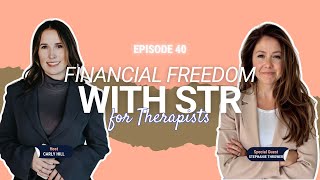
Podcast interview (Thriving Therapeneur) where Carly Hill interviews Dr. Stephanie Thrower about using short-term rental (STR) real-estate investing as a pathway for therapists to gain financial freedom. Stephanie shares her personal journey from psychologist to STR investor and coach, practical entry options (co-hosting, down payments, furnishing), mindset shifts around money and FIRE, benefits (tax, legacy, income), and her coaching/program supports for therapists transitioning into investing and/or coaching.
Chapters
Welcome back to the thriving Therapeneur podcast. This is the show where we empower therapists to step outside the box, create freedom, flexibility, security. It's really about outgrowing the office, if you will. So today I am beyond excited to welcome one of my incredible therapist Coach accelerator alumni, Dr. Stephanie Thrower. Stephanie is not only a psychologist, but she is the founder of the practice to property accelerator for therapist. So she helps therapists get into short term rental investing. This is so freaking cool. We're going to talk about her story of how she successfully leveraged real estate herself to gain financial freedom in her life and now how she's helping other therapists do the same. We're also going to talk about Stephanie's experience inside the therapist to coach accelerator program as a client and how she's built her business, the challenges that she's been through because there's so many floating pieces and it is absolutely a journey. So let's dive in. Stephanie, I just want to say welcome to the show. I'm so happy to have you here.
Thank you so much. I'm so happy to be here.
Yeah. So start off by telling us a little bit more about your journey. Like, how did you go from being a psychologist to being the creator of the practice to property accelerator for therapists?
I'm still like, how did that happen? Because I feel like I remember years ago people looking at my resume like before any of this happened and being like, this is interesting. Like, you have a lot of different interests and work experience and that my coaching journey has totally reflected that. Like, I as a. I am a psychologist, I have a private practice in outside of Boston and love my niche, kind of love, like where I've landed. I do a lot of vocational work and maternal mental health and I love the intersection of both. But I was getting burnt out a ton and I did perinatal work in the thick of COVID when we were all doing, you know, like, I was in session with people in the hospital being like, am I going to have a partner with me? You know, and people delivering with masks on. And it was just really intense. And I had a little one already and then got pregnant with my second. I was like, I need something different. I need, I need a little bit of a release from the pressure valve of the time for money piece. So it's like weird to like love my practice, but also to be like, I need some other way of bringing in income.
Right. So that's when you got into real estate investing yourself. Is that what you're Saying.
No, that's.
When you got into coaching.
Yeah, that's really when I got into coaching. I feel like real estate. I feel like real estate investing has always been this, like, quiet drive for me that I haven't broadcasted because I've always kind of been. Felt weird as a therapist and someone who's, like, trained a lot in social justice, I'm like, I know I want to learn this, but I also don't know how it. Like, other people will understand how this fits into my life, which I think is kind of true for a lot of therapists of, how do I learn about investing? How do I learn about financial freedom while also being this, like, good doer in the world. Right. Because we always think, like, landlords are horrible, unethical people. Right. So I started learning about it when I was writing my dissertation, because I realized I can't remember. I must have been, like, 31 too. And I was like, oh, my gosh, I haven't graduated. I still have to match. I still have to, like, get into a postdoc. I still have to write this dissertation. And then I start to get paid. Like, I think my internship year, I got paid $25,000 for that whole year. I was, like, far away from.
And I.
And I had no. I had no retirement plan, and I knew I wanted to have babies, and I was like, how am I gonna do these things all at once? And so I started coping by listening to real estate podcasts in 2006, which I feel like podcasts were kind of, like, still early 2016. And I was like, I'm gonna do this. And so it's over the last seven years, there was a lot of research. And then I purchased my first home in 2020. I don't remember 2018. And then. And then in the last five years, I purchased and sold five homes and had a lot of luck with equity.
That is so badass. Like, just pause for a second. Do you hear yourself say that? Like, it started with just this thought of, I want to be more financially free. Then it started with research and you coping and listening to podcasts and gathering information. Then it started with your first home, and now you have five. And you've been doing this for years. Yeah, this is like, this hidden, secret talent. And we're going to talk about this when we talk about, like, your experience and how many niche iterations you went through with a therapist to coach, accelerator. But when this came out of you, like, energetically, like, I felt like. And I'm sure you felt this way Too. Like, it was like a beast that was just, like, unleashed. Like, this has been, like, waiting to come outside of you, because this is something that you do in your own life, but why not help therapists do this too? I'm just so amazed.
Thank you. Well, that means a lot coming from you. Yeah, it's been, it's been. I think that. I think in general, the mindset shift that came from starting to learn about the fire movement, right? Which is like, at the time was, it stands for, what is it, like, financial independence, Retire early. And I, like, didn't want to retire and even started my career. I had been doing therapy forever in graduate school, but I was like, I love doing this work, but I know I'm not going to be paid enough to like, fast forward me to retirement age. Right. And support my family the way I wanted to. And. And I love, like, you know, all my answers already so far. Show how much I love complexity. And so what's kind of cool about the real estate space is there's just a lot of different puzzles to analyze. There's, like, numbers, there's qualitative data. It's. There's. We can kind of put our anxious brains to good use in that space as long as you act on it, right? As long as you actually go forward and do some of the scary stuff, which, you know, can be hard to do when you're by yourself. But.
Yeah, well, we're not meant to do it alone, right? No. This is so fascinating to me because the word real estate investor is actually on my vision board. So, you know, I just purchased my first home not too long ago, and we went through a massive remodel process. But I would. This is absolutely, like, a next step for me is moving into being a real estate investor. And you don't know what you don't know. Like, nobody teaches us this. You started to learn by listening to podcasts and diving into the research, right? Like, you don't have to figure this out on your own. This is quite literally why mentors like you exist, so we can shortcut the process. And I know for a fact I'm gonna be knocking on your door when I'm ready to energetically dive into this. I have so many things going on in my life, so, like, the capacity is not there for me right now. But what I want to say again is, like, you don't have to do this alone. You've already laid out the blueprint for all of these therapists when they want to get into short term rental investing. The Blueprint is there for them. Right. And I would love to talk too about how they don't have to have all of this money, because I think that's something that you probably hear a lot is people thinking they have to have buku bucks in order to become a real estate investor. And you can really start small and you can meet them where they are and there's so many different ways for them to invest. That is something that I have learned from what research I have done, because that was definitely something that went through my mind. I was like, oh, I gotta have all this cash to become a real estate investor. And I was like, oh my gosh. No, I don't. Like, I could start so small. I could start yesterday if I wanted to.
Right, Totally, totally. Let me pause one second. I'm gonna unplug the printer because it just started making all this noise.
Okay.
I don't even know if you heard it. Okay, I'm back. Yeah, I think that. Well, I think in general, real estate investing just seems like it's for the wealthy and it's for like there's an image in our brains and they're typically like white old men too, are, you know, like, there's just like, there's a, there's. There's an image of who we think a real estate investor is. And the reality is it's because it is mostly, it is not mostly female. It is not most, and it's certainly not mostly therapists, you know. And so I think that. Yeah, exactly. But I think that it's been, it's been super helpful to wrap my head around why people invest in real estate. Like, why it is such an incredible wealth builder, why it gives you leverage just in having equity. Right. To be like, well, I can sell this house and then I can, if I have an emergency, like, we can, we can work around these things. So you can start at a lot of different spaces. With real estate investing, one great way is when you have a lot of cash. That's nice. But you might actually, if you have a lot of cash, you just might not have the right mindset for what to do with that cash. What's. I think sometimes the biggest mistake people make is choosing the wrong market and being like, particularly in short term rentals, being like, well, of course it's going to make me money. But the data is out there. It's available for us to know what markets actually do well and what doesn't. And so I think that. And then there's ways to get into like, I always Feel like even when I did finally earn enough cash in my practice to, to start investing, I kept being like, man, I wish I learned that earlier. I wish I learned that earlier because that would have shaped the way I worked in my practice. That would have shaped the way that I. Some of the things I would have spent on and not spend on. Right. Or, or even hired people that I like held onto for too long as support people. You know, that can cost you quite a bit of money.
Absolutely costly mistakes in business. So what type of cash are we talking here? Like what is the minimum amount that somebody needs to invest?
So there are books out there that are like no money down, which is, they're interesting to read. And if you're at that point you would consider in my guess is you would consider becoming a co host first. Right. So that is a way to participate in real estate investing is to learn the business and to actually co host for someone else. So that what a lot of people are like, I don't know what that means. It's kind of like a much more casual version of property management where you're doing the guest management and you are learning like how to run the business, how to get good reviews, but none of that. And you earn 20% of what is booked. Right. So that's like a nice way. A lot of people even like the big gurus, they're all co hosts because they know how good the money is of being a good, you know, like it's, it's just interesting. That's not often like the, they will talk proudly about the properties that they co host. So in that case you're not spending any money, you're just spending your time doing that, which can be like really systematized. It kind of depends on where you live and if that's possible in your own location. Another direction is having some cash on hand. It depends on the down payment structure you have. Sometimes you can put 10% down of a house, but like we're talking about a big, are we talking about a million dollar house? Are we talking about $161,000 house? Those are such different numbers. And so we can talk together about what it means, what, what your budget is between those two. Right. And then there are some startup costs sometimes like linens and furniture, but not always.
Yeah, because you can buy some places that are fully furnished or you know, exactly like a duplex or. There's so many different avenues that you could go down that. I know that you teach in your program, I know you also teach therapists how to even make more cash in the first place so that they can invest. Like to talking about systematizing their own private practice and avoiding some of these costly mistakes and restructuring something so more cash can drop in so that they can use this towards investing. Right.
Yeah. And I think it was something. Once I became an investor, it really, it really changed the way I viewed my own business and then has, like, continue, like now that all the coaching education I've gotten has also changed the way I view my practice. Right. Like, I think that for a long time I did not see it as an asset, I just saw it as a job. My actual, you know, and the more I learn about business, the more I'm like, oh, this is a huge asset. And if I'm able to implement systems and automate things, if I'm able to understand what, what my market is, clarify my messaging, like, it change if I, you know, I, in the whole process of coaching, I got off insurance panels. I went through the hurdles of like, marketing that and figuring out what I offer. And so I think, and I, I also think there's such a mindset piece of. A lot of people have, like, they're so afraid to talk about money that they, it's almost like never is enough. Like, it's never like, I'm like, how much do you want to earn? And they're afraid to be like, it's always such extreme numbers. It's like as much possible money as I humanly can, or it's like $1 more than they need. Right. And so I actually think that if you have a goal in mind, like, I want to make sure I have $50,000 by the end of this year to invest in a property. I think things start to fall in place in our practice that follow like, oh, well, how do I actually do that? How do I make an extra $50,000 this year? Or if I can't do that, how do I do it in two years? And what are the actual problems in my practice that I can't grow? Does that make sense?
Reverse. It totally makes sense. It's about reverse engineering the process. Right. And, and you're right, a lot of people, because I see this every day too, with therapists who are wanting to add coaching. I'm like, what is your revenue goal? I don't know. Like, sky's the limit. And I'm like, give me a number. Have you crunched the numbers? Like, what would feel good to you? How much money do you want to take home? How much money do you want to Make. We have to claim that so that we can set some realistic goals. It's the same thing with your private practice. It's the same thing with real estate investing. We have to go there and have the money conversation. We need to welcome the money conversation. We can't be afraid of the numbers. We have to know the numbers and.
Like, and that I think there's a lot of anxiety that comes up for everyone. You know, everyone's got money, little T trauma, sometimes big T trauma. Right. And so I think we're in this space of how do we, how do we, like, in a safe way, regularly touch down on what does it cost for me to raise my family? Right. What does it cost? What are the things I really want in life? And I think that's what the fire. Learning about the fire movement early on gave me an education that I did not get in the other 10 years of like two masters and a PhD which was like, how much money do I need to live off of? And how can my investments actually just give me that money? And how would my work change if I was living off of my investments? I think it would change a lot, you know?
Yeah. Well, you've seen it transform your own life. You know, you're a busy young mom, you're a business owner, you're a coach helping therapists, you're an investor. And there's so much information out there for everyone. It gets overwhelming people, they get an analysis, paralysis, if you will. Right. But there's so many benefits if you can get past these money mindset hurdles, if you can just start to consume bite sized information. There's so much room for you to have financial security and flexibility in your life and so many different ways, which again, like at the beginning of this episode I talked about, it's all about outgrowing the office. How can we do so much more than just what we're doing? Like just being a therapist and trading dollars for hours is such old news. Like, we are in 2025. We can do so much. We. Money is infinite. Inf. It is available to us in so many different ways. Our impact can be expanded in so many different ways. We can reach so many people's lives, we can help them transform their lives. And just with real estate investing, I'm thinking, okay, yes, you have the financial flexibility and you have that security, but you also have tax benefits. You're creating a legacy for your family, but you're still honoring your values as well. Like you've created this freedom lifestyle for yourself.
Yeah, I feel like well, tax benefits is so interesting too because in this space of when you own your own business, you're like often shocked by how much you're paying in self employment taxes. And if there's like kind of two ways you can run this. You can run your, you can run your Airbnb in a way where you are super passive and you. And you give. Which that's how I am because I have three kiddos, like baby kiddos and so they. But I have an incredible co host who is my teammate and it took a while to get to that right person, but she's everything for me. Or you can run it yourself, depending on where you're at in your life, which often a lot of the gurus say do it because it's worth it, not just because the money that you're not paying someone to do that work. It's not that time intensive. It's extremely easy to systematize. And the marketing is not the same level as what we're doing in our private practice and our therapy. Like you, you do not need to be dancing on TikTok if it still exists to, to sell your Airbnb. It's a totally different process and you don't need it. The number of leads that we need in other spaces of business, it just is very different in that Airbnb space. Right. But you, if you are running it yourself, you also have massive tax benefits, like could be hundreds of thousands of dollars that you could benefit, not have to pay. And that's, that's really how the rich, the super rich get away with not paying is like all these different loopholes that are likely to be upheld. And so yeah, I think.
But it's a legal loophole.
It's what it's.
Yeah, absolutely. One of the reasons that this is my next venture is the tax benefit.
Yeah, it's. And, and that's why it's interesting to go in different directions of real estate because there are a lot of awesome directions. But the short term rental is a nice one to get into because your income is typically higher and you also have it as a place to go. Like we actually, my husband goes with his like high school friends. We have a pretty large, I mean, it's on a large property, but it's seven bedrooms, so a lot of people can go there. And so it's actually recommended that you go to your property, that you love it. Right. And so it's like a place that we'll go with our kids one day skiing. And if I'm like, okay, I won't have guests pay that know that amount will actually go right. But it's. Yeah. So there's all these different layers that come from short term rentals that and I, we always traveled in Airbnbs like early on and loved the experience. So it was like a way to be like, see, I knew I could do this, right.
Yeah.
Yeah.
It all starts with the idea again. I'm just so in awe and I'm, I'm.
It's.
It's been amazing to see have a front row seat to this journey of how you got here to this place of actually claiming that this is what you do and this is how you can help therapists do it, because it has been your own life. I'd love to talk about your experience. Let's shift gears for a second. Talking about how I saw this transformation in you from the moment you decided you were going to be a coach. You came into the Therapist to Coach Accelerator. You were one of my rockstar clients. Like, you always showed up. You always ask questions. You had your pen and paper ready. I'd love to just talk like, what made you decide to even join the Therapist to Coach Accelerator in the first place? And what are. Let's talk about the challenges that you went through first and then we can talk about your epiphanies. But I'd love for you to talk about your challenges because niche was one of them. Like, this is like the third iteration, I think, of your niche. Correct me if I'm wr.
Totally. Yeah. So as someone who. So I was trained in vocational psychology and during my, like, end years of graduate school that I love it. And there's this little assessment you can that I use a lot where that kind of helps distinguish people's interests a little bit. Like, you have different personalities and sometimes if you have different personalities, like across the sides, it's hard for you to decide what you're going to do. And I feel like I have strong interests in all of these areas and it makes it really hard. Like, it feels like it's like tearing a piece of my soul away when I have to niche. Because there's like these other parts that really matter. So, yeah, I was like, in this, I was on the struggle bus of saying I'm not going to do some things. And when I worked with you, I. When I started working with you, I remember the call and being. And just like having just like word vomiting out all of this stuff. And because I was really struggling, I think I really wanted to at that point find something that Worked in the business of coaching. Right. And I wanted to figure out how to make marketing work and how to get over fears of visibility and how to. Like, I still struggle to. Like, I'm learning so much. But even, like, copywriting is such a brain shift from a super intellectual training I had for so many years that, like, nobody could read what I was writing. Only a select few of people who got all the references. Right. Yeah. So I feel like I was like, I gotta make something work. And you, you were like, why don't you do this? And I remember being, like, like, so upset because I was like, that is. That is not what I want to do. Right. And. And it's. It's essentially what I'm doing now, which is helping people. Like, business coaching, helping people with creating systems and learning knowledge and kind of this vocational psychology that I'm supporting people in, like, caregivers and. But initially I was like, oh, my gosh, that's not it. Right. So at the time, I was wanting to do CEU training for therapists because a lot of my research was in how to train therapists to be more racially responsive and, like, built some really cool things, but didn't know how the hell to market it and was kind of stuck. And then especially, like, being a private practice, like, I'm not an institution anymore, and then moved into, like, kind of burnout and, well, I think business, like, business coaching for moms. Right. And then shifted, and that didn't feel right. I felt like mostly it was like I didn't. I felt like I didn't know enough about business, which is so funny to say yes. Because now I feel like I've done another degree in business school, like, since I met you. And then, yeah, I feel like I did burnout. And I was like, no, this is. This is not it. It was giving me no life. And I feel like in some ways, I'm doing all of these things. I feel like there's a lot of. There's a lot of liberation psychology. There's a lot of vocation. There's a lot of business coaching. There's a lot of. Yeah, there's a lot of burnout coaching. I'm doing, like, it tied in all of this, but it's actually a part of my identity that has not been integrated professionally until now. Yeah, you would have never came to.
The conclusion and landed on, okay, I'm doing real estate investing, or just stepped into that. That identity, rather, had you not tried on all of those other niches and just gone through because Like I said, like, like you said when I gave you the idea. Big resistance. Nope, not for me. I'm gonna do this instead. I'm gonna do this instead. I'm gonna do this, this instead. But you had to feel out all of those. You had to try all of those on. You had to dip your toe in the water with those, do some copywriting for those to be like, okay, like, this doesn't intuitively feel, quote, unquote it for me. Right. I just want to validate for everybody because everybody wants to come out of the gates and just like, figure out their niche. And I can't explain enough how many times I see all of my clients in the Therapist to Coach accelerator come in with one niche and then have this epiphany and change it to something else. They think they know their niche, but through the process of them putting themselves out there and doing like the self discovery process, something else sometimes drops in. And that's not always the case. Sometimes you know your niche right out of the gates and you run with it, and that truly is what it is. Or sometimes you have no earthly idea what your niche is and we just figure it out together and then you take that and you run with that.
But.
I think that this, there's this rule that everybody thinks in their head that like, they have to have their niche figured out before they dive into, to the process of creating a signature coaching program. And I think there's such a beauty in just allowing it to kind of unfold and be messy, which I know is scary, except especially for my type A friends out there who just want to have it, like, all figured out. But you, it's almost like this indoctrination process that you have to go through to really land on what you're supposed to do. And I think that was the process for you of landing here. What would you say is the most, like, valuable part? So we talked about the challenges of you moving from therapist to coach. Do you remember any, like, specific moments or valuable parts or lessons that maybe really stood out? We're actually still working together. Right. So this could be like current time. I don't even know how long we've been working together at this point. But what's been so helpful for you in this process?
I think that I keep getting surprised at your readiness to answer questions. You know, like, I think that that can feel. I. I can. I've been in other coaching situations where it's just like, save your question time for this little tiny block. Right. And. And I feel like Every time I come in with a question, you are there fully present to think it through. And that just keeps showing up in a really consistent way for me. Right. Like, you have, you have so many materials to like get through and to learn. And you're kind of having to sometimes be patient with me being like, okay, yeah, you'll get there, you'll learn like that part, you know, that, that, that that piece is necessary for all these things. Right. Because initially I'd be like, I'm not even going to do Facebook. And you're like, okay, you know. Right. Or I'm not going to do this. And there's like patience there. But as I came in and had the questions, I feel like you're very committed to people getting their answers. And I think that that has been extremely valuable and that has only helped me improve what my questions are, you know, if that makes sense. Because I feel like if you don't keep asking the questions, like, you can't, sometimes you can't get it out. Like, what are you, what do you not know?
You know, you don't even know what question to ask sometimes.
Yeah, right.
Which is why group coaching is such a beautiful thing, because I always call it osmosis learning where you could just sit there and hang out on a call and you could learn so much just from listening. Or you then have questions that you didn't even know you had because somebody triggered a thought in you. Right. I think this comes from my own experience. Experience. Well, it definitely comes from my passion and obsession of just helping you guys be successful because it's my favorite thing in the whole entire universe. But when I was on this journey myself of going from therapist to coach and I was investing in mentors and going through programs, I often felt the same way where you mentioned, like you have this tiny window or you don't get the support that you need. It was just always the number one thing lacking. So I feel like I'm really hyper conscious of that. And, you know, it's not always me, it's my team. Like, we have the copywriting coach, or we have the mindset coach, or we have multiple different business coaches, or we have a sales coach, we have one to one coaches, we have group calls, we have, you know, a question vault or posting in the Facebook in between coaching calls. Basically, if you have a question, it's going to get answered. So I do appreciate you shedding light on that. It's always interesting for me to hear what has been most helpful. And when I've asked my Listeners of the Thriving Therapy or podcast, like, what do you guys want to hear on this show? It's always words from clients. Like, I could say these things, but it doesn't carry the same amount of weight of when they hear it from you guys. Is there anything else that comes to mind other than, like, you keep being surprised by questions or answers?
Yeah, I think that. Yeah, I mean, I think. I think that there's a way. Hold on. My brain is just. Just went somewhere. I'll be right back. Um, yeah, I think that the program is just very thorough, and I think that there's. I think there's a lot of people that in any kind of transformational coaching that can be super light on teaching and. And kind of light on information. And I think that the risk of you having so much useful information is that people get overwhelmed, and it is overwhelming at times because you are. You're kind of unprepared for the education you're going to get because you worked with other coaches and you're like, oh, it was very easy to get done. But the results, like, were not, you know, like, they did. They echoed that learning in some ways. Like, I couldn't say, like, how did I transform in this process? Very strongly. And so in your, like, being in your coaching, I can clearly define some of the skills that I've learned that will impact my businesses forever. And I think that. I think that that is. I think sometimes, too, like, when you find a solid coach, that's. You want. You want these ideas to change your life in. You know, even if people worked with me and didn't ever invest in real estate, I absolutely want to impact their business. I absolutely want to impact, like, every home purchase they ever buy, you know, every negotiation, every sale. You know, like, I want all the ideas that we're talking about to influence them not just in those, like, three months or five months or whatever, but actually going forward in a meaningful way, you know?
Yeah. About the fundamentals. It's about having a foundation. It's like building a house, right? Like, you got to build up the walls and put the bricks on before you can put the roof on. It's setting that firm foundation, setting your clients up for success. So I want to. I want to wrap up, and I want you to tell everyone where they can find you. But before we do that, what's one piece of advice you would give to therapists who are feeling stuck about stepping into something new, Whether this be stepping into their private practice, stepping into coaching, stepping into podcasting, stepping into course Creating, stepping into real estate, investing. Any big leap, stepping into writing a book. What advice would you give if they're feeling stuck, they're feeling scared. Because you have taken many, many leaps in your professional journey. Would you give to anybody?
I think that courage is one of the best gifts you can give to yourself. And I think oftentimes we believe that courage is going to come to us. Right. Or like, if I have this, I'm going to be brave and do it, but I feel like looking back at the times when I was scared and I did it anyways, or I, you know, we do it all the time. We were scared to support people in their darkest moments, but we do it. It's so, I guess, like, it's something I can feel proud of very easily. Right. And so I think we can be so stuck in the discomfort of what fear feels like and kind of connect that with courage and say, like, oh, well, you know, I have to be courageous when I'm fearful. And so we think courageousness feels bad, but I think if we're able to, like, separate it out, it actually feels awesome. It feels awesome to be like, I was totally scared out of my mind and I did it. And it was like my gut telling me that this is the safe, right next direction to go. And was it pretty? No, but who the hell cares, you know, Because I think that's what we get stuck on, is it being pretty?
So that's my having to be perfect. Literally how we started this episode. You're like, do I look okay? I have no makeup on. I was like, yeah, my makeup bag is sitting next to me and I haven't gotten to it yet. Like, this is casual. We are rolling with it, girlfriend. Like, just allowing yourself to start allowing it to be messy. Just as we talked about niching too. Like, allowing yourself to not have to have it all figured out. Allowing the different iterations of yourself to come through and it all comes out back down to courage. That's so beautifully said. I love it. Where can everyone find you if they are interested in real estate investing? Getting your information.
Awesome Facebook group. I have a Facebook group and I have Instagram and a website. So I'll start with the Facebook group and we're going to pause for a second while I remember its exact name. Okay, so my Facebook group is short term Rental Investing for therapists. And my big old face is on it. So you can.
I'll include this in the show notes for you guys as well who are listening.
And that's a group where I post pretty much daily, but I have live, weekly live trainings and just it's a great space to ask questions and find other people. I have a few other investors who are already have short term rentals in it in the group, but also, like, the people that work with me, like, my co host is on it, you know, so people will come and chime in. And then I have a I have a website, which is coaching with Dr. Thrower.com and then I have my Instagram, which is theravestor coach. So those are the three spaces. Yeah.
Amazing.
Yeah.
Everybody go check out Stephanie's stuff. If you're interested in expanding and outgrowing the office in yet another way, I am cheering you on. My love is with you. And until next time, therapreneurs, I will see you in the next episode. Take care.
More from Carly


How Therapists Can Use Mentaya To Get Private Pay Clients Reimbursed (Without a Superbill)



How a Seven-Figure Therapist Actually Builds Wealth (It's Not What You Think)

“There was always this idea in my head, but I didn’t know how to formulate it until I met you.”




