High Ticket Mastery with Chad Thibodeaux
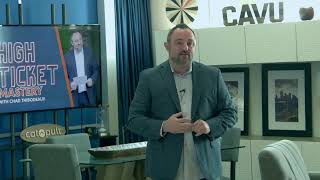
This is a YouTube video titled "High Ticket Mastery with Chad Thibodeaux" created on September 18, 2020. The content likely involves Chad Thibodeaux discussing strategies or insights related to high ticket sales or mastery, but no transcript or dialogue is provided to confirm conversational details.
It's Sam Sa. It's it. Check, one, two. Check. Check, one, two. Check, one, two. There we go. Check, one, two. Check. Check, one, two. Check, one, two. Okay, so, Sam Sa. All right, everybody, how are you? Chad Thibodeau here. Welcome to Speak for a Change. So glad that you guys are here. This is a live masterclass. We want to welcome you guys wherever you're watching from all around the world. Just below you is a chat room, a minute chat room. And I want you guys, as you guys log on throughout the day, I want you to let me know who you are, where you're watching from, and throughout the session today, you're going to learn some things that I really believe is going to elevate your game. Now, what game am I talking about? Well, I'm talking about your business and your life. So you're going to want to get a pencil and piece of paper and you're going to want to take great notes today. We're going to go for about two, two and a half hours and some teaching today. And then I'm going to give you guys an opportunity to click a button and join me on a zoom over here on my desk. As soon as we're done with the teaching today, I'm going to go over there, you can jump on a zoom call with me and I can give a little bit more coaching and do some live Q and A so you can figure out how to craft your very own speech. But before we get started, I want to see if I can hit you with a story. Ok. I don't know when the very first time you ever did public speaking, but they say that public speaking is literally the most nerve wracking thing that you can do. And because it's so nerve wracking, it has become the number one fear that you and I have in all of the world. When you stack up all the fears, the number one is public speaking. And I never really understood that because we're created with a mouth. We're created with the ability to communicate and with the ability to speak. It comes incredibly natural to us. We learn it at the age of one or two. We know how to open our mouth and make words come out. What is so scary about speaking? And I got thinking about it, well, what's scary about speaking is some people are really good at it. I mean, it's like poetry. Like they open their mouth and these words just begin to flow so eloquently out of their lips. I mean, it's beautiful. It's literally magical. And what happens is sometimes you and I open our mouths and we're like, da, da, da, da. Or. And we pop our lips a lot and we're like, we could never be like that person. And because of that, we have a fear of speaking. But we know that if we're going to make a difference in this world, if we're going to make a difference in our business, that we probably got to figure this out. We have to figure it out sometime. So what I want to do over the course of the next two days is I want to help you learn how to speak for a change. Now, it's got a double entendre on it. Okay, Speak for a change. So in other words, I want you to finally speak for a change, and then I want you to speak for a change. I'm talking about the kind of change that elicits a response, a kind of. Kind of talk that moves people, that builds movements. And if you notice that regardless of whether it's political or religious or cultish or whatever it is, there seems to always be some kind of charismatic leader that uses a speech to move people, I can't help but think. But, you know, several years ago, when Barack Obama was running for president, and I remember at the Democratic National Convention, I believe they held it in Grant park or somewhere, where they had like, you know, half a million people in attendance, and they had these huge white columns that look like, I don't know, like he was in, I don't know, Washington, D.C. or the Coliseum or whatever. And I remember they had this perfect backdrop, and he gets up and he begins speaking. And it was one of the most elegant speeches you've ever heard in your life. Whether you like him or hate him, you have to know that this guy knew how to use words to move people. And why did he move? Well, here's a guy that was relatively unknown. Nobody really knew who he was, but he used words, he used a keynote speech to move an entire movement to rally at the time, the Democratic Party. He ended up getting more votes than any other president in the history of our country. And this is for a man that nobody even knew. How was he able to do that in such a short amount of time? Well, he spoke for a change. He spoke to elicit a response. He spoke to move people. And so if you're taking notes this morning, what I want you to know is when you're speaking, when you're speaking, you have to have a point behind your message. And that point has got to be designed to elicit or to Cause or to gain reaction, to gain movement, to gain clarity, to gain forward momentum. That's what you're striving to do. So let's just say it doesn't matter what you're selling. Let's say you're a business coach and you're trying to help people launch businesses like I do. Well, you can create a keynote speech that makes so much sense. That makes so much sense that it causes people to move and take action. I told you I was going to tell you a story. Let's go back to the age of 16. Now, I grew up as a preacher's kid, right? You know, my dad used to stand up on a stage growing up, and he was a hellfire and brimstone type preacher. And he would get up there and he would scream and he would shout and he would sweat and he would foam at the mouth, and everybody loved it. And I grew up in that atmosphere. And so it was no doubt that when I became a teenager and had to start figuring out what I wanted to do for a living, well, I wanted to follow in dad's footsteps. And so I went to a very small, private Christian school growing up. And they had a competition at what we called internationals, where they were trying to find people to join. A preaching competition. Okay, A preaching competition. Well, of course, being the pk, everybody put a lot of pressure on me to join this. To join this competition. So I did. But I had really never spoken publicly before. I didn't really know what I was doing. I just saw someone do it my entire life. So I'm like, well, if he can do it, I can do it. So I sat down with a pencil and piece of paper and I started writing a. Writing an outline for what would become my very first speech. And I'll never forget it. It's out of the book of Isaiah, chapter six. And I created an outline. It was woe lo and go. Okay, I'll tell you a little bit more about that later on. It was woe lo and go. And I created an introduction. I had some points, I had a conclusion, and baby away that I went. And what was interesting was it was only a seven minute talk, okay? And at the end of seven minutes, I didn't know if I was going to do if I was good or not, you know, because I had never done it before. But I got up and I had presented this message and I came up and I, you know, I told a story. I set the stage for what I wanted to do. I went through my three points. Whoa, low Go. I had a conclusion at the end, and when I was done, people clapped very politely as well we expected them to do. And then I went on my merry way. A couple days later, the competition was over and they announced the winners and the losers of the competition. And holy smoke, lo and behold, I end up winning that speaking competition. And I was hooked. I mean, I was flat out hooked. I was so excited to be a part of the new speaking generation, right? And I was hooked. And I began speaking. And what I learned was that there was certain aspects of speaking that if you began getting good at it, you could almost have anybody do almost anything for you, because that is the power of words. Fast forward it just a little bit to the international convention. So that was the national. And I went now at the international, and it was actually in Flagstaff, Arizona. I get up and speak. And I ended up getting second place at that particular. At that particular competition, which I was super excited about. And this is coming from a guy who had no idea what he wanted to do. But I learned that I could speak and I could get some trophies, but I couldn't turn trophies into money. And so I was wondering, is there a way to turn speaking into cash? Is there a way to get paid to do what I really like to do, which is speak? And I did. I turned that into a 19 year career. I ended up speaking at churches and standing up on stages, giving hope and inspiration, exegeting the scriptures for quite a while. And then when I got into the secular world, after the church world, what I learned was the exact tenets that I used to win the national and get second place at international in the speaking competition. The same exact tenets that I used to speak on stage and inspire thousands of people, actually hundreds of thousands, if not millions of people over the course of 19 years are the same tenets that I could use in my coaching business. And what I learned was that through keynote speeches, whether they were small master classes, whether they were Facebook lives, whether they were webinars, whatever they were, there were certain aspects of a speech that as long as I implemented those tenets, that it would move people down a particular path and it would cause them to do something, it would cause them to make a change, it would cause them to start a business, it would cause them to pick up the phone and call me, it would cause them to buy my products, it would cause them to go get the affiliate link that I was. That I was pushing. And what I want to do over the course of the next two days is I want to teach you how you can do that on your own. Because the fact of the matter is, is that if you can learn how to speak and you can learn how to speak from a small stage. I'm not talking about speaking on the stage in front of thousands of people. I'm not talking about. That's a whole different lesson. I'm talking about how do you speak on a screen where you can communicate to somebody in a manner that connects you in them and they listen to what you say, they apply the application and, and it becomes mutually beneficial. It's beneficial for them because they get results. It's beneficial for you because you get paid. How do we do that? How do we do that? Well, what I want you to know just from the outset is that you don't have to be a professional speaker in order to get paid as a professional. So in other words, you don't have to be an expert at speaking. You don't have to have the best rhythm and the best cadence and the best voice. And you know, you don't have to do that. You don't have to be Morgan Freedom Freedmen and have the voice of God in order to make a lot of money speaking. You don't have to do that. You don't have to have years and years of experience in order to make money speaking. You don't have to really have anything but an idea, an outline, certain tenets partnered with rhythm and cadence and then you have to have an outcome that people want. That's how you speak. Tomorrow I'm going to show you how to sell. But today we're going to learn how to speak. The Speaking for a Change is a two part series that's actually part of a bigger picture called Small Event, Big Profit. Small Event, Big Profit. Not too long ago, not too long ago, I hosted it here at my home. And in just a minute I'm going to invite Crystal to, to play the teaching. Because what I'm going to do is I'm going to show you the teaching. It's about an hour and 45 minutes long. I'm going to show you the teaching from speaking self from the small stage. And what I want you to know is that this teaching that I'm going to give you is really in depth. In fact, I'm not. Well, yes I am. I'm really biased, but I actually believe the stuff I'm going to teach you you can't find anywhere else. I have signed up for the online courses to learn how to speak. And to be honest with you, they're lacking. I have gone to the live workshops to learn how to speak. And to be honest with you, they're lacking because all they do is they just tell you how to create an introduction, they tell you how to do some points, they may tell you how to tell a little story, they may tell you how to connect with your audience, but they're missing one gigantic piece. And that gigantic piece is called rhythm and cadence and timing and comedic timing and empathetic timing. They don't show you how to move an audience with your voice where you bring them down or you make them laugh as you change the tonality of your voice and you raise the rhythm. They don't teach you the power of three, where if you tell a joke, you got to tell two more jokes to make that goal. And they don't teach you all that. And I put all that together in a pretty massive action packed training. And so what I want to do is I'm going to fire this training. It's about an hour and 40 minutes long. @ the end of the training, I'm going to come back right here and I'm going to bring it to a conclusion. And then I'm going to invite you to join me on a zoom and I'm going to do a little bit more coaching and do some Q and A, and we're going to help you craft and write your very own keynote speech. It's time to speak for a change. Watch this excerpt from Small Event Big Profit. Hands up. Put them together, flip them around. This is a mirror. I want you to look in the mirror. Stare in the mirror, actually. And there's only two responses that you can have as you stare into this mirror. The first response is, I don't really like that person. That person has flaws. Ooh, look at those blackheads. I don't know. Or you have the opposite. Like, dang, wow, I am hot. And both of those extremes is typically what happens when you stare into a mirror. When you stare. When you stare in a mirror and you see your reflection, you go to one side or the other. One side, oh, my gosh, I'm not all that great, or whoa, I'm bigger and better in life. Same is true in the entrepreneurial world. When they stare into the proverbial mirror. You have those people over here on the left who are always apologizing about who they are and what they stand for. And then you got the douchebags over here that, look at me, look at my Lambo, look at my mansion, look at this, look at this, look at this, look at this. And somewhere in the middle, there are some pretty good people like you and I that totally get ignored. Victims get a lot of attention. Don't stop looking in the mirror. Victims get a lot of attention. Douchebags get a lot of attention. But that attention on the edges doesn't help anyone. When someone comes and says, oh my gosh, this just happened, and this just happened, and this just happened, and this just happened, oh my gosh, this just happened, you look and they have 388 comments like, I'm sorry, oh my gosh, poor little baby. Whoa, whoa, whoa. And what it does, it's like they have a tank. They move it from a mirror to a tank that says, fill up my attention. Whorish tank. And then on the opposite side, look at me. Look at my results. Look at this, look at this, look at this, look at this. And they move it from a mirror to a tank that says, fill up my attention. And what happens is when you fill up this tank with praise or with hate, and you fill up this tank with praise or with stop being a victim or hate, what it does is it engages conversation that is distracting. So, but when you can look in the mirror and you can say, yeah, I got this. I am enough. Man, those wrinkles look good. Dang, that gray hair, Chad. Wow. You know what? I got a calling. I have a message. And I'm not going to necessarily allow my feelings and my external to inform that because I know that I have a message inside that if I can flip the mirror so I can speak and people can see their positive reflection in themselves, that I can make a difference to them. And when you flip the mirror from you to them, when you flip it now, everything shifts. You're no longer worried about you, you're worried about them. You're no longer looking at your imperfections or what people may think about you. The mirror's flipped, and now you're thinking about, like, what can I do to make sure that they are elevated and that they are better? When you shift it from here, you are thinking about, like, how do I sound? How do I look? What do I say? What do I do? Me, me, me, me, me, me, me, me, me, me, me. And you shift and you're like, guys, how could I speak into your life in such a way that makes you. And you begin looking with intuitive eyes, and you begin looking at the eyes, and you begin looking at the pain. You begin looking at the soul. And as that pain just sort of lifts up off the page, the proverbial page. The person on this side of the mirror looking at them says, oh, I need to speak a little life into them. I need to speak a little love into them. I need to lift them up today. I need to encourage them today. I need to beat the crap out of them today. Because it's different. And people who become great speakers, people who become great speakers learn how to flip the mirror to where the audience sees their reflection. And what they do is they understand that they have a responsibility and unability to elicit a response in such a way that moves people to take action. So as today, as we start this presentation on how to speak from a small stage, it all starts with your position. It all starts with the point of a presentation. What is the point? Have you ever gone to these big gigantic conferences and people come out with these outfits on, like, man, like, their hair perfect, their makeup is perfect. They got all the sparkles and all the ring and everything. They come out and say like, baby, baby, baby, look at me, right? Or people come out on stage and they'll start clapping and they're like, come on, come on. They're like, listen. Taking it all in. Take it all in. Take it all in. Take it all in. Give it to me, right? Nothing wrong with that. Nothing wrong with that. As long as it's temporary. It's when the whole presentation becomes about them that you just have literally wasted somebody's time. So what I want you to think about is I want you to think about the stage. So if you were to look up on my stage right here, I have a marker, a marker here and a marker here. And this is my stage now. It happens to be the same level as everyone else in this room, but it's elevated because I am faced this way and you are faced the opposite way. You are looking at me. You are actually in rows. And what I'm going to tell you is there's two ways for people to sit. Either in rows or circles. When they are sitting in circles, the speaker has very little influence over the content because the content is about connectivity and connection and community. When the speaker has the audience sit in rows, the speaker is 100% responsible for the content because one is speaking with, the other is speaking to. Even when I engage you in conversation and you are asking me conversations, the rest of the world sees the back of your head. I am the only one that sees the front of your head. When you are sitting in circles, everybody sees your face. So what you have to understand is when you speak from a Stage, the very position of the people will determine your level of responsibility to communicate. If I am speaking on a stage and everybody is looking at me, I have to understand that 100% of the time what comes out of my mouth, I when will influence and impact you. If I have you sitting in a circle, it's not what I say, but the questions that I ask. So my ability to communicate depends upon how I sit you. So today I set you in rows. The reason why I set you in rows is because I want you to learn from my mouth and input into your brain, communicate onto your notes, implant into your heart. Yesterday I had you sitting in a circle. The reason is a lot of the conversation was communicable and so communicable. I don't know if that's a word. So what I did was I asked good questions. And the point of good questions is to get you to speak to each other, to inform each other. Both are equally important. But you have to understand that however you have them seated will determine how you prepare. And I'm convinced that nothing that you can do in life, in business, nothing that you could do will elevate your authority, elevate your credibility, elevate your know how more than being able to compose and deliver a meaningful presentation and deliver it on a stage, no matter how big or how small, if you could compose and deliver a meaningful presentation, people can take this and learn from by default, elevates you to a point where you can easily sell strictly based upon your ability to elicit a response from a stage. And what you have to know is there are some gifted speakers. Do you know the difference between a gift and a talent? There are some gifted speakers. There are people who were just born with the ability to speak, but that's rare. Most people who have the ability to speak, like me, learned it. I have a very bad speech impediment. I have a lisp. I've had it my whole life. When I'm lazy, you can really, really, really tell it. It impacts me. I've had to learn how to communicate in spite. See, you hear that? Spite. How do you say spite? Probably not S, H, P, I, T, E, minus shpite. Right? In spite of it, right? Because I can't say S without an H. I have a speech impediment. I talk really fast sometimes. I've had to learn how to slow down. I've had to learn how to enunciate. I've had to learn that. Now, the key word there is learn. If you're going to speak, you have to learn how to speak. Do you know what the number one fear in the world is? Public speaking. Public speaking. Speaking from a stage. Do you know what the number one profitability. Do you know what the largest profitable asset is in business? Speaking from a stage. Right. Tony Robbins chooses to speak from a stage. Does Tony Robbins make more money from his book or does Tony Robbins make more money when he speaks on stage? Speaks on stage. The president of the United States, when he speaks, he speaks on a stage. Does he make more impact speaking on a stage or doing a press conference? Speaking on a stage. Nothing moves the ball down the floor, court, field, whatever you want to call it, more than speaking on a stage. Sticky. Nothing is more sticky to your brand than being able to communicate to your audience in such a manner, in such a manner that causes them to want to be a part of your tribe. Nothing does that. Okay. When we were in Nashville for Funnel Hacking Live, Ross got on a stage with a live band and a microphone and began singing. You know what? Every single person in that area that didn't even, I mean, they knew of him, but they were sort of there with him. What all did they do? They pulled out their phone and they filmed him Facebook Live. They did not even know the guy, but because he chose to stand on a stage and communicate a message, it elicited the response of pulling out your phone and going Facebook Live. And everybody cheered for him. He accelerated his ability to know others based upon his commitment to standing on a stage and communicating a message. When you host events, whether small or large, what you're saying is, come to an event where I'm going to create a stage and I'm going to communicate a message on a stage that I believe is going to make a difference in your life. And so what I want to do over the next couple of hours is I want to talk with you about how to speak from stage. Now, why am I the right guy to do this? Ok, let's talk a little bit about this. Ok. I gave my very first speech at six years old. We went to a private school, Terre Hood, Indiana. Imagine doing this growing up in a home where your dad is your pastor, is your father and is your school principal. Oh, that was great. And your mother is your mother and your assistant principal. That's the house we grew up in. And so because of that, anytime there was a presentation at church, anytime there was a presentation at school, they had 12 kids. We only had 20 people. 20 kids in the entire church. We were half the group. Anytime there was a presentation that had to be done. Who did it? Our family did it. And so I did my very first speech at 6 years old. I may or may not have a picture of this. I will not show it to you. I was Uncle Sam. Uncle Sam. I had red and white striped pants on. I had a blue vest, I had a tie. I had a top hat. I had a fake beard. Your land, my land. This is the United States of America. It's not just any country. It's a bold country. It's a grand country. And our flag represents the red, white and blue. Ladies and gentlemen, stand to your feet. Take your right hand, place it upon your heart and let's give honor to the United States of America as we say the Pledge of Allegiance. My very first speech. Thank you for the roaring applause. And then something happened. I spoke and hundreds of people listened as they stood up to their feet and they said, I pledge allegiance to the flag of the United States of America and to the republic for which it stands, one nation under God, indivisible, with liberty and justice for all. Ladies and gentlemen, you may be seated. And everybody in the room listened. Do you know how much power a six year old had at that moment? Because he stood on a stage and he elicited a response and I was hooked. At 8 years old I decided I wanted to be a preacher. So at 8 years old I gave my very first sermon out of the book of Isaiah, chapter 6, where Isaiah said, woe is me, for I am a man of unclean lips and who am I but God? Here I am, send me. And at 8 years old I came up with the outline of woe lo go. That was it baby. Woe is me lo get low and then go. Because here I am, send me. At 8 years old. And I remember doing that little 7 minute sermon as an 8 year old and I remember speaking and at the end of it everybody applauded and said, oh, ain't he cute. 16 years old. 16 years old in high school and we are now in a Christian school up in Vancouver, Washington, Portland, Oregon area and in Arizona. First time I had ever been to Arizona. They have what is called the international convention and you could compete in preaching. I hadn't preached since I was 8 years old but I knew that I could do this. And so my school needed a representative to speak in preaching. And so I go and guess what sermon I dusted off. Whoa low, go. But now what I did, but now what I did as a 16 year old, I looked at this particular sermon and Said, what do I want them to do? I mean, I was speaking to a room of about 10 people. Six of them were judges, like America's Got Talent, right? And I go on there and I started with a story. I only had seven minutes, so I started with a story, a small little story, whatever. And I got a little humor in there. And I looked out and one of the judges had a little tear coming down their eye. And I did, whoa, lo go. And at the end of it, I did a call to action, not thinking anything of it. Four days later, the end of convention, it's award ceremony time. And they get up there and say, third place in preaching is such and such, from Saskatoon, Saskatchewan. In second place, from Vancouver, Washington, Kyle Decker, my classmate. Now you have to remember there's like 6,000 people at this convention. It's at the Sky Dome in Florida. And Kyle Decker, my classmate, got second place. And I remember my heart sunk. I'm like, oh, crap. In first place, from Vancouver, Washington, Chad Thibodeau. And I remember at that particular moment, I know I remember at that particular moment, like literally just crying. It was the first time in my life, besides an applause, that I had ever received any type of affirmation for what I did. And I remember walking, I still have the award. I remember walking down the aisle, going up on stage, getting my plaquesing myself up on the jumbotron, thinking like, wow, I did it. And then something happened. Something happened, what I did because I won that award. Up until that point, I was speaking to elicit a response. But after that award, I thought I was hot stuff. And I remember becoming a freshman, sophomore in college or freshman in college, going to speech class and winning an award that put me on a stage as a sophomore. And I remember going up there and I got a little too cute for my britches. And I remember there was a table and sitting down on the table, being all Rico Suave. And I got last place. And it humbled me because I thought I did the best job in the room. Mr. Penn, Dr. Brad Penn called me into his office and he goes, chad, he goes, what happened up there? I said, what do you mean? I think I did a great job? He goes, that was the most cocky and arrogant and self centered speech that I've ever heard anyone give. And it struck me at that moment, great presentations have the ability to either elicit a response or show the audience that it's all about you. Which one do you think people want to listen to? They want the one that you have the ability to listen to response. So I tell you that. To tell you that your speeches, when you create a presentation this morning, it's either going to be here where it's all about you, or it's going to be here where it's all about them. One will elicit a response. The one will elicit a nauseated feeling toward the speaker, which one do you want? But what I know is if you can present a great presentation, nothing will cause you to be Velcro more then a great presentation. Ariel, who's not here this morning, she had made mention that when we called her to do T shirts with us, she immediately googled us and looked us up and she said she binge watched so many of my videos, like literally binge watched them watch one after another, after another after another. I don't do that because I don't think they're all that good. But she goes, I watched them and I watched them and I watched them and I watched them and I watched them and I watched them and I watched them. And you know what? Always my first thought is like, why would you do that? Why would you do that? Like why? The reason is because when I spoke, I spoke in a way that elicited a response and nothing velcroed them to me more than a solid presentation. The presentation doesn't necessarily have to be on a stage. It can also be on a video. But it is a stage in and of itself. So here we go. Let's give you some things. The number one key that I can give you in presenting a solid presentation that's going to elicit a response, that's going to move your audience, that's going to attract them to you and make it sticky. The number one thing that I tell you you have to have is preparation, preparation. Preparation is the key to a solid conversation. So many times in the online world, what would give you a competitive advantage over others is most people, when they present, they do not prepare. They say, oh, I think I want to do a Facebook Live. And they pull out their phone and they do a Facebook Live. And it's terrible, right? And so then when you find someone who is great on camera or you find someone who knows how to speak, who knows how to command attention, it woos you and draws you to them. And what I'm going to tell you is the space that you are in and the space that I am in, we do not have a lot of competition with good speakers. The reason is, is because it's not that we're lazy, it's we're distracted. We spend too much time on our business and doing things that we don't spend enough time thinking about what we're going to say or how we're going to say it. When we go public with our Facebook Live, or when we go public and speak at an event, we don't spend enough time in preparation. So the number one rule is preparation. Speaking is hard work. And what I'm going to tell you is that your calling in life demands hard work. Your calling in life demands preparation. Not only does your calling demand it, but your clients demand it. Your clients demand that you put hard work and energy and effort and preparation into it. And your topic demands it. Okay? Your topic demands it. Whatever it is you're speaking on demands it. Okay? The goal of a presentation. Listen to me. The goal of a presentation is to elicit a response. If you're speaking for any other reason than to elicit a response that you're just babbling and nobody wants babble. So you have to understand that there is a point and a purpose between everything that you do. Now, when I go Facebook Live, if you've seen this, you'll notice that when I want to teach something, you always see this background right here. Have you ever noticed that when I teach something, I set up my desk? This desk, I set it up right here. We set up the cameras, we set up the lights, and that is the backdrop. Ok, Sometimes you can see my screen, sometimes you can't. But this is my backdrop. You can see from my TV to my lamp. That's typically the backdrop. I never let you see the top of it. You just see that. Why? That is a professional environment in which I speak, that when I speak from that position, that is my Oval Office. When the President speaks from the Oval Office, you know that he has something to say that we need to listen to. This is my Oval Office. And so what I've decided to do that if the point is to elicit a response, that when I speak from this background, I want people to know that I'm getting ready to teach you something that you can apply to your business, that you can learn and you can take to the next level. When I speak from my Oval Office right here, I also know that I can speak to elicit a response, but that speech will live in infinity. I'm going to download it, I'm going to repurpose it, I'm going to use it, because it's not just going to impact the people that I'm speaking to live, but. But I can repurpose it with technology. And I can use that in a multiplicity of ways. I speak that way when I just want to inspire someone. I don't care if I'm teaching them. If I just want to inspire someone, I go to my courtyard. You guys have seen those videos. I'm out in my courtyard in the middle of summer with the fireplace on. Hey, everybody, I'm out here, right? I speak from there to motivate, but I'm eliciting a response this way. I want to elicit a response through content and through information out there. I want to elicit a response through motivation and inspiration. When I want to put my dad hat on, ok, or when I want to put my personal hat on, I'm going to come to you live on a phone and I'm going to be walking or in my car or some other place. The reason is it's premeditated. But I want you to subconsciously know that when I'm in my oval office, you're going to learn something. When I'm in my courtyard, you're going to be moved and inspired. And when I'm anywhere else, you're just going to learn a little bit about Chad. All three of those are designed to elicit a response. Here Chad the teacher. There, Chad the motivator. Everywhere else, Chad the person. But all of them elicit a response to you that brings you back to me. It's not accidental. It's intentional, it's purposeful, it's premeditated. You have to put yourself in a position that says, when I speak, I flip the mirror. It's all about them. And what do I want them to learn, what do I want them to do? We'll come back to that in a minute. And I put thought and energy and preparation into it. Now, sometimes my preparation is all of 12 seconds. It doesn't have to be long. The reason is I have created a flow, a format, a template, so to speak, that I run all of my talks to. And I've done it enough, but I can just do it like that now. And I'm going to teach you that presentation today. Where did I learn this? Well, I told you I started speaking as a young lad, right? What I didn't tell you is at the age of 19, I became a full time pastor, full time pastor. And I started speaking to kids, to youth, to teens. And at the age of 20, I got hired by a company by the name of Youth Specialties. It was a huge organization and I would travel around the country with you specialties. Speaking on stages in front of 4, 5, 6, 7,000 kids at a time at these huge rallies, these huge camps, these huge concerts. And I had, like 12 minutes to come up there and say something that would capture the attention and heart of these kids and elicit a response. So I started doing that. Then I worked my way up in the church world. And then I got to a point where I was a pastor, a senior pastor, a teaching pastor, and I would stand on stages and speak to hundreds, if not thousands of people 1, 2, 3, 4, 5 times every single weekend. I did that for two decades. So when people come and say, hey, let me teach you how to speak, because I've done 24 Facebook lives, or I've spoken on four stages, I don't listen to them very much. But when I come to you and tell you that I have delivered thousands and thousands and thousands and thousands of talks, and I've developed a system that I can use to capture the attention of somebody, to speak in a manner that gets your attention and elicits the response, I'm coming to you from experience. And so it's not just the fly by night stuff. So when I talk about speaking from a stage, I'm talking about any side stage, small, large, or virtual. There's three different perspectives of it. But in the end, it all is designed to elicit a response. So the goal of the presentation is to elicit a response. Okay. The goal of the second goal of a presentation is to give them something that they can remember. Now, do you guys like steak? I love steak. Okay. I love steak. There's a bunch of great steakhouses in Phoenix. My favorite is the keg. It's the keg. The keg has just got a fun little environment. They put great food. Their customer service is magnificent. But I'll never forget the very first time I went to the keg up at Desert Ridge in Scottsdale. I'm sitting there and the waiter comes out and he begins talking to me about this rib eye steak that he has that they cook a particular way. They talked about the seasoning and the way they cook it and the way they present it with the big bone and stuff like that. And I'm like listening to it, and I was sold. And it took me all of 5 seconds to say, yes, that's what I want. And it took me all of five minutes to devour that thing once it came out. Okay, here we are 20 years later, 15 years later, since I had that first meal at the keg, I cannot remember the presentation. The description the seasonings, everything that the guy said. But what I can remember is I can remember how good it tasted. And that's the point of a talk. It's not necessary for people to remember every single thing that you say because they won't remember it, but you want them to remember how good it was and what the action or response was they were supposed to take. OK, I am 45 years old. That means 39 years ago, I dressed up like Uncle Sam and gave a talk. I still remember that talk verbatim, word for word, 39 years later. Nobody in that audience remembers that. I'm the only one. I mean, my mom does, but I'm the only one. The reason is, is because the call to response was not memorable. The call to response was stand on your feet and do something that we do every single day. At least back then we used to be patriotic, but that's a whole other story. So if you give a call to action and it's not memorable or it's average, nobody will remember it. But if you present it in a manner that's memorable, nobody will remember what you said, but they will remember what you did. And that's the point. Okay? That's the point. Our primary goal isn't to get people to remember, but to give them a piece of substance that can help them. Give them a piece of substance that can help them. Ok? So what I want to do is I want to show you how to create a speech. I want to show you some concepts of how to put this all together. Ok? So the first thing is there are basically five parts to a speech. Now, when I was in college, I went to a little bitty Bible college. I went to several of them, actually, but I graduated from Ohio Christian University. But here in Phoenix, I went to. There is a school here called Grand Canyon University. Way back in the day, it was just Grand Canyon College. They had a little Bible college attached to it that was called Arizona School of the Bible or Arizona College of the Bible. Acb, as we said it in there. We took a class called homiletics. Ever taken a class called homiletics? Have you ever heard of homiletics? Okay, well, homily is just simply a speech. It's a Latin word for speech. And homiletics is just simply a way of saying how to give a speech. That's it. So in college, when you study to be a preacher, they teach you these things. And I hated this class because I'm like, what is the freaking point? And little did I know That I was going to use this class to make tons and tons of money as an adult. Because I'm going to teach you something that I learned in Bible college. I'm going to teach you something I learned in Bible college that everybody thought was stupid back then. That I'm like, wow, people don't really know how to give a speech. So I'm going to show you how to do it. There's basically five parts to a speech. The first part is what we call the hook. The first part is what we call the hook. The hook, or the intro is an incredibly important part. It's an incredibly important part because the point of the hook is simply to create tension. You want to create tension in the hook or in the illustration, and then you want to use the rest of your conversation to resolve that tension. Okay? So let's just say that I was up here and I wanted to just pick a topic. Somebody pick a topic for me that you want me to talk on anytime. No, let's get it out of business. Okay, let's get it. Relationships. Okay, so relationships. So I'm going to come up here if I'm going to talk on relationships. Relationships. Okay. And let's say that I came up and I'm just literally making this up. The problem with every single relationship in America is women. Did I just get your attention? Did I just hook? What happened when you gave a hook like that? What do you do as an audience member? You lean forward, you listen in, and your blood's already boiling. Right. And then I have the responsibility over the rest of my talk to resolve that tension. If you can come out with a solid hook that moves people forward and makes people lean in, you have done a really good job. The point of a hook is to elicit a response, is to create tension. Okay. Intros do this. Sometimes. Hooks can be bold statements like that. I prefer them to be a bold statement. Sometimes a hook is a really cool story. A really cool story. I tell tons of stories in my presentation. A really good hook is just basically the thesis of what you're saying, but you want to say it in a way that communicates. Now, the hook right here ultimately leads to a big idea. In a little bit, we're going to talk to you about a big idea. Tyler, would you mind turning off one of these air conditioners? A hook ultimately leads to a big idea. Okay? And we're going to get to that. But you have to understand that the first words out of your mouth are so important. Here's what I hate you Guys ready? Ok. So Ross, you're going to introduce me. You ready? Ok. So I'm coming to speak on relationships and Ross, you're the mc. Introduce me. Go ahead. So I want you guys to get ready and be prepared for our next guest. Are you guys ready? Are you guys ready for our next guest? All right, well, here he comes. Let's introduce Chad Thibodeau. All right, all right, all right, all right. Oh my gosh. I'm so sorry for the way I look. This is terrible. God, I had a long flight just came in from Atlanta and Delta. God, I hate that airline. It's so dumb. It's whatever. But anyway, so Ross, thanks for that great introduction, but man, it's hot. Can I get somebody? Give me a glass of water. Anybody? Give me a glass of water. It's really up here. How are you guys doing? You guys doing good? You guys doing good? Anybody from Atlanta in here? Okay, what did I just do? Killed the room. I just killed the room. This is how 99% of people enter a stage. This is how most of you guys do your Facebook lives. Oh my gosh, guys, I'm so sorry that, you know, I didn't really get prepared today. Stop now introduce me. Let me tell you the right way. Okay? You don't have to be that long and elaborate, but alright, are you guys ready for our next guest speaker? Alright, ready to rock the world. Let's give it up for Chad Tippy doo. All right, guys, how are you? Grab a pencil, grab a piece of paper, write down the most important thing I'm going to teach you all day. Women suck when they're belittled by men. See the difference? See the difference? Which one got your attention? Which one gave me more power, more authority, more credibility? Second one. Second one. The hook could be the single most important thing that you do when you prepare a talk, prepare a solid hook. When you come up on a stage, the first words out of your mouth are the most important words out of your mouth. Don't waste it with crud. Don't waste it with like. Thank you guys. Wow. What a really cool room. Is those cameras back there? Hey, man. So awesome. Oh, dude, you got a pink shirt on. That's awesome. Well, you're from Atlanta too. Whoa. It did nothing for the room. Come out with a hook right out of your mouth. Put some thought, put some preparation into it. So the first words out of your mouth are power. I remember we had three cavu people speak at funnel hacking live this past year and I remember talking with Heather Quizzle, who's one of the final speakers. And she asked me if I had any tips for her. She had the content for her talk. It was really good. But I went in and we worked with her. We designed it and everything like that. And I told her, I said, heather, I said, the first words out of your mouth are the most important words out of your mouth. Don't blow them with, hi, everybody, so glad to be here. Don't do it. Why? Because everybody else does it. When you come out of the gate with a solid hook, it gets people's attention. Okay? So imagine, imagine coming out on a stage and being able to create a hook that just creates tension right from the get go. All of a sudden, what it does, it reframes. Write that word down. It reframes the entire room. It reframes it. It moves it. Nobody's thinking about pottying. Nobody's thinking about their notebook. Nobody's thinking about the football game. It reframes the entire attention of the room onto you and back with what you have to say. When you come up with a good hook, the second part is the body. Okay, the body. Okay, now the body. What? Okay, the body. The body of your talk is incredibly important as well. Okay, the body is the meat. The body is the meat. So if the hook is the sizzle, like if you're cooking a steak, the hook is the sizzle. Okay, the body is the meat. Now let's talk a little bit about how to put the body of a talk together. The body, the point of the body is to begin to resolve the tension that you just created. What I like to do is I like to create logical and linear steps in the body. In hermeneutics class, we were taught, we were taught it this way. Here is the point. So you would teach a point. Okay, so we're going to call this a point, okay? And I would teach this point and we'll talk a little bit about how these points are created in a minute. And then from this point, okay, so I would teach, I would illustrate and I will transition. Okay, I'll teach, I'll illustrate and I'll transition. Ok, so let's say that I had three points. Ok? If I had three points. So what I'm going to do is I'm going to take the hook. I would come out and say something like, ladies and gentlemen, or grab a pencil. The most important thing I want you to know today is that women suck when they're mistreated by men. Like it just sort of gathers their Thing. But what I want to do over the next seven minutes, gentlemen, is I want to teach you three steps that you can take that always make your lady feel like a million dollars. So her self worth and self esteem is always elevated. She's always firing on all cylinders. She always looks in the mirror and sees herself as amazing just by the way that you treat her. And by default, she's going to treat you like the man of your dreams. And, and you'll always be uplifted and you'll be that man of velvet, man of steel that you've always wanted to be. So grab a pencil and a piece of paper. I'm going to show you three ways to do that. Are you guys ready? Yeah. You see how you did that? So I created a hook. I built some tension. Now the body is going to come in and I'm going to come up with three points, ok? Or four points or five points or seven points, however you want to do it. So the way that I create the body is if the hook is sort of the tension that I'm creating, I go back to the same format that I used to build my program. What is the current reality, where do I want to take them and what are the logical and linear steps to get them there? Okay. And so what I'm going to do is I'm just going to come up with my ideas, with my points. So let's say, let's put this together. So what's a way that a guy. Ladies, what's a way that a guy can treat you that you would really like that would make you feel like a million bucks? Elevate your self worth. Elevate your self esteem? Huh? Compliments. Compliments. Okay, so we're going to just put this. Compliments. What's another one? So we're going to go compliments. Point number two. We're going to, we're going to, we're going to listen. And what's number three? And we're going to support. Okay, so let's just say this is where we're going to go. Okay? So what I've got is I came up with my three, I came up with my three big things. Now what I want to do is I want to do some work, I want to do some work here to be able to illustrate my points. Now there's some ways that we can do this right here, ok? And the way that I come up with these points is a few ways. Don't laugh, but it spells the acronym preach. Ok? So here we are. P. Okay. Sometimes I can come up with a way that I want to illustrate or communicate my point through some kind of picture. Okay. P, picture, it's like a metaphor. Okay? Okay. So Shakespeare says the world is your stage. Steve Jobs says a thousand songs in your pocket when he was referring to the iPhone. Sometimes I want to use some kind of picture or sometimes I want to use some kind of rhyme, ok? Who you know is how you grow, right? Ok, So I could use some kind of rhyme. E. I could use some kind of echo. Okay? JFK said, ask not what your country can do for you, but ask what you can do for your country. That's an echo. Hurt people, hurt people. Forgiven people, forgive. Whatever, Right? I could use some kind of alliteration. Ok? Alliteration. If you ever go to a Baptist church, you know that there are three P's, ok? It's like you read the scripture and all of a sudden these three P's just pop off the page. Whatever. I could use some kind of alliteration where every point started with the same letter. Heather, you have this, right? You have shift, shift, segment, syndicate, right? So that's your three points of your talk. So it could be alliteration. That's a C. Could be contrast, where you're contrasting two ideas, right? It's finished, but it's not over. Or dark versus light or first versus last. H could just be another hook for your point. Okay. Like, you know, hope floats when you get down and you stay drowned. You drown, but hope floats. Okay. Or you could use some kind. You could use. Did I get. Yeah, I gave you that already. That's preach. P, R, E, A, C, H. So you're going to come up with something like that to create your points. Now if you do the preparation work and you make your points memorable, people will remember them. Does that make sense? They're not going to remember everything that you say, but if you can give them some kind of direction or some kind of outline, they will remember them. So let's come up with this compliment, listen and support. Let's use our preach method and together let's come up with a memorable line for this right here. So if the hook is. What's the hook? Women suck when they're. When they are belittled by men. So today what I want to do, men is I want to show you. What am I going to show you? Three steps to building up a woman. So she then builds you up. Okay? And point number one we said was compliment. What's a way that we can say compliment? That would Garner somebody's attention. Okay, so here's what we're going to do. I'm going to put you guys in pairs. Okay? You guys, right here, you guys are going to use p metaphor. You guys are going to come up with r rhyme. You two are going to use the echo. You two are going to use the alliteration. You two are going to use contrast. And in the back, the three of you guys are going to use hook. Okay, What I want you to do is I want you to use this right here and I want you to come spend two or three minutes and I want you to focus and come up with the three points. Compliment, listen and support. But use what it was that I gave you to create headlines that are memorable. Does that make sense? So one of the things that separates good from great when it comes time for speakers to speak is people who put the work into this. Okay? They put the work into this. So let me just refresh this to make sure that you want. So when you do a metaphor, it's blank, like blank. Okay? So run like forest. Does that make sense? So just put the word like in the middle of a three word. That's the easiest way. Now you can go four, five, six, or even do it as they did. But if you want it memorable, something they can grab hold of just three words. When you do rhyme, you want to rhyme, rhyme, rhyme. Okay? So they can remember the three points in a rhyme. Okay, once again, the more you give them, the less they'll remember. Okay, Echo. The easiest way to do it is find a word and just echo it and then come up with a connection. So like, you know, hurt people. Hurt people, right? And it's got that double entendre. It works. Ok. Then alliteration. You just want all three of them to rhyme with the same letter. Does that make sense? Okay. Does that make sense? Okay, Contrast. It's just two ideas. Take one word, figure out what the opposite is. Okay, when you figure out what the opposite is, it's easy to do. Hook. That's. It's not the same hook as you do for a title of a talk because it's a little lengthy. But a hook is just. And you guys hats had so many, had so many hooks, but just put something, three, four, five, six letters in there. It's funny, it grabs your attention and you got it. Does that make sense? Your points cause tension in and of themselves, but at the same time will resolve the tension that you set in your body. Does this make sense? So when you guys work on talks, I'LL know that you listen to me if you put some energy and effort to it. So let me show you the easy way to do this and let me show you the hard way to do it. The hard way to do it is trying to start building your points by doing one of these six steps. The easy way to do it is just to come up with compliment list and support, whatever these are the big ideas. And then go back and run those words through your filter. That's the easy way. A lot of times when we are helping people create talks or helping people create pathways, they want to get cute. They see that I have the pointer system. So they want to come up with a word, right? They want to come up with, you know, you know, french fry, and they want everything to make french fry. And that's the hard way to do it. The easy way to do it is just come up with generic words that you know will help them and then run those words through your filter. Does that make sense? So once you have your points, now you're going to go. So that's the body. Now you're going to go to step three. Okay, step three. So the point of the hook is to create tension. The point of the body is to begin the resolution. Then the point three is what we call illustrate or story. Okay, Illustrate or story. This. The point is to begin causing them to imagine. Okay, you want to cause them to imagine. So hook is going to create tension. The body is going to be illustration. Now you want to cause them to imagine. So let's take. What was your first rhyme? What was the first word? Acclaim. Okay, so let's say that the first one was acclaim. Okay, so this was. We were going to do the first word. So I'm going to give the point, then I'm going to teach a little bit on the point. And then I'm going to come here and I'm going to hit it with a story. Okay, I'm going to hit it with a story. Stories are the most powerful part of any presentation. The reason is, is if you were given a choice to listen to a story or to listen to content, your chances are you're going to take a story. We love stories. This is why we go see movies. Why is it that we go see movies but we don't go to the theater to watch somebody lecture for four hours? Because we love story. We don't love content. Ok? But we know content is necessary. So if we can have content that opens up our mind, then we can use a story to flush it into Our system, and that's what we want. So the story causes imagination. This is why I tell you stories all the time. For instance, an example is when I'm talking with you guys about the power of tribe 100. I'll say something like, size really does not matter. You're not trying to create a big, gigantic ocean. You hear a lot about red ocean and blue ocean, but at the end of the day, you're still fishing in an ocean. So what I want to do is I want to create a pond. I want a pond of people who know you, like you, trust you, and follow you. That when you come and you put a hook with the right bait and the right offer, they'll buy from you. And then I'll tell a story. You guys remember the story I tell? I'll tell it to you. A few years ago, I made the conscious decision that I was going to change from being a crappy dad to being a great dad. My kids didn't want anything to do with me, and I'm like, you know, I'm going to change this. I'm going to begin becoming dad of the century, right? And when I die, if I don't do anything right, my kids are going to know that I love the heck out of them. And I did everything I could. So I realized that my kids had never seen it snow before. And this was after Christmas, and there was a huge blizzard up in the mountains of Arizona. I'm like, baby, we are going okay. So I called up there, I rented a cabin, put my kids in the car the very next day, and we drove up there. The problem was, the very next day, we had a massive heat front, and it was 80 degrees in Pine Top. So when we get up to Pinetop up in the middle of the mountains, all the snow had melted. And once again, I failed. I didn't get my kids a chance to see it snow. So I said, okay, well, I'm going to try to do something else then. Maybe I can. So we're on our way home, and I'm seeing these signs. Fish. Catch a fish. Catch your first fish. No bait needed. No tackle needed. Catch a fish. Guaranteed. I'm like, great. So I come in, and I pulled in. It was $28.50 a person for us to go fishing. But I'm like, that's okay. I'm getting data of the year. We're going to do this, right? And so we come in, I pay my $28.50, and the guy reaches in the door and grabs a little ziploc bag. And inside the Ziploc bag is a wine cork with fishing wire wrapped around it. At the end of it there is a rusty hook and a dead dry worm. I'm like, what is this? He goes, well, that's what you need to go fishing with. I'm like, man, I had these big visions of like teaching my kid how to cast and watching the little bobber float up and down. And when it goes under, come on, son, set the hook. I've got all these visions. And that was replaced with a little baggie. You talk about expectation versus reality. So we get in back and he goes, well, he goes, don't worry. He goes, when you get in the back, you're going to see the lake. Just simply go on the pier and you can toss that in there and that's how you're going to fish. Well, what he really meant by lake is when we got to the back, it was a little pond, actually about the size of my room right here. And it had so many fish in it, it looked like the pond was boiling. There were that many fish. And so I helped my little 3 year old son get his little rod and reel, as we are going to call it out. And he just started walking with it and he accidentally let the hook drop into the lake, into the pond. And immediately he caught a fish. And I looked over and Olivia caught her fish and Jada caught her fish and bam, 28 seconds, our entire fishing expedition was done. It literally was a dollar per second per person. It's crazy. That's a terrible way to go fishing, but that's an incredible way to do marketing. You see, what I want to do is I want to teach you how to create your very own small pond that's boiling with proverbial fish who know you like you, trust you, follow you, that when you have something to sell, all you have to do is put it in a hook, create the perfect bait and make an offer. And people who already know you already, like you, already trust you. All who follow you will come up and buy. The reason is, is because warm audience sells much better than cold audience. You guys get it. See, that's a way that you can tell a story to back up a point. Stories are magical. You have to become good at telling stories. Stories is just simply the ability for you to understand where you want to go and illustrate and illustrate it in a manner that helps. Does that make sense? Ok, that's it. So you have to use story. So the way you do this is you go point teaching illustration okay, point, teaching illustration. It's the PTI rule. Point followed by teaching followed by illustration. So P, T, I, T is where we're going to go, but P, point, teaching, illustration, does that make sense? So what I want you to do is I want you to to think of an illustration. So you guys all. I want you to take one of the things. So the point. What was the first point? Acclaim. And okay, whatever your first point was, what I want you to do is I want you guys to work together. I'm going to put a little bit time on the clock, you guys are going to come together, and I want you to do 30 seconds worth of teaching followed by a brief story. Not a long, drawn out, elongated story. The story shouldn't take you any more than two minutes. So you see how stories make everything come alive, right? So in a conversation, as you're putting a talk together, if you've got the hook, you got the body, and you've got the story, then you can sort of see how it works. Now, the fourth part that I want to talk with you about, you sort of understand. The fourth part is what we call transition. Okay? Transition. Transitions are so powerful, okay? Transitions are so powerful because just like when you're in a relay, okay, if they're doing like this relay and they're going and they're beginning to hand off the baton to somebody, that transition between one runner and the next makes the difference between winning and losing. The same thing is true when you're beginning to speak from a stage. You have to know how to transition them from one point to another or transition them from the hook to the body or from the body to the next part. This transition is so powerful. So when you begin prepping, you need to do what's called transitional phrases. Okay? Transitional phrases. This is part of your preparation. You don't have to spend a ton of time figuring out the teaching. You just bullet point that, but you have to spend time on transitional phrases. You have to move them from point one to point two, from point two to point three. Okay? Jake actually did a very good job of that, moving us from point two, where he spoke all the way, to point three. He bridged that gap for us. If not, what you're going to do is you're going to have a mental breakdown between every point. Every time you stop and you change direction, it acts as an off ramp to your audience. It gives people an opportunity to bail out on you. So what you have to do is you have to keep them engaged and move them forward. So what we're going to do is we're going to talk about transitional phrases on what you can do to put in here. So as you're developing a talk, you can transition them from point one to point two, from point two to point three, from point three to the conclusion, etc. Okay? Etc. So for instance, so let's say that we're going to do the hook. So what was the hook? Women suck. Pause. Unless or when? When they're mistreated by men. Okay, now if I just say women suck when mistreated by men. Hey, everybody. How are you? I'm Chad Thibodeau. How are you guys doing? You guys doing good today? There's a huge disconnect, right? You're like, wait, right what? You can't just say that and leave it alone. What's it craving? It's craving a transition, right? It's craving a transition from here to here. So what I've got to do is I've got to put some thought between this. So women suck unless. Or when. I keep saying unless. Women suck when they're mistreated by men. Ok? What I want to do now is to create a transition. So I'm going to do a little bit of work. I'm going to do a little bit of work here on my transition. So I'm going to think about, okay, how can I transition them from here to here? So women suck when they're mistreated by men. And then I'm going to say, okay, well, what can I use then to move them into the body? So what I'm going to use are different types of phraseology. Here's a few of them. So if you're trying to transition from one point to another, then you want to use keywords. Listen, watch. Okay, wait, that's one. Listen, watch. These are. These are imperative words, okay? To tell them to take a quick action. Hey, listen to this. Now watch this. Okay? Wait a minute before you make a conclusion. Does that make sense? That's a transition phrase. So you want to come up with some kind of imperative. Listen, watch, wait. Are my three most powerful. Let's come up with a few more. Let's come up with. See if we can compile a list of 10. What's an imperative? Just give me. Give me a command. One word command. Stop. Do this. Give me another one. Huh? Don't. Yeah, so you get the idea, right? So come up with a list. I'm going to put you guys in partners, and I want you to come up, literally, I want you to come up with a list of 20. OK? Come up with a list of 21 words, and then I'm going to show you how to use them in transition. So when you're coming up with a transition phrase, I always like to use imperative. Now watch. Let me tell you the psychology behind transition, Joe. When I give you an imperative, does it make me give you a suggestion or a command? A command. When I'm giving commands, does it make me authoritative or does it make me passive? Authoritative. Do people want to listen to authoritative people or passive people? Authoritative. An easy way to give a command without offending an audience is using imperatives in your transition. Wait a minute. Don't do that. Listen to me. Stop, stop. I know what you're thinking. Does that make sense? Transition phrases. So take, put three minutes on the clock. I want you guys to come up with a list of 20. A list of 20. Okay, go. So you get the idea, right? So we got a huge list. So throw that in Microsoft Excel and let me know how many we have. Okay? And then make sure you get these on there as well. So this is not obviously comprehensive list, but it's a lot, lot of lists. So when I think of transitioning, I just think of an imperative, okay? So when I want to go from my hook to my points, I just think of an imperative because I'm trying to psychologically place myself in a position of authority as I speak using an imperative word. It's one of the few places where you can be dogmatic in what you say. And people love it, okay? People love it. Okay? So the transition, transition phrases are super important. Now another way to transition is like. So if I'm going to go from like point one to point two. Okay, Another way to transition is simply repeat what you said. Okay? So if I'm speaking, if my notes are here and I need to remember what's on my notes, but I can't, I can simply repeat what I just said. So for instance, I could say something like, you're speaking must accomplish something great. Did you get that? Your speaking must accomplish something great. And it gave me time to get back to my notes and reset simply by repeating what I said. So a great transition is simply repeating what you said or repeating the first point. So like I said, guys, point number one, you have to love always. Say that with me. You have to love always. Now let's get to point number two. That make sense. So sometimes you can just repeat it and that's a good enough transition, but you can't give them an off ramp by being weird and stuck. Okay, so use that. We'll type these up and give it to you. How many did we end up with? 57. We ended up with 57. Okay. I bet we can end up getting to 100 if we put a little bit more work into it. We're not going to do that, but I bet we can. So that's transition. So that's the fourth part, the fifth part. The fifth part is a super important part. It's the application. The application, okay? So as a speaker, my responsibility is not just to give you boring, dry content, but it's to tell you what to do with it. It's to tell you how you should apply this to your life or how you should apply this to your business. Okay? Because my responsibility as a communicator, okay, Is to speak for a change. In fact, that's the name of the brand new online course that we're creating that you guys are watching today. It's called Speak for a Change. It's got what we call a double entendre, where it has two meanings. Right? Speak for a change and speak for a change. Right? Application is where change comes in. If I want Ross to make a change in his business, I can't just teach him stuff now. I need to tell him what to do and how to do with it. The difference between speakers who make a massive impact on people and elicit a response is they tell you what kind of response they're trying to elicit. They do that through application. Okay? The same way that you use imperatives to transition, you use imperatives to apply. Did you get that? The same way that you use imperatives to transition, you use imperatives to apply. So look at your list and I want you to give me an imperative. Just one. Raise your hand. Ok? Raise your hand. If you guys are going to take what I just taught you and do something with it. Raise your hand. Ok? Now here's what I want you to do. Raise your hand. Raise your hand. Now here's what I want you to do. Ok? Now I'm going to teach her exactly what I want. So see, I use an imperative to transition and an imperative to apply, okay? So your job is to put application. Now here's where so many of us fail. So many of us fail where we fail. And I want you to write this down because it's so important. Where we fail is we don't have a point to our talk when we have a point to our talk. We cannot fail when we don't have A point to our talk. We very seldom can succeed. When you have a point and a purpose to your talk, then the application is easy. So what's the point of this talk? What's the point of this talk? To teach you how to speak from stage. So then the application can be speak for a change, be prepared, do something with it. Don't just blabber. Right? Or blabble, whatever that word is. Right? So I can teach. So if I have a point, I can apply. That's what we're trying to do. So I use my. Use my imperatives to transition. I use my imperatives to apply. Now here's where it's super powerful. If your application if your application simple. If your application is simple, if it's specific, if it's timely and it's measurable, it will get done. Simple, specific, timely and measurable. Okay? Very simple. Very much like your smart goals. Right? Okay. So for instance, if I want you to. Angela, if I'm trying to teach you how to speak and you know the point of this right here is to be able to create a hook, a body and illustration transition application. And I want you to go and create a talk that drives home a point that then moves people to take action. Then what I want to do is I want to tell you how to do that. So very simple. I want you to create a hook, a body. No. Straight transition application. Simple. Yes. Is it specific? Yes. Is it timely? Is it timely? Does it tell you when to do it? No. So that's my job as a speaker. Now. I need to tell you when to do it. So, guys, what I want you to do is like literally within your next 72 hours, I want you to present a speech online where you use Hook, Body, Illustrator in the application. Now, how have I done that in this talk? How have I brought the timely into the application? No, we're going to give a talk on Monday. No, no. But how have I done it? How have I illustrated that within us? Take the next three minutes and you two do this. You two do this. You two do this. You two do this. I just applied it and I applied it timely. Where you took what I taught and you implemented it immediately. You can't always do that on a conversation or in a talk, so. But it is imperative upon you that you tell them when you want them to do what it is you just told them to do. Jada, go make up your bed. Okay, dad. Three weeks later Jada, why haven't you made up your bed? Oh, I will. Two months later Jada Why haven't you made up your bed? Oh, I will. When? Right. Well, it's my fault as a communicator. See, when you learn that you have to speak for a change, you understand this principle. Write this down. 100% of communication is reliant upon the communicator. 100% of the communication is reliant upon the communicator. The one who is speaking has the responsibility to make sure something happens. So when I'm speaking and I'm giving you a talk on how to speak for a change, it's my responsibility that you know how to create a hook, how to create a body, how to illustrate, how to transition, how to play. It's not. I don't put that onus upon you, but because I understand that I elevate myself as an authority, I flip the mirror from me to you. I look at you, I see what you need. Now it's my responsibility to give you instruction. Who do you feel more confident learning from? Someone who tells you what to do? Or someone who's vague and abstract and lets you figure it out? Tells you to. Could you imagine a self help book that didn't give any help? It'd be terrible, right? It'd be terrible. Or could you imagine like a marketing book that says the seven steps to do XYZ and all seven steps were blank? It wouldn't help. So it's incumbent upon you as a communicator to speak for a change by giving them an application. Tell them what you want to do. Make it simple, specific, timely and measurable. Okay? Does that make sense? Okay. And finally, finally, you want to end your conversation with a call to action. With a call to action. Okay. Here's how you apply it to your life. Here's what I want you to do now. Okay. Call to action. Now let me show you how this works. I'm going to spend a whole lot of time on call to action. But call to action ultimately is where the fruit of the application comes in. If I tell you how you can apply this to your life and it's timely, but then I never ask you to do it, then it's hard. In the church world, what was our call to action? In the church world, it was either a donation or come forward or convert or whatever, right? It was pretty simple. Pretty simple. In the business world, it's a little different. In the church world, we used to always say that our call to action was all the bees. Right? The Baptists cared about the bees. They cared about the babies, the budgets. The buses, the buildings. Right. It was all about the. And baptisms. Those were the call to actions. So it was pretty simple for us to figure out what our call to actions was as a pastor. As long as I got those five Bs done, we're all good. Have you ever thought about what the five Bs are in your business? What are you trying to accomplish with what you do? What are the calls to actions? Let's talk a little bit about this. What is the call to action that you want people in your audience to take? If you can narrow it down to these five things? I want these five things in my business, and I want them every time. It's much easier to figure out which one you're going to use. What I'm going to do is I'm going to put three minutes on the clock, and I want you to sit down and I want you to come up with a list of five calls to action that you believe that you could lean upon toward the end of every speech or toward the end of every life. What are five things that you could ask people to do? So let's put three minutes on the clock, come up with five ready and go. The subject of most of our calls to action are us, right? Download my. Get this, Call me, whatever. What was the subject of hers? Them. Both are necessary and both are needed. But don't underestimate the power of giving them a call to action where they have to go do something. One of the best calls to action I have. We do in the design academy is I tell them to go do something positive and then report back to me. Okay? And what that does is that it elevates me authority. I'm giving you an instruction, so don't underestimate the power of a third party call to action. That's super powerful. Now, I wanted to reframe our thinking just for a second, because most of us gave calls to actions that we would use on a Facebook Live, not necessarily calls to action that we would use on a stage. And since we're talking about speaking from a stage, I want you to take 30 seconds, and I want you to come up with one powerful one. If you're on a stage like this and you're giving a call to action, just give me one solid one. What's a call to action that you would give to a live audience when you're speaking on a stage? Okay, Just one. This next piece, this is how you put a talk together. Now we're going to talk about the delivery. Okay? We're going to talk about. The delivery is so important. Delivery is so important. About a year ago, at one of our first VIP events, Marley Jax was in cavu, and she had done a webinar, and she had spent all this time and energy and effort on the webinar, and she delivered the webinar, put tons of money into ads. She had hundreds and hundreds and hundreds, if not thousands of people watch the webinar and goose egg. Like, literally not one person clicked on the button to buy her stuff. They didn't even get there. So we started talking about that. So she sent it to me to listen to it, and I listened to it for all about four minutes, and I was done. I was literally done. The reason is because her content was brilliant. Honestly, some of the best. She's a great content creator. Her content was brilliant. Her delivery, not so much. Not so much. Here's how it went. She wrote it out in a manuscript, and you could tell. Hello, my name is Marley Jacks, and what I'm going to be doing over the next 90 minutes is I'm going to be showing you exactly how you can take content and repurpose it and use it for your business to make a lot of money. Now, what we're going to be doing is we're going to be coming and we're going to be looking at three things. So the first thing we're going to do is this, and then we're going to do this, and then we're finally going to do this. And after you do this, then you're going to do this and that and this. And right Now, I'm only 90 seconds into my speech, and I'm pretty sure that all 1000 people who registered for the webinar aren't listening anymore. But I still have 89 minutes and 30 seconds left to go. And I was like, whoa. So we brought. She was here, we had our VIP thing, and I'm like, whoa, whoa, whoa, whoa. There's something you're missing, and it's what so many people when I watch online, are missing. And it's a thing called rhythm. Rhythm and cadence. Rhythm and cadence. I'm going to talk with you about this because rhythm and cadence are factors to your delivery. Now I want to show you this. Okay? Okay. Rhythm of cadence. If you were to open up your phone if you were to open up your phone and you were to open up voice memos. Open voice memos. And you were to come here and you were to record if you were to record a voice memo, what happens Right here. What is this called? Do you see this right here? Okay. Notice that it goes up and it goes down and there's breaks and separate rhythm and cadence is what that is. Okay? And we're accustomed to listening to people with rhythm. Cadence. Now monotone. Sometimes when we think about monotony, we think of monotone voice. We think of somebody really low who speaks like this, who's going to put the entire audience to sleep. Why? Because they do not lack cadence. They may have a little rhythm, but they don't lack cadence. Everything is just really low monotone. But so is this. This is cadence or this is rhythm? We have rhythm, but we don't have cadence. It's loud and it's annoying and it's obnoxious and you want to get rid of me right away. Monotone, right? So sometimes you have the screamers who scream up there, and then you have the quiet people up here. And what you have to learn is you have to learn a rhythm and a cadence. Okay? So we're going to talk about cadence first. It's the easiest cadence if you were to draw a line right here. Okay? Cadence is the ability to go up and down. Does that make sense? Okay. And you'll notice wave patterns. They go up and they go down. And the reason is because if you stay on the flat line, whether you're loud or soft, it's still monotone. And so I want you. I'm going to show you some things from a psychological standpoint when you speak, some things that you may not think about. Okay? So I want everybody to take your hands. I want you to go like this, and I want you to pull against them, Okay? I want you to pull against them as hard as you can. As hard as you can. Okay? Now look at me in the eye in front of you. If you don't mind looking me in the eye. Don't take your eyes off me. Don't take your eyes off me. You ready? Now, when I say three, I want you to scream as loud or holler as loud as you can. Don't scream. Holler. Ok? And I want you to say kavu on three, as loud as you can. One, two, three. Cavu. Did you feel a difference in your hands? Okay, now what I want you to do is I want you to whisper, 1, 2, 3. Do you feel the difference in your hands? Really? See, when I whisper, I relax. When I go loud, I go tight. Okay, now take your hands and go. Really relax. Really relax. Just let them go. Just be right here. Say kabu. Now Say it louder. Now what I want you to pull up against your hands. We're going to start low and we're going to go high. And I want you to feel what your body naturally does. Ready? Pull it. Pull. Ready? And Cavou. Cavoo. Cavoo. Cavoo. Cavoo. Cavoo. Cabo. And if you guys feel yourself getting tighter the louder you get. So this is what happens. So when people come up here, the response that you psychologically generate in people is tightness. When people come down here, the response you literally is relaxation. Now watch if I'm telling a story, okay, I'll tell you a story. I'm going to tell you a story about when I was a kid. Ok? Now on Sunday you're going to meet my entire family. Ok? Now before I pause, I'm going to push pause. I want you guys to be observers, ok? Every time I want you guys to draw a line on your path, on your paper, just draw a line. And every time you hear me go up, I want you to put a little tick mark up. And when you hear me go down, just go down and see if you can. And I'm going to tell about a four minute story. So make sure you have, you're just going to go in one line from one side to the other. So don't do big, do really small. Okay, you guys ready? You guys ready? Can you track me? Sonya, are you ready? Okay, here we go. This Sunday you're going to get a chance to meet my family. And I have a brother Wayne who is going to be here. And Wayne was crazy. He was a crazy one in the family. And Wayne, when he was younger, he talked me into getting on the back of a sled that he had tied to our riding lawnmower. And our parents had gone out of town. They never go out of town, but they went out of town. And I get on the sled and he is dragging me all around our property. Now it is four and a half acres. We have lots of land, we have hills and things like that. And so we're doing it. I'm like 8 years old or 9 years old and I'm riding in the back of the sled, he's pulling me in and I'm going woo hoo. Yeah, it's so much fun. And so much fun. And then my brother being the adventure addict that he is, he makes a decision that ultimately changed my life for a long time. He made the decision to get off of the grass and to go onto our half court basketball court that we had. And then he just started doing donuts. And so here I am on the back of the sled and I'm doing donuts. He's pulling me and I'm going in circles just like this. I'm freaking out, freaking out, but centrifugal forces holding me in. And here I am, like literally as an eight year old thinking like, oh my gosh, if I fly off of this thing, I am going to go see Jesus. And just as I thought about that, guess what? I flew off. I like literally flew off of that sled and I hit this little wall right beside our basketball court. Now, before we moved in, this thing that we called the basketball court actually used to be a chicken Cooper. And they had a fence all the way around it. And we took the fence down, but down at the bottom there were these little nails of the post of the fence you sit in. And as I went flying, like, literally, I went waa. And I went boom. And no joke, I hit that thing and a nail went right through my head. Like literally right through my head. And I'm stuck on the ground. You think I'm joking? Let me see your finger. Phil, fill that hole. A nail went right through my head and I'm stuck on the ground like this. Like literally stuck on the ground. They can't pick me up now. Remember, mom and dad were out of town, they never go out of town. And I'm stuck, I'm bleeding everywhere and they don't know what to do. So my brother, not wanting any harm because he was the good one, he runs in, he gets my sister, my sister comes, they're trying to get me off. We didn't have 911 back then. They called the paramedics, the paramedics came, they literally had lift my head off of this little nail by cutting the little nail with a thing. I had a nail sticking out of my head pulled out. They bring me to the doctor, they give me stitches and everything like that. I have two black eyes, my whole face is full. I look like an idiot. Like literally just like this. They didn't want to get in trouble, so they bribed me. These guys bribed me with probably the best currency that any 9 or 10 year old could ever, ever want. You know what it was? A Dairy Queen Peanut Buster parfait. You know how big those things look to a 10 year old? I mean, for us they're about this big. But for a 10 year old, they're like this. And it's like all white, gorgeous ice cream. With luscious chocolate, these peanuts, and a big old gigantic long spoon. And they said, if you don't tell mom and dad what happened, we'll buy you a peanut Buster parfait. So the good chat over here said, no, you better tell mom and dad. And the bad chat said, oh, but think how good that peanut Buster parfait will go. So, man, now I've got a choice. Now I've got a decision. What am I going to do? Do I tell mom and dad, get everybody in trouble? My brother and sister hate me? Or do I get a nice, beautiful, delicious peanut Buster parfait? Which one do you think I did? To this point, I'm 45 years old. My mom and dad still have no idea the truth that happened. You know what I told them, Mom? I was on my way down to play basketball. I was dribbling, and there was a stick on the ground. But I was running so fast, I hit the stick, tumbled over, and I hit that thing as hard as I can. And I still to this day have never received my peanut Buster parfait one day. Okay, did anybody track me? Okay, now, what did you see? What did you see? What did you see in that story? Lots of ups and downs. What else did you notice in that speech? Extreme ups. Extreme ups. Sometimes it was up, sometimes it was down. Right? Okay, now let me put a little twist on that story. Watch. Okay, let me put a little twist on the story. Are you ready? I'm laying on the ground with my head in the ground. Like, literally, it's bleeding. And at that particular moment, my heart stopped. My brother, who didn't want to get in trouble, he was conflicted. Do I leave and get help? But then my brother could die, or do I stay with him and see if I can help? And the paradox was just way too much for him to handle. And he began trembling, and he ran as fast as he could to get my sister. And my sister comes running down, and they're trying to get me off of this, and they see me beginning to bleed out, and they're like, what am I going to do? So the only thing they needed to do is call the neighbor. Fortunately, the neighbor was a paramedic. And the paramedic came and knelt down, and he began to saw those nails. And then he picked me up, removed the nail from my head, and that was as close to a Jesus moment as I've ever had. They rushed me to the doctor and they stitched me up. And now my sister, not wanting to get in trouble, she made me A deal. She goes, chad, she goes, listen, baby, I'm so sorry that happened, but if you don't tell mom and dad what happened, we are going to give you a peanut buster parfait. And at that particular moment, my entire life changed. Like, oh, my gosh, this was the first time anybody had ever even did anything good for me. And I was so excited. But on this side, I had good Chad that said, no, you better tell mama and dad. And then on this side, we had the little snitch that said, you tell mom and dad, they're going to hate you. But think about how good that peanut butter parfait is going to taste. What did I do? What did I do when I was over here? Do you notice my voice? What did I do with empathy? And how did I get empathy? Know that the number one thing us ladies need is support. How many of you need support? You guys know that? How many of you just wish guys could get that? I mean, goodness gracious, can we at least. Can they at least be observant and know that we need support so bad that we wear bras? Okay, can't we do that? Like, if we don't wear bras? I mean, come on now, right? I mean, how many of you just wish guys could get that, right? Ok, do you see what I did when I raised my voice and I raised my pitch? What did that do to you? You laughed. It was lighthearted. Okay? Now watch me say the same thing. We changed my rhythm. Ladies, I don't know about you, but I need support. I mean, the thing that makes me a woman is the fact the way God designed me and created me is they created me to be supported. Goodness gracious. So much so I need a bra, for crying out loud. And how many of you just wish like. Like you wake up in the morning, you pull your hair out and just wish that your husband would freaking get it, that you need so much support. You wear a bra. Now watch. I'll do the same thing. Listen to my ear. Listen to the. I need support. As a woman, I need support. I can't live one more day if I don't get support. The world knows it. They know we need support. That's why they give us shoes to support us. Goodness, ladies, is why we wear a bra so we can get support. But for whatever reason, I can't get my man to understand that I just need support. What does that do? What do you feel for me? Empathy. You're feeling empathy? Do you feel yourself drawn into that story? Do you feel yourself Seeing places where you also need support. Do you see the power of speech? Okay, that's all about rhythm and cadence. Okay? That's all cadence right there. Now let's talk about rhythm. Okay? Rhythm. Everybody go like this. Okay? If you dance, you can dance to rhythm. Great comedians know how to speak to rhythm. So what? Okay, go ahead, stop. So what I'm going to do is I'm going to tell you a joke, I'm going to tell it to you without rhythm, and I'm going to tell it to you with rhythm. Is that okay? So how many of you guys know I do stand up comedy? You guys know that? Okay, you don't know that. So in fact, I just. By the way, if you want to write on your calendars, if you're in town. July 2nd, I'm going to be performing at the Improv. Wednesday night, July 2nd. It's the 1st. Their first time opening for amateur action. So I'll be back there, perform there a ton of times. So I'll tell you a little bit of my set, you guys. Okay? But the first time I do it, I'm going to do it with rhythm. The second I do it, I'll do it without rhythm, you guys. Okay. Okay. So how many of you guys, how many of you guys think. Am I the only preacher who's ever performed at the Improv before? You guys think that. Okay, hold on. I need a good crowd. Okay? You're all sitting back, like, looking at me. I need a good crowd. You guys ready? Okay. Ladies and gentlemen, give it up. He used to be a preacher, Chad Thibodeau. Hey, guys, how are you? Welcome to the Improv. Do you think I'm the only person, the only preacher who's ever performed at the Improv before? Yeah. Yeah. Ma', am, I said preacher, not Catholic priest. Your little boy is okay. Okay. It's just fine. You know, being a preacher is really, really tough work. You know, in fact, a lot of people think that we work just one day a week. I don't know why, but work one day a week. But we do tough stuff. I mean, think about it. We work with drug addicts, alcoholics, thieves, womanizers, and that's just the people on my staff. But hands down, the hardest thing, the hardest thing that we do is we answer very difficult questions. Is there such thing as heaven and hell? Is the great flood real? Can you go to heaven and be a Cowboys fan? I mean, everybody wants to know that, right? But hands down, the toughest question that I ever get asked is what Color is Jesus? Is Jesus black or is Jesus white? I mean, everyone wants to know that. You guys ever want to know that? What color is Jesus? Well, I don't know if I've lived in Phoenix too long, but I happen to think that Jesus is a Mexican. His name is Jesus. His daddy is a carpenter, and his mama got pregnant doing absolutely nothing. She's got to be a Mexican. But hands down, the hardest thing that we do is we answer very difficult questions. Is there such thing as heaven and hell? Is the great flood real? Can you go to heaven and be a Cowboys fan? I mean, everybody wants to know that, right? But hands down, the toughest question that I ever get asked is, what color is Jesus? Is Jesus black or is Jesus white? I mean, everyone wants to know that. You guys ever want to know that? And then at that point, everybody laughs and claps. And that's typically when I get a standing ovation and the one next to him in the room is like, oh, my gosh, that's so cute. Right? What color is Jesus? Well, I don't know if I've lived in Phoenix too long, but I happen to think that Jesus is a Mexican. Okay? His name is Jesus. His daddy's a carpenter, and his mama got pregnant doing absolutely nothing. She's got to be a Mexican. And then at that point, everybody laughs and claps. And that's typically when I get a standing go. That's exactly what you're saying. Okay, so that's a little bit of. That's a little bit of a set. Okay, now let me do it without rhythm. Hi, everybody. How are you? I'm Chad and I'm a preacher patient. And the one next to him in the room is like, oh, my gosh, that's so cute. Right? That's exactly what you're saying. Okay, so that's a little bit of. That's a little bit of okay, now let me do it without rhythm. Hi, everybody. How are you? I'm Chad and I'm a preacher. I said preacher man, not a Catholic priest. Okay? It's okay. I said preacher man, not a Catholic priest. Okay. It's okay. Little boy is probably just going to be okay. It's fine. Not funny, is it? Right? Because you're missing timing. You're missing timing. So. So the way you get timing is you think about little boy is probably just going to be okay. It's fine. Not funny, is it? Right? Because you're missing timing. You're missing timing. So the way you get timing is you think about a metronome when you're doing music. So tick tock, tick tock, tick tock. Now watch how I talk. Hi, everybody. I'm Chad thibodeau. So glad that you guys are here today. Can you hear the rhythm in it? Okay. So glad you guys are here today. Today, what I'm going to do is I'm going to talk with you about how to speak from a stage. Do you hear the rhythm? Okay, so what happens is our mind is psychologically programmed to be in a rhythm. So what you have to do as a speaker if you're going to gain their attention and just notice how I speak is you learn how to speak from a stage using a rhythm that people can understand. And what happens is, when you first start it, you're going to be very intentional, maybe a little awkward, but after a while, you're just going to get it. You're just going to get it. And then when you mix in some cadence with your rhythm now, you begin learning how to move people, how to adjust your voice and your tonality to be able to get people to do what it is you want to do. So if I want you to laugh, I'm going to raise my voice, I'm going to stop, I'm going to bring you down one direction and then bring you the other, and you're going to laugh at that. Okay? It's called a setup and a punchline. But if I want you to cry, if I want you to cry, I'm going to put some air inside my voice. I'm going to slow down. I'm going to use a pregnant pause to bring you to me, to engage you to me. And I've put a proverbial noose around your neck and I'm dragging you where I want you to go. It's the power of speech. And if you're going to speak for a change, you've got to learn how to do that. Does that make sense? So you've got to practice that. You have to get good at that. Does that make sense? Okay, this is crap that nobody else teaches you on how to speak for a change. It's not just about the structure of your talk. It's also about doing rhythm and cadence. So we're going to do a little exercise, okay? We're going to do a little exercise. You guys are going to work together and you're going to grab. You can grab a book from up here, ok? You guys just come grab a book. And what you're going to do is you're going to read a Portion of a book. So let's say that we're going to use Simon Sinek's Start with Y. Okay, so let's say that we're going to do this. What you're going to do is you're going to read. You're going to read a little bit of a book and you're going to work on different emotions. So if I say so, give me an emotion. Let's come up with some emotions. What's an emotion? Happy. Another one. Fear. Sad. Ok, so I'm going to demonstrate it for you. Ok, so I'm going to just start reading and then you're going to tell me an emotion and I'm going to change my rhythm and cadence to dictate that emotion. You ready? There's barely a product or service in the market, so I'm going to read for about five or six seconds. And Jorge, you throw out an emotion. There's barely a product or service in the market. What? There's not a. There's barely a product or service in the market today that customers can't buy what the customers can't buy from someone else for about the same price, but about the same quality and about the same level of service and about the same features. If you truly have a first mover's advantage, it probably lost in a matter of months. If you offer something truly novel, well, something else will soon come up with something similar, maybe even better. I don't know. Somebody give me an emotion. Right? What's another emotion? Okay, so do you see when you think about the different emotions, how if you change your tonality, your rhythm and cadence, how everything shifts? Okay? Master speakers. Know how to do this at a drop of a hat. Okay? Now Listen, I got 20 years of experience speaking on stage multiple places at a time. Nobody taught me this crap. It's just something that you learn how to do over and over. And you learn it. Now watch this. You learn it by watching the eyes of your audience. In speech school, they teach you how to find a point in the back of the room, to look above everybody's eyes and focus on that room so it looks like you're speaking to the crowd. It looks like you're looking at everybody. But to freak out or to not freak out, you find a space in the room and you look at it. That's the dumbest thing I've ever heard in my life because that spot on the wall back there is not giving you any feedback. So I've learned to look. I've learned to look in the eyes. And I've learned, even at the point of being a little bit creepy, to be able to look. And you tell me. You tell me with your eyes if you're getting it or not. And I've learned how to read a crowd. And so when you begin speaking for a change, learn how to read a crowd by looking them in the eyes. I flipped the mirror on, and I'm like, I know exactly what Tina needs to hear today. Does that make sense? And it's not just communicating what's on my paper to you. It's communicating something else. So here's what I want you guys to do. I want you guys to grab a book. We're going to put four minutes on the clock. One of you guys read for two minutes, the other one read for two minutes, And I want you to just change. And all we're going to do is we're going to go from happy to sad, okay? So move from happy to sad. And I want you to simply do that by changing your tonality, rhythm, cadence, tonality. Are you guys with me? So it's rct, rhythm, cadence, tonality. So this is what I want you to say. See, even though I'm teaching you how to do this, this is actually something that you do all the time, naturally. Okay? Naturally. But probably what we don't do is we're not observant, okay? We don't observe what happens, okay? And so all being a professional speaker is, is learning how to observe what you already naturally do. Okay? You already naturally raise your voice when you're happy or raise your voice when you're hollering. You already do that. You already lower your voice when you want to make a point or when you want to find empathy. So just begin to notice what it is that you do. Okay? So here's what we're going to do, and then we're going to be done, okay? When you create a talk that elicits a response, elicits a change. Here is the four boxes you have to filter in. What is your talk about? Okay. What is your talk about? You want to be able to answer that in as short of a sentence as possible. Number two, you have to know, why is your talk important? Number three, what do I want them to do? And what's the single most important idea? You have to have a point behind the message. Okay? So if you can answer, what is it about? Why is it important? What do you want them to do? And what's the single most important idea? This is the quick framework people want to Know, Chad, how in the world can you come up with a talk? Like literally you can give me a topic. Okay, so somebody just give me a topic. Rock and roll. Rock and roll. Ok, so what I'm going to do is what it's about. Hi, everybody. Today, what I want to do. I'm Chad Thibodeau. I want to talk with you about rock and roll. Why is it important? The reason why rock and roll is important is because music moves us. Ok, what do I want them to do? What I want them to do is I want you to go back and I want you to think about the most important rock and roll song in your past and how it has moved you. And what's the single most important idea is that when you get down and you feel like you're going to drown, go back and bring up to memory that rock and roll song, sing it in your head, play it on the radio and it will elevate you where you want to go. Right. I can do it that quickly and I don't care what topic. Okay. The reason is because I know the framework. What's it about? Why is it important? What do you want them to do? Single most idea. When you're preparing your talk, make sure you check off all four boxes. Does that make sense? Jake? Yes. What's the single most important idea for everything that I do? This is the same framework when I create coaching programs and I'm going to create a module. What's it about? Why is it important? What do I want to do? What's the single most important idea? Same thing. Everything I do. It's pretty simple. Okay, now a big question that I get asked often is when I speak, should I use notes? Should I read off an outline? Should I have a script or should I wing it? This is. This is the. One of the most important questions I get. Most popular questions I get. Which one? How many of you like to speak from like notes? Just bullet points. Okay. How many of you like to have an organized outline? Like, here's my intro, here's my, you know, hook. Here's my. How many of you guys like an organized outline? Well, no, not necessarily. So note is just like. That's notes, right? It's just scribbled out. Here's what I want to say. It's organized, but I haven't written. So an outline is. I'll write out my hook, I'll write out my thing, I'll bullet point this. You know what I'm saying? So outline is a combination of a manuscript and notes. Okay. It's got a little bit more beef to it. Notes is just like. I'm just writing notes. Here's the order I want to go. Outline is like where I write out my theses, I write out my points, I'll write out my transition phrases, but everything else will be bullet pointed. Okay? So when I used to speak as a pastor, I would write out. I would speak from an outline, like a manuscripted outline. So my transition phrases that I would create were typically written out. Or any important point that I wanted, I would manuscript. Everything else was. Manuscript is word for word, okay? Like a teleprompter. And then wing it is just. I'm just going to go for it. Okay? How many of you use notes? How many of you used an outline? How many of you used a script? How many of you wing it? Yeah. Okay, here's the thing. What do you think is the most powerful? Let me read what I wrote. The more you know, the more it's internalized, the less you need, Right? The more you know, the more it's internalized, the less you need. Okay? When you first start, it's all about preparation. Here's the thing. If you know what it's about, if you know why it's important, if you know what you want them to do, the single most idea, and you just wrote those down into notes, you can. Great. If you need a little bit more, put it in an outline. So it's organized. You got your key points listed. You got your. This story. This story. Great. If you're not super confident, then put it in a manuscript. This is the, hands down, the single worst one. Unless you know how to read off of a teleprompter. Okay? So, Rashad, you've worked with me long enough. Notes, outline, script, or wing it. Which one do I do better at? Wing it. Wing it. I am much better. It's like, Nancy, today was like, you're so much better today than what you were the last two days. I'm like, I know, because look at the pages and speak. You guys see all the notes, all those scripted lines? There's nothing there. It's just, I get to be free because I'm a winged guy. Okay? But not wingate, as in I just didn't create it. I know what the heck I'm talking about. But that's me. I will be worse if you make me read a manuscript. But I'm not bad on the teleprompter. Okay. I'm pretty decent on a teleprompter. Okay? But if you want me to communicate best, I'm going to wing it. If you want me to communicate quickly, I'm going to teleprompter it, okay? But I'm probably most effective but I'm probably most effective as a person when I outline it. How many notes have you seen me use since I've been here? I've actually had them, but it's the first time I've ever had notes. And I only had notes because you guys have been. Well, people have been asking for these fill in the blank things and I just only have them just to make sure I don't miss any. But I do best without notes. But I know my material, I've taught it so many times. But I would tell you, for your first event, use an outline. Nobody will take you seriously. If you use a manuscript, you use an outline, okay? Because when you use a manuscript, here's where your face is. Alright, guys, today what I want to do is we're going to do this and this and this and this. And you're seeing the top of my head, okay? But nobody minds. Even if you have your notebook, nobody minds. Hey guys, what I want to do. And now I'm open and I'm communicating and even if I have to open this. So when I was a pastor, here's what I would do. If I was in a venue where we didn't have a podium, I would take this and I made my notes the same size as my Bible. I put a rubber band in it, okay? And I would walk like this. And so then what I would say is I would just like. And this. And all I'm doing is reading my notes, I'm reading my outline, right? But it looked like I had an authoritative thing because it's this right here. And I could do this. Well, you could do the same thing with this right here. This was your small profit and you had your notes. I mean, I could easily carry this. And you're not going to be offended if I got this. And I'm going to say, hey, so let's look at this, right? And so what we're going to do, you know, and I can just open this up to, well, this one's blank, but you know what I'm saying, what page does it speak from? A. Okay, here we go. So I can say, so guys, here's what we do first is we're going to come up with a P for picture, okay? And I can close that and put my finger in it. So yeah, so P for picture. And now it's your prop. Okay. So I would use, if I were you teaching for the very first time, I would use an outline in a form just like this. Okay. If you need to put the blanks like I put them in here. So that keeps you organized. Okay. In case the most important thing is, what's it about? Why is it important? What do you want them to do? Single most idea. So there you have it, guys. That is speaking to elicit a response. And you know, at the end of the day when we're speaking on a stage, whether it's a big stage or a small stage, you want to be able to move your people. And so what I did for you in that session is I helped you see exactly how you're going to craft your speech, what the point of your speech is. Tomorrow, what we're going to do is we're going to come back, I'm going to show you in that speech, speech now how to pivot it, how to move it to where you're going to point them toward the product that you're going to sell. Okay? And we're going to do that. So what I want to do today is I wanted to give you some homework that you're going to be prepping for this evening. And then in just a little bit, I'm going to go over to the Zoom Room. I'm going to invite you to come on for some live Q and A and some questions. But what we're going to be doing is I want you to tonight, as you begin writing out your speech, I want you to think, think of this aspect. So grab a pencil and piece of paper and remember this. I'm going to hammer this tomorrow. People do not pay for process. People pay for payoff. People don't buy the process, they buy the payoff. So in your talk, at the beginning of your talk, as you tell your stories and you have your hook and you have point number one, point number two, point number three, and you got stories involved in all of those. And you work on your transition. And now you have your talk done. What's the payoff? What's the point? So what you're going to do is you're going to put a payoff statement between your talk and your pivot. Okay? So for instance, if I at small event, big profit, the payoff is create your very own event between 12 and 24 people and profit six figures in a weekend. Okay? That's the idea of a six figure weekend, or idea of small event and big profit. That's what we're trying to do. And so what I would do then is at the end of my talk, so let's say that I was teaching the five types of events that you can run in order to make an impact, increase your influence and make a lot of income. Let's say that was the talk I was doing. Well, what I would do then at the end of that process, at the end of my talk, then I would give the payoff statement, and I'm going to do the payoff statement in this form. I'm going to ask three questions that prepares my audience for what I'm getting ready to give them. Now, once again, I'm going to go over this again tomorrow, but I want you to begin thinking about this today. So if my payoff is create your very own event between 12 and 24 people, profit, six figures on a weekend, what I'm going to do is I'm going to set the pivot up, set the transition up this way. So let's say I just finished point number three. And guys, so that's the five different types of events that you can use to run and profit a lot of money. You know, for the last several years, I've been running an event called Small Event made Profit, where we help people just like you create your own event between 12 and 24 people and profit six figures in a weekend. Let me ask you a question. Everybody in the room today and everybody watching online, just raise your hand for me. Let me ask you, how many of you. Now watch. This is the first question you're going to ask. This is your qualifying question. How many of you would like to pay off? How many of you would like to have your own event where you could run between 12 and 24 people in profit six figures in a weekend? How many of you would like that? Right? So that's called qualify. Question number one is you qualify it and all you're going to do is how many of you would like payoff? Okay, so you have to get your payoff down. How many of you would like payoff? Then you move to question number two, which is scarcity. So the first one is qualifying. Second one is scarcity. I'm sorry, urgency. Forgive me, urgency. Second one is urgency. So second question is if I could help you pay off. Okay, so if I could help you create your own event between 12 and 24 people, profit, six figures on a weekend, how many of you would like to get started sooner than later? So in other words, how many of you want those results? Right now let me see your hand okay, this is called urgency. What you're doing is you're pivoting from your speech to your pitch by qualifying your audience and by putting some urgency saying, okay, you want this and you want this right now. The third question that you're going to ask is called scarcity. You could say, hey, you know what, There's a lot of people in this room. There's even more watching us online, even more going to watch it on a Facebook ad, and even more is going to get it in my email address. But let me ask you a question. If I could hand pick just one person, I'm talking about just one person that I could pour my heart and soul into and I can help you get payoff and I can help you create your own event between 12 and 24 people profit, six figures in a weekend. And I can look over your shoulder to make sure you're doing it right. I could give you my formulas, I can give you my processes, I could even give you my tools and resources. Everything that I've used to be successful, I can give you. And I can coach you through the process and make sure you not only do not make mistakes, but you escalate and accelerate. That's the word I'm looking for. You accelerate your outcome. If I could only work with, with one person, how many of you would want to be that one person? Let me see your hand. And if you're at a small stage, everybody's going to raise their hand if they're online, they're going to start hitting the heart button, etc. And then you're going to pivot them, say, well, that's great news. Because the reason is, the reason why we're here today is I want to talk with you about X, Y, Z, ok, Or whatever it is you're pitching. And then you're going to transition them into the pitch. Now, tomorrow, I'm going to spend two hours with you and we're going to break down that pitch. We're going to break it in detail, step by step so you can see exactly what it is you're trying to do. So tonight, what I want you to do is I want you to outline your talk, I want you to write out your payoff, and I want you to craft those three questions. And after you're done, you'll be ready for tomorrow's training, which is how to pitch. Okay? How to now profit from the speech in which you just created. Hey, I want to invite you guys to a live Q and A session over to the left of this video, you can see two buttons. One button is for you to jump onto live Q and A. That's going to link you right into my Zoom room right now. When you click it, it's going to say waiting for the host. Because I'm not over at my desk yet because this actually is live. And below it is sign up for night school. And night school is pretty cool because what night school is, is I've got a brand new program that we're pitching to people just like you to help you get your idea and turn it into a business and your business into an automated marketing machine. It's 12 weeks, it's convenient. I'll teach live just like this. If you can't make it, don't worry about it. You can watch it on demand in a room just like you're in right this moment. There's 12 weeks, 12 sessions that's going to walk you through each step of actually launching your very own profitable online business. It's my signature training. I'm so excited about this and I want to invite you to do it because you know what, sometimes we want to launch businesses, right, but we don't have time or it's that convenient. And so what I've done is I've given you time because I've done it at night. So now if some of you guys have a job, you can do it at night. You can carve out one night a week where you ask your significant other to watch the kids or to take care of stuff and you can jump on board and you and I can work together live. This isn't a canned program. This would actually be me live teaching on a camera just like this, being able to interact with you. When you have questions, they can interact with you. And I'm going to walk you through my curriculum. And when you're done with the curriculum, your business will be up and running and live as you go. And so I'm going to be telling you a lot more about night school tomorrow. But if you want to jump on board right now, you can click the button. It's $297 a month for three months for a total of $891 if you want to do that. And those three months include the 12 weeks that we're going to be live together in the program. It's really, really affordable. I've given you interest free payment plan to make it easy for you. And I promise you it's going to be fun, engaging and interacting. And what it's going to do is it's going to actually help you apply what it is you learn. It's not a canned course. So you're not just going to go watch some teaching and fill in some blanks? No, this is actually live teaching, live coaching. Okay. So I'm going to be able to actually help you right on the spot with exactly what you're doing. 12 weeks of live coaching. For most people like myself, who've got multiple 2 comma Club Awards, who's a ClickFunnels top 30 designer and has been coaching for quite a while, who's got a really good record for getting people results, typically should be somewhere between $5,000 and $7,200. And I said, no, we don't want to do that this go round. What I want to do is I want to make it affordable to people just like you. And so we've made it $297 a month for three months, total of 891 bucks total. You get all 12 weeks of coaching, and we'll help you get your business up and running. So click the button, enroll in night school. It's starting really, really soon. Well, guys, there's another button on there as well that invites you to join a Zoom coaching class. Click the button and I'll see you on Zoom in just a few minutes.
More from Chad








Why Interested Prospects Don’t Buy, and How to Move Them From “I Want This” to “I’m Ready”


Knocking Down the Three Big Limiting Beliefs That Keep Prospects From Saying Yes
