High Ticket Mastery with Chad Thibodeaux
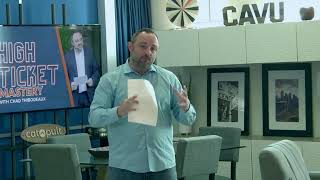
This is a YouTube video titled "High Ticket Mastery with Chad Thibodeaux" created on September 19, 2020. The content likely involves Chad Thibodeaux discussing strategies or insights related to high ticket sales or mastery, but no conversational transcript is provided to confirm multiple speakers or dialogue.
Sam, it sa. Yeah, there you go. Go ahead. Test one, two. Test one, two. Test 1, 2 bars. Right here on the microphone now. Yeah, yeah, it's picking up you really well. But do you see the microphone you're talking about right here? That's your settings for that. Okay. Okay. So as long as it's in the middle, then you know you're good. If it gets to the red, it's too high. Okay. Okay. So it should be nice. And that's it. That everybody can hear you. Nobody's on, but everybody will be able to hear you now. So go ahead and mute your mic. All right, everybody, here we are, day number two of Speak for a Change. I want to welcome you guys wherever you're watching from all around the world. So glad that you guys are here. Yesterday we talked with you about how to create a keynote that elicits a response. So, in other words, what we said is, if you're going to move people, and all great leaders know how to move people, one of the best ways to move them is through a talk, through a speech. And there's different stages that you can speak on, whether it be a live stage, like maybe in a small group of 20, 30, 40, 50 people, maybe you may even have as many as 100. Maybe it's a virtual stage, like a webinar or a master class. Maybe it's some kind of online course. Whatever it is, if you're speaking, if you're using words to communicate to an audience, you have to have a point. And the point of communicating is to elicit some kind of response. And the response that you want to be able to elicit is you want to be able to move them to take action, to get some kind of result. And then you want to move them or pivot them them to work with you so you can get them even more results. And that's what today is about. Today is all about pivoting. It's pivoting from your conversation to your close. Okay? And so I want you to grab a pencil and piece of paper today, and I'm going to reiterate at the beginning what I reiterated at the end yesterday. And that is, if you're going to pivot them, pivot them from your speech to your close, then the easiest way to do that is with a payoff statement. A payoff statement. Now, what is a payoff statement? A payoff statement is simply a statement that you use to communicate to your audience what's going to happen if they pay you. Now, once again, this is not Process, Nobody buys process. They buy payoff. When you go to the dentist, nobody pays the dentist because he has really long novocaine needles and really sharp drills. No, they pay the dentist because they can get poorly white teeth and a pain free lifestyle. Right. Well, what is the poorly white teeth and the pain free lifestyle of your product? If someone was to pay you 1,000 or 5,000 or even $25,000 for your services, what happens? No, no, no, no. Not what do they get, but what happens. So for instance, behind me, you'll see a screen that says high ticket mastery. Well, the payoff statement for high ticket mastery is you can come to high ticket mastery and we'll help you create your very own. Excuse me. We'll help you create your very own coaching program between 15 and $25,000 and sell three to five of them every 90 days. That's a payoff. You pay me the 7200 for high ticket mastery and I help you create a 15 to $25,000 product. And then I create inbound marketing systems that sell three to five every day. See, you exchange 7,200 bucks for a 15 to $25,000 product and three to five sales. See, it's an exchange. And every good sale has a transaction. But in the digital marketing world, transactions happen before the transaction. I want you to write that down. A payoff statement is simply the transaction that happens before the transaction. It's a mental transaction. It's an emotional transaction. It's a transaction that communicates vocally and visibly to your potential audience about what is going to happen. So you have to really hone down on your payoff statement. What is the payoff statement? What do they actually get? Not what do they get as in process, but what do they get if they apply it? What are the results? What does life look like? And the better you can get at that, the more money you can charge. So I want you to sit down and I want you to talk about the payoff. Then we have our three pivot questions. Our three pivot questions. I want you to write these down. They're qualify, urgency and scarcity. Cuss. As I like to say, qualify urgency and scarcity. The first thing you want to do is you want to qualify. You've just taught all of this knowledge and information to your audience. Whether it be live, whether it be masterclass, or whether it be webinar. You've already taught all of this information. Now you want to pivot them. You're going to do that by giving them a payoff. Now you're going to ask three questions to pivot them so you can sell them. What you can do is you want to qualify everybody in the room. So what I like to say is, I like to say payoff. We're going to take high ticket mastery. How many of you, and here's the question that I would ask. This is the qualifying question. How many of you would like to create your very own coaching or consulting program and be able to charge 15 to $25,000 and have inbound marketing systems. Have inbound marketing systems that you can close and sell three to five of them in the next 90 days? How many of you would like that? Let me see your hand. The second question that I would ask is an urgency. How many of you, If I could pay off, if, if I could show you how to create your own coaching program that you can sell between 15 and 25,000 and we could sell three to five of them in the next 30 days, how many of you would want those results sooner than later? See if it's sooner than later. That's the urgency. And then the third question is scarcity. How many of you? If I could only work with one person, there's hundreds of you watching this on live video and email and Facebook ads, etc. Etc. But if I could only hand select one of you and I could help you get these results and I'll say payoff again. If I could help you create your own program, I'm talking about hands on, look over your shoulder, give you my tools, give you my resources, help you do exactly what I did to make multiple seven figures. If I can only pick one, who would want to be that person? I see. That's a scarcity. They're like, yeah, I want to be that one person. And so what I've done to pivot them now is I've used the payoff and the three questions to pivot them, and now I can close them. What I want to do over the next 1 hour and 40 minutes is I want you to grab a pencil and piece of paper and I'm going to play the second half of Speak for a Change. This is where we dive deep into the pitch. I'm going to show you exactly how to do it. Yesterday we showed you how to construct a conversation, how to construct your keynote. Today I'm going to do is, I'm going to show you the second half, which is how do I sell? Is that a word? Etiquettely on a stage, small stage, Masterclass, a webinar, a Facebook live or even a small stage with, you know, 10 to 100 people in it. How can I sell in a manner that's not sleazy, that's not slimy, that doesn't feel gross, doesn't feel uncomfortable, but I can say wholly authentic and I can sell without selling. Well, how do we do that? Let's go to part number two of Speak for a Change. What I'm going to say is going to sound a little extreme, but it's super necessary. Okay? If you believe that your product can help people, you have a moral and an ethical obligation to sell them. Okay? If you believe that your message matters and you believe that if people enter your hemisphere, take your coaching program, take your consulting program, take your online course, take your done for you stuff, take your done with you stuff, whatever. If you believe it can help them make a difference in their life or difference in their business, you are morally and ethically responsible for to pitch them. And if you don't pitch them, if you don't ask them to buy from you, you are an abuser. You've abused your power because you had something that could help and you refused to give it to them. Imagine if someone was incredibly sick, they had a disease, something like cancer, and you knew that chemotherapy or if you knew that taking them to the doctor, you knew some kind of medication or would help them and you didn't get them the proper help. People would look negatively upon you, like, oh my gosh, I can't believe you knew that they had this and you knew this would help and you didn't do that people negatively upon you. But why don't you think about that when you come to pitch and when you come to sell. Here's typically, I don't know if you guys are anything like me, but here's typically what happens when it comes time to sell. When it comes time to sell, we're like, should I do I want to? What are they going to think? You know, am I going to be too salesy? Am I going to scammy? Do I even know how to do this right? What's the subject of all that argument? Me. I'm the subject. I'm the subject of all that argument. Okay? But I shouldn't be the subject of all of that argument. Ok? Why? Because mirror is here and what do I need to do? I need to turn around, flip it around. Ok? And so if you can flip that around now, it's not, oh my God, what are they going to think? Oh, am I going to be salesy? Oh, am I going to be scared. All you have to do is you have to figure out, does my stuff help? If it helps, I have a moral, ethical responsibility to sell them, right? Not what do they think about me, but how is this going to help? So scale of 1 to 10, I'm going to ask you guys, if somebody buys what it is you're selling, on a scale of 1 to 10, how confident are you that your stuff can help? So if you're confident that your stuff can help, then you have to have 10. So here's what we got to do. So we're going to put a 10 on the board. Okay? We're going to put a 10 on the board. Okay. We're actually going to put three of them on the board. Now watch this. Okay? How confident are you that your stuff can help? Okay, so we're going to just, we're going to put this as a P for your programming. On a scale of 1 to 10, I'm a 10 that my programming will help. Okay, On a scale of 1 to 10, how are you on your pitch? And on a scale of 1 to 10, how are you on your deliverability? Okay, so this is your product, this is your pitch, and this is your deliverability. Scale of 1 to 10, how are you that your product can help? How confident are you that you have a pitch that will sell? And how confident are you that you can deliver the goods? Here's actually the honest truth. Okay? I think if we were all being honest and taking an internal look, we probably would think that this is somewhere between a 3 and 5. Everybody said 8's 9s and 10s. I really don't believe that. I really think you think this is a 3, 4, 5. You know why? How many sold? The reason why I don't really think we think this is a 10 is because you haven't posted Facebook Live three times a day trying to sell it. Here's where the pitch comes in. And we're going to be talking about how to sell from a small stage today. You have to really believe this is a 10 in actuality, not just in theory. It took me a long time to really believe that my stuff was good, honestly. And so, because let me tell you how I know there's a 3, 4, 5. How much are you selling your program for? 10k. If somebody listens to you over the course of the year, how much money do you think they can make? 100k. Why don't you sell it for 75k? See what I'm saying? So we don't this is really where people struggle with the pitch. If I'm just brutal. I'm going to give you a whole outline on how to pitch in a minute. But I want you to understand between your noggin for a second, I want to do a little bit of mindset work with you just for a second. If we truly believed that our stuff was that good, I don't think any of us would shut up about it. Have you ever been to an MLM convention and they're just convinced that that hand cream is, like, going to change your life? You know what I'm talking about? Or that shake or that wrap or that. That water filter or that whatever. They just can't shut up about it. You're like, enough, right? They believe in that stuff so much. Like, honestly, they believe in it so much. I got a text message today from a guy in MLM that sent me a text and said, hey, Chad, I've got, you know, I follow you. I really love you, really respect you. I watch all your stuff. I've got this thing that I think it will really help you. And I look at it, I'm like, that's a freaking mlm. But he believes in his stuff so much that he took the time to send me an unsolicited Facebook message. So let's be honest. Let's be honest. What's the real number? That's the real number. And I want you to be honest with yourself. Like, do I really believe that my stuff is that good? Let's talk about the three buckets. Okay? So there's three buckets right here. Okay? Bucket number one is the content. Okay? It's the actual material that you created. Okay. Bucket number two is the presenter, the one presenting it. Okay. Bucket number three is the review. The review. What are people going to think? Those are the three buckets that our product typically falls in that we evaluate it on. Okay. Content. Is my content good? How many of you think your content is good? Right? Could be organized a little better, but your content is good. Okay? How confident are you as a person to be able to be able to present that content? And then what about the reviews? What are people going to think? Okay, so scale of 1 to 10, scale of 1 to 10, let's start here. How confident are you that people would give you 5 stars on your product if 100 people took your product, how confident are you that 99%. 99 out of 100 people would give you 5 stars. Think about that. You ready? So I'll review. So, like, If I come and take your stuff, right, you're taking a small event, big profit right now. So if I had 100 people take small event, big profit, how confident would I be that 99 out of 100 people would give me 5 stars? Does that make sense? Okay, so how confident are you in the review process that you think it's good, but do they think it's good? You know what I'm saying? I'm going to show you something real quick. So this is the mindset work that you have to go through before you make a pitch. Because your pitch, the quality of your pitch is actually determined in this bucket. Not in this bucket or not in this bucket? The reason why it's not determined in this bucket is they haven't seen it yet, so they don't know, Right? So they're going to buy right here. Based upon your confidence right here. Does this make sense? And so it rubs off right here. So what I want to show you is I'm going to teach you the pitch in a minute. But honestly, the pitch is stupid and it's going to be ineffective if you don't have this figured out. And this is the bucket right here that most of us freak out about. What is somebody else going to say about it? And this is what keeps us up. At least it keeps me. Keeps us up at night. For me to have run my very first event, I was really nervous about what people were going to think about me. So say about me. God, you have no idea how much I stressed about those talks and everything like that. I stressed about them, stressed about them, stressed about them. And then I delivered it and I just like, sort of ran away. It went and hit because I didn't even want to hear the feedback because I was just afraid it was going to be so bad. Right? This is the bucket that pulls us down, pulls our confidence down. So if I can just love on you guys a little bit. If I was to tell you, if you were going to Kavu, if you're going to get to Rarefied air, if you're going to Ceiling Invisibility Unlimited, this is the one that you're going to have to figure out when you get this to a 10, then people will have no problem buying your stuff. Because the format that I'm going to give you for the pitch is great. But this is what's not great. Okay, so this is where I want you to get. What I want you to get is, like, people are going to love it. I can't wait to get this out People are going to love this. People are going to love this. They're going to love it. Okay, can it get better? Yeah, but people are going to love it, right? Once you get to the point where people are going to love it, then people will be like, oh, my God, I got to get it right. You guys ever watched the Steve Jobs movie on Netflix about the very first time when he goes out and he's delivering his brand new computer and he wants the computer to say hello. You guys remember that? And he goes, I just ran a stinking super bowl commercial. It's going to do it, right? What he basically was saying is like, I want people to experience this because they're going to love it. And if they love it, then they're going to have no problem buying it. Okay? When you get to the point where you know that people are going to love your stuff, you'll have no problem selling it. I have no problem selling small event, big profit. Why don't I do it? Why don't I have any problem selling this? Because I know you're going to love it. Even if it's different than last time or different than the time before. Even if I screw up a lecture or whatever, I know you're going to love it. I just know you're going to love it. So I have no problem saying, yeah, man, get on an airplane and come. Yeah, yeah, Ross. Two days before they come on, man, we'd love to have you. I have no problem. If I wasn't confident in this, I'd be like, dude, I don't know, man. I don't know if this is the event for you. You may want to stay home. Because I'm not going to ask him to get on an airplane and come all the way over to Phoenix, Arizona to be in the middle of the heat if I'm not 100% confident, right? So when it comes time for shakiness or lack of confidence in pitching, this is where it's at. And so I just want you to know it, I want you to face it head on, that this is the bucket right here of where it's at. It's typically not the content. You typically are pretty decent, you know, with this, okay? It's not even you or the preparation of it. It's really, what are people going to think about my product? That's really where it's at. Okay? That's really where it's at, and that's what it forms it. So this one won't matter. This one has got to be a 10 if this is going to be effective. Does that make sense? Even if you botch this, your confidence here will move them forward. Does that make sense? Okay, so grab a piece of paper and let's jump into how to sell from the small stage. You guys ready? Everybody ready? Alright, here we go, here we go, here we go. The E word that's the most important when it comes time to selling at a small event is this word etiquette. There's an etiquette to everything that you do. And I want you to focus on this word because etiquette is where it's at. Have you ever known somebody that's just irreverent and they have no etiquette or no honor for the facility in which they're in? You guys ever know somebody like that? They get a little frustrating, don't they, after a while. Etiquette. Now see if I could formulate this thought. Etiquette is your ability to honor the situation and act appropriately. Isn't that better? To honor the situation and act appropriately? See, when you're at a small stage, especially in an event like this, and you get up on the stage and sell, you can't be that douchebag over here that's sort of slimy and seasy and salesy. Why? Because it doesn't just feel licky. You still have to see these people. You have to hang out with these people, you got to have dinner with these people. When you're on a big stage and you're up there and the lights are on, you, you can go and you can sell and you can sell hardcore. But at the end of the day, you get to go back to the green room and get in your limo and leave. You don't have to see those people again. You don't have to face them. But there's an etiquette that you have to develop in a small event in order to sell because you're still around. And once again, etiquette. My definition of etiquette is your ability to honor the situation and act accordingly or act appropriately. Okay, and so this is a small stage, right? There's not even a stage here. So imagine if I did this. Hey, everybody, how are you? Do I have something to sell you, lady? You'd be like, whoa, that's weird, right? What would you do if I did that, huh? Fake a phone call. It would be. Yeah, you fake a phone call. You would do something, right? You'd be out. How many of you would buy? But what if I hit was a 10 and it was A perfect program and it could change your life. Everything is a presentation. So you have to understand that what I'm going to show you today has to fall under the category of etiquette. Here's how you create etiquette. Ok? Number one. Number one, you ask permission to sell. You gain permission from the audience to sell, okay? You gain permission. If you don't have their permission, you don't do it. You don't do it. Okay? So number one, you gain permission. Okay? The easiest way to gain permission is. Hey, guys, is it okay if I tell you guys about what I have? I have something that I put together that I really think is going to be able to help you guys. But I don't want to pitch you, I don't want to sell you unless I have your permission. You. Is it okay if I have your permission? Do you think they're ever going to tell you no? They're never going to tell you. No. But what does it do just by simply doing that? What does that do from a superficial standpoint, Just strictly from a superficial standpoint, it prepares everybody to be sold, honestly, just for. Hey, guys, can I have permission to pitch you guys and to sell you guys? And what I'm doing superficially, honestly, is I'm preparing every one of your minds to be sold. Is the content, okay? It's the actual material. Now you know, you're ready to be sold. Does that make sense? On a big stage? It doesn't matter. On a big stage, I'm going to manipulate my. It's like I'm going to slide right into your dm, baby. I'm going to just slide right into the offer, okay? On a big stage, not on a small stage. On a small stage, it's different. On a small stage, control, manipulation, that stuff doesn't work. So what I've learned with etiquette is if you can honor the situation and then act appropriately, then if I simply ask permission to pitch, it not only just rolls out the red carpet for me to pitch you, but it also prepares you to hear what I say. The second thing that asking permission does is it makes you this, listen to me. It makes you the victim, and everybody wants to come to your rescue. Makes me the victim. Guys, can I have, Can I have permission? Like, can I have permission to tell you guys what I have? And everybody's going to say, yeah, yeah, yeah, right? Come on, come on, tell me what you got. Right? And so now I can present from an inverted place, right? So at the beginning, the. I'm going to Elevate myself, right? Watch. So I've elevated myself. Just watch how this works. You're going to love this. I elevated myself right day one, elevate. I'm teaching, teaching, teaching, teaching. Establish a thing. I built my authority, built my credibility. I got it all going, right? I've done that. Ok, when I start to pitch, if I pitch you up here at a small event, it doesn't work. Large event, of course it works. Small event, it doesn't work. So what I want to do is I want to invert this. Now watch what I do. What I want to do is I want to elevate the crowd and I want to demote me. I do that by asking permission. And what happens is this. Have you ever scraped your knee and somebody come to help you? Oh, babe, yeah, sure, right. And they begin to clean you off or take care of you. They sort of baby you. It's so weird. I have pitched hundreds of times in a small event and I've learned that when I ask permission, it inverts the control. And you guys are now the mama hen and I am the one who's getting my. And you literally, literally are nurturing me to sell you. It happens every time. Okay, so she asked, why is that energetically? Because if I'm asking you permission, what have I done to your authority? Moms and dads don't ask permission from their kids. Kids ask permission from their moms and dads. But in those moments when moms and dads come to their kids and ask their kids permission to do something. See what I'm saying? It inverts everything. The kids. Now listen more. Okay, now watch. When mom and dad, okay, I'm going to see if I can show you this and prove this to you. Okay? When moms and dads Olivia Leet, Jada Archer, William do this, I'm instructing them, speaking down to them. Don't do that without permission, lady. As I tell my 15 year old daughter often, don't do that without asking me, without clearing me. Who, who's on top? I'm on top. That's how it is. There's been a couple times when I've had to go to my kids and say, hey guys, can I have permission to just tell you guys about something and to talk to you about something? It's really important to daddy, but I want to make sure I have your permission to do this. Can I talk with you about it? And they say, okay, yeah daddy, yeah daddy. What do they do? What's their reaction to me? Do they tune me out. Do they turn off their listening voice? They now tune in and listen to me more than they ever have. Why? Because now they're the ones giving permission and I'm the one gaining permission and it's flip flop. And what I've learned is when you begin to gain permission from your audience and that control is inverted, they will now listen to you more intently than they ever listened to you before. It's the power of permission. You're literally psychologically inverting this. You're just inverting the process. Saying, I'm going to get down here for a little bit, I'm going to get on your level, I'm going to ask you permission. I'm no longer going to be the boss. I'm no longer going to be the authoritarian guy. Now can I have permission to tell you what I have? And you guys are going to say, do you do this? Yes. Depends. You're going to say yes. Right? And what I've done now is I flipped the permission, the control lever and now you have no choice but to listen intently because you just gave me permission to do something to you. Are you with me? Okay. Are you with me? Okay. So if that's the case, if that's the case, then the etiquette is increased because I asked for permission from you. Another way to make sure that the etiquette is real and the etiquette is fine is to tell them that you want to partner with them to accomplish a goal. Okay? And here's what I call this. I call this mission cause action or mca. Mission cause action. So the etiquette says, hey, Ross, I want to join you on a mission or I want to invite you to be a part of a cause or guys, I want to motivate you to action today. So it's called mission, cause, action, mca. Part of the etiquette of selling on a small stage is to make sure that when I go to speak, when I begin speaking, that the mca, the mission, cause and action is at the central point of everything that I do. Does that make sense? Not the sell of a product, but the mission, the cause or the action. Okay? So when I say, hey, guys, can I have permission to tell you what I have? Okay. And then what I'm going to do is I'm immediately going to figure out what bus I want to put you on. Do I want to put you on the mission bus? Do I want to put you on the cause bus or do I want to put you on the action bus? What you want to do. Hey guys, today what I want to do is I want to rally us together and I want to ask us to go on a journey together. I want to ask us to to figure out a way how to change the world. I want to figure out a way how you and I together can partner together to create the most magical event together or whatever it is you're trying to do. It's mission cause action. So I ask for permission and then I immediately, immediately move them to mission cause action. One more. Just a second, let me finish this. Remember day one? Do you guys remember on day one we talked about scarcity mindset and I said it's best if you sell to a scarcity mindset. And then what pivots them toward abundance? We said a what? A reward. Right. A reward will pivot them toward abundance and then a reward with a string attached will move them to abundance. Right? So now that was the beginning, this is the end. So now I'm teaching them, I'm in all my presentation, I'm moving them to scarcity. This is my ability to move them to reward and to a string attach. What I'm going to do is I get permission. I've inverted the power. Second thing is I put them on one of the buses. Mission. Ok, cause or action? Which one are we going to do? Hey guys, I want to invite you to join me today as we help create your small event that can make a massive difference in the world that can help you do this or help you do that. That's a mission or a cause. Or I could say if we want to take like an action, hey guys, I want you to join me today. Or I could say something like how many of you guys are ready to finally do X, Y and Z? Are you ready? Are you guys ready to do that? That's an action. Okay, so the etiquette of selling is if you understand this, gain permission and then put them in mca. Now at the end of the day when I sell, I'm either selling them a mission, I'm selling them a cause, or I'm selling them an action. What am I not selling them a product? Does that make sense? So what I've done is I've reframed the conversation, I've given you permission to tell you what I have and I'm reminding you that I'm simply asking you to join me on this adventure. I'm simply asking you to partner with me on this adventure, on this mission, on this cause, or on this action. And if you partner with me on this I'm not selling you, I'm just asking you to be with me. I'm asking you to get on the bus with me, so to speak. Does that make sense? And so it removes the sliminess, it removes the sleaziness and it puts us going the same path. Now Mikayla, you had a question. Can you clarify mission versus cause? Right, so a mission, okay, so a mission. So see a mission would be hey guys, together we're going to work and we're going to. Our mission is to create your very own small event. Okay, that would be a mission. A cause could be, hey guys, together we're going to partner together to eliminate sex trafficking in the United States. Okay, an action would be, guys, are you ready to do X, Y or Z? Are you ready to take action? Are you ready to get your life to the next level? Does that make sense? So just a cause is just an emotional like a mission is. We have a point and a purpose. A cause of something emotional and then an action of something that you're going to do to probe and don't get yourself too caught up on semantics there. The point is there's a mission, there's a cause, there's an action combined. That's an adventure. That's what you're inviting people to be on. You're inviting them to join you in an adventure to get something elevated. Okay, does that make sense? If you do that then now we've established the etiquette. Now if I've gotten their permission and, and I've invited them to come to the mission. Cause and action. Now it's relatively simple, okay? Now it's relatively simple. So there's two psychological things that I want you to think about that just happened. Now once again, nobody else is teaching this stuff, okay, because they don't know this stuff. But here's what's happening right here. Empathy and partnership. Empathy and partnership are the two emotions that have to happen in order for etiquette to be premium. Empathy and partnership. So when I've asked, hey guys, is it okay if I gain your permission to tell you what I have today? What am I gaining from you? Empathy. And when I put you on the bus of mission, cause or action, what am I establishing? A partnership. So now what I've done is when I've asked permission, it's a one way street. When I put them on the mca. Now it is a partnership and we are in this together. Why is it important that we go through this journey together? Why is that important? Yeah, absolutely. And we got it. From the beginning, like we're in this together, whereas when you're in a big stage speaking down to people, it's one way. Now this, what you've done from the beginning, you've made it two way. And this is so powerful when you're beginning to sell from a small stage event. Get empathy in partnership. Okay? Get empathy in partnership. Okay? The final thing that makes etiquette work is proof. Is proof. Okay, how do I have proof? So what's the first thing we do? We gain permission. Gain permission. What's the second thing we do? We have partnership through an mca, a mission, cause or an action. What's the third thing we do? We give proof. Right? So those are the three things. Empathy is the result of gaining permission. Partnership is the result of inviting people to be part of a mission, cause, or action. Okay? So those are the two things that we're gaining when we do that. Now what I want to do is I want to add the third one, and that is proof. Okay? This is all part of etiquette. All I'm doing is rolling out the red carpet of etiquette. Okay? So watch. So if I have etiquette, which is what you need, what's the first thing that you need? You need to ask permission. And what does that obtain? That obtains empathy. Okay? Second thing that we need to do is we need to invite them to be part of a mission, cause or action, which produces a partnership. And the third thing we're going to do is we're going to give them proof, which the result of proof. I just had a brain fart here. Empathy, partners. Oh, is result. Okay, so here we go. So this is the three steps of etiquette. When I lay out the etiquette of selling on a small event, I gain permission, I invite them to be part of a mission, cause or action, and I give proof that it works. So I'm getting empathy, partnership, and a result. Okay, that makes sense. Okay, so now watch how this works. Okay? So if I know that those are the buckets that I've got to put people in, then everything is really simple. Everything becomes really simple from this point out. Okay? Why do we put proof way at the beginning? Because selling from the small stage is all about making a difference, okay? It's all about making some kind of difference. And so when you have gotten the empathy from them by getting permission, you've invited them to be on a mission or a cause or an action. Now you want to do is you want to talk about a changed life, right? At the Beginning, okay? And this is the result that comes in. And this is ultimately what it is about, okay? It's not just about money. And so we're keeping money off the table right now because what do we buy with? Do we buy with our head or our heart? We buy with our heart. And the social proof at the beginning allows us to trigger that emotional heartstring and gets it. So, for instance. So I'm just going to show you guys, I'm just going to make this up, okay? I'm going to show you the first three minutes of this. Can I have permission? Can I invite you? Let me tell you a story. Okay? So this is right at the beginning of this pitch, okay? So all I'm doing, remember, you have to understand why I'm doing it. Why am I doing this? I'm establishing the etiquette. The etiquette is simply honoring the situation and acting appropriately. That's all Etiquette is honoring the situation, acting appropriately. So the way that I can honor the situation, act appropriately is I can ask permission, invite an MCA and give them proof. Hey, everybody. Hey. How'd you guys like that teaching? Was that good? Did you guys enjoy that? Hey, is it okay if I have permission to tell you. I mean, to tell you guys what. I have to tell you what I want to. What I want to sell to you guys today? Is it okay if I get that? Is it okay if I. Now listen, if it's not okay, just let me know and I'll just. We can stop and we can go get donuts right now. But is it okay if I tell you what I have? Is it okay if I tell you what I. Participate with me. Okay, perfect. What I want to do today is I want to invite you guys to partner with me in creating what ultimately is going to be a business, a coaching or consulting business for you that's going to help you positively impact the lives of so many people. Imagine, just for a moment, you being able to create a marketing agency for lawyers, that they're able to be able to help dozens and dozens and dozens of people. Think about how big your impact would be. Imagine, just for a moment, if we were to be able to work together and you would be able to create a podcast empire that helped people take their master's podcast, turn it into a master's show so they can get massive amount of leads and increase their impact. Imagine that just for a second. You know, Ross, I'm going to invite you to come and join. I'm making all these up. Ross, I want to invite you to come and join me on figuring out how to create amazing events together so people can come and they can just learn and be able to elevate their life and elevate their business. Just imagine the life changing that's going to happen because of. Do you see how that is? So what I do is when I ask permission, I then, hey, I want to invite you to does this make sense? And then mission, cause or action? Let me tell you a little story. I want to tell you guys a story about a gal by the name of Jessica. Jessica is one of my favorite clients. And when Jessica and I first worked together, Jessica and I watch the key words. Jessica and I partnered together. Jessica and I partnered together on her business. You see Jessica as a single mom. Any single moms in the room? Any single moms. Jessica was a single mom living in one of the most expensive cities in the United States, San Diego. In December, it was around Christmas time, and her business started taking a dip. So she went really hard to try to get some more leads so she could make some sales. She made 12 phone calls in the month of December. Guess how many sales she made in the month of December. Absolutely zero. She was devastated. She was frustrated. She was wondering, like, am I going to be able to have Christmas for my kids? I mean, that's awful. Well, what am I going to do in the new year? And so she had saw me online and she had saw that we had partnered successfully together with some people that she knew. So she reached out to me and she called me and she goes, chad, she goes, my name is Jessica and I need a little help. And she told me about her December decline and she wanted to know if I could help her. So beginning of January, Jessica and I started working together and her and I partnered on helping her create a high ticket coaching program. And what was interesting is after we removed a bunch of clutter, after we quadrupled her rates, after we elevated her expertise and elevated her mindset, Jessica made 12 sales calls in the month of January, just as she did in December. But in December, she was selling a single mom. Any single moms in the room. Any single moms. Jessica was a single mom living in one of the most expensive cities. $7200 product. We quadrupled her rates all the way to 36,000 in the month of January. But we got her mind right. We got her laser focused on what she does and, and we made sure that she had an incredible product that could help some people. And we helped Jessica partner with a lot of people. How many sales do you think Jessica made in the month of January not selling a $7,200 product, but selling a $36,000 product? Jessica closed nine out of 12 people. You do the math. That's almost $300,000. What would that do to your life? What would that do to your life? But most importantly, think about what Jessica was able to do. Jessica was able to help nine people that particular month increase their sales, increase their revenue, build up their impact, build up their worth. And see, that's what this is all about. So do you see how I just set up this entire pitch? Have I pitched yet? But, people, you're leaning forward. You're giving me permission. I've mca. We're partnering together now. Let me tell you about Jessica. Does this make sense? This is what most people miss in sales. Right here is the etiquette that if you roll it out right, you literally have people begging you to pitch them. Because how many of you want what Jessica had? Does that make sense? So this is the etiquette that, as you roll out. Okay, so let's take any one of your businesses. Any one of your businesses. Okay? What do you want to sell? A detox retreat? Okay, hey, everybody, can I have permission to tell you what I have for you? Okay, and then what's the mission, the cause or the action that you're going to invite them to partner with you on? Guys, I want to invite you right now to partner with me to regain your health. Let's partner together to make sure that your next year is your best year. That make sense? So you just got to give them a mission, a cause or an action to partner with you on. Okay? And then now let me tell you about. Who are we going to tell them about? Let me tell you about Betty. And then you tell the story about Betty. And how do you lay out that story? Betty's current reality. Betty was this. And Betty was this. And Betty was this. But really what Betty wanted, she wanted this and this. She didn't know how to get that, so she came and she worked with me, and I helped her do xyz. And now Betty's life looks like this, this, and this. How many of you guys want that for your life? Does that make sense? So do you see how we just rolled that out? We haven't even gotten to the pitch yet. But just by laying down the etiquette, people are ready to buy. They are literally begging to buy. So does that make sense? Okay, this is the part that nobody else teaches. Now, I'm going to teach you what everybody teaches. Is that ok? Ok. So now that we've done that, now what we're going to do is we're going to go through and we're going to put our educator hat on. Okay. And now we're going to teach through the stack. Okay. Teach through the stack. So number four. Teach the stack. Okay, so how many of you would like to have those results that Jessica got where you sold 9 out of 12? $36,000. What would $300,000 to your bottom line do? What would that look like? How many of you want those results? Let me see your hand. How many of you guys want those results? Okay, what I want to do is I put some thought behind this and I thought about what do you need to get very similar results to Jessica now what am I getting ready to teach through the six things that you need? Right. Remember how we talked about that earlier? Okay, so what I'm going to do is I'm going to tell you we thought about this and there's really six things that you need to be successful. If you're going to and then you revert back to the mca. If we're going to be partners together and you're going to get your business to the next level, if we're going to partner together, you're going to do this, this, or this. You need these six things. Number one, and then you go through the six. 1, 2, 3, 4, 5, 6. If you need a reminder of what those six, six are, those are on page, page 27. Okay. Right here. Six components. So all I'm going to do is. Now all I'm going to do is I'm just going to walk through this. I'm going to teach through this stack. Ok. So as we thought about this, here's what you need. If you're going to be able to get the same results as Jessica, if you're going to be able to accelerate, if you're going to be able to do this or this or this, then there's really six things that you need. So grab a pencil and a piece of paper. I'm going to walk you through these. The first thing that you need is you need a product with a payoff and then you teach through that and then you're going to need a pathway to get somebody from point A to point B. Okay. And in our program, I'm going to tell you about a little bit. This is what we specialize in. The third thing that you need is you need access. What happens when you get Stuck. The fourth thing that you need is you need coaching and teaching. The fifth thing that you need is you need tools and resources. And finally, you need a community. And I would teach through that. Teach through that stack. Does that make sense? Okay, so once I teach through the stack, now what I'm going to do is I'm going to introduce them to the product. Okay? I'm going to introduce them to the product and I'm going to introduce it to them. Why? This is why I created that's the transition line. This is why I created the podcast shift. This is why I created small event, big profit. This is why I created launch accelerator. Why did I create it? Make sure you follow me. Are you tracking with me? Okay. Why did I create my product? So we could fulfill the mission. Proof number two. Proof number two. Then I'm going to tell a second story about someone who took this particular product and was successful. Okay? Now the first one does not have to be about someone who took the product. It can just be about someone that you helped. Because some of you don't have two really cool stories. Okay? So this could just be someone you help. This one has got to be about the product. If you don't have this, you need to go offer your services for free. Until you do, okay? You're going to come back and give them proof. Okay, now with this proof, this is where you're going to interlace our three big sales strategies, which are silly math, expensively affordable, and stupidly irresistible. You're going to pitch this inside a story, inside social proof. Watch how this happens. Okay, so let's take Jessica as our story again. Okay, so what I want to do is I want to tell you guys a little bit of a story about Jessica. Jessica, single mom, richest city in the country. 0:12 in December. And then we started working with her. Okay. Jessica, being a single mom, wasn't quite sure she could afford my fee. I mean, I'm expensive. Jessica wasn't really sure she could afford my fee. Okay, but as I sit down with Jessica, I began showing her. I began showing her a concept that if we could raise her fee from 7,200 to 36,000. Because that sounds like a lot of money. But see, Jessica's mission, Jessica's mission was to help coaches and consultants create $36,000 products in their business. And so what I was able to show Jessica was that if you just sold one product, one product, that's it, then you would pay. You would more than pay for my entire coaching program. How many hours are There in a week? Not in a week. But how many work hours are there in a week? 40. I asked Jessica that question. You know what she told me? She said, 55. Jessica worked 55 hours a week. So I just made her do a little bit of math. If you worked 55 hours a week, roughly how many hours would you work in a month? Do the math with me. 50 times 4 is 200. 5 times 4 is 20. It would be 220. Right? So Jessica said she would work roughly 220 hours. I asked Jessica, Jessica, if I could give you a proven system of sales, and you worked 220 hours in a month using my system, do you think that you could sell at least one of those? Of course she said yes. Of course she said yes. You know, actually what she told me, she goes, I actually think I could sell one a week. I said, oh, well, let's take that. Okay. So what I did was I just simply showed her that if she was going to sell a $36,000 product and she sold one a week, that would be 36,000 times 52. Now watch this. What I showed her was if that were the case, she would actually make 1 point million dollars in her first year. But do you think she's really going to sell one a week? I didn't have that much faith in her, to be really honest with you. I didn't. So I said, what if you just sold one every other week and you cut this in half and this wasn't 1.8 million, but it was $900,000, do you think you could sell one every 110 working hours? She goes, well, I think I could sell one a week, so of course I could do that. Well. Well, let's just say that I have even less faith in you, and you can't sell one a week, but let's say that you sell one a month, OK, and you only sell a $36,000 product once a month. How much money is that? And I was able to take it. And I just took my little thing. 36,000 times 12. The answer is $432,000. Do you think if you just sold one of those products a month, do you think you'd be okay with a salary? $432,000. What do you think she told me? Can you see how Jessica couldn't afford not to work with me? Do you see how this worked? You see? And I would just tell the story, and I would intertwine silly math in my story with her. Okay? Do you see how that works. Now here's the thing. Now, Jessica was a single mom. So when I worked with Jessica in my program, I wanted to make sure that Jessica could afford it. I, I didn't want her going homeless or anything like that because she doesn't have a bubble bath. Okay? I didn't want any of that. Ok? And so I want to do something. And so we were pretty conscious with Jessica. And I was able to be able to give Jessica an interest free payment plan in our coaching program. One that she could afford. Okay. One that she could afford. But I made it simply irresistible for her. I told Jessica that if in your first 90 days, if you, if you don't make 100% of your investment back, I'm not talking about just the three payments that she made. I'm talking about the entire cost of my program. If you don't make that back in 90 days, on your 91st day, I'm going to push pause on that program until you do. And I'm going to take 100% risk off the table. What do you think Jessica said? What do you think Jessica said? Yes. And Jessica and I worked together, we partnered together to elevate her business element, elevate her life. And not only has she now bought her dream home that her and her little daughter live in, but she has helped dozens upon dozens upon dozens of other people create the life and dreams, the life of their dreams. And you know what? I sort of take credit for that because every person that Jessica helps is as if I help them. How many of you would like those kinds of results? How many of you guys would like those kind of results? So do you see how I interweaved with proof? I interweaved my three big sales points in there and I did it through a story. Does that make sense? That's the difference between selling a small stage and selling on a real stage. Now, finally, what I'm going to do is I'm going to move now to the emotional pull. I'm going to move to the emotional pull right here. So after I tell the story with Jessica, everybody's fired up. And I'm going to say, how many of you in my transition here, my transition here is how many of you would like to have a result like that? How many of you would love to be able to build a business that impacts the lives of so many other people? How many of you would really like that? You know, I just got thinking about, like, what would have happened to Jessica. Most people I got thinking about, like, what would happen To Jessica, if she didn't invest in herself, if she didn't take a chance, I've always thought about that. Like, what would her life be like? You know, she didn't have a terrible life before. She made about 70 to 80 thousand dollars a year. But she didn't impact very many people. She didn't find the significance of self worth that she has right now. Now Jessica stands up on her pedestal. She loves her life, she makes plenty of money, she's living in her dream house. But most importantly, when she looks in that mirror, she loves who she sees. See, it's amazing what happens when you finally step into your greatness. It's amazing what happens when you live up to the potential that you want. Okay, so I'm just going to do some kind of emotional pull right here, ok? And I'm going to show them why they can't afford not to do this. Okay? I'm going to show them why they can't afford not to do this. And finally, number eight, I'm going to invite them to do what Jessica did. Now notice I didn't invite them to work with me. Guys, I want to invite you to do exactly what Jessica did. Jessica invested in herself. I want to invite you to invest in yourself. Why? Because we have a cause that we're fighting for. And I want to partner with you to get this to the next level. This next level. So I want to invite you to join launch accelerator. I want to invite you to join whatever it is you're pitching. I'm going to invite you to do exactly what they did. Now watch. Then number nine is the call to action. Now here's what you have to do. And that's the transition. Now here's what you have to do. Okay? Now here's what you have to do. If you're ready now watch how to do this. If you're ready to get your life to the next level, if you're ready to partner with me to get your business to the next level, if you really believe in yourself that your product can make a difference in lives of so many, then you're morally and ethically obligated to make sales to them. But you may not know how to do it. I want to grab you by the hand and I want to help cavoo you. I want to help pick you up to that next level. And together you and I are going to make a difference. So here's what I need you to do. Akilah is going to pass out order forms and they'd pass out order forms. If I'm doing it here, Akilah is going to pass out order forms. And what I want you to do is I want you to look over this product now and then notice I haven't said anything about price. I haven't said any of that yet. Right. I'm doing a call to action way before they know the price. Okay. I don't know. So how many of you are ready to do this? So what I've done, the reason why you do that in a small stage is you get everybody to say yes. What do you get them to say? You get them to say yes. What do you get them to say? You get them to say yes. You get them to say yes before you tell them the price. So if you guys are ready, I'm going to ask Akilah and my team to pass out order forms. Okay. And what I want you to do is I want you to grab your pencil and a piece of paper as you're filling this form out. Okay. And then I'm going to go right to my bus. My bonus urgency scarcity. Have I told them a price yet? Nope. Why? I'm on a small stage, I don't have to. They have an order form. Yeah, they can see it. Okay, what I'm going to do is I want to tell you guys, bonus urgency scarcity. I want to give you guys some bonuses if you jump on board. I want to incentivize you to come on board today. I'm so confident that you and I can partner together to get your life and get your business to the next level. We're going to give you some bonuses. First bonus we're going to give you is tonight we have reservations at such and such restaurant. It's a nice five star restaurant and we have reservations there and we have a reservation with your name on it. And I'm going to invite you to come to dinner tonight with me. Get an additional two to three hours worth of coaching. We're going to get together, we're going to have great food, we're going to have great drinks. I'm going to get to know you, you're going to get to know me. And your coaching starts tonight at such and such restaurant. I'm going to invite you to come and we're going to have a blast together. Now don't worry, it's not going to cost you a penny, not even gratuity. We have 100% of it covered. Bonus. Okay. Urgency, urgency. Now the thing is I need to know right now if you're in. The reason is because we had to change our reservation. If you're in, we've got to make sure there's plenty of room in you. So what I'm going to do is I'm going to ask everybody to go ahead and fill this out right now. Even if you're not buying today, go ahead and just fill this order form out because we have some prizes that we're going to be giving to everybody. Got some swag. We're going to be sending you in the mail, so everybody's going to fill this out. But listen, guys, we want you to jump on board this day because I'm so confident this is going to work for you that I want to get started now. I literally want to get started now and then. S. Scarcity is typically how many people. I try to avoid the scarcity part at a small event. I do it at a big event. So I'll do scarcity a little bit different. So here's the thing. So we told you guys we're coming to dinner tonight. We told you that we've got to know right now because we've got to change the reservation. But here's the thing. Now I'm going to add a second bonus with scarcity. Okay? So for the first five people who fill this out and get it to Aquila, the very first five people, we have a thing called the yellow brick road call. Now, I normally sell this yellow brick road call for about two. Okay? But for the first five in, I'm going to give this to you absolutely free. What the yellow protocol is, is, Franco, you and I are going to get on the phone together for two hours and I'm literally going to go through my seven step pointer system with you and my six step launch phase with you, and we're going to lay out your entire business. I'm talking about all your funnels, all your emails, all your strategy, all your follow up, all your ads, organic traffic. We're going to roll all of this out so you can see your entire business. To be able to see your entire business on a sheet of paper, would that help you? If you could just see an entire business plan, you know where you were going, you had clarity. Wouldn't that help you? Of course. We do this all the time. Those are $2,000 for the first five people who fill that out and hand it to Aquila. We're going to be able to give you this absolutely free. See, that's how you would do scarcity without it being slimy. I Wouldn't say. We've only got three spots left tonight. Slimy. So I would add a second bonus to that. Now, have I given them the price yet? I don't ever really give the price. I don't ever give the price. Okay. Not at a small event. On a webinar, yes. On a big event, yes. It's already on the page. And then what I do is I sort of act ignorant. Act ignorant. No doubt. Somebody can say, well, how much is it? Oh, yeah, I guess I probably should tell you how much it costs. I don't even know how much it costs. And I just sort of act ignorant. But why don't I tell them? Because I don't really want them to feel like they're being sold to. I want them to feel as if we are partnering together on a mission, on a cause, or on an action. Does that make sense? So I don't really tell them. They'll ask me. And then if they don't ask me, I'll say, oh, yeah. Do you guys want to know how much it costs? Anybody want to know how much it costs? Well, you can probably see on your order form, but really, guys, if you were to go to my website, it would cost this. But because you guys are here today, because we're together, because we're going to spend the next few days together, we've decided to give it to you at this particular rate. And that's an awesome, awesome deal, guys. And, you know, Jessica, you know, and I'll just come back to social proof right here. I can just come back here and so, guys, I really want to partner with you guys. So let's do this. Okay? Let's do this. And I just use those kinds of words. Let's do this. Okay, let's do this. Are you guys in? You guys ready? You guys ready to go? Who's hungry? Who wants dinner tonight? Okay. See how it works? Okay, so talk to me a little bit about that. I just sort of rolled out the etiquette of selling from a small event. Can you see how that's different than selling on a webinar or selling on a big event? It's so much different. We were at an event. You may have been there. Were you at Akbar's event where Dan Henry came and pitched? Dan Henry loved the guy, but he used Myron Golden's large stage sales tactic at Akbar's small event, and it bombed. Okay. He did so good teaching. So good, so good, so good, so good. And then he switched into sales mode and he just lost the crowd ended up not selling any. And I just, I couldn't help but think like, oh my gosh, I wish I could teach him this particular thing. Because Dan is such a good person, he's such a good communicator that he would have been able to close the entire room if he used something like this. So don't underestimate the power of what I just taught you. You don't learn this a lot of good communicator that he would have been able to close the entire room if he used something like this. And so don't underestimate the power of what I just taught you. You don't learn this a lot, a lot of other places, but it's all about etiquette. Okay, and how do you get etiquette? You ask permission to gain empathy. You invite them to partner with you on an mca, which builds the partnership. You give them social proof which shows them results. Now you have the etiquette, you've established it. Now 4 through 10 are pretty simple. Does that make sense? What happens if you just start through number four? What'd you say? It's going to feel slimy. It's going to feel like you're selling them and you don't want that to happen. How long do you prepare to have this? Take 20 minutes in your presentation, a lot of other places, but it's all about etiquette. Okay, and how do you get etiquette? You ask permission to gain empathy. You invite them to partner with you on an mca, which builds the partnership. You give them social proof which shows them results. Now you have the etiquette, you've established it. And now 4 through 10 are pretty simple. Does that make sense? What happens if you just start through number four? So the most difficult part, the most time consuming part on this are your two stories and the number four. So three, four and six are your time consuming. So what you want to do is you probably want five minutes, five minutes, probably seven minutes. So you probably have 17 minutes just in that. Okay, so that's probably right there, a 30 minute presentation. So let's talk. That's a great question. Let's talk a little bit about that. So if you. I don't ever recommend. So Akbar didn't listen to me and we laugh at him all the time. Akbar flew me in to actually do the pitch, but he got talked into pitching the night before because somebody that wanted to see him pitch was going to be leaving. So he what, say it's going to feel slimy. It's Going to feel like you're selling them and you don't want that to happen. How long do you prepare to type Half of this? 20 minutes in your presentation. So the most difficult part, the most time consuming part on this are your two stories and the number four. So three, four and six bombed the first night because he pitched when nobody was ready. So you don't want to pitch too early. Okay. But you don't want to pitch too late either. So if I waited till Monday morning to pitch, that's too late. A couple of you are already going to be gone. You're going to be emotionally and physically and fatigued. Right? You're going to be fatigued. So typically, if you have a three day event you want to teach, halfway through day two, you typically want to pitch about the 60% mark. Okay. So on a one day event, you pitch the session that you speak after lunch, three day event, find the 60% mark. That's roughly right. Because if they don't buy, you have time to re pitch. Does that make sense? Okay, are your time consuming? So what you want to do is you probably want five minutes, five minutes, probably seven minutes. So you probably have 17 minutes just in that. Okay, so that's probably right there. A 30 minute presentation. So let's talk. That's a great question. Let's talk a little bit about that. So if you. I don't ever recommend. So Akbar didn't listen to me and you have more than one shot at it, but yet you built enough time to collapse or built enough value to collapse those time frames. Okay, so probably about the 60 to 70% range is where you want to pitch. Yes, ma'. Am. Okay. So that doesn't necessarily matter. Okay. As long as you have built up enough goodwill and credibility with them. It doesn't really matter. I happen to. But you have to at some point say, hey, you guys want to hear what I have? You have to do that transition. Okay, but how many times have I told you guys a pitch is coming? Yeah, we never. Right. I told you guys a pitch is coming. A big event. How many times did Russell Brunson tell you at Funnel Hacking Live, a pitch is. You laugh at him all the time. Ackbar flew me in to actually do the pitch, but he got talked into pitching the night before because somebody that wanted to see him pitch was going to be leaving. So he bombed the the first night because he pitched when nobody was ready. So you don't want to pitch too early. Okay, but you don't want to pitch too late. Either. So if I waited till Monday morning to pitch, that's too late coming ever. He never tells you now he is pitching you, he's brilliant at it. He's pitching you the entire time. You just don't know you're being pitched. You know that whole Operation Underground Railroad thing, You know why? So I'll tell you this, Because I'm a speaker with clickfunnels. You know why they do that? Not just because he loves Operation Ground Railroad. What do you do? It's a psychological tool. He gets you accustomed. He says, I want you to get up and go to the back. What he wants you to do, he wants you to get up and go to the back. He's conditioning you that when he does his pitch later, what do you got to do? You've got to get up and go to the back. You'll also notice and watch him on video. You'll also notice that when he comes to the left side of the stage, he teaches. And when he comes to the right side of the stage, he pitches. Just watch him. So he'll say something like this, like, you know, so the guys, this is why you knew this, you know. But I really want you guys to think about in my traffic secrets book, I've done it. And just watch him. He's brilliant and I never knew he was doing this. And when we went to his training, he started teaching that. I'm like, that is so freaking clever. Oh, it's all intentional. The reason why, he said, because he learned this from Dan Kennedy or whatever, is when you're on this side, so it's your right, okay? But when you're on this side of the stage, okay, what side brain are you thinking with? Creative or logic? It's logic. When you're on this side of the brain, which one are you thinking of? It's emotional, right? So he waits til he's on this side of the stage to hit you with a pitch. Why? Because you're going emotional. This side is logical and he's so brilliant with what he does, right? And then when he comes here, he'll come on this side of the stage and. And he'll say, go to the back of the room. And he conditions you and he'll even say something like, hey guys, everybody look back there, everybody look back. Hey Melanie, wave your hand right now. And he'll point you back there to that room. And he'll do the operation on the railroad to get you used to buying something by getting up and going back. And then he'll come back and he'll have story after story after story. Every single one of his speakers. Every one of his speakers is one of these proofs. Every one of them. Marley Jackson got this, this, this, this, this. And she speaks. He does this right here. As good as anybody. As good as anybody. And he sets you up and sets you up. Sets you up and sets you up and sets you up. Right? He says, oh, I wish I had more time to tell you this because there's so much information. I can't give it all to you right now. But listen. Yeah, he's brilliant. Yes, ma'. Am. What are you selling? You're selling a payoff. You're selling a partnership and a payoff. Okay? And so we've done all of this. How many times have we said, guys, I want to partner with you to X, Y and Z? A dentist isn't selling the drill and the novocaine needle. A dentist is selling white teeth and whatever. On a large stage, I nail the stack. On a webinar, I nail the stack. On a one day mastermind, I. I nail the stack. In an intimate environment like this, I don't stack it. Now hold on a second. The exception to that rule is when you ask me, but I've already told you here, because there's six things that you need to be successful. You need this to be successful, and then you need this to be successful. You need this. And that's exactly why I created Launch Accelerator. Launch Accelerator is alive. And interactive coaching program designed to do this, this and this, and this and this. And it provides everything that you need to accomplish it. Now let me talk to you about Jessica, right? So I don't have to go, I don't have to revisit. You know how Russell revisits his stack? I don't have to revisit it right here because I'm doing it. I'm selling the proof, I'm selling the stories. Does that make sense? So let me see if I can give you one other example of this. Okay, let's say that I was selling you. What? What am I selling? What am I selling, huh? An online course? So let's say I'm selling you my seven day launch, okay? I'm selling my seven day launch. And I come in here, guys, I want to partner with you on finally getting your business off the ground. You know, there's two things that stop you from launching your business. It's procrastination and it's perfectionism. In fact. And then I'll come to. So I want to partner with you to finally get over this. Let me tell you a story about Franco, okay? Now, when Franco and I first met, Franco had this great idea to do X, Y and Z. But doggone it, perfectionism and procrastination kept getting the best of him. And one month went by, two months went by, three months went by and then he finally bought into my seven day launch challenge. And what he says, and I'll show his proof. Franco says this, this and this about the seven day launch challenge. It finally got him to where it wants to go. How many of you guys would like to be Franco right now and have your business up and running in less than seven days? Okay, so let me tell you what you're going to need. If you're going to do that, if you're going to get your business up and running, there's really six things that you need. Let's talk through this. The first thing that you need is you need a product with a payout. And I'll just go through those six things. And that's exactly why I created the seven day launch, to help you accomplish those exact things. And inside the seven day launch is everything that you need to be successful. Let me tell you another story about Akbar. Akbar did this, this and this and this and this. How many of you are ready? Let me tell you why you can't afford not to work with me, okay? See, it's not about what you get and what you don't get. It's about what's the payoff. What's the payoff? What's the payoff? Okay, when you buy like any coaching program, do you care how many calls there are? I just want to get the payoff. You want the payoff, right? So in a big event, in a mastermind, like, excuse me, a masterclass or a webinar, you have to do the pitch. That's why the opportunity script has the pitch in it, right? You have to. In a small event like this where we've spent three days together, you don't need it, you need that. So you teach to a stack and this is up to your 24 people. Yeah, I go and I have 50 to 100 people on my cruise. It's a different everybody. That's if you're building relationships with them like you're the front. Like if you hit see, your crew is going to have multiple speakers. So you're not going to have had three days to build all the authority and credibility that you need. See at my event, how many people have spoken at small event, big Prophet me. Why is that? It's my event. How many people spoke at Akbar's event? A ton. Way too many. How many times? Akbar speaks, like twice. Did he have enough time to sell? No, he didn't. Right. In fact, my three hour speech that I gave was more time on stage than what Akbar had at his own event. And he was there six days. So what I teach is if you're doing that, then you're going to have to go pretty heavy with the sell because you haven't had time to build your credibility. Now, if you're selling their product or selling a product that includes them like you did last year, they've built their credibility. But if you're using them to sell your product, you're going to have to make sure you have some face time to build that rapport with people. If you build a rapport with people, you don't need the pitch, the stack. If you haven't had time, you've got to give it. That make sense, right? Yeah. I'm not telling you that there's not a better way to do it. But what I'm telling you is at my events, I'm the speaker. Yeah. I'm the only speaker. Some people will bring all these speakers in and they'll have a round robin and all they can do is screw it up for you, you know? And so what they do is they get these. Well, I'll tell you what, ask a guy named Ross Cristofoli. Ross Cristofoli ran a thing called Carrotcon. The year before it was Ross and I. Okay. Next year he wanted to get cute and he brought all these speakers on. End up firing me two weeks before the event shows up. Okay. He had freaking Daymond Johns paid him $90,000 a speak. How many people did he have? I bet he had 50. Yeah, I bet he had 50 people and I bet 10 of them paid. Right. The reason is because we bring more people thinking that they're going to bring more people. And it doesn't. It doesn't happen. Because when you invite me to your event, I'm not spending a single second promoting your event until I'm on an airplane going to your event. I haven't even thought about it. Does that make sense? And so a lot of people bring guests, think that they're going to get more guests, and it doesn't work. So in my experience, I'm not telling you there's not another way to do it. I'm saying in my experience, I speak at my events and I would recommend you to speak at your events. If you want to bring in a guest speaker. A guest speaker to help you a little bit, fine. But don't bring in 10, 12, 14. Oh. Unless you're doing something like Ross is doing a cruise or. That's the expectation. That's the thing. Yeah. It's way too many. Five days. Yeah. Yeah. It's just hard. You're the expert. You're selling your program and your product. Now, if you're not selling your program or your product, do whatever you want. Right? Right. But if you're selling your product, then don't let anything get in the way of your product. And the reason why I don't let other people stand on my stage and speak at small event, big profit. Do you not think that Ross knows a thing or two about events? How many events you run? Hundreds of them. Do you not think this guy could stand up and captivate your attention for seven hours? Why isn't he speaking? Because he can't do anything but hurt me. And I'm not saying any offense to him. But if he's great, you're expecting him to be great. But what if he says something that's really stupid and causes a distraction and causes me to get off mission? I can't ever get that back. Now, would he do that? Probably not. But do I take that risk? Absolutely not. Does that make sense? And so what I've learned about guest speakers is don't let somebody else take the spotlight from you. It's your show. You own it. Now, if you want to bring a guest speaker on, fine, fine. That's fine. But don't fill it up where you have all these risks. Okay? No doubt. Ross could. I literally could say, ross, I'm done. There's a day and a half left. Take it over. And Ross has forgotten more about events I'll ever know. And so he would be great up here. But at the end of the day, are we selling Ross's event or my event? My event. So don't let anybody get in that way. Does that make sense? And I'm really, really, really, really passionate about that. And I teach people and teach people and teach people that those who listen make a lot of money. Those who don't, don't. Now, Akbar ended up making a lot of money, Made a lot of money, but not necessarily because of his efforts. So case study repitches are fantastic. So if Jessica Yarborough over here. Jessica would be right here. Jessica would be right here with me, and I'd interview her. Okay, so what's hard about this event is I don't have my cavours here, you know, because everything's closed. But you're a new cavour. You haven't been to any events yet, Right? So I don't have my. I don't have my 15, 2 comma club orders here. I don't have my 10 x er here. I just. It's us. It's new, right? So I don't have all my case studies to put, but I totally would bring a case study and have them here. Would you bring multiple? Sure, I'd interview them. Hey, Jessica, I want to talk to you about this. Hey, Latasha, I want to talk to you about this. Hey, Wendy, let me talk to you about this. Right? Because that's these stories right here. See these stories right here? Yeah, I totally would do it. Sure. Oh, yeah. On number three, you would just bring her up. On number six, you bring someone up. So I would say something like this. How many of you guys are ready to partner with me to get your business to the next level? How many of you? How many of you? How many of you? Hey, I want to tell you a story about a girl named Jessica. In fact, I want to bring Jessica to the stage. You guys ready? Everybody give me a hand. Let's bring Jessica to the stage. We clap Jessica on the stage. Jessica, I want to talk with you about xyz, and I'd have three questions outlined, ready to go for her and let her tell her story, okay? And then I would have her pitched to say, guys, listen, if you're ready to get your life to the next level, you've got to work with Chad. I'd have her do that. Everybody give Jessica a hand. Blah, blah, blah. All right, now, if you guys want to get results like Jessica, let me tell you the six things that you have to do. The same six things that Jessica did. Jessica, is it okay if I just give all the secrets away today and see and I just sort of make it like I'm giving stuff away? I would totally bring Jessica up or I would totally bring whoever up. Well, the sales video. I love the opportunity script that we did that we did the other day. I love that this isn't too far off, but this is just the tweaks that I made when I sell. You know, when I first started pitching, I used the opportunity scripts, and I just learned that there's some things that aren't needed that sort of make it a little softer. And what I learned is here I don't have to tighten the wrench as hard because I built rapport with you over three or four days. Does that make sense so I don't have to tighten the wrench as hard if I didn't like at my One Day Mastermind, if you go in the small event, big profile, I have the pitch that I use in One Day Mastermind. Oh, I do it all, baby. I go after it. You know, I use the whole scarcity and the, you know. Do you add in the top part though? Do you still like ask them for permission even though it's like on video? Write these three questions down. These are three great questions. Here's the three, here's three questions that are not in here that could be, probably should be in here. Okay, what I do is when I say, hey guys, can I have permission at a One Day Mastermind, I say, hey guys, can I have permission to tell you guys what I have? Can I have permission? Can I have permission? Okay, hey, let me ask you guys three questions. Okay? First question, how many of you and then I'm going to come to my mission costs. Ok? How many of you would like to have your very own event between 12 and 24 people and profit six figures in a week? And how many of you would like that? Let me see your hand. Right here. Okay, perfect. Right? So I'd ask the question, how many of you would like. Okay, that's the qualifier. The second thing I'm going to do is I'm going to do urgency. How many of you? If I could show you how to start your own event between 12 and 24 people and profit six figures in a weekend, how many of you would want to know how to do this sooner than later? How many of you would want to know how to do that sooner than later? If I can make you six figures, let me see how many of you want to do that sooner? And I would ask them that question. That's urgency. Third one would be scarcity. Scarcity question is, let me ask you this, there's 16 of us in this room today. If I could only work with one or two of you and I could grab you by the hand, literally you could just walk right beside me and I could help you build your business. My emails would become your emails, my funnels would become your funnels, my notebook would become your notebook, my manual would become your manual, and, and I can walk with you to create your very own event each and every step of the way. And every time you made a mistake, I would be there saying, no, no, no, don't do that. And every time you were going to do something wrong, you say, no, don't do that. And I could get you up and running in just a matter of weeks using all of my stuff. And I worked with you one on one as a mentor, but I can only work with one of you. And there are 16 of you in here. How many of you would want to be that one? Let me see your hand right here. And I'd get everybody's hand raised. That's called scarcity. Okay, the second question is, would you want, if I could help you make six figures in a weekend, would you want to learn that process sooner or later? So the first one is, how many of you would like to have your very own event between 12 and 24 people in profit, six figures in a weekend, or whatever your payoff is, how many of you would like your payoff? How many of you, if I could show you how to do this, would want to get started sooner than later? And the third question is, listen, there's 24 of us in this room. There's 50 of us. There's 100 in this room. If I gave one or two tickets away to people that I could mentor one on one, and I could get in the ditches with you and show you exactly how to do this, I could give you my emails, give you my funnels, give you my system, look over your shoulder, make sure you're not making mistakes. When you do, give you some course correction, and I can get you the result that you want much, much, much faster. Guys, there's 50 of us in this room. But if I could only work with one or two, how many of you would want to be that one or two person? And I get every room. And what I've done is I've qualified the entire room as being a potential candidate to buy from me. That's what I do in the one day Mastermind. I don't do that in a small setting like this. You can, but that's what replaces my MCA. When Russell Brunson sold $3 million in 90 minutes at Grant Cardone's, what did he give them? When he sold 12 million of 2ccx at Funnel Hacking Live the first time, what did he give them? He gave him order forms. Russell Brunson only sells from an order form or get up and go to get the order form. Yeah. Either way. Yeah. What's not a good idea? I do this, but it's not a good idea is what's not a good idea is to pass out order forms. Like okay, Akilah, pass them out. Okay. And then we pass them out and get them. What's better is if you're in. Get up and go. Get up and go. Get up and go. But that's hard to do in a small event. Even a one day mastermind. It's hard to. Now here's the thing. So if I were doing that. So like at my group of. Even at 48 people that were in here, this place felt packed with 48 people. I still didn't have them go up and do it. We passed. How do we get. We actually did it electronically, didn't we? Yeah, that one we did. Pull out your phone and do it. Okay. But if I was getting them up to go, I would have prepped. Okay, Akilah, you're buying. Ross, you're buying. Franco, you're buying. Even if you're not buying, you're buying. I would have prepped three or four people that I already know. It's called priming the pump. That's exactly what Russell Brunson does. Russell Brunson has a dozen people in the audience already primed that get up and run to the back. And they don't walk. They run. And it's all staged. But he knows if they get up and do it, everybody else is going to get up and do it. Ok. And so that's great. At a big event. That's great. You can't really get up. Where are you going to go Here? So the mistake that I've made before, like that launch accelerator thing that you have in there is I made the mistake of having them on a table when I started my presentation and everybody's already and they're flipping through the whole thing while you're talking and they're so distracted. Okay. But I've also. You'll see that there's a lot of stuff in there. Okay. To do it again, I would only have the order form. I wouldn't have all the crap in there, say I don't need it. I'd walk them through it. Right. And then if they wanted more information they can go back. But I have never had any success with the table rush. Get up and go. Get up and go. Get up and go. Get up and go. Get up and go. Big events. Okay. Not how many of you guys. If I was in this setting right here. All right, guys, if you're ready to join Catapult, I want you to get up right now. Who's up? Stand up. Stand up. Stand up to your feet. Here's how we were taught at clinic, click funnels. Okay. All right, guys, if you can see the power, stand on your feet. If you're ready to take your business to the next level, stand on your feet now. Right now. Who's ready to take your business to the next level? Stand up to your feet. Stand up to your feet. Stand up to your feet. Stand up to your feet. We were taught to make them stand up to their feet. Now here's what I want you to do. Now that you're up, you guys are ready to take to the next level. Get up and go. That's how we were taught. And that's my cricket sound. Chirp, chirp, chirp. Okay. It's terrible. Nobody would get up and go. Russell can do it. There's five freaking thousand people in the room, okay? If 100 people get up and run, great. But there's 5,000 people in the room, okay? Most of us aren't blessed with rooms that size. Most of us have rooms of eight people. You're not going to tell eight people. Get up right now if you're going to do this. You've violated your etiquette. Okay, I just. What? One to six ratio? Only one person's running to the back of the room. Only one person, right? Yeah. Yeah. Who's going to be that one? I put my preacher voice on somebody in here. Who's going to be that one? I know it's going to. He's going to be. I see that hand. I see that hand right there. Come on down. That's why I used to hate when I did altar calls. I used to hate to have to do it because, like, you preach your entire message, you give an altar call, and nobody comes, and you're like, I don't know how many times my ex wife got saved. I was like, you're coming down every time. Nobody. You're coming down like, you know, she's the plan. She's the plan, baby. Yeah. So any other thing on this? No. That's great. Okay. Was this helpful for you guys? Okay. Now, the nice thing about this is that I hope it was helpful. It's. I've never taught this before, and so what I taught you guys this whole session. You guys are the first people in the history of the world that's ever learned this from me. So. Yeah. So I hope it was helpful. I'm very nervous about teaching this, and so just. I've never done it before. And so. Yeah. Well, good. Thank you. Okay. Yeah, Great question. So once I do this, I pass them out okay. And everybody's filling them out and stuff like that. And then probably if I was doing it right, I'd probably play a video of like something the guys put together for me of like a testimony or two. Yeah. But I wouldn't want to do it. But I'd want them to fill it out right then and there. I'd wait, honestly, and then I'd collect them. Do you collect them before you broke? That's what we do when we're in Boise. We collected them before we broke. Pass it to the end. Yeah, because if not, then what happens is they don't fill it out, right? Yeah, they don't fill it out. Oh, go give it to her. They're not going to do it. Yeah. So a really good way to do this as well is if you have like some kind of like a one day event, we do drawings. And so what I'll do is up on my stage, if you guys look in the pack of your manual, you'll see up on the table I have a swag pack. It's got like a shirt and a hat and a book and all this stuff, sleep stuff. And I give that away at the beginning. And there's tickets, like a little raffle. That's a great time to do the raffle because everybody wants to be in there. Right? So, hey guys, fill this out in a little bit in about a couple minutes. As soon as we're done, we're going to be giving this away, but take your time. Right now fill this out. I'm going to put three minutes on the clock so you guys can take some time to fill that out. And after three minutes we're going to give this away, right? Yeah. In this environment you don't have to do that one day environment, you could do something like that. I'd pass it out and say, hey guys, look at that. Okay, now here we have Nancy. Okay, so the thing is, guys, I want you guys to fill this out and then I'll give some kind of bone. I'm still trying to figure out what the urgency is I'm going to do tomorrow. And so still trying to work that out. But then what I would say is if you guys are still on the fence, if you're struggling, I want you guys to go see Nancy as soon as we're done. And I want you guys to have a conversation with Nancy and she'll be able to talk with you, give you a little bit more detail more and answer some more questions for you. Okay? Yeah. Well, then I would do Something, rah, rah. I am enough. And then we'll go because I gotta be with you for two more days. Oh, hey, guys, we'll put three minutes on the clock. Go take some time to fill it out. Now listen, I. I want everybody to fill it out whether you're buying or not. The reason is I give them some kind of reason for filling it out, and we want that. Okay. But I also know that I have two more days, so it's not so important that you buy while you're at the table. Right? I have two more days. You know, at launch accelerator, we had somebody that bought. He left and he bought. He didn't get my bonus, but he. He still bought. So things happen. Just don't be. I guess if I could say anything. Have you guys ever thought about how much psychology goes behind this? It's already psychologically packed. You don't have to be slimy. You don't have to be slimy. Just honestly, if there's anything that people love about me is I'm just on the up and up. And I won't pressure you because at the end of the day, I don't want your money if you don't want my product, because you will be a pain in my. And I have enough of those. Okay. Yeah. So there you have it, guys. That's speaking and selling from the small stage. So yesterday we learned how to craft a speech, and today we learned how to pivot them and move them toward the sale. I believe that if you take the principles and the lessons that. That we taught you over the past few days and you apply them to your business, that you're going to see your business get to a whole other level. And that is what it's about. But some of you may still be a little bit unclear. Okay, what's my message? What's my pitch? What's my offer? So what we did is we put together a thing called night school. It's called digital marketing night school. And the very first class in night school is a thing that we call messaging 101. Because when you. You craft a speech, you pivot them to the sale, and then you pitch them. You have to have your messaging down. You have to have your hook, your story and your offer. And we put this together in what's called the 12 step messaging and marketing matrix. So in other words, it starts with a person. Who do I want to work with? Who's my ideal avatar? Who do I get energy from that I'm around? Who do I think I can get results from. Then it moves to the problem. What problem do they actually have? If that problem persists, well, how does it manifest itself? In pain. Okay. Then it moves down to step four, which is position. What's my position as an expert? To be able to help these people. Once we crafted our origin story, then we're going to move them over to a promise or a payoff statement. That will move them down to creating a pathway. A pathway to get them results. Then we're going to create a product, a product name, a description, an outcome. Then we're going to show you how to get social proof. Okay. Then after proof, we're going to give you the perceived value. We're going to show you how to stack the value so people can see that whatever it is you're selling, man, it's worth way more than what I'm paying. Then we're going to create a price and we're going to teach you things like price anchoring, price marination. We're going to teach you silly math, stupidly irresistible, expensively affordable. Then we're going to figure out exactly what kind of perks we should have. Like what's our bonus, what's our urgency, what's our scarcity? And we're going to create a funnel where they can click the button and they can Pay. That's our 12 P's, the 12 step strategic operation process with messaging and marketing. And we put all that together in a 12 week program called Digital Marketing Night School Messaging 101. And over 12 weeks, what we do is we get you in a classroom and I'll be a professor and I will teach you live. Now this isn't canned teaching. This isn't an online course. This is actual live teaching and live coaching with you in a classroom. And we do it at night. Okay. We do it in the evening, so it's after dinner. It's normally during your Netflix time. Right. Instead of watching Netflix one night a week, you're going to come and you're going to watch me Chatflix. Okay? You're going to watch me and then I'm going to interact with you and we're going to help you get build out your entire business. It takes 90 days, start to finish, one night a week. Okay? It's flexible. Okay. It's flexible. Chad, I can't make this one night. Okay, no problem. Don't worry about it. 100% of our classes are on demand. That means that when we're done teaching, we record the session and then I upload it into a Membership site. So you can go back anytime. You get unlimited access to that. You can go back anytime and you can gain access to the teaching, see the Q and A, and you can do the homework and the assignment. Now, because it's school, it is night school. Every week you're going to have a quiz. You're going to have two exams, okay? One on week six and one on week 12. You're going to have two exams throughout the process and you're going to have to pass a class. You're going to get an actual grade. Every week you're going to do homework. You'll submit your homework. I'm actually going to grade it. Yes, Back to school. It's night school. It's not a course. It's night school. We're going to help you maximize, maximize your efforts in launching your products. I want to invite you to be part of our inaugural program. You can just Simply go to Nightschool.online. it's Knightschool.online. when you go there, you're going to see the landing page for this event speak for a change. But you're going to have an opportunity to select the $297 version. That's $2.97 per month for three months. Okay? And it's going to enroll you into night school. Okay. It's going to enroll you into night school. And as soon as we get enough people, it should be about a week or two. Then you're going to get a text telling you exactly when your start date is. It should be within the next 30 days. We're going to start that. And so I want to invite you, before the price goes up to $1,997, I want to invite you to be part of our inaugural class of night school for three payments of 297. A total of 891. It's 12 weeks of live online coaching. Now you have to understand that I have a 12 week live coaching program called 12 100. Excuse me, called Tribe 100 that we sell for 12 payments of $597. That's 7,000, a little less than $7,200 that we charge for something like this. You're going to get it for 891 bucks. So I want to encourage you guys to jump on board and get this right now. We give you a payment plan to make it easy. It's three payments of 297. But I want to invite you to be part of our inaugural training called Digital Marketing Night School Online, where we go through messaging 101 and we get your entire message done. Now what can you do with this one? You're going to have absolute clarity on your business. You're going to know who you are. You're going to know who you help. You're going to know what it is that you do, how much you should sell your product, and you're going to have it live to the world. So number one, you're going to get clarity. Number two, what it's going to do is I am a master copywriter. I'm going to be able to help you with your copy because copy matters. Okay. And I'm going to help you craft that message in a way that elicits a response like we talked about yesterday, and then moves people to purchase. Okay? I'm going to help you get. I'm going to help you get crystal clear on who you are as an expert, because you have to be able to position yourself as an expert if you're going to make money. And some of you guys struggle a little bit with that. So I'm going to help you with your positioning statement and your payoff statement. And then we're going to put your product together. We're going to build funnels to put your product in. So at the end of the 12 weeks, you are literally live online, making sales, making profit into your business. And I can't think of a better way to do it than taking one night a week live, clearing out two hours a week for me to help you and work with you and coach you to get your business up and running. So what do you say? Come and join us and be on our beta team that launches Night School. All you have to do is go to night school, select the 297 version. It'd be 297 per month for three months, total of $891. And you and I will get your business to the next level. Hey, I'm going to go over to the Zoom Room if you want to jump over there. If you have any questions, I'll be on for just a few minutes. You can just click the link below. Or actually to the. I guess that would be to the left of this video. You can click on that. The password is catapult, all caps, C A T A P U L T. But you can click that button. It'll get you right into the Zoom Room. Catapult. And I'll be in there for a few minutes. If you want to ask me some questions. I'll help you get to the next level. God bless you guys. Thank you so much for being a part of this process, and we'll see you next time.
More from Chad








Why Interested Prospects Don’t Buy, and How to Move Them From “I Want This” to “I’m Ready”


Knocking Down the Three Big Limiting Beliefs That Keep Prospects From Saying Yes
