KEELY ODMM
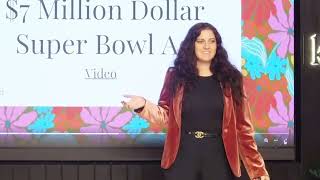
This is a YouTube video titled "KEELY ODMM" created in August 2025 featuring Keely Spiky, who presents a detailed talk on how to effectively use Facebook advertising in a post-AI world. The content is a monologue or presentation focused on strategies for creating successful Facebook ad campaigns, including targeting, creative content, funnel stages, and lead qualification. The speaker shares personal experiences and insights into Facebook's advertising platform and algorithm changes, aiming to help viewers improve their ad performance and business growth.
My name is Keely Spiky and I'm the queen of Facebook advertising. And I'm here to show you how to win with Facebook ads in a post AI world. So as we get started, I want to know what is the difference between a casino and Facebook? Win money. Win money. Well, they were designed to take your money. Yes. And they have algorithms. It is AI, but it's a lot like, you know, when you set up a Facebook ad campaign, it's a lot like pulling the lever on the slot machine, it goes. And then you're like, this is exciting. Am I going to win? Am I going to lose all my money? What's going to happen? But the truth is that Facebook and casinos, they are businesses. They're not bad or evil. They're just there to make a profit. And so have you ever noticed that when you post something on your business page doesn't tend to get a lot of traction anymore? Right. There was a time where you, you know, having the blue check mark or whatever for your business page was like the thing. And now you seem to post something and it reaches like 10 people, right. Well, there was a time where posting something would get traction and now it doesn't really. And that's because it was the house, which is meta designed it that way. It's been designed to have businesses pay to play. Another question. What percentage of your following will see a post on your business page? Yeah, it's 1 to 2%. There was a time only a few years ago that the number that Facebook actually said it was was 3 to 5% and it shrunk. So if we can't post to get attention, how do we grow on social media? Because your options are you either spend a ton of time getting good at making content and being an influencer or you pay to play. And so today I want to show you how to create a predictable, sustainable, sustainable method to win with Facebook ads. Because I believe through my experience in this online world that Facebook advertising is the best way to go from being the best kept secret to being a sought after authority in your industry. I've been in this game about 10 years. I started in my early 20s. We had a sustainable sawmilling business. We had invested like over a million dollars in equipment. We had all the big excavators and trucks and things to drag the logs out of the woods. And we were like heavily in debt. We had like 25,000 are like payments every month on that business were like $25,000. And it was like 23. So I was in Charge of the sales and marketing. So I was always posting content. And one day I got a little notification from Facebook that said, get $150 free. And I was like, I don't know what that means, but I sure need $150. And so I clicked on it and I followed it and I was like, you spend 150 and you get $150 credit for Facebook ads. And I had no idea what that meant, but I was like, cool, I'm going to do it. And so we did it. And what's crazy is in that first $150 we spent, we booked a job for $25,000. And I was like, what is this magic? I need to know more. And so in time I went down the rabbit hole and I got really, really good at this. And I've built several six figure businesses using Facebook advertising as our main form of advertising. But what I love about it is that you can do so many things with it. You can use it as a billboard. So if you have a brick and mortar, you can use it as a billboard to reach hundreds of thousands of people. We run ads. This is for a moving company out of Utah. And on a very small ad spend budget, we reached 184,000 unique people. And the ads were seen over 400,000 times. It's like an entire city worth of people in a month. You can also use it to generate DMs. So this is for a dentist office. We also do this for coaches a lot. You can get conversations happening, not having to post more content, just kind of automatically they're getting a 13 times ROI on all their messages. You can use it to fill events. Like if you have webinars in person events, paid events, you can use it to do that. You can use it to build your email list with freebies and other opt ins. You can use it to sell courses. So I'm a big fan of creating a buyer's list. And so we do a lot of Facebook advertising for low ticket courses. You know, through all my experience, what we developed is a system that is built on reverse engineering what Meadow says they want. So a couple months ago we, I got hired in as a consultant on this big project. It was like one of the biggest projects I've been brought into. And they had spent $100,000 in two months and they were getting terrible results. They had two other media buyers working on it. And so they wanted me to come in and just kind of check what they were doing to see if we could fix it. And so part of this process is that they got to meet with Meta vip. The only time you get to meet with Meta VIP is when you've spent enough money for them to actually want to talk to you. And so Meta told us a lot of things, and from these things, it verified a lot of what we've already been doing. But I thought today I'd break it down for you, because our Amplified method is built on the back of what Meta has now verified works on the platform. So it's basically like walking into the casino and them telling you how to play the games to win money. Isn't that cool? Don't you guys want that secret? All right, so before I start, I first want to say, this is not boosting post. It's very different. Boosting posts is basically like putting your money in the penny machine and never seeing it again. One of the things Meta told us, the number one thing really is that creative is 53% of the results that you're going to get. And so how do you create creative that's actually interesting? Well, the first thing is, what does it say? Don't be boring. Don't be boring. But also don't be too fancy either. Be. Because when you look at what people interact with on Facebook and Instagram, Meta is Facebook and Instagram. To clarify that, it is not big, highly produced videos, right? Like, as a business owner, you don't have to hire a videographer. You don't have to, like, spend a bunch of money editing a fancy video. You can put something out there that is pretty mediocre as long as it says the right message and it's not boring. So a good example of this is Kanye west in 2014, I think it was. He ran a Super bowl ad. He spent $7 million on this ad. And this is the ad I'm going to show you.
Hey, y'.
All. This gay.
And this month commercial. And since we spent all the money on the commercial spot, we actually didn't spend any money on the actual commercials. But the idea is I want you to go to.come y e c-y.com and I'm gonna write it at the bottom of the screen. And I got some shoes. And that's it.
He spent $7 million on the spot. And guess how much money, how much revenue he got in the first couple months from this ad? Like $25 million. Just in the first two months. But you know why it worked really well, even though it was absolutely terrible, because it woke you up. It was a disruptor, like what everyone was expecting is like the Budweiser commercial, right, with the horses, or like La Santa with the Coca Cola. Like, that's kind of what people expect when they see super bowl ads. And then here's Kanye west, like, looks terrible dark in a taxi or whatever, like, hey, by my shoes. But it worked because it was a disruptor. So you don't have to get fancy to actually get results. So the second thing is Facebook told us to use broad targeting. So back in the beginning of Facebook ads, you used to have this thing called audience insights. And you go in and you look at like all these keywords and you would like micro. You like laser target people. You don't do that anymore. And this is because the iOS 14 update back in 2021 said, basically said to Apple users, hey, you can opt out of tracking on social media apps. And so 90 something percent of people did. And this killed the way that Facebook was able to track user data. So they had to switch their algorithm over to what TikTok uses. So entirely different. So now they use AI and they basically are able to use their AI wizardry to show people what they want to see. And so this means as marketers, we have to give the ability to target people to Facebook. So we focus on saying the right things in the creative and we say, hey, Facebook, show this to people and then like, find the people that it's meant for. And so we call this a proximity power play. But what happens when we do this is when we say, hey, a lot of times, you know, businesses will set up ads and be like, okay, show it to everyone in the US because more the better, right? Well, what tends to happen is that you, your ad will end up being shown to places where, yes, the leads and the sales are cheaper, but those pockets of people often can't afford high ticket. So we find this time and time again. So what we do is we use this and we use it to leverage proximity to amplify trust and visibility and get better quality. And so what this looks like is, is we first target a city, and when the ad starts converting to that city, we'll move it to an area. So Hood river is where I was for a really long time, so it was easy for me to grab this. But then the outside of Hood river is what we call the Columbia River Gorge. And this is a bunch of smaller cities, but it's still an area. And what we can also do is speak to those people in Makapi too, right? Like, if we're here, we're like hey, Hood River. Especially for local based business. Hey, Hood River. If you're a coach, try this too. You might give it attraction on your ads because you're speaking to an actual person. Hey, Columbia River Gorge. Hey, Oregon. And then you move to Pacific Northwest, which I don't know if Idaho counts. I just always mix it in there. Someone can be like, hey, Idaho is not the Pacific Northwest, but I think it is. Okay, so this is how we start scaling ads. We first start really laser in an area and then we kind of broaden out. When I was single in 2019, I got salsa dancing. I love to salsa dance. I was taking classes and I went to a social and this guy who I've never seen before, he is dancing with me. He said, hey, my family, I think it was his aunt, is having a birthday party at this restaurant. Will you come with me and be my date? And I was like, I don't know you. I don't want to meet your family. Like, that's a lot to ask of me when I just met you. Like, this is the first time we've ever had a conversation. And so the thing is, is a lot of times when we do posts or marketing, especially with ads, we're asking people that don't even know us a lot, right? You wouldn't go to a business networking event and be like, hey, book a call with me. Hey, buy my thing. Right? You have to give people the opportunity to get to know you. And you can do that through Facebook ads. And we call it tmb. It's top of funnel, middle of funnel, and bottom of funnel, bottom of funnel. Strangers. There is a lot of strangers, right? If you've never advertised on Facebook, there's going to be a lot of strangers for you. Then we have people that are like their acquaintances. These are people that have seen you around and they're like, oh, okay. Like, I saw you. I saw this thing. I know of you. I heard of your name in some other room. They kind of know you. And then there's people. These are your buyers. These are people that have bought from you, they've taken a masterclass from you. They've met you in person. Each one of these people, you're going to talk to them differently. So this is also. Sometimes we call this warm and this is hot. So you're going to speak to all these people very differently, right? Like, you're not going to, you know, some friend that you've known for a while. You'd be like, hey, I'm going on this trip. You want to go with me. They're going to walk up and you're like, hey, you want to go a trip with me? Right? We really know each other. That's really weird. And so when we create campaigns, we'll have a campaign that is for top of funnel, for people that have never met the business before, don't know them. Then we'll have ones that are like, okay, I've kind of seen your things. Maybe I've, you know, watched a video of yours. So we could do cool things. Like, we can see that using tracking in Meta, we could say, hey, show this ad to people that saw a video of mine. Hey, show this ad to people that have been to my website. Right? Those are people that know you a little bit more. And then we have Bonhomme, a funnel. Those are people who are like, I buy all your stuff they've already bought. You can ascend them into other things. Number four is launch, leave and let the dad speak. So how much should you spend? Right, Like a lot of. I've heard all the horror stories, especially when new people say, hey, I've ran Facebook ads, but I spent $5,000 and didn't get anything. Or Chad shares a story in Boise where you're running ads for the event. I think spent a thousand dollars and didn't have much results for it. There was this misconception for a really long time. A lot of gurus will say this. I think it's because they have big budgets and they don't care, right? They're the Tony Robbins, right? They, they like $1,000 is nothing to them. But for us, when we're starting out and we're just trying something, $1,000 is a lot, right? That like hurts our heart to like go to the casino and gamble that money and not win. And so what this does is it allows, you see, if I put the framework here and allows you to launch it and kind of put something out there to meta. And we typically will do it on, on a longer, like we'll say, hey, show this for 30 days, but within 24 hours we're gonna look at it. Because one of the things Meta told us is that longer campaigns do better. There used to be a time where you could, you know, the, the, you could get good results if you were doing a webinar and you're on like a seven day cycle. Now they say the ads do better if you leave them for 30 days because the AI has to go through a learning time and that typically takes a couple days to a week. And so if you're just trying to run ads in a week, it doesn't give enough time for it to actually learn. And so we'll launch it. We'll say, hey, show these ads for 30 days, but we'll check it within 24 hours. So we leave it. You have to leave it. And not like a lot of people want to get in there and like, oh, it's not working in 10 minutes. Like, let's, let's modify it, leave it for 24 hours, and then stop the ads that aren't producing or costing more than 2x your target goal, within a couple of days and a couple of hundred dollars, you can typically know if it's going to work or not. So if you're like, I'm selling a horse for $40, I can afford to spend 20, and your ads are costing you 50, they're not working. Time to change something. And lastly, qualified leads. So in Facebook ads, it is so easy to flood a funnel with leads. So incredibly easy. But what happens is, is that you'll get a lot of unqualified leads. You'll get a lot of freebie people or freepal people, as Myron golden says. So you can do a super cool thing with using the pixel, but you have to understand that there are different types of people. So when, when you set up a pixel, which is the tracking code that allows you to track data on your websites and landing pages, you can set up different, what we call conversions. And the conversion looks like this. So you have content view. And this is basically telling Facebook, hey, I want people to see my video, I want them to see my landing page. I want them to come to my website. And so these are people that will typically click through and view things. And then you have, you have people that will subscribe to things, right? It'd be like, hey, I want people to come and subscribe to my newsletter, or I want them to opt in for my free thing. And then you have leads. These are people that will become a lead. They'll fill out a lead form, they'll opt in for a webinar and become a lead. They have these type of buying behaviors that Facebook has been able to track using AI Then you have people that will check out. They will initiate a checkout. So we use this. A lot of poorly designed e comm sites and poorly designed funnels where we can't actually track sales very well. But this is a buying behavior that's as close as possible sales. And then under that, we have sales. And so the reason it's important to know how these all work is because each one of these people are different. How many of you guys are ones that will never buy anything off an ad? Ooh, you will never buy anything off an ad. You tend to just opt in for things. Yeah, I'll opt in to things. I'll look at the thing, they're for sale, and then I might go check them out at another time. Okay, so she said that she'll. She'll see the ad, she'll check it out, but she'll circle back to it in another method, either Google search or something like that. Yeah. So depending on the time frame, you would still be counted as a buyer because if the website. The other website's pixel, it will still be counted towards the ad, but it could be where your buying pattern is here. Well, you'll often for something or you'll be a content viewer. And so Facebook will categorize your profile as such. So when an ad campaign is set up for content user leads, you're the type of person that'll be shown that ad. Who here will buy courses? Who's here bought a lot of courses. Okay, so you guys would be ones that are like premium traffic. And you'll be shown all the ads because you tend to buy things. And so. But do you see what will happen if you were setting up, like I had a meeting with someone the other day and they were like, all of my pixel settings and all of my goals are set to get people to subscribe. And I said, well, are those people buying later on? She said, no. And I said, because Facebook knows they are not buyers. They are people that retirekick all day long and they'll sign up for the freebies, but they're not going to buy anything because they don't tend to. Facebook is using the buyers over here. And so what do you do? How can you qualify? Besides using the pixel, there's also one other method that we use to create quality leads. And this is something we're working on with that big project. And what we do is we put a lead form. So it's like got a little. The submission. Right. Like the phone number and the name and email. And then we have a couple of questions down here. Like my doodle. We have a couple of questions down here. And so this is where we can start qualifying. And so it's like, hey, have you for the, like this real estate, the real estate funnel we're working on, it's hey, have you ever done a real estate deal? Have you done the research on real estate funding. Have you never done anything? So there we could see what ads are creating better quality results and which ones are just tanking and bringing down our numbers with a bunch of like freebie seekers. So quality is better than quantity. So if you have, if you're building with a free item, really think about are those people you're bringing in? Are they people that are here or here or are they going to be buyers? So maybe it's time to add a paid item or a low ticket to it to at least be attracting people that buy. And also if you're using a freebie, maybe instead of just having it be like super open, not even asking for a phone number, just like, please, I want to build my email list to 10,000, maybe adding some questions in there to pre qualify people. So you're building an actual quality list. So my goal for you today is to help you go from being like going to the casino, pulling the slot, the machine, the handle and being like, oh my God, I'm losing all my money, like, this isn't working, this sucks. And actually win with Facebook ads because in my experience, they are one of the easiest and fastest ways to scale. If you understand what the house meta is looking for. SA.
More from Chad








Why Interested Prospects Don’t Buy, and How to Move Them From “I Want This” to “I’m Ready”


Knocking Down the Three Big Limiting Beliefs That Keep Prospects From Saying Yes
