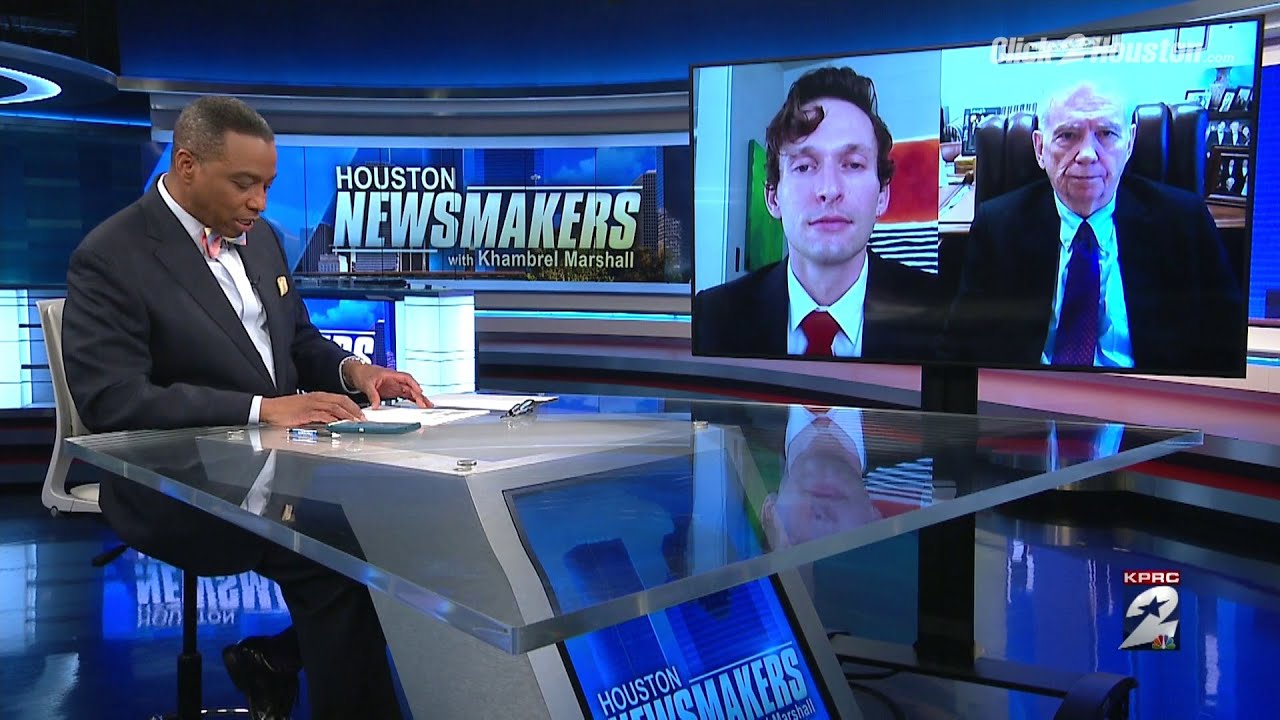
In this Houston Newsmakers Extra episode, host SPEAKER A moderates a conversation with immigration expert Charles Foster, chairman of Foster LLC, and Parker Sheffey, supervising attorney at the University of Houston Law Center Immigration Clinic. The panel begins by addressing the exaggerated public perception that immigrants, especially unaccompanied minors, pose a security or health threat, noting the politicization of these narratives over the past four years. They then trace the legislative history of comprehensive immigration reform, recalling the 2013 "Gang of 8" effort and explaining why partisan division has stalled similar initiatives. The discussion shifts to current legislative prospects, focusing on House Bill 3—a version of the DREAM Act that would expand DACA eligibility, provide a five‑year pathway to permanent residency for recent entrants under age 18, and extend protections to long‑standing Temporary Protected Status (TPS) holders. Parker outlines the case‑by‑case nature of immigration adjudication, describing the key eligibility questions (national origin, manner of entry, reasons for coming, and post‑arrival circumstances) and highlighting the extreme processing delays—some clients wait 12‑14 years. Both guests criticize the fragmented, piecemeal approach to reform, arguing that the U.S. legal immigration system is historically restrictive, with limited avenues (family, employment, investment) and few options once individuals are in the country. Charles expresses cautious optimism that Congress will eventually act, but predicts incremental, confidence‑building measures before any comprehensive overhaul can succeed. The panel underscores the tension between public support for legal immigration and political opposition to its various pathways.
Chapters
Welcome to Houston Newsmakers Extra. We've been talking about the crisis and/or the challenges along the southern border. Charles Foster is the chairman of Foster LLC. They specialize in U.S. and global immigration services. Parker Sheffey, supervising attorney at the University of Houston Law Center Immigration Clinic. Parker, let's talk about this. We were talking about the unaccompanied minors. All of that is coming at the border, and the perception sometimes can be the reality. You represent people who are trying to come to this country, going through the legal process. Do you get the sense that the perception is overblown about the danger that immigrants coming into this country can do?
Yes, I think, I mean, succinctly, absolutely. I think it's an easy distraction point, and it's one that's been politicized heavily over the course of the last 4 years. So it's an easy place to go and point. As we think about the idea of there being some sort of threat, again, I'll return to the idea that this conversation as we're having as it relates to the governor's statements came as he was indicating that there is a surge in unaccompanied minors and undocumented individuals into the United States who pose a threat of coronavirus. And at the same time, The full context of that is in light of the mask mandate, and so invites the question: If at the one hand you have this threat of individuals bringing in coronavirus, and at the same time you are rescinding the mask mandate, it they're incompatible. And the answer is that no, that the threat is not the reason, or is not as well founded as the repetition of these falsehoods would.
Charles, I remember I was looking back at my notes and it was 9 years ago when the Gang of 8 came together in the Senate. They came together with what they thought was a pretty good plan. And of course, it didn't make it. They thought it was the answer to some of our immigration problems at that time. Since that failed, we've become much more divided as a country. So the idea that we could put together a Gang of 8 and come together with something back then, now it would seem like impossible. What's the hope for an immigration answer, looking at how partisanly divided we are in this country?
I've worked on this since 2000 when I was a senior policy advisor for President Bush on this issue. It's always been hard. And if, as we know, things in terms of the political discourse have become even more difficult. In 2013 with the Gang of 8, with that Republican support, there was enough votes in the Senate. But under the Republican leadership in the House, I think John Boehner was the Republican majority leader. It couldn't get a vote. Now it's the reverse.
We can get—
we can pass that bill in the House. But even Nancy Pelosi, she has found that there's tepid support for that in the House. So even if it passed the House, it's going to be hard to get 10 votes. Good news is Joe Biden is a creature of the Senate. Be hard to get the 10 extra votes in the Senate. The good news is Biden is a creature of the Senate and he's willing to wheel and deal on this. But realistically, I think it's more likely that we'll take a small bill approach and pass a version of the DREAM Act that was introduced the other day, House Bill 3. And if that could pass through the House and the Senate, which I think it can— Senator Cornyn and Lindsey Graham have both indicated their support— then that would be a confidence-building measure. And then maybe the Senate could take on something bigger.
What's in that? What does that basically call for?
It would—
the so-called Dreamers, the DACA beneficiaries, that would be expanded to include those that have entered more recently under the age of 18. They would have a path to obtaining lawful permanent residency. Equally important, it would include those with temporary protected status, TPS, mostly from the northern zero countries of Central America, if they've had that status for more than 3 years. And they would have a That they would have a, I think, a 5-year path to obtaining permanent residence.
Well, that would be interesting to see if that happens. Parker, you represent people who are trying to get into this country, the legal process.
How—
talk about how long a process that is and how the government vets these people before they are able to come in.
Yeah, so it really, it's case-by-case dependent. response. And I have individuals who have been in process for 12, 13, 14 years. And as Charles was indicating, he points to Dreamers, TPS. You have all of these different, we can call them lines, different avenues by which individuals can seek relief. And by relief, I mean, if they qualify, for one of the lines that would allow them a lawful status in the United States. So with respect to what does it actually look like? Well, again, it's a case-by-case dependent scenario. And the questions that you would seek to ask is, one, the national origin of the individual. Two, the manner of entry, whether it was lawful or unlawful. And based upon Those threshold questions, then, well, why are you coming here and what has happened to you since you've been in the United States? And so from those threshold questions, you're able to determine whether or not an individual qualifies for anything. And so oftentimes, as we think about this undocumented population of 10.8 million approximately, there is no form of relief. And so that's why I think it's important to circle back to what was— what Charles was speaking, House Bill 3, comprehensive immigration reform, so that it's no longer these piecemeal changes, but rather a system that is designed to account for the wide breadth of issues that are currently the reality and that have continued to grow, shift, and morph over the course of the last 20, 30 years.
Charles, you've been at this for a long time at this point. Do you have any level of optimism about there being a positive outcome that will change our immigration system for the better?
Boy, is an optimist, Camaro. And I think eventually Congress will do the right thing. But I think they'll start off with a piecemeal approach. I'd just like to add to what Parker said. Most Americans have no appreciation of just how restrictive our legal system is. For years, I would give a speech and I would ask— I would use Queen Elizabeth as an example as to whether or not she could legally immigrate. And at the end of the speech, the answer was no, because up until they added the investor provision, you either immigrate through a close family relation or through job skills for which there's a proven shortage. And then in 1990, they added investors. So just to permanently enter this country, it's a, it's a restrictive system. And then once you're here, there are relatively few options. So as I mentioned earlier in the program, it's critical that Congress deal with this. But unfortunately, it's become a political football. And one of the things I've noted is that folks will often say how they love legal immigration and they want people to legally immigrate, and then they turn around and oppose every legal avenue. They oppose family immigration, saying that— they call that chain immigration. They oppose employment-based immigration, saying that's a zero-sum game, they're taking away jobs. They oppose immigration through investment, people are buying their way into the country. So it's sort of ironic. We love immigration, but it's become so political that it is hard to get anything done.
And our purpose today was to try to take a lot of the raw politics out of it. You can't talk about it without politics. Next week I've got a couple of members of Congress to come in, and we'll be oozing with politics next week. I hope someone has told the Queen that she's not eligible to immigrate, but, you know, somebody's got to give her the bad news. Charles, thank you. Parker, thank you very much. I appreciate it. Houston Newsmakers Extra. Share this with everybody you know.