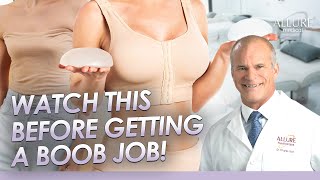
A plastic-surgeon-style informational monologue explaining breast augmentation basics: silicone implants are the current gold standard (saline rare), the newer form-stable “Gummy Bear” implants reduce rippling and can be placed on top of the pectoralis muscle for many patients. The speaker contrasts sub-pectoral vs pre-pectoral placement, outlines surveillance (occasional MRI recommended by FDA), possible complications (rippling, capsular contracture, implant rupture), incision location (inframammary) and a typical recovery/settling timeline (4–6 weeks healing, 1–2 months to settle). Sizing is individualized.
Chapters
So I'm going to give you a few little facts about breast augmentation. This is a sample. This is a breast augmentate. This is a breast implant. And breast implants are generally silicone. There is a form of saline implant. They're really not using those anymore. They eventually fail. The silicone implant is the gold standard. We're using the Nat Trail brand called the Gummy Bear implant. It's called the Gummy Bear. It's not as hard as a Gummy Bear that you chew on. What it means is the original implants were almost like putting oil in a sandwich bag. And if the sandwich bag broke, it leaked out. The newer ones are formed. Stable means if the, if the skin breaks, the implant generally stays within the compartment. The first implants were designed to go underneath the muscle because they deformed a lot when they're put in. If I hold this up closely, you see the little wrinkles in here. We call that rippling. And when the person's standing up, you can see little grooves in the breast. We put them underneath the pectoralis muscle to compress that so it didn't wrinkle as much. The newer implants, the form stable ones, they don't get nearly as much grooving. So they're really doing well going on top of the muscle. So what's the advantage or disadvantage of underneath the muscle or on top the muscle? The on top of the muscle is typically a better surgery now, not 10 years ago. Now it's a better surgery because there's less motion when you're moving your muscles. So a woman has implants on the muscle, she works out, the implants kind of distort the surgery hurts more. It's got a little bit more complication rate, a little bit more pain afterwards than on top of the muscle. On top of muscle hurts less. Less bleeding. They look a little bit more natural in most cases if there's enough tissue. So the determination for under or over the musc is made by your surgeon based on how much tissue that you have. If you can pinch more than inch of breast tissue, generally we're going to go on top of the muscle. Now, again, not 10 years ago, they wrinkled too much. The current ones they're good for on top of the muscle. For women have a reasonable amount of breast tissue. If your breast tissue is very, very limited, there's almost nothing there. Then yes, it does have to go underneath the muscle. You'll hear about. They have to be changed after a certain period of time. Well, the FDA tells us that we should recommend that you get an MRI every so many years to see if they're leaking or not. But we don't necessarily do that routinely. Like people want to pay for the expense of. In MRIs, they don't really break, don't generally break right away. But over 10, 20 years, something could happen where the shell gets weakened and the implant breaks and you have to change it out. When an implant does break, it's the implant typically. The breast will typically get hard, called a capsular contraction. You'll be able to identify that and take it out. The implants could last a lifetime. They might last five or 10 years. So there is always the likelihood of getting another surgery down the road. Also, other things can happen, such as childbirth or changing weight, where the breast might get a little saggy, or you might want to go bigger or smaller. So these are all things that happen with breast augmentation. This is again the season we're seeing a lot of women get their breast implants right now. Typically, you know, let's say you're going to plan on going to the beach and, you know, showing off your new breasts. When I have typically about, you know, four to six weeks of healing time. Because when you first put them in, they look a little unnatural because the tissue is kind of tight around it and takes a while for that to relax. So it's not like you can't go out in public. You certainly can, but you might want to wear a covered shirt. But you get in the bikini, really, it's about, you know, one to two months before they're completely kind of settled in. For most women, we're typically doing incision right underneath the breast right now, so it's pretty much invisible with a. With the top on. Even when you're undressed, it's hard to see. After a little bit of time, they're mostly going on top. The muscle. We're mostly using form stable silicone implants. And implants come in all different shapes and sizes, so your doctor can talk to you about what is going to be best for you. So if you're interested right now, this is a good time to get breast implants. Thank you.