Coronary Calcium Score Test: Who Should Get Screened & When?
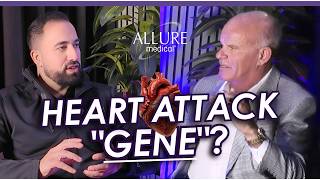
In this interview‑style conversation, Dr. Charles Mok and Dr. Araha (Synergy Longevity) explore a proactive, 360° approach to preventing atherosclerotic cardiovascular disease (ASCVD). They critique the reactive nature of conventional medicine and argue that early detection—using inexpensive calcium scoring, coronary CT angiography (the "Clery" study), carotid intima‑media thickness (CIMT), and advanced labs—allows clinicians to intervene a decade before an event. The dialogue covers who should be screened (young adults with family history, diabetes, elevated Lp(a) or ApoB, etc.), how to interpret calcium scores (low scores are reassuring, high scores signal plaque burden, and rising scores can reflect beneficial calcification), and the value of serial CTA for visualizing soft versus calcified plaque. They discuss a suite of biomarkers (ApoB, Lp(a), homocysteine, uric acid, hs‑CRP, LP‑PLA2, HOMA‑IR, A1C, CGM data) that reveal sub‑clinical risk beyond traditional lipids. Lifestyle is positioned as the first line—exercise, resistance training, diet, smoking cessation, sleep, sauna/heat therapy, and wearables (CGM, Oura ring, home sleep tests). Pharmacologic strategies are detailed, emphasizing personalized statin dosing, micro‑dosing, combination with ezetimibe or PCSK9 inhibitors, and the emerging role of GLP‑1 receptor agonists, SGLT2 inhibitors, and even low‑dose Cialis for vascular health. They also touch on emerging adjuncts (nitric‑oxide supplements, sauna type considerations, hormone replacement, stem‑cell joint therapy) and stress that motivated patients willing to pay out‑of‑pocket can access these services, positioning themselves as the "CEO of their health". The conversation ends with a call to action for listeners to seek proactive, individualized cardiovascular screening and longevity care.
Chapters
When I started Synergy, one of the focuses that we looked at were kind of the big killers of Americans. So cancer and heart disease. And what do we have right now? What are the tools that we have in our toolbox that we can use to decrease our risks and also optimize our body's own ability to prevent any kind of heart or cardiovascular event?
Hi, I'm Dr. Charles Mok. I'm here with Dr. Araha from Synergy Longevity. And we met kind of serendipitously. So I was getting a full body MRI and a clery study, which is a special CAT scan, looking for heart disease. And we kind of connected there. And we're talking about today is about not waiting until an event happens, such as having a heart attack or stroke, or not relying entirely on doing a cholesterol level, but actually looking to see if you're the one that has heart disease. I have a personal concern because I have the. I have what's called the heart attack gene. And I've been monitoring my heart and making sure it's getting younger, not older. We're talking about cardiac today. You can go over this to hold longevity.
Firstly, thank you for having me. It's always a pleasure to be here. A little bit on my background. So I did my residency in emergency medicine. All of healthcare is reactive. And of course, by definition, the emergency department is entirely reactive. Right. Something has to happen to land you in the ER and then we take care of you. But what I noticed was that it was more than just the emergency department. It was extensive throughout the healthcare system in that all we do is take care of people who are sick. And so somebody who is at high risk for a heart attack or some kind of cardiovascular event, they have no modification of risk factors. They have no deep dive into what their lifestyle is like. It's just come back when you have chest pain. Right. And that's again, just a reflection of this reactive healthcare system. And so when I started Synergy, that was kind of the focus with how we started and what we've seen and what our patients, I think, have really given us some positive feedback on is taking that 360 approach with not just looking at the risk factors and modifying those risk factors, but looking at actual disease. And so, as you see, medicine has to be very individualized. People can have sky high lipid numbers and a totally clean coronary cath or a coronary cta. And that can also be the opposite, where you have borderline lipids and a CTA that shows a lot of heart Disease. And so it has to be very individualized.
And I want to kind of break into what you're saying there, because if you ask somebody, do you want to have your heart screened, like, oh, my cholesterol is good. That is almost the most worthless of the things we check. I mean, it's better than nothing, right? Better than guessing. But you have genetics, and then you check your cholesterol, but it is not a good predictor. We look at really what predicts having a atherosclerosis or plaque in the arteries, hemoglobin A1C, something called homa, uric acid, homocysteine, oxidized LDL. There's all kinds of things that come way before cholesterol and ldl, and they're frequently not even checked. And what kind of brought us up to talking again is a relative of mine called me, and he had done a calcium score, which is a CAT scan. It's really inexpensive test. It's a good screening test. His score was significantly abnormal, which means he had some atherosclerosis, which we call hardening of the arteries. In his case, he had calcium calcification. So the question is, okay, the calcification is not actually dangerous. It's the stuff that's not calcified that is. And the CAT scan can't tell you that. So I referred them to you to get the Clery study done, which is a. It is similar to a heart cath, but it's done on a CAT scan in a very brief period of time with. With some dye and using some AI imaging to look at the arteries. And we're gonna get the results back of those in a few days. But let's talk about that as a teaser first before we go into how we manage this and what are the other options? Somebody. So we can go or. What is the purpose of Clery? How have you been using it in your practice?
Yeah, that's a. That's a great question. So I almost call it a less invasive heart catheterization. Right. You're not going to a cath lab. You're not, you know, having something go into your. Your artery and take pictures of. Of your heart. But using CT scan and IV contrast, we're able to shoot the contrast through the coronary arteries and get a picture of.
Really.
I like to kind of generally categorize it into soft, non calcified, and then calcified plaque. And so when, you know, with. With your. With your family member's case, where they have an elevated calcium score, what that tells Us. And what that rings for us is not that that calcium is there and present. It really tells us that there is plaque in previous stages that has then calcified. And so it's more of like a warning bell that there is more going on than, you know, than what we think and what we know. And I think the more important piece from that is we get to actually visualize the disease. So when we're treating lipids or when we're treating high blood pressure or, you know, telling people to not smoke, we're modifying risk factors. You know, looking at homocysteine levels, looking at other lab markers, we are tracking risk factors, but we don't see the disease with a test like our CTA with. Clearly, we can visualize that disease and we can see. See exactly what's going on. The even cooler piece to that, I think, is the ability to one, you get cubic millimeters of what type of plaque and how much plaque there is. We also have an additional study which they cleverly named ischemia, which can predict if there is ischemia or decreased blood flow to part of the heart where, you know, wherever that that vessel may be blocked. So I think with being able to see the actual disease, we can become more personalized with how we want to treat the risk factors and how we want to modify the risk factors. And I think that that's like the most important piece of what we get from clearly. In addition to that, we're also able to do year and three to five years. When we repeat these clearly assessments, we can overlay them and say, look at the difference in what happened to this plaque that you had that was initially this really high kind of soft, rubbery plaque. Your body has taken it and remodeled it. It's taken that really high risk plaque and made it lower risk. And that's exactly what we want to do, you know, and. And what we see as the end product on a calcium score.
So we want to talk about. The question we get is like, I have employees that are younger. What do I do now? And people that are older and I want to kind of think about, let's say somebody's 30, they might start thinking about it, and they've got the gift of youth who might, I would consider a CT calcium score.
I think it's. That's where that. That nuance and the. That introduction, you know, introductory conversation is so important.
Let's say they're not going to seek out a concierge or doctor yet, so.
They'Re just going to go and get you know, or.
Right. Because I think the lowest threshold is removing any barriers because a 30 year old has the least risk.
Sure.
And they might not say, well, I don't want to go down that road. So I'm thinking about, like we talked about function, health a little bit with blood tests.
I think I would look at what family history looks like and what labs look like and I'm going to play a little bit of devil's advocate and I think that this should be physician guided and physician, at least physician led. I have patients come to me and say I want XYZ tests and we have a fairly lengthy discussion and sometimes we don't do certain tests that some people may want or we end up doing a different test than what people initially came for. Because all of this needs to be personalized and all of it needs to be based on what is this person's risk factors, what are their family risk factors, what current diagnosis do they have? Or are we thinking about what do their labs look like. I have people send me a year or two of previous labs so that we can look at trends. If, if that, if that doctor has some set of, of labs on you, look at looking at your risk factors through your labs, if they can do an lp, I would definitely get.
That should be a one time screen in your life, right? Everybody should get it, correct.
Yeah, I think an lp, if that's elevated, go and get a calcium scan. No doubt. If you have somebody in your family who had a major cardiac event before 60, those two things in and of themselves would warrant. Yeah, absolutely. Yeah, that's a, that's a great point. I think diabetes, you know, if you're, if you're a diabetic, I would also have a lower threshold to get a calcium score. So, you know, risk factors, personal risk factors, family risk factors, genetic risk factors are all things that I would contribute to making a decision of getting a calcium score at a younger age.
And then what about somebody who should be seeing somebody that's outside the health insurance world, like yourself? What, what is that? Other than there's many people that just kind of, that love themselves so much, they're going to say, I really want to be super healthy. I'm in that ballpark. Well, I'll pay for it out of pocket. And there's people that might have to say the unlimited resources. But in general, who's going to be the person that's going to have the most say, juice for the squeeze?
That's a, it's a, it's a great question. And I think it's so new that sometimes it's difficult to tell right now because of certain restrictions. You know, most people don't have access to the services that, that we're able to offer. But I think in general, it's people who want to make a real change in their life and want to go above and beyond what the traditional healthcare system can offer to make a difference in their health, to make a difference in their longevity, the quality of the life that they're gonna live. And so if you are passionate about that, if you're interested in what can I do additional to the screenings, additional to the blood tests, additional to all these things that I'm doing through my primary doctor, what can I adjunct this? What other tools are there in the toolbox? You come to somebody like myself or to you and get those tests done?
Yeah, I think that's a great point, and I agree entirely. It's going to be the person who will take action. So if you say, well, I'm not going to take anything, I'm not changing my diet, I'm not changing my lifestyle, probably wasting your money.
Yeah, I've turned away patients who want to come to me for a cure all. We're not that practice, you know, I want people who are, who are excited, who are motivated, who, you know, And I've had people who neglected their health because they are busy entrepreneurs for 30 years, right. And then they exited their companies in their mid-50s, early 60s. And they come to me and they say, doc, I've done a bad job of taking care of myself, but now I want to live to see my grandkids, my great grandkids. I'm motivated, you know, I want to get this process started. That's the perfect individual to come in and get the services that we're able to offer.
And when you think about healthcare as it is right now, it's pretty advanced. And we're really excellent at treating disease when it occurs. And prior to the Affordable healthcare Act in 2010, there was no screening for disease that was considered medically necessary. In other words, an insurer would not pay for a mammogram, colonoscopy, breast cancer, et cetera. But there was never a mandate to screen for heart disease, and the screening for heart disease did occur at that time. So I want to get a little bit about why we would screen. So everybody knows somebody who dropped dead of a heart attack or had a heart attack at a young age. And by young, I mean 50, 60 years old. The thing is, we could have Predicted that heart attack a decade in advance and done interventions specifically on that individual versus waiting till they get chest pain short or the cholesterol is high. And that's commonly what happens. Your cholesterol is high. We'll put you on this medicine. Blood pressure's high. Put this on this medicine. But somebody with a borderline blood pressure that has some degree of what's called atherosclerosis, they have plaque, they should be treated more aggressively. And obviously, there's lipid intervention, there's interventions on homocysteine, uric acid, other things. The first thing is a calcium score is a CAT scan, and you can pretty much get it done anywhere in the country for about 100 bucks. And I like that for young, healthy people. I just want to say this about the calcium score is. The calcium score is a good screening test. It's not a good monitoring test because as you get healthier, your score actually gets worse. So as soft plaque turns to hard plaque, we want it to do that. So plaque starts out as little thickening of your vascular wall. Then it gets like a little pregnancy rupture, and then, I'm sorry, little pregnancy. Then it starts expanding, and if all goes well, it hardens. Then we call hardening of the artery, which is actually safer. But it's that underlying soft plaque, and then heaven for it ruptures. That's when you have a heart attack or a stroke. Then the next step is if I do a CIMT test, which we screen here for, or a calcium score if it's not perfect, I'm sending them for a clery study, if that's appropriate for them to see what's going on now in the heart, which is going to be sooner than problems in your, say, neck arteries. So can you kind of describe what the patient goes through to get a.
Clery test with the calcium score? It's a great point, because people, you know, if we, we repeat them and they're like, why is my score going up? I'm like, no, that's a good thing, right? You know, that's a, that's a good thing. And, and people always get a little bit concerned when their score is going up. So it's very good to, to make note of that with the, with the clearly test, we're able to see in almost a 3D fashion, firstly what the, the vessels look like. And then. And you can see exactly what that plaque looks like. And you described it perfectly where you have these layers of, of plaque. And initially they kind of tuck themselves into the arterial wall because of injury to the endothelium or that inner lining of your artery, it expands. And once your body realizes and says, hey, this is bad, this is not good, we want to remodel it, we want to calcify it, our bodies then take that next step to calcify that. And that takes years. That's a process that takes a very long time. And that's why we don't repeat the CTA with clearly for about three to five years, depending on patients and their risk factors.
Classic example is this family member, he had this abnormal score. And a report said you have a very high incidence of having a heart attack or stroke in the next couple years. So he goes to see the cardiologist, he goes, well, I could do a stress test or something. Or he just come back and see me next year. I mean, a stress test is freaking useless. Now if he's having an impending event, it's helpful. But a stress test won't predict if you're having a heart attack in a year.
Correct.
And he's got small children, even though he's a full grown, he's 50 something years old. So I think that it's a matter of just taking that in your own hand and kind of being the CEO of your own body to say, I'm going to look into this. And you know, again, we're talking about the Clery study, which is an expensive test, there's no doubt. And you might be a little afraid about getting the CAT scan and the dye. And that's something that, you know, we can overcome if, you know, you have disease. So the first step I think is getting a calcium score when you're younger, the cimt. And again, when you said the CIMT has a lot of intra user variability. Totally agree with that. We really look at plaque presence or absence and plaque progression or regression. So your point was that if different techs do it, they might get a different number. It has been standardized to some degree, but the technician's gotta lay that caliper just right. And I see it a lot of times where it doesn't make sense, it's not adding up. So we use more presence, absence of plaque and regression or progression of plaque. But describe that briefly, what it is. It's cimt. They take an ultrasound in your neck and the technician tries to find the lining of your arterial walls and measures the thickness of it. Before you get a plaque, it gets fatter. Okay. And the idea is that if your wall is thin for your age, you have a very low risk of having heart disease and it's thick for your age. You, you have a. Basically you're accelerating your aging, but there's no plaque there. Not super helpful other than having some predictive value in our take. We treat more women than men and women don't get plaque usually until they're in their mid-50s to late-50s where men might get it earlier. That's another issue with the limitation to a calcium score is it does tend to miss disease. That is what we call soft plaques, particularly in African Americans and women. So it's not the perfect test, but it is better than nothing. It's very inexpensive. So that's step one calcium score, it's negative. You have low risk. You're probably good there. If you have the next step might be for iscoming getting the cimt. You really have to go to a center that does it. You can't go to a hospital and do it. So the doctors that have it are, they are making sure they have quality control to get consistency because it's not as predictable as a CAT scan. And after that is the Clery study. Are you aware of any other non invasive, non invasive imaging studies? Am I saying non invasive? A heart cath would be actually not as accurate as a Clery, but that would be invasive. Any other non invasive things not that.
Have proven themselves as well as the previous three that you've talked about. And you know, I think one thing that you mentioned that's a great point is the age incorporation when we talk about things like a calcium score or a cimt. But to go back to your main question, I haven't come across something right now where it is as reliable and as proven with studies with data that can mimic what we can see as progression of heart disease. So not to my knowledge at this time. I think there are some things that are, are coming out without getting too technical, but using EKGs and like the Laplace law for blood flow through coronary arteries. But I think that's coming down the pipeline. I don't think anything has, has really shown face yet. But I think you made a phenomenal point with incorporating age into something like a calcium score, even a CIMT. Because if somebody is 35 years old and has a calcium score of 20, you know, you're like, why? Right? That's, that's high. If somebody's 80 years old and has a calcium score of 20, you're giving them a high five. You're like, you know, you're doing great.
And to be clear, we said this is clear for Audience A low score is great. A high score is not great. However, if you start out with 100 and you go on aggressive therapy and goes to 200, you actually have gotten better. It's an oddity to us. Well, let's talk about that a little bit. But your screening test is what you're talking about now.
That's exactly right. Thank you for clarifying that point. Yeah, entirely as a. As a screening test, as that initial test. I'm with you. I think 45 and younger, with really 40 to 45 and younger, depending on risk factors, I'm really erring towards the side of a calcium score. We want to see where you're at. Want to see a zero? Exactly, exactly. We want to get a baseline, and then we, of course, incorporate that with your risk factors, labs, et cetera, family history. Super important. Above 45, we get a little bit more technical. And I tend to not love a calcium score because at that point I really want to visualize disease. How aggressive do we need to be? And I tend to err on the side of being pretty aggressive with treating risk factors for cardiovascular disease, because although it's the number one killer of Americans, it's entirely preventable.
And we talk about this. We spend about one and a half trillion a year on heart disease, but the rate of death from heart disease is unchanged since the 60s. It is exactly the same.
Right.
We might stretch it out a little bit more, but the best time to treat cardiovascular disease is a decade before the heart attack.
Correct.
You know, in this case, my family member, his doctor was saying, well, wait till you have a heart attack. I know exactly what to do. And that's actually, quite frankly, until Congress mandates otherwise, insurers do not consider cardiac prevention medically necessary. Therefore, they're not going to cover screening and not going to cover intervention unless they're, of course, they'll pay for medications and stuff.
Right? Yeah. I have this kind of, you know, motto, and it's really taking control of your health. You have to take control of your health because we're in a system that does not allow for and that does not look for prevention and being proactive with your healthcare. And so if you want to do that, if you want to be like that, you cannot wait and rely on somebody else to say, hey, this is a good time for you to get XYZ test or to start this medication, et cetera. You have to take control of your own health, be the CEO of your own healthcare, and then seek out these additional tests. And for some tests, like a Calcium score is relatively inexpensive and can pay out of pocket. Other tests like the clearly assessment between 1500-2000 for a test like that you have to pay out of pocket for. But the benefit that you get from it, the amount of information that you get from it, the ability to visualize actual disease is phenomenal.
So once somebody who does not have symptoms, now they have symptoms, a whole different deal. You're seeing them in the er.
Correct.
But they don't have symptoms, which again in traditional healthcare means you don't have to worry about it. But that's not true. Just like if you had a lump in your breast, doesn't hurt yet, we're still going to take it out. If you have somebody that has a abnormal clery study, kind of go over the uncommon labs that you do, we all know everybody, they're checking lipids and the so called good and bad cholesterol. It's kind of like a, not a great term for them.
Correct.
And they're not too useful. They're helpful in the big picture, but by themselves are not helpful.
Yeah, you're exactly right. And to highlight that point when people are going to their primary doctors and they think, hey, my labs look great. Those labs are, I don't even want to call them, the tip of the iceberg. It's like the tip of the tip of the iceberg. Right, because we, we look, you have to look in so much more detail, especially for lipids, saturated fats, antioxidants, things like that, that make a difference in what, what your health will be like. And so in addition to that kind of hdl, ldl, total cholesterol, maybe triglycerides, we want to look at a very important number like your apob, that is going to be the summary of which atherogenic particles, which particles are going to cause heart disease in your body. And you can track that number. And if you're able to track that number and decrease that number, you are immediately decreasing your one major risk factor. The other I think is really important is to look at something called lipoprotein A or lp. And that is a genetic risk factor a little less modifiable, but a genetic risk factor that can at least prompt us to say, hey, we need to be more aggressive about screening you. We need to be more aggressive about bringing you in for additional testing. The other ones that you mentioned earlier, which I think are extremely, extremely important, Uric acid, homocysteine, which you know is related to our B vitamins and related to risk factors for genetics and genetics Absolutely. And A1C in addition to A1C, sometimes you can get a little bit more nuanced. And. And I'll talk to my patients who sometimes are a little nervous about starting statins, about a cgm, a continuous glucose monitor. And the reason for that is changing your A1C takes months. Seeing subtle changes on a CGM can be weeks to a month. And when you're seeing subtle changes, you're immediately thinking, okay, why is this happening? And am I getting insulin resistance? These are the kind of labs that we look for, labs of insulin resistance. So you mentioned a HOMA earlier. We also look at inflammatory markers. So things that are pretty broad, like a crp. Sometimes I think that a CRP is even too broad to look at, but I think it's good to know good screening. It's a good screening. That's exactly right. The other big one that I love to look at, something a lab called LPPLA2. And this is an inflammatory marker that is reflective of vascular inflammation. And I tie that in. Sometimes I'll talk to my patients. And minus focusing on specific labs like APOB, LP, A1C, Homa, when I see generally elevated lipid markers and I see a vascular inflammatory marker, to me that's giving me a sign that on a microscopic level, we are having damage to our endothelium and we're forming plaque. And we may not see that for years on imaging, on a cimt, on a calcium score, even on a clearly. But on a microscopic level, if we know that's happening, we need to stop it from happening to form that end product of disease. So those are the kinds of things that I'll look at with labs. Specifically uric acid, I think is very overlooked as a predictor for hypertension, which is another big risk factor for ascvd. So from a very kind of big picture perspective, those are the labs that I'm really looking for to highlight and to say, what can we change? What do we need to do? What's our game plan gonna be moving into the future?
So let's get back to that testing. So let's say we do. You talked about the continuous glucose monitor. That's basically a device you wear on your arm, but that gives you a continuous blood sugar. And we know that quite frankly, there's two things we're looking at. One is how long your sugar is up and how much it spikes. I just had the doctor write down, do not bill insurance, because that'd be considered something that's not medically necessity. And your insurance Company might ding you for it, but they're 75 bucks and I do it every six and it just basically reminds me of things I shouldn't eat actually wearing right now. A one week device. I had atrial fibrillation. I had had it since I was 30 and I had a procedure done recently to reverse it. And I'm wearing this to make sure it's gone so I don't have to worry about it again. This is seven days. I'm going to wear it once a year because doing going to your doctor's office and getting a blood sugar doesn't tell you what's happening at night and getting an EKG doesn't help you tell you what's happened during the night. Another wearable I like to wear which is tied in, all these are tied into heart disease is a sleep apnea monitor. And this is the most grossly under diagnosed disease that is totally treatable. Huge link to cardiovascular disease that doctors just don't check for. That is such a, and it's treatable. Once we treat it, those risks go away.
We actually in a similar boat, encourage wearables and starting next year are going to have wearables as part of our, our membership program. And it's all going to be in an app so people can overlay their OURA ring data with their CGM data with their sleep data. We do a 30 day at home sleep test because again these kinds of lifestyle modifications are improve your heart health and then of course anything that improves your heart health improves your brain health.
I want to talk about kind of some conventional treatments and when I think about it as a little bit more unconventional treatments that are clearly beneficial now, but the world's too new to know about it. So talk about conventional treatments that you use in your practice. Maybe some of the more high line treatments that you do.
Yeah. So, you know, so it's great because some of the newer treatments are becoming conventional and we'll touch on that in a second. But we always take a lifestyle first approach and for people who are low to medium low risk for what we call, you know, major adverse cardiac event or mace, we calculate, you know, MACE score for people when, when people are, are low to medium low risk. I always start with lifestyle and then jump into, into therapeutics. Those therapeutics can be pharmacological, they can be supplemental. But we take a lifestyle first approach and, and we have a very frank discussion about it. You know, it's, it's easy to tell somebody, all right, well you know, you need to work hour of resistance training and a half hour of cardio training a day and get back to me in three months. Well, if the person travels for four days a week and doesn't have access to those things or can't monitor their nutrition as much as you'd like, you want to make a real sustainable plan for them. And so having that lifestyle first approach is extremely important. The next we can touch onto supplemental supplements or pharmacological interventions and for modifying risk factors. You know, smoking is a huge, huge risk factor for ascvd, right? You're causing constant, essentially scraping of your endothelium. And that scraping of the endothelium is a perfect place for plaque to sit and form. And that's one of the mechanisms that smoking causes ascvd. So we, you know, counseling people on smoking cessation medications like, like Chantix or patches, gums, things like that, hypertension, which is high blood pressure, a very strong risk factor as well. Same thing with the shearing forces, right? Shearing forces being injury because of high pressure blood flow through our arteries. And we manage those again, lifestyle first, therapeutics second. Lastly, with lipids, it's a similar approach. If people can modify their nutrition, can modify their diet, can get into the gym and exercise. And although exercise in and of itself doesn't impact the lipid, it's through another mechanism which exercise helps. But if people can do those things, optimize their sleep and focus on their nutrition, that is hugely important for lipid management. But I think by far and no doubt pharmacological intervention for lipid management is the most potent and the most effective. And what I like to explain is, firstly, the decision needs to be personalized. Secondly, we have to take a data based approach. This is why Joel Kahn is a good friend of mine as well. The test, don't guess, is based on making decisions on real data, not making decisions on anything else. And so if we want to talk about statins specifically, we have to discuss, well, dosing. Dosing is extremely important, which statin you pick. And then looking at side effects. We are focusing on three major side effects for our patients. We talked about insulin resistance and tracking that through things like cgm. So we see it in real time. We're not seeing it on yearly blood panel where the A1C is slow slowly climbing up. Because once that A1C is climbing up, you've done, you've done a lot of damage, right? So looking at things like a cgm, the second is your, your transaminases, your liver enzymes. So those two things we can use real data to track and I think is extremely important to do. The third is muscle soreness. And that's, that's a little bit more difficult to track based on data, but somebody can come and tell you, hey, doc, I'm getting this muscle soreness from this medication. You know, in terms of, of dosage for certain statins, something like Rosuvastatin, the efficacy curve shows that at 5mg you're getting about 85% of its maximum efficacy. And a lot of people, a lot of my patients come and tell me, my doc started me on 20mg rosuvastatin. I'm like, you're kind of just buying yourself side effects without maximizing efficacy. I'd rather, And I'll quote Dr. Khan with this microdose on statins, combine it with other medications, ezetimibe, PCSK9 inhibitors, and use that to modify our lipid healthcare.
We kind of call that a therapeutic threshold where you have the effective dose curve and then the side effect curve. And I think that's a great point. Somebody's taking four times the 85 percentile dose to get that extra 15% improvement, but then they significantly increase their risk, which makes it useless. And combined with, like I say, with Zeti or something like that, which has virtually no side effects, you can get more than the high dose statin alone.
Yeah.
So let's talk about some of the unconventional things. The GLP1 drugs, the SGLT inhibitors and other things that are kind of like showing up. They're showing some, definitely some signal of promise, certainly in people with heart disease, but also in people that don't have heart disease but have a risk for it, such as diabetes. What's been your kind of thoughts on those drugs?
Yeah, I think, I think I was a little bit skeptical on the mechanism for GLP1s to impact cardiovascular risk. And what I had initially assumed was, well, people are losing weight. Obesity and visceral fat is a predisposition for atherosclerotic cardiovascular disease. And so that's kind of the mechanism that it works. But in the last year or two, there's actually been some literature that, that the GLP1RAs in and of themselves are showing improvement for cardiovascular risk. I think the mechanism is still being studied and looked upon, but it seems to be much more than just weight loss. So I think they're phenomenal medications. Again, has to be personalized, has to be for the right patient, and extremely, extremely important to focus on not losing skeletal muscle Muscle. Right. You know that's like, that's the piece where I think people have the hardest time with because it's actually sometimes some more work for the patient to get on a GLP one more exercise. They have to put more exercise, they have to be way more diligent about the amount of protein that they're getting. We, I mean you know, look at the RDA for protein is about 1.6 mix per kg and 1.6 is like the bare minimum. Right. Your, your body, if you don't get 1.6 is going to start eating a skeletal musc. And so you really want to be at 2 or 2.1 mgs per kg mg per kg for the amount of protein that you're ingesting and even more so and more diligent about it when you're on a GLP1 receptor agonist. So I think that that's where it becomes a little bit more work sometimes when people want to do it because a lot of times it's the thought of I'll take the shot, I'll keep doing exactly what I'm doing and I'm just going to lose weight and my health is going to get better. But, but if you're not focusing on skeletal muscle, working out, getting the right amount of protein in, you're actually doing more harm than good for your longevity.
Just spin on this with my bias is that if this protein intake I think is a double edged sword. Whereas we know the most effective way to activate muscle protein synthesis is exercise.
Correct.
And it's weightlifting basically and a lot of people don't want to do that. But these protein needs go down precipitously when you activate them through muscle building. In studies with GLP1 drugs, the people that do exercise, regardless of protein intake, they had virtually no muscle loss. And I think it's almost an excuse for people to overeat because if you're not exercising and you're taking a GLP1 drug and you're relying on taking say two and a half milligrams per kilogram of protein, you got to eat ultra processed food to get it because you're having to eat a supplement or just a bunch of red meat. So I think I'm a little, a little skeptical about eating that much because I've been, I'll convince people to exercise and that's my been my bend on is where I'm very much in because I don't even get a gram of protein per kilogram per day. And I'm on 8% body fat weighing 190 pounds but I do exercise pretty vigorously so I would like to see that. And I know it doesn't occur so when it doesn't occur I say yeah just eat a bunch of protein which does activate muscle protein synthesis. But the flip side is I'm concerned about the downward the downstream of eating all this animal based protein and aging and turning on mtor. So I've got this double edged sword when I'm thinking about longevity and the you know occasionally we have people protein restrict to have them to create longevity and that's a whole nother discussion about. I think there's other ways you can activate it besides eating a bunch of protein because to put in perspective A woman weighed 150 pounds she's got to eat like six or eight steaks a day to get that much protein. It's hard so you got to supplement it. And ultra processed food we want to stay away from so I'm going to leave it at that's a very legitimate approach. And also exercising will reduce the protein need. You might think it'll increase the protein need but exercise by itself does activate muscle protein synthesis. Talking about some other Non Committ and SGLT2 inhibitors too have been shown promise. That's another diabetic drug. Another thing is like the. We probably read about the Finnish sauna study.
Yeah.
And just in a brief overview Finnish do a lot of saunas and it's cold as hell there. I'm part Finnish and they suck sauna. And what they found in an observational study was people that did sauna, I think it was like 20 minutes three times a week had a remarkable like 50 reduction in all cause mortality particularly cardiovascular disease. And we think that's from liberation of nitric oxide into the blood. But the heat therapy does have cardiac protection. Fortunately cold plunging does not seem to have any effect on it and I'm glad because I don't want to do cold plunging and I would do anything that would work but that that's probably.
A little more uncomfortable.
Yes.
Yeah, yeah.
And it's beneficial for your probably post workout it doesn't really probably cause longevity. Nitric oxide supplements, not good solid science on it but even small studies looking at ingestion of beetroot powder or beetroots show reductions in blood pressure. Certainly for guys it has more erectile function which is tied into having having better cardiac protection. But there's a lot of companies out there making nitric oxide supplements and I do take them in disclosure because my nitric oxide is. If I eat a lot of greens, it does go up, but I don't seem to make as much now that I'm older. And so I do that. And it's not clear, but I think that's something we can very safely take. Another thing that's very interesting is studies on a well known erectile dysfunction drug, which is Cialis. Now, it's only been studied in men, but men taking daily Cialis, which there's an on demand form where you take it when you want to get a heart on an hour in advance or so. It's kind of like Viagra, but it's Cialis. But they have one that's every day, it's 2 or 5 milligrams. And they'd use it for two reasons. One is for erectile dysfunction and the other is for having bladder problems, such as, you know, having to get up bathroom three times a night. And they did studies looking retrospectively, which is not the best study, at men who were on daily Cialis, occasional Cialis or no Cialis. And they found something like a 35% reduction in cardiac events on something that quite frankly makes your bladder and prostate healthier and makes you have less erectile dysfunction. That's quite interesting. So we have a low threshold and they also showed that no matter how long you take it, you don't get. It doesn't exhaust out, so it's safe to take long term. And I think there's a big fear of using these DHT inhibitors now because there's some sexual side effects and using things like Cialis. So that's been beneficial.
Yeah, I think just to kind of double click on the sauna piece, because a lot of my patients will have either a sauna or infrared sauna. And what they noticed was it was a relation to skin temperature changes. And so you really have to be in an infrared sauna for much longer than your kind of typical sauna to get the cardiovascular effects, because it's about raising your skin temperature. So it's a phenomenal thing to have. I think if you have access to a sauna, three times a week is like, why not?
Right?
And it also feels great to be in that you're lowering your ASCVD risk. You feel great coming out of it. But when you're looking at what type of sauna you want to get, it does get a little bit nuanced. And so, you know, just warning the audience to be a little bit careful when they're getting a sauna just specifically for ASCVD you want to look at.
Specifically what type he was done with. Wood fire sauna. Yes.
That's a very important piece to it. And the.
So. So, for example, I have a home here in Michigan and I have an infrared saun. I get this practical. My house was in built regular sound and I have a place down in Charlotte that's got the, you know, that heats up the rocks and I feel about the same with both of them and sweating. But I'm not confident I'm getting the same benefit with the infrared. And we just don't know, you know, like I said, we can postulate it's not going to be as good. I agree with you on that. But the sauna companies are using the finished study to promote their products, but it wasn't based on their products.
That's, that's, that, that's why I, I say, you know, I kind of want to warn the audience that like you want to make sure you're getting the right product for what you want.
But I would say even if they can't get a wood fired sauna or. Yeah, they should still do it anyway. Oh yeah, it's likely going to be not as beneficial, but. Beneficial. Yeah. So a great discussion. I kind of want to leave this with the idea that dying of a heart attack can be optional. And the, I think the biggest mistake somebody can make is thinking that, well, my insurance won't cover it, my doctor won't order it, therefore it should not be done. And doctors in general like you and I are very unconventional. We came both from ER and we saw what was happening with conventional medicine. We decided to make some changes on our own. Your doctors in general, they're, they're burdened with whatever the insurance company tells them. That's all they're going to do. So we've stepped outside of the world then doing very unique things such as doing the hormone replacement, doing some, we do some longevity specific aggressive treatments. We do stem cell treatments for joints.
We want to help people live a long, healthy life and we use the traditional healthcare method plus all the additional kind of supplements and services that. And when I say supplement, I mean the additional testing and blood work and things like that to supplement what traditional healthcare does so that people can live a long, healthy life. And that lifestyle first approach, I think is extremely important. People love that because it's so overlooked by the traditional healthcare system. And then we have a really great and healthy discussion with people about what pharmacologic, what supplemental interventions that they need to continue to live that, that long healthy life, everything you mentioned is so important. The additional things that, that we offer that you mentioned, it's kind of supplementing to traditional medicine. And it also, like I feel like traditional medicine gives you that, that immediate snapshot, but doesn't give you anything on a moving basis. Right? It's a snapshot of a picture, it's not a video of what your health. And we want to give people a video of their health. We want to give people the 360 visualization of where we at right now and where are we heading to. So in my practice, we're starting an HRT program that I wouldn't even consider myself like an HRT clinic, but it's things that we do for patients that need it and it's so important. It's so underrated. Like you said, so many things were treated as disease. So we're kind of missed the ball again for a whole generation of people. And now we have the ability to fix that. So in addition to the kind of standard baseline panel, we adjunct primary care with all these additional, more extensive tests from the cardiovascular screening on nutrition and nutrient status. The benefit that you're going to get from seeing somebody like myself or like you for your health is going to way surpass what you're going to get from the traditional healthcare system, unfortunately. But that's the reality of it. And I think you and I recognize that pretty early on the commonality of being emergency medicine physicians, we recognize that it's so reactive. And if you want to be proactive, if you want to take control of your health, you want to be the CEO of your healthcare, you got to step outside the realm of the traditional healthcare system. So go straight through our website, synergylc.com, all of the fill out a contact form or concierge will reach out to you to set up an appointment, answer any questions that people can have, and that's the easiest way to, to get a hold of us. And if you're interested in a journey with longevity and interested in living a longer and healthier life, I'd be more than happy to have a conversation with you.
More from Dr.





Functional Movement vs Traditional Physical Therapy #shorts #mobility #physicaltherapy


Knee Arthritis? It Might Not Be Your Knee #kneepain #jointpain #arthritis #shorts



Lifestyle vs Medication: A Smarter Approach to Heart Health #shorts #hearthealth

How to Build a Strong, Healthy Back for Longevity (Before Pain Starts) #muscle #shorts #longevity