Hormone Pellet Therapy for Women: Benefits, Safety & Results
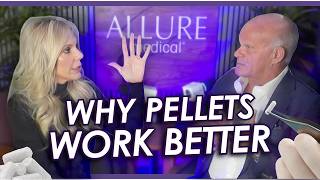
Interview (2026-01-14) between Dr. Charles Mok and patient Colette Van Pamel about surgical menopause and hormone replacement. Colette describes surgical menopause at age 40 (2010), poor symptom control with estrogen patch and topical testosterone, then dramatic symptomatic improvement after receiving compounded testosterone/estrogen pellets. Dr. Mok explains historical HRT context (Women's Health Initiative misinterpretation), safety nuances (synthetic progestins vs bioidentical progesterone), delivery-route differences (oral vs transdermal/pellet), and practical pellet details (pellet sizes, typical doses, insertion method, ~2-month onset). The conversation also covers GLP‑1/GIP microdosing for weight and cardiovascular benefit, approaches to longevity/health‑span (screening, regenerative and senolytic pharmacology), access/insurance barriers, and patient advocacy/education.
Questions this video answers
2026-01-14 (recorded/published date given in front-matter).
Typical pellet dosing described: ~100–150 mg testosterone and ~6 mg estrogen (approximately 20:1 ratio).
Testosterone pellet: about the size of a grain of rice; estrogen pellet: described as very small ("like a little pen mark").
Pellet release/onset: usually about two months for initial effect; stronger effect often after the second pellet due to residual plus new pellet.
November 2025 (Dr. Mok states the FDA admitted the mistake then).
Chapters
I felt a mass in my abdomen. She had indicated to me that she felt like it was a cancerous mass. They sent me in for a hysterectomy because I was. I mean, I was 40. I was done having kids anyway, and if they were going to go in there to remove that, they were going to do a hysterectomy. So I was put into a surgical menopause. I did not have cancer, by the way, but I was thrust into a surgical menopause at 40 years old.
When women go through menopause, is pregnant pretty obvious. It's either period stop, or you have a hysterectomy.
I just didn't feel good. And, you know, it affects everything. It affects your esteem. I still had massive night sweats. My sleep was horrific. The mood swings, everything that women complain about in midlife, anxiety, all of those things were not being managed.
In the 80s and 90s, we did large studies in humans showing that women on hormone replacement at the time, it was mostly permanent. Basically outlived women who did not go on it. They had less Alzheimer's, less heart attacks, less strokes, less. All cause mortality.
I feel like 90% of them are not on any kind of hormone replacement. And if they were that it's almost like a fog lifts. I can't imagine not having it. Like, I just can't imagine where I'd be in my life right now. I don't think I'd be doing any of the things that I'm doing right now.
Hey, I'm Dr. Charles Moak with Allure Medical, and I'm here with Colette Van Pamel.
Yes.
Who's been a patient of ours.
Yes.
And we actually met for the first time today.
Yes.
But you've been a lump patient in our Shelby office mainly.
Yes. The whole time.
And we're gonna talk today about hormone replacement therapy. And right before the show started, we talked about some other things. You asked about some marketing, microdosing, a glp. A lot of women in menopause concerned about that. In fact, the number one complaint in menopause is the weight gain, even though we might think of other things. But can you just kind of tell us your story, how you considered that you might need hormone replacement therapy? What led you to that?
So in 2010, I felt a mass in my abdomen, and I went and saw one doctor who told me I had a urinary tract infection, which I didn't. And then I sought out another doctor.
And.
And she, based on her examination and an ultrasound, she had indicated to me that she felt like it was a cancerous mass. So she sent me for some further testing, and those further tests sort of solidified her thoughts. And they sent me in for a hysterectomy because I was. I mean, I was 40. I was done having kids anyway, and if they were gonna go in there to remove that, they were gonna do a hysterectomy. So I was put into a surgical men. I did not have cancer, by the way, but I was, you know, thrust into a surgical menopause at 40 years old. As I came out of the surgery, they had already slapped an estrogen patch on me. Big, ugly, you know, patch. And it didn't really help at all. And I didn't help it either because I would forget to swap it out. I was supposed to change it, I think, twice a week, and I would forget. And so I feel like my hormones, the hormones it was giving me were all over the place. And I tried. Compounded testosterone, you know, they just put on my arm. But I still had massive night sweats. My sleep was horrific. You know, the mood swings, everything that women complain about in midlife, anxiety, all of those things were not being managed by the patch and the cream. But I continued to do it because I thought, well, what else am I going to do? Like, I had. I didn't know that anything else was out there. No doctor had ever said to me, hey, there are other modalities that you can try of hrt. Until a girlfriend was at my house and she had brought a friend with her. And her friend started talking about this pellet that she got in her butt. And I'm like, tell me more. And she said, it's like life changing. It eliminated all my symptoms. And like, that was all I needed to hear. And it was through your office. So she's actually the person who referred me here. I did get the pellet. The first pellet I got, I thought, this isn't really doing much. Like, I didn't feel any different. And by the time the second pellet hit, everything changed. Like, everything changed. My sex drive was through the roof, which it had never. I shouldn't say never. But in the previous 10 years, not been existent. I haven't had a hot flash in five years or more. I sleep well. I don't have unmanageable anxiety. There have just been so. There's just been nothing but good come from it for me.
That's great.
And my husband is now on it too.
Yeah. So when women go through menopause is pretty obvious. It's either period stop or you have a hysterectomy. And for men it's a little bit more insolent. It's not quite so clear. But we're in some of female hormone replacement therapy today and go through, you know, what kind of happened. Why was it that the patch wasn't working for you real well? Why did the cream not work very well? Why is the pellet working better? So first off, we think about what's the dominant sex hormone in a woman. And most people don't know about this because we don't talk about it much, but FDA approved testosterone for women in 1953, before they approved it for men. And it was actually FDA approved for metastatic breast cancer. The most potent breast cancer stopper at the time was testosterone. Now since that time, they replaced it with tamoxifen. But women have about 10 to 20 times more testosterone than estrogen coming out of their ovaries. And if you made no testosterone with your ovaries, you'd have zero, essentially zero estrogen. All of your estrogen comes from your testosterone. And the reason we primarily use estrogen is that historically when we started giving hormone replacement to women, we were using desiccated organs from sheep. Ovaries like dried up. That was in the 30s, right about the 40s or so. They started using Premarin, which was a horse based estrogen that they would get from the horse's urine. Now they make it, you know, synthetically now and it worked and it reduced all cause mortality, improved symptoms of menopause. So when you put on the estrogen in 2010, there was a bias against estrogen. About 10 years earlier there was not. But in 2010 there was fear of estrogen. So they put you on the lowest dose possible, which was a mistake because you were before that making plenty of estrogen. And then they of course put you on. They probably did not put you on progesterone then because you didn't have a uterus anymore.
They did estrogen, they did.
Okay, that actually is unusual. I mean I think you should, but that was uncommon at the time. So somebody was forward thinking about it. Then you went on the testosterone cream and a few things happened. First off, you can't really absorb it through your arms. Absorption on the arms is 1/5 what it is on the legs. It's an odd thing, but if we look at absorption of testosterone through the skin, it gets absorbed by far the best through the genitalia. But it's almost too much too onset. But women might use that for sensitivity but on the inner thighs, you rotate it around, that's the best absorption. Below that is the stomach. And almost nothing is the arms. And I know.
Well, I'm glad I know that now.
Plus, it transfers other people easier. So that's some kind of like maybe people were doing that and understand that, but that was just a legacy issue. That being said, you cannot get enough testosterone through your skin to get your level to where you were when you were young. And there's a misunderstanding about what is the level. If we use labs to check testosterone or estrogen, we're kind of getting a false read on what's happening. So there's a physiologic blood level that when you're 30 and you had your ovaries working, let's say your testosterone was 30, 50 to 90. But if you go on external estrogen and external testosterone, regardless of means, your body recognizes that it's getting something from the outside and it tries to gobble it up. So makes a special little protein called sex hormone binding globulin. And the sex hormone binding globulin is like a big sponge and it actually holds testosterone and estrogen, but you still pick it up on a blood test. So the amount of free testosterone or free estrogen, first off, we can't measure it, but it's depleted when you order a free testosterone. Actually just doing a guess or doing a calculation, so we have to run the levels a little higher. And you really can't get there with topical testosterone. Now you get benefits from topical testosterone, but the protective effect of testosterone is in the studies have only been seen with much higher doses, which is you get from a pellet. So before the show we were talking about, you said you get always a question about cancer. So I want to kind of go back to what happened in 2003, and you can interrupt me anytime because I'm going to. This is a passionate subject, but you can stop me. So in the 80s and 90s, we did large studies in humans showing that women on hormone replacement at the time it was mostly permanent, basically outlived women who did not go on it. They had less Alzheimer's, less heart attacks, less strokes, less all cause mortality. And there was large studies that demonstrated this. So it became the number one drug in the world was Premarin, and every woman was offered it. So about 40% of women were taking Premarin. In the 90s. Then there was a study done called the Women's Health Initiative trial. And it was the way we interpreted that study was the biggest disservice to women's health in the past 100 years. But before the study was completed, the FDA got some pressure by the media that there was signal that a certain subset of women on the horse based estrogen and a synthetic progestin had a slight increased risk of heart disease, breast cancer and blood clots. And they rushed to make a black box warning which is one step before moving a drug to the market. And they said warning, estrogen causes breast cancer, heart disease and blood clots. Well, the study got published a year later on estrogen and it showed women on estrogen had 22% lower breast cancer and 44% lower breast cancer mortality.
So why the disconnect?
Well, because they published a study and they misinterpreted the data. So people on this drug called MPA Medroxypedrestin, that started it, 79 years old or older, or sorry, 69 years old or older, had a slight increased risk of breast cancer. 8, 100 to 1%, no increased fatalities, but that one group of people taking a very strong synthetic progestin had increased rate of disease. And the government just assumed it was estrogen. But they never waited for the estrogen study. It didn't come out yet, it wasn't published. And what we saw was that women in the study that they based basically almost banning estrogen on women on either estrogen or estrogen, plus the synthetic progestin had lower colon cancer rates, 30%, lower fractures such as hip or knee, lower mortality from fracture, lower breast cancer, lower cardiovascular disease, everything was lower. And the women who were put on it within 10 years of menopause, it was even like say more better, they had even a better outcome. But a subset of women that had been in menopause for 20 years had never been on anything or put on this MPA drug had slight increase and that was it. And this led to such an overreach by the government because they were politically pressured. The number one drug, imagine how popular the GLPS are right now. And if you said this one subset of people are worse off on it, that's all you're hear about, is people are worse off on this drug. So the leader, for every pioneer in medicine, there's a thousand self appointed guardians of the past. And that's what happened. The guardians of the past, like we don't want women on these medicines and it's not appropriate. And breast cancer back then was much more of a politically charged disease because right about 2000 there was a disparity in how we did studies on Women versus men in healthcare. There still is, but it's more so then and how we put in resources for women's health or men's health. So there's already a kind of a disparity of women's health. And this breast cancer was just a hot, hot topic. And it actually led to more, you know, potentially more breast cancer ultimately. So when this happened, we had about 40% of women on HRT. It went down to about 2% over the next several years. And what happened is we saw a rise in SSRIs to antidepressants, rise in bone drugs, antidepressants, antipsychotics. We started treating menopause as a mental illness. And the shift occurred in November of 2025 where the FDA said we made a mistake. They admitted it, and they referenced the original studies they based this on. They said all the studies leading up to that point showed the exact opposite. We just made an error, big error.
That's more than just an error, though.
Well, but then at least they had overcome bureaucratic arrogance and admitted it.
What do you think the catalyst to that was? Like, why now?
So what happened is heavily in 23 and 24 major medical societies started lobbying the government, particularly the American Endocrinology Association, American Society of OBGYN, and American Menopause Society. And rate in about 18, 19 and 20, there were massive studies came out in Europe where they never stopped using hrt. So in America, we stopped hrt. In Europe, they didn't, they didn't participate in that original study. And the Women's Health Initiative trial was a 250,000 women year study. So that means a certain number of women times a certain number of years, 250,000. So in Europe, there's about 4 million women years of study showing that they had. The longer they're on estrogen, the more protection they got, particularly from cardiovascular disease, strokes. And the only negative signal is that older women on oral estrogen, they're eating their estrogen, have a slight increased risk of blood clots, and they don't get as much stroke protection. But any estrogen protects against stroke. But transdermal or pellet or cream reduces risk of stroke up to 54% if you're on 10 years or more. So, so massive reduction. And even women that start hrt in their 60s, well into menopause, they still had protection. And our government had even made that a bigger warning because of these older women that were on this MPA drug. So a few things that we can synthesize from that. First off, you should not eat your estrogen. And what happens when you eat estrogen? We gotta give you a 50 times higher dose because your liver recognizes coming from the outside and tries to bind it up, give you some clotting factors and inflammatory factors. So it's still better than nothing, but it's not as good as something through your skin. And then we should not be using a synthetic progesterone. And it's still common in America. It's very rare in the rest of the world. We're kind of unique where we like to buy very expensive custom drugs. They're still making more progestins, but generic progesterone. The brand name is Prometrium. Cheap, widely available.
Yeah, initially.
So you had a more advanced doctor at the time.
Yeah.
First off, in 2010, they let most women just suffer through it. So your doctor was more thoughtful. Didn't have as much information as we do now. Yeah, so I'd be doing things differently now. But that was fairly advanced thinking. And even though it didn't quite work, that was better than what the rest of the population was getting at the time. So you got truly bioidentical estrogen and progesterone. So that's a real benefit. So that's what led us to where we're at now. So I want to dig a little bit into the pellet therapy and just describe and you can kind of talk about your experience. Okay.
Yeah.
So with the pellet therapy, that's the first FDA approval of testosterone was pellets for women. And now there's not a manufacturer that makes it. So we have to get them compounded. But their compounded means there's a manufacturer that makes them. They're inspected by the fda. It's an FDA approved product, but it is manufactured through a compounding. It's called a 503B. They're allowed to mass, so they send it to our office, they ship it in big batches. The testosterone pellet is about the size of a piece of rice. The estrogen pellet is like if you drew a little pen mark on the paper, it's like that big. It's just tiny. So it's like basically we're usually doing about 100 to 150 milligrams of testosterone, about 6 milligrams of estrogen, 20 to 1. And we numb your skin up and little incisions made and pops in there. No stitches. And you pointed out you didn't feel the first one. This is a big struggle we have is that women come in and they get their first pellet, and they didn't feel it immediately. It takes a little while to release, usually about two months. You start feeling something. And then second pellet, now you've got that residual old one, the new one, and that's when the magic happens. So go ahead and go over kind of your experiences.
Well, that was exactly it. The first one, I thought, well, this didn't work. This didn't work for me, right? And I think I'm very different from a lot of women, that they would just stop right there, like, it didn't work. I'm done. You know, Let me just move on. And I just thought, I'm gonna. I'm gonna continue it. If I do three pellets and I'm still not feeling anything, then maybe I won't. But the process was very simple. The. The nurses here and the PAs that you have are very knowledgeable and very willing to, you know, kind of talk through some of this stuff and make suggestions. But, you know, that was five years ago, and I can't imagine not having it. Like, I just can't imagine where I'd be in my life right now. I don't think I'd be doing any of the things that I'm doing right now, because I didn't feel good. I just didn't feel good. And, you know, it affects everything. It affects your esteem, I think, hugely more than women actually even think. People who are in midlife that are feeling like they're stuck or in a rut, I feel like 90% of them are not on any kind of hormone replacement. And if they were, that. It's almost like. It's almost like a fog lifts. You know, it's. I used to compare it to Pigpen from Charlie Brown. Like, you know, that cloud following you everywhere you go? And it was literally like that was just completely lifted. And I started talking about it a little bit to my friends and that kind of thing. And once I got onto social media, I really started talking about it. And even if I talk about it today on social media, people that have maybe been following me for years have not necessarily heard me talk about that, but they'll say, I've never heard of that. Tell me more. Well, I'm not a doctor, obviously, I can tell my experience, but I wish that I had somewhere I could direct them to go. If. I mean, I have had some Michigan people reach out to me, and I can direct them to you. But beyond that, I'm like, is there a database somewhere where women can at least Have a consultation to see if this is something that is going to be right for them. Actually, I don't know if you can.
Answer that to some degree. So there's two large organizations, we're not part of them, that train providers on how to do pellet therapy. And one's called Biote B I O T E and those called Softopel, I believe, and I think, you know, the way I would approach this is that the telehealth is not as good, but it's better than nothing. So the real key is get some testosterone. If it's not the ideal and we're thinking about this, how do we handle more people in different states? Well, testosterone's got a uniqueness where most states require an in person exam. So telehealth is tough for that. So only like eight states that don't require that. Michigan's one of them and the pellets are going to work better. So our kind of plan as we're growing is to establish telehealth relationships in certain cities and then plan a store there when it's appropriate. We have enough patients. But I want to go back to this, you know, you don't, can't answer the doctor stuff. I'm going to talk more about the doctrine stuff and you talk more about how you're feeling things. And our mission is for our company is to extend your health span. Yeah. And health span means how many years you're not sick, which also ties in the lifespan. And if we look at what does estrogen, progesterone and testosterone do? So you had talked to me earlier, you said a big question people have is what about the cancer? So on the study on Premarin and Provera, women on Premarin only had lower breast cancer risk. But we can't interpret that to say estrogen protects against breast cancer because maybe Premarin does and estrogen doesn't. We don't know. So we look at the European studies and it appears that estrogen is neither favorable for cancer or particularly preventative. Okay, so it's not particularly preventative, perhaps Premarin, because it's not truly a woman's estrogen might inhibit some estrogen receptors, but it's neutral on breast cancer.
Yeah. Okay, I was just thinking. So it, it doesn't cause it, but it also doesn't create it.
Right. So in the case of the synthetic progesterone, I'm sorry, the synthetic estrogen did have lower breast cancer rates and it was very small, lower. But the, it's like there's a relative and absolute risk. The absolute risk reduction was very tiny because most women don't get breast cancer and at five years they followed them, but the relative risk was 22% lower and was statistically significant. But if we look at what's the rest of the world doing outside of America is they're using testosterone. Now, testosterone was first approved to treat breast cancer. Now this Biotea company I mentioned before, they published a study looking at their patients, a big group of patients, because they have, I don't know, they're not really franchises but people affiliate with them so they have their data. Dr. Glaser and Dateno House published on this a lot. There's been several published studies in America because again, it was more common in Europe to do it through national healthcare in America wasn't covered by insurance. But what they saw was a 40 to 70% reduction in breast cancer rates in women taking testosterone versus taking nothing. Now initially in the early 2000s, 2010, we knew that testosterone by itself improved all symptoms of menopause pretty much on par with estrogen. Because you make estrogen out of your own testosterone and testosterone was a strong breast cancer blocker, doesn't mean you can't get it reduces it 40 to 70%. So the question was, do you need to add estrogen? Well, the data is overwhelming that estrogen is so cardiac protective we would be remiss not to do it all the time. Now women who have breast cancer history, they might have a particular fear if they go to their oncologist, say I'm taking estrogen, they're going to go ape shit on them and it makes them afraid. We don't have good data to say that if testosterone converts into estrogen you still get the cardiac protection. We just don't know. That study's not been done. Probably to some degree it is and testosterone's favor for heart disease favorable. It reduced it to some degree. But in those women, we might just put them on testosterone only because they're still getting many of the benefits of whole HRT. They're missing that 6 milligrams of estrogen. The fear mongering is going to be so much and they're still going to live longer than taking nothing that we want to give them an option. So that's the one. Any one out of seven women get breast cancer in America. So that is a real concern. We have to deal with that. There's some people that use a estrogen blocker when they put women on testosterone. I would say that's probably not A good idea because, you know, you want estrogen to protect your heart. And if you had breast cancer and you're in remission, you're probably not going to die of breast cancer. You're more likely to die with everybody else does, which is a heart attack or Alzheimer's.
Yeah, along that. Two of my best friends have had breast cancer and neither one of them have been on estrogen or testosterone because both of their doctors have suggested against it and one of them was on an estrogen blocker with the black label being removed. Now, is that something they should go back to those doctors and question?
It's a great question. So first I just want to clarify, do you have active breast cancer? We do want to block estrogen. Estrogen didn't cause your cancer, but it is responsive to cancer. So you'll better go into remission. Blocking the estrogen during that time, though, you are damaging your heart and your bones and your other organs. So we want to get you off that at some point. This idea of leaving on forever is going to shorten lifespan. And I'm not sure that if a doctor has been telling his patients for 20 years, estrogen causes cancer, if they're going to reverse their statement on it, it's kind of hard. So I think there'll be about a 5 to 10 year transition period where doctors are either retiring or confident after reading numerous supporting articles that they're going to start allowing our patients to use estrogen again.
That's what's so frustrating too, is because. And you should put your trust in your doctor. But I also feel like if your doctor isn't necessarily up on the research, like, I. I just feel like it stops so many women in their tracks because, well, my doctor said. My doctor said, and that's where they leave it. And they don't realize that by not having estrogen or testosterone that they are shortening their lifespan. They just, they don't. They just don't understand that. And I just wish there was a way. I'm not a doctor, so I can't say to them, well, you know, don't listen to him. Like, how can women navigate this? Like how? I just don't know how they're going to, like you said, go back to your doctor who's been telling them for years, I guess you find a new doctor. Right. That's maybe the only.
It does happen. And I tell you, I was in our Charleston office and this is a story that occurred probably two months ago and I was visiting the provider there and she brought me Into a room where a woman had been concerned about gaining a bunch of weight, and she gained like 50 pounds. And I went into her history. Well, she had carcinoma in situ, which is kind of like a pre cancer. And they did a surgery on it. And her doctor took off her thyroid medicine because she said hormones cause cancer. I mean, this is absurd, but a lot of Doctors are watching CNN, watching these shows. And in 2003, I mean, I remember where I was at when this happened. I was in San Francisco when the black box occurred. I'm like, we knew this for years. This does not occur. And the FDA saying that. But like now that the government said it, doctors are worried about losing their license, about getting sued. Because if the government says it causes breast cancer and I put a patient on estrogen, she gets breast cancer, she's going to blame me. It's not necessarily cause and effect, but if you did have breast cancer, there is a real possibility to recur. But the bigger question is, what are you going to die from? We look at really the killers in America. Number one is cardiovascular disease and affects women once they get into menopause, generally, not before that. And estrogen cuts the rates down by up to 54%. And Alzheimer's depending on the study. 35 to 55% in the study looking at estrogen and Alzheimer's reduction were studying women in about their 80s. So think about this. They were on this stuff a long time. 35 to 55% reduction. And we've been telling women for 20 years it causes dementia. There was no evidence of that whatsoever. That actually estradiol hemenestrin causes dementia. But this was a statement and it says it on prescription, actually says it on there. So there was a coordinated effort to basically blacklist by black boxing the estrogen. And I think, you know, you're saying, how do you get this across? We're doing stuff like this here. I wrote a book on this in 2016. I wrote a book, it's called Testosterone Strong Enough for Man, made for women. And I kind of redid the COVID recently. I was wondering if I rewrite the book. And I think the timing wasn't quite right. And I didn't rewrite it, I just let it go. But now that the black box came off, I'm going to kind of rewrite it and write down this. What happened between 16 and 25. A lot of studies came out and just really hammering the nail in the coffin of this black box warning. So what will happen in practicality is that there'll be some doctors that are more evidence based and are going to make their own decisions rather than what the government told them in the past and start. And that's what we did for years. You know, I knew the government said that, but I knew it just wasn't true. And then that word spreads. It kind of forces other doctors in the community to get with the program.
It's.
And I think what we'll see is people are in a community where there's no practice like ours that's been doing this for 20 years. The other doctors aren't going to follow suit. We actually have a lot of competitors in this space because we've been doing it for so long. People are realizing, well, this is what people want and they'll start reading about it and realize, okay, maybe I shouldn't listen to cnn. We all have our own opinion how Covid should have been handled and our vaccines should have been handled. But we know now, regardless of where you fall on that, there was some science that was misrepresented. It was just misrepresented. And it got really widely spread. And you know, Again, back in 2003, breast cancer was a hot potato because it was purely a woman's health issue. And there was a disparity amongst what we were doing for women's health and men's. It was ripe for attacking and they needed an enemy and the enemy was estrogen. In reality, it should have been this MPA drug. And I want to make it clear that this medroxyprogesterone or the Proveras of the world, they're not inherently unsafe, but they're not the ideal one. And they should not be started in women over 70 if they've not been in anything. Because that's the study that showed they had a slight risk. But in general, the hormone replacement debacle cost probably about 2 million years of lifespan. And it's time for us to fix it. And almost like, okay, that's done. What are we doing going forward? Let's get the word out.
Is there a certain age at which it's too late for a woman to start?
Yes, that's a beautiful question. And Based on now 20, 25, the answer is no if they're on skin based estrogen. So pellet or cream or patch. So the largest study to support that was in Denmark. And they looked at women who started it over 60 years old. So they were well in 10 years past menopause because it was answering a specific question. Because some of the medical colleges in America, which we were in Love with primary not true estrogen. They said, well, we know there's a clear benefit if you start within 10 years of menopause, but after 10 years does not appear to be a benefit. However, if you used a non oral estrogen, which was common in Europe, was not common in America back then, it was maybe in 2010, you were kind of a, say a maverick getting topical because we were using pills back then. So in Europe they continued to use topical estrogens and they found that at any age estrogen was protective. Now the protection is related to duration of therapy. So if you started it later in life, you will not get as much protection as starting it younger. But it doesn't mean you shouldn't do it. And I tell you, I've revised the way I run the practice. In about three years ago when these major studies came out, it's like, okay, we used to say if you're 60 years old, you never buy anything, let's just give you testosterone. Estrogen has no known benefit. Well now that's patently changed. So when we have, and that's called evidence based medicine, new evidence comes out, let go of your old beliefs and we practice it based on what is, what are the clinical studies showing us and large. This was a 2.2 million women year study, so it's a robust study. It's hard to argue that the only thing you argue about it was not a randomized controlled study of a control group. They just had a observational group. This versus people that took nothing because they're in a public health system, they know what people got prescribed.
Got it. So a woman who, because a lot of times I'll also hear, well, I'm already through menopause, I don't have those symptoms anymore. You're of the opinion that it could still benefit them?
Yeah. So let's dig in that a little bit. So when they say I'm through menopause, there's a period of time where you get sort of immune to the hot flashes, night sweats, and also where you just accept the mental fogginess, the joint pain, the weight gain. So I hear women saying, I'm through menopause. Are you gaining weight? Yeah. Were you when you were 20, 30? No, I, I, I could argue that you're still in menopause, you did not start having periods again. So the, we call it vasomotor symptoms. That's a term for the hot flashes, night sweats. But there was a epidemiologic study that said if we used vaginal estrogen on women that are not an estrogen at all. We would save about $2 billion a year in urinary tract infections in menopausal women. A 30 year old does not need, you know, vaginal estrogen. So if you're taking estrogen systemically, you generally don't need it vaginally, but some women still do. But urogenital disease of menopause is a big concern. And if we look at what causes older women to get sick, urine infections are very dangerous when you're old, not when you're young. They're very dangerous when you're old and when you have this thinned out tissue. So is that woman through menopause? No, she's still in menopause. It didn't go away. So when they say they're through menopause, they mean I'm no longer having the hot flash and night sweat. I still have the vaginal dryness, I still have the decreased libido, I still have the low energy, I still have the joint pain, I still have the mental fogginess. Still starting to forget things like that. My skin's starting to get wrinkled. There was a study done in Vienna, 1996, where women say, where should I put on my estrogen? I'm like, put that shit on your face. Makes your wrinkles less.
They make an estrogen face cream now.
I think, yeah, it's estriol. So there's three forms of estrogen in women and one is one we maybe don't want called estrone. Estradiol is our workhorse. That's the prescription. And then Estriol E S T R I O L is one that makes you glow when you're pregnant. And they get a huge amount of it.
I don't think I ever glowed when I was pregnant. Everybody says that.
I don't think I ever pregnancy. But it is a skin estrogen and it works as good as the skin is estradiol, but it doesn't affect your other organs. So you can just lather this stuff all over. You can't get excess with it, which came with estradiol. Take too much estradiol, your breasts get tender, your hands get swollen. So you can use estriol on your face or on your vagina too, so it can be used to increase moisture in the skin. And that's the, you know, it's not over the counter. You have to get a prescription for it. But any compounding pharmacy can make it.
Yeah, yeah. So can we talk for a second about. I know you work a lot with GLP1s peptides. All peptides, or are you specific to GLPs?
So GLP1 is by far the most common peptide.
Okay.
But any peptide questions we can discuss.
Okay. I'm on both. I use the HRT and I also am microdosing a GLP1 GIP. If a woman is not doing hormone replacement by choice, is there any benefit to her in starting with a GLP1? Will it help any of those symptoms if they don't want to do hrt?
So it will help the weight loss? Not as much as taking hormone with it, but it will not typically help symptoms of menopause. Now, we're getting studies now saying that somebody that's overweight, that's usually not microdosing it, they're overweight, if they go on a GLP drug, they'll have less cardiovascular events. Enough that I got it FDA approved for cardiovascular protection.
Okay, can I stop you right there?
Yeah.
When I saw my doctor after I had gotten my blood work, because it was independent of him, he was not very well versed on the GLPs and what those cardiovascular benefits could be. And when you talk openly about GLP1, everybody says it's just a weight loss drug. It's just a weight loss drug. But you're saying that it is approved for cardiovascular use.
Yes, certain criteria. So 1. So let's talk like, why is your doctor not aware of it? Well, your doctor, generally speaking, works within the confines of what an insurance company dictates. And they're not going to approve microdosing at all, and certainly not for something other than obesity or overweight with comorbidities or diabetes. So when they did these trials, they found that people with diabetes who took GLP1 had less heart attacks. Then they say, what about people who are overweight with comorbidities or obese? They also have less cardiovascular risk. Probably after one year of use, get a certain number of months of health extension. And after three or four use, probably get about one and a half years of additional lifespan. So it's significant. It's not trivial, significant reduction in cardiovascular events. Recently a study trying to look at it for Alzheimer's didn't really work out well, but I think they used the wrong grouping when we're talking about microdosing. So there's a couple ways to microdose it. One is to take a smaller dose, and the commercial available product does not have such a thing. So we sell it by a little bottle, and you can draw it up yourself, and you take a Lower dose. The other thing that happens is your body gets its medical condition we call tachyphylaxis. So refer to anaphylaxis, allergic reaction, tachy, rapid flaxis. So tachyflaxis, where your body rapidly gets tolerant to the drug. Classic example opioids. Okay, so you take a narcotic and take it for two months, and all of a sudden it's not working anymore. You got to take more. And then if you stop the narcotic, it might take a month or two, but those phantom pains you had go away and they start working again. Now, it doesn't have the negative consequences with glp, but they have a rapid tachyflaxis. And we look at the studies for semaglutide or tirzepatide. The maintenance dose was 10 times higher than the starting weight loss dose because of tolerance. So this led to the concept of, can we cycle through it? We've been cycling people through it, going for 12 weeks, stop going, and you don't get that. Tachyphylaxis. And we discovered probably, I guess in 22, was that the women that were significantly overweight, that would have qualified for taking this all the time. They take their 12 or 13 weeks, and then they'd just go on it periodically, a much lower dose, and they kept losing the weight, or they'd go on a second shorter cycle and lose the weight. And this led to the idea about what about microdosing it? Because we see with the higher doses, you get the weight loss, but you also get the side effects. But if you keep that tolerance from happening, what happens? So when somebody takes their first dose of semaglutide, they'll generally notice a little lower appetite, a little less inflammation. If they have Crohn's disease, it might get a little better. If they have psoriasis, it might get a little. All these autoimmune things get a little bit better, but then you need a higher and higher dose. Well, if you separate it out, if you take the starting dose and do it like every two or three weeks, you never get the tolerance. That could be microdosing. The other way to microdose would be taking a smaller than starting dose every week. And they both kind of work as what's practical for you. I like the every other week because it's easy to draw it up that side, that way. But those are effective. And we don't have any studies on microdosing of semaglutide. So some, based on some logic, and we call evidence based Medicine, we see things happening with people, but there's no clinical studies and there's probably not any rationale for clinical studies. There's no money to be made by a drug company for it. You make a lower dose because that's.
One what a lot of people say, well, there's no studies. Well, that doesn't mean there couldn't be studies done. It's just that people aren't necessarily doing them.
And we can use like sacratarian logic. So if a person that is obese takes a high dose of semaglutide and has a lower heart attack rate, the person that's normal weight, if they take low dose semaglutide and their labs get better, their lipids get better, their C reactive protein gets better, we know they're going to have a lower risk because we can actually stratify them. So that has occurred. We're seeing these things. But again, they're not going to do a double line rabbit control trial because there's not going to be a product made from it. And you said you had the Function health. I did that too. I was younger than my, my age and I'm in a race to, you know, like you have your GPS, it says it takes 18 minutes, I want to get there in 17. So we're probably doing similar things. I'm doing things to slow down my age. I measure my brain age, my heart age, my genetic age, my bone age, my muscle age and my biologic age routinely.
Okay. So I know Function Health. Does you know your blood operating system? Where are you getting brain data from?
So for brain, it's called neuro quantitative imaging.
So I'm gonna need all these numbers.
The I went to a place called Health Nucleus in San Diego. They were a leader in it years ago. And my brain was at the 88 percentile for a person my age. And 18 and which was good, you want to be in a higher number. And we know that you're talking about.
Health of your brain.
No, the size of it. So your brain shrinks as you age.
Yeah.
Just like your bones do. So we can predict when you need Alzheimer's pretty accurately. And I did an intervention for one year and I remeasured it and I was at the 95 percentile for a 20 year old and it stayed there. Okay, so that's an age you can do. So and we've had people that had brains in the bottom 15, 20%, they didn't have any symptoms yet. Those guys get about 5%. And we do things with Them treat your sleep apnea, change, change some things, and it'll actually grow back. So. And you can. That's trackable. Cardiovascular age, really two ways to do it. So one's called a cimt. We offer that here, and it's looking at your carotid arteries and it measures the thickness of your lining and it compares to other people of your race and sex and age. So my case, I have the heart attack gene and I had my heart age was about two years older than I am, in spite of. I was doing things to slow it down. So I did intervention and went back 16 years. Genetic age, it's called a biologic, the epigenetic clock. And this is a little bit more wild west, which we don't know what happens when you change it, but basically from when you're an embryo, your genes are keeping a clock on when you're supposed to die. And we can predict when people are going to die fairly accurately by doing. And it came out in 2014, so it's fairly new. And, you know, you can do it through your urine, your saliva, your blood, and we don't really know. Does that mean your kidneys aging? That, you know, we don't really know yet.
Yeah.
But Dr. Muss and my doctor in South Carolina, we've been on like a. Like a race and we're kind of tied. We're slowing our. Every year we're aging about six months. And there's things you can do with, you know, drug therapy, obviously, for that, and then bone agent, DEXA scan, muscle age and fitness age with a VO2 max and a body composition.
That's fascinating. The whole longevity thing just fascinates me. I listen to Dr. Hyman, his podcast all the time, and Huberman's lab and all of those things. It is fascinating because I don't. You know, 10 years ago, I would have never believed that any. I would have thought this was all malarkey. Right. I don't know if I'm old enough to say that word, but now I, I believe it because I'm. I'm seeing it and I'm feeling it, and I just think it's so exciting. And it's a topic that so many people just aren't aware of. Like, they aren't aware of all of the things that you can do. The other hindrance is money. Obviously, a lot of people are like, well, I can't afford to do that. Like, but can you afford not to?
What do you love more, you know, yourself or your possessions? And, you know, I think about health insurance was never designed to make you live longer. It's kind of car insurance or home insurance. When there's a fire, it covers it. And until the Obamacare act or Affordable Health Care act, screening was not covered. You. And a mammogram wasn't medically necessary. And they put into law. Yeah. Pay. And really, if you look at screening for cancer, we only pick up about. We only can pick up 1 out of 20. 1 out of 20. Sorry. 1 out of 4 cancers, 24% can be picked up. We pick up less than that because a lot of people don't get screened. But I mean, I get a full body MRI every year, and you can pick up a tumor size of a peanut. And we use bionic MRI in Southfield, there's a national chain called Pernovo. They don't have them in Michigan.
That's what I've used.
Yeah. And it's right around 2000. And they'll do the brain too. So I love that. So you're. I mean, it is. It is expensive. But instead of thinking about lifespan, I want to think about health span. And ideally, you know, I'm. I'm 62 and I've got two grandkids, and I went on away. My daughter, other daughter just got engaged and she's already asking me, you know, how do I know I'm fertile? You know, let's just. It's okay. You can wait a little bit. But I want to be able to play with my grandkids and potentially see and play with my great grandkids. And to make that happen, you've got to preserve your stuff as much as possible. That is not medically necessary. Therefore, it's not covered. And just like you taking care of yourself and going to the gym and exercising and eating healthy, you know, some people have that built into their work plan, but it's not covered by insurance generally. So what can we do? And I think about hrt, some cases covered by insurance, doing pellet therapy is not. But it's pretty inexpensive relative to getting, you know, 55% less Alzheimer's, 55% less heart disease. With me, that's like kind of worth everything you have. We have a new program where I'm not sure we're going to keep this on forever, but people that are new to it, they can try it for free and then they sign up with our membership.
The pellet. Your pen.
Yeah, we started that last month.
That's awesome.
And the goal I have is that we know how much additional health span you get if you go on this. So I want to add 50,000 years of health span by August 31, 2028.
How old will you be then?
Three years from now? So be 65.
No, like your biological age. What's your goal?
So that's a great question. So there's a lot of other things that affect that. But when we look at the different things you can do to make yourself biologically younger, let's say, for example, you have high blood pressure, you're going to age at a faster rate. And you'd pick it up actually on your functional health that you did, and on your methylation study called the epigenetic age. And if you treat it, you'll age at a slower rate. So if we look at somebody's got single joint arthritis of a large joint knee or hip, and we know the studies are pretty well established, that if you treat it with a method that's reasonable, you'll gain between 1.8 and 3.5 years if it's mild to moderate, a little bit more if it's. If it's more severe, even more if it's severe and you lose weight.
So you're talking about like a hip.
Yeah, arthritis.
Okay. So if somebody's got arthritis in their hip and they don't treat it short, shortens lifespan. Interesting.
Now, not from the hip directly.
Yeah.
From the decreased activity you have associated with the hip pain.
Right.
So we do, we do a regenerative therapy stem cells with that. And it's like most people aren't getting surgery because it's so invasive and there's a lot of complications with it. But you put a shot in the last few years and that staves that off. And it's getting very inexpensive. You can bank your stem cells now for. They'll bank them for the rest of your life for 250 bucks a year. I mean, it's really gotten cheap. Cheap. Used to be able to go to Panama for 25,000. Now it's like really inexpensive in America. So there's a lot of things we could do to change your age, but I don't have the ability to measure their biologic age. And we do have a program that Danielle handles where we measure people's biologic age and we use certain pharmacology to reverse it. And that's really for the person that's doing everything else already doing the wellness stuff, and they want to really dig.
Into kind of pharmacology are you referring to.
So there's a few drug therapies. So the mainstays for aging that are potentially modifiable are slowing down what we call senescence. And that's where your cells from dividing over and over again. They become senile, they stop dividing and they start telling other cells in the area to stop dividing, waiting to be eaten up by your body, which occurs really well when you're 18, when you're 60, not so much.
Are those zombie cells?
Yeah, zombie cells, senescent cells. So we use a drug, it's a chemotherapy drug that kills those. You do it every three months, very cheap, very safe. The dose is given and it kills off the senescent cells. So, you know, we do that every quarter.
Yeah.
And then we have drugs that inhibit the muscle protein synthesis pathway that allows your body to clean up old cells better and slows down development of senescence. And you just pulse this, you like to take it once every two weeks and just give that little break. The drug lasts about three days and it basically turns things off for a little bit, allows your body to clean itself up. Then we use another drug that restores your thymus gland activity. That's been shown in a published clinical study that did a study on men. And the odd reason was women take twice as much of this drug as men do. So it was an expense issue. But they had men go on this drug for six months. They were average age of 55 and one year later, they were one and a half years earlier than the day they started. So they went backwards two and a half years on a drug for six months. The mechanism is not exactly clear. Then we do other things too. We make sure they don't have cancer, full body mri, make sure they don't have cardiovascular disease, off a brain scan to see where your brain's at. And if there's an issue there, we can directly, directly affect those.
Yeah, sounds like there's a lot you can actually do to potentially extend your lifespan.
So I think about it, and that's a great point, Colette, but I think about it in terms of like phases. We're not going to go to these senescent drugs if you're not getting the fat off, if you're not on hrt, if we haven't managed your sleep apnea, if you got joint pain because those are the low hanging fruit. So the first say tier of medicine is, you know, taking care of your health, getting your mammograms and doing your, you know, your blood pressure checks and your, you know, your lipids, which might not be that helpful, but the basic stuff, blood pressure management, diabetes Management, second tier, something that's regenerative. So the things I think are regenerative are weight loss. If you lose weight, you've restored your metabolic health, hormone replacement therapy. You know, if you have a palate in you, it's like having your ovary again. If you have sleep apnea, that's something we actually have a patented system to treat to reverse sleep apnea that accelerates aging because it degenerates your brain. And then even circulation. We have some circulation services we offer. So those are the regenerate and the stem cell therapy. After that comes, don't die of anything that's totally preventable. Heart disease, cancer, and brain disease. So when I say preventable cancer, only 11% of cancers are genetic. The other ones are epigenetic. They're caused by our behaviors. And if we do a scan and pick up a tumor the size of a peanut in your liver, it can be taken out. But one size of a golf ball, not so predictable. So we can scan ourselves periodically and then neurocognitive decline, we can measure that. So before you're symptomatic, if your brain's in the bottom 20 percentile, you're going to get Alzheimer's. Maybe not for 10 years, but you're going to get it. If we get that up to 70%, you just basically made that not happen. And the last thing is cardiovascular disease. Then after that, we're doing these other things to actually then reverse your genetic age. The first one is reverse your biologic age.
What are your thoughts on women who are in menopause? They're on hrt, but they're still experiencing that midsection pooch, I guess I would call it. That seems to be like women's number one complaint is keeping weight around their midsection. Is that something that HRT alone can address, or is that something that you would then put someone on like tirzepatide or something like that for?
Yeah, great question. So we get patients coming in with a primary interest in like a tirzepatide and a primary interest in hrt. The vast majority come in for the GLP drugs. Now, if we manage the weight loss through GLP drugs, we don't address the hormones, they're likely to put the weight back on. And with HRT medications, we know that as a standalone let's take estrogen. Women who take nothing will gain the most weight. They take an oral estrogen, they'll gain a little less. Take skin estrogen, they'll gain the least testosterone also.
I'm sorry, is that regardless of exercise.
And nutrition, these are studies done looking forward at people. So women in menopause generally always gain weight. So if you take the women that went on something, they'll gain less, they went on topical even less. But they all three groups will gain weight. And this was pre GLP studies. Now testosterone on the other hand, a little different. So a study done on perimenopausal women put on a pellet of 100mg testosterone for six months. They were average age 52, just before their natural menopause. At the end of six months, the women on nothing gained roughly 7 pounds and the women on testosterone lost about 4 pounds of fat, gained a couple pounds of muscle. So they stayed about the same weight, but they became more lean. So those patients that are on HRT and they still have the midsection. This is not, I don't think, a controversial subject anymore. We treat people that are not obese with tirzepatide because if we look at even like blood pressure, if you're say when optimal blood pressure is below 130 and below 85, well it's better to be 120 over 70 and it's better to be 118 over 68. There's no question about that. This is proven that it's better to be lower. And there's certainly a point where it's too low, that's extraordinarily rare. Somebody's got a disease where it's too low. But you can't get too low of a blood pressure under normal circumstances. Can you be too thin? Well, yeah, obviously, but in general you cannot. In fact, the only predictable way to extend life in every species is, is to undernourish it. Okay, this flies in the face of eating all this freaking protein. But I'm not an anti protein advocate, but I think it's, it is leading to overeating if you try to get the recommendations some of these people are suggesting. But people that fast or a little bit underweight live longer. And people that are a little bit overweight, they have a lower short, you know, shortened lifespan. So if someone wants to lose ten pounds and back, I tell you, three years ago when I was giving these women semaglutide, people were pissed off. Well, this drug's been around 10 years. We know the safety of it. We know being thinner is better. Certainly from a look standpoint is better. And from a health standpoint it's better. So this is, I don't think, controversial anymore. It was at a time that we, you know, when kind of people are thinking we're making them anorexic. You know, if you look at pictures of people in the 60s, I guess we'd call ourselves skinny. Right. And today we'd say, you're really skinny. Back then that was just normal. And when people died, it's because we died of stuff we didn't know how to treat back. We weren't barely treating high blood pressure back then, so. And then what happens? You're doing semaglutide and HRT and you're still getting that midsection of fat. It's on you. You know, there's, there's probably check your thyroid, of course, but this is. Now your body's different and you're gonna have to increase your activity and decrease your consumption.
So you say that JLP1 is no longer controversial, but in the social media world, I can tell you there's nothing more controversial right now.
Well, let me rephrase it. It's not as controversial.
Okay.
There was a hot button topic before.
Yeah.
And because it's more commonplace, you know, if you look at our office, the women here are normal weight. Now, it's good for us because we pay their health insurance. But I mean, they're losing five pounds. They're going to take a little GLP1. So I think that spreads out to.
Okay, well, and that's not for vanity. That's because you want them healthy.
We want them and their family to be healthy so we can present it to our customers as well. We buy lunches. We have since 15 because I saw people eating McDonald's at lunch. And if you work here and we're about wellness, we want you to be well.
Yeah.
So the. Yeah, I mean it does really, it does lower healthcare costs. I wrote this white paper with the idea of persuading companies to pay for GLPs for their patients because a lot of people don't have it covered. And we did is we used this, not quite a microdosing, but a sick cycling of the semaglutide using some metformin occasionally in the break period to raise GLP1 levels in your blood. We found is that with about one tenth the cost, we got all the benefit and of course we paid for it.
Yeah.
And I thought, what happens if I get other businesses to buy lunch and then, you know, employees aren't disappearing during a day, get lunch and they're eating healthier. Maybe they're more awake in the afternoon and you pay for the GLP1 drugs. They're not so hungry and you have lower your health care costs because thinner people will cause you less in health care. I mean, this is unknown. I know that sometimes people get upset hearing that, but that's the reality. If you're overweight, your healthcare costs are higher. If your older healthcare costs are higher. So that's why the best cure to old age is youth. And if we can do things that make us still be young, if we look at what predicts lack of death, there's a few things that are not arguable. Your relative strength to your weight and your speed. So anything we do that can accelerate those treating your circulation, treating your joint pain, staying active, hrt, less joint pain. Then we have other things as well. You know, we talked about there's certain blood work that you do. The cholesterol not a good predictor of heart disease. Apob A little bit. C reactive protein. A little bit. But there was this Clery study which is a special CAT scan of the heart. There's a company that looked at the blood results compared to actually having basically like a heart cath, more sophisticated heart cath. And they found the number one associated factor in blood to heart disease was hemoglobin A1C which is a marker for metabolic syndrome, blood sugar. Other ones were interesting. Uric acid, homocysteine. Cholesterol is right down at the bottom. Oxidized ldl.
But cholesterol is the buzzword that everybody knows.
Well, there was a time that's all we had. So in a general population, if you have high cholesterol and a heart attack, we thought we could reduce the chance of a second heart attack by reducing cholesterol. Not really proven out exactly, but there's some correlation. Now we have a lot more tools. So if we were to manage their blood sugar better, we get more juice for the squeeze than we would managing their cholesterol. But that being said, we're in an era that it's your choice to have a heart attack. Maybe some exceptions, but I know men my age that can afford to test themselves and they won't because their insurance won't cover it. But you can do a $99 calcium score. Not the best, but it's a. I mean you won't miss much, but it might over call things. You can do a $300 what's called a CIMT of the carotid iris or you can do a $1,500 special CAT scan called a Clery C L E E R L Y. And you know my history. I've got, I Have some atherosclerosis, and it's going backwards, but this is managed with. I was already doing good lifestyle. I've stepped it up, and medication, make sure my inductive oxide is high. So these are optional things. I think we're at that point. And, you know, the GLP1s are part of that solution for the right person. Hormone replacement. They are part of that solution for the right person. Then lifestyle, things. Other peptides, potentially.
Yeah. I think it's a matter of priority. People will spend money on ridiculous things we see. I mean, I'm. I'm one of them, too. I spend money on things I. I know I don't need, but I also spend money on things. Oops, I'm sorry. Things that are going to hopefully extend my life and help me live a longer quality of life. I feel like there's this epidemic. I go to any store anywhere to get gas, wherever I am. And there are people that seemingly aren't much older than me, and they are hunched over and they're walking like they're frail. And I'm like, what is going on? Why are. Because I know that there are things that they can do. I know that people can exercise, lift weights. They. They can eat better nutritious food. They can do GLP1s. They can. There's so many avenues for people to do it. And I don't know if it's a matter of priorities or a lack of knowledge or a combination of the both, but if people could get away from some of the senseless spending that they do on everything.
I didn't hear the term. I want to grow old naturally and gracefully. If we look at. From a paleontology standpoint, once you're done, let's say caveman era, once you're done having kids, you are a burden.
Yeah.
It's best you die.
Yeah.
And of course, that's not true in today's society, but we weren't genetically programmed to have a long, healthy life. And there's people who live a long, long time and don't get disease. They're rare. You know, like George Burns. Smoked every day of his life, lived to about 104 years old. And there's people, like, I always tell us, my patients this. There's always that one woman, you know, that no matter how much she eats, she never gains weight. It's actually a medical condition. She's called a bitch. And that's just so.
There is those people I was waiting for. I'm like, is there.
What's the name? So that there is those people. But in general, most of us are going to go towards nature. And just dying naturally of old age is kind of an ugly thing to happen potentially. Now, certainly it does happen where it goes just fantastic. In my case, neither. My parents died a great death and it was before I had anything that I could do about it. But it's like I want to put that off as long as possible. And again, when we extend our lifespan, our health span gets better more than the lifespan. So let's say roughly about 30% more. So if you live another two years longer than you would have otherwise, you're probably getting a third year without disease. So your disease period will be impacted. And if we look at people that die at 100, they weren't laying in a nursing home for 10 years, they were 100 years old and they fell down the stairs, broke their hip and died. Not a bad way to go, versus at 58 getting Alzheimer's disease. And then at 65, dying with your family taking care of you and putting you on the bathroom. Big difference in our health span. So I think we should think of those things.
Aging gracefully, that's a term that I battle regularly because the basis of what I do on social media, well, I actually started with makeup and, and sharing makeup that works for mature skin and that kind of thing. So a lot of the feedback I get is why can't you just age naturally? Why do you? I'm like aging naturally or aging gracefully is what they actually say isn't very graceful. It turns out, in my opinion, if you age, if you just let nature take its course. Right. And you don't take any preventative measures to extend your own life, it's not going to be very graceful.
What you can say when you say why don't you age gracefully? It's like, no, you go ahead and do that.
Oh, I do.
And I'll stay the way I am. So difference in men and women. So I'm a little older than you and I've got a lot of wrinkles and guys aren't really into the Botox and it's not like our priority. But for a man, my sign of youth is I'm very, very fit. So I'm at the gym at 62, I can do a one leg squat with 250 pounds, 12 times. There's virtually no guys my age that can do that.
Yeah.
And two legged squat, almost 600 pounds. I can run much faster. I go to the university, I measure my VO2 max and I'm on par with their younger athletes. So that's kind of the comparison to the makeup and putting yourself together. So it is a little bit vanity. I want to look young, but it also leads to being more young. Now, the flip side is people that are taking care of themselves on the outside are more likely to take care of themselves on the inside. Okay. And it's not. It's very close to linear. So if I'm taking care of myself from my fitness, I want to have a six pack. I want to be fast. Well, it's hard to die when you have a lot of strength and a lot of speed. And if we have women coming in getting their Botox, sounds kind of vain. Well, they, generally speaking, are also the ones. They're the first ones going to do hrt. We look at the incidence of hormone replacement therapy in the United States is 1.8%. But in the patients we see, it's about 10%. They're five times more likely to do something to look better on the inside. And most of our wellness services come from our cosmetic patients that they've spent a little money to look better on the outside, which is a clear risk benefit ratio. You can see it right away. And then they get confident that while I'm looking younger, I'm actually mentally feeling younger. I want to feel even more younger. I want to have better joints, better sexual health, better mental health.
Yes. Yeah. For me, it's about quality of life. It's. And I'm not even trying to look younger. I don't wear makeup because I think somebody's gonna mistake me for a 30 year old. Like, I. I'm very aware that I look my age. And that's fine. I want to look my age, but I still want to look good to myself.
Look great at your age. Look.
Yeah. Look great at your age instead of for your age. Right, Right. Yeah.
And my coach, Dan Sullivan, he's a business coach and he's 82.
Dan Sullivan's your coach?
Yeah.
No.
Yeah.
Really? You know the author?
Yeah.
I don't know him. I know of him. I know his books.
Yeah. So he's my coach. But at 82, he's doing everything possible to reverse age. And I can share because he tells us as a group, you know, not as a doctor. And at 82, that guy is the most ambitious he's ever been, the most useful he's ever been, and the most productive he's ever been. And I look at him, he's older than me, and it's like, well, he's doing that stuff now and the world's changing so fast where there's more stuff for access. At 82, he's still running a very successful business. People are seeking him out throughout the world and he's very engaging and he's loving life. Then I see other 82 year old people that are not really loving life. They're just waiting to die. I go to the gym here at LA Fitness and I see a lot of the same guys there that are, that are older men, a little older than me and their outlook on life is way more positive than the people I run into that aren't in that environment. It's a little bit social for them but they're making an attempt. They're probably eating a little healthier, they have eat too much on Thanksgiving. They're probably going to be kind of hitting the gym on, you know, Monday. So it does all intertwined together. And I think the biggest obstacle since insurance doesn't pay for it, think people believe they ought not to do it. And then think of your auto insurance, it's not paying for your tire pressure.
As if it's not something that is going to be paid for from health insurance. And it's really not that important right? To anybody. You know, if the Blue Cross isn't going to pay for your GLP1 or your hormone pellet, it's probably just, it's like cosmetic. It's not really something you need and I think people just blindly accept that.
Another thing you brought up about access is that if you're going to your conventional family doctor, internist, obgyn, it's not like they're constrained by what insurance pays for, but they believe they are. And it's like, well, I will prescribe this newest drug that came out because we got detailed on it, it's covered by insurance. I can make a note on it. There's actually legitim legitimizes an office visit. But for example, if you said to your doctor, I want to optimize my hormones, he cannot bill your insurance. So now your family doctor's in a predicament. He's got to actually falsify the record and say you did something else or ask you to pay out of your pocket. And then we have the vehicle for collecting money other than co pay. So it's like I get it. And that's why we're seeing a rise in concierge medicine, lifestyle medicine kind of fill those niches where people realize there's something out there. But my doctor really kind of can't offer this, because it's not. Maybe even their hospital that owns their practice won't even allow them to do things. That does not drive patients in the hospital.
I think that women need a quick win, some kind of a quick win that. Well, here's an example. My best friend had had breast cancer. She had the estrogen blocker. She was gaining weight rapidly because she was in menopause and not able to treat it, or so she didn't think. She. I don't know exactly what she gained, but it was a lot. She's a petite woman. She gained a lot. And her mental state went right in the toilet along with it. She was, you know, she thought she was eating right. She was exercise or trying to exercise, but at some point, she kind of just gave up. She would literally flat out just say, I'm miserable. And you could tell, like, it was almost rock bottom. She finally got her doctor to agree to put her on some form of semaglutide or tirzepatite, I don't know which. And within weeks, she was losing a little bit of weight. She was already starting to feel better mentally. So that prompted her to get into working out more, eating better, dressing better again, because now she was starting to feel good in her clothes again. It was like that little shift where she could see light at the end of the tunnel. That, to me, is why. Well, both HRT and peptide therapy, if it's appropriate, are two tools that can completely transform a woman's life, especially in midlife.
I'll say. We had a woman in our South Carolina office that was overweight and just was struggling as an employee. Kind of checked out during the day, and, you know, she gets free stuff. So she lost over £100. And last time I ran into her, man, she's engaged, and on her game, I said, your attitude's changed because, you know, I think I was sick when I was heavy. Like, you ever go see your doctors? No, but I don't. You know, I. I really didn't, but I think I was sick. She probably had diabetes, you know, and didn't know it. So even young women. Yeah, I mean, when they're heavy like that, they feel. They feel horrible.
Yeah.
So it is at any age. So we talked about menopause. And there's a condition called perimenopause, which is. It does have a definition. It's kind of a soft one. But typically it means your periods are stretching out. So it's going to be. If you were getting 12 periods a year, maybe you're getting 11 or 10. And it's at the point where you're born with a certain number of eggs in your ovaries, and that's it. And every month you grab in the basket and you grab a bunch of eggs and they start kicking out all your hormones and you get to a certain age and the basket's getting kind of empty. And the eggs there have been there a long time. They're a little tired, they don't function as well. So the cycle started getting a little messed up. And what happens from a clinical standpoint is women get symptoms of menopause that are sporadic, and they get periods that are sporadic. But we're seeing on a biological standpoint is their testosterone has already dropped down about 10 years earlier, and now their estrogen, because the testosterone declined. The estrogen getting below a critical level where they're getting the vasomotor symptoms, the hot flashes, the night sweats. So how do we approach that? What's the age? Well, typically it's older. You know, you're going to be not likely in your early 30s, but late 30s, it's possible get perimenopausal. And 40s is very common. It can be a couple years or 15 years. And it brings a couple questions. First off, are we worried about birth control and are we worried about symptoms? So if we're worried about birth control, there might be putting something on, like a direct birth control pill. We want to make sure the birth control has an estradiol in it, and then we might add testosterone. And some women were not so much concerned about birth control, vasectomy or something. And we would just use testosterone at that point, because what happens is that pretty much all of your estrogen comes from testosterone. We're not worried about the cardiovascular protection at this point because you're still making estrogen. And if you get a pellet of testosterone, your estrogen level will rise to usually a therapeutic level. And most of the time that does it. We might add progesterone as well. I'm not keen on adding estrogen in perimenopause when I'm on testosterone, when we're on testosterone, because she'll make estrogen out of it and then she could have excess bleeding.
Okay.
If you're not going on testosterone, then the options are traditional hrt, estrogen, progesterone, or birth control pill with an estradiol and a progestin. So.
So if you suspect that a woman is in perimenopause, you're starting with testosterone.
Yes.
Interesting.
Yeah. Now, the Other approach would be like, a more conventional approach would be a some form of a synthetic birth control pill or a traditional like Premari and Provera. But again, we shouldn't be using those anymore. It should be like estradiol patch and progesterone. But since we're focused on testosterone as a primary hormone, we want to get the breast cancer protection, the metabolic protection we can almost think about. Estrogen protects bones, brain, colon, heart. Progesterone protects mood better sleep protects your uterus. And testosterone, energy, metabolic health, sexual wellness, Those are kind of the big classifications.
And you're a fan of progesterone even for women who don't have a uterus?
Yeah, because, you know, the old school thought was we were only given progesterone to protect the uterus from uterine cancer of unopposed estrogen. We discovered this in the 90s, that Premarin had a slightly increased rate of breast. Of uterine cancer, not breast cancer. And if you added a progesterone, it went to null, but. And this came to synthetic progestins that worked just as good. But the synthetic progestins have no positive effect on any other organ. They actually demineralize bone, favor weight gain. Progesterone is breast cancer protective? Not a lot, but it's breast cancer protective. Very, very mood protective when you. You have to take it orally. And when you eat progesterone, it does go to a receptor called gaba. Gaba, which gives you mild sedation, lets you go to sleep easier, improves your mood. It can counteract some perimenopausal symptoms like pimples and hair growth in your face. So it's got all these other bone health things as well. So I would use it even though it's not medically necessary. It's very cheap. I looked on Amazon's got a drugstore now Mark Cuban's got a drugstore. It's like 15 bucks a month. And it's got so much benefit, no harm. You can't overdose on it. You can take four times the normal dose. All you can be then is more sleepy. So some women that can't sleep will up the dose.
Yeah.
The minimum dose is 100 a day, and the typical maximum about 400. Most women rate about 200 milligrams a day.
Take 200, but now I'm thinking I'll take four.
Yeah. Especially if you think you're gonna have a sleeping problem. Yeah. So let's say you're going on, you know, a vacation. You're on time zone. You take a. Take a second one. Safe.
Yeah. So you. That's interesting because I do know it makes me sleepy.
Yeah. So if you take too much, you'll be groggy in the morning. Yeah, that's the downside. So if it's not making you groggy and it's helping you sleep better, it's okay to up it. So, Colette, tell me about what your thoughts on how you're trying to get message out to other women on trying to kind of spread the word, especially in this day when we've seen this black box warning comes off the estrogen products. What's kind of your mission and the messages you want to communicate to other women?
I think my mission has always been, since I started this is there is more to life after 50. Like, for me, my audience is typically 50 plus. And it's really about sharing my story and where I've been. And it was not good. I've been at my rock bottom. But the different modalities that I have taken upon myself to investigate and invest in have dramatically changed the entire trajectory of my life. And I really just want women to see themselves where I was. Like, I realize that there are options for you. Like, I. I don't know a really good way to explain it other than women in midlife are at a point where they're like, is this all that's left for me? Is there more out there for me? I don't like the way I look. I don't like the way my makeup looks. I don't like the way I feel. This is kind of the end of the road, and this is how it's going to be. And so I just try to share everything that I am doing along my own journey, kind of being a guinea pig for the rest of midlife women to show them that there are options and there are things that they can do to improve the quality of their life.
That's great. We have a mission that we kind of do internally, and I'll talk about that. But outwardly it's helping people look and feel better with less risk. That's really the core strategy we approach. And we have a cosmetic division and a wellness division, and we have some other businesses as well, like some plastic surgery. But our main goal is cosmetic and wellness, and they are the same people. Our average patient that comes here is 47.5 years old, younger and older. And what I'm thinking about it from, you know, being in business is that we can add potential healthy years of lifespan to people's lives.
And it's kind of like you look good doing it.
Look good doing it. Right. And if you look good doing it, you're more motivated to keep it going. Is it outward thing. And it's kind of like that. You can lead a horse to water, but can't make her drink. So if we say, well, you have the opportunity to start hormone replacement therapy now, it's up to you to continue it and then to do the other things. Start going to the gym again, start having sex again, start being energetic again, start interacting with more people. So these all kind of tie together. And we're not really in the wellness space. We're working on coaching people on lifestyle. We don't do that. We do medical procedures. But it's the first step towards getting that life back the way you want it. And it's really a quick little win.
Like I was talking about. Like, maybe not quick, but it's that little win. It's that little incentive that somebody can see the light at the end of the tunnel.
And the beautiful gift we've gotten recently is these GLP drugs. They are a gift. This is something that since 2016 and every quarter, I worked on some innovation for obesity, and it was a struggle. And my thought was, if I gave myself enough time, this could be tackled. And then, boom, this new drug comes on the market. That's by no means a miracle, but it's the closest thing we've had. And the HRT, you know, I've been doing this since 2003, since the black. But that's when we started our business. And the FDA admitting their mistake was just a gift because it gives us more ability to let their letter patients know that when their doctor says, well, that causes cancer, like, well, did you read the FDA said they made a mistake? It does not. It just changes the dialogue. And I think now it's really going to reverse 20 years of damage to women's health. It'll happen quick enough.
Yeah. I don't know. It's kind of like the chicken and the egg. Like, when I first started on social media, it was because I had found this makeup that truly changed the way that I saw myself in the mirror. It was so different from anything else. So I naturally just wanted to share that with other women. That exterior change was enough for me to start seeking out other things and changing other outward appearances about myself. But I think for other women, it's that internal feeling of health that is going to cause them to then want to do the exterior things, too. I just feel like do something. You have this one life. It's such a gift. Do something. Pick one. Inside or outside, Start somewhere.
You want your organs to hold out.
Yes.
You know, from your teeth, your eyeballs.
Yes.
Your spine, your joints, your liver, your heart. And we're custodians of our organs. And I think that goes back to the reluctance to do things that aren't free, that aren't paid for by insurance. You were given a gift of a life and it's your job to take care of it. And even that means that you have to trade in possessions for your health. Again, not everybody's going to do that. There are people that love their possessions more than their health. But I think we're seeing a bigger percentage of people that are more worried about or more concerned about loving life. Experience life to the fullest, taking care of themselves as much as possible. Because really there was a time that we expected that, you know, we would retire at age and die. And now we're seeing that. That's when we have the really, we have the most wealth in our life when we're older because our kids are done with college and the freedom, the freedom. Time and money, personality, relationships. And the person who's sick has but one concern is their health.
Yeah, yeah, yeah. I just heard this literally yesterday. I actually wrote it in the notes in my phone. Well, my phone's over there.
But if you have, if you don't have health, you only have one wish and you just eke out that. And really what we do now with like for chemotherapy drug to be approved only has to add 30.
Healthy person has 100 problems. An unhealthy person has 1.
1. Yep.
Yeah.
If we look at chemotherapy drugs cost hundreds of thousands of dollars and to be approved they only need to add 33 days of lifespan and walking it back. If we find cancer at stage one, it's not even a lifespan question anymore. It doesn't happen. So these are things that are available now. Insurance doesn't pay for it, but it's a much less miserable outcome.
Yeah. Well, it was really exciting to have this conversation. It's hard to find other people that are having that have the same mindset.
So in 2017, I said I didn't need 100 years to solve a problem. So I gave myself a lifespan of 153.
Nice.
And then since then, I've been trying to reverse engineer.
That's completely possible.
Even if it's not, I'll probably be a very healthy 90 year old. But if I didn't have that mindset that wasn't going to happen.
No. You would have just settled.
Right. So now it matters. Doesn't matter how much discomfort or money or aggravation it costs. I'm doing it if it means getting me that hundred years to accomplish the outcomes I intend to do.
Yeah. And more importantly, to be with your family.
Yep.
Like you said. Yeah.
So if you know somebody who could benefit from this information, please share it with them. And thank you very much, and thank you for your time.
Thank you.
More from Dr.





Functional Movement vs Traditional Physical Therapy #shorts #mobility #physicaltherapy


Knee Arthritis? It Might Not Be Your Knee #kneepain #jointpain #arthritis #shorts



Lifestyle vs Medication: A Smarter Approach to Heart Health #shorts #hearthealth

How to Build a Strong, Healthy Back for Longevity (Before Pain Starts) #muscle #shorts #longevity