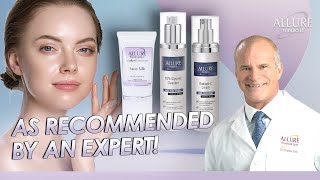
A clinician-led YouTube lecture (Dr. Charles Mok) explaining how to run skincare consults and train staff using a simple, medical-grade topical regimen. Key recommendations: stabilized multi-form vitamin C in the morning (protects collagen, bonds in skin ~36 hours), vitamin A/retinoids at night (start low and titrate; avoid strong use with sun exposure), daily glycolic wash for epidermal normalization, a soothing moisturizer ('face soak') for sensitive skin, a mild eye product for the thin eyelid skin, and an even-tone product with kojic acid plus hydroquinone (2–8% discussed; speaker commonly starts patients at 6%). Practical counseling points include starting frequency (e.g., twice weekly until tolerated), tolerance troubleshooting, expected costs (~$50–$70/month for core set), and an 80/20 approach to focus on a few effective products.
Chapters
So I'm gonna go over skincare and how to do the consult for the patient that has topicals. And I'm recording this from South Carolina, where I see a little different skin obsessiveness or lack of assessment, as I do in Michigan. So in Michigan, we have less sun. People are a little more obsessive about their skin. Even different countries, they have different ways they approach skin care. I see people in southern climates. They tend to, like, almost like throw in a towel at themselves, the age. And then when they turn 40 years old, it's like, holy crap, what happened? They want to fix it. I'm doing the consult. I've trained the staff in South Carolina. When they hear me say to the patient, well, your skin looks good. What are you doing? This is not a sales thing. I just want to kind of COVID and make sure they're using things that are appropriate. And they're usually on an obagi or something that's a good quality skin care. They're using a retinol at night and vitamin C in the morning. Glycogenous. Come. Stick with it. It'll help you out. If I don't say, your skin looks great, what are you using? I say, you know, what are you using for skin care? Kind of means your skin looks like crap. And then we're going to talk about what we're going to do to make your skin look better. So that's kind of the giveaway is that I ask them and they're say, I'm washing my face with dove. Like, that's why you look like that. Okay, so now we're talking about what are the steps now? There's a few things that we're offering in South Carolina. And one of the things that happens is that when people are unsuccessful at something, let's say getting people on skincare, they would like to pick something else to be unsuccessful at, which would mean, like, adding more skus or more products that they're not going to sell either. So really, if we narrow it down to a very narrow, simple things that work for everybody, we can really have an impact on people's skincare. And there's all these different. If you go to Target, there's multiple lines of skin care, and it's kind of confusing. So what are the. What are the big ones? I'm going to go over that. So vitamin C is something that we would use in the morning. Those particular vitamin C that we use, Radian C, it's got multiple forms of vitamin C and it's a stabilized Vitamin C, meaning it doesn't want to oxidate on its own and actually it gets absorbed very slowly, unlike some, some other vitamin Cs you might buy. So medical grade vitamin C typically is going to be more stable. There'd be multiple forms of vitamin C. It's got a little other vitamins like vitamin E to stabilize it as well and it'll absorb more slowly. So they can use a much stronger form without turning red. Okay, we're using that in the morning. Now vitamin C bonds to your tissues, into your dermis, into the skin for about 36 hours. And it particularly protects collagen against ultraviolet light degradation and elastin. So collagen makes your skin thick and not be thin and wrinkly and elastin makes it kind of spring back. So those are both youthful effects of your skin. And vitamin C is really key to helping that out. Taking vitamin C orally doesn't help it much. It doesn't hurt though. It doesn't help much. Also vitamin C helps the skin brighten so it'd be less creation of pigment and skin irregularities. So it actually lighten up a little bit with vitamin C. Now one make a person who's darker skin, lighter skin, but it helps lighten up unevenness to skin. So that's the key. The second one is some kind of a vitamin A or retinol. Now there's retin A, which is an acidic form of retin of vitamin A. There's Accutane, which is an oral form of vitamin A. There is multiple different synthetic forms of vitamin A's that are drugs that we use. And there's vitamin A's we use cosmetically which usually have a retinaldehyde aldehyde type which is probably the weaker one, and a retinal retinol which is the kind of best cosmetic one. And also for acne and wrinkles. Now in the retinol, this one's called tretinol. It's a little bit different form. There's numerous forms of vitamin A. This has also a little bit of vitamin C and a little bit of vitamin E in it. Now this is 1% I'm holding here somebody that's not been on it before. We use like half percent Retinol normalizes keratin turnover. Not only the skin turnover, reduces inflammation, reduces the promotion of acne and reduces the appearance of wrinkles. But both vitamin A in which is retinol and vitamin C, they're pretty strong. These are medical grade skincare products and it says right on the Bottle. Start using them both in vitamin C and vitamin A twice a week until you get used to it. Okay. Used to it means it's not burning, it's not causing dryness. If they're causing dryness, when they go to three or four times a week, they can back it down and get kind of used to it. They do take a month or two to get used to it and then they can step it up. Not everybody needs to use it every day. They might use it for four or five or six days a week and that's fine. So the vitamin C in the morning, the vitamin A at night. Why vitamin A at night? A strong vitamin A makes your skin a little bit light sensitive. Okay. Weaker vitamin A's don't. But strong vitamin A makes your skin a little light sensitive. So we use a strong one at night. If they're going away on a holiday where they're going to be tanning, probably don't use it that week, but use it normally if you're, even if you're out in the sun on a routine basis. So the vitamin A at night, we start people on half percent. Why do we have 1%? There's a lot of people that are already on a retinol. Just put them on 1%. They're like the stronger one or somebody that has like more oily skin or a man, they can probably go right to 1%. The cost is so close. You're getting twice as much retin a in this one. So I kind of lean towards stronger if I think the patient won't have sensitive skin. So those are the two biggies. Now the glycolic moisturizer, I'm sorry, glycolic wash. This can be used once or twice a day. You don't have to start it up slow. You can start going every day. It's got a little bit of B vitamin it, but it's mostly a glycolic, which is a very strong, like a hydroxy acid. And it's, it's strong, but it doesn't cause irritation to your skin in general. So somebody's got dry skin, will make it less dry. If they have oily skin to become less oily just normalizes the skin also that creates a little bit of sun protection because it increases the thickness of the epidermis and refracts light a little bit better. So this is for the epidermis, the outer layer of skin, and the retinol and the vitamin C go into the dermis, into the skin itself. So this is the outer Layer and these two are for helping the inner layer. So those are our three things we talk about with everybody that's not on skin care now. Moisturizer. If they're not on a moisturizer, I really like the face soak. We've been using this for years. Our patients love it. I'm gonna give you the ingredients, okay. And it's like you don't have to read the patient ingredients but it's got aloe leaf juice, glycerin, some words I can't pronounce, some B vitamins, some tocopherols which are like a vitamin E. Some ascorbic palmate which is vitamin C, green tea, ubiquinone which is CoQ10, superoxide dismutase, blah, blah, a bunch of anti inflammatory stuff. So this, the face soak is for somebody who's got sensitive skin. This makes their skin less sens them. It's a great moisturizer. I'm not really heavy on changing people moisture if they love what they have because it's not really medical grade. I shouldn't say it's not really medical grade. There's not really a big difference between them. There's a bunch of anti inflammatories. But I love this one because it's so cooling and soothing and it makes people skin better. If they have acne, doesn't stimulate acne. So this is really good for people with sensitive skin in general. Anybody can use it. Then there is the eye rescue. The eye rescue is it does have vitamin E and it does have vitamin C and it does have vitamin A or retinol and all very weak forms of each because right around the eye skin it doesn't take much. So we're not using a strong vitamin A, we're not using a strong vitamin C because the skin underneath your eyes is very, very thin. So we're doing the vitamin C. We're going the full face and eye rescue on the eyelids. Okay, so this is a mild vitamin A, mild vitamin C, mild vitamin E, mild vitamin K. The last one is the even tone age defense. So this has got, this is for people with uneven skin pigment. So I'm going to read you what's in here again. Kojic acid, vitamin C, beerberry white mulberry, green tea, milk thistle. These are all very potent anti inflammatories. And the hydroquinone are little bottles that we add to it. We make it 2, 4, 6, 8%. 2% is non medical grade. 4% of is a prescription. So the provider's got to Write it on the. On the face sheet that they're getting the prescription. I usually start people at 6%, and typically there's a condition that's kind of rare where people have a problem with their skin and nails, with using too much hydroquinone. We've never had a problem with that because we put people on 6%. People can go on it all the. But there's no reason they have to. So typically have people buy a box of this lasts about two months, three months if they. If they're careful with their pads and they wring them out. You can use pads a little bit longer for two or three months, take a break for a month or so, and then start it up again. They don't use. Need to use it continuously. They'll get the same value by using it and given a month break every couple of months. So when you're evaluating the patient for their skin care, I'd look at their skin. Their skin looks great. I kind of ask what they're doing for skincare. I'm curious what people are doing. Actually. I learn about products that way. There's certain brands that I know from doing this for several years that are really very good. If you have no idea what brand you're using, you say, how much does it cost? If it's $10 a month, it's scrap, and it costs, you know, $50 a month. They got really good stuff. Really good stuff. For example, if we bought the face silk, the vitamin C, the retinol, vitamin A and a glycolic, people are looking at about $230 for about three or four months. So looking at, you know, it's a 50 to 70 bucks a month in general. And that's probably like what people should plan on sort of spending for their skin care. And then sunblock on top of that, when you're doing the consultation, the patient's skin looks really severely rough. Don't give up on them. They not doing anything now. And they're really coming into us because they want expert advice. You know, most of you have a working knowledge of Botox that exceeds the average injector, the average plastic surgeon, the average dermatologist in North America. Those people that are working on the front lines, that are ultrasound techs or medical assistants or checkout and check in. You know more about Botox than the average plastic surgeon and the average dermatologist. Okay, so knowing these things about skin care, you'll know more than most. Probably dermatologists will have an edge on you in this one, but most plastic surgeons, most aesthetic doctors. And there's sort of a tendency to want to get a menacing of different topicals. And people can do that. These are really the core ones we do for probably, you know, we look at the 8020 rule where 20% of your effort gets 80% of the results. These few products here will make 80% of skin conditions better. Okay, so thank you very much.