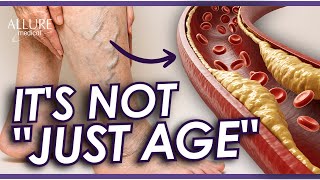
A short patient-oriented YouTube explainer by Dr. Charles Mok describing early signs of vein disease (swelling, heavy/restless legs, discoloration, varicose/spider veins), the importance of ultrasound diagnosis (noting people of color may lack visible varicose veins), stages from mild disease to venous ulcers, and typical non-surgical office treatments that can reverse or halt progression. The speaker gives verbal incidence estimates (about 20% of symptomatic people progress; about 2% develop venous ulcers if untreated), urges patients to seek vein-specialist evaluation, and invites questions or clinic visits.
Questions this video answers
About 20% (verbal estimate).
About 2% (verbal estimate).
Chapters
Swollen or tired legs aren't just part of getting older. These can be signs of vein disease. And catching them early makes treatment easier. So you may feel that swelling your legs or heavy legs, even the imprint that you have when you take your stocking down is just normal. You might think that restless legs at night just kind of happen. You might think that after working all day, your legs feeling very heavy and being a little bit swollen or just normal. This is actually a sign of vein disease where your circulation is, isn't working properly, and there is actually a treatment for it. So typically, vein disease, it might be something as simple as spider veins, which generally aren't too clinically important, or varicose veins that frequently aren't too clinically important. Varicose veins are those bulgy ones on the surface of the skin. If they don't really hurt, there's no urgency for them. But then we have people that have maybe varicose veins, visible, bulging veins, and pain or swelling or heaviness, heavy, restless legs. This is a sign of venous insufficiency or vein disease. And when Left untreated, about 20% of those people will go on to progress. Where the legs get bigger and bigger, the skin starts discoloring, it starts even breaking down. We see the incidence of venous stasis, ulcer. These are actually holes in the skin that about 2% of people get from untreated vein disease. And it can be treated anytime in that course. And when it's already really bad shape and there's a venous ulceration, we can treat that, turn that clock back. But most people are trying to want to not get there in the first place. So if you have swollen legs, heavy legs, you're starting to see some discoloration around your ankles, and you're maybe hearing from your family doctor. Well, that's just part of aging. Just wear some stocking, just live with it. This is correctable and reversible. So at any stage, you should really seek medical care for it from a vein specialist. So historically, we think of vein disease as being varicose veins on the surface of the skin. That was probably what we understood 20, 30 years ago. But vein disease goes way past that, particularly in people of color, like African American folks. They might not get visible varicose vein, but they have the same incidence of venous insufficiency as Caucasian or white people do. They just simply don't get the visible bulging veins. They'll have more swelling, heaviness, discomfort, and a lot of times kind of missed in healthcare, not realizing this is something you can't see with the naked eye, you've got to do an ultrasound to see what's going on. So I'd say that my take home message is that you might have heard a few times, well, the swelling is just normal. I don't see any varicose veins. They're not too helpful in all people. We really need to do an ultrasound. They get a three dimensional image to see what's going on with your circulation. You can't see it with a naked eye in many people. So I really break down vein patients into a few categories. So some of our patients that just have some varicose veins, maybe a little minor swelling and discomfort, typically after treatment, we do a treatment, it's non surgical, it's done in the office. You don't do your normal activities afterwards and your leg will look like it did a few years ago pretty quickly. There'll be some bruising and discoloration for a while. That's the most common patient we see. Then there's people with a little bit more advanced disease. Legs pretty swollen, skin's a little discolored, maybe some rust color on the skin. This is something that we're more in the advanced stages of vein disease. The treatment is pretty much the same as a person with minor vein disease might need a couple more sessions, but it's pretty much the same. We can reverse that and turn those abnormal veins off and your body would just start healing itself. But the color might not change that much, but it'll stop progressing and the swelling will go down significantly. But you still might have a little bit of discoloration in your leg, it's not going to really necessarily fall off. It could take years for that to happen. In the last stage where somebody has a, what's called a ulceration, venous ulceration. Open sore. We want to get that leg healed so there's no longer open sores. We want to get that swelling down. We want this open sore to have way less recurrence and they're never going to go back to a pretty leg, but the leg will feel better, it'll look a lot better, it'll be much healthier. If you have any questions, ask us and we'll be glad to answer them and share this video with a friend or someone you know that might need it. And if you live near one of our clinics and you have concerns about your circulation, come in and talk to one of our providers, see if an ultrasound or treatment is appropriate for you.