Chuck Stormon - Managing Partner, StartFast Ventures
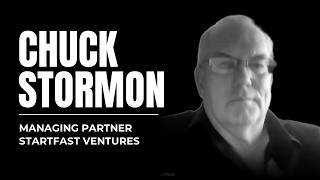
Chuck Storman, Managing Partner at StartFast Ventures, discusses how the firm backed Impel.ai from zero revenue to over $200 million ARR by identifying founders with sales talent and coachability. He outlines his five-criteria framework for evaluating founders and describes StartFast's hands-on approach: board seats, recruiting help, and customer introductions beyond just capital.
Chapters
Charles, welcome to another VC Wisdom podcast. We have Chuck Storman for round 2. Last time we discussed Chuck's background and a little bit about StartFast Ventures. I wanted to have him on to discuss a couple of his port calls, including Cygnus.com, Blackbird AI, maybe about the fund too, if time allows. So Chuck, welcome to the podcast. Tell us a bit more about yourself and what you've been up to.
Yeah, great to see you again, Charles. Um, I've been busy, uh, helping one of our portfolio companies, uh, raise their A round. So really exciting, that's coming together. It's going to close next Friday, and, uh, really excited to talk to you a little bit more about the AI portfolio that we put together.
And when you say help a company close their Series A, what do you do specifically for them?
Yeah, the company is kritosai.com. They are a company that helps large enterprises like Fortune 50 shorten their receivables by several days, and they work with banks and auto lenders and telecoms, and they've been adding, you know, over $50 million to one of their large telecom clients, Bottom Line. So when they went to raise their A round The first thing we did was went over the deck with them and helped them optimize their story for where they are now. We were the lead investors on the seed round, so my partner Nasr Ali sits on their board of directors. And, um, after going through their deck and optimizing that for fundraising, uh, we then helped them with introductions to A-round investors. They found a lead investor, uh, which is Great, good term sheet. Everybody was happy with the, with the deal. And then once the term sheet was signed, then we went around and tried to help them fill out the round. So basically, the, the raising $7 million, the lead investor's taking $5 million of that. Ourselves and the existing investors made up about another million, a million and a half, and then the remaining amount in the round, you know, finding other parties to just fill it out so the round is 100% subscribed. So that whole process probably took about 3 months, and we're at the very end of it now. A week from tomorrow, the whole thing will be done.
Nice. And has this company been one of the most promising ones? Uh, tell me about a couple of your protocols and which one have known the most success so far.
Yeah, I mean, the number one on the, on the success list has to be Impel, Impel.ai. They started in 2013, and again, we led their seed round. They became the operating system for auto dealers around the world. They have thousands and thousands of auto dealers and, and also some major OEM auto retail brands on their platform. They also have, you know, customers that are familiar names on automotive websites that use Impel inside. So Impel has grown to an over $200 million ARR, and they've had several private equity rounds. They had a major acquisition that that was funded by private equity, and they're running a process right now for another private equity round. So, uh, very, very exciting. Uh, the two founders are still in charge of the company. Uh, one founder, Devin Daly, is the CEO, and Michael Quigley, who's the other founder, is President and Chief Strategy Officer. They both sit on the board of directors. So just a fantastic story. And as a venture fund, We have seen multiple liquidity events. We've distributed that to our limited partners, so it's not one of these investments where people are still waiting for liquidity. Now, we do still have a stake in the company even though we've been in since 2013, so very exciting to see what happens a little later this year.
And why At what ARR were they when you invested, right? And where do you attribute their stratospheric growth to? Was it go-to-market? Because there's been a bunch of these companies, right? Like CRM of auto dealers, but very few actually succeed. Most of the time it's because the founder's a machine and precisely like a sales machine, right? Like they're really good at creating funnels and penetrating fast, getting one dealer after the other and just like snowball effect.
Yeah, they were pretty much at zero ARR when we made our initial investment pre-seed, and when we followed on in the seed round, they were still very low ARR. They hadn't even found the automotive vertical yet. This is a company where we had strong conviction and belief in the founders themselves. So it was the character and the hustle and the sales ability and the vision of the founders that we were investing in, in those early rounds, that what helped propel them was finding the right market. You know, everybody's looking for product-market fit, and they try to adapt their product to the market. These guys had figured out that augmented reality was something that they were passionate about. They initially started looking at it in the fashion industry, then they started looking at it in museums and artifacts And then they, uh, they actually got their first revenues from, uh, companies in the tablet publishing world, putting magazines on iPads back then and trying to do advertising that was interactive and, and, uh, three-dimensional back then. So it was only, uh, coincidentally that they found a really quick sale at an auto dealer and they began thinking maybe we ought to look at pivoting to automotive. Now, as investors, we were happy to bring in some folks who were from the automotive software side to help guide them, but it's really these founders, Devin and Mike. They just executed that pivot, hustled, sold their butts off, and built this company. They've had a lot of help along the way. Each round of investors have kind of leaned in and provided additional resources. But those founders were blue chip, and I stand by our decision to invest in the team.
When did you invest, 2012? Because I've seen like 15 years they've been building this.
Yeah, 2013. They— 2012 is when I met them, and, uh, you know, I do what I always do. I gave them some mentorship and some tough love. I said, hey, all right, here's all the red flags I see, why someone wouldn't invest, including me. So go fix those. These guys were super coachable. They just checked every box. Everything I asked them to do, they did. So by 2013, we made our first pre-seed investment. We spent 3 months with them in an accelerator cohort that we were running at the time. And then right after the accelerator cohort, we were the first check-in in their seed round. Other investors followed on. I sat on their board for a year while they were making the pivot to automotive, and then with the Seed+ round, one of the new investors replaced me on the board. So very typical story, but you know, these guys are rock stars, and I would say they're probably in the $2 to $3 billion market cap range at this point.
And would you say that the combo of like high ambition and IQ and being able to do shit really fast and coachability. These two things, do you think they're like standard or they're very high, they're very rare qualities? Because it seems to me that, yeah, it's either one or the other. It's pretty rare that a founder gets shit done massively and is coachable, will listen to what I have to say. That it's Either one or the other. How do you— yeah, like, where do you see that in the market right now? What's your formula to find it at Scale-In Founders?
Yeah, so I have 5 criteria that I apply to the team in general. So, uh, commitment, conviction, coachability, sales ability, and completeness. So 4 Cs and an S. Devin, we had a founder who was a natural born salesman. He absolutely had done like early in his pre and post-college career, he'd sold solar power systems to homeowners. That is a brutal cold calling door-to-door almost activity. And just a very, very charismatic persuasive guy. Also highly intelligent, also highly committed and convicted to his vision, and yet coachable. So when you take all 5 of those things together, the last one is completeness. So Michael was the strategy side of things, uh, the quiet counterpoint to Devin, but they were not a complete team. So I said, hey, where's the CTO? Where's the builder? Oh, we just, uh, We just have an agency do all that for us. And then I said, well, you know, I don't want to invest unless you can move fast because you've got some technical chops on the team. So that was really our playbook for picking the right team to invest in.
Yeah. And my question is more like, how do you find these guys? Is it a scale equation in which you talk to 10, 20 founders a day and maybe one of them fits that? Like, how do you tailor and curate your deal flow?
Mm-hmm. Well, I mean, if it's, uh, at the time we were investing pre-seed, and so it really is a massive scale of room, you know, talking to thousands of founders and really just then selecting down the few that have the traits that you're looking for. But, uh, now that we're— StartFast has moved into investing in seed and A rounds, so there is a lot of data that we can use to make those selections. I still want to use those same 5 criteria for evaluating the team. But now with a seed stage company, I can also look at what's your current ARR and how long did it take you to get there? I can also go through pipeline analytics and look at their sales funnel and really understand what the dynamics are in the sales funnel. And then also we can do customer interviews and customer interviews are very, very indicative. Like, is this a nice to have or a must have? How long did it take you to make the decision? What other alternatives did you consider, Mr. Customer, before you bought this startup company's product? So, you know, with these days, with having the 5 criteria for the team that I can analyze by talking to them, but also then having the data associated with traction, growth, and customer references, I feel like we're making many, many fewer difficult calls.
But do you have like a system for deal flow? Is more like my question. For example, me, I use cold email, right, to get in front of 10, 15, 20 founders per day. So I have options and I know when I see it, right? It's like crossing paths with a rare Pokémon. You try to catch them with the Master Ball from the get-go. I also have scouts, right? Scouts that bring deal flow to me. Like, do you find Do you have like a system for that, or do you find that the system is useful?
We do have a system. I mean, one of the luxuries of being in the— as a VC for 14 years is we have a brand, we have a reputation, so we get hundreds of, of startups that are inbound to us. So that's really nice. In addition to that, we also have a network of venture partners and exited entrepreneurs. All of our— most of our LPs are exited entrepreneurs, so they're always meeting founders as well. So we get a lot of warm introductions. Third, we have a portfolio of companies. We get warm introductions from those CEOs. Hey, I know this person, they're starting a company, you really ought to talk to them. And then finally, uh, we are out there doing the legwork too. I attend events probably on the order of about 60 events a year, that some of which are like last night I was at a private dinner where there were about 5 companies at that private dinner. But some of them are conferences like South by Southwest or some of the fintech conferences or some of the AI conferences. And in those, I'll, I will try to meet 60 or 70 founders for each event. All told, we're meeting, we're, we're meeting, we're screening, we're putting through our process 1,000 to 3,000 companies per year. And, you know, with the number of companies that are being started, I wish we could do more. So I've been spending a lot of time over the last 6 months building an Agentek operating system to help me turbocharge that. Because there are just so many companies being created and we don't want to miss the best ones.
Tell me a bit more about, uh, other very successful deals. I think Signals is one, Blackbird AI. Like, which one has been the most successful after, uh, the last one we spoke?
Yeah, so these are both great companies and they're both in the process of raising this year, so that's always good news. When our companies are raising for the right reasons, which are growth is forcing them to consume cash, so they need cash to achieve and exceed that growth. That's the case with both Blackbird and Cygnosi. I'll start with Blackbird. Blackbird is raising a C round. They are a company that uses AI to fight deepfakes and misinformation and disinformation.
Your microphone, Chuck, is moving.
I'm sorry about that. I'll stop moving it. They're a company that uses AI to fight deepfakes and misinformation and disinformation. So Blackbird basically coined the phrase the narrative attack.
Yeah.
And that's when companies using AI or some other means to create content that maybe creates a conspiracy theory that makes a brand look really bad. They started out actually in the 2020 election working for the US government to fight some of the, you know, the foreign state actor attacks on every political candidate and democracy in general and America specifically. So they were— the US government was an important client of theirs. And I would say, I will admit I made a huge mistake with Blackbird. I caused our fund to not invest in their seed round. We invested our first check in their A round. And the reason was they were only doing government business at the time. And I thought, you know, I really would like to see them get a corporate contract. So what caused us to make our first investment in the A round was they had an exclusive deal for 6 months with one of the crisis management PR firms that large Fortune 10 firms will bring in to deal with one of these brand attacks or narrative attacks. An example would be, you know, let's say that this is hypothetical, but let's say PepsiCo.
Let's take Silicon Valley Bank, for example. I think that's a good one, right?
That is a good one. That is a good one, but I don't want to use a specific thing as I don't want to get in trouble with the brand, so I'll make one up. So hypothetically, let's say PepsiCo had some kind of viral story out there about how certain bottles of Pepsi or cans of Pepsi were laced with arsenic and killing people, you know, so just totally made-up nonsense. But once it catches hold on social media and gets an audience, people start spreading it. So Blackbird's Constellation AI will find the point of origin, track how it's spreading, and figure out a counter-narrative attack to basically tone it all down and get it contained and basically defend the brand against the attack. They've also got deepfake detection for videos. So you can actually give a grade to— automatically give a grade to an AI-generated video and say, yeah, You know, 75% sure this is nonsense created by AI flop. So they have Fortune 10 customers. They've got— they've made great strides. They're still the market leader in the category that they helped create. And I see great things. I think they're raising a C round. I think they will be acquired. I don't see them going public, but I could be wrong about that.
Are they like, um, operating on the Palantir models, like Ford Deployed Engineer and organizations? It's like half agency, half software.
No, they're not. They really employ— they really employ a pure software as a service model. So I like that better from a revenue multiple point of view. I, you know, obviously the Ford Deployed Engineer has been hugely important for Palantir, uh, but, but to really drive that, Palantir had to reach a really huge scale before they could prove that that model was scalable. And their market cap has followed that proof point. But Palantir languished for many, many years. So as a VC, I really, I really prefer the pure software approach because I think it's more capital efficient And it's— and the multiples in software as a service companies are still tracking better than software-enabled services companies.
And the sales cycle, isn't that their main issue there? Like, is it high ticket and also selling to government? Is it taking like a year or two to unlock a contract?
I, I think they've shifted to the large corporates I think that dominates. They still have government business. The nice thing about our portfolio companies is none of them lose any customers. They all have a, you know, gross retention ratio of 100% and a net retention ratio above 100%. So that's all really good. But you're right, sales cycles for governments are very long, which is why I am relieved that they are mostly driven by corporate contracts now.
You mentioned also that, yeah, you help founders to some degree when you invest in them. Like, uh, what— do you have a process for coaching them? Do you meet them on a weekly or monthly basis? Like, what extra value do you have apart from, uh, helping with fundraising?
Yeah, it's actually a huge list of things that we do. So a good example is, uh, Credos AI, who is currently, uh, raising the A round. I talked to you about, uh, about that already, but We've also helped them with their AI strategy. We've also helped them recruit key employees. Their current CRO is a referral, somebody that we, we had worked with in the past. So we also make customer introductions. So really, uh, you asked the right question. You do need a regular meeting cadence with each of the founders, and sometimes For example, if we're leading the seed round, we'll take a board seat. And so that board of directors structure provides the cadence, the governance, and the recurring meetings. But if we're not the lead, we're not sitting on the board, then we always ask for board observer rights. So we're still attending the board meetings. And I'll tell you what, Charles, I feel like if I'm attending a board meeting as an observer, I'm in the room, I'm hearing everything. When I speak, people are listening to me. I feel like I have just as much influence as I would as a board member. The only thing I don't have is a vote. So that participation in board meetings is just the tip of the iceberg though. We're always thinking. So as partners, StarVet Ventures, we do meet with each other each week and we go through each portfolio company. And we tap the brain trust for what we know, what they need, what we can do to help them. We— that doesn't mean we have a weekly cadence with the founder. It's more like every 2 weeks, right?
I feel you're a different type of investor as well because you've founded companies yourself. You've had the exits. Like, most VCs don't have that right under their belt. They're just, I don't know, pure intellectual. But they're not that they don't have value, but I feel that you're, you're not the norm in the VC world. I mean, Am I right saying that?
Well, I'm sure every VC adds the value they can. I think what sets us apart is that our mission is even broader than most VCs because we live in areas that don't have VCs traditionally. So I went to college in Syracuse, New York. I live 20 miles from Syracuse, New York now, and there are two VCs VCs in Syracuse, New York. For, for a really a tertiary city like that, it's remarkable that it's not just us. We also have Armory Square Ventures, and, uh, you know, we co-op— we have co-opetition with them very, very well. We, uh, uh, so coming from that place which doesn't have a lot of VC activity, um, we're all about building the ecosystem. So we think about, okay, Syracuse is a microcosm, but let's look at upstate New York in general. That ecosystem is completely underserved. So that's where we look for. Now, Credos is in Seattle. Seattle has 10 VCs. They've got the corporate headquarters of Microsoft, Amazon, Boeing, et cetera. Those, that's an incredible secondary city. but it should be a venture capital hub. So why is it we're providing so much value-add to Credos? Because we're building, we're bringing our small ecosystem, our underserved ecosystem chops and hustle to the Seattle market. Why were we from Syracuse able to lead the seed round of Credos in Seattle? It's that mindset, you know, we really want to help entrepreneurs that I think I might have mentioned this to you last time. My profession is I'm a fiduciary for investors. My profession is to make them a lot of money, but my mission is to help entrepreneurs. The difference between vocation and avocation, right? I am driven. The purpose of my life is to help entrepreneurs. Why? Because they're the ones that are going to solve the big problems.
Yeah. And they're the ones, the ones holding society together. We have the same thesis. It's also Certainly my thesis, right, as well. I run a show called Spark Tank, right? And it's like Shark Tank. And sometimes on Shark Tank, there's Mr. Wonderful dissing founders openly. And I'm like, no, that's not okay, right? Like, don't—
That's not the mindset.
Yeah, I mean, it's good entertainment, but it really like you're throwing the baby in the bathwater, right? Like you should always, Encourage fellow founders. Yes, I have hard talks with them, but I think it's important to foster like a positive, healthy environment there, because most founders and entrepreneurs are in charge of society and holding shit together and solving problems like you mentioned. Last time we briefly talked about like alignment, right? And superintelligence. Yeah, we agree that scaling superintelligence without consciousness is a big problem. Have you thought about solutions to fix that problem, or startups that you're bullish about that are investing? Because it seems that Anthropic or OpenAI are not on a good track to solve that.
Yeah, a couple of great things on that topic. Let me just throw in also, I applaud you for doing Spark Tank. We did something similar in Syracuse at a small private college called Le Moyne College, where whose sports team are the Dolphins. We created Dolphin Tank because dolphins are more intelligent than sharks and also more supportive of the pod. So, you know, similar ethos. So on the superintelligence front, Anthropic's recent announcement about the interpretability of the inner thoughts of Claude, really important. And I applaud the group at Anthropic for looking for interpretability, uh, and pushing the envelope as far as interpretability. I think that's really important. The thing about using a superintelligence that's not conscious, which is everyone we have now, is that it has to be governed. And governance is key with this kind of interpretability where you can see the inner thoughts and really understand what's going on. In the process, that makes governance a little easier. One company that I'm super excited about that's providing governed agentic AI for enterprise is a very early company, very early stage company called Polyrithmic. They were in the services business for 10 years and then they pivoted, started pivoted to agentic AI basically started the company in 2025 and are already up to $3 million in ARR. So very exciting. I'm working with them and, you know, I really think they have one of the key elements is governed AI, especially in regulated industries. Regulated industries shouldn't introduce agentic AI without a governance harness. So that's one of the companies I'm super excited about. There are others. that I'm happy to get into that are sort of in the pipeline for investment. And, uh, lots of really exciting things happening out there. I don't think we're going to see consciousness in AI anytime soon, and by anytime soon, I wouldn't expect it until 2029, uh, but, uh, that's a whole other topic.
Chuck, thanks for being here for round 2. Where can people find out more about you?
You can reach me at chuck@startfastventures.com. You can also check out chuckstorman.com if you'd like, and you can also ping me on LinkedIn.
That was Chuck and Charles, uh, for another VC Wisdom.
More from Charles




Founder Wisdom: the full audiobook (7 hours of quotes and stories from 600+ founders and CEOs)






