Grant Blaisdell - CEO @ Copernic Space
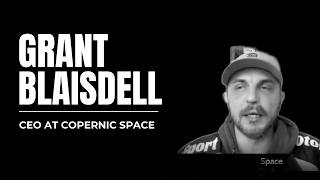
Grant Blaisdell, CEO of Copernic Space, built a marketplace to tokenize and trade space assets like payloads and mission capacity. He co-founded Coinfirm in crypto before launching Copernic to become the financial backbone for a $600 billion space economy. The Moon Mission 1 proof-of-concept financed a lunar payload and split revenue with investors.
Chapters
Welcome to another Founder Wisdom podcast. We have Grant Blaisdell with us today, CEO at Copernic Space. And, um, yeah, it's a marketplace and a financial infrastructure for space assets, so payloads, data, missions, and more. He co-founded Coinfirm, he got acquired, also co-founder at Tixi Apps, so serial entrepreneur originally from LA, um, and yeah, nowadays in Poland. I Talked to a Polish guy yesterday, and coincidence. So Grant, welcome to the pod. Tell us a bit more about yourself and what you're up to.
First off, hi Charles, thanks for having me, and hello to everybody watching. Uh, Charles gave a pretty quick intro. Uh, myself, I've been— I view myself as a creator, but I've been a startup founder since age 19, originally digital media platform. So I've always looked at what are the new technologies, innovative models to be put on top in the interface to better distribute and monetize digital assets of some sort of format. And that got me into the blockchain market very early, a little over 12 years ago, not as a speculator, but viewing it as kind of what I view the big power of the technology, which is economic infrastructure tech, so to say. So I did some ventures, uh, around that, more in the media space. Eventually I met my co-founders at what became Coinfirm, which really was extremely visionary and eventually became kind of the standard setter and leader in the private market when it comes to AML for crypto and blockchain-based digital assets. So through that, I've had the, you know, good experience of working anywhere from the, the banks and the regulators to the exchanges and protocols, all the way down to the token and application layer. Um, but I'm third generation space, so the Copernicus Space thing, in reality, the roots stem from my grandfather who built the original space program in Poland where I'm sitting right now, which was responsible for shooting— being the fourth country to shoot up an astronaut to space, who was actually his student originally before they did that together. And he also had the first works around the concept of democratizing access to space. So again, those are like the roots, the values that sit behind Copernic Space. Uh, when we were talking, uh, beforehand, you mentioned the Hudson Bay Company. What we do at Copernic Space is my co-founder and I were kind of some of the early participants, people on the ground in California, and kind of the infancy early stages of this new space economy, you know, the private, a little bit building more of a startup sort of thing around it. And we realized that yes, the, the physical infrastructure, the rockets, uh, the satellites, or the data that's generated out of it, the assets, um, of course are extremely important. The market doesn't exist without that. Um, but really what one of the biggest needs and opportunities is that is going to unleash it, scale it, unlock it to the broader market is a financial infrastructure and marketplace sort of standard for it. And to the Hudson Bay comparison, the way we compare ourselves historically, the impact, the importance, the value of what we're doing is the first era of exploration, discovering of the Americas, going into Asia, the trade of those assets Yes, the new ship technology made it more accessible, etc., so the physical infrastructure. But what really made it pop, set the foundation for the economy today, and created actually the most valuable company of all time, which is the Dutch East India Company, was they built the financial infrastructure and then the marketplace to trade the assets that, uh, came out of these voyages that provided returns to the investors and to these, into these ventures. So that's kind of what we represent in a big macro level at Copernic Space. Uh, you mentioned Tixee. Uh, when I said I was a creator, um, my first creative form is music, actually, since I was a child. So I mentioned the digital media background. So all that came together, and Tixee is, um, a ticketing, payments, and data platform for live events, concerts. We service some of the, the largest festivals, artists in the world, et cetera, especially when they're here around Central Europe. And that stems out of Big Idea, which is a broader promotion kind of 360 music company I'm a shareholder in.
And you said you launched your first company at 19. What was the first company back then, and how old are you nowadays?
Oh, you never ask a young lady her age. Um, uh, so that first company was, uh, Um, I have a thing for being, uh, pretty early. So, um, it was a company called Freeway, and what we were was a video programming and distribution platform with integrated branding, but focused on mobile, focused on cell phones. This is in 2007, so the iPhone wasn't out yet. We're programming on Palm Treos, which is probably my favorite phone ever. So one of the first, like, touchscreen phones that you can use media on. Um, but that was like a big lesson for me around, like, timing. I, I don't know if I was mature enough individually to take it where it could have gone anyways, but it was a big lesson around timing that, uh, a lot of times it hurts more to be very early than it is even like a little, you know, a tiny bit late around things. But that's just a part of my character, I guess, is being, being early to things.
And how do you go from crypto to space? I mean, I know that you're, you're third generation, but why, why did you get acquired on that one? Why exit? Why not continue on that path?
Um, well, actually, I, I left the— I left Coinfirm a couple years, uh, before it got acquired. Partially to do Copernicus Space, um, and space assets, which is an asset class that, you know, big opportunity around space is you kind of get to define a market, even the language for a market, and a whole new asset class that is going to become one of, if not the largest asset classes, uh, ever. And this is actually, in my opinion, the biggest kind of opportunity for on-chain assets because this space asset class will be the first major asset class that can inherently in its foundation be put on chain. And the big struggle for blockchain, if you're like really in the industry on a broad spectrum over the years, is big promises. We're going to penetrate, be this, you know, new system for all these big markets and asset classes and But those markets are already sitting on decades of legacy systems, standards, whatever it may be. So you'd have to kind of gut the infrastructure. You know, that's been a big problem for traditional finance. It's like, what, we're just going to shut off SWIFT overnight? Like, you can't really do that. The incentive models aren't very good for doing that, whereas space hasn't had the economic infrastructure built for it yet. So You know, I'm not as smart as my grandfather. I'm not going to build you a rocket and shoot up an astronaut, but I'm just smart enough and I guess creative enough to understand the opportunity and how to start creating the standards, the infrastructure, and the marketplace for the space asset class.
So who would be your clients? Who's your ICP? And do you have competition in that niche?
So clients— the cool thing around space that, you know, just especially for the viewers, I don't know your knowledge around this, but I even had this happen yesterday when I was on a call for, for Tixi, where we're dealing with some big partner, and he's like, yeah, well, Grant, Grant's one of the few people that, you know, can shoot you up in a rocket. It's Musk, you know, Bezos, and Grant who will do that for you. He's telling another partner. And the reason I bring that up is because it's completely not the truth. There's over 10,000 companies growing a lot in, in the space And the space economy can be a lot of things that people don't see. So our user base, which has been global B2B and B2C even, has been anyone from artists, space enthusiasts, companies, startups, uh, people wanting to do kind of more, let's say, educational, scientific sort of driven things. And then there's of course the institutional investor and the retail investor class, because what we're doing is we're building a layer that provides both the new financing models and mechanisms, secondary market for what we call financial space assets that fuel the creation of what we call real-world space assets, which are the commercially viable assets, the payload space in the rockets, the payloads themselves, the data, the computation capacity that then in turn can provide returns to them and faster returns for the investor. Because the big issue with space, it's like, okay, It's very privileged how you get to invest in it. It's usually pretty big tickets, pretty big risk, but the liquidity event timelines are how long, right? A decade, whatever it may be. So if you can start putting in models that— back to the East India thing a little bit— is like, uh, you know, open it up to more entities and people and enable them to diversify the risk around it by instead of investing into equity of a single space company I can invest into this particular infrastructure, let's say a rocket or this particular voyage, and tie their rights to some sort of performance-based thing like a share of the revenue that that generates. And we proved that last year with what we call Moon Mission 1, where we proved the new model, both how to finance a lunar payload, how to commercialize a lunar payload, and then provide returns very fast to the liquidity provider. So create a circular kind of sustainable economic model for, for both sides. So the answer to that question is is, uh, it could be almost anybody, to be honest. It all depends, you know, what, what's in their heart, what's in their minds, what's their ambitions, goals, uh, and, and we keep discovering, you know, new kind of layers to, to that potential market as well. As far as competition, I would say at this point there's a couple companies that we could count as competition. I would say though that they're a little bit more focused on like a singular vertical or a smaller segment of the market, where we view ourselves as this horizontal infrastructure with the marketplace for the entire market and, and asset class. You know, it's like Amazon started with selling books initially, but really the thing is, is they, they'll sell everything, right? And I think the space market, although it's $600+ billion, it's a, you know, a vibrant commercial market Uh, if you're to focus on like smaller segments, it might not be dynamic or big enough to, to be a massive opportunity for a little bit.
So anyone that wants to launch their stuff to space, I guess an example, I saw an article, I think it was Reebok, right? They want to build shoes in space or whatever. Like, the question is like, who wants access to space first, right? Like, there's, there's been talks about, uh Space Pharma. Now there's talks about, uh, data center in space, which in my opinion is quite a moonshot, uh, literal one. Um, tell us about—
sorry, sorry, go ahead. Apologies.
Yeah, tell me about like who would want access to space ASAP and could see ROI like tomorrow.
Well, the, the Reebok thing is actually— that's the founder of Reebok is, uh, a partner and supporter of a company called Syntellae, which is led by Ben Weiss. It's the first AI and 3D printing shoe company. It's a great concept, you know, customize the shoes based off your actual foot and generate them based on that. And for them, and this comes back to the data center thing, which is computation in orbit, computation in space is going to be a big thing. I totally understand why you view certain things as a moonshot because it's like, okay, We're going to take Earth's computation infrastructure and put it in space for service of Earth. That's very big, right? That's a big thing. But we got to remember that space itself needs a computation layer for all the things that are happening in space and all those devices, et cetera, that are happening in space. For example, satellite imagery, it's way more efficient to be able to gather loads of data, whatever it is. In space, do some analytics crunching in space, and then beam down the end actionable data versus sending terabytes of stuff down. Just as an example, in the case of the shoe aspect, it's, it's, um, a few folds to that. First off, there's billions— I don't know how many billions of dollars of market potential in transforming terrestrial, what we view as terrestrial assets, into what we call real-world space assets. You're objectively turning them into more unique, rare, therefore valuable assets. So in that case, we're proving a standard on how to turn computation capacity in orbit into a more accessible fractionalized asset, and then providing a really cool kind of use case on how that's going to be used to create the first shoe designs in space, beam the shoe design down to Earth, generate an exclusive shoe line that is the first ever shoe that's been designed in space. And for brands nowadays, you know, it's, it's extremely hard to differentiate yourself and create attention in unique, like, original ways. I think that's why loads of brands invested billions prematurely into the metaverse. They're looking for new avenues of experience. And I think, you know, over the next X years, there's going to be a big boom on how brands, uh, interact, uh, utilize products around space. And we're here to provide the standard on authenticating, tokenizing, turning them into what we call, uh, real-world space assets. So not only like fractionalizing, democratizing access, but providing a, a layer for these assets, even the secondary markets if it's that type of asset.
And your priority right now as a CEO, what is it? Finding partners or finding capital? Like, what does a day in your life look like?
Yeah, it's, it's, it's all things, you know, to be honest. So like, I have some good problems of a founder, which is people are interested in what we're doing right now. We're doing a sale for a European reusable rocket. So, you know, yesterday I processed a transaction and then onboarding a bestselling author from the UK. Who wants to, you know, have his book be a part of this mission. Um, so there's just day-to-day business stuff. There's the operations end, you know, of course, as well, which I wouldn't say is my strongest suit, to be honest. But, you know, as a founder, you know, as someone who's, who's doing a transformative— you know, it's not like I'm doing a marketing SaaS platform, okay? It's not like there's much precedent to what I'm doing or some sort of standard around it. Um, you know, you kind of got to get your hands into everything because it's, it's even hard to find talent sometimes that knows how to handle something, you know, like this. Um, fundraising is, you know, in my honest opinion and experience, is kind of the— there's some CEOs and stuff and founders that like, that's all they focus on, but then they sacrifice like actually, you know, creating placing themselves, building the standards for what they're doing in the actual market. Uh, but you know, that's an important obvious part, especially nowadays where, you know, you have to run very fast and a lot of time you need to out-resource potential competition.
Tell me, you work with your mother on the company? She's like the co-founder? How's the dynamics there? What— tell me about like your, your childhood and the, the family dynamic there.
Yeah, well, I, you know, I was, you know, I'm, I'm blessed around that. You know, I was— my parents met in Palo Alto. They're both, you know, my dad was selling computers when they were like the size of my room, you know. Um, my mom's one of the first kind of lead sales and marketing women in Silicon Valley. I was born in Southern California though. Um, and she's always, you know, she's an extreme— and more people know her than know me in a lot of ways, right? She's kind of a brand. Lady Rocket is her brand. Uh, and she's a real example of, of visionary, um, a real example of someone who knows how to, you know, draw attention and come up with very creative concepts, solutions, etc. Um, so it's, it's great, you know. It's like, I've had, you know, I've had, uh, relationships with previous co-founders that, you know, they get testy and they get— they can get unpleasant and, and you know, and then the businesses, it can get, you know, complicated to that. And, uh, although it's not always easy, you know, to, to do business with, you know, such a close family member, especially, you know, if there is some sort of friction or something like that, it's very easily, you know, made okay, right? It's so— and there's just a trust and a joint mission and a joint goal, you know. I've I have kids, right? Like, so there's just— it's, it's, uh, it's, you know, I, I wouldn't have it any other way at this point. Um, and, you know, anybody who's met her knows that she's just a very dynamic person, and, and sometimes I'm there to take her, you know, her visions and, and try to turn it into, you know, a little bit more reality and things like that. Cool question though, a few people ask that.
Yeah, um, I'm curious about the business itself, like, must provide a lot of, uh, dopamine because it's space-related, right? I think crypto people got, um, I don't know, uh, tired of, of crypto and the scam. So I think that this, this is like new type of dopamine for you, but Tell me, like, yeah, it's sometimes space is pretty fucking hard. So how do you balance like the dopamine with like the very long-term goals, right? Like you said, you're starting with the financial infrastructure. I'm pretty sure you want to launch rockets in 10, 15 years from now, or at least be an important component of the mission. How do you balance like that short-term dopamine, that hype, vs. like the very hard technical problem of space.
To the kind of end of what you said around us launching rockets and things like that, uh, we don't, we don't put that kind of in our, our basket. What we do is we, we will strategically acquire space assets to fractionalize and resell. Again, I'm not going to build you a rocket, but I can buy rights, for example. Um, but back to the core part of your question. Well, to the dopamine thing around crypto, etc., is like I said earlier, I was— I'm not the speculative type. I think a lot of people, especially around cryptos, like dopamine is like, it's the speculative thing. It's, you know, to the moon. For us, it's to the moon, literally. Um, so, um, sometimes you forget to appreciate the road that you're on. I feel like, you know, you're so caught up in like what you're doing, what's the next thing I have to do, ah shit, I forgot to do this thing, and etc., that you kind of, you kind of miss those moments to, you know, to celebrate it. You know, like Moon Mission, one thing we did last year, we did a private event at Kennedy Space Center with our partners and came in and all this, but I was like helping manage the event. I'm running around making sure everything's okay. So You know, I think I need to find more moments where I get to, you know, really like appreciate and, and be happy with what we've already accomplished, which in some ways is historic. Uh, space is challenging, you know. I think, I think there's billions of dollars in value in what we're doing and just kind of digitizing, streamlining, making business in space easier than what it is. You you can't believe how archaic and how challenging, like, doing business in space— like, just the processes and things. It's insane.
I believe you.
So, you know, um, so sometimes you feel like you're running your head into a wall over and over again, even though you know it's the right thing to do, and you're even doing the right thing for that company, something that's good for them, right? But you're, you're fighting with it. So To be honest, it's a little less dopamine recently. It's a little bit more head down, grind, uh, you know, prove what you're doing. There's always going to be naysayers, but over, over time we've seen more people get it. And the market's going in this direction. It has to go in this direction. It's a matter of how fast and are we going to hold our kind of leadership, standard setter. You'll hear me you know, talk about that we're setting standards for this asset class. You know, even the term real-world space asset, I came up with that term before RWA was really, you know, a thing. Um, so those are like the small dopamine hits. And our users, we're extremely close with our users, uh, and being able to fulfill other people's, you know, the concept of I got to send something to the moon and I'm just like a normal person not involved in this stuff. Like, those are the things that give me a little bit more, more dopamine, so to say, is the reward of, uh, being able to do kind of life-changing or forever memorable things for our users.
Thanks for being on, Grant. Where can people find out more about you?
Anywhere. Copernic Space, I think you see how it's spelled right there on the screen. You— that's, uh, LinkedIn, Twitter is really the, the best place you can look me up. Blaisdell as well. If you want to look up my dynamic mother and co-founder, just look up Lady Rocket. You'll find her. She's hard to miss— blue hair, you know, very rocketty sort of attire. Um, and if, if you have— whether you're a company or, you know, you're someone sitting on a couch right now, you know, a lot of humans have dreamed. I think, I think our aspiration towards space— like, the first art ever created was what we ate and the stars. Um, I— if you have a dream or aspirations, or you have a product, or you have art, or whatever it is that you would want to be a part of the space economy, sent to space, um, you know, reach out to us. We're here to democratize that access to the market and turn what you're doing in your market to an asset that has potential further value in the market.
Love it. So how is Grant and Charles Cormier for another founder
More from Charles




Founder Wisdom: the full audiobook (7 hours of quotes and stories from 600+ founders and CEOs)






