He Built a Turo.com Micro Empire (Fully Automated)
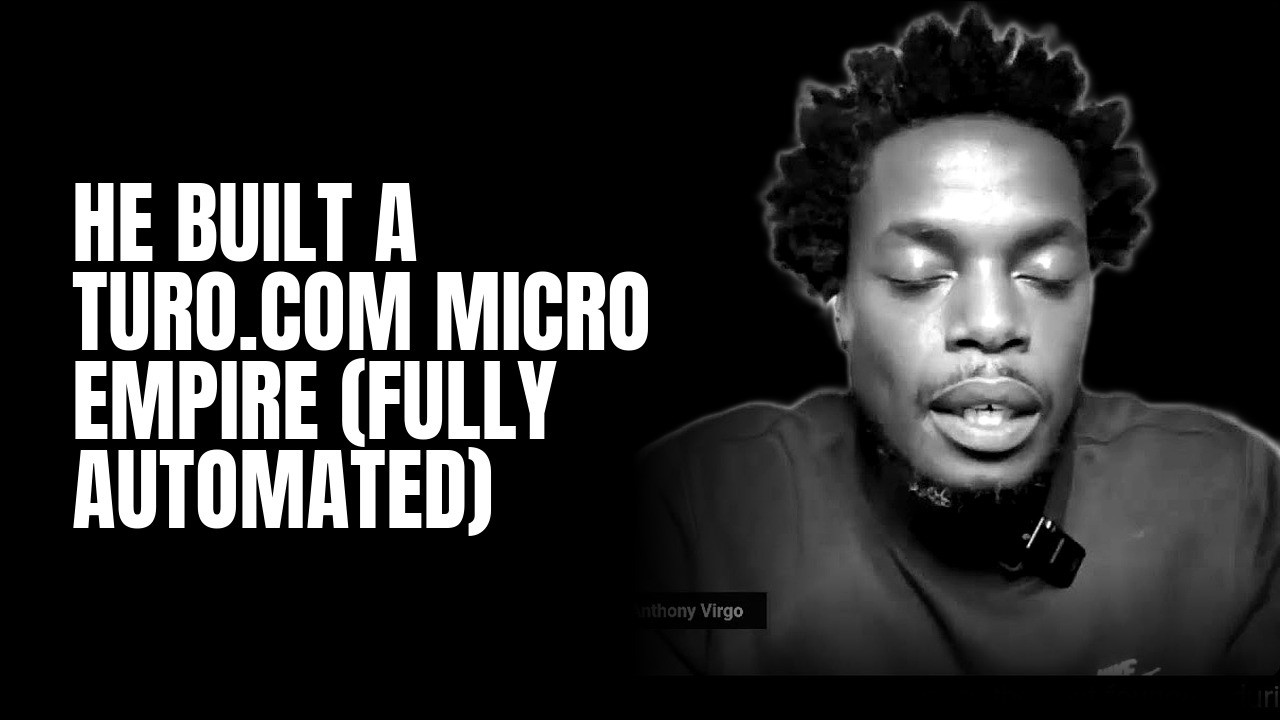
Anthony Virgo built a fully automated Turo rental fleet generating $2,500 to $5,000 monthly per car using AI and backend triggers for bookings and customer service. He then pivoted to founding A+ Active Services, an AI consultancy for healthcare practices, and launched content channels like "Let's Automate This" on YouTube to teach workflow automation.
Chapters
Welcome to another CEO Wisdom podcast. We have Anthony Virgo with us today. Anthony's a proud dad reshaping digital healthcare, uh, at A+ Active Services. Been at this company for 5 years now. Anthony, welcome to the pod. Tell us a bit more about yourself and what you've been up to.
Definitely, definitely, Charles. First and foremost, thank you for having me. Um, yeah, uh, Anthony Virgo, based in, uh, New York right now at the moment, originally from Connecticut, but, um, I spent the last 7 years at a health tech startup, um, where I ran community and network partnerships, um, pretty much working with organizations for community-based organizations for social determinants of health, and then working with large health providers like Mount Sinai, NYU, a bunch of those, the credential providers on EHR systems. And then I just pivoted into my own AI adoption company within healthcare. So we do a lot of education, a lot of, uh, building agents on the back end for work workflows, and then also a lot of SEO or AI SEO. So when someone asks ChatGPT or Claude who's a dentist or therapist in Brooklyn or Manhattan, that person pops up as well. So glad to be here. Thank you for the conversation today.
And you've been in sales for quite some time. What prompted you to start your own company?
Yeah, so I started off my career in sales. I was at the car dealership, Toyota., in Connecticut where I'm from, uh, and that's where I kind of bit like the sales bug in terms of like, I love the fact that I get to build connections with people, help them find a product that they really love, and then, you know, that product goes on to be— at that time was a car, you know, to last them or do whatever they needed to do for their livelihood. Now I'm doing like the same thing on the AI automation side, just really changing lives through sales. But I think sales is just one of those things where you have to actually like talk to people, engage with them, you know, build some type of relationship. And I think that's how the world, uh, go around, to be honest with you.
Nice. And what did you do at Turo? Turo.com?
Yeah, so Turo, uh, that's, that's where my like kind of my car, my love for cars kind of came back in. So, um, a few years back, New York, uh, approved Turo being, uh, Live in New York where you can actually like rent your cars. So me being in the car business previously, I'm like, hey, this is like kind of a good way for me to kind of do my own business on an already established platform. So I had a few cars that I was renting out in New York when Turo first came to New York. Did really well in that, but then pivoted into like a lot of the AI stuff. But I would say like while doing like the Turo business, I was doing a lot of the automation.
All of that was through automation.
And almost AI in terms of like if you were to ever book a car from you, I mean, if you were ever to book a car from me, I would never meet you. I don't even know what you look like other than, you know, communicating with you on the app. But, you know, you will either fly into New York, the car will be parked at the airport, or you'll be parked at the neighborhood where you're staying at the hotel. You send a text and then the car will automatically unlock. You take pictures and then you go ahead and drive and come back in the same process. So I was able to kind of automate, you know, my bookings on Turo. And then I just kind of scaled that up to like a fully AI automation company.
Interesting. So how much, uh, how many cars did you manage and how did you find the car renters?
Yeah. Yeah. So I mean, Turo does a really good job with already having people interested in like, you know, booking cars. So for the most part, like they have a platform of people who are like, the demand is there. So you don't have to necessarily go out looking. But I still did my own promo pictures on Instagram, ran ads and a bunch of that stuff. In terms of like getting the cars, like I said, I come from the car business. So I was able to lease a few cars. I had two, like, like a Mercedes and a Toyota that was renting out really well. And then I was co-hosting other cars for people. So there were people in New York who wanted to do Turo and stuff like that, didn't really know how to set up and optimize, take pictures and stuff like that, set up the backend.
So it was automated.
So, you know, you know, um, I was at least managing a lot, like 5 cars at a time, but personally I had like 2 that was recurring.
And can this be as profitable as an Airbnb? For example, the Mercedes, was it $100 per day? Give me the economics here.
Yeah, 1,000%. I would say in a city like New York, or even like a high-demand city, um, something like that is super fruitful. Like, I would say just as good as like an Airbnb. A city like New York, um, You— one, a lot of people fly into New York, but in general, a lot of people rely on taking public transportation, the train, a lot of that stuff. So if you have a car, like, it's gonna be rented out in demand. Like, it's not hard to get that in New York, you know what I mean? Like, I was thinking that I was gonna do like a lot of airport, JFK, LaGuardia drop-offs, but honestly, it was probably like the person around the corner who needed to go upstate or go to DC for the weekend or something like that, for sure.
Right, right, right. Okay. So, and most of your clients, I would— yeah. Okay. So people that try travel from one place to the next, not necessarily like tourists, right? Um, and the economics, was it the $100 per day? Then your lease, how much is it? Like, uh, $300 a month you would pay? Give me the economics here.
Yeah. So it really depended on, um, so really you set your own prices at that point, you know what I mean? So you could do whatever. So it was the holiday, if it was the summertime, it didn't matter. So the lease for the Mercedes, I had a yellow 2023 CLA 250, yellow, nothing that you ever see coming down. Like if it's coming down the road, everybody know that, you know, you was coming down. That will go anywhere from about like $300 to $400 to $500 a day just going out. And the lease on that was like $800 a month. So you think of 4 weekends, I'm making about $400 or $500, $600 a weekend on that one car. Something like a Toyota The Corolla is more— it's classified as an economy car, so it's good on gas. A lot of people took that on like large, large road trips. So the Mercedes were like— was like the statement maker, the nice, you know, the night out on the town, the proms, the holidays. It was getting booked up for those. The Toyotas was always getting booked because of, you know, the road trips and things like that. And, uh, the, the lease on that was about $400, but on the Toyota I'm making about— on a weekend I'm making about $400 or $500 a weekend, $300 a weekend, depending on, you know, who's, who's renting it out and stuff like that. And, and if, you know, if it's, if it's the holidays, like the Christmas was, was too much, you know what I mean? Like it was always booked out, you know?
Right. Uh, any insurance on that in case shit goes wrong? Like what was the, the cost on your end?
Yeah, so the good thing about, uh, booking on Turo is they different insurance package plans depending on how you're renting the cars out. So you're able to get it like fully covered for the most part through Turo, but you also have your own independent insurance. But when you're actually booking on Turo, depending on the package you have, it's going to be fully, fully covered. So you're covered when you're renting a car to these clients. For you, for me personally, that's when I would have to like need like that specific insurance. And I was just regular, my day-to-day insurance for the cars and stuff like that. And that came out to about like Uh, it was less than $500 a month for both cars.
So with a fleet of 3 cars, you wouldn't make, uh, $15,000, $20,000 a month or what?
Yeah, uh, like, yeah, not $20,000, not $15,000 to $20,000 a month. Um, nothing crazy like that. I would say realistically, like, anywhere between like $2,500, $2,500 to $5,000 That's like a safe number because, uh, I would say usually the bookings would happen Thursday to Sunday. Those were like the hot days. During the week, I, I would rarely get booked out, but Thursday to Sundays, the weekends, I was always like booked out for the most part.
And what's the difference between this and Airbnb? Does it require less upfront capital just to lease 3 cars, or was it you being a cars guy and having a good standing? Like, what's the difference?
I think it was a combination of both. Me just knowing the car business as a whole and then using that, like, knowledge to then be in the car rental. But honestly, I don't think the barrier to entry is it like that steep. You could do it with your own car. I think as long as you have like a 2016 with like less than 70,000 miles or something like that. I think that there's a specific threshold where there's a minimum where you have to, um book the car unless it's like considered a classic car. But you'll have to have a new enough, high quality car to actually put on a platform, which it doesn't have to be brand new. And then you could just start from there, just take pictures just like, you know, you do on Instagram or something. And then you'll just book it from there. They'll put it in the algorithm.
And what was the less nice part about that business?
Say one more time.
The less nice part, you know, the less nice part.
Oh yeah, I would say, I would say again most part, like, for me, it was completely hands-off. Everything was automated, a seamless process. I— all I really had to do was, like, gas up the car and clean it. The only thing I would say is maybe the headache with, with certain people, because you really don't know who's renting the car. Because so sometimes, um, you know, people are just taking it for joyrides and stuff like that, leave it abandoned, it'll come back really dirty, stuff like that. Typical car rental stuff. Like, I don't— nothing, nothing crazy.
Uh, have you studied like car rental empires like Hertz? Uh, and yeah, what do you think about these businesses? Like, why not start your own car rental empire rather than just relying on Turo?
Yeah, so I think for a few, for a few things is because one, uh, Turo actually owns the client base. So when you rent on Turo, those are Turo customers as a whole. So I knew for a fact that I wanted to like regain like client stuff. Like, so in addition to me doing Turo, I was also doing private rentals as well where I owned the client base. Um, but I would say, um, I kind of just kind of pivoted when I saw that the system— meaning like, I was running AI to kind of run this business. So in my head, I'm like, let me just learn how to do AI so I could run any business, you know what I mean? It's like, it's like you go from actually— I, I always say that sometimes if you like the car business, sometimes you start off as just like the car detailer and then you go into sales and then you go into like the sales manager and stuff like that. Um, I think with Turo you're able to kind of like just skip the line. Like, like, like Hertz and all that is, is cool and fine, but I think the user-friendliness of Turo, the way people are able to kind of create their own experience— like I said, I never met a person who rented my cars, but if you see my reviews, I have all 5, 5-star reviews because of like the customer service aspect, the seamless workflow flow of it. And that was all because of like my AI setup in the back end, for sure. And so, so yeah, to answer your question, I just said, you know what, the car stuff is cool, it's fun, but like the back end is where I feel like a lot of the, uh, um, opportunity was at.
And in that specific industry, you were one of the only guy doing that, right? Because I think it was very prevalent in Airbnb, but in Turo not that much automation, right? Like last time I rented a G-Wagon in New York, the guy like literally waited for me 2 hours at the airport. Yeah. Isn't your time worth like $500 an hour? Exactly.
Exactly.
That's weird. Yeah.
And again, it's just like Airbnb is, you, you know, sometimes you get a good Airbnb and sometimes you get a bad Airbnb. It all depends on the host. And for me, I just wanted the host in a more seamless matter because I kind of knew that, you know, someone's renting a car when they just want— they just want to know where their car is, they just want it to be gassed up, and they want it really clean. So I would do all that, but I will also leave snacks in the car. I would leave a Starbucks gift card, I would leave all that stuff because I knew people were traveling and, you know, doing a bunch of stuff. But again, uh, the back end, they never saw me. They, they knew what a key was, they could park the car, leave the car anywhere in the world, and, you know, someone will go pick it up, and it was just automated.
And how does the key unlock work? Tell me a bit more about that part.
Yeah, so for the most part, a lot of the newer cars— this is why, um, I went like brand new rentals— a lot of the newer cars are synced like through specific apps. So you're able to like— so, so through the Mercedes, Toyota, Honda, whatever car you at, more than likely if it's a newer car, you're able to like unlock and lock the car remotely anywhere in the world. So I will be like in California and someone will be renting my car in New York, I can unlock unlock the car, right?
Um, the customer service part, was it AI? Was it you? Did you hire someone?
Yeah, the customer service part of it, I mean, it was all again like automated through the backend. So triggers, so anytime someone would like send a message, a trigger will happen in terms of like, uh, if you say, hey, I'm outside of the car, the car will automatically trigger, you know, to unlock. Almost like that. So I ran a lot of the triggers on the back end. In terms of like, like washing and gassing the car, I did that for the most part, you know what I mean? I just, you know, 9 out of 10, the car will come back already gassed up from the previous customer. I'll just like run it through detail or clean it myself. And that was it. Sometimes I'll hire somebody if I was like, again, if I was like on the other side of the country and my cars were in New York, I could just like hire somebody for the weekend. But for the most part, I just did that part.
But I meant like, uh, answering messages, right? Like that part, was it automated or—
Yeah, all of that was triggers. Everything that I was saying in terms of like triggers, and anytime someone would like message in the chat, there'll be a backend like automation trigger that will trigger our automatic response. Yep.
Okay. Okay. Got it. And then, okay, so you took that backend and then you launched how to How to HBCU, like, how was that, like, becoming a TikTok, uh, content creator?
Yeah, so all of this kind of wraps up into each other because How to HBCU was kind of like another layer underneath, like, what A+ Active is. So initially, again, getting back into, like, the AI automation stuff, even before, like, doing the Turo stuff, I was doing, like, a bunch of content online, right? Like, just, like, curating content, building a following on TikTok, um, and that's kind of how I— so a few things that I'd realize, like, not just automation on one side, also like personal branding. So if you have a combination of like a personal brand and you're doing AI at the same time, you could run a company as big as Google by yourself, you know what I mean? Like, you'll be able to kind of do a lot of that stuff if you're able to like hone these two talents. So when it comes to like the How to HBCU, I've been able to kind of like build a really great following on TikTok about like HBCU content and things of that nature.
Right. And since that time, did you fully give up the Turo stuff? Like, are you full-time into that content stuff and, uh, service stuff?
No. Yeah. So actually those were just like running both at the same time because they never really like interacted. So I wasn't doing— I wasn't actively doing like content for Turo, you know what I mean? Like that didn't exist. Turo already had like their customers. I will— I would, I would like collect emails and send out like email campaigns about like rentals this weekend and stuff like that. But in terms of producing content, I didn't necessarily have to do that part of it. Um, on, on, on the How To HBCU side, I was building my personal, personal brand up. And you know, and then I might run a— I might run a viral ad, or I might do like— I know, I'll say for example, okay, I know I'm gonna go viral today on TikTok. I just know this skit is going to go viral. And in the midst of that, I might put in a call to action like, oh, also I rent cars and stuff like that. So I mean, it kind of— it was two separate things, but they complemented each other at the same time.
And then your services, how much would you charge your clients to fully automate their stuff? And what was your ideal customer persona? Who do you serve?
Yeah, I mean, really, it, it varies on the layers of of what you need. Like, anybody— so the, the thing about AI is it's so complex, it's so new, it moves every day, that a lot of people think they want AI but they don't even want— they don't even know what they want, right? You could say, hey, I saw this cool AI agent, and that's what you want, when you don't necessarily even need an agent. You might just need an automation in the background, you know what I mean? So it really varies on the use case. And like, in terms of like our ideal clients right now are people within healthcare, healthcare world. So any healthcare professionals, people who own private practice and large health systems, a lot of those specific services will drill down to like AI education. So actually teaching people how to use AI within their practices and stuff like that, making sure AI agents or automations are HIPAA compliant. And then also like doing like a large scale if someone wants to build like a an app or something like that or a website, then we're able to curate that for them or run content, right? We do a lot of like AI avatars for, you know, personal brands and stuff like that. So it really varies on the services. But again, I would say that the top people that we deal with are healthcare professionals and like solopreneurs, solopreneurs, solo practitioners, people who are able to kind of be a lot flexible, use AI in their day to day, and then see the benefits 1,000%.
And I know you have a background in healthcare. Why do you target these, uh, healthcare workers? And also be a bit more precise, are we talking about like clinics here, med spas? Like, who do you serve? And is it in New York only?
Yeah, so yeah, um, I spent the last 7 years at a health tech startup and like 9 years in the healthcare industry as a whole. So that's pretty much my domain, that's where my network is, that's where I kind of know the, the days and day, the ins and outs. Um, like I mentioned, I worked for a startup, so I've seen that go from like X amount of people in a room to a large, large big company. So for me, it really just, it really comes down to, you know, how can I, how can I do that within the same domain? Meaning like this, how can I use AI as a benefit within healthcare? And there's so many different ways, whether it's like for the client, for the practice, um, And to be specific with you, it's not just— so we're not— so we're based in New York, but a lot of our clients are all over, like Miami, Tennessee, California. It varies. You can incorporate AI almost anywhere. So they're not just locally based. A lot of what we do, like the events and stuff like that, might be tailored to New York because we just, we just, you know, this is our community, this is our network. But our services are for pretty much anybody within the US. We even meet with like a lot of UK and Australia. Providers as well too. So, um, that doesn't matter. Um, but ideally it all—
it—
I will say it is the private practice owners, the solopreneurs who are kind of doing their own thing, and then like, uh, people see— I would say CEOs at large health systems. So like the people who are able to make decisions and incorporate new technology, those are like the 3 main people, right?
Um, saw some of your content, you mentioned TikTok, right? Like, but I also saw your YouTube YouTube, like what platform are you most bullish about and any hacks and tips or thoughts about, uh, how to create good content that generates subscribers and cash ultimately?
Yeah, for sure. So I actually, I'll answer that like kind of from two perspectives because you have like the How To HBCU, which is like the fun personal brand, just really giving out information to a specific niche like audience. And pretty much that's just like you being able to build community, right? I think you being able to build and hone or boy influence in a specific niche community, that's, that's important. Like, it could be, um, it could be anything. Like, like me, for example, I'm an active father. Like, so I know, like, dad— like, making dad content could be specific to dads or people who are, um, you know, around fathers are going to be able to dissect that. So as long as you're, like, a leader to a community You're going to be, you're going to be almost good or speak from that community when it comes to content creating on the back end. So I'm building Let's Automate This YouTube channel, which is pretty much AI for everyday people. People are going to come and be able to just like watch how I build AI. Me not coming, me never being a software engineer, me not having a tech background, me coming from sales and being able to build apps, build sophisticated systems. That's what I'm actually teaching people how to do. And at that point, I'm just making sure that I'm like top of mind. So like being super intentional versus having so much fun. So on one side, on the personal brand side, I'm just having fun showing my personality, doing my thing within a community for a niche. And then here I'm just kind of trying to be top of mind for the thing. So in AI, I know there's not a lot of people in AI who are also dad AI people, or I just don't know a lot of AI healthcare people. I'm that, I'm that person, 1,000%.
I love it. Anthony, thanks for being on today. Where can people find out more about you?
Yeah, definitely. First and foremost, just want to say I appreciate the time and just being asked for being on the podcast. But LinkedIn is pretty much the source of truth for anything. Anthony Virgo, A+ Active Services. And, you know, you guys are going to be seeing a lot of stuff like online on LinkedIn. We're doing masterclasses every Thursday. So if you want to learn AI, you could come and learn from, you know, our team. Every Thursday at 12 PM. And then we, we are also gonna have like free AI, uh, office hours on LinkedIn as well. So that's gonna be the source of truth. But A+ Active Services, Anthony Virgo, um, just look out for me. You could definitely, um, just find my information, book a call, and you know, I'll sit and, and chat with you.
Was Anthony and
More from Charles




Founder Wisdom: the full audiobook (7 hours of quotes and stories from 600+ founders and CEOs)






