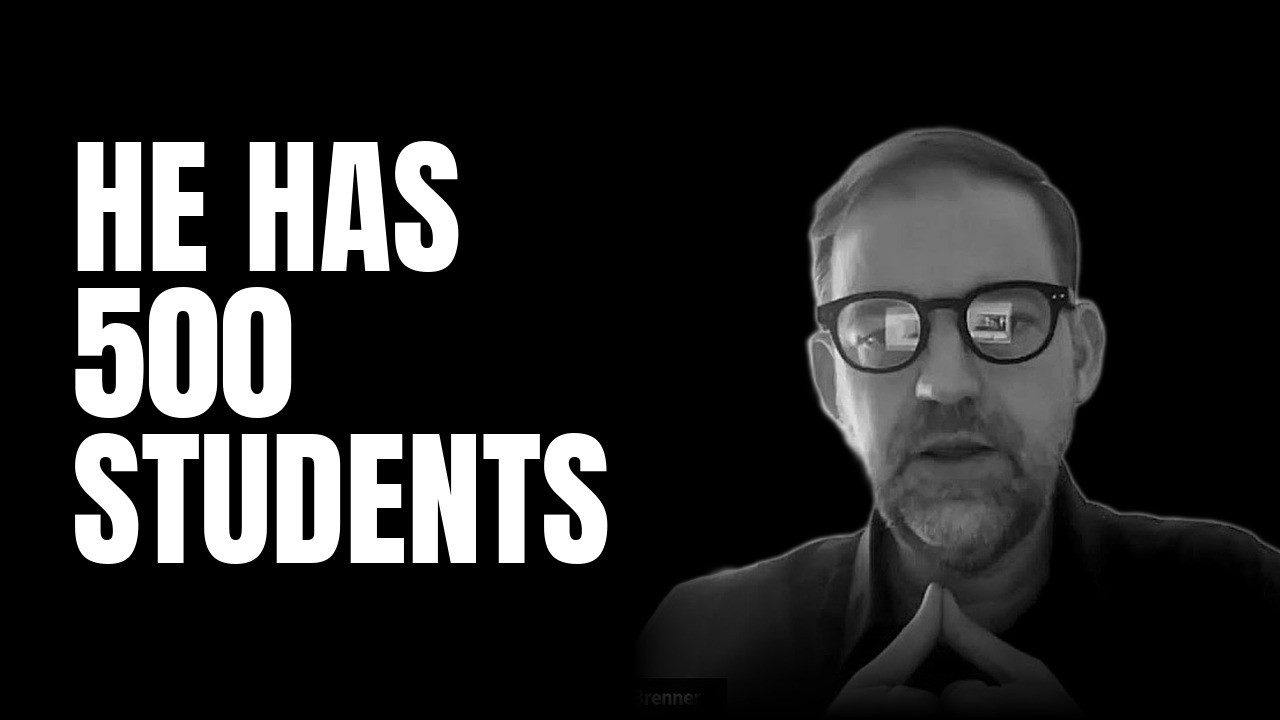
Aaron Brenner built Briante Academy into a dual-language early-childhood school with over 520 students on the US-Mexico border. He launched during COVID, faced a three-year delay, and kept it open when peers closed. His advice: reserve seats for under-resourced families and blend in-person community with hybrid learning.
Chapters
Welcome to another CEO Wisdom podcast. We have Aaron Brenner with us today, CEO at Zetan Education Partners, the founder of Briante Academy down in Texas, I believe. Was it Austin or Houston? Or I think you're in McAllen personally.
Yeah, I live right down on the border, 10 minutes from Mexico.
Oh, nice. Very cool. Yeah.
Yeah.
Tell us a bit more about yourself. I also saw you were like director at University of Notre Dame at some point. So Quick intro about yourself, Aaron.
Yeah, of course. Um, so I'm originally from Detroit, um, Canadian-US border. I now live on the US-Mexico border. Um, in between that, you know, I was brought into social entrepreneurship through my corps member experience as a Teach for America corps member in 1995. And of all places, they placed me here in the Rio Grande Valley on the border. It's the reason I'm here still. And I've learned and had the opportunity to start a number of nonprofit organizations in the social sector. My focus the last 24 years has been designing and building new school models, and in some cases and in some contexts, trying to bring those to some relative scale. And I'd say at the same time, you know, what, what I'm really passionate about is fostering innovation in others and inspiring, modeling, coaching, other leaders who have a social entrepreneurship leaning to get into the work, to design models, to design schools, to design other nonprofits and innovations that can help community children, etc.
You live most of your life on borders. Did that like influence your switch to southernmost borders? Like what inspired you to go down there?
Yeah, I mean, you know, I'm— I, I grew up, um, in a, in a home that promoted learning language. So, um, you know, I, I studied Russian for 7 years. I don't use it much anymore. Um, and I lived in South Africa for a period of my life and lived with a family that spoke Sotho and Zulu. And so when I applied to Teach for America and they asked what do you want to go? I put New York City, Washington, D.C., and the Rio Grande Valley, just to be honest, because it sounded interesting. I found out later that anyone who put the Rio Grande Valley as one of their 3 options was likely placed there. So, uh, this is obviously a dominant Latino community. Over 95% of the people are of Mexicano descent. My wife is Mexicana. So I was immersed in the Spanish language, and I'd say similar to the Canadian-US border, it's just a fascinating place to be because you have French and English right up in Detroit, Windsor, and down here in McAllen Mission with Reynosa, which is 2 million people right across the border and is a city of just a lot of energy and English and Spanish. And, you know, not just people from Mexico and the US, but people from all over the world. that live and operate around the border. So I'd say growing up on one border and then living on another, there's differences, but there are similarities. And it's, it's a, it's a really amazing and life-giving place to be.
Right. And what prompted you to start your own stuff, right, and not just keep on being employed? I think your first one you started was KIPP Shine Prep and then KIPP Houston, right?
Yeah.
then the One World Networks of Schools, were you always that entrepreneurial?
Yeah, I mean, I actually, you know, I started, Charles, my first nonprofit when I was only 24. A different one that I don't list in my bio, um, called Proyecto Derecho del Corazón, Project Straight from the Heart. And essentially, it's, it's what I coach and foster in other innovators in the, in the social sector, which is I identified a problem. Um, there was a huge lack and deficiency of children being exposed and having opportunities to create in the fine arts. There was no arts instruction, no music instruction, and that had a critical, just formative role in my own life and the life of my brothers and friends, etc. And so I saw that deficiency in the community. I knew that you know, at least I felt I was a little naive at 24 years old, but that I had the ability to do something about that. And so there's a social entrepreneurship foundation and fellowship called Echoing Green, which is based in New York City, and it's a global fellowship. And so I applied to that, you know, after hearing about it from a trusted friend, and they took a chance on me. And so I started a nonprofit, I built a board, I raised capital, I raised operating funds and I got that started. And, you know, we were serving over 1,000 children, but then I pivoted when I realized that to have a more long-lasting impact in the community, that the school is a unit of change. And I, I was going back to school and, and studying education leadership at Stanford in the summers. And so that had a big impact in terms of how I thought about social impact, change, scale. I heard from, you know, business entrepreneurs like yourself, and I learned a lot from those people. And so I shifted my focus from art centers and art innovation to education through a school, and that's what I've been really focused on the last, you know, 25 years.
Interesting. And which one has been your most resounding success so far, would you say?
Yeah, you know, I don't always think about scale in terms of success. I will say that when we started Shine in Houston, you know, we had kids from over 50 zip codes, we had kids from over 40 countries, and we started with 114 4-year-olds in Southwest Houston, which is an immigrant hub. So we had kids from, you know, the Middle East, Africa, all over Africa, South America, Central America, Mexico, Canada, Europe, Southeast Asia, all coming together in one school. And the model that we designed was a dual-language, project-based, values-enriched school. And we did a ton of work and development and capacity building with parents and families. And it took a tremendous amount of work at first. It was, it was, to be candid, a pretty big grind. Um, at 29, 30 years old, you know, I was working 75, 80 hours a week, um, to get this thing going and moving. Um, but this school was incredible. We had an incredible team. People were attracted to it to work there from all over the country. We had some of the best teachers and educators from across Latin America leading our Spanish program, including my wife who designed it, um, and tons of other teachers. And what happened was We had tons of educators come from all over the country. And beyond that, we had people, you know, we had billionaires, we had, you know, Bill and Melinda Gates, we had Waltons, we had people coming to see this school in action, see how we were getting the results quantitatively and qualitatively that our children were getting and how we did it. And so even though it was a single unit of change, That model, that exemplar that our team built inspired not just schools across the US, it inspired schools across Latin America, into Africa, into India. And so it had a really revolutionary impact on early childhood and elementary education. And, you know, some of the biggest investors and philanthropists in the country saw the potential of it. invested in it, brought it to other countries. And so to this day, it's had a ripple effect. And within that school, you know, 10+ of the teachers that were part of that team, Charles, ended up designing and leading their own schools that were, you know, part of that original Shine team. And so they then in turn, you know, in terms of a ripple effect, had an impact in educational contexts and sectors across the country. And even leaders in Chile, again Mexico, Colombia that started schools inspired by Shine. And so the impact just continues. And, you know, it's had a generational change in a lot of places.
And what's the problem down there on the border of Texas? I mean, there seems to be very brutal and abrupt and like simple solutions like putting up a wall, right? Like, but What is the real problem down there and how would you fix it and how are you fixing it right now?
Yeah, it's a great question. You know, I've lived here of the last 31 years, I've lived here 21. We had a 10-year run in Houston where my daughters were born and where we started and grew Shine. But really the border, you know, in many ways like it was in Detroit-Windsor, was very fluid when I first came down here. I mean, yes, there was a border and a checkpoint, but, you know, if I brought you down here, I could drive you across. And I know you're based in Oaxaca, so you know Mexico. I could have driven you across with me. We would have been across in 5 minutes. We could have grabbed a meal. We could have had a good conversation. We could have seen and explored some innovations there. You know, now just to get across the border from the US, can sometimes take an hour when it used to take less than 5 minutes. And to come back across from Mexico can take up to 4.5, 5 hours when it used to take 30 minutes. So it has, it has strangled the interconnection and really the business transaction and commerce transaction that used to be fluid, you know, under a quote the name of security and protection. That really hasn't improved with those changes. People can get in and around a wall. A wall doesn't really prevent people from going under it, over it, around it. Innovative people that want to do things that are against the law will find a way to do it regardless of the barriers that you put up. So You know, the reality, right, it's humanity. The vast majority of people want to will the good of others. And if we can create conditions and contexts and structures for that to happen and for them to grow themselves, whether they want to start a business or whether they want to start a nonprofit, to me, that's what Briante, which is the newest model and venture that we've done, here on the border is hopefully an example for it. It's a dual language school. Again, it's a different model than some of the other ones I've created, but nonetheless, it's promoting and facilitating this idea of building bridges versus building walls. And, you know, I'm still hopeful about the border, but yes, it's a place where unfortunately human trafficking happens, obviously drug trafficking. There's other things that happen on the border, you know, because the U.S. in particular are consumers of a lot of the fruits and products of those activities. And so yes, there needs to be security, there needs to be accountability. I'm 100% supportive of that. Yet we also have to be careful about stifling growth, stifling innovation, stifling business, and even disconnecting families, which is really the biggest harmful impact of quote-unquote over-securing the border.
Right. Uh, how was it to launch your cool— your school? Was it like pretty chaotic initially? Walk me through the process of that.
Yeah, I mean, the one thing that was chaotic is that we did it right in the heart of COVID right? And so, you know, ironically, I got a lot of inspiration. I spent a couple weeks down in Oaxaca during the summer of COVID where you are based now. And, uh, I'm an old-school, you know, artist myself. I've painted a lot of murals, I've done a lot of sculptures. So I studied a lot of the art down there, and it made me think a little bit differently about what we were trying to do. Um, you know, in the Valley, people were ultra concerned about the impacts of COVID and so the mask wearing, um, the sort of you know, shutting down of businesses, the limitations even in movement and transportation was really excessive. And so the school was designed in 2019, it was approved by the state in 2020, but we had to delay the opening of it because of COVID until 2023. So that was the longest delay, right? And when you think about how fast things move, and, you know, I've studied your work and your thinking and You know, things like AR are changing every second you and I are talking. So 3 years to wait to get a school started, it's like, how do you adapt? How do you adjust, right? You know, getting electricity going, it was like growth and business was overwhelmed by COVID. I think the fear of it, the anxiety of it, we've come out of that. I'd like to say we've come out of that shadow. and we're back into the light of opportunity. But, you know, of all the charter schools, new charter schools that opened the year that we did in 2023 in Texas, we're the only one that's still open. The financial challenges, the post-COVID challenges have really limited, you know, some of the new school and social entrepreneurial growth. I'm hoping we're beyond that, but I can certainly say that of all the entities and all the schools that I've either co-founded or founded, This was the hardest, most challenging, most chaotic one to get off the ground.
And how many kids and from what age to what age?
Yeah, we're up to 520 children. We have over 200 3- and 4-year-olds. You know, my philosophy, especially as I get older, Charles, around education and its impact and scale is that you have to start incredibly early. For a lot of our kids, there's a significant vocabulary, literacy, and technology gap. So getting our kids into a full-day setting where they're being enriched and immersed in vocabulary and literature, they're being exposed to hardware and software and technology that can accelerate their learning, they have opportunities to play outside and, and get strong and grow and improve their physical well-being, that's a core part of this new model. As I've gotten older, that's become more and more important to me. And I know that's a core part of your work and your leadership. That's allowed us to keep our kids and our families. The only thing that's limiting our growth is probably adult talent, like finding enough teachers. We continue to think about and identify AI and other forms of technology in terms of accelerating learning, in terms of scaling our work. We have 8 schools in New York City that, that are doing a lot of that pioneering work in technology, and, and this model in Texas is certainly benefiting from that. So, um, but the 500+ kids that we, that we serve here every day are, are getting a new innovative education that we believe is gonna set them up for success as the world changes and adapts, you know, faster than we can imagine.
How different is it than the classic school you and I went to? And yeah, how have you studied Alpha School as well? I love that model.
Yeah, that's a cool model. I do like it as well. You know, I've been brought into Ad Astra. I was asked to consult a few years ago. as they were considering, you know, SpaceX is only an hour and a half east of us, um, and I have some good friends who, who work over there. So, you know, they brought me in to sort of study what they were doing and, and, you know, and think and, and learn about different models. And, you know, I can't say we're like Alpha, we're like Ad Astra 100%. I will say though that, you know, schools today, it, it— we can't write like, like per your own thinking and writing that I've studied a bit, like We can't predict the future, yet we have to be as prepared as possible for what's ahead. And we have, in my opinion, right, a moral responsibility to do that for our kids. Now, I say that, but look, the reality is, is that technology— there's— it's like anything else, right? The yin and yang, the tension. It, it also has a negative impact, right? We see more and more kids here in our communities who spend more and more time on devices in a way that's really not nurturing their growth. And, and from a physical growth and a physical well-being, it's certainly diminishing that. And so one of the core tenets of this model, which, you know, I think is different than Astra, is that our kids every day are outside climbing trees, exploring the outdoors. Like, we chose a site that is forested and we kept and preserved that so that our kids can connect with nature. They can connect with their own physical well-being. They get stronger, quicker, faster. And that then nurtures their intellectual ability to dig into literature, content, math, you know, technology. And we're doing it in 2 languages. This is a dual language school. And so whether you're learning English or you're learning Spanish, Everybody here is a language learner at the same time that you're being exposed to the outdoors and growing your own physical well-being. So that to me is, you know, I'd say in some ways it's probably a throwback. I don't know about the schools you attended in Montreal, but I can say in Detroit, one benefit that we had was we were allowed to play outdoors every day and fight and engage, go into the, you know, escape sometimes, go into the woods. Get in trouble, right? But to me, that's such a core part of being a human and being strong and having good health. And that all sustains and really nurtures your ability to be a deep thinker, a deep learner, and I would argue a good human being.
Yeah, my school, we had like récréation in French called, and yeah, we could play like all kinds of sports, but we couldn't go, we had a wood, but we couldn't go like real deep into it, which is kind of weird. I understand why, right? Because some kids would just hide there or—
Yeah.
Get stung by something.
Yes.
It was a good upbringing though. I could just take my bike after school and go pretty much everywhere I wanted and get into trouble like you said.
Amen.
One question I have for you, because I believe very much in selecting like who I work with, right? And I'd like to start my own school eventually. It's going to be called Define School. My daughter's like 6 months old now. It's going to be AI first. I'm just going to select like specific kids for that, but I don't want to exclude kids that may not have the capability, right? Because it's not like if I was that special as a kid myself. So I want to give them a shot, but if they're part of an household that keeps them that keeps on feeding them shit, you know? Like, I mean, my impact will be limited and it'll be quite frustrating.
Yes.
Yes, another kid that I could really have an impact on and really propel through the stratosphere, right? So how can I launch that model? Like, give a shot to kids that really want it, I guess, or parents that really want it but can't afford, right? Really care about their kids' education and, and still scale my school, right? Like, while selecting high-potential kids, which most of the time are middle and upper class.
Yeah, yeah. I mean, look, it's—
it—
that's like the greatest question, right? I mean, I'm, I'm someone who, like, my mantra has always been, if the school's not good enough for my own kids, it's not good enough for any kids, right? I mean, my daughters are older. I have a daughter who's at Trinity College in Dublin. And I have a daughter, you know, who's up at Notre Dame in Indiana. And so they're both at excellent universities and they're bilingual and they're learning third languages. And, you know, and I go back to the schools they went to Shine. We eventually put them in a different school. You know, I would say in your case, first of all, kudos to you for thinking about a school and congratulations on your daughter. It'll be the best thing that's ever happened to you. Um, flashbacks for me, right? 6 months old. You know, there are so many families out here, Charles, who, you know, I'm sure from Oaxaca to here in the Rio Grande Valley to Detroit to Montreal, we could go anywhere in the world, you know. And I've lived in a few other places myself, including South Africa. And I would say that, you know, you're always going to find families and children who are hungry for deep, meaningful, engaging learning, right? And their only obstacle, to the point you made, may be financial resources, or it may be that the neighborhood or community that they live in doesn't have access to as many options or choices. As you and I both know, right, like through technology, we can kind of blow that up and think about, you know, a mixed hybrid school where, you know, they're already doing this, right, where some of the days is online. And so if somebody has the right hardware and the right connections, they can access the learning. I'm still a person who believes in in-person engagement and community building, so I think that's got to be part of your school. Yet I would say you could take a risk on at least, you know, 25% of the children. I would push for more, right? But at least 25% who are coming from an under-resourced, under-choice community who would greatly benefit from the school that you're designing and visualizing in your head for your daughter. And look, that's the world, right? I think one of the biggest gifts that we gave our daughters that, again, I'm happy to hear you're thinking the same way is when you keep your kids in an exclusive setting, and they're only around a way of thinking that is— God bless it, but it could be a little closed-minded. And that can be anywhere, whether it's the most affluent or upper middle class or low socioeconomic status. And forget about economic status, just education levels, cultures. You can limit people's growth. But when you travel, you know, when you choose to live in new communities, when in a school you give your kids access to children from different profiles, different neighborhoods, different families, that enriches them because the world is incredibly diverse. And we owe it to our kids, we owe it to the children in our work that we serve to expose them to that diversity. And it really does make them a better learner, a deeper thinker, and a better human being.
Yeah, I love that. I'm gonna think about something. Definitely gonna follow up with you on the Define School project, right? Like, where can, uh, Aaron— where can people find out more about you, Aaron?
Yeah, um, you know, come to the organization that I run. That's www.setonpartners.org. That's S-E-T-O-N setonpartners.org. You can also look up Briante Academy, Bria Schools. You could look up One World, which is the organization I got started. I'm not formally connected to that anymore, but they continue to do great work after we got it launched and started in countries around the world. So yeah, come and check out our work, and if anybody's interested in partnering up, Reach out. We're always about walking and working with different people in service of kids and families. And thank you, Charles, for this opportunity.
Pleasure. That was Aaron and Charles.
More from Charles




Founder Wisdom: the full audiobook (7 hours of quotes and stories from 600+ founders and CEOs)






