He ran Overstock.com with Patrick M. Byrne
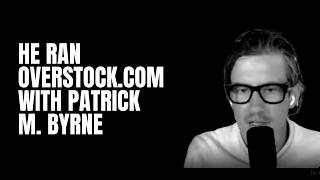
Jeff Atkinson became SVP of revenue at Overstock.com at 27, overseeing $1-1.5 billion in sales under CEO Patrick Byrne. The company grew from zero to $300 million in three years by investing heavily in SEO. Atkinson later founded Huckabay to help sites prepare for AI-driven search through Generative Engine Optimization.
Chapters
Welcome to another Founder Wisdom podcast. Today with us is Jeff Atkinson. He's the SaaS founder and CEO at Hookah Bar in Park City, Utah. Jeff has an interesting background. We, uh, we talked about, uh, interesting stuff last time, uh, we got on the call. He's an ex-Overstock.com, and I think he was, uh, Patrick Mentee. So we're gonna talk about this, his, uh, background, uh, skiing, biking, playing golf, and doing all kinds of things, and, uh, where that leads to hookabuy.com today. So Jeff, welcome to the pod. Tell us a bit more about yourself and what you've been up to.
Hey Charles, great to see you again. And, um, yeah, I've had a kind of a wild ride since Since I was born, I'd say expectations have always been high. I was a ski racer. I skied in high school, actually my junior year in high school on the U.S. ski team, and that's what got me into college, got me into Dartmouth here, skied at Dartmouth. Dartmouth's the connection to Overstock. So Patrick Byrne, for those familiar, he was the founder and CEO of Overstock, but he's also a lot of other things. He's, um, one of the leading pioneers of cryptocurrency. He's always on the cutting edge of this or that. Brilliant, brilliant man. His godfather is Warren Buffett. His dad is the CEO— was the CEO of GEICO, and one of Buffett's first bets was GEICO. His really first big bet was GEICO. So You know, imagine growing up with Warren Buffett around the breakfast table. That was my mentor for the first 8 years of my career, and Overstock was an incredible experience. And kind of took that experience and, you know, really learned a lot about SEO and just the power of SEO, what it does for a brand, what it does to grow a company. We took SEO from 0 to $300 million in like 3 years, which is incredible growth. And now, um, SEO is really, you know, GEO or AEO, whatever you want to call it. It's really become a technical conversation. That's very important. And we'd spent 10 years building the perfect technical conversation or the perfect crawl experience for Google, and, um, AIs just so happen to eat that up. So the wind is in our sails at the moment. After 10 years of sort of rocky roads, highs and lows, and fighting and keeping it alive at certain points, we really have the wind in our sails at the moment. So it's a very exciting time at Hakobai.
Right. And it seems you and Patrick, I don't know, have like different, very different personalities, right? And you called yourself like a man of the people with like peace and love sign, while Patrick seems sometimes more on the aggressive front.
Um, well, he would call himself a man of the people too, and I'm peace and love and hippie, you know. But, uh, yeah, he's not afraid to, uh, come after you if you're, uh, like, for example, while I was at Overstock, he took on Well, largest banks. He took on the largest banks in the world, uh, and sued all of Wall Street. Um, so yeah, he can be, uh, confrontational and aggressive if he feels the need. He has no problem with that.
These guys were bullies, right? Like, the short traders are very much bullies. I feel that one's very much justified.
Tell us about that. So justified. Yeah, if you don't know anything about short selling, the quick— it used to be a practice on Wall Street among a very sort of, uh, schemey group in which you could short sell stocks without having to cover. So basically, if the stock went up, you never had to cover it, so you never have the loss. So there's really no risk. And Patrick closed that loophole. By suing Wall Street over it because all the big banks were doing it. And, um, he won, um, which is crazy to think. But at the time when he was suing them, for example, like, our— I was his closest friend. I was with him the most of anybody. I had a private security detail issued from the state and the, in the federal government, so I had a state trooper following me around 24/7 and protecting me from assassination attempts for 6 months. Patrick had that like times 5, so he had like a sniper on his roof of his house, convoy. Like, it was insane. Yeah, and it was really scary, you know. You drive— I lived in Park City, so I drive down to Salt Lake, and, you know, some black car would just fall like every day would just follow me, park, watch me walk into work, watch me walk out, watch me walk out for lunch. It was a scary time. And for him, I think it was even scarier. He was on this crusade against Wall Street, and I was his guy to run revenue at Overstock and make sure Overstock was still was still growing and doing. The thing about Patrick and I is if you gave us 100 decisions, business decisions, and laid them out in front of us, we'd probably make the same decision 100 times. So that, that's our connection. Like, we just think— and he taught me that business, um, but he really trusted me with the revenue portion of Overstock, which included all of marketing, all of pricing, all of forecasting, all of buying and sourcing of product. Um, so I had full control, and I was a really young guy. I was like 25 by the time I kind of took over the reins. Um, and I lasted 8 years, and you know, that's a lot of pressure. It was over a $1 billion worth of revenue responsibility. And it'd be funny, you know, we'd go to board meetings and we'd be talking about revenue, and anytime revenue would come up, everybody at the table would look at me. And I'm like, okay, like, I'll answer the question, but Patrick, like, you're responsible for this too, man. Like, ultimately it comes down to you, but I would, yeah, I gladly took the experience and we did some really cool stuff that has, and I learned so much that has applied to Huckaby and some of it that hasn't applied. We haven't gotten big enough, you know, Overstock has thousands of employees and I was much more used to managing teams of hundreds, if not thousands. Always less than 5 direct reports, but I'm used to sort of bigger data and bigger companies than I am where Huckaby is. So I think as Huckaby grows and really takes off, I'll become a more effective CEO because that's just what I'm good— I'm better with big numbers. So hopefully that comes true and Huckaby continues to grow into a brand like Overstock where I can leverage that knowledge that I picked up at Overstock. But yeah, what a character. I mean, he's so smart and he's just— we could spend the whole episode talking about Patrick.
But how did you guys meet and why did he trust you with so much so fast?
Yeah. I've always been a very goal-oriented person and I actually was kind of taking a break from that because I had retired from ski racing and I was just— ski racing at Dartmouth, they're one of the best schools in the country. Obviously being on the U.S. ski team, your whole life is skiing. You're, you're really, really focused and it's a very hard sport. I was a cross-country ski racer, mind you, Nordic ski racer. So the training and the endurance was just insane. And when I, uh, I was, I was moving to New Zealand. I was taking basically a break. I was moving to New Zealand to work at a ski friend's bar, his family's bar in Queenstown, New Zealand. And my mom, being an East Coast mother— I'm from the Boston area— was like, we just spent a ton of money for you to go to Dartmouth. Um, even though I did get a good amount for skiing, but— or financial aid, uh, you're gonna take a job interview before you leave. And she actually had a friend in career services and, and picked— they spent like a month scheming and picked Overstock because Overstock's in Salt Lake City. It's right at the base of Little and Big Cottonwood Canyon, which is some of the best skiing in the world, honestly. So I came out. I still wasn't convinced. I came out for a visit, and the minute I met Patrick, and I, I just, I was like, if I, if I get to know this guy and I prove this to this guy that I'm really smart and I'm good at this, he's my ticket. I can ride him I can learn a ton from him and I can go quickly to the top, of which I did. Like, I was set to take over Overstock as the next CEO, um, before I left. And, uh, so I know I had no shame. Like, we just enjoyed similar out-of-work activities. Um, we would hang out a lot together at his loft. We would travel a lot together on his jet. We just spent a ton of time together. We shared an office for a long time. Um, so we were not— we were good friends as well. He kind of— he doesn't have any children, and he definitely saw me as a bit of a a son to him, um, more than a mentor. Like, he really looked out for me. It was a, it was a very personal relationship, um, and so, and it was, it was sad when it ended because it ended kind of poorly. Uh, we're on good terms now, but, um, we have— since I got in with him, it's crazy.
Sorry, just that my mentor is like not famous like that, but he was very much on the spectrum. He was successful, he was a wild man, and it was also very much personal. And just like Patrick, he didn't have any son, he had a daughter, so I think he saw me as a son for sure. And this guy really propelled me, right? And still very weird to this day, but still, still very respectable. Um, in, in some shapes and forms run, and I run marketing for him. I was his VP marketing as well for 2 years. It started with an LED, uh, company selling LED lights, and then I founded my first marketing agency with this guy. Um, it didn't end— it didn't end well either. It was like, I'm, I'm going my own way and you're going yours, because it's 2 alphas in one room, right? Like, there's only room for one, but we're on good terms as well, right? Like, I still have respect for, for these days, uh, but from what I'm seeing, you were probably one of, yeah, the most savage employees out there because you came in with a competitive mindset in a company.
It was brutal. Yeah, I, I— people were absolutely terrified of me. I held so much power. I was so young. I was extremely threatening to the rest of the executive team. I was extremely— um, Patrick loved it. Like, Patrick is not afraid to fire people if they don't perform, and do so quickly. Like, he taught me how to fire people. Then, like, I've fired hundreds of people now using this exact technique that Patrick taught me. But I, it was a, I was, I was aggressive. Yeah. And you kind of have to be, yes, to experience that type of growth and to also earn Patrick his trust was that no, I'm not gonna just sit around at all. Like, he's a man of action. He moves a million miles an hour. He's so smart. And again, on that sort of spectrum, like his intelligence level is so high, and I'm quite comfortable dealing with people— not dealing with people, I enjoy that type of intelligence and understand that that intelligence is offset by something else. And for him, it's a bit of social awkwardness. That is no problem for me. Like, I can just sit through complete silence with him for hours on end, and we can just cohabitate a space and be fine. And for him, that was very relaxing because a lot of people don't feel like they have to talk to him because he's—
yeah, or they can't follow him. It's too quick, it's too aggressive, extreme. They can't tolerate that. Ideas in their mind with their simpleton mentality.
Yeah, and I had no problem keeping up. And so I— yeah, I was like a mini, mini him. And, um, I just learned, you know, when people ask me, well, we're, you know, we're gonna test this first in SEO, and that's just the opposite of what we did. We did everything we possibly could as fast as we could. That's how you grow to $300 million channel in 3 years. Like, you don't test, you just do everything. Just so when people Yeah, with Huggabuy, for example, like we have 8 different products now. 3 of them are our core competency and allow you to talk to AIs and all this fancy stuff. But there's 8 products that really move the needle. And so the à la carte idea to me of purchasing only like 2 or 3 of the products is just like, what are you doing? Use all of it. Use all of it starting today. And, and I don't— time is money.
Like, get live and go all in.
Get it going. And his thing would be like, even if the lawyers had a real problem with the, the deal, say we found a partner like a Hakobai, he would have loved Hakobai. If we, if we were early stage in SEO, he would have bought in the room, first meeting, and say, let's get live as fast as possible. It's amazing how many people don't think that way and will take their time and make all these, you know, legal decisions and take— like, we have companies in our pipeline that have spent— been there for over a year. That's a year of them, and they're— they don't have the technology on their site still. So say structured data, just a very, very simple but important technical, uh, geo-technical aspect. You have to have structured data on your site to communicate with an AI bot. They're, they're now a year later without any structured data. So they just missed an entire year of talking to AIs. What impact does that do? Like, that's an enorm— like, you should— and I, I would have been fired I would have just straight up been fired if I'd missed an opportunity like that. So he would like give lawyers deadline, like, you have that, you have the end of the day to get the best possible deal you can, you can get, and then I'm signing it. So at 6 o'clock I'm signing this no matter what it looks like because we need to get this product live. And then we'd get the product live as fast, as fast as possible. So that's where My— and a lot of this stuff comes from Buffett. A lot of it comes from his dad Jack at GEICO. Jack basically eliminated the, uh, insurance agent and took that money and spent it on marketing.
And hence tons and tons, and I think like was, uh, hundreds of millions of dollars in marketing budget per year, right, at GEICO?
Yeah. Which was a, a completely bold move. What a vision, right? I mean, in those days you had your local insurance agent that you'd walk into their office and they'd, you know, make you your favorite drink, or you'd go to their country club and have lunch with them or whatever. It's like, no, no, no, no, no, no, no, we're gonna, we're gonna cost, we're gonna price these guys out of business. And then we're going to take whatever's left and we're going to put it into marketing. And so he gets that. And Buffett's the same way. He buys companies that live and die by these fundamentals of business. In fact, Patrick ran a manufacturing company, a uniform manufacturing company. He was the CEO of a uniform manufacturing company of Berkshire Hathaway. Talk about a way to get an education in how Buffett likes business run.
Um, and Charlie, let's not forget Charlie, the legend. Yeah, Charlie Munger.
Yeah, yeah. So, um, yeah, I've never— it's very hard for me sometimes on the sales side, and I'm hoping to learn some of this from you, um, as our, as our partnership develops, is and I, and I'm working on it, is to just not— is to realize that most people don't think this way. So here's a— here's one example.
Most people don't think, period.
Yeah. So PPC, paid search, usually a huge channel for SaaS companies. Can be up to like 40% of their revenue coming from PPC, and they'll spend into the red Like they'll spend where until they're literally losing money for each customer acquired, but they will, they need to acquire, they need to acquire customers 'cause they need to grow. And they've just gotten $500 million of venture capital money and they need to grow. They need to put numbers up on the scoreboard. Well, we were kind of doing that. We were, we were, but we were doing it all breakeven, but we were doing it breakeven. We were spending about half a million to a million dollars a month on paid search, but we were breaking even basically. And we'd do it all the way down to the keyword level and figure out where we break even. And then SEO comes along and we figure this out and we're like, what? These customers, they convert higher, twice as they're hired 2x conversion rate, 3x revenue per visitor, 4x lifetime value of a PPC customer. They're with us forever. Okay, why aren't we spending half a million to a million dollars a month like we are in PPC on SEO? Now name a company that would think that way, that would say, you're right, we should be spending half a million dollars on SEO if we're spending half a million dollars on PPC. In fact, we should be spending more on SEO because the customers are better. They convert higher, they have higher LTV, they're just better customers. They come in as— they trust you, they trust the brand, they they trust. Like, there's all these brand effects of a number one ranking in AI or SEO. And, and that to me is common sense. So when I say I had an unlimited budget for SEO, I really did, up to whatever the revenue, you know, could. So when you're doing $300 million a year in revenue You can— now it's hard to spend $10 million a year on SEO, but we did so through developers. And that's what got me really interested in the technical side of SEO and how to speak to, how to communicate to these engines. And that's what Huckaby does, is we optimize the communication layer between a website which is built for a human and it's typically very difficult for an AI engine or a search engine to crawl and understand. Let's serve up in a silver platter the perfect experience so that they can get all the data they can possibly want as fast as possible, right?
And we're gonna cover that in a second episode because, uh, this one's already coming to an end soon. I just want to finish the Overstock file before we do take maybe like 3 minutes. How did Overstock end? Um, and would you— yeah, what was, um, your role when you, you actually left? Tell us about like the, the end chapter of that story.
Yeah, um, I'll be totally honest. I, I— so I, I was SVP of, um, this crazy department that Patrick had invented called Corpus Colossum. Do you know what a corpus callosum is? It's a piece of the brain that connects the left half of the brain to the right half. And in his mind, that was the product side to the customer side. So I started in marketing dealing with customers, and then I started optimizing pricing forecasting, meaning how much, like, reducing out of stocks. So it was a, it was basically a group of analysts, and these analysts were then placed within departments like PPC, furniture, jewelry, and they made all the decisions. No matter who the buyer was or who ran PPC, it was the analyst that was pulling all the strings and made and had the authority to make all the decisions. And that's when the sort of threats on my life started. The state troopers started, and the stress built to a point where I was looking for substances to, to, to calm my nerves, alcohol being one of them. I've been sober for quite a while now, um, and other substances. But I was kind of not functioning at a very high level. I could function, but I could get by, but I had a problem. And that's really— and this is the first time I've really admitted that, that my— the end of my Overstock career was really over sort of a drug and alcohol addiction problem that has resulted in trying to relieve the stress of having the Russian mob trying to kill you and grow— be responsible for and growing over $1.5 billion worth of revenue at 27 years old. Uh, there's no training for that out there. So, um, yeah, and it took me a long time to kind of realize that after Overstock. But that's really— initially I left to like get help. I did all that, and I was promised my job to come back. And then when I was time, the board voted for me not to come back. So I got stiffed there, which was out of a lot of money. And then that's how it didn't end well. And then Patrick was supposed to fund my startup and that he never put a penny into Hakuba, which was really disappointing as well. So that was like the sad part of that.
And what a crazy life. What a crazy first part of your life. You've hit like ludicrous mode, like straight from the start.
I had a similar one. Any psychologist would make sense of it, right? They'd say like, oh, of course you're going to look for substances to like get yourself— just to fall asleep, um, you're going to look for something to sort of ease your mind. And, um, I looked, I looked for everything.
Let's do chapter 2 in the second episode. I need to run to that meditation group, by the way.
I hope to see you. Yeah, I'm joining you.
Oh, perfect.
Nice.
That'll be great. Where can people find out more about you, Jeff?
Uh, huckabay.com is the best resource. We have a great, um, it's actually not on the home page right now, but if you go to Huckabay, it's spelled H-U-C-K A-B-U-Y, like byproduct, uh, huckabay, H-U-C-K-A-B-U-Y.com. And if you go to, um, the product that everybody wants right now is the GEO product. So, which is actually what we originally built. So if you go under product, there's a, there's a link that says Generative Engine Optimization, GEO. And it'll say it's no longer search, it's a conversation. And you can drop your URL into this box and analyze your website to see how well are you performing currently and how well we predict you to perform in the future on AI engines. Um, and this will give you a score between 0 and 100, uh, don't be shocked if you score low. Uh, Charles's sites scored in the 20s, I believe. 22, 23. Is that on the 100? So everybody has a lot of work to do on this front. Um, with— hey, the worst I've seen is 2, and it was a, uh, it was salesforce.com scored 2 out of 100. Yeah. So Um, and sites aren't ready, people are behind. It's wild to see, like, the customer has shifted, right? They just have— they've moved from Google to another place. Like, why aren't people— why aren't marketers following them? This is not rocket science. Um, you just follow where the customers are going. There's better technology now. So we enable you to rank in AI, and you turn Hawkeye on, and literally you don't have do a thing, you're going to rank in AI and, and become an authority. And people really trust those answers, uh, and they recommend products as well.
That was Jeff and Charles Cormier for another
More from Charles




Founder Wisdom: the full audiobook (7 hours of quotes and stories from 600+ founders and CEOs)






