Jeff Lupinacci - Founder @ Evolve HR Solutions
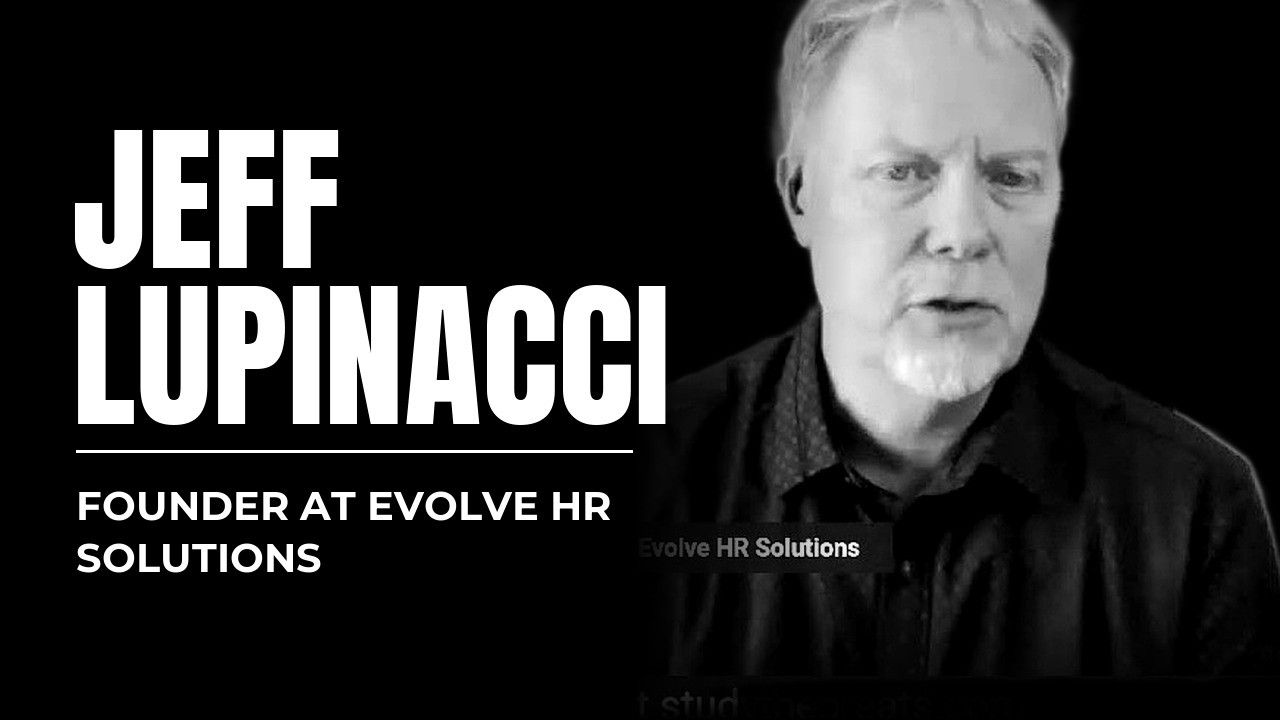
Jeff Lupinacci left 30 years at Intel and Kimberly-Clark to start Evolve HR Solutions, an executive search firm for private-equity-backed companies. He replaces CEOs and CFOs in distressed deals at a 90% rate and offers a 12-month replacement guarantee with a 90% retention rate. He sees AI as a third workforce that will reshape manufacturing over five years.
Chapters
Welcome to another Founder Wisdom pod. We have Jeff Lupinacci with us today. Jeff is a founder at Evolve HR Solutions. Uh, it's executive search for HR, finance, commercial, and operations leader. Uh, he's former global chief talent officer at various prominent companies, also an author and a Baylor EMBA professor in Dallas-Fort Worth. Jeff, welcome to the pod. Tell us a bit more about yourself.
Hey, thanks, Charles. Really appreciate you having me on the pod. Uh, spent 30 years in the corporate world— Intel, Kimberly-Clark— finished up my career as Chief Talent Officer in a private equity-backed company, especially materials. And almost 4 years ago, I decided to go out and do the entrepreneurial journey, started from scratch. So it has been, uh, quite the, quite the journey, right?
And you've been in corporate for some time, you know, we're talking about that prior to you launching your own company. What prompted you to launch Evolve in 2023, or post-COVID?
Yeah, um, you know, I, I, uh, I had spent, oh, 20 years in human resources, finished up was in integration work. So I was doing M&A last couple years of my career. And then the interest rates started going up and the M&A activity just dried up overnight. And so I sat down with my CEO and said, all right, what's next? And he said, well, you could be CIO. And I'm like, yeah, not really feeling that. So I took the package and I said, well, let's go start something. And, uh, I have plenty of friends that were in the executive search space, and so I thought, well, let's, let's do that. I know how to find and identify really great talent. Um, and so that's how Evolve was born.
And how do you get both ends in your pipeline? One, like the very promising and talented humans, and two, the companies that want these talented humans?
Yeah, so I spend a good bit of time just reaching out to people and spending time talking to them and learning about who they are, what their background, what kind of culture fit they would survive and excel in. And, and then have just built out my, my network from there. And of course, on the business development side, for me, it's, it's, it's all about building the, the deep relationships. I am not one of those that just gonna churn and burn through, through clients because that, that's not, uh, that's not really helping them. I want to get in, I want to learn their culture, I want to learn who they are, what they're looking for, and I'll, I'll, uh I'll reach out. I've built quite a big network. One of the areas that I've actually really enjoyed meeting folks and building network is right now, certainly the last 2, 3 years, there's been a lot of senior leaders that have been in transition. Not any fault of their own. A lot of companies just have been cutting layers and reducing headcount. And so when I find those leaders, I have a networking group that I specifically focus on senior leaders that are in transition. And so that's where I get a lot of my connections, because you know what, they're all going to land in senior jobs. And at some point, they're going to need some help with talent, whether it's on the talent development side or finding the best talent.
So in the manufacturing space, that's really common, right? Do you work mostly with private equities, by the way, that Do you mandate it for manufacturing?
Yeah, private equity is a big part. And we do work with some Fortune 500s and family-owned business, but most of them tend to be portfolio companies.
Okay. And when you say transition, right, are you saying cutting out people and finding new ones or just cutting them? Like, what's—
Well, yeah, a lot of companies will cut them. Uh, you know, just to save costs, right? And, and so those in the— it's, it's the, it's the politically correct way to say they're out of, out of work. So the nice way—
so you have the crappy job to be like, hey, sorry, is, is that you? Is like when you get an email from HR, do you— how do you manage that like, uh, psychologically, right? Your nervous system. Isn't it super awkward to fire someone?
Oh, you know, I have unfortunately had to fire my fair share of people. And it was, it was, it's the worst part of the job as a manager. And I did it when I was in HR, but I also did it as a manager previously. And it's just, it's no fun. But here's the thing that I've learned after firing a lot of people. Is 99% of them land on their feet and they land into a better situation. Can't tell you how many folks that I've let go who ended up getting promotions and who are now thriving in just a different environment. So I, I kind of look at it as, uh, not rejection but redirecting, uh, them to be a— to be where they could be more successful.
Okay, and talking about top talent, what are the questions that you ask them and what cues are you looking for to see that they're top talent and they, they can really— they're different, right? They're, they're part of the 1%. Like, what cues do you look for and what do you ask them?
Yeah, you know, I think, I think there's, um, a, a couple of questions that I, I really focus on. It's like, um What, what have you accomplished in your last role? I don't want to know what your job responsibilities are. I mean, that's what, that's what most resumes talk about. But I want to know, have you delivered what the company hired you originally to deliver? So that's, that's most important. What, what measures of success? Did you grow revenue? Did you reduce costs? Have you built a team? Have you built a better customer experience? And then, you know, third is I really dig into what kind of culture brings the best out of them. Because what I found is you can have a superstar and you put them in the wrong culture and they're going to fail. I mean, you can see this in sports teams. How many, you know, superstars say in basketball or football or you know, hockey, whatever, uh, in one team they're, they're great, and they, they move to another team, get more money, and all of a sudden they, they struggle. And that's a, that's a culture fit.
How do you get your clients? Uh, I think you said last time it's mostly referral for, from your decades of experience in, uh, the corporate world and HR. But do you have like a machine to bring new clients that you don't have prior relationships with, uh, on autopilot?
You know, I, I have, uh, I have tried some of those AI tools that will do the, the outreach and cold outreach, and what I found in my business is most, most people want to work with someone that they know and that they trust. And so I have just over the years just built that relationship. I've had lunch with folks. I'll— I've written two books, so I send people my books and say, hey, look, you know, hey, thanks for having a chat with me. Here's a copy of my book. And then every month I'm just— you know, what's on autopilot is every month I'm reaching out to the individuals who I have made connections with. And, um, and I'd say, you know, 70%, you know, maybe it may be 3 months, 6 months, a year, but, uh, they, they come back and they, they, um, uh, they, they want to do business with me. And then once they do business, then, um, you know, I have like a 95% repeat business once I, once I find—
and let's say the private equity firms, they're the main guys hiring you, right? And, uh, how much, uh, manufacturing facilities or companies can they acquire a year and put you on, right? And will they fire pretty much like the C-level every time? What percentage of the team will they fire? Give me like numbers here.
Um, you know, really depends on the PE firm and it depends on what they bought the, the company to do. Um, you know, if, if the company is distressed and PE's getting in as a— with a good deal, it's probably 90% they're firing the CEO and CFO to start with. Um, if the company is currently successful and growing to higher percentage, you know, maybe, maybe 60, 70%, where they actually keep the leadership team. A lot of times they're buying the leadership team with it. So it's not as easy as he comes in and half the time the, the CEO's gone. But, uh, that does, that does happen quite often. And once they get rid of the CEO, then, then the rest of the C-suite ends up, uh, getting getting let go at some point.
Okay, got it. Um, and they have a playbook? It's almost guaranteed that they'll let go of the CEO, or it's like half of the time, or, uh, if they're buying distressed companies?
Yeah, it's, it's most of the time they're gonna, they're gonna let this—
and they only buy distressed companies, most PEs, right? Like, it's pretty rare that—
no, no, no, they're looking for value, but that doesn't mean that a company is distressed. So, you know, for example, I work with one company and they decided that they were going— it was a good company and they started with it and then started buying smaller companies that they built, tacked onto it through acquisition and made a bigger company. And in that case, You know, they kept the CEO and, and, um, you know, they've been, they've been growing, growing ever since.
So are most of your talent roster CEOs? Is that who you speak most of the time with? Or—
I am, I'm speaking with, uh, CEOs or, uh, heads of HR. That's who I tend to interact with most.
Heads of HR on the company side, that, uh, Okay, yeah, yeah. But aren't— isn't like— aren't PEs the main decision makers, like, in the equation?
If, if it's for a CEO or CFO, yes.
Okay, got it.
But if it's, if it's for anything, anything else, it'll also depend on the, the PE. You know, some, some PE firms have, uh, T, talent teams, HR embedded in the, the PE, and they're, they're doing all the, all of that search. But, but there's a lot out there that, that don't really have that capability, and they'll, they'll tap into me when, when they need that help.
Got it. Um, the PEs, do they acquire companies throughout the states, or are they most of the time focused in one specific, uh, state?
They focus more on industry. Not, not state.
Okay. And do you have specific manufacturing, uh, industries you're specialized in? I don't know, metal or electronics? Like, uh, which, which one's the most prevalent right now?
Yeah, so, um, a lot of industrials, um, so some special materials, some, uh, non-woven materials, all most of them are all playing into the industrial space. I do have some food and beverage that I deal with and a little bit of construction.
Got it. Is that industry exploding because of reshoring nowadays?
For sure. Definitely. You're seeing a lot of movement from Asia, especially the high-tech technology companies are— you're seeing definitely a lot more onshoring, pulling away from the Vietnams and the China, right?
And in Texas specifically, uh, is it, uh, what are you seeing on the manufacturing scene? Uh, weren't there like some Giga factories being built there?
Yeah, it's definitely some, uh, uh, Gigafactories, batteries, um, a lot of, uh, data centers are being being built in, in Texas right now.
Okay, got it. So, um, no, that, that's super, that's super intriguing. Um, so the, the model you— how do you manage like all these, uh, these candidates of yours? Like, what if the SEO has an existing job? Do you take them out of that job? Uh, do you still reach out to them? Uh, what, what happens there?
Well, um, if, if I have a asserts, then I, I will, um, I'll certainly reach out to anybody as long as they're not an existing client. So, um, you know, I, I do make sure that I'm not, you know, poaching, poaching good talent from, from folks who I've done business with. Now, if, if it's been a couple years and, and I can't, can't seem to get any new business, I have no problem, you know, uh, coaching some folks.
But, and how do I evaluate your performance? Find a PE, uh, you refer me CEO, I try them on, uh, how much— what's your, what's your strike rate? You know, like, is it always the good CEO at the right place? What are your metrics? And how do you know if the, the CEO is not good, right? Do they give them a year? Do they give them months? Like, what what happens there.
You know, I think it— I think a lot of it will depend on how well the CEO is doing once they get there.
But your, your strength, your mojo, your specialty is like finding that or previewing that fit, right? Like seeing the future. How do you, how do you make sure that the fit— I mean, you said culture, right? But is it fully culture? Is there other things?
Well, there's, there's culture and then, and then really understanding what the company needs and layering in, has this individual delivered the results that the company needs previously? Because that's a really good indicator if they'll have success in the future. And my, my hit rate, but I have a, I have a guarantee that for senior leaders, it's usually a year, you know, up to 12 months guarantee where I'll replace someone without, you know, without any additional fees if they don't succeed. So, I'm pretty confident. Most folks that I place, I'd say 90% are there, you know, definitely after 12 months and usually longer.
And what's cool about CEOs is I guess they're, they're the head honchos, they're fully accountable, and you, you can quickly see if they're gonna perform or not, right? Of course, in manufacturing there's cycles, uh, so you gotta give them time, but when do you know that it's time to pull the plug and they're not meeting the objectives? Sort of my question.
Yeah, I, I mean, it, it's, it really depends on, um, how bad the company was when they first jumped in., right? But, but usually within 6-9 months you can see, has the, has the, the progress been, um, substantial, uh, going in the right direction?
Do you feel eventually that most humans, or not, I mean low performance or entry-level humans, will disappear and robots will replace them, uh, and say 10-15 years from now, granted that robots will be capable of doing most things that we do today.
And I think we're already seeing, uh, robots being heavily used within the manufacturing plants themselves. Um, but you know what, look, uh, 25 years ago when the dot-com boom started, everyone thought that the retail brick-and-mortar stores were gone. Everyone, gloom and doom, you're not gonna go to a mall, you're not gonna go to a strip mall, you're not gonna You're not gonna be able to walk into a Walmart. It's all going online. And what we found is, yeah, some of those stores closed, but there's been a whole lot of new innovation since then. A lot of online, a lot of social media influencers. I mean, all of that was born out of the dot-com. I think we're gonna see the same thing with AI and some of the technology that's coming out now is, Yeah, there's going to be, there's going to be roles and jobs that will be taken over by AI and/or robots, and there's going to be a whole host of new opportunities for humans to step into and, you know, just find a new way to add value to an organization. And so that's the exciting part right now. It could be scary if you if you're a gloom and doom kind of person. I, I really am excited to see what happens.
We're seeing some robots in, uh, manufacturing, but still the adoption is very slow, right? Let's say most businesses are headed by boomers, right? Or even PEs, they're— I mean, they're good at finance, but most of them are not so good at automating and tech and all of that, right? So the adoption tends to be pretty slow, but I feel that someone that takes this seriously could, uh, lead to very quick turnaround. I mean, the full tech is there, right? Like, oh, for sure. I had on this, uh, podcast various people that, for example, an AI camera that calculates what goes through your, um, your production chain, right, and spots inefficiencies. A software, like, I'm sitting behind my computer and it says that this employee is not doing their job and there's a bottleneck there and stuff like that, right? It's called Spot AI, if my memory is good. And I feel someone just like automating everything and really taking the time, like an engineer type of mindset, you know, like how the McDonald's brothers, the original ones, they were obsessed with like efficiency and every movement and all of that. I feel that someone obsessed with that can make tons of money in manufacturing. What do you think?
Oh yeah, for sure. What, you know, my latest book is actually talking about AI as a third workforce. We have your normal employees, you have your contractors dig work as your second workforce, and then AI is now your agents, your bots, your digital assets that are doing all this stuff. They're taking on real work, which is great, and you can get the ROI from it. If you're implementing it wisely, you can add the robots in. And the biggest question for companies is going to be, you know, do they have enough capital? And the beauty with AI is you don't need nearly as much capital as you used to. And so I think we will see over the next 5 years that that's going to really hit into the manufacturing Love it.
Jeff, thanks for being on the pod. Where can people find out more about you?
Yeah, you can find me on LinkedIn at Jeff Lupinacci or via my website, www.evolvehrs.com.
That was Jeff and
More from Charles




Founder Wisdom: the full audiobook (7 hours of quotes and stories from 600+ founders and CEOs)






