Marc Rust - Consequently Creative
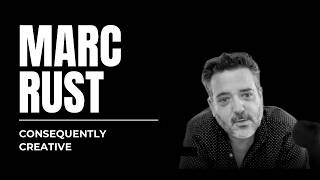
Marc Rust left JP Morgan after a 2020 layoff to start Consequently Creative, a branding agency for private-equity portfolio companies. He argues that AI can draft copy, but human research and insight are what actually move valuations. Clear branding and internal alignment, he says, can materially increase what a company is worth.
Chapters
Welcome to another VC Wisdom pod. We have Mark Rust with us today. He helps private equity increase portfolio company valuations and navigate change with brand momentum. So he's a managing director at Consequently Creative and today in Paris. I'm not sure what you're doing in Paris, Mark, but usually you're in Boston, right?
Yes.
Been to Boston as of late, great city, viva la Celtics. What's up, Mark?
I'm doing great. Thank you so much for having me on. It's, uh, it's wild. It's gonna be great.
What are you doing in Paris?
Uh, well, I, I'm actually half French, so my mother lives here. Really? And yeah, yeah, yeah, yeah.
So how does that feel?
It's great, you know, going back to your roots, seeing your old friends and stuff. It's the best.
Oh yeah? How were your old friends? Mine were pretty toxic.
Oh no, I don't know. For some reason, I have like 20 friends from like junior high. We're still in contact.
High school, not junior high. Junior high in France?
Yeah.
So tu parles français parfaitement? Ah, fantastic. Because you don't have like an English accent, French weird accent, right?
No.
I still have some of that.
It's the best.
Yeah, that's weird. Why? How come?
Because I learned at such a young age that, um, you, you lose the accent at some point. And it's great. I mean, when I— it was— it's great when you want to fake something, you know, because people would never think I speak French, and when I speak French, they'd never think I speak English. So I could just totally, you know, fake it.
Yeah, you're like one of the first guy that I speak that doesn't have that accents in either, which is weird. Um, tell me about yourself. Uh, you were creative director for some time and then decided to launch Consequently Creative.
Yeah.
Why was that?
Um, I, um, hold on, I got a call. Sorry, terrible timing.
Are you coughing on me?
Sorry. I know I have a button for coughing.
Coughing on us. That's when you get nervous, right?
I know.
Damn it.
Now I lost the voice.
Dude, have some water.
I know. One second.
Happens every, every, every 20 podcasts.
All right. I promise it's not gonna be this bad. Okay? There you go. How did I start? You know, I've always been driven by creative.
Yeah.
And from childhood, I think it was honestly going back to like language and stuff. When I came to France, I was American. I came at the age of 9. I didn't speak a spit of French. And I would, I discovered that commercials on TV are easy to understand no matter what the language. And I didn't speak French, so I was learning. I was going to bilingual school and stuff like that, but I would go and watch TV, and when the commercials were on, I would be like, oh my gosh, this is great! I under— finally understand what's going on without understanding the language and stuff. And I was so crazy about them that my mother would call me into the room when commercials were on, and then I'd go back and play in my room when I was a kid.
Oh man.
And I feel like I learned French through marketing, but at the same time I learned this amazing power of marketing, which is the magic of marketing. When you combine a message with music, with video, with photography, you create magic. You create something that's amazing, and we all have favorite ads, right? You have these ads with billboards that you see, and you just can't ignore it. You look at it and you're like, oh my gosh, it's amazing, you know. And then a few years later when I was a teenager and I started putting posters on my walls, you know, I probably put posters on my walls because the typography was really cool, because it was sending a different message using all these different elements. So, you know, then that went into like obviously school and all that. And then, uh, I, I actually started out in the finance industry, like you know, working for financial firms.
JP Morgan.
Yeah, JP Morgan, Putnam Investments, stuff like that. That was always like, and still in marketing, you know, still that kind of like, how do you explain something super complex?
You helped contribute to the student loan crisis, right?
Oh yeah, absolutely. Yeah, yeah, yeah.
That was— Shout out to Mike for that.
JP Morgan, Chase. Yeah, yeah, that was great. That division doesn't even exist anymore. They're still in one division.
I think they would get sued.
Uh, no, but yeah, that, that. And then finally, um, you know, one day I finally jumped out of it and, and was able to start working for agencies as a creative director, and then now my own thing.
And then what took you so long to launch your own? I think every entrepreneur is asking that same question, or every like entrepreneur that started in entrepreneurship, because the past podcast guest, the same, she had a long career in corporate, right? But, and the answer is like, oh, I had golden cuffs.
Oh, really?
Yeah. I mean, you were paid $300K a year to, and you could tell your friend, oh, look at my big job and title, and you had everything. Why leave, right?
Yeah, I guess so. Yeah, yeah. I mean, I was never paid that, but yeah, yeah, yeah, I guess. I mean, I think that it's honestly fear. People are afraid of it. You know, doing something scary is uncomfortable. And being an entrepreneur is scary. Having to do, take the risk. I was, you know, talking to a friend today who was, you know, thinking about it and stuff. And I said, listen, you only regret what you don't do in life. You're not gonna be there at the end of your life saying, you know what? I never should have started my own company. I never should have worked for myself or been my own boss.
Yeah, because it's like 50% of your life. So I think everyone has some kind of version of that thought.
Yeah.
Working is like your full life. And if someone has agency over you, and you're not like, I think humans like control, because control is survival. Like you want to try at least once to see how it is to drive the full ship, right? And crash it because all of us get attacked from all sides and when we survive it and the ocean is beautiful and we see the sunsets, like, oh yeah, for sure, that's what it feels like. But coming back to you, fear, right? You started, um, Consequentially Creative in 2020, and during the pandemic, what pushed you out of comfort?
Well, frankly, I got laid off.
That's a good one.
I lost my job and I was like, holy shit, what am I gonna do? Yeah.
Um, after that I was just like a bunch of people, by the way, was like a lot of people lost their job.
I got pushed out of the nest. Okay. It's like the baby bird, you know, I didn't want to—
That's the danger of corporations and 9 to 5, right? That's— yeah, they can lay you off at any time.
Yes. In the United States. Yeah, absolutely.
So how do you find comfort in that is my question.
You don't. Well, yes, you don't. Oh my God. I mean, I don't know. I think that, that I, I think getting laid off or fired is actually good because it builds character.
Oh yeah.
It teaches you something.
Um, it's traumatic also.
It's not to be all preachy and stuff, but honestly, you only learn in life through pain and experience. Yes. Okay. And you know, uh—
Experience is pain.
Yeah. Well, depending. Yeah, exactly.
Yeah.
So, so it's really tough, but, um, you overcome the— sometimes it takes a long time to overcome the pain because you need to switch gears, and switching gears is not easy. It's not about, oh yeah, now's the time to go, and, and you can't just go from corporate job to entrepreneur overnight. You really have to switch gears. You have to think differently because there are so many things they're going to tell you you can't do it. And by the way, it's easier to not do it. Yeah. It's easier to go and look for a job and find another job and I'll do all this stuff. It's harder to start finding clients, pushing yourself, believing in yourself and doing it. That's really hard.
Yeah, the analogy is like, it's easier to continue eating ice cream. It's harder to start a 2-day or 3-day fast, which would be entrepreneurship in that case, right? Fasting is better for health, obviously. But yeah, numbing, right? Like humans numb themselves a lot. Lot nowadays, right? And I feel they avoid pain. Well, if you work out, right, like pain is muscle growth, it's a buildup release, I would say, right? Like as an entrepreneur nowadays, I have very heavy days, and when I do sports, it releases all the buildup, and it's like, oh, I can chill now and just like be less war mode. Um, the next logical question for you is like, How's it been? How's the track record showing so far? How's been the adventure?
Great. But I mean, I think since I've done it later in life, you know, I guess I kind of feel that you really have to have— you have to think correctly in order to be successful. It's about your thoughts. It's a very, you know, you become what you think about. And I really, really believe that. You know, I mean, there's times where I was at networking events and people are talking about things and I just walk away. You know, I had a really good friend of mine the other day saying, oh my gosh, you know, I'm having so many issues with AI. AI is very difficult. You know, it's taken away so many jobs. So much creativity is going into AI. You know, what does it feel like for you? And I'm like, I don't— Mm-hmm. Want to talk about that. That's not my battle.
What is your battle? You know, not coughing?
Well, you know, I, I— yeah, yeah, coughing.
But bro, walking away from someone, like, I could never do that.
Well, I mean, like, I'm not like that rude, but I— you, you, you, you—
first off, I never show up to a networking event I wouldn't control because that makes you a potential target for someone like that, which obviously some of them deserves to be walked away from. But I mean, I did that when I started my career and I never even got one fucking sale out of 20 networking events. That was pretty ridiculous.
Really? I guess.
And I'm good at talking and selling.
They're tough, but you have to know why you're going. I mean, you know, For sales. Well, yeah, but if you go to something just for sales, then you're so eager that people are gonna run away from you. We've all been to networking events where you have that guy that's just like, oh, I do this and I do this and I do this and I do this, and you're like, okay, dude, I just wanna have a drink and have a good time.
Bro, he slips a business card in your pocket.
Yeah, exactly. Yeah, you get home, you're like, what's this stuff?
And then he's like 5 glasses in, and that's the moment you know you need to run. Not just walk away, run.
Exactly.
What's your problem? You said AI is not your problem. What is your number one problem?
Right now? Well, I mean, I think everybody's problem is how do you consistently sell?
Sales are difficult. Podcasts.
That's—
yeah, that is— I'm the annoying networking guy to you.
Take my business.
Sure.
Okay, sure. Yeah, I mean, that's definitely our next goal, is, is to start a podcast.
It's genius. Yeah, I mean, you speak to your ICP like 10 times a day, you get smarter, you have conversation, you have fun, you make content, and on the back end, like, hey, can we work together? Um, yeah, sales is freaking hard. I spent the last, like, 10, 15 years trying to hack it, and it's really hard. Even nowadays, right? I would say probably one founder out of 100 knows how to close, you know? Even if I would give them like 100 leads per month, they wouldn't be able to close one because they're just clueless, right? And especially, I'm not saying it's the case with you, but like, if you come from a corporate background, you rarely had to sell. Something. Yeah, you had to sell yourself, and corporate, that means a lot of time being political, right? And kissing this guy's ass and being strategical. But the founder world is just like explaining something in utter simplicity. And even before you explain it, it's asking great questions and seeing if there's really a pain, right? That's what sales is about.
Yeah, but also, I, I, I feel fortunate that, you know, I, I, I'm selling something I'm extremely passionate about.
Which is?
Creative. Before all, it's creative. Okay, consequently creative. I mean, we want to do creative stuff. We want to do things that we uplift brands, we make them look better. I mean, obviously our, our niche market is private equity. We, we help private equity companies after they purchase a company, we say there's a window of opportunity where you can celebrate that company and amplify its voice, make it look the part, make it updated, make— give internal alignment, all the things that are giving people to believe, reasons to believe, right? And that actually amplifies the value of that company. That's— we can prove it. But we do it by being creative, saying things that are fun, Being clear, you know, trying to find that perfect word, trying to find that, you know, back to what I was saying in the beginning, that magic that, you know, makes people notice you. There's nothing cooler than that. You know, you want people's jaw to drop, and that's the challenge. Not everybody can take a brand and turn it into something remarkable, give it a story that you can't ignore.
Yeah.
Or give it a story that you're going to repeat to somebody else. It takes talent, and it takes hard work. I love that. So, so at least I'm creating— I'm selling that rather than saying, hey, I'm selling shoes. Not that I'm not trying to beat up the shoe salesmen that are listening to this podcast every day.
Shout out to Phil Knight.
Yeah, exactly. But, you know, I'm selling something I believe in, you know. I feel bad sometimes for, you know, some of the SEO people because it's very run-of-the-mill. It can be unless you find that absolute creative way to stand out. And I said creative, you have to use creative.
So Steve Jobs, is that the number one example to a guy with good simplicity and hooks and great ads and billboards. Sure, I see what you're saying. And does that model scale over time? And I mean, can't help the question, can an AI do it? Like eventually if I prompt an AI, or is it only a human thing in which we have a huge database in our minds and we've done so much and we just know that this will work out there because we're so connected? Is that reproducible by machine or not?
Um, we don't yet know. But let me— that was one hell of a long question. Let me answer some— like, can I cut it up? I mean, Steve Jobs and Apple is something that was nurtured over years and years and years. Okay. It also had in most of its existence and most of its development, one person with one vision. Guiding the light, you know, one kink. Okay, he knew what he wanted.
And what— One asshole.
Yeah, one asshole. I mean, what one of the asshole moves was that people begged him to put two buttons on the iPhone on the front, one forward, one backwards, one forward, back. He said, you have to have that, I'm begging you. And the guy was like, no, we're gonna have one button on it. And in the future there's going to be nobody.
Yeah, there you go.
Okay, I mean, he— that, that's very difficult to work with that person. So that— but, but he's a visionary, and can you really compare that, you know? Um, I don't know, but it's nurtured over time, over time. But going back to what you were saying about can a machine do that, I'm not sure a machine can do all of it. AI was still at the beginning of AI. In the sense that when microwaves came out, everybody thought that microwaves could cook everything, right? And, and now we're discovering, years later, we discovered, okay, microwaves are good at reheating stuff, good at cooking some things, popcorn, but you can't do a steak with a microwave. Okay, so now we understand, okay, microwaves is part of the future. It's not all the future. So same thing with AI, we're gonna find out a time where, okay, AI's good at this, very good, it's not so good at this, you know, and we'll have to do other things.
I'm more of a crockpot guy. I have a steak cooking right now, it's gonna be delicious. Steve Jobs, I think this guy's genius was like simplicity, right? So you were talking about the early posters in your room. I hope there wasn't too many Playboy posters in there. But just the simplicity, right? 3 words and finding out which words would resonate. And sometimes Steve would call his execs late into the night for 1 hour to discuss about 1 word in that ad, right? So do you also obsess over that? Like, what's your process to get like the full essence of a brand, the customer, and come up with something genius that will get gets the mouths to drop?
I mean, now in this like period of oversaturation of information, the time period we live in, it's very difficult for a brand to have a voice and you really have to be talented and work hard. For us, I mean, the simplest answer to your question is that it's bringing clarity. So many brands are unclear. Because they have these clever turns on words or clever taglines that honestly don't mean anything, you know.
Means something to them, but for most it doesn't, right? Isn't that just a statistic question of like, here's how the market speaks and that's not how you speak? Like, it's—
Yeah, absolutely. I mean, you know, Your audience needs to understand things in their words, you know, not yours.
How do you discover these words? Do you interview your clients? What if you never spoke to that specific ICP before, right? Like if I tell you fintech founders, right? I'm not sure you've spoken with thousands of fintech founders.
No, but you need to go out and find them. You need to go out and find them. We have to talk.
Or can't you ask like a GPT to do the deep research for you and scrape the keywords that they put on their LinkedIn and whatever? And talking to their words?
Sure, you can.
Yeah.
And maybe it will work and maybe it won't. But I've had companies that have taglines that don't mean anything. You know, you have things like, you know, "We believe in quality and we deliver the best." Oh, that's good. All right. Well, what does that company do?
Mission-oriented.
Yeah, I mean, that could very well come. ChatGPT can spit out fantastic headlines, don't get me wrong, but you still need to have somebody behind that who says, okay, I pick this one because it makes sense. But also you need to bring your audience into the group. I mean, nobody should do research just through AI. You do research with your audience, with the people who are actually gonna buy it. You need to humanize it. And I think that, you know, I'm actually quite happy with AI because there's never been a time where being more human is valuable, where being more creative is valuable, and— or digging deeper is more valuable. What, what AI is doing is fantastic, okay? It's elevating the, the plateau. It's making what was difficult in a lot of cases Easy, right?
Yeah.
But we all know as entrepreneurs that nothing is easy in life. Easy is bullshit, okay? An easy tagline is not a good tagline because it's gonna— if it's easy for you, then it's easy for the guy down the street who has the same company. And then how embarrassing is it going to be when you guys both go to market with the same idea and the same tagline and the same way of talking about it? It evens the playing field. So it's good for marketers and consultants and agencies and stuff like that because it allows us to dig even deeper and it will sift away the talented people from the people who are kind of talented. Kind of talented will not cut it in the age of AI.
That's bad news for— India and Philippines, I used to hire a lot of folks there and like they're 7 on 10 nowadays is being challenged, but I think it's like you said, levels up like the full playing field. So think like they're gonna do better as well, statistically. The next step after talking with the ICP, find out how they speak, right? By the way, the best way to do that would be podcast in my opinion, such a low-hanging fruit.
Yeah.
Is it like finding out where they hang out? And then deciding on the types of media you would expose to them?
Yeah, absolutely. In my case, I go to private equity conferences. I, you know, I follow them. I meet with them. I, sometimes I'll go to networking, not for sales. I go to networking just to find out what they're thinking about. Saying, hey, what's difficult in your life right now? How do you guys get clients? How do you guys find the companies that you want to purchase? What makes you make the decision? What happens to the owner of that company who's selling the company? What's his experience like? All these really, really interesting questions. And now you're engaged in a really, really cool conversation where you're learning things firsthand from people that you could never learn otherwise.
Yeah, with private equity, the challenge that these guys use all kinds of financial terms, right? And the people that are selling their business or buying, like, don't, have a clue of what these fucking things mean, like EBITDA and all of these things, right? Is that the main challenge or something that you're finding out with your ICP nowadays?
Sure. I mean, you know, within the private equity world, I'm not— we're not interested in everybody. I mean, there's definitely a bad rap in private equity of people that are, you know, just buy a company, trim the fat, and sell it. You know, that's not my customer. I'm not— my customer is somebody who's going to buy a company because they see value in it and is there. It's actually a focus that they're good at. Then they're going to nurture that company over time, maybe merge other companies with it, and then find a suitable buyer over time, right? That kind of thing is far more interesting because you're celebrating the company, you're building a good culture, you're making sure that people love their jobs, you're attracting the right people. It's about the overall growth. Yeah.
And if that's your ICP, then a lot of your job becomes revamping websites, I must guess, and like LinkedIn outreach or LinkedIn content. Is that like most of your media?
I mean, that's part of it, yeah. But no, the overall thing is— What else? Email? Newsletters?
Sorry? What else? Email, newsletters?
No, sometimes they already have that. What we do is we help with the alignment. The internal alignment of the company. Oftentimes, the internal alignment of the company is out of line. It hasn't been looked at for a long time. Sometimes these companies have been purchased and sold several times. So there really is no internal understanding that is linked up to the overall institutional goals of that company. So when you get a good internal alignment, Well, your outcome's far easier. Your sales are going to be easier. Then you're going to know exactly what to do with the, you know, LinkedIn, with your emails, your outreach, and all that stuff. Don't— that becomes the symptom at that point. But the cause is correct alignment.
So you start with internal documents is what you say?
Yeah, absolutely.
How weird is that?
Well, not just documents. We start with internal understanding what they stand for.
Okay, across like the full team, which is like 200 employees most of the time, or—
Well, no, we would not— not the 200 employees. We, we pick the—
Just the execs?
Well, not— no, no, no, some execs. It needs to be a fair mix from each department, a good mix of people, so you get an overall understanding of what the company stands for, from the junior developer all the way to the, the CEO.
Interesting.
Because ultimately what you're trying to do is you're trying to find that company, not necessarily the person who's worked at the company for 10 years. You're trying to find that person that cares the most about the company.
Right.
And you say— And it might be somebody who's kind of quiet and never spoke up before.
Okay.
And you need to give that person a voice. And finding that person is pretty difficult, but You get to it over time.
And 80% of your clients are private equity?
Yeah.
Interesting. Internal documents, and that spreads out organically across the company. So like you're saying that each employees are sort of walking billboards, or the accountable ones at least.
Yeah, we like them to be, I guess. You know, it's about understanding why people are passionate about what they do and amplifying that, trying to find the values, the common values within a company, because the more you can have those common values, the more you can have people focused on the same effort.
And what do these big boys pay you? Is it like 6, 7-figure contracts a year for revamping their brands?
It depends on the project, really. It depends.
I mean, you know, but why did you go after private equities? Because they— these guys have cash, right?
No, not necessarily. I mean, I, I'd love to— for them to have cash. I mean, but, but we went after private equity because I had a— I realized that I had a good understanding of finance. I had done a lot of finance. Why is that?, and I was bringing in—
Oh, JP Morgan, yes.
Creativity to it, and you know, I also feel that it's an underserved market, and I have a provocative point of view when it comes to it.
Hmm, is it common for banks to hire brand people like you?
No.
Or creative, right? It's not common, right? So what, you're like a special ops type of guy, and then they shut the division down?
No, I mean, I think that it's, we're not for everybody. We're there for the company that cares, that has a vision of like, you know, we're not just buying a company for its monetary value. We're buying it 'cause we believe in it, you know? We're buying it because what you think is important is actually something else. You know, like going back to Apple, for example, you know, you may think that the Genius Bar at the Apple Store is about repairing your phone, helping you work something out, figure out how to do something with your computer or something. No, for Apple, it's there to maintain the relationship with the customer. It's to make the relationship with their products a healthy relationship. That's why they have a Genius Bar. The public doesn't know that, but that's the reason. You know, they have a deeper understanding of what they're doing. It's not all about the money. It's not all about, um, the next sale. It's about ingenuity. It's about initiative. It's about so many other things. And when you start opening that box, of having different definitions for things beyond the monetary value or the market share, let's say, then you start having a richer engagement and relationship between your audience and the product or your audience and the service, your audience and the company. And, and over time, value is being built.
Interesting. Why don't you do VC? Why just PE?
No, well, I mean, the, the PE world around— I mean, of course VC, sure, absolutely. You know, we've done VC in the past.
And how would you expect these guys to behave differently from PE guys?
I don't think very, very differently. I, I, I, you know PE tends to be our niche and our focus because we have a lot to say about it. But what we do could apply to, you know, many industries and audiences. I mean, it's ultimately about finding clarity in a brand and value and expressing that so the audience understands it.
Right, yeah, PE are a bit more legacy, VC are the cooler boys, but VCs make less money nowadays, I would tell you that as one myself, right? I've analyzed the market extensively. Yeah, PEs are a bit more disciplined nowadays. Mark, where can people find out more about you and your brand?
Well, you can Google me, Mark Rust, so Mark with a C, R-U-S-T. And other than that, our website is Consequently Creative, and we're pretty active on Instagram and LinkedIn. And yeah, we're available.
This is Mark and Charles from another
More from Charles




Founder Wisdom: the full audiobook (7 hours of quotes and stories from 600+ founders and CEOs)






