Nick Patel - Founder and CEO at Wellable
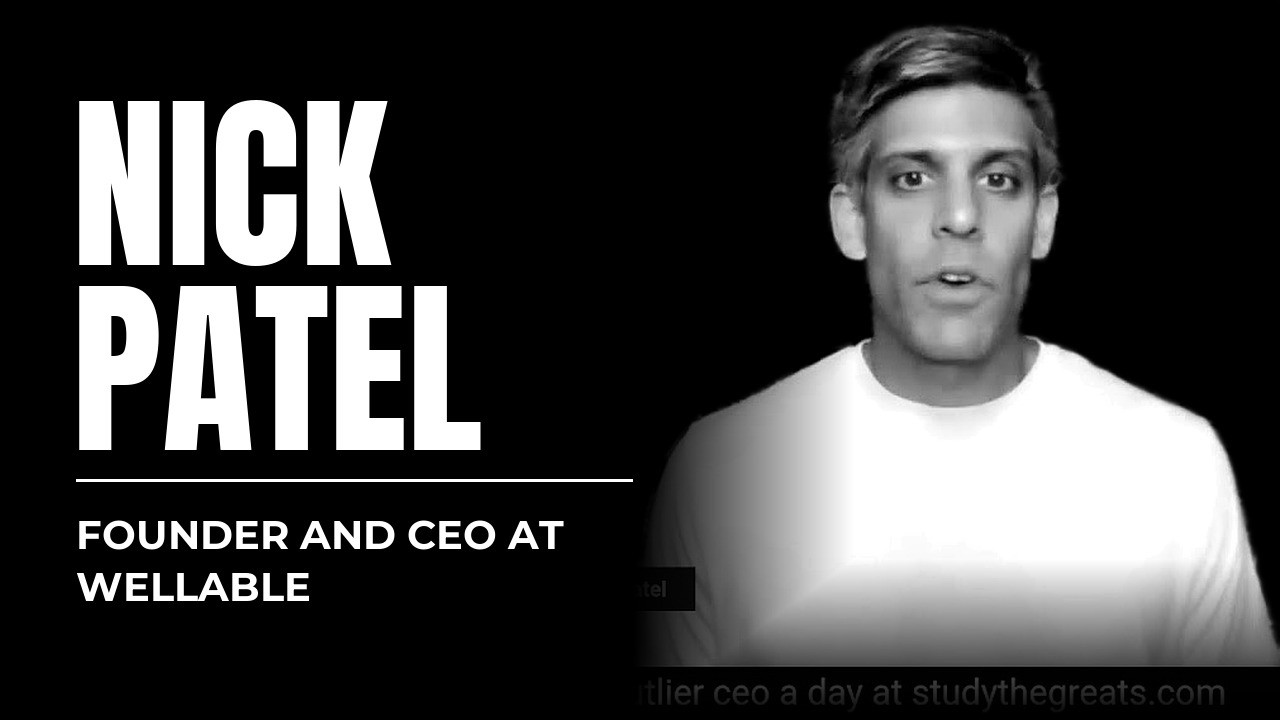
Nick Patel built Wellable, a corporate wellness platform, by bootstrapping and growing 30-50% annually instead of chasing VC hypergrowth. He aggregates data from Fitbit and Apple Health into a points-based system, betting that healthier employees cut medical costs and turnover. The ex-investment banker started solo after his co-founder quit, relied on inbound leads and broker referrals, and just launched outbound sales in 2026.
Chapters
Welcome to another CEO Wisdom pod. We have Nik Patel with us. Nik is the founder and CEO at Wellable, very successful company. From our last talk, he's been at that company for almost 15 years now. So, uh, Nik's gonna explain what the company does, but, uh, I very much like it. It's, uh, it's related, uh, to workspace, uh, well-being, I would say. And, uh, it's, yeah, corporate, corporate wellness software. Nick, welcome to Bond. Tell us a bit more about yourself and what Wellable does.
Yeah, thanks for having me on. We're like you said, we're an employee well-being company. And so the thesis around this market is that if an employer keeps their employees healthy, happy, and productive, they have a financial gain, right? Lower medical expenses, more likely to be retained at the company. So lower turnover, general job satisfaction, you can kind of go down the list. And so the question is, how do you create a platform that can help support a culture of health at a company? And that's what Wellable does. So through integrations, through apps and devices like Fitbit, Garmin, Apple Health, things like that, we allow syncing of activity data and nutrition data and things like that into employee accounts. We have our own proprietary health modules around sleep, productivity, happiness, right? Gratitude, how those like unique dimensions of health connect to health and well-being.. And we award these Wellable points and employers can effectively incentivize employees to engage in these healthy behaviors, improve their health, help the company's bottom line, and just create a better place to work.
I've seen a lot of CEOs or founders try to scale these companies. Most weren't successful in that space. What do you attribute your success to? Is it grit? Is it, yeah, your long-term mindset? Because you've been doing that for 15 years. Tell us a bit more.
Yeah, so I don't know, you're right in the sense that the two things that are very unique about this industry are one, it's more fragmented than any industry that I know, right? Especially in the software market. So one person who's like an elder statesman in our kind of like industry one time told me that there's 600 companies in the US, employee wellbeing companies in the US that have $1 million in revenue, just to give you a sense of how fragmented it is. I don't know if that number's right or not, but like directionally it's correct. I always run into these new companies that I'd never heard of that were like Dayton, Ohio or someplace like that. And so it's highly fragmented and there's a huge graveyard. So despite that fragmentation, there's a huge graveyard, um, of companies that were especially VC-backed that tried to, um, take the classic like Silicon Valley growth playbook to this market. And I think what's challenging about this market is that it's very attractive, it has certain dynamics, but it's not a hockey stick type market. Market, right? There are a lot of companies that, you know, are— most of the clients that we bring onto our platform have— don't really have a formal wellness program, and they've thought about it for some time. It wasn't a top priority. They eventually get to it, and so the growth is kind of steady. And so we see that in our kind of financial histories that we've had— I think it's closer to 14 years, but 14 years of steady, consistent growth that's gotten to where we are. We didn't come out the gate with like 500% and like 1,000% growth or something. It wasn't like a land grab market where in the traditional SaaS playbook, you can like support a bunch of losses by just, you know, grabbing as much land as you can into and become the dominant player. And so the VC companies that are in the graveyard went to that model and they found that the market doesn't turn over quick enough, right? There's some greenfield opportunities and that's great. There's some turnover of like legacy vendors to new vendors, but you're never gonna see this probably expected super high hypergrowth scenarios, but you can have good, strong, steady returns and growth. And we just believe that thesis. And when we got into it, I think we appreciate the market dynamics early, and then we built the acquisition model, the growth model around what we thought was you can grow 30 to 50% a year consistently, but you're not going to go— it would take a lot of capital and probably not wisely use capital to grow, you know, triple digits every year.
So you've never raised fully bootstrap?
Pretty much, right? So the, um, in 2019 we acquired a company by issuing equity and they had some cash on the balance sheet that we effectively took in. So it was, we never went out with like a pitch book to go out and raise capital, but in 2018 as part of the acquisition we took in some additional capital. But our DNA has been largely, it continues to be a bootstrap company.
And to come back to that question, right, because 15 years, that's a very long marathon, uh, that you've run and the company is not always been doing well. There were some days that you were like, why am I doing this, right? Your patience, does it come from a deep belief into what you're doing and an obsession with health?
Yeah, so I mean, very personally, I always say this, you know, there's two types of entrepreneurs in my mind. And the more common one that we hear about maybe is that people who want to start a company, and the question is, where do they want to start it? And maybe they fall into an area that they have personal passion, maybe they don't. For me, I didn't really have a vision of like, I need to start a company. That wasn't a thing. Um, actually, when I first had the idea for the company, I was working at a job. I enjoyed that job. Um, I was good at that job. So I tried to start this company by convincing other people to do it, and I would serve as an advisor and help some funding. It's one of those things, you try to convince everyone to do something and eventually they don't do it, so you just go out and do it on your own. And that's what happened for me and why I was always interested in this company. Was really kind of my personal interest in health and wellbeing, a combination of where the consumer health tech market was. So we rewind back to 2013 when we first started, that market was when Fitbit was still nascent, MyFitnessPal was nascent, the iPhone was nascent. Companies were just coming out and saying, let's digitize a lot of these consumer solutions. Like the old MyFitnessPal is a digital version of like a food diary, right? And so all these things were coming out I personally found them super cool and interesting. I knew a little bit about employee wellbeing and thought those markets would benefit a ton to have that consumer-grade technology infused into those programs. And so I tried to get it started by getting someone else to do it and being like an outsider, but still a very involved outsider into that market. And eventually I just said, look, I'm going to go start it myself. So it's kind of, uh, it's definitely a passion project, but it was something that I eventually forced myself to do. It wasn't something that was like, I have to go start my own company. For me, I just wanted autonomy and like impact in what I was working on, and you don't need to necessarily start a company to do that.
Your background's in finance slash, uh, consulting, right?
Uh, finance. I was an ex-investment banker. Yeah.
Okay, interesting. So you've always got the numbers part right. Uh, you co-founded that one?
This company? Yeah. Uh, no. So I mean, kind of crazy story.
Solo founder.
So, but not intentionally, right? I actually wanted to have, so when I finally said I gotta go do this on my own, I started going to all these meetups to find a co-founder, right? I'm non-technical, um, to your point, like a finance numbers related business guy. I thought, let me go find someone else who can help build the product and help take it to vision. This is the time where meetups were cool, right? I'm not sure if they still are, but I would go talk to all these developers, right? I couldn't find a co-founder. It was hard. Like just intuitively you have to meet someone for a very short period of time, convince them your idea's good, convince them that you could be someone that they would wanna work with for a long time. And that's just hard to do. And then eventually through a friend of a friend of a friend, I got connected with someone in San Francisco and I'm based in Boston by the way. And we said, let's go do this. He was an Oracle developer. We both quit our jobs on the same day or had our last day on the same day. And then we said, look, let's take a couple weeks off and just relax and then we're gonna hit the ground running on the first of the month. We did that, by day 4 he was like, I can't do this anymore, I'm sorry. And so yeah, I'm sitting there, what am I gonna do? It was really challenging. I won't get into—
It's like, what do you mean you can't do this? We're day 4, that's like—
Exactly.
We haven't even got started yet.
Exactly, I won't air the dirty laundry or whatever you wanna call it, right? But it's, It's one of those scenarios where you would think, right, that all the things you would know, it's so much uncertainty when you start a business. But the things that he would want to leave for were things that are 100% known for us, right? At that time, as you can tell, day 4, he could probably predict that with some level of certainty. So I don't know, some people maybe have a dream, think they can do it, but I was planning to leave and move to San Francisco. And I was like, let me just wind down my lease cuz I didn't wanna buy it out and have that expense. And otherwise like it could have happened when I've already packed up my bags and moved. So better early than later. And unintentionally I became, uh, kind of a single co-founder or single founder. Yeah.
A single dad.
Yeah, right. Exactly.
Love it. It was struggle back then and look at you today, right? You've scaled that to what, 1,000 customers you told me last time?
Yeah, more than that, right? So on the subscription side, yeah, we're, yeah, we have a bunch of customers.
So looking back at this, what do you attribute that success, that uncommon success, right? Because 99% would fail. Like, what's into you that made it, uh, made the company successful as it is today?
I think a lot of iteration, right? You have a thesis on what you think the market should look like, you have a vision of what that product is,. And even like in the later years, once we were established, if you go back 5 years and ask me what our product look like today, and that's still like, you know, 7 years of history before that, I still would be off pretty wildly, right? And so come in with an open mind. You're hearing your customers, stay close to the customers. I was always, especially early on, I would like be involved with some customer success, right? I was still taking support tickets, not just cuz I, I needed to, right? I was like, I wanna stay close to the customer. They don't always tell you the next move, the next feature, but they give you that answer subtly. And you have to be very, very close to understand that. And we just iterated a ton. And each time we iterated, we kept the growth engine running. Um, for us, we asked all of our clients to pay us upfront for these annual subscriptions. That was helpful. We eventually had enough money to take on a little bit of like, uh, revenue-based loans to give us a little bit more lifeline, right? Um, and we got in, got the ball rolling and snowball growing enough to like keep it going, and we still try to do that. I still try to stay close to the customer. I think before we started this, uh, live stream, I was telling you I was flying back from DC, and we have an office in DC, but I also met with a lot of like channel partners and things where I don't think many people in my role would do that meeting. And it's not that like I want to do it because I'm trying to— I'm the only one who can advance our agenda. I like to do it because those individuals I talk to in a casual conversation tell me sometimes directly, sometimes indirectly, where our product should go. And I find that's really important to really understand where your fit is. And for the employee wellbeing market where there's not some hyper growth, the subtleties matter and you have to address and kind of resolve those subtleties every year to keep that growth engine running.
And to what percent of your success does account pain tolerance and chip on your shoulder?
I mean, I'm called Resilience, right? So another way of saying resilience. I don't know, I think pretty good, right? And I, you know, I have a lot of people who support me along the way from friends, family, right, et cetera. But I've always been, you know, there's two things that are true, right? One thing, when I first started the company, what I told myself was I was saving up money to get an MBA. So I went to go and start this company and I told myself, okay, this is gonna be my MBA. I'm gonna take the money that I've been saving. An MBA is 2 years plus like living expenses and travel and all these things. I will give myself 2 years to do it. So during those 2 years, like psychologically, I already felt pretty safe because I go, this is just my MBA. I felt confident that if it didn't work out after 2 years, I would go back to the job market. I would hopefully be able to tell a story of like, yes, I started this company, it didn't work, but I learned all this cool stuff. I was a good contributor to my previous companies. Let me just continue that on. I'm way stronger and way better now. Um, so I felt like I had that period. Is after 2 years, like that year 3 and 4, that were the hardest because like I was— I thought by 2 years I would know this thing was going to work or not for sure. And by end of 2 years I was like, this thing could work. I don't think at that point I learned that there wasn't going to be some hypergrowth that can be long-term and steady, which is different than the company I set out to build, right? I was thinking like, oh, this company is going to grow double every year and things like that. And that just wasn't gonna be the case. And that was very clear. And some of that was just market driven. It wasn't like our product. So eventually those are the years where I relied on like a startup community, friends, family, other people, and honestly just kind of kept my head down and I set small goals of like, let's just get to this stage and we'll figure it out, right? Let's get to the next stage. And I don't know, I feel, I don't know if I had strong resilience going into it or this, built my resilience, and probably both are true.
I, I think you have, like, looking at you. But, um, yeah, it's, it's intriguing, right? Try to deconstruct yourself. Um, I think you're a very smart guy, obviously. What about your sales skills? Uh, you mentioned relationship building. Uh, I mean, you look good, you talk good, so I guess, like, you're good at sales as well. But you didn't have previous sales experience, so what was, uh, top of funnel back then? Like, what are your main GTM initiatives? What were your main GTM initiatives back then and have they changed up to today?
Yeah, so thank you, you make me blush. And what I would say for us, again, no sales experience previously, but I was obviously doing sales for a very long time early in the kind of launch of the company. And for me, I think it was very unique because our pitch at the time, like our one cool feature at the beginning was we integrated these apps. That many people had never heard of, right? So we would, at the time, everything we do now is like virtual sales. But at the time we were like, I was calling friends, hey, introduce me to your HR person. They were in Boston. I would go to the office and I'd try to talk to 'em in person. It wasn't scalable. You're just trying to get the thing off the ground. And there are times that we were in the room and we weren't even talking about Wellable, the company. We were talking about, do people use, what is Fitbit? Do people gonna use this? It's like a real thing. Like very early on, companies were buying Fitbits for all their employees as a cool fun step challenge. 'Cause people didn't have those devices. Devices on their own. And that was the struggle. Like, there's a real conversation, like, are people— this at the time was called Quantified Self movement, but it was like a very small movement. They don't use that term anymore because it's not a movement. Everyone, like, so many people have these technologies just naturally. Some are on their phone, some are on the wrist, etc. Some are a ring, right? Um, and so the pitch was often getting people to believe in a future around technology that was important to your ecosystem but wasn't your product, right? And so I personally was excited about it. I personally believed in that future. I found it very easy to talk about and sell, but it wasn't necessarily selling the product, which made it an easier conversation. I wasn't coming, I felt the product would sell itself if I could convince them that Fitbit was gonna be a thing. And you know, there's enough, if they ever Googled it, there's enough chatter online that would suggest and support that position.
Yeah, and Whoop is another big one nowadays, right?
Also bought.
This thing, yeah, was meant to be, a thing like corporate wellness, right? You're merging one wellness and two money, right? Corporates, like, uh, and people taking care of their employees, right? And if you take care of them, they're gonna perform better. So it all makes sense, just that corporations take a long time to make decisions. How did you circumvent the long sales cycle and have them try the, the platform, become customers ASAP, is my question.
Yeah, so outside of like the initial sales, just to get things off the ground, which is like a lot of like friends calling their HR, things, things that weren't scalable just to get— once we got to a place we needed to sell outside like a network, um, where we focused our energy was mostly in marketing, right? And it was 'cause we could felt we could scale then. This was at the time where like blogging was just picking up. So we did a lot of content marketing. We wrote a blog, started once a week, went to twice a week. It was very popular. The traffic to our site, it was, was way higher than like the size of our company we weren't. And all of our calls to action, some were top of the funnel, but a lot of them were bottom of the funnel. Like, you know, if you're looking at this blog, you are considering an employee wellness program, right? If you're looking at this blog, you're interested in bringing Fitbit into the workplace or something like that. And so we built all this content. And so we would capture these individuals deeper into the funnel, right? Or across the funnel. But the area of focus that we were spending our sales effort on was a deep funnel conversions.. And those sales cycles were a little bit quicker, right? Many of those people were looking and searching these terms that took them to our blog because they already got budget. They were already planning to launch a program on January 1st. And so that really tightened our sales cycle. The other thing to probably note is we were selling to smaller employers at the time because they were the ones doing their own research. The larger companies had these health insurance brokers who were consulting on what to do for health and wellbeing. And those sales cycles were way longer. So we created a product that was economically viable to that SMB market, selling to that SMB market when they were already deep into that conversation or deep into that funnel around doing health and well-being. And one of the things I always tell people, like back then and today, because those remnants of that sales model still exist for us, is if you go to our website, we don't actually sell employee well-being that much. Our blog will talk about it a lot. Our podcast will talk about it a lot. But you don't come like an opening homepage saying, this is why you should do employee wellbeing. We're saying that if and when you're ready to launch an employee wellbeing program, and there are tons of reasons why you should do it and other people that are going to promote it, like the Society for Human Resources Management or, you know, local health coalitions and things like that, we are the solution to help get your vision off the ground. That's what we're selling on our— and so it's really trying to not convince people's mindset that they should do employee wellbeing. I find that's a really hard sell to do. We're trying to say, once you know you want to do employee well-being, let us sell you on why Wellable is the best way to go about doing it.
That's intriguing, but what about like more aggressive players that are more top of mind? Or are you saying you're already pretty much all the time in their mailbox and in their line of, in their lines of sight?
So interesting comment, right? I think what you're trying to effectively insinuate is like cold outreach, right?
And yes, but it's, it's more like human psychology. Even if they— if you— if your brand sounds good to them, if another brand reaches out before you, they'll give them more attention. Yeah, possibly if a salesperson reaches out to them. So, um, yeah, the branding stuff is still a bit vague in my mind. I'm not saying that's what you're doing, but do you have any thoughts on this?
I mean, it's partially branding, but it takes decades to build a brand, especially in the corporate wellness space. And I think we've established a pretty good brand over the years. But really what we're trying to do is effectively, or let me give you the history. Before June 1st, we just had this new employee start named Kyle. We did zero outbound sales. Kyle's sole job is to launch that effort for us. But that's June 1st, 2026 is the first time we have began to launch. It really, it takes some time to warm up the emails and all that stuff and the domain.
So really I would say July.
This month is the first time we've really had a serious outbound campaign ever. It didn't mean that I read a weird article one time and maybe I fire off an email, but I always tell people about when you talk about numbers for our business, I say the one number I can quote you with exact certainty is zero, zero outbound calls. We're just not doing it right now. One of the criticisms we've received, and I think rightfully so, and a lot of advice I would say, not just criticism, is like, why are you waiting for your customers to come to you? You should come to them. And the one thing I would say is early on, that was not a luxury we had. We were a, uh, you know, self-funded bootstrap business, and cold outreach is a very expensive game, right? And for us, our cost of acquisition was extremely attractive, right? Um, because we were using blogs and all this content, and that just was in our DNA. It took us probably too long to ever set up an outbound strategy just because that was working really well. We eventually started building a brand with the health insurance brokers because our current clients would tell them about us and they would start referring business into it. And so we spent energy building that market. But the reality is it is probably a deficiency, but it's something that in many ways have allowed us to be self-funded in the sense that our CAC is really attractive. And do we lose some opportunities because someone else hits an inbox? No question. We're hoping to mitigate that problem. The real question we have was like, you know, given our history, like when would it have turned on? Because the beginning it just wasn't feasible to ever, you know, do that.
Yeah, but you already have— you're already very good at SEO. You do ads as well, right?
We started— so we have some Google Ads right now, but we actually have— don't have a ton of success with Google Ads.
Interesting.
Yeah, so it's a very minimal spend, but we do have some running.
Yeah, but your strongest channel is, is you, is the relationship you're building, is the brand you're onboarding, and the brands are referring you other big brands. That's strongest channel, and that took like a decade to build.
It took a decade to build. And I would say the health insurance brokers is a huge successful channel for us now because of AI search. Our SEO channel's struggling, right? It's still very productive for us. We still get a ton of leads, but we're used to that channel growing 30% year over year. It's like flat, you know? And when it's flat, that's down, right? In a growth company, flat is down. Our broker channel, our health plan channel, is really attractive. And those were built really bottoms up. It was having the clients of the health plan, the clients of these clients being companies, of the brokers who are giving positive feedback. And then when the opportunity arises, we're like, hey, yeah, we'd love to chat with you and just give you a good general capabilities, you know, overview. Yeah. Kind of thing.
And to come back to the cold email stuff, I'm a cold email guy, but I don't ever cold email people to sell them something directly. I think what I would do in your case and what I would do with Kyle is like, uh, have him do podcast pre-interviews at scale, and then someone to scale the podcast. It would check your content box, would check your SEO box, uh, you would build relationships with your ICP at scale, right? And you could sell them on the back end. Um, that is pure genius in corporations. That's like the number one, uh, way to sell in my opinion nowadays.
Yeah, I mean, you produce a ton of content, right? And good content. So like, uh, we're big—
it's also relationship building, right? Because you these guys wouldn't be in front of you anyways, because like we said, they wouldn't react to a cold email saying like, hey, do you want to buy this? But they would buy, uh, hey, let's hop on a podcast for 30 minutes and talk about your corporate wellness program, right? That's what I'm referring to.
Yeah.
And then on the back end, you, you pitch them about your stuff. Um, talking about the business, right? 15 years, uh, you've acquired a company. How is that for you? And you aim for an equi— to be acquired yourself in a couple of years down the line?
Well, there's no real interest. I mean, we're focused on growing our business, and so I never say never, but there's no— like, we're not building a company to sell, right? The comment we used to say was the old, uh, Jeff Bezos line, which you want to try and build a 4-year company, you're trying to build a 40-year company. Um, I like the people I work with. I like the industry that I'm in. It's still challenging in a way that keeps it interesting, but also not so challenging that you can't be successful. All those things. And so right now my focus is growing the business, and if something eventually comes to sell, great, but that's not our energy. We get approached all the time, right, for acquisitions, and we turn them down. It's just not the right time. So I'd be shocked if it happens in the next 5 years or 10. I just would. But again, never say never. But yeah, we're just focused on growing the business, the acquisition, and yet we're more of trying to be an acquirer not get acquired, to say another way. And going through acquisition was good. I mean, the one I think you're referring to was last year is Bright Breaks, a company that does these really short 7-minute breaks that employers can do. They're live, everything from like a yoga break and like a dance break and like little like nutrition. They have 5 categories and it's all around burnout management, health and wellbeing, ton of content. They're doing like 250 live sessions a week, all sorts of time, all this cool technology. We love the product. The founder, David Howell, is still with us. He will be with us long term, hopefully. Um, and so we're excited about that. I think we got some really good talent. We got a really good product. We added some revenue, which was nice. I think we made it splash in the market, right? For those people who, um, want to work with a company that comes from a position of strength. I think it's always companies want to sell, but that's not attractive to the customer. When you get sold, that typically is a bad experience for the customer. Our perspective and our kind of market statement out there is like, we don't want to be that. We want to be the acquirer. We're going to be the stable company that you can work with for, for decades, and we're going to acquire companies and build products organically. That's going to constantly expand your feature set in Wellable.
Is going public in the cards then?
I doubt it. Again, I would never say never. I mean, one, you would need a lot more scale than we have, although if we continue to grow at the clip we are, you know, you could get there. It would need to be a real significant reason to go public. It would need to be a strategic business reason to go public rather than just like, let's just go public for the sake of going public.
What habits do you entertain for performance? What does a day in your life look like?
Like a personal day? So I typically wake up around 5:30 every morning. I usually try to get some exercise. Sometimes that's the gym, sometimes it's basketball. I get into the office around 8:00, breakfast at the office, right? Maybe snacks. Sometimes I actually legitimately eat breakfast. I should do more, but I don't always do that. And I just kind of hop online in that morning time. I'm always like on the train coming in, like I'm looking at email, like I'm responding. I'm like clearing out my inbox. I'm doing those type of things. I have a family at home. I have two young girls. And so I try to get home early for them today because it's such an amazing experience to be talking to you. I normally be out of the office right now, but I'm in the office. But I'll be— try to be home typically by 5 PM. So leave before then to get home, uh, spend time with them. Once they go to bed, I'm— I work a fair bit. I hop back online, check email. We have an office in San Diego, so often from that 4 to 8 PM time, like, stuff is happening and it has to be taken care of at some point, whether tomorrow or that moment. I'd rather just clear out my inbox and get it going. I do that and go to bed. It's very routine, but that's like a typical work week. And then weekends, or just depends on the kid's schedule. Um, you know, it's either birthday parties, gymnastics, swimming, you know, all that jazz.
What's your Whoop score slash, uh, Eight Sleep score nowadays?
I have not tracked it for a while. My general— when I had a Whoop, my sense of it was like it was super interesting and super informative for a period of time, but then you start realizing this thing gets me poor sleep, or doing this, like you begin to already know what your score is going to be before you, you know, even wake up. Um, so I don't know, sometimes the score doesn't make any sense.
Uh, also, like, tired and you feel like shit and you have like a perfect score, or the other way, right? It said you had a poor sleep score and you feel amazing, you slept good, right? So they still need a lot of work behind the algorithms in these companies, but they're great, they're great, great attempt at, um Yeah, at bringing data to health. Nick, where can people find out more about you?
The best to go to our company website. It's Wellable, W-E-L-L-A-B-L-E dot co. We don't have the dot com. It's like a glucosamine business that I think may be defunct in China, and we have not been able to buy the domain. But if you can help me out, just go there and go to the contact form. I would love to buy it. But it's wellable.co. All of our information is there. We do a podcast as well. We have a blog. Obviously you learn about the company. If you want to connect with me personally, you always go to LinkedIn.
Um, yeah, that was Nick and Charles for
More from Charles




Founder Wisdom: the full audiobook (7 hours of quotes and stories from 600+ founders and CEOs)






