Seth Levine - Quantum Advantage Capital
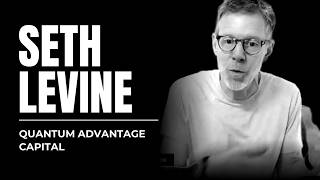
Seth Levine, a 25-year VC veteran, discusses winding down Foundry (nearly $4 billion AUM) and launching Quantum Advantage Capital, a fund betting quantum computing will unlock exponential power for medicine and materials. He also defends capitalism while pushing reforms like broader employee investment and his Pledge 1% initiative, which mobilized $3 billion in charitable equity.
Chapters
Welcome to another VC Wisdom podcast. We have Seth Levine with us for round 2. Real like my round 1 with Seth. Seth's a legend. He's a nationally bestselling author. He's partner at Quantum Advantage Capital, partner at Foundry Steel, uh, co-founder of Goodbread, Pledge 1%, uh, and a whole bunch of other companies in Boulder, Colorado. So Seth, welcome to the pod. Uh, tell us a bit more about yourself and what you, you've been up to.
Thanks for having me back. Hopefully people will go back to the first conversation we had. I thought it was excellent. I'll be brief. I've been in VC for 25 years, first at a large Palo Alto-based venture firm that was for a while affiliated with SoftBank and then was kind of on its own. And then in 2006, I spun out with a couple of other people, including a guy named Brad Feld, a lot of people know, who, 'cause he's written a couple books on venture stuff. And we started a firm called Foundry that grew really beyond our wildest dreams. We raised— we almost have $4 billion under management, a little under that, um, across now 20 years. Invest both in other venture funds, also in direct, uh, into companies, uh, companies like Fitbit, Whoop, uh, Rover, SendGrid, Xometry, you know, a handful of many others, right? There's probably 200 firms that we've invested in, companies we've invested in. Um, and we raised our last fund in 2022, and in 2023, we announced to the world that was gonna be it for us. So we'd never really been building a generational firm, and after 20 years of doing it, we decided that it was time to, you know, kind of time to be done with that. So we are, we're actually still in our investment period. We've in fact recently closed a couple new deals. We have a few more that we have remaining in the pipeline, but that'll start ramping down. And so now I've spun up a couple new things. One is this fintech business, Goodbread, that you mentioned. That was based on the first book that I wrote. I published another book about 6 months ago. That's Capital Evolution. That was the one you referenced that became a national bestseller about the future of capitalism. I'm sure we'll talk about it. And then I've also started working with a couple of partners on a new quantum-focused fund, venture fund. That'll be how I spend my next 20 years. I like to say I'm old, but not that old. So I still have a lot of energy. I'm not quite ready to be like done, done. And so we're raising a fund to look at investing in quantum technologies now, which is a massive opportunity from my perspective.
Interesting. And I think the reason why I reached back is I had Andy McLaughlin on my pod not so long ago, and I think both of you invested in SendGrid and he started Founders Pledge. You started your own thing. So how did you get to know Andy?
Yeah, so I mean, he knows my partner Ryan better because Ryan was on the board of SendGrid for years and years. But yeah, kind of had that parallel. Like, we were all investors in SendGrid, and then he started Founders Pledge. We've talked about that. I started this thing called Pledge 1% with Marc Benioff, Scott Farquhar. Marc Benioff from Salesforce, Scott Farquhar from Atlassian, handful of other people. And that's unlocked about $3 billion worth of money back to local charities. It's a, you know, give 1% of time, equity, profits back to a product. Back to local communities. And that's been an amazing, amazing sort of force in the tech world. We have 20,000 companies who signed up to take the pledge. A bunch of really big brand name companies that you've heard of have done it. By the way, including SendGrid. They were one of the— Samir, who is the CEO of SendGrid, was the CEO of SendGrid, was very involved. And by the way, so was Twilio that eventually bought SendGrid. And Jeff Larson was very, very, very involved with Pledge in that organization. They're both the founders. Founders Pledge is also a great organization. And we're all trying to do the same thing, which is encourage companies to at least be aware of their surroundings and be thoughtful about sort of how they're operating their businesses and giving back. And that dovetails kind of nicely into some of the things I wrote about in Capital Evolution. Which was a bit of a defense of capitalism, but also a description of some things that maybe needed to change in capitalism. And so all of these things kind of come together, right? I mean, I do a lot of things, but they all kind of have some themes that tie them together.
Right. And do you feel that some give back because they've taken a bunch of people, if you ask them, especially in the US, right there, they have a negative view of billionaires and very successful companies. Shouldn't these companies have these initiatives internally, or is their full role just to give back to investors?
Yeah. So I would make the argument, I don't like using words like should, because I feel like there needs to be choice in that. So one of the things I don't like about neoliberalism, which is the type of capitalism we've, at least in theory, been operating under for the last 50 years, I mean, the main thing I don't like about it is it leads to what you just described, which is a bunch of inequality in our society and people feeling like companies now are bad things and people who make money by inventing things are somehow bad because they made money. None of that is— it's all completely anathema to me. I celebrate people who have done extremely well, and I think it's fine that they have done really well. Now, I think that companies have a role beyond just giving back to shareholders, and they always have. And even Friedman, Milton Friedman, who outlined what became neoliberal capitalism, even he believed in this. Right. I mean, he put very clearly in his writings that, of course, it makes sense to invest in your employees, for example, things like that. So that's kind of what we talk about in the book, in Capital Evolution. And, you know, look, I think companies should be free to make their choices about how and when they give back. I think there's lots of reasons why that makes sense from a business perspective. Right. We interviewed Dan Schulman as an example for the book. He was at the time, he was CEO of PayPal. Now he's CEO of Verizon. And he put in place a bunch of practices. I mean, they were paying at market rates. He thought everything was fine. Turned out he had a big employee base. A large percentage of his employees were barely getting by. And he put in place a bunch of practices that wasn't actually that expensive in the context of PayPal, but did a lot to affect the lives of his employees. And it turned out people were more productive and turnover went down. So was that altruistic? Well, I mean, I think Dan did it— having spent some time with Dan now, like, I think he wanted to do it because it was the right— he felt like it was the right thing to do. But it was also, as it turned out, a good way to make money back. So I don't think that— I think we believe that these things are separate. And it's partially why I don't love when we talk about entrepreneurship, but we caveat it somehow, like you're a social entrepreneur or you're an impact entrepreneur. I don't think we need those designations. I think businesses have different goals, and sometimes those goals mix. Something about public good with what they're doing. And I think that's fine. And by the way, we're in the middle of this debate around all these AI companies. Right? I mean, they're all B Corps. And for the most part, they have these trust— it's actually another level. They've got these trust boards, essentially, that govern what they can and can't do. And that's like another version of this. I mean, I suppose if you're familiar with Eric Ries, he wrote The Lean Startup. He wrote another book. I'm constantly pitching it because it's just so damn good, but I just came out. He, he was kind enough to give me a copy before it came out, so I read it a while ago. But, um, uh, Uncorruptible, and it talks about many of the same themes that I wrote about, but Eric's, you know, a better writer basically. And, and so he, he writes about it at a different level, which I thought— and they're very complementary, like reading the two books together makes a lot of sense. But he talks a lot about these this concept of a purpose trust and how do we think about having different constituencies and balancing those constituencies in how we operate. I don't think it's that challenging. Neoliberals would be like, oh my God, if you're not making money for shareholders, how do I even know what decision to make? And that's just kind of ridiculous. That's not how the real world works. I mean, one of the people we interviewed was Lisa Greenhall, and she basically invented what we now call impact investing. Although again, I just think it's investing, but But she always would argue to us, look, companies are made of people. People make decisions like human beings make decisions. And so to pretend that these corporate boards and CEOs are automatons and all they do is think about shareholder value, it just kind of gives them a cover to do bad things when they want to and an excuse for it. And it's just not how, generally speaking, most people operate.
But talking about tipping points, right? I think there's always a point in which you become more of a taker than a giver. Corporations, I've never been bullish on them for mostly two reasons. And again, like, it's, uh, it's great, right? Like, there's a lot of percentages and reasons and justifiers, which makes it a complex equation. But I do, I do think they zombify people. Like, they turn people into 9-to-5ers. And I think that with AGI coming, we need more founders. Most jobs won't survive. That's one. And two, I think that corporations make startup life harder. They, they take too much. They don't innovate for most of them, and it becomes really hard for most startups to try to compete with a brand, you know, just a logo out there that people can trust but that does not deliver the, the best product, um, possible. Vs. VCs— I love VCs because they fund, uh, founders all the time and they take risk, right? And the— they're sort of the antithesis of corporations and banks. What do you think about these points?
Well, I mean, we argue a lot for an ownership economy, so I definitely would like to see more people feel more ownership. You know, what that means when you work for a, you know, 200,000-person organization obviously is different than what it means when you work for a startup. But I think we can strive to at least give people that want to the idea that they are a part of that ownership class. I mean, really, we argue in the book for creating more capitalists. None of this is easy and there's no simple solution at all. And companies at this— I mean, people often ask me, who are the heroes of the book? Because we interviewed Jamie Dimon and Dan Schulman and all sorts of interesting— Dick Parsons and—
I love Jamie Dimon.
Yeah, all sorts of great people. And no one is perfect. Everyone has strengths, everyone has flaws. And I think we are making a mistake. Even inside the question is a mistake, which is like, I'm not looking— we didn't write the book looking for heroes. We're not trying to put someone up on a pedestal and say they've done everything right or they're doing it all right. Everything ends up being a give and take, right? I mean, if you look at what Just Capital comes out with, they essentially monitor and grade a bunch of really big companies on different aspects around how they treat community employees, et cetera. Like, yeah, it's great. Is it a perfect assessment? No, of course not, right? Is it a little bit greenwashing? Yeah, absolutely. All exercises like that are a little bit like that. Does it tell us something? About the underlying companies and does it maybe nudge them in the right direction? Absolutely. So the challenge is there's no heroes anymore, period. Right? I mean, we used to trust government. We definitely don't trust government anymore, statistically. We used to trust media. We really— I mean, media is now so fragmented, right? We trusted media when there were like 3 news channels. It's just very different now, right? We don't know where to get information. So what's left? Well, companies are left. And I don't actually argue that that's That's like the society that I would organize is like companies have the most authority and the most power. It's just, I'm just accepting that that's my belief of where the world's going. Sovereign states as well. Let's run better, right? I guess that's what I'm saying. If we're gonna go in that direction, let's hold these companies accountable as consumers, as investors, and as stockholders.
Yeah, I like that. Continue on that direction before I go in the wilder direction talking about sovereign states. That are led by corporations. Eric Ries' Long Term Stock Exchange, his company that he started, is that a better view of the stock system, the stock market? Because current stock markets, I feel that most consumers lose, traders win because they were more educated. So it's not like power to the people. Corporations win big time. If you think about Tesla or SpaceX IPO, it's just like pure fabulation. It doesn't make sense. These valuations, this is pure like meme stock. So it doesn't reflect the real value of a company in my opinion, and it's sort of a circus. And Eric, uh, suggest— suggested the LTSE. What do you think about that one?
Yeah, I mean, I love what Eric's doing with LTSE. I— but I also want to recognize these things can exist in parallel, right? So there's gonna— and, you know, I mean, look, capital should decide, right? So people should, should vote with their dollars. And if they're more interested in businesses that are sort of performing and have the attributes that are required to be on the LTSE, then they should be putting their money there. Um, I, I understand what you're saying about, you know, is the fundamental value of SpaceX justified by their, you know, their stock price? I mean, they're not public yet, so we don't know exactly what that's going to be. I, I don't know. I mean, it's hard to— in, it's hard to bet against Musk because he's been so successful. On an apples-to-apples basis, Tesla is much more highly valued than other car companies. You could make an argument it's because they perform better than a bunch of other car companies. So I'm— I guess I'm not here to say what the right value is, and I believe in the markets to be able to do that over the long period of time. I totally understand what you're saying, which is it's a little bit scary to be an individual investor. But again, I would differentiate trading and investing, right? If you're a trader and you're an individual, yeah, that's hard. You're coming in and out, in and out, in and out. And it's, I mean, maybe some people are really good doing that at their homes and they've got some data feed that they really like. I like to think about the world more as an investor because that's what I do in my day job as a venture capitalist. I'm not taking one day or one month or even one-year positions. I'm taking, in some cases, 5-year, in some cases, 20-year positions in companies and ideas. And I'd rather think as an investor, and I encourage— I mean, even in my— I don't do a lot of public market investing, but in my public market investing, I try to think like an investor. What are the longer-term trends that I'm trying to play? How do I play those trends?
You know, these meme stocks—
not giving investment advice.
Yeah, we're not. Um, the meme stock people, I think it's a sense of community, it's a sense of excitement, right? There's a big loneliness trend, and it's just I can't really put myself in their shoes, but it's like, oh, it's exciting because we're chatting with their buddies of like, to the moon, and silly stuff like that. And it's emotion, right, for them. It's not really about ROI, I feel.
Um, but don't you think this is the thing our society is missing the most right now? Like, we've really just killed community. There's a— I read a lot, so sorry to reference other, other people's books, but there's a great book called Lost Connections, uh, Johann Hari, I believe, is Charles Cormier is the name of the author. And it talks about exactly this. We used to live very, very connected lives in our communities, in our churches or temples or mosques, in all sorts of— in Rotary and Lions Club, whatever it was, right? All sorts of different organizations that allowed us, forced us to feel and be connected. And that's gone away. And that— I mean, he argues that that's— in and of itself explains the rise of mental illness and depression and things like that. You'll have to read the book and decide whether you agree with that science, but I think we can certainly say definitively that we are less connected. And so I think what happens is, you know, people go to Twitter or X now and they, you know, they look for their fellow whatever, right? Yeah. You know, I believe that, you know, whatever, lions are purple and I find my community of like purple lion enthusiasts, whatever. And you understand why people are doing that because they feel like they lose that connection. And I think that's why people are afraid of AI, because it feels like it's going to rob yet another layer of connection, which is the reason people talk about AI in the sort of same breath as social media, not because they really have anything to do with each other, because— but because people blame social media for, you know, putting a screen between all of us and our friends. And they're worried that AI is going to have some similar effect, not the exact same thing, but some similar effect.
Yeah. An earlier dude that I had on my podcast today, he organizes these men peer groups and he was— we were talking today about the 80% suicide rate amongst men specifically. Right. And yeah, we talked about that. It's a fact, you know, especially since COVID Uh, just clarifying, you're—
what you mean, it's not the 80% of men commit suicide, it's that 80% of suicides are men. Yes, exactly. And some of that is because men tend to choose methods that are more final.
Well, it's that they carry, right? Like a man's job is to protect and carry, and sometimes just carry too much. And then the incentive of just letting everything go is bigger than climbing a 2, 3 Everests, you know.
Yeah, well, I mean, you may not have read it yet, but, but there's a great book by these two, I think Princeton, uh, sociologists, uh, Deaths of Despair, um, and it talks about particularly this crisis amongst white non-college educated men dying of not just suicide, although that's one of the things, but also drug and alcohol abuse.
Oh yeah, right, the opioids crisis, right?
Um, Dean is the last name of the, of the couple that wrote it. It was written by a husband-wife team. Um, really interesting read, right? We referenced it in our book a couple times because it really— it's an important trend, and frankly one that I think got skipped over by politicians in both parties, right? And, and then in the last, whatever, 10 years since the rise of Trump, I forget about how he governs, but he certainly talks in a way that, that these people think speak to them.
And that's— I don't know what to do with that. It's overwhelming to me because I can see the downsides of that, right? And I guess that it— a post that I've written yesterday reflects that, that most humans choose weakness, right? And project strength out there. They choose the easy path, but I don't blame them either because they just don't have the extra energy to veer the conversation back towards AI, right? And what will happen. I'm not a doomer, but I'm not, uh, optimistic for these normal people, which I would derogatively call normies. I do think AI is going to replace a bunch of, of these people, these GameStop, uh, investors, and, you know, like these meme stock people, which is most people, by the way.
Yeah, I know.
Aren't you afraid that America and, uh, probably Canada and all these first-class countries will go to shit in 5 to 10 years when there's no jobs, no government to support that, no banks as well. Banks will fail as well, in my opinion. Um, what's your— I'll take on that.
I'm more optimistic than it sounds like you are. Now, I recognize that there— AI is scary, and there's, without a doubt, there's short-term job disruption. Now, that said, employment is pretty— unemployment is really low right now in the US, so we're seeing some signs of it, but it's like more in the narrative than it is in the actual numbers. I think the thing that we don't know yet, Charles, is like, what are the jobs that come next? Right? I mean, there's— let me give you two examples. One is from ages ago, which is everyone was scared when this crazy horseless buggy thing came out, right? Cars. And you had to actually hire— people were so afraid of it. You had to hire someone to walk in front of your car with a flag called a flagger. Because like, who wants to— this is crazy, scary new technology. So I give that as an example of like Reid Hoffman wrote about it in his book. But I give it as an example of like when new technology comes out, it's really scary. We had no idea how much the automobile would unlock in terms of commerce and jobs and everything else. Another example—
We're creating a brain, right?
What's that?
We're creating a brain with agency. So it's not the same.
Well, so but let me give you a more current example then that relates very specifically to AI. There was a time about 10 years ago as AI started to form, and what happened was in the medical profession, the job that, that we were all told you should not go into as a medical student is radiology. Radiologists are going to be gone. It's going to all be read by AI. Well, what happened? AI reads a ton of radiology now, but there's never been a higher need for radiologists because it actually created this sort of higher order need for people that were actually trained. And so I think that, and by the way, we've got a shortage of radiologists now 'cause we scared a bunch of people from going into radiology. And so now we gotta like convince people to go back into it. So that's maybe a more current example as it relates to AI. I, so I can believe two things at the same time. One is, one of which is there will absolutely be job categories that get disrupted by AI. And I think we are without a doubt asking a lot of people to say, hey, you need to lean into this or you're likely going to lose your job. On the flip side, I also think we have no idea what's going to get unlocked by AI. And I tend to be more optimistic about certainly the medium and long-term effects of AI because I think it's actually going to unlock a huge amount of productivity. And when I look at the US, like, what is my biggest fear in the US right now? It's the spiraling of debt. There's only 3 ways to get out of that. One is to cancel the debt. That doesn't sound very good. One is to inflate your way out of the debt, probably fine for you and me, but really bad for most people. It's fine for people that own a lot of assets. Then the last one is we become much more productive and we produce our way, if you will, out of the debt. By the way, we saw a mini version of that back around the time of the internet. We actually ran a number of budget surpluses in the Clinton years. And that was entirely due to, well, one was the Cold War dividend because we had sort of ended the Cold War. So we weren't spending as much on defense. We could learn something about that right now. And then two was that we just became a more productive society because we added the internet and internet technologies and personal computers, et cetera, into the mix. I think there's a chance that we do that with AI. I think you're looking at, for those of you that are listening, Charles is looking at me a little bit skeptically. So I know I have to explain.
I'm thinking, no, I agree with a lot of these points, except that. Yeah, well, first the job creation, right? I think it's EQ, EQ-related jobs. So radiologists to read you with empathy of like what you have and what's going to happen, not a robot, right? Like no one wants an artificial thing to fake empathy, right? You want a human that feels pain and that have a real quote-unquote life story. Um, productivity, my brain immediately got to agents. I think it was Elon that was talking about like, uh, agents actually skyrocketing productivity. But yeah, at what expense, right? Me, I still see tremendous disruption. I'm about to start the 1929 book by Andrew Ross Sorkin, which I think is a good example of probably what's going to happen.
But then I do think with what happened, right, like we, like what we had this— I mean, so I've read that book, it's great. Um, don't tell me about it, I won't tell you. I mean, it's all history, right? So we know what happened, right? We had —crazy speculative bubble that was in some respects the same in the sense that there was a very disparate sort of economy, if you will, right? A K-shaped economy. But in some ways very, very different, right? Because the rules around— it was the asset bubble was a stock asset bubble, and it was driven by ridiculous levels of leverage and margins. that you, that we, you can't even do anymore, right? So, and then obviously that led to the Great Depression and, uh, and some really, really big challenges. And then that led to kind of a reorganization of society, uh, sort of.
Yeah, that's that part that interests me. Not, not, I'm not saying that we're in a bubble, but I think it's gonna be like Great Depression-ish for most people after this thing happens. Because the equation for me is quite simple. If I have the choice between a an agent or human. Yeah, sure, there's still going to be, uh, value with me having co-founders and very intelligent human beings, or nodes that have a network, right? But if I want to hire someone for a task— and most humans' jobs are tasks. Even you and I said we're smart people, and I'm pretty sure that it happened to you a couple of times that you were like, oh, a robot could do this, right? Like, an agent could do this.
I'm trying to have an agent do as much as possible, actually. I finally have, like, living the dream of having mini mes, and I have trained up Claude Code on a bunch of stuff. I can only manage about 3 of me at one time, but I usually work in terminal window. I have 3 terminal windows running at any given time. It depends on how much time I've had to kick them off and do things. The stuff I do is like 10 minutes might be a long time for it to run or 15, but I don't know. Let me ask you a question. I'm curious your thoughts on this. There's been a bunch of discussion about how do we tax agents, right? If we— like, we have a tax code that has moved from, uh, or that, that is focused on taxing individuals, right? I make an income, I pay 40% or whatever, you know, top, top tax rate on that income. Crazy, right? But offensive.
What's that? 40% is offensive. Is like, it's offensive. Like, even 20% is like So how should we—
I don't want to get distracted by that. That's a longer conversation. But how do we tax agents? Because how we tax agents right now is kind of backwards, right? We, we, in, in your world, if we are— I don't want to say firing. Let's say we're not hiring that incremental person, and now an agent's going to do it, right? So I'm spending some money on the agent, but I'm actually much more profitable because you're replacing, you know, a $200,000 you know, potential hire with whatever, $50,000 worth of tokens. So that $150,000 that was taxed at 40% is now taxed at the corporate rate, right? Because that becomes profit, presumably, to the, to the company, and it's taxed at half that. Do you have any thoughts on that? It's an—
I haven't fully questioned because one, like, and we're gonna talk about sovereign state. I think that's a nice segue to the next topic, which is corporations owning countries. I want to have my own country in 10 to 15 years from now. It's going to be called founderland.city if you want to check it out. It's like the Switzerland of the Americas. There you go. Switzerland is still there.
I mean, there is that project in, uh, Roatan, right, which is basically—
yeah, me, it's gonna be in the Andes, right? So like protected by mountains. It's gonna be under— anyways, it's pure fabulation for now, but it's gonna materialize very quick because I think the world is it's gonna go sideways. Um, to that tax question, so first, like, I'm not super bullish on tax, uh, paying governments that I— that don't bring me a lot of value. But another side of me, and I'm saying that because I'm a digital nomad, I live in Mexico, and I've never loved the idea of government, someone looking over my shoulder and taking more than they add, right? Like, it's a basic win-win equation. Um, if I think— yeah, I think for the world not to go to shit, we absolutely need to tax agents. Like, if I put myself on the rational and social side of things, so I absolutely think that to survive— and by the way, that's not what I'm preaching, but I think that the US government should actually absolutely have laws and tax if they want to retain power, right? Um, uh, so like per, per action, per agent action, they need to take like, I don't know, a microcent on the dollar if they want to survive, because most jobs will not be there, uh, if, if that happens, right? But then will most companies accept that? Will they relocate? Um, will the government block their system if they refuse to pay these taxes? Um, my ideal version of the world would be some kind of value coin, right? So if you add value, you get paid more. Um, and I've, I've thought about this, uh, because yeah, obviously agentic payment infra is a gigantic niche, right? Like if you crack that. It's multi-trillion. What do you think about it? I, I think you're more educated on the matter.
Yeah, well, I mean, I'm still thinking through, uh, what it would look like. As a general matter, yeah, I think we need to figure out a different way to tax a bunch of different things, right? I mean, I think we're having a discussion. I hate wealth taxes, so I'm not in favor of that, but we've kind of gotten away from this concept of generational tax, right? Because there's lots of ways to basically avoid paying, uh, what Republicans in the US call the death tax, but which is the, uh, estate tax. Um, so I think looking at that, I think this sort of like how we— how and where we tax corporations and what we allow them to write off. I would love to rewrite the tax code and simplify it significantly. And I do think we need to look at whether there is some version— I don't think it's actually an agent tax. I think it may be more of like a token tax, um, because I don't know what an agent means, right? I run if I've got 3 windows open, am I, is that 3 agents? But like, okay, so if I wanted to only have 2 windows open, is that—
I think ultimately it's like GPU or watts.
Well, and I think tokens are the proxy for that, right? Because that's the work that's getting done. So I think somewhere in there it's something that makes sense. But, you know, I'm very sensitive to how we think about this, especially at the state level, because we just went through this extra— I live in Colorado in the US. We just went through this exercise. We had a really crappy AI law. It scared a lot of people away because it was a really crappy AI law. We managed to fix it in the last couple of weeks, so it's in much better shape. But I've watched what happened as people reallocate capital elsewhere. And the question you're asking, and maybe that's the life you're living as a nomad, digital nomad, is like, people are pretty mobile between again, in the US between states, right? We see that already in California, people fleeing ahead of this potential billionaires tax, which I totally understand why they're doing that. Are people equally as mobile or nearly as mobile between countries? Like maybe, I mean, obviously in the crypto world, UAE as a good example, has done a really good job of basically saying, hey everyone, come here. We will be incredibly friendly to you. And they would have literally, I don't know if you went to any of these conferences, but you'd go to these crypto conferences in Dubai and there'd be like a kiosk there where they'd help you with your application. And essentially anyone could get, I can't remember if it was a 2-year initial or a 5-year initial work permit, but you could re-domicile there.
That's the way to do it.
It was really easy to do it.
And they're like, look, we are your clients, treat us as your clients. Your property, you know. Think, uh, that's so outdated, that notion that governments own citizens.
Well, I mean, as a citizen, I worry that the U.S. government— other governments will get scrappy around that and say— I mean, we've seen that with digital nomad stuff, right, where the governments are like, we'll make it really easy for you guys to come hang out. U.S.
has a moat. You, you cannot beat U.S. It has a brain drain moat, and it's just like the American dream. They You cannot compete with that, even if you're Abu Dhabi, even if you're Singapore. Of course, US is still suck.
By the way, who wants to live in Dubai in August? It's too damn hot, right? Especially this year. We're gonna have the worst year on record. Where you— are you a French citizen? Where are you a citizen?
Montreal, Canada is my origin, so Canadian passport, and living in Oaxaca, Mexico, of all places. Uh, very special place, right? But no valued on, on the business side of things, just like spending 10 hours behind a screen. So I'm a citizen of the internet first, and then I relax in this, uh, beautiful picturesque side of the world here.
Yeah, it's not about me. I haven't been to Oaxaca, but I've been to Mexico many times. And I should point out for listeners, you, you, you and your partner just had a, had a child, so not a bad place to be raising, uh, a baby.
Hopefully you have a Montessori down the street, you know. So that's the strategy, like, uh, before I my own school. Sovereign states, do you think that's a thing? Like countries ran by corporations and that treat citizens as clients, you know, and treat them with decency? Is that— is that— history would say no, right?
I mean, history is like, that's not how governments work. Now, will there be a couple forward-looking governments? Yeah, probably. Interestingly, I think that that model works better in dynastic states, right? I mean, I think part of the reason the UAE— and UAE is a funny example because the Emirates don't all agree with each other, but in any event, Abu Dhabi and Dubai in particular of the Emirates tend to be pretty forward-looking because it's easy for them to do that, right? Saudi is being relatively forward-looking because they've got, you know, MBS is, you know, ruler for life, I guess. And so I do think there may be some states that try to be sort of on the cutting edge of that. My suspicion is that just the way that democracy works and how messy it is, that generally speaking, democratic states are going to struggle a little bit more with that and not necessarily be able to be as welcoming as, you know, maybe you or I would design a state to be. And then there'll be these like mini things that happen, like that we were joking about the Roatan thing, but that's like a real thing, right? There's a bunch of people moving around.
The most successful out there yet, but yeah, it's hard. It's a very hard equation. Do you— yeah, broad question and wild one, but what's after democracy, right? What's after science? What's after capitalism? Is that all AGI?
I think we bounce back and forth. I think that we think we're on this sort of linear thing, but we're actually in a circle somehow. Oh yeah. The next thing that comes is something that's already happened. That's intriguing. I'm not— I don't know that I'm— I mean, I guess I'm long-term bullish-ish on democracy or some form of democracy, but I don't know. Sometimes I read the news and I'm like, yeah, I guess we're headed away from that. And we're kind of headed away from that in the US. And the countries that seem to be working better these days are not all— I mean, again, and I say better with big air quotes because there's some things about each of them that it's like terrible. But there's a lot of things about the US or Canada that also are really challenging. So, I don't know. I don't have a good answer to that question because I don't quite know what's next. I think that capitalism survives in some form. And my hope is it's closer to a true capitalist form than it is to something that is like a social capitalism. 'Cause I think that socialism clearly doesn't work. But I understand why people are attracted to it right now in a time where everything feels completely outta control. Um, but I don't think— I mean, what's the problem with socialism? You— what do they say? Eventually you run out of other people's money. Like, we will eventually run out of other people's money. And I think about it myself, right? Like, we have state-level initiatives in, in Colorado that would double my taxes and things like that. And I'm like, I'm not staying for that. Like, I'm pretty mobile. I can go somewhere else. Yeah, it's rational, right?
And we're still humans. It's still the laws of evolution, right? Like, we're, we're still wired for what's the the best decision for us to survive. And that's why capitalism scaled. Bradley, tell me about QAC. Like, what are you building here?
What are you investing in? Yeah, yeah, so I wanna be a little bit careful because we are fundraising, so I can't like promote it too much, but I'll just say what it is without saying why I think it's exciting, which is we're gonna invest primarily in quantum assets and infrastructure. So that'll be directly quantum computing, but also the enabling stuff around quantum. And then about 20% of the fund will be quantum-impacted investments. So cryptography, digital assets that are secure to quantum, things like that. And it's— I'll just, again, I'm not gonna— I can't promote it, but people should go read about it and not read about Quantum Advantage, the fund, but read about quantum, the technology, because it's super interesting and it's happening I think more quickly than people believe. And it has the potential to be incredibly impactful and helpful for medicine and other real-world problems. Right. What is quantum good at? It's good at modeling the real world, the physical world. And so problems that relate to the physical world, like how do we model a new medicine or how do we model your interaction with various drugs or the environment? Like, that's what quantum will be really good at.
Quantum, is it like in, um, because quantum, yeah, that I've been, uh, following quantum since the Rigetti computers, right? Like, yeah, that was a big thing back then, but it seems that it's evolving so slow. Is there something that happened as of late? Why not focus on AI, for example, then create an AI scientist that could lead to better discovery in the quantum space of things? Yeah, what's your thesis?
I mean, AI might power a little bit of quantum. AI is not going to solve the same types of problems that quantum can solve because there's like literally not— there are not enough. If you turned every molecule in the universe into a transistor, you still couldn't do things that a quantum computer can do with a relatively modest quantum or number of qubits. And so, so they're two different things. Now, I mean, what I would say is like if you were talking about AI in 20— 2016 or '18. I mean, when was OpenAI started? 2015, 2014, not clear which one, but that would've been the time, right? Anthropic 2018, that would've been the time to be investing. Now there's plenty of opportunities in AI. We're doing AI stuff at Foundry. It's all great. Quantum is where AI was 6 years ago. And I think the accelerants are like, Google puts out this Willow paper a couple of years ago that shows that actually as the— that was specific to it. Certain type of qubit array. But, but as the number of qubits increased, the error rate actually went down. So that was a huge unlock. And there have been sort of the steady stream of progress in quantum. I mean, listen, we didn't have a workable 2-qubit array 5 years ago. Right now we've got 200-qubit arrays. That's not big enough to do anything particularly interesting with, but we're getting there and getting there quickly. And unlike classical computers, Quantum computers increase exponentially with each qubit that you add.
Huh. Wow. That's intriguing. Yeah, that could fix the bottleneck that we're facing right now in GPU or potentially even watts, right? If we're really energy efficient. Seth, thank you for being here. Where can people find out more about you and the fund?
Thanks for having this. I always love our conversations, Charles. This is super fun. They can find out about me at Seth Levine dot com. They can find out about the book at thecapitalevolution.com. There's really no information out on Quantum Advantage, but if you eventually want to follow it, we're at qa.capital. We've got just a splash page up for the moment. And of course, Foundry, which is my— the venture firm I founded 20 years ago, is foundry.vc. Love it.
More from Charles




Founder Wisdom: the full audiobook (7 hours of quotes and stories from 600+ founders and CEOs)






