William Morgan, PhD - Restless Egg
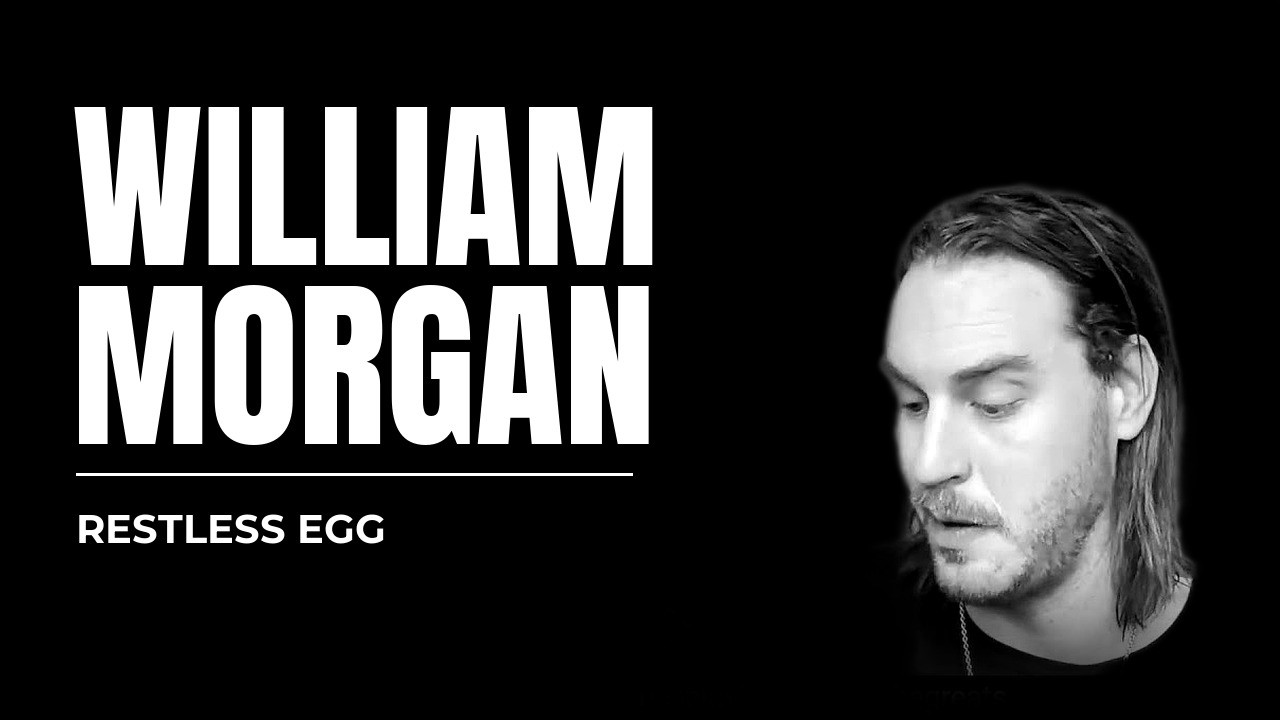
William Morgan founded Restless Egg to back creators from artistic and intellectual backgrounds who anticipate AI-driven cultural trends. His fund makes initial $100K checks and backs portfolio companies like Yaya Labs' robot-dog fighting league and Hidden Fish's AI social app. Morgan argues London's ecosystem offers a less pressured environment than Silicon Valley for these cultural innovators.
Chapters
Welcome to another VC Wisdom podcast. We have William Morgan with us. Will's a PhD. He's a founder at Restless Egg. He has a very interesting background, which, uh, well, I'll let you, uh, detail in a couple of moments. But yeah, I see research fellow here. You were like an ex-artist of some kind, right? Uh, And you're in London and you're London maxing, right? We talked about that last time. Uh, like, uh, yeah, London can be interesting for founders and VCs. It had some kind of moat and we're gonna talk about it today. So Will, welcome to podcast. Tell us a bit more about yourself and what you're up to.
Yeah, thanks for having me. It's great to be here. Um, so I'll start maybe by saying what Restless Egg is and then, then I'll tell you a little bit about how I got into it. So it's an accelerator and fund for, cultural first movers. So we're sort of looking out at the, the tech founder landscape, and, and today you can kind of identify what the traditional tech founder looks like. It's, you know, where they went to school, what companies they worked at, maybe even what their LinkedIn profile says. And at the same time, as that marketplace is, is quite mature, there's also a sort of dearth of ideas for what these novel technologies emerging from the AI revolution are going to do and what they're for. Uh, so our, our thesis is that at the intersection of the tech founder pipeline being mature and the question of what these technologies are for being somewhat unanswered, a new founder class is emerging. And they come from cultural scenes, from different backgrounds, from unheralded founder spaces. And yet they've spent entire careers dedicated to developing what is now, you know, the buzzword of taste, but we call them cultural first movers because taste is a little bit churned up and overexposed these days. But what they identify is signals before they become commonplace. And so they're in the, that kind of breakneck pace before something is mass market identifiable, but they can tell you what's going to happen next. Uh, and so we're looking for people who have that capability, but who are now, due to the barriers to entry coming down, able to build tech companies. So imagine what would Virgil have built if he decided to build a tech company? What would Pharrell have done if it was purely an intervention in the mega-cap tech space? So those are the kind of possibility spaces that we're thinking about. And we think that founders who have been cultural first movers have historically been able to drive outsized returns, but that now this founder profile is emerging as a veritable archetype of building a company. So I can stop there and I can say a little bit about how I got into this, unless you want to ask about that.
Well, it feels that your archetype lives in London. Why London specifically?
I think that's right. So what we've seen is that there are two centers of gravity in the kind of geopolitical AI arms race that we're all living out. Obviously Washington and Beijing, uh, but, you know, the US and China, um, Silicon Valley. Uh, and so those, those centers of gravity create a kind of cultural, uh, force pressure on what technologies will be developed, how they will be developed, and who will be sourced to develop And that's fine. You know, that creates a lot of momentum and there's a lot of capital deployed towards those ends and they've been successful in many ways. What it doesn't capture are these like weirder types of interventions that are more asking the questions that the kinds of questions that we're asking, which are what are the alternative purposes of these technologies that aren't simply the ones that are useful for the chips wars, arms race, whatever. So we're thinking sort of a few years ahead in terms of what happens in the aftermath of all of this data center spending. What are the use cases that people are going to want both at an enterprise and consumer level? And it seems to us that there is a kind of opportunity space in London given its geographic location, given its cultural history, um, given its venture history and its financial history for that kind of work to develop all in concert. And it's sort of unencumbered by a lot of the forced pressures that you might find given the American venture ecosystem. So for us, it's a combination of both people and investment opportunities that are located here.
And how did you land it there? Like, your LinkedIn is pretty obscure. Like, what's your background? You were an artist, right? Like, how did you actually land it where exactly? Exactly you are today.
So I'll give you the, the sort of long version, but very quickly. Um, I thought, uh, I knew I wanted to be an academic since I was in the 9th grade. Um, and then as you go further and further into the academy, um, you realize that if your dream was, uh, to become an academic because that was the closest thing to being a rock star without playing music, uh, then the academy is not actually the place to achieve those goals. And so as I became more and more disenfranchised with the academic model of, of making an impact, which is this really slow and churning publication process and the administrative bureaucracy that keeps being heaped upon the university and the academy in general, I started looking for alternate ways out. And I found these fellowships starting with Anticathera, which was this tech, art, and design fellowship that was about reorienting planetary computation in LA. That was my first sort of exit trajectory when I realized that there were these people still doing really high-level philosophical thought, but they were also building prototypes. And then from there, I sort of hopped on this, this residency train, and that took me to Europe. And then I've been in Europe ever since. I did a game design project at Media Lab Matadero in Madrid, and it was through doing these residencies that I realized it wasn't just stroke of luck that I stumbled on these people at Antikythera, but actually there was a whole community and a whole scene of people trying to build technologies according to this kind of vision. And so after— Restosafe was really built from the ground up by being in communication with these people and also seeing the funding hurdles that they were dealing with and what funding opportunities was available to this scene, seeing that it was mostly philanthropic money, it was patron-based money, uh, it was arts money. And a lot of that was drying up and getting smaller and never that big to begin with. And so the hypothesis that initially we started with was, what if you could bring venture-scale incentives to this most imaginative and creative group of people? Could they build tech companies? Did they want to build tech companies? And could they stand them up in a fast and profitable manner? So that was the initial hypothesis, raised some money, started doing that, and I've been building that ever since.
What was your PhD about?
Philosophy of AI. So, um, it was somewhat relevant, um, but I think the, the reason it was relevant is because it put me into these kinds of conversations. Um, so I don't really use my academic background too much. I mean, maybe you've seen I keep a Substack where I sort of track the ongoing macro-political and geopolitical things that are circling around the AI revolution. And that allows me to stay fresh and on top of trends. And I do that in the newsletter as well. But I think mostly what I use the PhD for is kind of just being an interested generalist. Which is obviously a skill set that is very useful in the job that I have now.
Tell me about the rock star perception of the academia. I want to discuss about that because I think there is value in, in like the revival of probably intellectualism, right? Was that the guiding force for you? And who were you revering back then as PhDs?
Um, so in 9th grade I got hooked on, uh, Marx, Nietzsche, and Freud really early, uh, and was a very annoying teenager, as you can imagine. Um, and then, so, so my initial understanding of the way history worked is that you would write something and history would simply move as a result of it in this kind of like mega fashions. Um, and then as I got older my interest turned towards French and German philosophy in the 20th century. And so the people who were really influential on me were folks like Bataille and Deleuze. And there was this scene in French philosophy and a scene of intellectualism that set the course for a lot of things that happened in culture that would, you know, go on to be quite revolutionary— thinking about surrealism and situationism and how those would echo into later actual design projects and would have their— have quite a large impact, uh, but it was a very long-term impact. So I'm not suggesting that intellectualism is over per se, and in fact, this is one of the theses of Restless Egg is that the way intellectualism makes a real difference today, especially given the way information exists and moves throughout the world and the way attention is very scarce, is that it takes the form of a product. The medium of a product is in fact the way to channel intellectualism. So I'm less interested in the kind of freedom of the intellectual to simply write or say what they want. And I'm much more interested in the freedom that the product offers, which is the friction with the user, right? So that's a different kind of freedom. It's not this unlimited freedom to think as you like, but it is the freedom to make a genuine impact with your thoughts. And to translate those thoughts into building. And so that's, that's a much more targeted, applied kind of philosophy. But for me, and I think for a lot of the founders and the people in the, in the larger ecosystem that includes intellectuals, have found that this application in the product sense is a way of channeling the work they've been doing into something that genuinely lands in people's hands that they can use. And that is part of what would have looked like a philosophical revolution a century ago, but now takes place through technology.
Very interesting. You invest $100K in promising founders and follow-ups of $175K. Explain your model and explain, double-click on or 10x click on that archetype of like what precise founder you're looking for.
Totally. So the check size, we've increased it every time. And what we've seen is that the archetype of person, it's not that we increased the check size because we were like, we're not attracting the right people and we need to bring in more people by increasing the money. That was not the rationale. The rationale was we've got great people coming in. It's almost like when you have a sort of janky product to begin with and it's like, people are using this., but we need to scale it up. Everything we've seen so far from this founder class is they want it, they're ready to do it, but the runway needs to be longer. And especially if we want to do more cash-intensive projects, and I want to do a lot more hardware, robotics, physicalized and embodied AI, that's extremely important for, for me. Um, and you have to have more, more capital to spend to do that. So the, the rationale to go to $100K is basically that in the beginning of the program, you know, we want to be extremely early stage and that founders can run extremely light in terms of burn and then scale up towards the end. And then as we conclude the program, they're in a space where they're ready to be either generating revenue and sustainable in the sense that they might go on to become a bootstrap business or they're ready to raise another round. Now, you asked about the, the specific founder profile. Maybe the easiest way is to talk about a couple of specific people. So the first ones I'll highlight, because there's a very important upcoming event this Friday, is Yaya Labs, or Robot Dogfighting. And so they are trying to create a new category of the future of combat sport in the AI era. You know, you've probably seen— a lot of the audience has probably seen the, like, kickboxing robots. One of the founders of, of Robot Dogfighting was at the very first London shoot of BattleBots, if you The TV show. And he tells a story about how halfway through he was like, this is kind of lame. Like these things, it's just about who has the lower center of gravity and they kind of bump into each other. And I think that the kickboxing robots are a little bit the same. It's kind of like we've seen the form factor of humans boxing. We've actually seen incredible humans boxing and doing MMA., but you've never really seen leaning into this cyberpunk, cyber future robot dog fighting with alternative weapons strapped to them and exploring like real novel, like form factors that robotics unlock in terms of combat sports. So the, the model for that business is a sort of F1 style, um, where they will not own the dogs, but it will be a kind of media company and they'll put on these mega events, and then the tech companies will outfit the dogs with all sorts of weapons and whatever, and then they'll do combat in the ring. And the reason I mention them is because this Friday, the very first fight will take place in London at a venue called Outernet, which is like a 2,000-person venue in central London. It's taking place in combination with this group called Genesis, and they put on MMA raves. Which are exactly what they sound like. Uh, so if you're in London and you want to see a robot dog fight, that's, that's happening. The, the founders, um, one of them is the global editorial director of Vice magazine. And so he and his co-founders came to us and were like, you know, we have this lizard-brained idea. We understand subcultures, we understand where people are thinking about robotics, and we also understand how robotics are currently being built. And this is a gap that exists in the market. It's also kind of intuitive, like it does what it says on the tins, you know, it's robot dogs fighting. Um, so that, that idea, when we first got the application, I mean, I'm, I'm originally from Atlanta, so robot dog fighting, you know, Michael Vick was a big deal when I was growing up. And the, the initial application of robot dog fighting, I was like, this is horrible. And then I realized as we were going through the applications later on, I was like, well, actually I gotta fish that out of the trash. That's like really high signal. I had never seen an application that I had this visceral reaction to that was like, oh. So that told me that they were onto something. And I think that's the kind of spirit that we're looking for in terms of cultural signal. So that's one. Another one that I would point to is Aisley and Riven, and they are building a company called Hidden Fish that is a bit like— the thesis is sort of Tamagotchi as form factor is not wrong, but early, and is now really plausible with advancements in AI. So there's this social fish tank. You can download the app right now. It's on TestFlight, and they have a big TikTok presence. It's very Gen Z, but there's this social fish tank. You control a fish and the fish has like a life and it interacts with these other fish. And so you can go in and play as the fish live, but the fish also will do stuff when you're not on there and you'll come back and read the diary and the fish is like, damn, I had like a horrible day today. And then so they're working on all of these personalization layers so that you can give your fish a personality and then it will live in the tank. And then there's this kind of back and forth between you and the fish.. And so there's, in my opinion, I think this is a really cool way of thinking about how human-AI interaction unfolds, where there's a kind of liveliness to these creatures in a way that it also changes what we think about social media is. So I think that's really cool to be like, look backwards at Tamagotchi and be like, there was something about the cultural meme of the Tamagotchi that needs to be revitalized and can be revitalized right now. And, you know, if you look at their TikTok following, which is quite rabid, um, you can see that they're really on to something. Uh, at times I'll admit I don't totally understand the, the aesthetics of the app, but I think that is by design. It is that— let's say they have a very specific cultural taste that is not middle of the road, like everybody's gonna get it. It is very distinct. Um, I can keep going, but maybe I'll just pause there with those two and let you ask.
And is that in the luxury category, um, that you're investing right now? Why, uh, luxury technology? Double-click on that.
Yeah, it's a great question. So for us, luxury was a way of cutting through the noise of the, like, taste slop kind of debate. There's two ways I think about it. One is based on this Alex Yemas article, uh, What Will Be Scarce, that came out after I wrote that piece, but I think it's excellent. And in it, he, he talks about a future where humanity will be a kind of ultimate luxury, where there will be products that you want to pay extra to have a human touch in. So already in China, this, this is the case. Like, at sort of mid-tier hotels, you can get your food delivered room service by a robot, but at like the 5-star hotels, it'll be delivered by a human. So we can already see that there's a kind of There are moments where you want human in the loop, and I think that that category will get larger. Uh, so that's one way of thinking about where luxury technology is. It's where you want to feel a kind of humanity in the product that you're consuming. The second element of luxury is the one that I more attend to in my piece, which is that AI spending is already experienced as a luxury by the mega-cap tech companies. What are the products that would make it feel luxurious to us? So what are the new categories that would make it be like, wow, I actually like this thing as opposed to like, it's stealing my job. You know, it's taking all the, it's raising the energy prices, whatever. It's like, it kind of mirrors a moment that happened in the 1950s where people really didn't like computers. They were like, this is military tech. You imagine this like giant mainframe. And then later you got cultural producers in, then you can trace a direct line to Apple and the personal computer entering the home. You actually had to have this like design refresh of what the computer was in the personal imagination before that could happen. People actually desiring this. And so I think we're, we're coming up on a moment where there's going to be a class of founders who reinvent what this technology does, what it's, what it can do, who it's for. That will evolve around a number of different use cases and outcomes that we haven't even thought of right now. So human-AI interaction, intimacy, uh, pleasure are the common ones, but entertainment, new forms of privacy— there's a whole host of, of these different categories that I think are, are coming, but people aren't looking at as much right now as they're focused on model benchmarks and that kind of progress.
What do you spend your time thinking nowadays? Uh, are you very much in the future, and are you worried about, um, AGI, or mostly excited?
So my answer to this question is, is a little bit less exciting than I think it would be as my former academic self. What I worry about is that the future gets written by a very small cohort of inventors and builders who come from a, a cultural monoculture. So I think less about like P-Doom, yes, no. And I think it's, it's much more how broad is the field of inventions that get created and do people get to actually vote with their feet in terms of what products they use for what the AI future looks like. So if the AI future is just one project built by like the Global Singularity Company, you know, let's just make up a name and call it Skynet, uh, then I think we're, we're in a pretty bad place. But I think if instead a number of different builders get incentivized to create different use cases for the technology, then I think we're in a really cool position where it's like, oh, there's thousands of different outcomes that we can optimize for with the fundamental technology. You know, it's like electricity is not just used for light bulbs. But I think that we're in a comparable revolution here, and it's like, what are the other things that electricity does besides just light homes? Or besides, you know, that, that's the kind of genre transition I'm talking about.
Interesting. What's next for you? What are your goals for this year?
So we have our, our applications are open right now. Um, we've started reviewing them as the priority application deadline closed yesterday. So I've started reviewing them already today. And then the final application deadline is July 17th. So there's still time if people are watching this and want to submit an application for the next batch. So I'll be reviewing those and then we will begin that cohort in the fall. And then there's of course stuff on the, on the fund side and thinking about that kind of deployment over a longer period and supporting a larger number of people here because we understand that there are still— we need to support a large number of these people, both because of what I believe about the scene that I've already said, but also for the incentives of this to work and to have enough opportunities to to continue to do it. You know, it's not, it's not a given that people will support this, so we have to show that it is not just a— this is not a philanthropic effort, you know, this is a real financial opportunity as well. So that's, that's a heavy focus of mine, it's always a focus of mine. And then coming up we have a demo day that's going to take place during Creative Intelligence, which is this festival that will take over the entirety of the South Bank Centre, which is this large cultural institution in London, um, that I would love to see anyone at. Um, and we'll bring companies from the beta batch, the first batch, and maybe a couple from the incoming batch if, if that fits timing-wise.
Um, yeah, one last question. How do you convince investors to invest, invest in Artist Founders? Do you operate on power law, and isn't that the dangers with artists? Like, they get lost in the minutia of the art and not the business.
100%. Uh, and so this is a question that we got all the time, which is, um, so this will, this will be the very first time I say this publicly, but we've actually stopped using the term artist founder, um, simply because in all of those conversations we were having to sort of backtrack and be like, we're not talking about sculptors and we're not talking about people who are famously bad with money. And so we've switched over to this new term, cultural first mover, which I think captures what we were trying to say with artist founder. And so it is exactly the kind of methodology that we're interested in, which gives someone insight into trends before they emerge. And the fact that they've developed that over a career of practice, that's very important to us. But we're not interested in someone who's not interested in starting a business. There are certain fundamental requirements to being a founder, you know, and being aware, not only aware of, but fully leaning into the hardship of being a founder and wanting to go through that and understanding that it is a business and running it like one. Those are obligatory. They're not, you know, it's not like you can run this as an artist. So what we, what we think about is that we want startup processes, startup methodology, startup hunger and experimentation, and that rapid iteration combined with the idea space of the cultural first mover, right? So it's, it's the person who can tell you what is worth building. That's the key insight from the, the artist or cultural side is that we have very little You know, there was, I think, a fake piece that was like YC had to like stop their Demo Day because all the founders were presenting the exact same agentic workflow company and it was just like slop on slop on slop. And so I think there is a question that is emerging in a lot of people's minds of like, why are people building things? Who are they building it for? What are the important things to build right now? That is something this group of people has in spades. And they will give you ideas like robot dog fighting, like non-anthropomorphic robotic sex technology that you're like, whoa, I've never thought of that before. And then what we are doing is running this accelerator program to make sure and help them to stand that up as a business and to lean into the startup processes that will allow them to scale the insight that is the fundamental part of the business., but needs the bedrock of startup methods that have worked for years to actually bring it to fruition.
I love it. Will, where can people find out more about you?
So if you search Restless Egg on any of the socials, it'll come to me or my partner Sam, who's the Los Angeles side of the egg. So Restless Egg on LinkedIn, Instagram, Twitter, and then my personal Substack, I think is just my first and last name, William Morgan. And yeah, anything Restless Egg will usually turn it up, which is one of the advantages of being called Restless Egg.
There you go. Yeah, thanks for being on today. That was Will and Charles Cormier for another
More from Charles




Founder Wisdom: the full audiobook (7 hours of quotes and stories from 600+ founders and CEOs)






