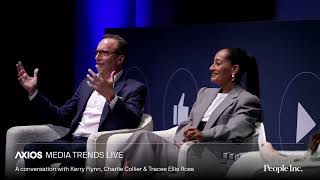
Roku President Charlie Collier on Prioritizing Live Sports, Streaming Landscape Fragmentation
On-stage interview (recorded Sept 18, 2024) with Charlie Collier, President of Roku Media, about Roku's evolution from a device maker to the largest television operating system and its strategy around sports and curation amid streaming fragmentation. Collier emphasizes Roku's "front door" home screen (120M daily broadband household reach), curation via destinations (Sports Zone, MLB destination), FAST content on the Roku Channel, and selective exclusive rights (multi-year MLB Sunday package) to both drive discovery and complement partners. He discusses bundling neutrality/support for partners, the growth of women's sports, the platform's scale (over a billion streaming hours/year claimed), and the need for consolidation and profitability in streaming.
Chapters
President of roku media, charlie collier.
Hey, everyone.
Good morning, everyone. We're the last one holding you until lunch here, but we've got a great session here with Charlie and thank you for being here. So I want to start with a little bit of a level set as to who you guys are. I think there might be a little bit of maybe of a misunderstanding. We know, a lot of us, I think, know you as a connected TV device company, and you're the box that.
How you know me.
You're the box that we buy to get our streaming services. I literally just did this with a Roku box for my daughter at college. But you're in transition. You've got exclusive sports rights that I'm going to want to get into. You've got this platform business that we want to discuss as well. Where is the brand in this sort of evolution?
Sure. Well, first of all, thank you for having me and good to see a lot of friends out here. And has anyone else mentioned the ferns? No. Between six ferns. Here we go. I am first and foremost believer in content, believer in audiences, believer in fandom, and that's what I'd love to be known for. But Roku, as you said, is very well known for being a device company. You can get Roku either through a device or we make TVs as well. And it's a complex company. But really, if you want to know what we are, it's the largest television operating system in the country and number one in Canada, Mexico, and, you know, a really enormous operating system. Why is that important is because if you think about the way you consume television now, and so many of my old friends have been sitting in this chair for the morning. It used to be you turn on your TV, you go to channel, fill in the blank. Channel 36 for me was ESPN and that's where it always was. And then you scan channels and you knew sort of where to go to. Go up 1 to 37 and find TBS and you'd get your Braves. And it was just in the ecosystem and easy. And today the first thing you do when you turn on your television is you come to our home screen and think about this. You, you know, we have basically super bowl sized audiences coming through the home screen, coming through our front door every day. And so in a world where fragmentation of audience attention, fragmentation of viewership, fragmentation, I mean, the gentleman you just heard from has a great product at Ion. And you might go there for your mysteries and then you might go there for Caitlin Clark and you have to want to Go there and, and we're going to help people find women's basketball, which they do so well, and they'll come to our home screen first. We'll help them navigate, we'll make it easy to find it. I'm a, I know you're a Pittsburgh fan. I'm a Jets fan, so want to know? Oh, and one, it is challenging to find your game if you're not in the business, and we make it easy to do so. So you come to the home screen. We'd give you an option. And by the way, we have great data relationships. We know what people love and what they're used to going to. And frankly, we curate all sorts of television, including sports, which is a huge priority for us. So our sports destination, the Sports Zone, would give you all sorts of ways to find the sports you love and make it simple and easy, no matter where it is. And so again, half the broadband households, households with over 120 million people in it every day, come through Roku's front door through our home screen. And we use it to entertain and to bring sports fans closer to what they want. And really, it's what we call a streamer's journey. It's not as easy as turning on channel 36 anymore. It is a journey to get to the Netflix home screen or to get to ESPN last night. And we help you do it. And that opportunity in a world of fragmentation really is distinct and no one has the scale we do. And, and it's really fun. And we also obviously are an investor in sports, believer in sports, and we'll.
Get to that in a moment. But just one more sort of question on that sort of conceptual piece that this notion of the front door of your streaming experience put you in sort of a unique position where a lot of the companies, including some that we've heard from this morning, in some senses, your partners with them, and we'll talk about NBC specifically, but in some cases, you're competing with them as well. And sort of that dual phase put you in sort of a unique position.
Well, I think it's unique because of our scale, you know, but it's, we're all pretty used to coopetition or working with people to elevate their products and also building products of our own. So that is a natural state of play today. Mark Lazarus was up here, dear friend, and also so good at what he does, you know, for the Olympics, we, we built an Olympics experience. So again, 100 households with 120 plus million people come to Roku. We Actually advertise the Olympics on our home screen because we want people to find what they want and that's an enormous event. Obviously, at that time, we built the Olympics destination, which was what's terrific about the Olympics. And I wasn't here for all of Mark's conversation, but what they did so well, as we all know now, is they took the thousands of hours of content and put it out there for everybody and we helped organize it. So if you went to Roku and you were in the Olympics destination, not only did we have a live medal count and all sorts of other things going on that the Olympic fan would care about, but my son's a water polo player. He wanted to find water polo. It had a path to get you there quickly. And so we sent more people. We send more people to almost everything because again, you know, half the broadband households in the country, our Roku users. But we contributed more to new subscribers on Peacock to viewership across the board. We do the same for Ion and Scripps. And that's a great joy because the notion is I used to work for Fox Entertainment and when we had a show we loved, I mean the most important show every year, lo and behold, we put it behind the NFL. If you want to know what a programmer likes the most when they run a broadcast network, they put the new shows to try to bring lead in to them behind the NFL if they're lucky enough to have it. Or Fox had many great sporting events and so the lead in mattered a ton. And you see the promotion that they use their league relationships for. Well, I believe in an era fragmentation in a world where lead ins. I mean, I don't think there's a show in America right now on traditional metrics on adults 18 to 49 live same day, I don't think there's a show doing above a 1 rating. And so the lead into television is now Roku. I mean, we really want to take that super bowl size audience every day and really help them in the streamer's journey, often on the way to sports. And so we know how many people love sports. We know how personal sports is. Again, you've been hearing about it all morning. And we help elevate that as the lead into a lot of sporting events. So if you love what Ion or NBC has, we hopefully get you there, give you some information on the journey that you welcome and hopefully help elevate the experience.
There's a lot of friction out there right now for the consumer in the streaming landscape. A lot of bundling We've been writing all year about all the bundling offers going on out there. We've got one with Venue Sports that's now the subject of litigation. Where is Roku on sort of that notion of bundling? Are you sort of agnostic since you're taking people to wherever they're going to go anyway, or were you on that?
Well, if you start with the fan, which for sport, bless you, for sports is good and for really all that we do to make television simple and delightful, that is a mantra of ours. Bundles help. And so when our partners bundle, we obviously are there to support our partners. But for us, I wouldn't have probably led with the word agnostic. But yeah, we want to make television the best it can be. We want television to be better on Roku. And we want to help people find the content that they're looking for and introduce them to content that they forgot that they loved or they didn't know about. And so it does allow us to really help support every partner. And so from Netflix to Ion, from NBC to Paramount, it all happens on Roku. And again, if you take the notion that fragmentation is a huge problem, and it is, and scale is really elusive, you can't fake scale. I was sort of blown away actually. At Fox we bought a company called Tubi. It's a great free ad supported service and I looked at the numbers and I could not believe how many of our viewers when we bought it came through the Roku front door. And then as I started to, with.
Little promotion from Fox, well, I mean.
Look, though they do a fine job promoting it in their own properties. But. But again there's. We had a presentation I saw when I first got to Roku that said the platform is bigger than the pieces. And I'm not fond of the word platform because I don't know that anyone uses it the same way. But if you think about this, you turn on your television, you're offered, in our case, a really clean ten and a half tiles that you can move around in whatever way you choose. But behind those tiles is content. And our job, just like it was to send people, is to send people to Tubi or Pluto or Max or Netflix, our screen. And that opportunity to start their streamers journey happens before their home screens. And so I thought, all right, well, having had the benefit of lead ins when I ran Fox Entertainment, can I provide that benefit to our partners and can we do it for all of television? Because television's gotten really confusing for the consumer and so we have a great opportunity to make it simple and delightful and easier and all the things if you actually can. I do show hands. How many people here use Roku? All right, awesome. Thank you very much. That's good. And again, half the broadband homes do and we hope it's a better experience. And when you buy your next set, you do it again. And we're growing. And that is. It's exciting to have scale in a world where fragmentation is an enormous problem.
So within that context, the live sports piece and the exclusive rights you had Formula E and then even more prominent situation with baseball. How did that strategy come together? Why was this sort of pivot or expansion to say, hey, we want beyond the front door piece having this exclusive content.
Sure. First of all. And I feel like we should all do it. Mets, Yankees. So you know.
But I have lots of Mets fans. It's all good.
Mine's a cry for help. But we're on a run. It's going pretty well. But we have a relationship with Major League Baseball. I'm an enormous baseball fan personally. That's not what made the decision. If you look at it, we have the Sunday games and if you're. The notion is that you're the lead into all of television, it's pretty cool for us to have an opportunity to have the first Sunday game and to really get baseball going on a Sunday. In sports. Sports in general going. In fact, we launched Roku Sports Channel just to make sure we could shine a light on the.
So it's that same concept of keeping people on your platform as they're going to the other RSNs and ESPN at night.
Sure. And helping them find what they got. But with the baseball deal, in addition to the Sunday morning leadoff games of which we're incredibly proud and we're proud to be with one of the major sports leagues, what we also have is a Major League Baseball destination. You won't be surprised. And there we give every fan every opportunity to see their team, see what's going on, get highlights and get scores. And we have FAST channel. Fast, I'm sure this crowd knows is free ad supported television. And it is enormous. It is in literally billions and billions of streaming hours. I think our FAST service alone on the Roku Channel, which is. Channel's probably the wrong. It's a service. It's our version of an app. Basically it's called the Roku Channel. And. And I will tell you the fast service alone would probably be the number five app in the country in terms of usage. It's that big. And so a Ton of people are watching it because it's easy and it's great content. For example, Ion and Scripps bless you. Have a fast channel, and I'm going to bless everybody. It's sort of how I feel. If you keep sneezing, I'm going to bless you. It's sort of human. My mother would be proud. But this fast service gets a ton of viewership. And so how do we organize it for people? Because you might be going to Ion for a mystery, and Caitlin Clark's coming up in an hour, and we can help the viewer of both be happy finding both. And so the whole notion of having not just the games from Major League Baseball, but the opportunity to curate a fan's experience and have a destination that makes it easier for them and have a fast service. It really is a very modern way of thinking about solving the baseball fragmentation problem. And I used to be an investor in Minor League baseball. And you'd go to an owner's meeting and the first thing we'd say is, oh, my gosh, the audience is aging. And we got to figure out all these local market deals. It's not national anymore. I feel like we're playing our role in getting the fans to love this sport the way we do.
To your point about the younger fan, when that Sunday morning package started with Peacock, that was the original premise from the league, that we want to go after a younger viewer, a newer viewer. What has your research told you in terms of your audience versus what may be going to other broadcasts on other networks?
Well, look, I think Roku has a bit of an unfair advantage because it is open and because 120 million people a day roughly come through that front door. So our numbers are very solid. And by the way, we want you to see it whether it's on the Roku sports channel or if it's on MLB tv. We want to help the fan get wherever they've chosen to. To watch this event. I mean, you'll. You'll watch if you go through Roku, those of you raised your hand. You'll notice if you have multiple options, if you could watch something on Fubo, or if you can watch something on Hulu, we'll send you there. And often we have a service called Premium subscriptions. Often they'll bring their stuff out from in front of their paywall and put it right next to our free stuff just to make sure it goes in the flow. Because there are so many moments of connectivity that allow us to drive an audience from one place to another and to me, why I was just blown away by the notion of working for a streaming platform is a, we have direct logged on relationships, so the data relationships are staggering and again, it's millions and millions of people. And B, if people don't remember what time something is on or where it's found or you know, how many times have you been recommended a show and they say, oh, it's on Hulu and you find out, no, it's on Peacock. I mean we can help make that easy for both the fan of television, but also specifically the fan of sports.
So you're four months into now this Major League Baseball relationship. How would you evaluate the success so far? And what do we think? What are you thinking about so far for next year?
Well, I mean we have a multi year deal and it's only going to grow. I mean we, we signed this deal and we are so pleased to work with Major League Baseball because ours are also unusual deals. Right. We have the games and then we have all these curation opportunities to help grow, grow the game. And we have the fast channel that helps shine a light on in a.
Different way, a little bit different than a standard rights deal.
It is. And so they were terrific. They're really good partners and they want what we want, which is you want the fan to be happy, you want new users to find ways to connect with the ip, in this case Major League Baseball. And then we want to elevate the experience so that it's a good one. So, so far so good. And I think having, you know, I can see some content friends in the room. For those of you who've had franchises, you know, year one you learn and year two you really start to leave salt with Amazon and Thursday Night Football. I mean they evolve and they get better and I expect the same from us. And I think the Mets are going to win every year we have the deal, I think. Yeah.
So of course then what are you looking at elsewhere in terms of future rights, assuming this portfolio, you would like it to grow?
Well, it's interesting again, if you believe the notion of being the lead into all of. By the way, check out his cufflinks. I didn't notice that there you got baseball cufflinks going. If you think about the notion of being the lead into television, we have every event on our platform already somewhere. So the Major League Baseball game was really special because it allowed us to have a branded MLB zone and do all that. I explained we have an NFL zone, we have a great relationship with them and, and I would guess that Roku probably sent more people to ESPN yesterday for the jets game than any other platform. Just by sheer size. I mean, I think it's funny on the east and west coast because of a marketing culture and because we're in the business and because these tend to be high income areas. You have a lot of people who think, oh, Apple and Samsung in terms of Roku versus Apple tv. Roku is so much bigger in terms of its distribution as a TV operating system that the scale we get to bring really does differentiate. So I look at it and I go, all right, I want to make ESPN more successful, I want to make Peacock more successful. That's one part of our mandate.
Is that your way of saying that you don't need exclusive rights so much?
I think what will happen over time because fragmentation is hard and sports rights are expensive, is that we will work with a lot of people who have big league relationships to make those better. And we will work with the leagues to make sure our curation of that really elevates it. And then when there are rights opportunities like the Major League Baseball one for us to play and play appropriately for what we do, we didn't go out to get, you know, the reported price.
Point was a lot lower than a lot of this stuff is out on the market. I'm assuming that's a salient factor here.
Well, I mean what we want to do is put the right deals on our platform and elevate our partners content because they paid a lot of money for it as well. And so the trick is to balance that so I don't have to worry about the fans not getting the events. I got to worry about wherever they are, making sure they have an easy and delightful path to them. And then when we have the events, of course we use it like they do to build lead ins and to elevate the experience in our case for the Roku user. But believe me, when the Olympics were on, if you had walked through the halls of Roku, certainly on the consumer side, you would have thought we own the Olympics rights. And when. And by the way, it'll be the same tonight for the debate and it'll be the same, which won't. It'll be on the Roku channel if you want to watch it there and you may, because our promotion might take you there. But we're thrilled to have you watch it wherever you're most comfortable because again, we're the lead into that. If you change the paradigm and say, how do you get that first screen to be really powerful so for you.
To do another rights deal, exclusive rights deal, it's got to have these other attributes.
Well, I want to be able to curate it in the way that the platform allows us to. So it's funny, my history in cable was very much and for many people in cable, one show could change your life. So, you know, for me, I was at AMC and we wanted to be the premium television on basic cable. And so a madman. And we brought them to this stage. It's probably one of the more recent times, you know, one of the first times I was, I was on this stage. Mad men change AMC's brand. But when you're only scheduling 24 hours in a day on Linear, you know, your mornings are probably syndicated repeats, your afternoons start to build into early fringe. And then you might start to really Curate. And by 9 o' clock for us, we were airing a movie that would set up the 10 o' clock new hour. And if you got Mad Men or if you got south park on Comedy Central or if you got, you know, the Closer on tnt, that became your brand, one show. And that doesn't happen anymore. Literally. We and public information, we're doing well in excess of a billion streaming hours a year. So for me to say any one thing is what we do that we're going to count on for our brand, it's not that in well in excess of a billion streaming hours last year. So if you think about that, then every show is contributing to that. And our job is to elevate the ones that make you happy and make you happy of Roku and do it simply and delightfully. It's a really interesting blend of data and technology and programming. And I love it. And I think it will over time. I think you're going to see the platforms have scale, so it'll be Amazon and Google and TV operating systems or Roku. And for Reach, it's. It's going to go precipitously down from there because because of fragmentation.
Been a steady undercurrent today around the growth of women's sports this year. And obviously it's something we focused on at FOLS all year long. Where has Roku been in that growth wave and where do you see that going?
Well, it's terrific and you can see it in the numbers. Obviously you've heard about a lot this morning. So I, I won't go to detail on that front, but a perfect example. Again, Scripps and Ion had all the, I think they had 9 of 11 of the first Caitlin Clark games and again you probably wouldn't have because the world is fragmented so much. Maybe you would have because you're in the business. But the common viewer looking for Asia Wilson or looking for the big rivalries probably wouldn't have said, oh, I'm running to ion for it. And so we have a women's sports destination we can curate there. We've done it now, actually. It was one of the first destinations we had. And what you could really see is that you could make it easy for people to find what they were clamoring for. And those who invested early obviously have done very well. And I think it's just going to continue to ascend. I was watching the US Open, I'm sure, as many of you did, as a fan, and I've never seen. I've never seen the community rise in such a powerful way to talk about women's sports. Not just in tennis, but they too were talking about the power of women's sports across all platforms. And Billie Jean King obviously was at the forefront of all of this. But what was remarkable is they were promoting women's sports across non ESPN properties in such an interesting way. And then we come to a lot of these panels and I've been on panels with more Mark before and it's just terrific that actually we. It's just sports and it's just another type of sports that we can promote to. And we've been doing it with our partners in really cool ways for women's sports in general.
So we've been talking a lot about sort of navigating this disruption and there's still a lot out there. We've got linear households falling precipitously. A lot of the streaming networks that we've mentioned have yet to be consistently profitable. Where do you see this business going in a macro scale, say, three, five years down the road?
Look, I. I do believe that there are going to be. They're going to be winners and losers. And I do believe that there'll be consolidation over time because you've got to marry scale to these investments. And so for us, you know, rather than picking winners and losers, our job is to make sure that when our partners come to us, we help provide that scale. And I think it'll matter a lot. I think it is been a pretty profound shift to watch the growth at all costs, which was, you know, a couple years ago where, where obviously growth was bigger than profits, shift to find me profitability. And that is, if you're stuck in the mushy middle when that shoe drops, you're watching that it's not so hard to change your behavior based on an instant change in what you're rewarded for. So you're seeing the response to a lot of folks who growth was an unequivocal good. And I remember from business school, my finance professor wrote on the board day one, he wrote, growth is not an unequivocal good. You've got to manage your growth and you've got to deliver profits and you've got to remember the cash matters. And for a while there, I think our industry forgot that growth is not an unequivocal good. Good.
You know, well, to that end, you're a publicly traded company and you know, try, you know, nuance is often lost on the street. And as you know, a lot of stuff that we're talking about is complicated and takes a long time, certainly a lot longer, 90 days to play itself out. How are you feel like Roku is doing in sort of communicating a lot of these complex nuances to the street?
I think complex is a great word. What's fascinating when you look at Roku, it's founded by a gentleman named Anthony Wood. He's an absolute genius. He invented the dvr. He was on the replay side when there was Replay and TiVo. He's awesome. I've never reported to anyone like him. He's an inventor and Roku is the number six in Japanese for those of you who don't speak Japanese. And it's either his fifth or sixth company. He's just awesome. And he's so. He's created a really complex company because we're a great device company company. We are a great television company. They manufacture televisions. The remote, if you have the Rokim remote, is the most simple, delightful, easy to use. You can use it without looking at it remote I've ever seen. And that was all by design from him and this remarkable engineering team, thousands and thousands of engineers. So you can't fake that. You can't fake engineering. And then we have this whole television business where we are really proving performance television. We want to show that the ROI of investing in this television business that we all love so much is real. But that's a whole different set of analysts than cover devices or software or hardware. And so it is a long term consistent journey to say here's who we are, here's what we do. And it is complex, but it makes a ton of sense to bring the right brain and the left brain together, creative and engineering and also bring together a thriving tech company with a company that loves Television as much as any I've ever worked for. So it's, it's a long road, but I think we're doing great.
So the rest of this year. Q4 It's a great time in sports. We got baseball playoffs coming up, start of hockey and basketball, college basketball, getting into the heart of college football, all of it. What can we expect from, from Roku in the next 90 days?
Well, you won't be surprised to hear here that everything again, anyone who raised their hand with a Roku anything that you're excited about in sports, we are too. And we're going to try to make that experience better for you and more delightful. There's no doubt about it. Our first season of baseball wrapping up and heading into the playoffs feels just terrific to be in the conversation. But again, not just the games, the curation, the fast service, the, the way we make, make the viewer know and.
You'Ll do the whip around thing and all of that because you won't have the same Sunday morning coming playoffs but you'll do all this other ancillary shots.
Look, we want the Olympics. It's so easy to explain because it's a two week event. It's obviously so many different events and we made it simple to navigate there. But we want to do that for everything. You asked about women's sports. Sure. We want to take you there and the more we know about what you like, we're going to make it a better experience for you and for baseball. Look, I think baseball's awesome. I just love it. But you know, you know, your local team and even that, I mean as a Mets fan, I can go to sny, I could go to MLB tv. Maybe if they're on Sunday morning you find them on Roku channel. That is really confusing for the non industry person. And we're going to make it simple and help organize TV and be the lead into these events. So again, if you walk the halls of the people who build this stuff, you'd think we own the rights to all of it. And we don't. We just actually want to get the fans where they want to be. So you're going to, you're going to see that on the sports side and you'll see us continue to invest in that.
Well, in the mantra of trying to make all of that easier. If you can solve some of these regional blackout and territorial issues, that would be really great too.
Well, you know, it's, you're always reminded of it in preseason football. I always, you know, end up looking for my jets and you. Are they on picks today or are they in CBS today or where are we? And that's. You know, there are a lot of legacy issues television has to solve. And. And yeah, that's a challenge. But. But I will say it's also the greatest year in the world. I'll give a plug to YouTube for those of you who have Sunday Ticket to watch. My kids, with their 37 fantasy teams, have access to every game in every way. And then through the Roku Sports Zone, they're tracking players and just trying to find where they want to go. It's as if they always had it. And I'm like, no, dude, we used to have one game. You know, I remember baseball. You had the game of the week. It is the greatest moment to super serve people, but it requires curation in a different way. So we're going to figure that out. And these are early days. There was a thesis at roku in early 2000s by Anthony. He said all TV will be streamed and all sports will be streamed. And that is happening. And now. All right, well, how do we curate it so it's organized for you and so that the fan wins and. And I don't think we've ever been in a better time to do it. And I. I love our operating system, our platform, and our ability to, you know, tell stories around those sports. That helps us and our. Our partners grow.
Well, your comment about Sunday Ticket is a great lead in to stay. Stick around for the rest of the afternoon because we'll be closing up with YouTube and hearing much more about Sunday Ticket. Also, encourage you to stay on the other side of lunch. We've got a great session with Stephen A. Smith coming up, but for now, we want to thank Charlie Collier from Roku Media for spending this time with us.
Thank you. Thank you very much.
Thank you.