Tracee Ellis Ross & Roku President Charlie Collier + Axios’ Kerry Flynn
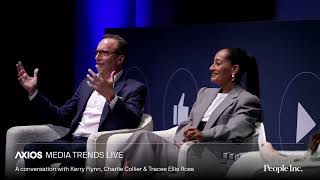
Transcript of a live Axios Media Trends panel (YouTube) featuring Kerry Flynn moderating Charlie Collier (Roku president) and Tracee Ellis Ross. They discuss Tracee’s Roku Original series Solo Traveling with Tracee Ellis Ross—why she chose Roku (creative freedom, bespoke collaboration), how the series feels intimate despite its title, Roku Originals strategy and scale (audience data informing programming), the platform’s commerce capability (viewers can press the remote to purchase featured products such as Pattern Beauty), Roku’s new subscription product Howdy, and the renewal of Tracee’s show for a second season.
Questions this video answers
Solo Traveling with Tracee Ellis Ross
It was the number one unscripted show that Roku has ever had.
Over 90 million active accounts.
$2.99 per month (ad-free).
Chapters
We're kicking off Media Trends live at the intersection of Hollywood advertising and technology, a place where the future of television is being written. I'd love to welcome to the stage Charlie Collier, president of Roku Media and executive producer of host of the Roku Original Solo Traveling, Tracee Ellis Ross.
Hello.
You're in the middle, please.
You're in the middle.
Good to see you. Good to see you. Hello.
Hi, everybody. Is it morning? It's afternoon.
Great question.
I have no idea. What coast am I on?
Tracy, thank you. Clearly, your show is about traveling, so you're used to it. So what I'm curious, though, is what made you say yes about doing your show with Roku when there's so many streamers that are, like, craving for that type of content and working with talent like you?
I'll be really honest. I said yes because they said yes clearly and quickly, which is not normal in the industry. There's a lot of hemming and hawing. There's a lot of we want this. And then a deal takes months and months and months. There was a we like it. We want it. Here's the deal. And that also has been my experience through production. There's a space and a clarity with Roku around, allowing their talent and creatives to have the space to give you the resources to do what you want to do and then give you the space to do that. And that was very important to me in terms of this show. Does everyone know what it is? Should I say that?
Give the quick fix.
Okay. So the show is called Solo Traveling with Tracee Ellis Ross on Roku.
I'm not actually Roku. I'm Charlie. Really?
Oh, my God. You guys. I thought I was talking to. Oh. Anyway. And it is. Can you be yourself by yourself out in the world? So it is a travel series, but it's not prescribed prescriptive. It's not a traditional. I'm going to show you what to eat. I'm going to show you where to go. It's really. Can you hold your space for your own company and do what is my version of solo travel, and there's a very intimate aspect to the show that I want it to capture that has not been done before. And Roku really gave me the space to do that, and that is why I said yes.
Amazing. Harley, do you mind adding to what you see as the value of a Roku original when you're pitching talent and trying to convince them to create such a show on their platform? What do you say? What makes Roku unique?
Well, and that's not exactly how it happens. We love to. Actually, I got into this business because I can't do what people like Tracy do. And when you recognize that, you think, all right, if I'm going to be in this business, it's a really good thing to support artists. And so we didn't go out and pitch this show. It's so authentic. Actually, if you. When you watch this show, and you should, it's called Solo Traveling. But the oddest thing is because it's so you. You watch, but you feel like you're traveling with Tracy. It's completely the opposite of.
It doesn't feel solo.
No, it doesn't at all. And the feedback we've been getting, and it's exactly what we wanted is, oh, I've actually been to Mayakoba in the second episode. You go to the Rosewood Mayakoba. I've been there. And to see it with you and through you is different than what I experienced when I brought my four kids and my wife and I mean, and so there's such a wish fulfillment part of this because we all know how we travel. And then you go someone else travel, and the choices you make. It really is. You know what I love is when you change your mind, because how many times when you travel do you have to do what you planned? And you say, you know what? I prefer French fries. Thank you. I wouldn't go to the bar. Yeah. And there's something really just calming and personal and wonderful about it. I love it. I love it.
Charlie, you just hit on what was my favorite moment of the show? When you're eating french fries in bed. It was amazing.
Can I ask you a question? Do you match up size of french fries?
Yes.
Okay. Yeah. I don't know if anyone else did it, but I got to say that in the show, and apparently other people do it, too.
That's happy we have that connection.
Me too.
Charlie, I want to focus on Roku Originals a little more. How much are you spending annually on Roku Originals?
Well, I mean, obviously, we don't break out our budgets for competitive, competitive purposes. But what we do is we. We. We start as a platform. We have a lot of information about what people love to watch. And so what we do, there's no theoretical minimum or maximum. We spend a programming budget, and then we want to make sure that we can satisfy the avid sports viewer, obviously the originals viewer. And then even back to my AMC experience, the combination of movies and originals are profound. And you start to look, we have a destination for all things food. And you're promoted there. Even though it's a travel show. Because of.
I do eat things on the show.
Well, not only do you eat things, but you travel through it. And certainly on the beverage front, I had heard before we met, by the way, she doesn't drink much and she doesn't eat gluten. And you wouldn't know it if you watch the show. She travels. I travel well, travels very well. But so there's no theoretical minimum or maximum. What we're trying to do is actually super serve these passionate viewers.
I also think there's a real interesting benefit and space that Roku has created that allows for a different kind of creative, circular experience between network, studio, platform, whatever you, you know, however you look at it and the content that's being created. So there's space for them. As you said, it's not like a template that exists and it's just like this is what we do and that you have to fit into. There's sort of a. I don't know what you call bespoke. There's a bespokeness to the way they worked with me and I worked with them. That honestly was the kind of experience I had not had. And obviously I've not done unscripted before, but I am used to the industry. I've been in the industry for many years and there was just a space for a bespokeness that I thought was very lent itself to creativity.
Well, and Brian Tanemon and his team, they've done a great job curating projects that will shine on the platform. So if you don't know Roku, actually, I don't know how many people here. Raise your hand if you have a Roku device. Thank you very much. That's good. Half the broadband households in the country get their television through our front door. And so the amount of curated, it's like 90 million. We, you know, we have over 90 million active accounts. Look at you pitching. That is impressive. I can't do what she does. She can do what I do. That's a cry for help. But truly it is massive. So we are by far the number one TV streaming platform. And with that obviously comes a relationship with the viewer that is different and allows us to curate differently. And I want you to have a different experience because we also send more people to the super bowl than any other platform and we curate that on that day. And so it really is much more bespoke.
I think it's something that the industry doesn't talk about as Much. But it's actually happening. Can I admit, I will admit this. I actually did not know what Roku was.
Wow, you learned. How did you come.
I came to learn in the process of wanting to make my show. And then as soon as you do any research, you go, what it is, you know, it's like an industry secret.
Well, here's what it is in New York and L. A. Because I think for reasons including, you know, there's less price sensitivity, people have their TVs installed or they go get their Apple TV. You know, the Apple TV product is, I think, one eighth of our size in terms of distribution. But obviously, in. In markets where they. Where they market, they feel like they have a bigger presence. And it's a great brand in so many different ways. Apple and then Roku is covering the country.
And by the way, it's like, I remember when I was 6 years old and I got glasses. As soon as you get them, you notice everybody in the world that wears glasses once, you know Roku.
Yeah.
And every person you ask, they're like, yeah, I'm a Roku user. Like, everybody and everybody has a Roku.
It's literally half the broadband households plus. And that's crazy. And that scale allows us to do some of the differentiating things that I love.
And then, you know, what we should say, which is very important in this moment, is that my show was the number one unscripted show that Roku has ever had.
It's great.
I mean, that bears saying, right?
Rarely an hour goes by where I don't see it. I love saying, me neither.
Well, congrats on that milestone I wanted to go into. I love that you both use the word bespoke one bespoke part of the show that I think was unique. The fact that, like Tracy, Pattern Beauty is a part of it. And there are moments in the show where you're using the product and you look at the camera and you're like, press on your remote to buy.
Okay.
I have never seen this in my life.
I'm so grateful you said this, because that was actually one of the main reasons I said, yes. It was the original idea. But one didn't know that it could happen. And so Roku has the technology. I was like, wouldn't it be amazing if So, I have a beautiful beauty company by the name of Pattern Beauty. We have everything from hair now to body. And my thought was, is there a way to combine these two things? And Roku has the technology that no one else has that allows you to actually purchase from your remote. So there's. It's not just like the whole QR code that does exist in the Roku world, but you could actually press OK on the remote. So there was a way for me to seamlessly sort of utilize the products the way I do and then lean towards the camera and break that fourth wall and allow people to purchase what I used.
But because it's so personal a story, it actually feels right that you break the fourth wall.
It doesn't feel like a commercial.
It's you. It's great. And look, you know, there is the. The power of the platform is really profound. And I remember in the first season of American Idol, does everyone remember when Ryan Seacrest flipped open his phone and taught us how to text? He's like, for Kelly Clarkson, Crest won. And then that year, more people voted for the winner of American Idol than I think in the general election, which will tell you a lot about our country. I think that we will teach people, where appropriate, how to conduct commerce on the remote as well. And that is a really interesting opportunity.
So, Terry, you see that as like a replicable model because to me, it's pretty unique because again, Tracy, you're authentic. You're traveling with her. It didn't feel weird that you're like, essentially shilling this product because how dare.
You use the word shilling.
But here's the.
Let me protect you.
I can shill. Like, no, but anyway. But the thing that I find really interesting is when I started in the industry, there was product placement, but there was no actual connection when the industry started, television and television content was created to match with the commercials. So this is sort of a flip on that. And it's the way that we use social media, it's the way we use TikTok. It's the way all of that happens. But it's one of the ways that I believe Roku is bringing television and that kind of content into the future because we're doing it anyway. But somehow TV was getting left behind.
Well, you need the platform. I mean, it's really interesting that the platforms are by definition now bigger than the pieces on the platform. And so you have this fundamental layer that is both the front door to television almost by definition, and then the apps and other product that lives on top of it. So that layer allows us to obviously to conduct commerce in a way that is really going to be fascinating.
It's, I think, industry changing. I really do.
I'm excited to see what other shows, like, start to use that again. And one other Thing I want to quickly touch on, you just recently launched Howdy, which is a subscription product I'm curious about. Is that like a test or do you see a further growth into subscription? Because we just talked about the power of, like, brand integrations and obviously Roku is powered by advertising. So why the subscription?
Well, so we drive more people to almost any app. If you're half the broadband, again, think of it as a base layer. If you're half the broadband households in the country and they're coming through your front door, you can imagine that we send a lot of people to all the major apps, no matter what, every one of them. So if you then think about the landscape of streaming, there aren't many. This Howdy is ads free, 299amonth. So for less than half a cup of New York coffee, you can get a month of great streaming. And so if we're building those other services, it makes sense for us to offer that to consumers because it's not meant to replace Netflix or Disney by a long shot. They have great value. But there are a lot of people across the country who are 299. Ad Free is a phenomenal opportunity. And if we can keep those costs down and give them great content, you can imagine someone searching for a title, finding it on Howdy and say, wait, I could buy it somewhere for a lot more or have the whole month here. That seems to make a lot of sense to me.
Excited to see how that grows. We're virtually out of time. But, Trace, I wanted to ask you.
Everyone at Axios is ADD here, so exactly.
Let's go.
What are we saying?
Go.
One quick thing, Tracy. Your show is renewed, so you'll have a season two.
We'll have a season two.
Where do you want to go?
Oh, my God, I want to go everywhere. But we, we have to narrow it down to three. So I don't know. These are some of the things that are coming up, like Japan, Switzerland, south of France, Belize. What was the other one? There was another one. Oh, surfing. Surfing in.
Perth.
So there's all these ideas that have, I've had.
Here's the big takeaway. If you're good enough and talented enough to get someone to make a show about going to places you've always wanted to go to. That sounds awesome.
Season three. So you can go to all those.
Exactly. But we're going to do one at a time.
Thank you both for joining us today. It's great to conversation.
Thank you.
More from Charlie
Roku President Charlie Collier on Prioritizing Live Sports, Streaming Landscape Fragmentation