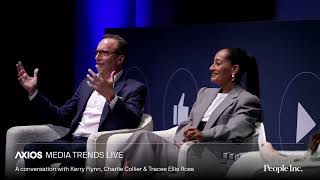
A short YouTube interview (Shelly Palmer with Charlie Collier, AMC president/general manager) about AMC's breakout original series Mad Men. Collier describes Mad Men as AMC’s first major original scripted series and a critical and ratings success, highlights milestones (Emmy wins, pop-culture crossovers), recounts promotional and brand partnerships (Banana Republic window campaign), describes a digital avatar promotion that drove social sharing ("over a million" downloads), and notes strong digital distribution performance (top four iTunes season-pass slots alongside The Prisoner). The interview closes with program sign-off and viewing details.
Questions this video answers
Over a million people ("we literally had over a million people come in and download a likeness of themselves inspired by Mad Men").
Mad Men became the first cable network series ever to win the drama Emmy back-to-back (as stated in the interview).
At the time referenced, AMC held the top four season-pass slots on iTunes: The Prisoner at #1 and the three seasons of Mad Men directly behind it.
Chapters
When you think of Mad Men, you might think of Don Draper, the chain smoking leading man in AMC's hit series. But you should really be thinking about Charlie Collier, the president and general manager of amc. He was the barking mad TV executive who thought airing a period piece about the ad business was a good idea. You know, it was. And AMC has the Emmy, the Golden Globe, and the ratings to prove it. Please welcome my good friend, Charlie Collier. Charlie, how are you?
Great, Shelly. Good to be here.
Welcome to digital life. So, Mad Men, huge phenomenon. Tell me all about it.
Well, it's been a great success for us. It's funny, a few years ago when we decided to get into original scripted series, Mad Men was our first foray. And the entire goal was to create programming of distinction, distinction for the viewer, for the distributor, and of course, for the advertiser. And it's been a great success.
So look, everybody, I can't probably add to all the accolades and all the adulation and certainly the critical acclaim. You guys making any money with Mad Men?
You know, as you can imagine, with a show like Mad Men that has been, as you said, a rating success, but also a critical success, it's been pretty standard in terms of monetizing it in the traditional ways. But I know you want to talk about the ways beyond the traditional, and we've been able to do that for a number of reasons. First of all, when it made history, becoming the first cable network series ever to win the drama Emmy back to back, it became also part of a pop cultural phenomenon. So, for example, Saturday Night Live and some of the fun stuff we got with it, Saturday Night Live and Sesame street and Jeopardy. All either have spoofed or in the case of Jeopardy. Used it as a category. And then it crossed over out of television into other areas of popular culture like fashion. So you look at something like what we did for the premiere with Banana Republic here, we had 11 miles of window promoting the AMC premiere of Mad Men and also sending in people to help them sell what were Mad Men inspired clothing lines.
So let me ask you a question, Charlie. Is it safe to say that once you have a hit television show, everything else takes care of itself?
Well, I would say once you have a hit television show, your job is to make everything take care of itself. And we do just that.
So, no, no, I'm sort of saying that rhetorically and just trying to be a little silly about it. But the truth is, to become a hit television show, you need people to watch television and know it's a hit. What did you guys do to do that? Did you just put it on the air and hope for the best? Was it traditional promotion? Was there some digital promotional social media around it? How did you guys drive the interest in the show and awareness?
Sure. No, it's a great question. Obviously we did all of that and more. You know, I mention the promotion with Banana Republic, that was a great one. We also created unique digital opportunities. One of them was an avatar we created. We literally had over a million people come in and download a likeness of themselves inspired by Mad Men. So they could choose their hairstyle and their clothing, they could choose accessories of the era and then they uploaded it to their social networking sites and literally shared it with millions more people. And it was sort of the perfect confluence of events for us because here you had this opportunity where actually Entertainment Weekly went on and put us at the center of their buzz metric bullse. And here you had a monetizable opportunity and the opportunity to have people not just personalize their brand but then share it with millions more people.
So what's next? What's next for Mad Men? We've got this fantastic snowball of promotion and fantastic programming. Talk to me about how you're going to reach out and touch the people next time.
Well, it's not just been Mad Men, you know, we have just done the Prisoner, which was a six hour miniseries we did last week. And along with Mad Men and Breaking Bad, the Prisoner is available on itunes. We have them all up there and it's been a tremendous success. Actually a digital note for us. Last week we had the top four slots in terms of season passes on itunes with the Prisoner number one and the three seasons of Mad Men right behind it.
That's truly fantastic. Charlie Collier, the general manager and president of AMC the Crazy man behind Mad Men. Thank you so much for being here, Shelly.
It's great to be here.
I'm Shelley Palmer. You're watching Digital Life. Watch Digital Life with Shelley Palmer Tuesdays at 10pm Eastern on WNBC's New York Non Stop or catch it online anytime@shelley Palmer.com.