Exponential Thinking for Exponential Times Webinar
Charlotte Kemp, a futurist and executive coach, argues that leaders need to shift from linear thinking to exponential and quantum mindsets to survive in a rapidly changing world. She uses the rice-on-a-chessboard story to show how exponential growth overwhelms human intuition, then maps three worldviews onto the Three-Horizons framework and offers practical tools like an abstention ledger and the QUIET acronym to embed future-thinking into every decision.
Chapters
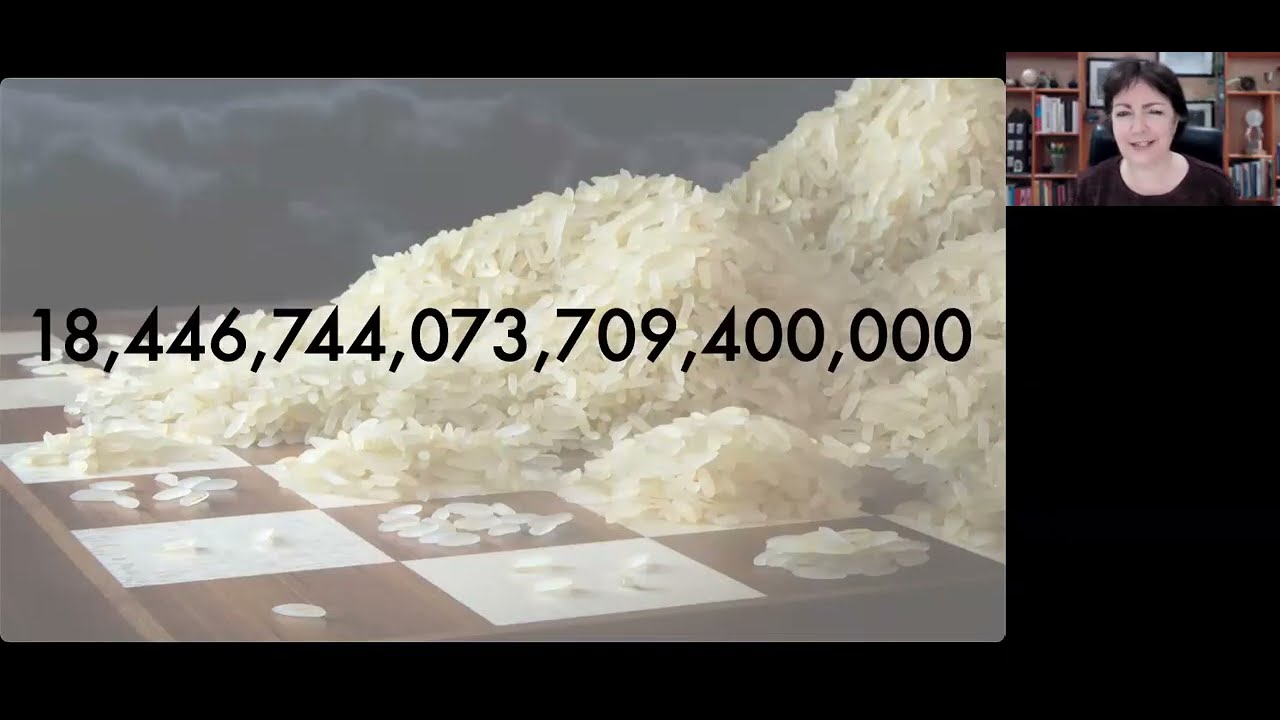
Okay, for those of you who don't know me or you haven't met me before, I am Charlotte Kemp. I am a futurist. I call myself the Futures Alchemist because I love playing with these different ideas and coming up with something new. I'm a futurist executive coach and author, and I also do some keynotes and workshops on various topics. This is one of the workshops that I do for companies, so we're going to explore a couple of ideas, but I can't really get into everything because It is too big a subject, and I have to keep holding myself back. I always, always want to like share everything with everybody, but that gets overwhelming, and that is part of the whole exponential thinking part we'll get to in a moment. Towards the end, I will share a link and an image just showing you where this topic today fits into some work that I'm doing at the moment, just so you can see the bigger picture. And there is a book that is available as the first part of this series. That book is online already and it's free almost everywhere you look for it, so you're very welcome to download that and get yourself a bit of a picture of what we're looking at. All right, so let's get started. Let's start with a bit of story time. We're going to go back to ancient Persia where there was an emperor who was at home for a while at his, you know, kind of head— what would you call it? Headquarters of an empire. But he's at home in his court after having been out winning many multiple campaigns and conquering other lands. But he's back at court for a while, but he's starting to feel a little bit bored. You know, court life, it's not as exciting as things that are happening out in the world. So he tells his courtiers that he wants to be entertained. So everybody rushes around trying to find entertainment or games to keep the emperor happy because you don't want an unhappy emperor. And everybody who comes and brings something, it's either too boring or, you know, it's not clever enough. It's a very clever emperor we're dealing with here. And then one day a courtier arrives with a checkered board and some carved pieces and explains the game of chess to this emperor. And the emperor loves it. This is a game of strategy and war, and so the courtier has to teach him the rules and then teach everybody else. And the emperor is having so much fun playing these war games on this little board with everybody in his court, and he says to the courtier, this is really good work, I'm really impressed. What would you like as a reward? The courtier, who is clearly a clever person, says to the king, to the emperor, oh emperor, I would love to have one grain of rice and doubled and the sum of that double for every block on this checkerboard. And the king looks down at the checkerboard and he goes, well, okay, if that's all you want, that's no problem at all. And he calls over the treasurer and he says, make it so. So the treasurer and the courtier go off. The emperor is playing his games, and after a few days, the treasurer comes back and he is sweating and he's bowing down and he's just praying for mercy here, and he says, oh Emperor, we do not have enough rice here at the capital to give to this courtier who's invented this game of chess. In fact, we don't have enough rice in your entire empire to pay him what we've promised him off this checkerboard. And the king cannot understand this, and he gets the treasurer to try and explain it to him, and the treasurer explains how these numbers keep growing and growing. and it's not making any sense. And the more they try and explain and do the calculations, the more the emperor starts to feel really uncomfortable. He feels like he's been deceived, that he's been tricked, and he doesn't like that at all. And so his response is to call the courtier back in and then to demand— after this has been explained to him— to demand that the courtier's head is chopped off. Because he's been deceived, and nobody wants to, you know, deceive an emperor. But the problem is the emperor at the beginning could not understand the concept of this exponential number. There's a couple of debates about how you actually calculate this, but I've referred to like the ultimate expert of Wikipedia, and they've given me this number. It is 18 quintillion, 446 quadrillion, 744 trillion, 73 billion, 709 million and over 400,000 grains of rice. That is over 1.4 trillion metric tons. And what the emperor was experiencing is what so many of us experience in the world today when we are faced with these phenomenal concepts and numbers and implications and complexity, and we cannot understand it. We cannot fathom the scale of these numbers. And that's a serious problem because we're living in a world where these things are getting really huge and and out of hand. This particular image is a really interesting one because I've shown it to a couple of people in presentations, and some people look at it, especially when it's moving. Let me just show you that again. I can go forward and backwards. It gives us a kind of unreal sense of what happens in our brains when we start to get distressed by something that is too big for us to contemplate. This is anxiety. This is fear. This is starting to sweat because we cannot keep up with what is happening in the world. And that's a really very real epidemic. I was talking to some colleagues of ours the other night, and they were talking about how statistically so many things in the world are improving. Health is improving, people can live longer. Technically, there are fewer people in poverty in these days than there were in the past. There's more literacy, there's more access to clean water and opportunities. I know we see all the bad stories, but for the whole globe, things are getting better. The 2 things that are getting worse is mental health and suicide rates. And this image, it's just for me, it just encapsulates all of that fear and anxiety. So here we have this Emperor who has been faced with this exponential number. He can't understand it, but there's another character that we want to look at as well, and this is the Red Queen from Alice in Wonderland, and this actual concept is called the Red Queen Hypothesis. So in Alice Through the Looking Glass, the Queen is running with Alice through the garden. She's got Alice by the hand. She's running really fast. Alice is getting tired, trying to tug on the Queen's hands to stop, and she's saying to the Queen, why, why do we have to run so fast? You know, we don't do this at home. What is going on here? And the Queen responds with, Now here you see, it takes all the running you can do just to keep in the same place. All the running you can do just to keep in the same place. And if you want to get somewhere else, you have to run twice as fast as that. So this Red Queen hypothesis has been used by people in biology to explain this. A species must constantly adapt, evolve, and proliferate in order to survive. So if you think about species in an ecosystem, if one species is just happy, they're, you know, floating along on the lily pads in this little swamp, and they're not adapting, evolving, or making many, many little babies, then they're going to be eaten by the other species in this ecosystem who are adapting and evolving. So we may want to evolve because we want to achieve something, but if we don't evolve, and we just think we've got enough knowledge, insights, whatever it is we're looking at, and we can just stay here, then other species will evolve and eventually kill us or eat us. So this microbiology concept is we must adapt, evolve, and proliferate in order to survive. And I'd like to think in terms of what we think about with the future ourselves is our species must constantly innovate, expand, and succeed in order to survive. I'm not sure that we need to proliferate in the world. I saw this little post which I put onto LinkedIn yesterday, a little meme that says, when Sir David Attenborough was born, there were about 2 billion people in the world. There's now 8 billion people in the world, and his lifespan has gone from 2 billion to 8 billion. That is an exponential increase in In the population, the little tagline there was "Attenborough, you sly dog." He didn't have anything to do with how many people there are on the planet right now. But we we do proliferate as a species. We do have so many more people on the planet, and there are all these concerns about do we have enough resources. As an aside, if you want to have some fun later on today, go and have a look at populationpyramid.net. If you forget that, drop me a message and I'll remind you populationpyramid.net. And it'll show you the population of the world. Now, what is very interesting about that site is you can drill, you can look at the world, you can look at continents, you can drill down to countries. Countries in Europe, especially into the Scandinavian countries, countries like Japan, their populations are on the decline. They are not having more and more babies. They do not have enough babies being born into their population to sustain that population over time. So they're not proliferating. In Africa, it's a very, very different graphic. So have a look at that, and that implies so much. How many babies are born into a country has incredible implications going forward a couple of decades, and that's not even talking about immigration or anything. So we need to innovate and expand in order to be able to keep up with things that are happening in the world. And this picture of Alice and the Queen just running is something that we we experience a lot. People think that in business we have to hustle more, we have to have a side gig, we always have to be busy, we have to have a packed calendar, and only if we are very busy and we don't have any time, um, are we considered to be succeeding. And I think it's a very negative, damaging, and false metric. Uh, we should be in this time frame, we should be able to do more with less. We should be able to achieve more and not make it fill up our calendars more. I've had some conversations with colleagues recently about artificial intelligence and the impact it has on business and, you know, how many people are going to lose their jobs because of AI. And somebody said, but of course we've seen this all before. And I really wanted to understand what they meant by that. And they said, back when computers were first you know, becoming a feature in the workplace, people discovered that with basic computers, with basic spreadsheets on computers, they could do a lot more work. You know, the work that they'd done before would now take less time. And the question was, if these computers are going to make our lives easier because our work is more efficient, what are we going to do with all the spare time? Are we going to go out and explore and learn a craft or learn how to paint and have more deep conversations. What can we as humans do now that we have more time on our hands? But it turns out because we humans like to proliferate, it's all we did was work out how to do more work in the same amount of time because now we've got the platforms that will help us to do that. And the same thing is happening with artificial intelligence. We are, we're not using the time that is now available to us, we're just packing more and more work into that time. We are running twice as fast as we were before. just in order to keep up, and we're doing it to ourselves. We're doing it because we're trying to compete with other people, companies, or nations. It's a very unhealthy way to look, and there should be something different. There should be a way of balancing what we work on with how we live our lives, but we don't get that right if we're thinking in terms of the Emperor or the Red Queen. So let's look at this model to help us see things differently. The 3 Horizons Model is a a really quite flexible tool in futures thinking. You can use it for so many things. If you look at marketing companies, for example, while you're buying product 1, they're busy working out how to do the marketing campaign for product 2 or version 2, and the R&D department is working on the final touches of version 3. So these things are always happening because we're always— some companies are always trying to sell more things so that we can, you know, that they're going to keep having profits. But we can look at these 3 horizons in terms of the world that we're in, in terms of this concept of a linear world and an exponential world. So Horizon 1 is the world of yesterday. It's a linear world. Peter Diamandis calls this, he says it's local and linear. So local is, you know, the people in the area that you live in, you can know them by name, you recognize them, you greet them across the road. And it's linear. If you stand somewhere, outside, you know, on the road, you can look down the road and you can see the distance. And if you, if you go and take 30 paces and you walk along, you can see where you started and where you end. It's a, it's something that is very tangible to us. It makes sense to us. That is the world of yesterday, the linear world of yesterday. We are in at this moment an exponential world where things are so much faster, and it's so it's according to Peter Diamandis, it's now a global and exponential world. So now our friends and colleagues are all around the world. They're not just, you know, in our neighborhood. We don't just pop in and see each other. They're in different parts of the world, but they feel close to us because of technology. So we're in a global world and we're in an exponential world. So those 30 paces, if you, if you do them as a linear equation. It's like 1 1 1, and you walk along and you get to 230. If you made 30 paces exponentially— and I'm not going to try and do the maths because we had a party on Monday night, and I think I'm still hungover from that one— but the maths gets really, really wild. If you take 30 exponential paces instead of 30 linear paces, you can move so far you can go around the globe. The entire Earth. You can go around it not once, but 26 times. 30 exponential steps will take you around the planet 26 times. I used to have a graphic where I showed that with a little animation, but then it would take a really long time for me to click through all the animations to get through 26 revolutions. Our brains are not designed to be able to hold that scale in our brains. We cannot fathom these kinds of things. That is why people can go to the beach and look at the horizon and say, I don't see a curve on the horizon, the world must be flat. It's because they cannot fathom the scale of the universe that we're in. And that's a problem because it means that we're going to keep pulling back to things we do understand that do make sense to us, and we're going to miss out opportunities. Our brains are phenomenal. They can calculate and do a whole lot of things, but we have to really stretch our brains to deal with these bigger and bigger concepts. So this is the exponential world of today. It's global, it's exponential, things are happening fast. We can achieve so much more. We can have a meeting like this, which used to have to happen, you know, over breakfast somewhere with people who were in town, and now we got people from Mauritius and Pretoria, and I don't know who else has joined us, you're all welcome. So we got all these people from around the world. That is the exponential world of today. We have a quantum world coming of tomorrow. Beg your pardon. Contemplate that for a moment. Quantum sciences is really interesting. Um, the word quantum is very useful in marketing in science fiction. You just throw in the word quantum and it means, oh, big or amazing. The science behind quantum theory is robust. They have done tests. They know what they're talking about. But it is really challenging to our brains to understand what they're talking about. Beg your pardon. So let me try and give you this one explanation. And they talk about things being in superposition. and being entangled. So superposition means that a quant, the thing that you're looking at, can both be a particle as well as a wave at the same time. And it's only when we look at it that it demonstrates that it is a particle in this moment or a wave in that moment. But while we're not looking at it, it can be both things. I know that that sounds utterly nonsense if you've never thought about this or heard about quantum theory. you're gonna think I'm just making this up, but every weekend I would listen to another video explaining quantum science because I would really love to understand it. So there, it implies so much, and there are computers that are being built by Google and Apple and other places that are actually quantum computers, and not quantum as in like the marketing department saying, this is a quantum computer, how cool, let's add a zero on the end to sell it, but quantum computers are actually calculating things in a way that is very different from how our very efficient computers at the moment calculate things. So we'll be able to do calculations and concepts so much faster on these computers. For example, the security codes that protect some websites that, you know, make something encrypted. If you use a regular supercomputer right now, it could take them months, years, decades to do the calculations to crack that code, whereas a quantum computer can do it in a matter of seconds. This is really crazy to our brains. So if you want to learn the science, go learn the science. If you see it being, you know, bandied around in marketing or science fiction, just have fun and enjoy it. But for you yourself, as you develop and prepare for the future, for your organization, Use the challenging concept of quantum thinking to see what else you can do. The other concept about entanglement means that if something happens to— if 2 particles have been entangled, when they're separated, even over vast differences, distances, if something happens to one of those particles, it'll happen instantly to another. So the concept of cause and effect is kind of discarded with with quantum science because these things should not be able to communicate at such a distance, and they certainly should not have things happen instantly. How can you use that theory, that concept in the workplace? That's what you wanna ask yourself. In fact, if you do nothing else, just write down, how can I be quantum in the workplace? And look at that throughout the day. If you're making a plan, if you're having a meeting, if you're discussing, you know, future products or projects that you're working on, How could this be quantum? And that is how you start to prime your brain to think beyond the linear and then the exponential world that we're in at the moment. I'm going to show you because this can all seem really cool, but what does it mean? I'm going to show you this in terms of business models. And I think when we, when we look at these business models, the idea here should be a metaphor for everything else that we're doing in life. We've been raised a certain way, we've been taught a certain way, we are products of our history and our environment, and we can choose to keep some of those concepts and models and plans, etc., or to get rid of them. We can replace them. Something that was good in the past is not necessarily good for now. We don't have to hang on to everything because it was precious to us. It has served its purpose back then, but now we need to do something else. If you've moved from a small little bachelor pad into a family home and then into a retirement home, all of those homes were beautiful. They served their purpose, but you don't need to stay in a home that doesn't serve your needs anymore. So we need to learn how to move beyond something that was good in the past that no longer serves us. What, what got us here will not get us there. We need to be able to see that. So let's look at business models in the linear world. Kaizen, SWOT, waterfall project management, balanced scorecards, Porter's 5 Forces. There's a bunch of others, I'm sure you can think of them. Kaizen is that concept came out of Japan about incremental improvement. So we got a procedure and tomorrow this procedure is going to be 1% better and next week is going to be 1% better on yesterday's 1% and then we just keep incrementally increasing and improving on that. It's a great management tool. It's a great tool for factories, for manufacturing. It's good. But we can incrementally improve on something that is becoming utterly redundant. If you were the, after all these years of experience, the best fax repair person in the world, you're out of a job, except for some kind of scattered places in the US who apparently still use faxes. But we don't use faxes anymore. You are the best at something that is irrelevant. It could be a novelty. You can make a hobby out of it. You, you can, you know, be a personality in that, that space. But this is not something we send our children to learn at school anymore. We don't have courses about it because it's irrelevant in this day and age. So we don't want to incrementally improve on something that will not be there in the future. So we need to really look at that. SWOT is good. Your, your strengths and weaknesses, etc. It's good. It serves you. That's a thing that you can— a model you can use to just kind of start your thinking. But that's not the model you want to use. That's not the analysis tool you want to use for moving into the future because it doesn't serve any longer. Waterfall project management. Those of you who, who are in project management, you'll understand that. So these are concepts that have served their purpose, but they don't suit anymore. So in the world that we're in today, in the exponential world, we've replaced waterfall project management with agile projects. We're now looking at design thinking, platform business models. So everything like, you know, Uber, Airbnb, Spotify, any of those platforms— beg your pardon— where the business model is to host the platform and other people are the creators and other people are the consumers. They don't have to make the products and services to sell them. They just host the platform. That's an exponential business model. It's really powerful. In fact, I'm gonna forget the name of it, but what, what we experienced with one of those systems or platforms is every additional person you put into that platform creates exponential more value for everybody else who's already on that platform. So you want people there because it makes it so much more effective and powerful. All of our social media platforms are like that. I love using LinkedIn and I've spent a lot of time investing in my LinkedIn network and my LinkedIn profile. And every now and then I'll get these invitations and say, this this is a new version of LinkedIn and you can come and play here. And I think, well, why would I want to when there's this exponential value of opportunity and network on LinkedIn? Why would I leave that environment to go backwards to a small platform that does not have the reach? This can be both, you know, a benefit and a drawback because we are sometimes locked into something that we don't want to be locked into because of other reasons, but that platform at the moment is winning. So all of these things are business models and concepts that we can use in this exponential world of today. Blue Ocean Strategy has been around for a while. It's you want to go and mark, you have your market in a place where you don't have a lot of competitors. The opposite of blue ocean, if you haven't encountered this before, is a red ocean because there's a whole lot of sharks and other predatory species in that space. They're all eating everything else and red from the blood of the competition. A blue ocean, you don't have that competition, so you can do something, something new. And exponential organizations is really interesting. If you want to, if this is something that you're interested in, look up OpenEXO, OpenEXO, so exponential organizations. And it comes from— gosh, I am losing names today. Peter Diamandis from Singularity University and Ishmael Khan or somebody, they've worked on this exponential organization platform. And what it means is it's teaching you how to create a business that is flexible, that is agile, not one that is heavily invested in huge amounts of staff and infrastructure that you can't easily move or change direction or respond to opportunities. So that is our exponential business models of today. What are we looking at in the future in a quantum world? We're looking at complexity theory, not just design thinking, but the complexity of how things impact other parts of the world. And we're seeing that now with politics. Somebody makes a pronouncement and we think, well, that's fine for them over there, but then all of a sudden it affects people in other parts of the world because we have a very complex integrated world at the moment. We're all affected by things that happen. Holocracies are the opposite of hierarchies. So a hierarchy is the bosses at the top and then there's all this kind of authority that goes down. A holocracy is where the boss is in the middle empowering the people on the outside to do the things they need, not demanding coherence with their purpose, but actually serving them so that they can do the work that is out there. So it's a distributed leadership and responsibility model. Biomimicry is how can we mimic what is happening in nature, in biology? There's lots of products that are designed on biomimicry principles. But if you're looking at a business model that looks like this, it's just one example would be maybe our industry or our sector or our market is something that happens in seasons, in waves. And if we can get used to those seasons, then we can respond to the seasons like nature does, as opposed to saying, well, we had a good quarter last quarter, we should have a good quarter this quarter. Why are we not getting the profits that we expected? Well, because it's a different season and people are doing different things. I live in Cape Town in Strand. Down the road is the Belgian Waffle House. If you're ever here, please come and visit. It's absolutely gorgeous. And they do a roaring trade on the beachfront over summer. But we're heading into winter, and I know next week is June, and she takes off— the owner takes off 3 weeks in June. They close it down because it's cold and wet. Nobody's on the beach and nobody's buying pancakes. You know, Mug and Bean down the road can have their business, but they'll come back come summer and then they'll open up. So they got used to that seasonal approach. They're running their business according to how biology works in this part of the world. Well, not biology, kind of like nature. Regenerative business models. Here we're looking at instead of extracting value out of one part of the world like Africa and shipping it to China to make things, just go to North America or Europe and sell the products. That's an extractive business model. A regenerative business model is how can we use the components we need, but then build back into the society or into this environment so that it's sustainable, so that it doesn't destroy the lives of the people who, you know, rely on that particular environment. So how can we create a business model that is more in harmony with that part of the world instead of just extracting that value? Antifragile business models and decentralized autonomy. DAOs. I should not have used these big words today. So there's a lot of different business models that people are experimenting with that can be used. There are obviously people looking at this going, well, you know, there's not enough profit in this. We want to make money. That thinking is old-fashioned thinking. It doesn't serve us. It's greedy. It is self-centered. It is really about some people having all the power and authority and the financial power over other people, that is not the kind of thinking that will allow this planet and our race to actually survive into the future. So we need to find different ways to respond, and business can still make money and still make profits without destroying things if we can look at this in a quantum way. So that's a challenge to us in terms of our thinking. If we can identify business models that applied in in a linear world that work in an exponential world that we're experimenting with for a quantum world. What other parts of your business or your life or your career can you look at and say, I've been operating this way and I need to change it and operate a different way. I've been marketing myself one way, it needs to change. I've been selling my services or presenting my services one way, I need to change. There are a couple of speakers on this call, and in the past, we, we would have to be present on a stage in front of a group of people to present our work. We knew we could do online stuff. Some of us already did some amazing online stuff like Ian Hatton did, and then COVID happened, and we all had to learn how to use this and use it well. So we're now in a, like, an exponential world where we can We can reach and talk to people anywhere because of the technology we have. So that is a shift. What will those shifts look like for our industry going into the future? This one example keeps teasing my brain. It's kind of like superposition. You can be in 2 places at once. And during COVID I was asked to do a keynote, but to record it, have it prerecorded so that they could run it at a certain point at a seminar. And I was online presenting live to one group of people while my video was playing on another seminar, and I thought, this is like, this is quantum. I am in 2 places at the same time, and that's the kind of thing we want to take advantage of. We want to explore. How do we do that? We, first of all, the very first thing we need to do is we need to get comfortable with discarding things, throwing things away, and it's uncomfortable. We don't just do this casually. There needs to be some structure, there needs to be some, um, a kind of a format of how to do it, um, because it's very easy just to go in and say, well, I've had enough of this, and throw away, you know, clean up, throw away files, um, stop doing certain things, ignoring certain markets, uh, retreating from certain social medias because we feel overwhelmed. But if we do that without thinking it through, we could end up you know, causing more damage than actually serving us. So we need to pause and have a really good look at what we're doing and to simplify and throw away what isn't serving us. So this is the part where I do a tiny little bit of promo. There are 4 books in this particular series of Business Boardroom Briefs. So we're looking at how do we in leadership think about the future, This talk today is about exponential thinking for exponential times. The book behind it, Put the Future on the Agenda, that is already available on Amazon and other platforms, and I will put it into the chat just now where you can reach that. But in that first book, Put the Future on the Agenda, I've looked at why a leadership team needs to consider the future in every one of their meetings. So it's not like you have a whole big plan, you put a project together, and then at the end you go, oh, how do we make this future fit or future-proof, which is a ridiculous phrase. You can't ever be future-proof. How do we make it fit for the future? And it's kind of like, not that I have much experience with cooking or anything, but like cooking a really good meal or making a pizza, and you've got the dough, and then you've got all the pieces on it, and then all the sauces and everything else, and then you bake it and it comes out and you go, Oh, I forgot to put salt in. I'll just sprinkle some salt on top. It's still going to be a terrible pizza with a salty aftertaste. The salt has to be part of the dough and part of the sauces right from the start. You cannot sprinkle it on top. So we need to put the future on the agenda every time we're making a plan, because then those plans will be more robust and more sustainable for the future. They will serve us better. And thinking about the future makes the decisions we make today better decisions. Part of that book, once you, you get it online or anywhere else, you can email me if you can't find it. But once you've got that book, there is a board pack of a couple of documents that you can use that will give you templates or exercises to, to actually practice some of the concepts that are in there. And 2 of the documents there One is an abstention ledger. So what are we going to abstain from? What are we gonna stop doing? So in a department, you can take that ledger and say, these are all the things that this department does, but we wanna see what we can get rid of. And you can put something down onto that ledger and then kind of monitor it. We're not gonna do this anymore, or we're not gonna focus on it, or we're not gonna do this kind of reporting. What are the implications? And you can test it out. And if it turns out you need it, you can bring it back and then you try something else. But practice getting rid of the things that don't work. Another one is called the Kill Your Darlings Committee, and that is where you look really seriously at things that are part of your organization, and you do the right kind of analysis and say, can we get rid of this? Can we not get rid of it and go, good, it's done, but can we say that this has served its time and maybe honor it, maybe have a bit of a ritual and say we're not doing this anymore? I know there's a couple of tech companies that have, you know, fake funerals for redundant software or redundant technology. And they actually say, this, this was great in its time. It was great. And the people who were part of this project, like, we still think about them. We remember their names. This was, this was wonderful, but it's not going to take us into the future. So we're going to put it to bed. We're going to give it a funeral, or we're going to do a little coffee table book to say, do you remember those days? Yeah, that was great. And then we put it away and we move on. So grab that book, get the board pack, and then you can work through some of those exercises, and part of that will help you to start moving your thinking. So it's all well and good to do all of this. How do we change our thinking? I'm just going to give you one acronym here called QUIET that shows you a couple of things that you can start to develop, and we're just going to touch on this now. This is something that needs to be developed in your thinking over time. So the first part of quiet is that we need to have the skill of quantum sensing, and all that means is we need to train ourselves, we need to remind ourselves to sense what is going on. So it's not just the data or the reports or the figures that we look at. We need to have a little bit more intuition about how things are happening, and that means we're paying attention not just to our work in our part of the world, but what is happening elsewhere. We have a perspective, and we can start to develop that sense. We don't just have the 5 senses we always talk about, we have intuition as well. And while you probably couldn't get a board to authorize the investment of huge amounts of money because you just sense that it's a good idea, you're going to have to do a bit more research. But to prepare yourself for the future, you need to start developing that. So pay attention to reports, to organizations that are sending out newsletters from different parts of the world. Pick up your ears and listen to what else is happening, and then think about what that implies for you and your part of the world, and you start to develop that concept, that ability to sense what is happening way beyond your own space. The second one is we need to master uncertainty. Someone said to me the other day, it is becoming intimate with the unknown. Many of us like to have some definitive answers. We want the data, we want the bottom line, we want to know what it is we're dealing with, we want those boundaries. And while they're good, this is not a world that is clear-cut. And, and if we pretend that the boundaries define exactly what things are, we are fooling ourselves. And it might be okay for certain parts of a business to operate in that space, but in terms of leadership, or if you're developing your own career, you have got to become comfortable with uncertainty and not try and bring it down to something well-defined. Kind of move in that space. Imagine, I keep using analogies that I could never actually do, but, you know, imagine surfing on the ocean. There's waves, there's currents, there are other things happening, there's, you know, actual creatures in the sea with you, and you're kind of surfing over those waves, and you get the skill of doing that if you practice. So you know how to move your body and how to respond, and if you crash and you're under the waves, you can, you know, come up to the surface again. It's not the end, but they have become comfortable. They've mastered the uncertainty. of the ocean. We also need to explore intelligent entanglement. So we need to start thinking in terms of design thinking and complexity thinking. We need to see how what we are doing in our space is affected by things that happen in other spaces and how what we do affects other spaces. We need to understand that there is that relationship. It can be quite, quite a sobering exercise if you did it yourself just in private. Just sit down and think about the decisions you've made over your career, the positions you've held, the way you've voted on certain things. Have a little kind of analysis of that and then think about the people whose lives are different because of decisions you've made and you've entangled their futures, their lives with yours, to a lesser or greater extent. But we can be more intentional about that in terms of being able to respond to other opportunities in the world, because we are paying attention to that, and we can see how we can take advantage of some, some new technology or a social change or political change. You want to understand that. Lots of good quantum science there. Emergent action is also really interesting. It is, what are you seeing that is coming up? What is happening? And how can you— and this is a little image from agile project management. It's like you take an action, but you've got to go back and see how that has had an impact, what change has been made, and what can you do next. So the action is always coming. There's always something new happening. You don't define a project and work through it nice and neatly and in neat bits, that doesn't work. Something is going to happen, something's going to change, you need to be able to respond to that, and that action you need to be paying attention to so that you can respond faster and better. And then a transcendent purpose, and I think this is really, really important. We can just work to make money to survive, and there are certainly people on the planet right now who are just happy with surviving, that's the circumstances that they're in. That is their goal, is to survive and to protect their families. For those of us who are fortunate enough to not be in those kind of circumstances, we don't need to— we don't need to just hold on and get by. We can actually create something. We can be part of something. We can make decisions based on our values. that transcend the work that we're doing, that transcends the time that we're in, that has an impact generations from us, that has an impact around the world. And that transcendent purpose for a quantum world is, it's just something that fewer people in the past have had the opportunity to do. These days we can all have this opportunity to a greater extent because of the technology we're taking advantage of, because of how the world is. So So this acronym of QUIET really, really works well. There's another acronym called EQUIP, which is all the concepts and features you want to build into a business so that it can respond in the quantum world. But what is important about this, and I just, I just loved it when I kind of— ChatGPT and I were debating backwards and forwards, and I finally defined this, this QUIET term because we cannot achieve any of those things. We cannot achieve a transcendent purpose. We cannot achieve everything that is possible if we're not prepared to actually be quiet from time to time. Leaders need to be able to sit back, take a breath, not, not have to be heard, not have to be seen, just allow themselves to explore something quietly so that what is transcendent, what is for the future, can emerge out of that. We cannot prepare ourselves for the future if we're running like the Red Queen, if we are conscious and anxious, if we're wanting to cut off heads, and if we're resisting everything, if we have this anxiety, we cannot prepare for the future. So we started the story with the Emperor cutting off heads, the Red Queen running fast as she could, and she also, you know, has a good reputation for cutting off heads. Is there a metaphor, a character that we can look at for the quantum world? I'd like to suggest we might look at Loki. And this is a picture of Loki, the Norse god, not Tom Hiddleston in the Marvel movies, because that's a bit distracting. But Loki as a character is a trickster and a shape-shifter. So a trickster is he pulls pranks, he does magic, he is not straight-laced. He wants to do some crazy things, and he's a shapeshifter. He can respond to different things. He can actually change his shape. He can change how he appears, and it's not just— it's not that kind of foolish responding to, you know, reacting to anything that happens. He can change and change a circumstance because of how he appears. So he's a very fluid personality and identity. So a shapeshifter and a trickster, these are the kinds of skills we might want to play around with a little bit as we learn how to respond to the future. Not a trickster who's deceiving, not a Norse god who wants to, like, you know, rule the whole world, but what can we draw out of this character that can help us to consider the future? Because we don't live in that linear world anymore. We don't even live in the exponential world that this whole presentation is about. We're starting to live in this quantum world, and that is what we need to prepare our thinking for, our leadership for, our organizations for. The only way we can develop this exponential thinking is through these intentional approaches to developing it, and that's how we develop our thinking that is fit for the future.
More from Charlotte




Unlock the Power of Thresholds_ What Ancient Wisdom Teaches About New Beginnings






