Future on the Agenda webinar
Charlotte Kemp shows leaders how to integrate futures thinking into strategy, arguing that data overload isn't the problem—discernment is. She introduces causal layered analysis to uncover hidden worldviews driving decisions, and proposes "future-fit" over "future-proof": staying agile rather than static.
Chapters
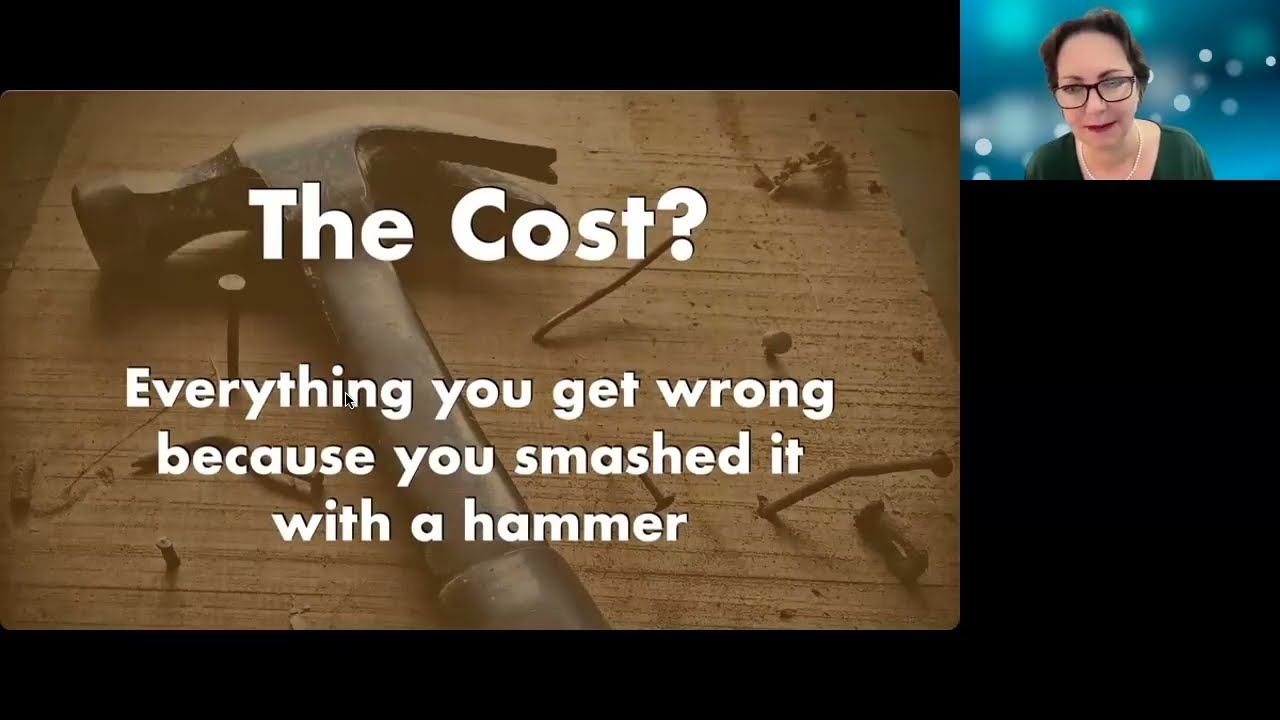
Welcome to this webinar, Put the Future on the Agenda. I really enjoyed putting this presentation together because it answers so many questions that so many of my clients have been wrestling with. So I'm hoping that we can answer some questions for you as well. And this all starts on a Monday morning when you come into the office and you know that you've got a team meeting at 11 AM and there is so much on your, your plate already and your team has got so much to deal with, but at the same time you've got people in other parts of the organization really asking you to think strategically about the future and to prepare for things that are coming and to look at disruptions. And now you have to try and balance those 2 things, and that can be quite challenging. So what we're doing is balancing the needs of today, what's on your desk at the moment, with the needs for the future. And if we don't get that right, then we run the risk of working very efficiently, doing really good work that increasingly becomes irrelevant and redundant. And that word redundant is really terrible because it may apply to you and your team as well if we don't manage to get that right. As an introduction to myself, because there are quite a few people who've registered for this call who I haven't met before or engaged with, And I'm pretty sure that I would have connected with you on LinkedIn by now. So please do engage and let me know your questions and your insights there. But I am— well, let me show you this particular photograph. A colleague took it a couple of years ago, and I think it's just perfect because it illustrates 4 jobs that I do that I could never have studied at school or at university. Some of them are university courses now, but not back when I was in school. So I was speaking as a keynote speaker at an event for association executives because I am an association executive. I'm past president of the Professional Speakers Association of Southern Africa and past president of the Global Speakers Federation. I'm speaking as a futurist at this particular event, and the slide behind you is actually about social media because I spent about 12 years teaching people about social media, being ready for social media, how to use it for business, etc. So there's a whole lot of things going on in this particular photograph, but it's also a good indication of how much can change in even one person's lifetime. It has just been my birthday. I don't feel very old, but even in that short space of time, so much has changed. So what we're talking about today is putting the future on the agenda, making sure that it is something that we talk about, that we bring into conversation, and that we don't ignore. And we can't ignore it because it has become so important. But before we get into some of the futures elements I want to explore with you, I'd like to see if we can agree on 3 particular issues first. And please feel free in the chat box to pop your questions or to agree or disagree in the chat box. But grab your cup of coffee and your cookies and let's have a look at 3 things that I'm hoping we can agree on. The first one is The question, do we need more data? Is that something that we need? In the chat box, do we need more data? Yes or no? Let me know, and then I will explain what I think. Ah, thank you. Right off. So I found these slides, and I thought they were so interesting. This is the volume of data that is being created, captured, copied, or consumed worldwide, measured in zettabytes. Now, if you have a cell phone anywhere near you, which I'm sure you do, just reach out. You can keep your eyes closed and you'll find it. Your cell phone, if it's a really good one, has about 256 gigabytes of data storage. 1 zettabyte is 1 trillion gigabytes, which is about— let me just see where the slide is— 4 billion cell phones. So 1 zettabyte is about 4 billion cell phones worth of data. Think about how many photographs you've got on there and how many podcasts and everything else. That's a lot of data. That's one single zettabyte. Okay, good point, Johan, specific requested data, we can get to that later. So let's look back in 2015, the world created 16 zettabytes of data. That was about 65 billion cell phones worth of data. In 2017, 26 zettabytes. And then we got some more over here, moving the chat box. In 2020, 64 zettabytes. And then in Come on, slides. There we go. And in 2025, 181 zettabytes of data was created and consumed in 2025. And add on to that everything that came before, that is about 735 billion cell phones worth of data in that one year. And we were only just getting started with all the stuff we're now creating with artificial intelligence. So We do not. We certainly do not need more data. What we do need, as Johan commented, is maybe more specific data. Something— we have all the knowledge. We have all the data we need. What we're looking for is discernment and something meaningful. So here's the next thing I'm hoping that we can agree on. And the question is that this is a fast-paced world. Is this a fast-paced world? How are we dealing with that? And I'd like to introduce you, if you never have met the person before or heard of his name, Toffler. He wrote this incredible book called Future Shock, and he said future shock is the shattering stress and disorientation that we induce in individuals by subjecting them to too much change in too short a period of time. Shattering stress and disorientation. And he wrote this book in 1970. We jumped ahead because it was so exciting, in 1970. Now the reason I remember that specific year is because that was the year that I was born. So I have now aged myself completely. But again, in just my lifetime, in just your lifetime, we have created so much more data and we're experiencing so much future shock and polycrisis. So this is Adam Tooze, about 3 or 4 years ago he came up with this expression called polycrisis. It's a situation where all the individual crises around the world, when they get together, it's more than the sum of their parts. It really is a very, very complex and dangerous situation. So you put those 2 things together, you've got a future shock and polycrisis. That is pace and complexity. And yes, I wrote a book about that because I found it really interesting, and it's available on Amazon. So yes, things are too fast-paced. I think we can all agree on that. We're good with that? So then the next question I want to know if we can agree on is that we should have more meetings. Should we have more meetings? In the chat box, I'm having disagreements here. When, when my children were little, they heard their dad and I talk quite often about the meetings we were having, and they came to us one day and said they wanted to play a new game called Meetings. because mom and dad had them, so they must be exciting and interesting. So we got the little green plastic table out and the little plastic chairs, and we sat around, and we each had paper and a pen, and I explained we needed an agenda so that we could agree what we were going to talk about in the meeting. So we put on what's for supper, what are we doing next weekend, why we should keep our bedrooms clean. And around about this point, little Hannah is looking at her big sister trying to work out, you know, Is this the way the game was supposed to go? Because it's not feeling really good. And Jocelyn goes, is this all the meeting is? Just talking about things and stuff? That's boring. So she turns to her sister and says, come, let's go and play. And the meeting was adjourned. And I remember that, that particular conversation so well, but also her kind of complete disillusionment about this magical meeting that will solve everything, that will be exciting. And I think that is the problem. with so many of our meetings today. They're full of decisions and warning and conversations and debate, but no real action, no real progress, and nothing exciting, nothing that moves us. So we want to put the future on the agenda and experience something different. So no, we certainly don't need any more meetings. I hope we can all agree with those. Now, if we don't, if we don't need those, then what is it we're here for? What is it we're looking at in terms of the future? And now we need to try and unpack what is the real question? What is it that we are really after? And getting to the heart of the real question is one of the most important skills that you can develop as you develop your own futures thinking, as you begin to think like a futurist. So let's look at our agenda again. You got your coffee, you've had a cookie. What is it that we're really looking for from this conversation? And I want to make 3 promises to you in this conversation. I want to unpack 3 things that I think will be really relevant, and this is what they are. Can we really shape the future? Is that possible, or are we just waiting for it to happen at us and to us? The second question is, can we do this without making it too difficult? Does it have to be really complex? Do you have to go and get a degree? Do you have to have an expert doing this? How complex does it need to be? And then the third one is, it's all well and good looking at the future, but how can we relate it to today's demands? Because today my boss wants something and I've got a deadline and there are turnaround times that I've got to deal with. So how do we make it relate? So we're going to look at these 3 issues. And to start with, I'd like to introduce you to the concept of Maslow's hammer. It's also called the law of the instrument. And you would have heard this before. If the only tool you have is a hammer, then every problem starts looking like a nail. And it's very easy for us at the moment to point a finger at disruption and AI trends and politics or other challenges to business, pace and complexity, absolutely. But the real cost to organizations isn't that external disruption. The real cost is making decisions today for the future based on yesterday's assumption and yesterday's thinking. And that's what we need to deal with. We're working with, with a really limited range of tools, and we want to be able to expand and broaden that set of tools. If we only have one tool, then this is what it looks like. You're only business analysis tool is SWOT. Everything's a strength or a weakness, an opportunity or a threat. There's no nuance. There's no depth of understanding. There's nothing that helps you to see what the trends are or the indicators or the real issues, because that's the only tool you have. And you think you're doing a good job, but you can't actually achieve anything significant. Or it could be that you turn to somebody in your organisation who is the social media marketing person. The only tool that they have is social media marketing. So if there's a problem, they're gonna go, we need another social media campaign, we need to do some more posting, we need some more blog posts, we need to get an influencer to endorse what we're doing because that's the only tool that they have. These days, a lot of people have thrown away everything else and just grabbed onto a single tool of artificial intelligence. And it can do some amazing things. But AI is a great aggregator of human ideas over time, both good and bad ideas. And it can do some amazing things, but it also can produce a lot of generic expected repeated tropes that we've had in the past. It's not gonna help us to break into the future. It's not as good as the experience and skill of a really skilled human being who knows what they're doing. So that's why we want to challenge that concept of a single tool because the cost of only using that tool is everything you get wrong because you smashed everything with a hammer. What do you get wrong? You've lost a client account, you've lost a career promotion, there's a failed business, there's retrenchment. Really, we're facing all of that because we're going into the future ill-equipped. And we want to have new tools. So I'd like to introduce you to one of my favorite tools that I talk about very often. It's called causal layered analysis. And if you think that is a mouthful, the person who designed this is Professor Sohail Inayatullah, and I spent ages practicing how to pronounce his name. Causal layered analysis, it just means that we're going to analyze the layers that cause the layer above. And we're going to go through this. So it's a typical iceberg model, and what I'd invite you to do is if you are old school like me and you happen to have a notepad on your table, get a pen, sketch out your typical little iceberg model, and we're going to go through that and think about a problem that you're dealing with that you could explain through this particular model. So we're going to start— there's 4 layers— we're going to start with what is visible. What is visible is above the waterline. It's the thing that we see, the thing we talk about, the thing that we, we report on. It's the headlines in a newspaper. And if those visible pieces of data are not good, people just hammer away at the top with their little hammer, because that's the only thing they have. So I'm going to use a very simple example here. Let's think about a sales team. where their sales are down. The sales figures aren't as good as they should be. So what happens is the manager and the manager's manager, they all come in and they all start yelling and say, get your figures up, sell more, do better. There's either a little bit of incentive or a little bit of a threat, but all they can do is just hammer away at the top there because they don't understand that their sales results are an inevitable result of the system that created it. A system can only create a certain outcome. It can't create a different outcome, and if the circumstances are around it, then that is what is going to be visible. So the system is flawed. If you don't like what is visible, then there's a problem with the system. In this case, it could be that the lead generation is poor, or there isn't good lead qualification, or there's the wrong kinds of incentives, or marketing and sales are misaligned. The system is flawed. It's going to produce what it produces. But if you don't like the result, then you have to change the system. And you can't just go in there and rip out a system and plug in a new one because that system— wait for it— is built on a worldview. It's how you assume the world is. And we do have vastly different worldviews. You just need to look at any political headline right now to know that there are people operating with different worldviews, and they might be sitting side by side, and they cannot see eye to eye because they're seeing through such a different set of lenses. So in this case, it could be that the worldview is sales is a battlefield. This is a dog-eat-dog world. Every customer is ours to win. Customers, you know, need to be convinced or coerced into buying, and winning means beating the competition. It's a very aggressive, competitive worldview. The worldview comes from something deeper. It comes from the myths and metaphors that are at the heart of what we talk about, how we see ourselves, how we see ourselves as individuals. In this case, it could be that the myth is of the salesman being a hunter or a warrior, that this is a race, it's a competition, only the fastest person wins and everybody else is— you know, immaterial. Or it could be that, that, that myth or metaphor of a pie, and every time somebody else has a bite, then there's less of that pie for me. For those people in my speaking, colleagues know the pie metaphor quite well, because what we did was change the pie metaphor and said, let's make a bigger pie. But at this point in time, for this team, they've got this scarcity mindset. They're trapped, and they don't know what to do. So think about your example, and I really encourage you afterwards to, to sketch this out again. Every time you've got a challenge, just run through this little exercise and see what might be at the heart of things. We can do this exercise very quickly, or we could really work on it. There's a group that I'm working with I'll mention later on, and we've been discussing this for 2 months, and we're going to be discussing it for another month or 2 afterwards because it really is that deep and profound a set of tools to look at. So we worked our way all the way down to the bottom, to the myths and metaphors. Now what? So now we just know that business is bad because we got the wrong metaphors. Well, what we need to do is we need to start building them up again. We need to change the stories we talk about. We change a pie being not enough for everybody to let's make a bigger pie. We change the metaphor. We can change our sales metaphor about instead of, you know, being a, you know, a race or a hunter trying to get business, well, maybe we're a guide or a gardener. Maybe we're building bridges with our customers. Maybe it's an ecosystem that we're a part of. And we start to play with those new metaphors, we can create new opportunities. So no more hammering at the top. Let's build it up from the bottom. We've got new myths and metaphors, and that's gonna take us to new worldviews. If this is an ecosystem, if we're working in collaboration with people, then customers are not targets anymore. They're partners. Collaboration doesn't mean you're losing out. It means that you're growing a market, creating a new market that wasn't there before. You're solving problems, you're building. And that's a vastly different worldview to operate from. It invites so much more abundance and collaboration. And out of that will come new systems. And those systems will be about building relationships and building ecosystems. And those systems will inevitably create a set of results that will be better. They're going to be different from what they were before. You don't change the results at the top, you change what causes the results. And that top layer solves itself. It works out all by itself. I really feel like this is a very powerful model that I've used in so many things. We can look at how a business is working, looking at how you're attracting talent. It could look at your personal health life. It could look at your reputation. There's all of these different ways of using this tool to uncover things. and then redesign intentionally, start to begin to craft the future that you want. But I'm going to give you another example, which for anyone in South Africa you will recognize, and that is of the retail giant, Edgar's. This is an advert they had for— they had out recently. You had a bad day, people forgot we existed. Now, when I was growing up, Edgar's was When you grow up, you get your first Edgar's account and you get your first card, and then you know that you're a grown-up because you got, you got your Edgar's credit card. It wasn't just a department store. It was a place that we went to, that we hung out at. It did financial products and funeral plans. It had everything that you need, you know, personal and makeup and homeware. And, you know, it was just everything you could find in Edgar's. And any big store or small that you went to, they had an Edgar's. So it was part of our culture growing up. But there was a problem that Edgar's had is that their sales were declining. Their large flagship stores were increasingly empty. And for any of the South Africans there, think back to, you know, a couple of years ago before COVID if you ever went into Edgar's, I would have loved to work out who did the salespeople training there because it was really good. You would walk in and there would be salespeople around. They'd be very friendly and they want to help you and, and make sure that everything you need is there. And they could do that. You could have 3 or 4 salespeople helping you because there were only a handful of people in the store. The sales training was really good, but it wasn't answering the problem. And maybe they were just playing around at the top there, but it wasn't addressing the real issue. Their debt was mounting, their malls had less foot traffic, and the stores were increasingly more expensive to operate. This became a really serious problem. And then COVID came and just absolutely escalated the crisis. So when we look at the system beneath it that created these results, part of the system were these huge rental commitments in the premium malls, in the big malls. Their large format department store era was built literally for another era, like for the '80s and '90s. They had high debt servicing costs, they had very complex inventory. If you went into an Edgar's store, you could find all these other brands with like these little mini shops within a brand. And there were like technical problems as well about slow decision-making and being unable to respond to the competition from online retailers and from fast fashion. And all of that started to create these serious problems. Beneath the system was the worldview that made sense. Back in the '80s and '90s when I was growing up, when Saturday morning meant going into town and going to visit Edgar's, having a big store was prestigious for the Edgar's brand. Department stores were a destination, a place that you went to and you met up with people. And customers enjoyed browsing around through the different items in the store. And that was the worldview they had. And part of it was based on this, this myth of Edgar's being part of the fabric of South African life. Becoming an adult, getting your first card, that was a big event. My mom took me, we celebrated. Part of the myth is that retail is inevitable and essential and cannot be replaced with anything else. It's a myth that was, that was, that we all believed. And the danger of those powerful myths is that organizations start to believe that what they have created is permanent and inevitable and cannot be challenged. And that was the problem. So, whoopsie, we gotta go back one. There we go. So when COVID hit, everything for Eggers really came to a crisis. And I remember listening to a recording of a radio interview with the CEO, And he was being interviewed by Bruce Whitfield, I think, on The Money Show. And the CEO was talking about, very frankly, because this was not an Edcon problem, this was a South African problem, that Edgar's didn't have enough money. They had enough money probably to pay salaries this month, but now we were going into lockdown and people weren't buying from Edgar's and they already had problems. and they didn't have money to service their debts. And the CEO is getting choked up. He's getting emotional on radio in front of the entire country. And it was really a pivotal moment. And I imagine this man had grown up with the myth of, of Edgar's. He wasn't much older than me. So, you know, he would've grown up with that as being part of his background in his own life. And he must have been so proud when he finally got to that position of CEO. And now he's facing this situation that is really traumatic for so many people. And it was like nobody was looking at Edgar's going, oh, look at all the things you did wrong. It was like everybody was feeling that kind of shared pain of what that company was going through. So they needed to change things, and they could only change it by starting right down with the myths and metaphors. So a new company came along and bought them, Retailability, and they challenged a whole lot of things. And I think part of it is Because they came in with a fresh mindset, they didn't bring in all those inherited values and myths and things. And they said, what is real here that we can make work? And what do we get rid of? What do we let go of? So the old myth was, Edgar's must be the biggest department store. Apart from a grocery store, Edgar's was always the largest store in a shopping mall. The new myth was, Edgars must remain relevant for its customers. That's the story we're gonna tell. That's what we're gonna talk about. Edgars is relevant, not Edgars is biggest, not Edgars is proud. Edgars is relevant to what our needs are. So once they change that little bit, then they could start to change the worldview. The old worldview was success comes from scale, from being large. The new worldview is success comes from efficiency, flexibility, and customer relevance. That's how we're going to measure it. That's what the worldview is. That's what we're operating in, in a world that is online and everything is happening so quickly. We need efficiency, flexibility, and being relevant. And so they created new systems. They closed underperforming stores. They reduced their store footprints in the shopping malls. They renegotiated their leases and rental exposure. They simplified their operations. They got rid of a whole lot of elements to the business that were there for ego but didn't actually add to the bottom line. They focused on profitable locations. They pulled all of that together and they created better systems. And those better systems inevitably, without any effort after you created the system, create new, better results. And the visible results today is that Eggers is now opening new stores again, not huge massive stores, but really tight, relevant stores that are profitable, that are creating renewed confidence in the shopping malls and with consumers. And when consumers walk in now, when a customer walks in, there's a new attractive energy and vibe in the Edgar store that has been missing for a very long time. So for me, I just find that to be a really powerful illustration of how we can use this causal layer analysis. And again, I invite you sketch that out anytime that you're stuck thinking, I'm not liking the results here, let's go down and explore what is beneath. And as you go down, you'll be able to find those other layers. This is not the easiest exercise, and this can be challenging when you start to get to worldviews and myths and metaphors. It's literally about our identity, how we see ourselves. And anybody who's had any challenge to their identity, who've had to, you know, rework things, especially post-COVID, you'll know that that is quite challenging. So just give yourself a good dose of grace if you are working through that. But in terms of making real change, in terms of shaping things for the future, there's nothing better than that particular model, causal layered analysis. So yes, we can really shape things for the future. Let's look at the second one. Can we not make this difficult? Is it possible to do this easier? And there's lots of tools. So I'm going to show you one small shift that you can make right now that will change immediately how you think about the future. And that one is this word future-proof, this phrase. A lot of my colleagues use it, and I don't want to diss them at all, but I think future-proof is the wrong word. Because like the little chap with his waterproof rain jacket and his umbrella, to proof yourself from something is to separate, to protect yourself from something, to repel it, to keep it away from you. And that doesn't work with futures thinking. You can't protect yourself from the future, and you cannot ever, no matter what, gather enough resource and insight and intelligence to actually be able to cope with everything. You can't prepare yourself entirely for the future because it is so vast. To pretend that you can is to exhaust yourself because you won't be able to keep up. So you want to find a new way of expressing it. So instead of future-proofing ourselves, we need to become— any minute now, we will become— Future-proofing ourselves. Future fit. There we go. So future fit is engaging with, like these young guys playing in the rain, playing in the mud. You need to be agile. You're having fun. You're experiencing the future. You're not protecting yourself from it. You're not creating a barrier. You're not pretending that you can create protection because that's not possible. But now you've got the energy and the agility to engage with the future, and that's going to be a lot more exciting. Exciting and ultimately more beneficial. Now I know a lot of people get annoyed when you play with the word and say not this word but rather that word and, you know, people don't like political correctness. I think there really is a place for it but that small shift of just one word from future-proof to future-fit does this. Imagine flying home one day and you get into a plane and you take off and you know that a plane never goes in a direct line. There's reasons that they've got to move around things, and so the pilot is constantly course correcting the whole time to get closer and closer to the destination and to deal with whatever comes along their way. If the pilot is not paying attention, if they take off and they're just in 1 degree in the wrong direction and they don't correct, then ultimately they end up somewhere else entirely. They end up in the wrong place because In 9 hours' time, it's going to be a lot more expensive in terms of fuel and a lot more annoying for all of the passengers to suddenly, you know, take a left turn and then fly to your actual destination. You want to change as early as possible. You want to make a small shift now so that it becomes easier and easier and easier to get to the place that you really want to get to. That's what being future fit is about, as opposed to being future-proof. So there you go. I hope that that satisfies that particular promise to you, that it doesn't have to always be very difficult. There are other ways of engaging with it. Good. Again, if you got any questions in the chat box, please pop them in there, and we'll get to the Q&A a little bit later. I want to now get to this 3rd question: can we relate futures thinking to day's demands. It's all well and good looking at the future and doing that and being strategic, but if you've got demands today that you have to meet, then, you know, how are you supposed to balance those things out? So, beg your pardon. I'd like to introduce you to consider this particular approach. We want to discard throw away anything that no longer works. So we have lots of reports in our industries, whatever our industries are. We got reports, we got laws, we've got rules, we've got years, decades of best practice about this is how it's supposed to happen. And for many of us, we've got qualifications or studies that we've done, and all of those things need to be discarded if they no longer work for us in the future. So my, my question to you is, what, what is one thing? And think about it for a moment. What is one thing that you could stop doing, that you could throw away, that you could put aside, that might make your life easier? One thing, okay? Because we're developing our thinking fit for the future. We're not kind of ripping it apart like it's a tornado or anything. Everything unnecessary, um, that, that we manage to eliminate, everything that we eliminate frees us up to focus on what is really valuable and relevant to today. I like to think of this as the Marie Kondo approach to the future. If it doesn't serve you, if it doesn't bring you joy in the future or today, then you throw it away. You don't hold on to it because every time you get rid of that that thing that you're, you're trying to live up to or comply with and it doesn't work anymore, when you get rid of that, you create freedom in your brain and freedom on your calendar and freedom and clarity in your vision for the future so that you can actually do that. So just by throwing away things that no longer serve you for the future will actually serve you for today because it'll help you to make better progress. So note down in your notes or put into the chat box one thing that you can throw away. It could be a habit that you have, it could be some nice busy work that you like to do that makes you feel like you're being productive and you can show people but doesn't actually get you any closer to your goal. Work out what that thing is and get rid of it, throw it away because it's not serving you anymore. If it doesn't serve you, it's just making today more difficult, and tomorrow a little bit more further away. So there we go, 3 promises. I hope that I've made those for you, that we can actually shape the future, it doesn't have to be difficult, and what we're looking at for the future, what we're developing for the future, actually has an impact on today's work. Now I know at this point you're thinking that that's well and good, there's lots of information here, clearly a lot things that we can do and develop, what do we actually do with that? Companies that I work with normally start with a Developing Your Thinking Fit for the Future workshop, and we work through a whole lot of these issues that actually help to develop our thinking, to find the toolset, to develop the mindset, to practice and develop the skillset so that we can craft preferred futures. So we normally start with that. For any of you who are not, you know, wanting to arrange a whole workshop, then there are some other ways to engage as well. And I'd like to really invite you to consider the sandbox, the Future Coach Sandbox, and Richard will pop in some links in the moment into the chat box. The sandbox is so interesting because it's designed for coaches and consultants and trainers and speakers, and we get together and we unpack the Futures tools and we see how those tools relate back to our own work. So for some people, they're saying, in, in my practice of occupational psychology, this is what I use, and we can compare it and we can see how Futures tools can enhance that or can enhance the work that they're doing with their clients. And it's very much a collaborative conversational, um, program that we work through. I've got, I've got a Future Coach Sandbox that I— that is public that a lot of my clients and colleagues are on, but it's also a really interesting approach if you want to do that in-house so that teams can work on these tools together. So it's not a workshop necessarily, but it's a way of slowly, gently unpacking all of this futures thinking and seeing how it integrates with the work that you're doing. For anybody who just wants to play around, maybe get access to the books and have access to videos and things, then check out the Futures Alchemy Collaborative on Patreon. You can join that for free. There is a paid version, but you can go in there and there's— I'm always putting in some really interesting videos and content there that you can engage with. So the collaborative is quite cool. What you would notice from these 2, the sandbox and the collaborative, is that it is people coming together and sharing insights and developing this together because futures thinking isn't a solo exercise and it isn't designed, it shouldn't be designed just for one in-group of people. The more we have a conversation about it and co-create the future, the closer we come to a future that actually serves Everyone. All right. So I want to now ask, allow us to explore what it means to be fit for the future. So we've seen what the cost is of not getting it right. What does it mean to be fit for the future? And this is an expression workshop title as well. We want to develop thinking fit for the future. So developing means that there's tools, there's a process, there's a process that we're going to go through that will actually get us to think more clearly because we want to be intentional about how we think. We want to develop that metacognition. We don't want to just react to whatever is happening. When we develop our metacognition, we think about how we think. We choose a way to think, and then we can become fit. We, we can build those thinking patterns and the agility and the resilience so that we can get towards our— closer to our preferred future. So that's developing thinking fit for the future. But let's explore more what this word FIT means. It stands for foresight, insight, and transformation. But the word FIT by itself means that we choose a tool that is fit for purpose. If we only have that hammer, it should only be used for hammering things. If we're using it for something else, then it's not fit for purpose. So we we need a range. So think about shoes. This doesn't really relate to me because I would wear my black boots every day and not have to change if I didn't have to. But we have different shoes for different events, for different activities. And we're also used to, we're familiar with the idea of choosing how we think because we've always known about de Bono's 6 Thinking Hats. It's kind of a staple in so many L&D departments. But we know that we can choose a particular style of thinking to achieve something if we want to explore our feelings, or if we want to be creative, or, you know, if we just want to look at the facts. And that brings us to this. We wouldn't walk onto a building site with a beret and ballet shoes. Instead, we would make sure that we, we select the correct gear for the project. We would select the safety gear for the right kind of event. And that's all we're doing with futures thinking is that we're choosing the correct futures thinking approach or tools for the job at hand. So let's look at what some of those look like. Lots of different styles of thinking, the first one being creativity. And there are some, you know, creative tools out there like brainstorming and mind maps. But when it comes to futures thinking, we got tools like the Futures Wheel and visioning exercises. That help us to describe what the future could look like. If we then move on to, we need to think analytically and make plans about the future, then we've got tools like axes of uncertainty or the 4-stage Futures Compass model, which introduces a whole lot of other approaches. If we are looking at warnings about the future, because that's relevant, we can't stay in high alert the whole time, but we do need to face the signs of certain problems in the future. So we could look at things like emerging issues analysis or policy stress testing so that we could explore what those warnings look like. Then we might want to actually make some plans, some, you know, what is the process? How are we going to get to this future that we're designing? And then we've got tools like road mapping or scenarios. And if we— oh, this one. The future is co-created. It is not just a solo exercise. So we need to find out how things work together. It's a kind of an integration of people and ideas and worldviews and tools and disruptions. So we got the PESTLE drivers of change. We got the conscious futurist spiral that shows us how we move through thinking about the future and dealing with any crisis that we're in. And when we're specifically saying, let's look to the future and imagine what this could be, then the futures cone is a lovely tool to use. Scenarios again to really describe different ways of what the future could look like. So now your toolbox isn't just a single hammer. Now you've got a whole range of different tools. These are just some of them: the axes of uncertainty, cause and effect analysis, which we've just spoken about, the compass, 3 horizons framework, which is very powerful, the futures cone that shows different preferred or potential futures. We've got the conscious futurist spiral that goes all the way from from just surviving to being responsible, invested, conscious, and then ultimately emerging as a transcendent futurist. We got the Map, Compass, and Guide, which is a lovely narrative way of looking at the future and helping our teams to find new ways to consider the future. We got all the different trend tools and trends analysis and counter trends and things that we could explore. So lots of different ways there that are available for you to think about the future. Again, I just want to let you know, especially any of you who are in human resources or learning and development, that the Fit for the Future workshop is a really powerful way to kind of set the tone about what it is you want to achieve for the future and how to build that capacity into your organization so that you don't always have to go outside to get an expert in to show you how to do something. You want to build that capacity into your people. So L&D can do that and HR can make sure that that forms part of that conversation. But this workshop is available and appropriate for any department. So let's return to our agenda. We finished our cookies. We've got a new cup of coffee here. Now we need to think about all the information we've got and what are we going to do? I've been involved in a lot of organisations over the years Um, and, and I've learned, I've learned something powerful about agendas and minutes. The person who controls the agenda and the person who writes the minutes actually really direct the, the, the future of the organization, because what goes on to the agenda is really important and where it is in the order. So sometimes in a bureaucracy, when they're facing something that they don't like, they don't want to cause a big fuss about it. All they do is they just drop it. to the bottom of the agenda, and we'll get to it next meeting, next month, next quarter. What— there's more bigger priorities right now. And my concern is very often that people say the future is very important, but we'll get to it later. If we postpone it, if we shelve it for now, if we defer it until later, all we're doing is like the airplane is we're allowing that plane to drift into the wrong direction, and it's going to take us a lot longer to get to the place we want to. It's going to be a lot more expensive to get there, and we're going to lose a lot along the way. We can't afford to not have the future on the agenda, and we can't afford to not have it right at the top of the agenda.
More from Charlotte




Unlock the Power of Thresholds_ What Ancient Wisdom Teaches About New Beginnings






