Charlotte Kemp explains Causal Layered Analysis, a framework that digs beneath surface problems like churn and turnover to uncover the systems, worldviews, and cultural myths driving them. Most fixes stop at the top layer, tweaking metrics without touching what actually needs to change.
Chapters
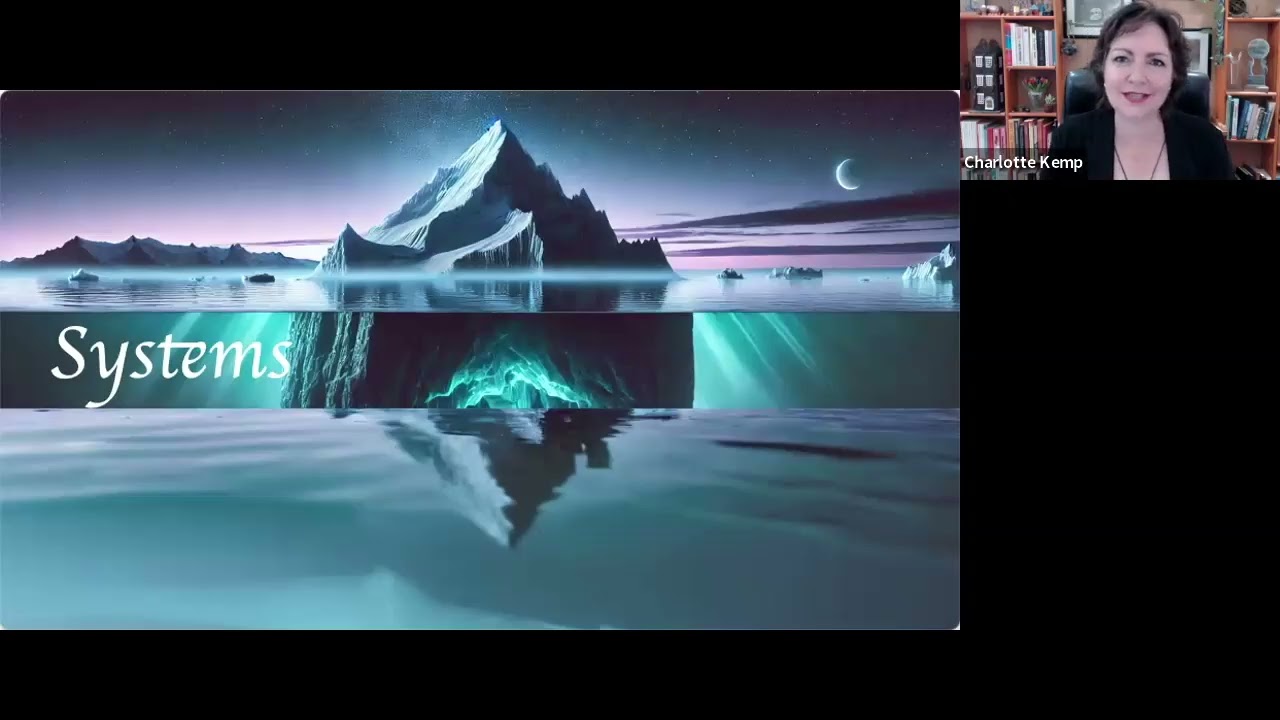
So how do we understand this? How do we look at the situation that Techno Titan has gone through that has brought them to this very low, very dangerous, very, very uncomfortable space? Well, there is a model that we can use, and it's called causal layered analysis. It's quite a mouthful, but if we work from the bottom up, in this case, we are analyzing the layers that cause the results. At the top. And any conversation about business or the future or how to change anything in an organization, you either have to have a Venn diagram or a pyramid or an iceberg. So today it is definitely the iceberg. This particular iceberg, Colesalate Analysis, has been designed by a prominent futurist and is really, really powerful at explaining what is at the heart of, the root of, the bottom of any of our problems. So we're going to start above the waterline with the things that we can see, and that is the litany, the stuff that we can talk about, the raw data, the statistics, the churn rate, the customer, the staff turnover, the headlines from the companies, the figures that we look at, the bottom lines. This is the litany that is being shared. And very often an intervention in a company comes at this point. Somebody will come in and say, let's get your figures up, let's get your costs down, let's refocus and do a bit of PR and get some changed headlines. And all they're doing is fussing at the top without actually going any deeper to understand what is happening. Immediately below the level of litany is the system. The system creates the results. Their system is their sales system, their marketing system, their employee retention system, recruitment system, their customer acquisition system, the systems that they use to serve their clients, the systems that they use to follow up. Everything is a system, and those systems have been designed over the last decades to bring Techno Titan to this place in time. And now they're getting bad results. So the system that worked before is not working anymore. Why not? That is because below the system is the worldview, the way an organization or a person thinks about the world, their framework, a Western worldview, an Eastern worldview, an African worldview, a capitalist worldview, a socialist worldview, a religious worldview, a worldview about how, how we get to live in this world and, and what is happening. And that worldview is really, it's really close to our identity. We identify with our worldview, but what we don't often realize, that is every worldview we have is based at the bottom on myths and metaphors, the things that we believe that are inherited from our ancestors and that are just part of the culture that we never look at, we never explore because they're just always there. And it's this kind of myth and metaphor that develops a worldview, and that is really challenged when we travel to another part of the world and we experience what is happening there. Our worldview can be shaken when something goes wrong. That myth and metaphor and worldview is really how we identify ourselves.