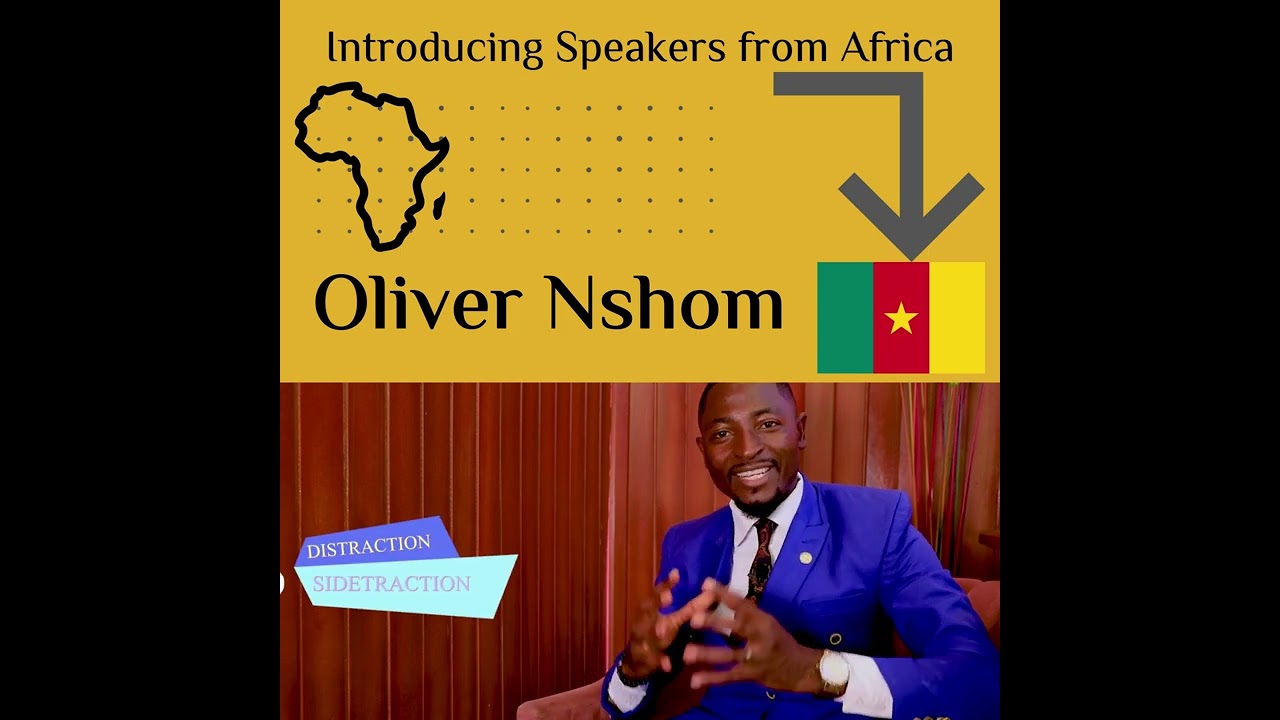
This content was created by Charlotte Kemp. This content was uploaded by Charlotte Kemp. This is a YouTube video titled "Introducing Speakers from Africa - Oliver Nshom" (published 2022-11-24) containing a single-speaker instructional/promo segment by Oliven Chong. The speaker addresses entrepreneurs, clergy/pastors, NGO workers, students, lecturers and professional speakers about public-speaking skills: handling mistakes by reiterating instead of apologizing, the importance of body language/kinesis (eye contact, facial expression), and vivid descriptive techniques. The speaker identifies himself as an author and experienced global speaker and invites viewers to join his class.
Chapters
As an entrepreneur, have you ever been given a lifetime opportunity to pitch yourself or your business to a partner or an investor just in 2 minutes and you messed up with the opportunity and you later on really feel like you wish the opportunity was given back to you? As a pastor or any clergy, do you feel like God has really anointed you to preach his message to the four corners of the world? And you really know that your communication skills are not the best. Anytime you mount the podium, you don't speak with clarity, you don't speak in an interesting way, and your sermons are full of distractions and sidetracks. As an NGO worker or an entrepreneur, maybe a student or university lecturer, have you delivered a presentation and you later on wished you were given the opportunity to redo the presentation because of the things you said and you regretted why you said those things? As a professional speaker, 90% of the mistakes you will ever make while speaking would never be noticed by your audience. So what this means is that anytime you make a mistake while speaking, you should never say I'm sorry. You should simply reiterate. By reiterating, you're saying it again what you intended to say the right way, and then right on. Public speaking is 50% body language, and when I talk about body language, I mean your eye contact, your facial expression. Like, you should really frown when you're supposed to frown, and you smile when you're supposed to smile. This also has to do with you actually showing the audience how the fish was swimming in water, and how the aircraft was kicking off. And of course, letting them know that there was traffic, and there were cars that were maneuvering their way out of the traffic gradually and slowly. All this is called in professional speaking, kinesis. My name is Oliven Chong, author of 2 books, 11 years of experience speaking and training speakers, and a global speaker. I look forward to seeing you in class.