A futurist in Cape Town reflects on watching Kuala Lumpur from a 44th-floor window during Chinese New Year, thinking about how statistics about jobs and births hide the specific reality of each person living them. She argues leaders need humility about what aggregate data can tell them, and calls for deeper Africa-Asia dialogue on culture, education, and development.
Chapters
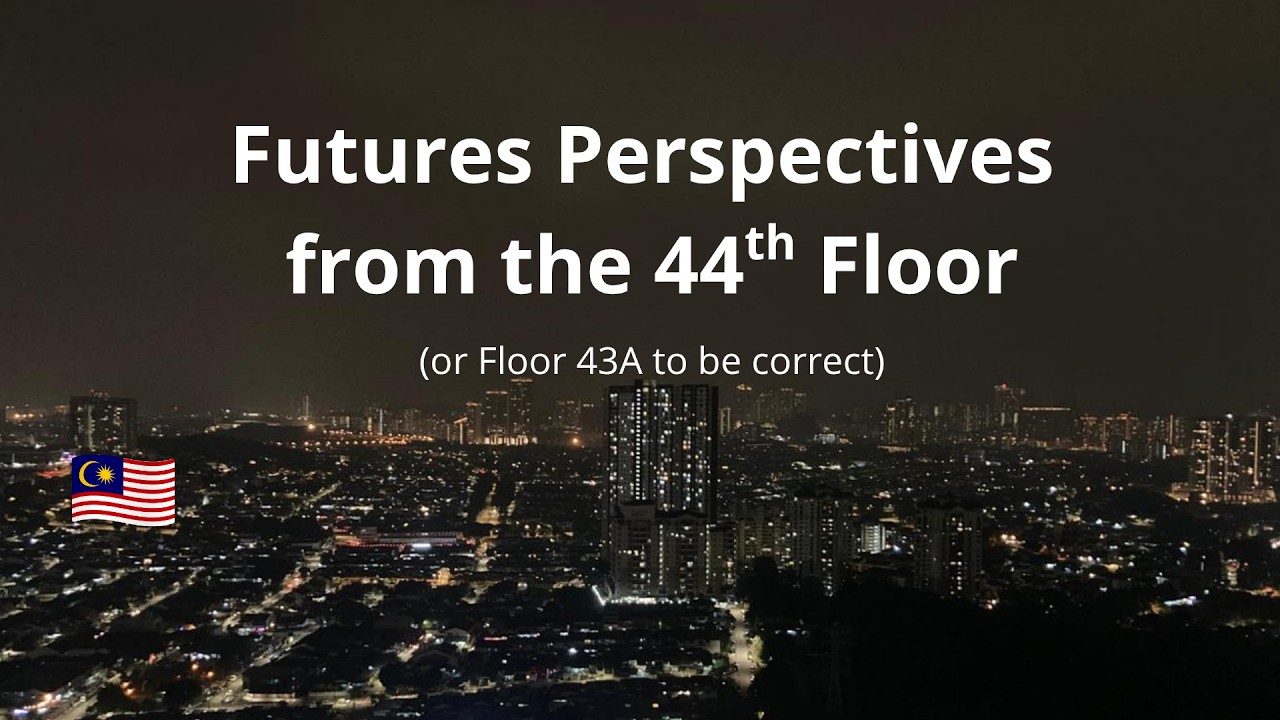
My husband and I are spending some time visiting various countries and staying in Southeast Asia, first Malaysia and now Vietnam. When we were in Malaysia, we were on the 44th floor, which is really high up and not something I'm used to. I obviously suffered from some of that anxiety about looking down from a great height. My tummy kind of churned every time I thought about it. But we did arrive during the Chinese New Year celebrations. celebrations. And almost every night there were beautiful fireworks displays that I could look at as long as I had one hand safely holding onto the wall on the inside. But I was reflecting at one point, sitting safely just inside our apartment while looking out over the balcony at how wide our vista was, how far across Kuala Lumpur we could see all the different suburbs and buildings and infrastructure. I would try to work out, you know, where everything is in relation to everything else from that height. And while you're looking out over that vast area of space with all those buildings, I know statistically that inside of those buildings there are people living their lives, having various experiences. How many people, um, in my field of vision might be falling in love? How many people in my field of vision might, uh, be experiencing a job loss or a promotion or having a baby and bringing a baby home for the first time or other things. But all this activity happening statistically on average in this entire space, which really was quite huge and overwhelming. And as a futurist, I find that kind of perspective so incredibly useful to remember for myself because one of the things I struggle with as a futurist is that tension between a policy designed for a group of people, for a country, for a nation, for a region, and the implication of that policy on one person's life. If I'd got into the lift and gone all the way down to the ground floor and met with somebody, I would know what that person's story was, what they were experiencing, what joy or heartbreak they were working through that particular day of their lives. I wouldn't be able to identify that person from the 44th floor with that vista, But at the same time, I couldn't apply that insight to that one person because their experience of anything is going to be unique and incredibly contextual to their experiences. So this perspective is something I like to remind myself about and be humbled about on occasion when we feel as leaders of any kinds of organizations, leaders or influencers, that we got an insight, we got a really good solid policy, we've done the research, and this is what should be done. It might be appropriate, it might be good, it might be leading towards a more preferred future for the majority of people. But we do have to remember that there are individual people who will be experiencing the consequences of those decisions, of those policies. How do we communicate this to that individual person? Is there a space in the work that we're doing to recognize the unique needs and response of an individual person? or do we just aggregate them away because individuals are a little bit too messy? The other perspective that I'm trying to gain in this trip to this part of the world is to kind of immerse myself a little bit more in a culture so vastly different from what I've experienced in South Africa. I live, my home is in Cape Town, South Africa, and the experiences that I have, the kind of city that I live in, the transportation, the food, the culture, how we communicate, All of that is what I've been taking for granted, as one does, as the background to living one's life. But when you're living somewhere else for an extended period of time, all of that has to be renegotiated. So that in itself is a huge learning curve and really valuable for exploration. But part of why we wanted to do this, to really take our time and just kind of seep ourselves into this, is because I believe there really is an opportunity for more understanding and more resonance between the people in Africa and the people in Asia. We should be having more conversations. We should be comparing notes about culture, about education, about development, about economies, about governance. There are things that we should be learning. How do we each do innovation under different kinds of constraints? How do we deal with the vastly different consequences of our population pyramids? Those are the conversations and insights that I'm hoping to gain so that I can share them with, with people back home in Africa. But I would love while I'm here to have any conversations with people who want to explore what those differences are or what those learnings could be from each other. Those are the perspectives that I'm really hoping to glean during this time.