Reinvention and Positioning: Strategically Securing Your Professional Relevance
In this hour‑long webinar, futurist and former Global Speakers Federation president Charlotte Kemp guides a mixed audience of futurists, trainers, speakers and association executives through the process of career reinvention and strategic positioning. She begins by sharing her own non‑linear career path—from social‑media trainer to futurist, association leader and emerging coach—to illustrate why learning on the job is essential. Kemp then outlines the common signs that signal a need for reinvention, such as stagnation, misalignment with personal values, burnout, industry decline, and external disruptions. She introduces practical tools: an asset register of skills and experiences, the S‑curve model for recognizing when a career plateau is reached, and a Venn‑diagram framework that aligns personal strengths, market demand and emerging trends. Central to her method are four pillars—Perspective (global and futures outlook), Communication (speaking and writing for visibility), Network (industry and global connections), and Portfolio (body of work and portfolio‑career). Kemp discusses psychological barriers (fear, imposter syndrome, mental health) and stresses the importance of naming and breaking down these obstacles. She demonstrates how futures‑thinking tools, especially Causal Layered Analysis, can be scaled down to the individual level to uncover underlying myths and worldviews that shape career choices. Throughout, she emphasizes the role of mastermind groups, coaching, and continuous learning in sustaining change. The session concludes with concrete next steps, including a strategic moves assessment survey that maps respondents onto the four pillars, and encouragement to reframe personal narratives to align with a collaborative, globally‑connected future.
Chapters
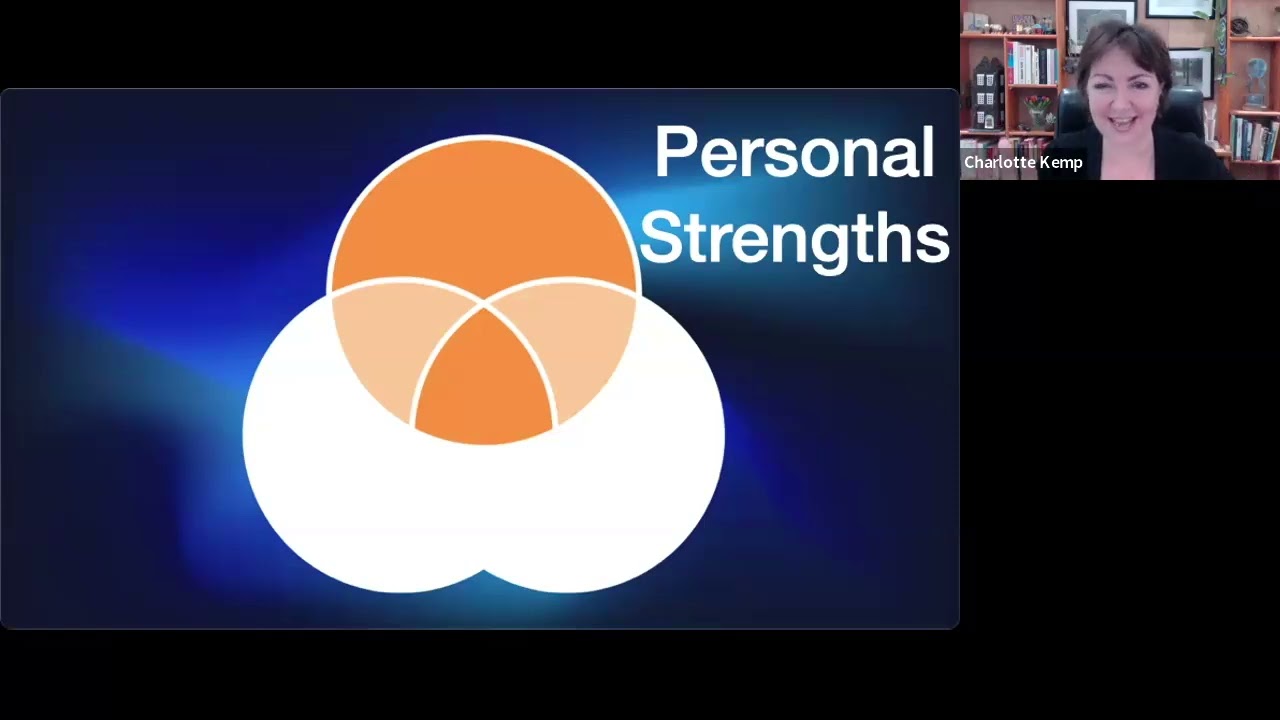
Good. So what I love about sessions like this is having some of my colleagues from different parts of the world kind of overlapping. And today we've got futurists and we've got trainers and speakers. So it's a nice combination. For those who don't know me too well, I put up a little video the other day. I think it's on LinkedIn about this particular photograph because it represents 4 of my 5 most recent career choices, and none of them could I have learned in school. So I'm standing there in the middle. I've got a waistcoat on. I have had a bit of a steampunk thing going at the time, but I'm standing there as a professional speaker. Behind me is a just a glimpse of a page from my presentation, and it's got a digital footprint on it. And I was talking about social media and our online presence, and I was a social media trainer and speaker for over a decade. And then, as one might imagine, you don't want to keep talking about Twitter and Pinterest forever. You need to move on. So I moved on, and I became a futurist. I went back to school. I learned. I joined the association. I've done a whole lot of research. I've written a number of books about futures thinking, and that was what I was bringing to this audience, and this audience, they are the epitome of nerds. They are association executives, and this is an association of association executives. So everyone there is learning about how to run or add value to their associations, their professional bodies. The majority of people in that leadership role are volunteers. There are only especially in Africa and South Africa, there are only a few people who are professional, full-time employed and actually paid to be involved in and running associations. So it's quite an interesting space. And I've been an association executive for ages. I'm the current immediate past president of the Global Speakers Federation. And all of that I'm sharing, the 5th part is the coaching part, which is for me something very new and not something that I expected to move into. But coaching people, I think it's a missing link that we haven't been speaking about. So there's definitely some conversation there, David. Um, for, for decades in the speaking and training world, people are saying, you know, you have a training session, you have people away from the office for 2 or 3 days, they're very enthused, they want to change, this is amazing, whatever they've learned And they go back to the workplace, to the office, and they cannot actually make that change. And everyone was saying, what is missing? Why doesn't this work? And what is missing is the coaching part. When we embed coaching into our training and speaking, we can actually make sustainable change. So I think it's really important that a lot of us start to, to explore that. All right. But now what are we looking at today? I've shared a little bit about my career. And part of it was moving away from things in the past that I didn't want to be in any longer, or that didn't suit me for various reasons. But for all of us, and I think all of us can kind of imagine or share stories, and I don't want to push anybody to share anything that is too sensitive, but I would love it if in the chat box you could put a comment or 2 about this. For example, in this case, What are the signs for you that it's time for reinvention or time for you to look at your career with new eyes? What is the catalyst? What is that thing that is prompting you or making you uncomfortable that you very often don't want to look at, but it keeps nagging you to pay attention to it? We could be feeling stagnant or unchallenged, or that we've just been doing the same old thing for a long time. We could feel this anxiety that what we're doing is not still serving that we're getting fewer and fewer clients. What does that look like? There could be industry disruptions. Our industry could be in decline. For example, if you were a fax machine manufacturer or repairer, you got no business in certain parts of the world anymore. There's still other places where you could go, but you know, generally that's, that's an industry that is in decline. There's a lot of those kinds of stories. There could be a misalignment with what you feel in terms of your personal values or goals and what the company or organization or industry is doing that, that you're starting to feel uncomfortable about. And there's a lot of those. There's a lot more awareness these days of what goes on behind the scenes in terms of certain value chains and product chains. And a lot of people are feeling very uncomfortable and wanting to step back. They don't want to support industries or companies that are for any reason unethical or just kind of squeezing the value out of certain countries, parts of the world, groups of people. And so those values really start to— as we mature as individuals, we start to feel this misalignment, and we know that it's time we need to move. Burnout or chronic stress. There are so many stories of people really reaching the end of their tether in terms of saying that what I've been pursuing up this corporate ladder is no longer serving me. It is draining me. It's not worth earning the money and then going home and having nothing left for my family, for myself, for things that I want to pursue in my own career. So just from the chat box, we've got people who are bored and need a new challenge. They're reaching the top of the S-curve. Gail has been doing her homework. The S-curve is when you get to top of a certain, um, you kind of gone through the dips, uh, through the challenges, you got to the top and you realize that if you don't do something new to get onto a new sigmoid curve, a new S-curve, a new kind of innovation or, or something that you want to explore, then it's going to start to decline. And if you are applying futures thinking to your own career, then you can start to identify when that happens and you want to take action before that curve goes down. And that's exactly what we're looking at with Gail. We've got her saying, when you realize you're spending more time teaching, coaching others rather than doing your own work. Yeah, good. And good morning to Ime and Armand. This is an hour-long session, Armand, but if you do need to drop off, no problem, it will be recorded. So I remember when I got my first real, real job, full-time job, the HR department came through and gave me all the manuals and gave me a login to online learning courses where I could learn things. And every learning course that I had had a little kind of application, and I had this lovely neat career path in front of me, this career ladder, and it was really exciting. And my daughter is in the same sort of position at the moment with a company that has been bought out by an international company, and she can see what she needs to do to go up this corporate ladder. But for many of us, that corporate ladder is broken. it does not work anymore. It does— the things we were pursuing, the skills that we've acquired, they no longer serve us. They are no longer relevant, or we can't or don't want to be in that place anymore, which means we need to start looking at our careers in a very different way. So chess is a lovely analogy every time for when we are strategically positioning ourselves to do something. And many of us, and I would have been connected with almost all of you already on LinkedIn, and I love that as a place to look at how somebody's career has evolved over time. So I know that we're, we're savvy, we're strategic, we've been doing things intentionally, we've acquired the skills, the accolades, the recommendations we need so that we are growing and maturing and that we are bringing more value to our clients. But this is the game we've been playing, this, this chessboard game, and some people play better than others. But what happens if chess has changed entirely? What if the strategy now looks like this? And these 2 images come from artificial intelligence. So I went to Leonardo, and one was on ChatGPT, and I said, show me a chessboard that looks different in different dimensions in a different world. And this is one of them, and this is the other. And this one kind of makes me feel a little kind of like my breath gets taken away. I feel a little anxious, but also like so excited. This is so intriguing. The chess pieces in the background are— they look so different, and they're going into maybe different galaxies. And it is just imagination. It is just fun. But if we start to challenge ourselves, if we start looking at what we're doing and saying, this is— I might have been doing it well, I might be really good at what I'm doing, but what happens if what I'm doing is no longer relevant? What if it won't be relevant in you know, 2 years or 2 months' time because things change so quickly. What do I need to change? So do whatever you need to do to push your thinking about yourself as far into the future as you can. Really challenge yourself. It might even feel stressful. You might feel a little anxiety because you're looking at something that looks bewildering, like you can't achieve this. But we'll go through a few steps so that you can see how you can get to that place. But I really encourage you to— this is just an image, I know, but whether you're using artificial intelligence or you're working with a coach or you're working with friends and colleagues, keep pushing yourself to go further. I am part of a mastermind. There's 4 of us, the core of the mastermind. We've been meeting for over 5 and a half years every Wednesday morning, and that group is I credit them with getting me to the place that I am in my career because we don't— it's not about accountability. It's not about, you know, pushing each other and challenging each other. It's about just holding space for each other as we grow and develop. And when we want to explore something and we're anxious, we have that support from the rest of the group. We really know each other well and we respect each other in that place. But you need to find whatever it is that you need so that you can start to prepare yourself for a chessboard that looks like that in the future. So let's go back and get really practical. There's a lot of coaches and facilitators here, so we're familiar with a, a Venn diagram. And this particular diagram, we're not going to go into too much detail, but just to show you some of the things you might want to be paying attention to. The first one would be obviously your personal strengths, whether you are moving from one career to another because you have to, or whether you really want to step up in your career and be more strategically positioned for better opportunities, you need to know more about yourself and you need to be honest with yourself. I have experienced the conversation, the complaint from time to time with people saying, my voice has been blocked. People don't want to hear about my message. they're rejecting the message that I'm bringing. And sometimes it's not about what we're actually doing. It's about the fact that we're not being seen, that we don't have enough visibility, that we're not actually necessarily good enough at what we're doing for people to take us seriously. So when you look at your personal strengths, be honest and weigh up where are you not good enough. So it's not about them out there blocking or preventing you from achieving something. It's that you're not ready. You haven't stepped up enough. whether it is in your skill set or whether it is about your visibility or your impact. So you really want to explore that very honestly. This is a difficult thing to do, to examine ourselves in this way. All right, so a couple of things we want to look at: core competencies and our skills. So do, do an asset register of, of all of the things that you have. There are lots of lists out in the world from things like the World Economic Forum and from big consulting companies where they talk about future skills that we need. And one of the most interesting things there is many of the skills that they're talking about, if you put them into categories, there's a few that are technical, but most of them are about how we deal with other people. So emotional intelligence, people management, leadership, etc. And the other ones are how we think. So creative thinking, possibility thinking, futures thinking, strategy, creativity, all that kind of flexibility that we need in order to respond. So there's a lot there. And because of my audience today, I'm going to encourage us to not use the word, the phrase soft skills when we are referring to some of those people skills, for example, because they're not soft. They are powerful. Anybody can learn a technical skill, but if we don't have those core skills, then that is what makes us irrelevant in the future because we can't respond, because we can't work with other people, that we can't be agile in our thinking. So let's look at those as core skills or core competencies to help us to actually make progress. You can look as well at your personal passions and hobbies and interests, your unique talents, your unique experiences. In the world that we're going into where we are creating new careers for ourselves, your unique experiences and skills, even if they were novelties, even if they— you did them for fun, they can actually add value. One of the best ones I ever heard was a man who loved doing origami, and then he ended up being like this highly paid consultant that gets flown around the world to help people work out how to fold parachutes into their bag or fold documents into, for transportation. And he's just used his skill of origami to be able to look at these things in 3 dimensions. So whatever they are, do an asset register, know what you are about, because everything that you are about is the value that you bring to someone else. How adaptable are you? How open are you to learning new things? So create that asset register, know what it is that you're looking at. All right, then the next thing is market demands. What does the market need and what market are you in? Because that, that might be changing as well. So here we could look at your industry needs and your opportunities in your industry. What are the skills gaps that are out there? What are people in your industry complaining about we don't have enough of in terms of skills or skilled people, etc.? And you want to look at that. How are consumers changing? If you are in an industry providing a service to another industry, What is happening in that industry? You need to really understand that so that you can answer their demands that are changing the whole time. What are the emerging job roles or professions? You can go onto job boards and look at, you know, what are people looking at in the future, trying to find skilled employees to actually provide those services? And those are different from what they used to be in the past. And then what competitive advantages might you have with your prior experience in your own industry or in allied industries. If you want to do that, you can— to find this kind of information, I always recommend that you look at your own industry association or professional body. You want to join that or at a minimum subscribe to any reports or newsletters that are coming out so that you can see what the people in your industry sector are talking about because that prepares you. Then you want to look at actual future trends. So there are a few futurists here. There are lots of good places to go and find trends. Again, go and subscribe to newsletters or reports that come out. There's a lot under trend watching if you just Google that search term. You will find a couple of companies that give out reports about trends that are happening. So subscribe to that and become more aware of what is happening around you. You want to look at environmental factors, economic factors. Obviously politics is playing a huge role right now. The wars and invasions and genocides and threats of war around the world are really concerning at the moment. There are so many that are happening and others that are simmering, and we need to understand what will that mean for, for our industry and for ourselves. So very often when we're talking about futures thinking or strategic foresight, we're talking about an organization, we're talking about an industry, we're talking about a part of the world, and we're helping them to prepare for the future. In this case, we're talking about you as individuals and perhaps the people that you work with, whether you're coaching or training them. And, and that's really important. Um, we can take any of these futures tools and trends that are out there, the models that are out there, and while they can be used for those big organizations, we can also scale them down to apply them to ourselves. And when we do, we're positioning ourselves to be able to respond. Um, how— why an individual in South Africa— a few of us are here— might need know about the politics in America, for example. In the past, we wouldn't have needed to worry about that, but now we need to pay attention because that does have an impact on us. There are things that happen in the rest of the world. When Russia invaded Ukraine, it had an impact on my career. I could not believe that it would. There was that volcano years ago in Iceland that none of us can ever pronounce that had an impact on my career. Because we are in this global networked world. So you want to pay attention. And once you start to do those, you bring those 3 parts of your, your Venn diagram together, that's when you start to strategically reinvent yourself and position yourself for opportunities. When we are trying to look for new opportunities, even with the best intentions, we very often run into some barriers. And this is a bit of a, like, a psychological reflection on what we're trying to do. And it's important that we take that time for psychology and in a moment for philosophy, because we can have the best intentions to change. But if we're facing these kinds of issues, we can't get there. So fear, uncertainty, the imposter syndrome, the whole feeling of overwhelm because the world is just so complicated, all of that impacts us, and we need to know how we are going to break down this barrier. We need to actually have strategies to respond to that, because on the other side of those barriers are hope and opportunity and a new way of living and expressing ourselves as humans. And I think that is really important, and we don't pay enough attention to that. So what we need to do is we need to look at anything that is holding us back, and perhaps in the chat box again, anything you can name, something for yourself or something that you you imagine someone else might be experiencing? Put that into the chat box. Once we start to name what our barriers are, our fears and concerns are, once we start to name them, they lose that fear that there's something out there that we can't name, we don't want to look at, we don't want to face. If there are any Harry Potter fans, Voldemort was called He Who Must Not Be Named. And the more we don't name something, the more we don't talk about it in polite company, the bigger the power and impact it has on us, the more it holds us back. So we need to name those things. We need to name our fears, our anxiety. We need to name our ADHD and neurodiversities. We need to name depression. The whole— this is Mental Health Month. We need to name these things so that we can start to deal with them. Um, we need to name the fact that we might be in an industry that is in decline, or we need to name the fact that we haven't gone back to school to learn anything for a long time, and we're not sure that we have the capacity to do that. Once we start to name them, then we can break them down into elements because it could look like that great big wall, but we can start to break them down one brick at a time, and we can create a strategy to actually reduce that impact of that barrier so we can get past that. Trudy's got a concern about relevance. You know, is what she's doing making a difference to her clients? Alka, beautiful slides. Okay, Alka, we can deal with that. But yes, find those things, name them. I don't know what your personal practices are, whether you are journaling or meditating, or even if you sit down and create a business plan for yourself, put down those, you know, barriers to entry into a market and name them as a part of your business plan so that you can create a strategy for them. All right, so now that we've looked at that, the next part we need to consider is philosophy. And I don't think we value philosophy enough. Um, for the kind of people who are in this audience, philosophy should be kind of built into the work that we do. We should really consider this as part of the value that we're bringing to people when we sit down have this conversation, when you work with a coach who's helping to guide you in your career, you're doing philosophy and you're starting to think about the things that are important to you so that you can become more relevant and bring more value. The philosophy that you do in your field means that you bring more value to somebody who's an expert in their field. They might be really philosophical or expert or have a lot of experience in their space, um, that they could teach you, but in this case, because you've thought about something, that is the value that you bring to them. Sorry, this loop is making us a little crazy here. So here's a couple of things you can consider. What career or how could your career make you more money if that is one of your values? How could it give you the biggest impact? Or do you need to change direction or change clients that you have a bigger impact? What is most fun or what fits most with your lifestyle so that you can actually have the career you want? So many professional speakers go, I want to be an international keynote speaker and speak on big stages and travel around the world. And I had that as well, and until I did it and realized I didn't like that at all. I am not a professional speaker who wants to be on big stages and traveling around the world. I want to work closely with people and engage and, and coach and explore and develop, uh, and not be on an airplane as much as possible. How can what you do leave a legacy after you've gone? Or how can you have such an impact that it has an impact in other people's lives and creates a legacy there Even if you don't always know what that is, how are you passing on that value? So that's our philosophy. I'm going to move on now to briefly mention here, because I want to get to a part where we look at a particular futures thinking tool, which is really quite, quite interesting. I love using this, but this is the model that I use where you can make an assessment of where you are in your career and what you need to actually achieve. At the end of the presentation, and I will send this to you later by email as well. But at the end of the presentation, there's a survey that you can do, an assessment, and you can go into the assessment, answer a few questions, and then I'll send you a report so that you can see how you measure up to these 4 particular pillars. And regardless of where you are, whether you are self-employed or you're working with someone or you are reinventing or whether you're just really trying to get to that next level in your career, these 4 pillars, I believe, are really impactful to help you to get to that next stage. So obviously you would need a good foundation. You've got the 4 pillars, and then whatever comes on the roof, that is, that is your achievement of what you're aiming for. So 4 perspectives, and these include many of the things that we look at with the World Economic Forum and with other consulting firms that put out the skills and things we need to be relevant in the future. This encompasses many of those concepts. So the first pillar is perspective, and we need 2 perspectives in particular. One is a global perspective so that we can see what is happening in other parts of the world and we can respond to them. And we need a futures perspective because we need to see into the future and explore the different scenarios of what could happen for ourselves, but also for our clients. So if we're looking into the future for a client or for a sector that they're in, then we can help to prepare them for that. So whatever is your expertise, you're helping people prepare for the future, even people who look historically. So if you, if you went to a therapist who's helping you to overcome past trauma, you're overcoming past trauma so that you can live freer into the future. So although there are a couple of us official futurists on this call, We are all natural futurists. We all look into the future for ourselves, for our families, for our clients. So we need to have that perspective. And, and the more we do that, the better, the more relevant is the work that we're doing for them. If you're preparing somebody to be a really great fax machine repair person, then, then you're getting it wrong. But if you're helping them to realize that, to, to work out how to communicate electronically better, across the world, then you're preparing that person for the future. So we're looking at the future, we're looking at a global perspective. Even if you're not traveling, you could have clients in other parts of the world, but other parts of the world, or how your industry is behaving or experiencing things in other parts of the world, can affect you. That's the perspective you need. So that's your first pillar. The second one is communication, speaking and writing. And I know we're not all professional speakers or trainers, we don't necessarily or aspire to that, but still you're speaking. You, you could be coaching, counseling, um, you could be having conversations with clients. You are speaking, and we need to be clearer about how we communicate that way and how we communicate in writing. That could mean a book, and books are not as difficult to write as some people believe. It— that there are ways to get a book out. Um, so it could be a book, but it could also be blog posts. It could be comprehensive emails, it could be written reports. So you want to look at your communication because you have value, you have insights and experience, and it sits inside of you. And sometimes you go, why can't I get this out? You get this out by speaking and writing, and that's what we need to help to move you forward so that your career is better placed. You could have— you could be the best person to be in a particular position, but if you don't have visibility. If people don't know what you, what you're about, how you think, what your values are, what your insights are, what your models are, because they're not hearing you or they're not seeing you, then you're wasted. You're sitting there frustrated because you cannot get that message out. So we need to find ways to do that. The 3rd pillar is that you need a network. 2 kinds of networks again, an industry network and a global network. So in your industry, who are people like you? I'm a futurist, but every time I run a futures webinar, and I've got another one coming up on more futures-focused things specifically, I always go and invite other futurists. And at the beginning, it was really scary because I was thinking, you know, what if I get it wrong, or what if I sound really naive because I've only just started? But the more we put ourselves in front of our industry and professional colleagues, the more we grow. So we need to have that industry network. We also need to have a global network. Again, even if you're not traveling, you don't have to do all the stuff, but you need to know what is going on around the world because we are so connected now. The network is really powerful. So building those is, is really fantastic and will put you in a much better position to find opportunities, whether they are clients or employment opportunities. And then you need a portfolio. And again, 2 parts of this portfolio. One is you need a portfolio body of work. So think about a photographer, an artist, a model. When they go to a new prospective client, they take their portfolio and they put this great big fat book down on the table, and then they flip open and they show the various kinds of work they do or the style they have. Those of us who are not visually into things like that, um, we could be putting forward a portfolio of work. Think of your LinkedIn profile. Your LinkedIn profile is your portfolio of work because it's showing the work that you've done, the experiences that you have, your qualifications. It's demonstrating your writing or your speaking if you've got videos or blog posts. It's showing your recommendations from other people. It's showing any qualifications, awards, anything else that you've achieved. That is your body of work. And on LinkedIn in particular, we need to be able to say, this is who I am, what I do, what I'm good at, what my experiences are. Here are other people saying that I brought value. We need to say that with confidence, with no thought of imposter syndrome, with no thought of being shy or retiring because it sounds like we're bragging. We need to put all of that forward so that we can do the last thing and say, and this is how and why I can help you. Your expertise can help someone else. Someone else is waiting for you to share that. If you hold it back because you're trying to be polite, because your mom told you not to brag, you're doing yourself a disservice and you're doing your potential client a disservice as well. So put that forward. So that's our body of work. The other portfolio is our portfolio career. We should not think of the ideal being getting a job, staying there for 3 decades, getting a golden watch at the end and a pension or provident fund at the end. That, that is incredibly rare. There are only a handful of people around the world who will get that right. The rest of us, and particularly people in this, in this group, we'd be moving around doing different kinds of work. So we could do a project for 6 months. We could do a startup and create a business and then sell it. We can have a mini retirement. We can go back to school for a while. We can take time off and spend with family or just, just recovering and then do something new. So we need to be a lot more flexible about how we look at our careers. So those are 4 pillars. When I look at the Strategic Moves assessment, which I'll send to you later on, and I do the coaching, I do it around those particular 4 pillars. But what I want to show you now is a very specific Futures model that we use. It's called causal layered analysis, and I know this could sound really hectic right now. I want to break it down and make it sound simple to you. Again, this is a powerful, powerful tool that is used by big organizations and multinationals, but it can also be used by individuals. So causal layered analysis is the, the activity you're going to do to explore yourself And see how you can reposition yourself. So let's look at this. What it says is at the top, we've had a Venn diagram, so now we have to have, you know, the iceberg or the pyramid as well. But at the top, what is visible above the water is the litany, the data, the stuff that we're seeing. So if you're looking at how many clients you have, if you're looking at what your income is, if you're looking at how many you know, inquiries you're having. That's the litany or the data at the top that you're seeing, but there are things below that. Below that is the system, the system that operates. Now, if we just stopped at that point, that would represent what a lot of our colleagues do around the world, is that we, um, somebody says, uh, our sales team isn't making enough sales. we're not reaching targets. So that's the litany, the complaint. And we go in there, we look at the system. The system is the, the salespeople and how they go out. So we motivate them, we encourage them, we give them great big goals. And, you know, we talk about, you know, what enthuses them. And we start to measure how many calls they're making, how many emails they're sending, how many doors they're knocking on. And all we've done is the system. And there might be a little bit of a change, But that's not really addressing the problem. The real problem is below that, the worldview. There is a worldview that has created the system, and the system creates the litany or the data. And that worldview could be you're only going to get clients if you go and hit the pavement and knock on doors. That's not a very good way of doing it these days. So there's a worldview, and below the worldview is what we call the myth, the legend, the almost like the origin story of how things work. So I'm going to take you through an example to show you this, and maybe you want to take a screenshot, although I will send you some slides as well later on. But, but this is such an interesting exercise you can do. I've done it for my business, I've done it for clients, I've done it for my personal health because it's just such an interesting, flexible system. So let's try and go through this. So let's look at the litany. If we're looking at clients, people that we're working with, and they're trying to position themselves for opportunities, the litany we're hearing is that jobs are scarce, there's war and recession, artificial intelligence means that we're unemployed, there are going to be new skills, we can't keep up, and those are all the complaints. So what is the system that we're looking at to address this? We're looking at job boards, we're looking at social media, we're looking at hitting the pavement and trying to just get our CV out in front of people, or or try and say to, you know, potential clients, come and hire me, I can do this. And it's an exhausting system. Below the system is a worldview. The worldview is capitalism. It could be the corporate world. So many people, especially those of us who are independent speakers and trainers, we think we need to go back to the corporate world to sell our services to the corporate world. The other one is a Protestant work ethic. And I'm aware that not everybody here would be under a Protestant religious background, but we could slot in anything else there that, that, that is relevant, that worldview that we have to work harder, we have to hustle, we have to grind. And if we're not doing that, we're not going to succeed. So there's this worldview of things being really tough and this dog-eat-dog world. And, and that's what we're trying to operate in, because below that is the myth, the stories we say that people like us don't get to have those kinds of opportunities. They always do this to us. They always prevent us from doing something. I have no option but to hustle. I have no option but to try and get a job with corporate or to try and sell my services to corporate, whatever it is. And that's the myth that we talk about. Those are the things that are almost like those, those unwritten values right at the foundation of our lives, and we have to address that. This is a very cold slide, so I'm going to give you a warm one just to kind of give you a bit of a break here. This is a difficult exercise to do because we're really going down to the core of our values. So, so get help, have conversations with people, find people who will be honest with you, find a mastermind to work with as you explore and unpack this. Because even if you know what you need to do, It's not that simple to just do it. It takes a long time, often, for us to, to get rid of things in the past, to reposition them, to reframe them so that we give ourselves new opportunities. So let's go back to this iceberg. We're down at the bottom. There's stuff that we're saying, people like us, they always— we can't do this. Let's say other things. Let's create new myths for ourselves today. We can today, like more now more than ever, we have the opportunities to for the first time in our lives, in our careers, we are positioned. We have the opportunity. We have the global access to do things. This is a very exciting time to be in. Not everyone is in this position. We do need to accept that there are some people for whom this does not apply. But for us, it certainly does. We have opportunities now that have not been available in the past. So let's look now at reframing our worldview. If we can say now more than ever, for the first time, we can do things, it's because we're now more aware of collaboration and co-creation rather than just pure capitalism. It's not just one person taking out all the money, becoming a billionaire because they've stolen the labor from thousands of people who still have to be on food stamps in, in the States because they're not being paid enough. It's not like that. We can create a co-creation, a collaborative way of working. We can change the worldview. We can look at a creative global sharing economy that gives us more opportunities, that does not make one person wealthy and everybody else destitute. We can change the worldview. Um, we don't have to subscribe to what others have, and we can do that because the system that we're working in now is different. Um, the system is, is way more networked. We have— I beg your pardon— we have networks, we have access to different parts of the world, to different insights, um, to more content and, and learning online for free than we ever have in the past. The system that we're using right now is absolutely amazing, and that means that we have unique experiences, new skills, and we are all right now well positioned to have the careers, the lifestyle, the clients, the impact that we want to. So what you see we've done here is we've gone through those layers, we've analyzed them all the way down to the bottom, and what we're doing is changing something at the bottom. So we don't just change the things at the top, we don't just try and make more sales, we go down and say, why am I not making enough sales? And we build it up. So this slide will help you. We start at the bottom with the myth, and we tell new stories. We tell new stories about what is possible, and we tell them to each other. And when we find successes, we retell those stories. The more we hear those stories, the more we challenge and question the worldview that we have unquestioningly accepted as the way the world has to be. And we go, no, it doesn't actually. Why can't we do things differently? Why does success for one person have to mean destitution for someone else? Can't we do better as creative humans in this day and age? Can't we, can't we have a better worldview? Because then we can redesign the systems so that everyone can have a measure of success. Everyone can achieve more. Everyone can have their basic needs met. And my business can have more impact and I can have the kinds of opportunities I want because now I'm measuring what matters. I'm not just measuring what other people think needs to be measured. It's not about how much money you've made or how impressive you look in in in in your friend group or something like that. You're measuring the real impact and the kind of lifestyle that you want to have, and that's how we redesign our lives, our careers, our businesses, and. The part of the world that we have influence on. So this causal-laid analysis looks— it looks a little daunting to start with. Some of the terminology might seem a little overwhelming, but it really is powerful. And I encourage you to, to explore that, to go through it up and down and see if you can change. Where are you stuck? Do you get to the part of the, the worldview in particular and go, I can't change that? You know, my whole family, we've been raised this way. This is how things are. Question it. Question it, be bold enough to actually question and explore that. So we're talking about ourselves here. This still has a benefit for corporates. So there are lots of corporates who really just want to look at the bottom line. They want to squeeze all the value out of people and just make profit. There are businesses like that. But I put this slide in because when we as individuals live better lives, we challenge the the worldview and the system that we're in. And that could actually make a difference for organizations that hire people and use them in their space of genius. We have at the moment a productivity lust. We look all the time at getting the most productivity out of every human unit in the workplace. And if we can find better ways of expressing our genius and bringing our insight, and then we can challenge those organizations. And there are certainly businesses in the world that want to work with people and use the uniqueness of those people. That is what we're looking for. So there are some next steps that you need to do. I suggested a whole bunch of them. I will send you an email later on with a link to this recording as well as the survey link again. But kind of sit down and start working out how are you going to challenge where you are in the world? How are you going to redefine yourself? How are you going to reposition yourself in terms of your career so that you can find opportunities that suit you? So we mustn't look at somebody else's career ladder or somebody else's ambitions. What do you uniquely want? And some of that will come out of the Strategic Moves assessment. So if you want to right now, you can take a quick scan of that, but I will also share that with you later on today.
More from Charlotte




Unlock the Power of Thresholds_ What Ancient Wisdom Teaches About New Beginnings






