Getting the Most Out of Pinterest as a Content Creator in 2022 with Jane Ko
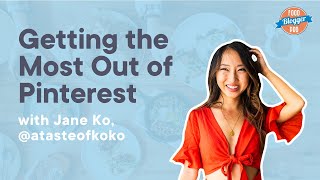
Jane Ko explains how Pinterest drives long-tail traffic and revives old blog posts months after pinning. She makes static pins monthly from templates, experiments with Idea Pins, and repurposes TikTok video. She prioritizes Instagram for revenue and TikTok for growth, tailoring content to each platform rather than cross-posting the same thing everywhere.
Questions this video answers
About 8,000 views.
Approximately 60% Instagram and 30% TikTok.
Some pins took off after six months to a year and have reached about 10 million impressions.
"100 Things to Do in Austin" (seasonal variant: "100 Things to Do in Austin this Summer").
Chapters
So Instagram, obviously a really big important platform for you. Different brands will work out, connect with you there. I'm curious to know, you know, obviously Kate mentions you in the live Q and A that we're doing as doing really good work on Pinterest and starting to use a lot of the new tools that they're releasing. How do you view Pinterest as a platform? When you think about kind of all the different platforms that you could be spending time on that you are focusing on and do you view that as potentially a place where you could be doing sponsored content or do you view it as a traffic driver?
So I have a, I wouldn't say I have a love and hate relationship with Pinterest per se, because I think it's about setting expectations and understanding what, how you can maximize your potential on each platform. So my thing with Pinterest is early on, it was the reason why I had so much traffic to a website that really didn't have that much content. And I think the reason why my website comes up on page one of Google for a lot of key terms, especially with anything awesome related thanks to SEO that I've invested in. But also with like, you know, Google also looks into how many social shares that you have on your page, whether it's on Facebook, Twitter, Pinterest or whatever else. Pinterest is a big driver of that. I think because I focus so strongly in the very beginning on how my photography looked, that that's why Pinterest has worked in my favor. I also figured out to use, figure out a template that looks great. So you, when even on Google, I have people who are like, I can recognize your photo from anywhere, whether it has a text overlay with the color block, because the way your hands look, you have your white nails, like, it's just a very iconic style. And I think I'm like, I wouldn't say a creature habit, but I find if I find something that works and sticks, I will stay with it. And it's just kind of on clockwork, which is why I'm able to power through and get so much done every single day. Pinterest is definitely a big traffic driver for me when it comes to sponsored content. I would love to do sponsored content on Pinterest. I think that Pinterest has, and I've talked to their teams before. It's. It's hard because a lot of agencies that maybe I'm working with are not selling Pinterest to their clients because they want to see that immediate roi. So I can easily do a Instagram story and get hundreds of views within seconds by a 24 hour loop. On average, my Instagram stories get about 8,000 views. That's not something that you're going to get on Pinterest right away. Like, I see Pinterest as something of long tail. So what I try to tell brands, especially with a travel campaign, because travel content does so well, is I will tell agencies if we're doing a travel campaign, like, hey, you're already flying me to the destination. You already have a shooting all this content. I already have the blog posts going up. Let's repurpose it for Pinterest. We'll still do all of their social shares, but that your brand will still get visibility six months from now. The lifespan of a TikTok video or Instagram post is about 48 hours and then it's gone.
Yeah, it's interesting. Brands, you potentially will have this mindset of like quarter one. We have goals for quarter one. Here's how many like impressions we want to get on this specific piece of content. But whether it be a blog post or Pinterest, I feel like it's the other platform where this is true. YouTube as well. Like, that can be kind of forever in some instances. Not forever forever, but like there can be a really long tail on the content that you're pushing to YouTube Pinterest your blog. And you almost have to like sell a brand on that or an agency to say like, hey, this continually delivers value. Yeah.
And I think it's hard because I had some pins that take off after six months or, you know, after a full year loop, then it's gotten like 10 million impressions. And occasionally if I do have a pin pin that does that, well, you will go back to the agency and unfortunately their retainers are usually six to 12 months. They're like, cool, thanks. We're not with that client anymore.
Yeah.
So that's kind of the uphill battle right there.
Yeah, that makes sense. So as Pinterest has introduced new elements like, hey, you know, it used to just be the pin, but now we're going to do all of these different things that they're kind of experimenting with. What has your strategy been with saying like, hey, I'm going to try these out. Is it creating content specifically for that or are you kind of repurposing content that you're putting in other places and then trying that on Pinterest and then would you be able to like kind of stack order? Like, what are the different things that you're Doing on Pinterest right now?
Yeah. So obviously a static pin is still my favorite because I like to kind of sit down once a month and kind of power through and create a bunch of new pins. Because Pinterest likes to have new content and it can't be the same photo that you're basically re uploading again. I guess their algorithm will protect that as like still old content.
Sure.
So I will go in with my template on Photoshop and make a bunch of new pens for blog posts that we know that are doing well or I know that are. I can also fight follow seasons. Right. So like right now we're going to start spring, so people are going to look for patio stuff to do. Like maybe people who live in the north are looking for things to do in the South. So like Miami contents and do well. Texas content is going to do well.
Just last night I walked into the room and Lindsay had like Expedia Miami pulled up.
Yeah.
I was like, yeah. So you're like spot on. Yeah. You know your audience. Yeah.
And then I would say with the Pinterest, what are they calling it? Where it has the slides and the different frames. Idea pins. That's what they're calling them. We've kind of experimented with recipes. I do have a few recipes on my website and we've been able to bring a lot of old blog posts back to life by creating idea pins with a step by step up. And I think with any platform, whether it's Pinterest or Instagram or TikTok is, whenever they release a new feature, it is recommended to jump on that feature and use it because the platform is hoping to promote that kind of new feature. So you're going to get more generous engagement and visibility. Like when Instagram first launched IG reels, it got a ton of impressions because it was a feature that they were hoping to push. So I jumped on idea pins pretty early. We then realized like, oh, also pretty relevant to travel stuff. It's like, oh, 10 things to do in Austin. We just kind of grab stuff from my website and because I have so much content, it is, I would say, a little easier for me to like repurpose content because everything's already there. We then realized like, oh, video content. So her team was like, hey, would you consider creating videos on all these blog posts? And of course, they're only there to manage my Pinterest. I was like, hey, I actually have a pretty big following on Instagram. And tick tock, you can just download the videos and we can just Test them and repost them to Pinterest. So that's what Kate's team has been doing, is downloading my TikToks and then say, like, if it's a restaurant with a patio, then we will hyperlink to my patio guide. And we've actually had a lot of videos go viral that way, too, which is great because I'm not recreating videos for the sake of Pinterest that we're able to repurpose what I already have posted on my other platforms.
Yeah. So you'll take. You. You're creating something and you're thinking, I'm going to publish this to TikTok. But there is the potential to use that on Pinterest.
Like, yes.
Is there one platform that you think is like your leading platform? And then you repurpose underneath those to the other platforms and are you changing anything in between?
I would say Instagram is still my priority because that's where all of my revenue is tied up to. So my focus is still, like, I would say 60% Instagram, then it's 30% TikTok. I have this running series on TikTok. I just kind of laugh because it took me 10 years to get to 100K on Instagram and on TikTok, it took me about three months. And that.
Why do you think that is? Like, what is it about the.
I think there's just more active users on TikTok because of the newer platform, I think. Also on Instagram, when was the last time you followed a new account? Is what I asked people is like, when was the last time you fold a new account? You don't really. Because you're kind of. You like the accounts that you're already following, there are people that. Or personalities that you've been tethered to for years. I think it's a lot harder to want to have to follow a new account. Whereas on TikTok, you will see content from people whether you're following them or not because of your for you page. So my for you pages filled mostly with plants, Trader Joe hauls, Costco hauls, and obviously things to do in Austin and Texas, because that's what I engage with. So the algorithm will constantly feed me videos in those topics. So I've had, early on, like, before I had maybe even 500 followers, I had one video go viral at 2 million views and that sent me 30 new followers because it's like, oh, hey, there's this new girl on TikTok. And these are all people that weren't following me on Instagram, like, it's a demographic that I would not have reached. And I, you know, just a bunch of people started following my account because they're like, oh, it looks like she does things in Austin. I live in Austin. It's very fascinating because I'm already on Facebook, I'm on Instagram. You go on Google, I'm on page one. Then you're you on Pinterest. I'm there. But then TikTok then reaches another demographic deck.
Right.
Actually doesn't use any of that stuff or then discover me through those outlets, which is very fascinating. And so here in Austin, like, people usually do recognize me. But the fascinating thing with TikTok is because my series is called 100 Things to Do in Austin this Summer. This winter is when I'm out and about. People are like, oh, my God, you're the hundred things girl on TikTok. And I'm like, yeah, yeah, yeah, 100 things girl.
Right? It's like, if somebody sees me and they recognize me, they're like, oh, you're Pinch of Yum's husband.
It's like, yes, exactly.
That's how I'm known in the world. Yeah, forever. Um, so. So it's interesting and people hear that a lot, like, hey, it's important to repurpose your content and think strategically about work and live on different places. But I think what you said is really important to point out. The reason that's important is because everybody uses platforms differently. Some people exclusively use TikTok, others have never opened it, and they use Instagram or they use Pinterest. And so if you can find ways to put your content into multiple different places, like you're going to reach people that you wouldn't reach otherwise. What I'm curious about is like, do you need. Can you just essentially take something from Instagram that you're creating for Instagram and repurpose it to those other platforms? Or do you need to, like, tweak and adjust even, like, dimensions? Or, like, you know, a lot of times you'll see like a TikTok export that then is uploaded to like, YouTube Reels or Instagram? You see like the little. And it's like, oh, this is just like a direct export from TikTok. Are you needing to change things or do you find something can be. Can perform well across all the different platforms?
So I still kind of create content for each platform. I know there's, you know, maybe some bloggers that just kind of make one content piece and just auto post even I'm like, oh, my God, why would you do that? Because I think you're only going to get what you put into a platform. Amount of time and effort. I think if you have limited time and resources, I would say create on Instagram like a video for reels and then you can save and export that because there's no watermark. However, I really don't like it when I'm on Instagram reels And I see TikTok videos because it has that watermark and I also know the platforms don't. The Instagram doesn't like that.
Sure.
So I think if you're going to go one way to another, it would be creating a video for Instagram reels and then downloading and reposting it onto TikTok because it's not going to have the watermark. Then you can take that same video and post it onto Pinterest.
Yep.
My strategy for each platform, like I said, is I, I. Everything that I'm posting on TikTok is not necessarily going on Instagram because I'm posting on TikTok almost once a day to fulfill my hundred things to do in each season.
Yeah.
Goal. So a lot of things are in that tech talk series aren't necessarily cool enough per se, to make it onto my Instagram because my Instagram is a very curated experience. Also on TikTok, it is all just things to do. In Austin, I have not posted a personal video. By personal, I mean, like, oh, like my home renovation, which has been heavily promoted on my Instagram channel because I've heard, and I have friends that work at TikTok. They're like, hey, once you, like, make it in a niche, don't go outside of that niche because the algorithm will get confused. So I'm just kind of like a little careful of that. Whereas on Instagram, I have an audience that has followed me for a very long time, you know, maybe like two years, five years. However, so they're like, not really looking at me just for Austin content. Like, actually, only 30% of my audience on my Instagram account isn't Austin. Half the rest of it is in California, New York, primarily because of the migration route, maybe for work or personal. But people who are just like, oh, I guess interested in what I'm doing with my life. Right. So I get high engagement on my home renovation right now because I've been doing that for the past year. They, like, want to see what my dog is up to, or they want to know, like, oh, what trip she's taking. Because, you know, maybe they will go to Miami right now because everywhere else is pretty cold.
Yeah. Interesting. I think of friend of a friend, but somebody I've connected with before. His name is TJ and he does, like, he's on TikTok and he does, like, birth order humor. So, like your youngest child, your middle child, the oldest child, and like, how they, like, eat an Oreo, like, and.
Just, oh, my God.
But it's like that's. And he has 900,000 followers. But to your point, like, oh, man, it's this, like, super specific niche and it's just like repeating that over and over and over and it's all these different, you know, versions of that type of humor. But do you think that's more true for TikTok than, say, an Instagram?
Yes, I really think so. I think just because of how the algorithm presents content. Whereas on Instagram, I think the. The platform allows you to build a brand that people become invested in. Like you and your personality.
Yeah. Versus I feel like on TikTok centric, like, they may know you, may not they, but they do know, like, this thing that you're doing. And this thing is like a specific niche.
Yes. And I think, I don't want to say selfish, but I think as we've been talking right now, like, I feel like the consumer on TikTok is a little bit more selfish. And I think this is how easy you're able to swipe up through videos. Like, when I think about how I consume content, if I'm watching something like a plant video, I'm like, oh, I don't like this breed of plant. I mainly swipe out. TikTok is like, oh, that video is not good, not relevant or something. So we're not going to show her something like that again. Which is why I think the average consumer on TikTok is more selfish. You know, like, there's a lot more comments. I would say, like, people are like, hey, why don't you put the location? Oh, this is too expensive. Oh, like, why didn't you feature a vegetarian Russia? So, like, they're just a lot more vocal. And these are people that I probably will like, will never message me.
Yeah. And. And those are people who, like, on Instagram, they maybe know you, they'd be following you, versus they would not comment or complain.
Yeah.
Totally. That's. That's really interesting.
Sam.
More from ChatFBP

One more reminder to tune in here to the latest podcast! https://pod.link/1014116331









One more reminder to tune into this week’s podcast! https://pod.link/1014116331

A glimpse at our October coaching call all about returning to your blog. Replay on FBP!