How Amanda Schonberg Helps Home Bakers Grow Their Baking Businesses | The Food Blogger Pro Podcast
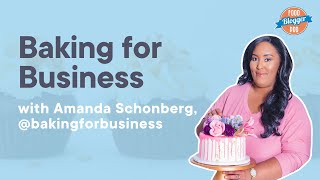
This is a transcript of a podcast interview with Amanda Schonberg (recorded/uploaded Dec 15, 2021) about her path from culinary school to running a baking business and teaching other bakers. Amanda describes discovering she could legally bake (not cook) from home, starting with family pound-cake recipes, applying lessons from corporate bakery management (SOPs, streamlined menus, scalable, low-skill items), handling early business logistics (pricing using culinary math, food liability insurance via FLIP, delivery and scheduling), and gradually transitioning to full-time after staging steady hours. She launched a teaching/community (Baking for Business) originally via Periscope and group coaching; the membership focuses on the business side of baking, features guest experts, and has student success stories (e.g., a student who scaled from ~$300/year to a six-figure brick-and-mortar).
Chapters
Amanda, welcome to the podcast.
Hey. I'm so happy to be here. Thank you so much.
Yeah, it's going to be a fun conversation because there was a kind of an inflection point in your career years and years and years ago, which would have been we kind of intersected at a point and you went not in the way of, like, building a blog, although you were thinking about it. You went towards kind of building the career path that you have right now. But we chatted a little bit about it before we press record. But take me back to that point and kind of the mindset that you were in and some of the decisions that you were trying to make about what you were going to do.
Yes. So years ago, when I was in culinary school, I used to be vegan. And. And I used to love to just break out the meal prep bowls and just prep everything and have everything in order. And I said, you know, I want to do this. I want to cook vegan dishes from home. But when I looked up the laws, you couldn't cook from home. You can only bake. So I said, okay, well, instead of doing vegan meal prep, maybe I'll do a vegan blog. Right? So I was so set, did all my research. I said, okay, I have to do this correct. I have to learn from the best. Pull up, you guys, right? Because I'm really big on learning and teaching. And you guys popped up and I said, that's it. I'm going to do it. But then my friend said, no, you know what? I think you should start off with the cupcakes and the pound cakes.
So, yeah, so change.
Change my mind. And started baking.
Nice. And it was the right decision. You've had success with that. What did that mean? Starting off with the cupcakes? Starting off with the pound cakes. What, you know, implied in that is like, you're going to be creating these, you're going to be baking these. But did you know at that point what that was going to mean and what that was going to look like?
I didn't know. I tell people all the time, cake has changed my life. It took me to some amazing places that I honestly, I didn't know my mom had a pound cake recipe. And I did know that I wanted things to be familiar, what I was used to. I never really liked the big cakes with fondant and stuff like that. So I started out with the recipe my mom gave me, and after that, it just took off.
And so that looks like you making, I'm guessing, a lot of these. Who Are the people that are coming to buy them. How are you finding these people? What does it look like to grow? I'm super fascinated. Just personally knowing that. It's like I have zero experience in that world. What did it look like the first time? I always think of the first time that you ever made something and somebody paid for it. What was that like? And then how do you kind of scale that up to a certain point over time?
Wow. It's crazy because that kind of happened by accident. So after culinary school, I went into corporate retail management, so I managed bakeries. Costco, Great American Cookie Company. And I said, okay, well, being around these businesses, honestly, you learn a lot when you pay attention to their standard operating procedures, everything they do. So I was honestly just at Costco one day, and we were full, and the lady was like, so no one can make this? And I was like, well, I guess I, you know, I make them kind of on the side. And I had no idea she was actually a local councilman. So fast forward. I ended up making the cake for her. She told her friends, yeah. And I was like, okay, so, you know what? So maybe I should step this up. Maybe I can do this full time.
Yeah. What. What were some of the things that you learned managing bakeries that you were able to implement right away? I was actually thinking about this just the other day, where it's like, man, people who work, like, within a startup or at a restaurant, like, if you work within a restaurant next to a chef who's really good, you're going to be able to then go to a restaurant and start your own restaurant and be ahead of where you would have been if you were just starting out. Which, you know, a lot of that is the. Are the things that you teach, which we'll get to eventually. But what were you. What did you learn that you were able to apply to kind of some of your own businesses and best practices from those experiences?
So one of the things I learned, which is a big thing in our community, was in our community still is definitely streamlining processes because, you know, there's a time and place for everything. Costco doesn't sell a lot of different things for a reason. They sell things that could be easily produced that have a quick turnover. They sell things where the skill limit is low because, you know, as a business, they're employing average workers, teenagers or young adults who can just come in and step in. Well, when you take those skills and you transfer them to the cake world, we're opposite. We don't want to do you know, we look at boxes. Oh, no, not a box mix. That's bad. That's a no, no. And I'm like, you know, hey, you guys, I've been blessed to work with Pillsbury in the past. You know, that's. That's not a bad person to work with. So in my bakery, I had to bring over some of those processes and say, you know what? It's not about what I can do, but it's about how much money can I make if I'm able to quickly do things, if I'm able to quickly come up with menus where things can be easily done, things where I can tell my husband, hey, you can do this, so that I can take orders. So I knew from the beginning that the things that I was going to do weren't going to be so elaborate. I believed in the small things, which are okay, but I just always believed in the small things in large volumes. So it was up to me to go out and find that volume so that I can get the space sales.
Yeah, that's really interesting, I think, of the book the E. Myth. I don't know if you've ever heard of that book, but I think the example in that book is a pie shop. Like, it's like, essentially a bakery, and it's this person who is a really good baker, but then they just get kind of consumed by their business because they're doing all of the baking. It seems like from the outset, you knew. You kind of knew that intuitively.
So.
And maybe through your experience in the different places that you wanted to build a business, you didn't want to build a job where you'd be baking all the time. Is that true?
Yeah, exactly. It's definitely true. There have been times where I've stepped away and, you know, no one has known or missed a beat because my husband can step in. You know, I've taught him how to scoop, how to roll, assistance, other people who can deliver. So, yeah, I always knew that I didn't want labor intensive, you know, strenuous things. I wanted things that could be easily reproduced. And I knew that that would get me the volume that I needed.
So, yeah, yeah. And so in those early stages, you know, this councilwoman comes to you and is like, hey, you had mentioned this pound cake. Can I actually buy one from you? Are you, like, sure? And then Google, like, how much to sell pound cake for, or, like, how do you know in those early stages how to price, how to deliver? Are you having to think about setting up an official business do you have to have, like, insurance? I also feel like these are all of the questions that you probably get from students that you work with. But, like, I also feel like I would be nervous about, like, hey, what if I make something and somebody gets sick and it's not related to that, but they think it is, is there an issue there? What about all those early stage business things? What was that like?
So the very first order, all of those things were definitely relevant. They were there, but in all honesty, no. The first order on the pricing, I went back to the books, to my culinary books. So the money's always there because we do take culinary math, Intro to business finance in culinary school. And that's one of the things that I love is that I went to school for food service management. So I'm actually not a pastry chef. I'm not a savory chef. I'm a chef that particularly deals with the business side of the kitchen, which is what I love. So I priced it accordingly, you know, delivered it to her, and all was well. But once I saw, hey, I could really do something with this, when people started calling and it wasn't just a hobby and people were kind of getting upset when I wasn't available, then I was like, okay, well, let me sit down and mold this into something. And again, I pull from my corporate baking background and said, okay, I need to create a set of standard operating procedures for. For myself. When will I be open? You know, like, what's a website going to cost? Food liability insurance, which we have, which is called Flip. Amazing company. What does that cost? And how do I factor in all those costs into the price of the product so I still make a profit. So once the wheel started turning and I knew that I wanted to do it, then, yeah, all those things came into play.
You had mentioned a company. You said it's called flip, which is a. Okay. And that's where you would go if you want to start bakery or you're selling baked goods. You'd go to them and say, like, here's what I'm doing. What does it cost to get insurance to make sure that somebody doesn't sue me if they get sick from something.
Exactly. So FLIP stands for Food Liability Insurance Program. And they are super amazing. They're a really great company. Another company I always recommend, of course, their State Farm. And then there's another one called Hartford. But FLIP is really good because they specialize mainly in food liability insurance.
Oh, interesting. And so my guess is there's kind of an on ramp where you Get a couple orders here, a couple orders there, and then maybe you get one order where somebody's like, hey, we want to do a bulk order of, I don't know, a hundred cupcakes or something like that. And then it starts to be like, hey, this is actual, like, picking up speed. I need to kind of shift more attention here. At what point in the process did you step back and say, like, this might be able to be something that I, like, focus on in a full time capacity, or was it kind of at like that from the start? It sounds like you kind of always had that mindset.
I always had it. For me, it was kind of like after the first year, because when I was at Costco, my schedule was up, down, up, down, up, down. So I said, you know, one of the first steps, I need reliable hours. And I've always been a gambler. I always tell my students, bet on yourself. When you bet on yourself, you can never lose. You know, I've never been shy. I walk up to people, I knock on any doors I can until I seek opportunities. So one of the first steps for me was I need to find a job that has steady hours. And my husband was like, you know, really? Like, it's just. And I'm like, really? I said, let me just first find a job with steady hours. So that way I can, you know, bake at night, deliver in the morning, as opposed to just being up, down, up, down with Costco. And then so I did. So I left Costco, went back and found a job with steady hours. And then I came back the second year. I spoke to my cpa and I said, you know, what do you think? And she said, yeah. She said, you're growing. You're growing a little bit more than I projected. So what do you want to do? And I said, okay, well, let's keep going. So I kept that job, and I did it the second year, did it the third year. Then after the third year, I was like, you know what? I don't really like being here anyways. I think I could go on my own. You know, we all jump. We all take that jump leap. Looking back, I would not have leaped so quickly because that was an amazing job with great benefits. But I jumped, I did it, and I left. And I've been full time now for four years in business, total of six and a half.
Yeah. Good for you. That's incredible. I remember some of those same, uh, thoughts Lindsey and I having where she was a teacher. I worked at a nonprofit. And it was this, you Know, I think some people would be like, hey, I want to do this. And they would jump right away. Right. Um, we were more like you where it was like, hey, we're kind of moving this direction. Let's shift and change our schedule, make adjustments so we can maybe work a little bit less or to your point, work hours that are maybe a little bit more predictable so we can slot in our side hu in pursuit of making that the full time hustle. And to your point, sometimes you'll get in and you'll think, man, I wish I would have done this earlier. Or you'll be like, wait a minute, like actually it was really nice to have benefits and you know, whatever it is, healthcare and things like that. But at some point you just have to pull the trigger and jump in. If looking back, would you have waited like another year or like what would that amount have been that you would have held off?
Looking back, I probably would have waited maybe about another, maybe about another two years.
Sure.
Because I'm to the point now where I'm really, really blessed I for my baking business. I don't really even have to advertise. The orders are there. I put systems into place to where the orders come in. Before culinary school, I went to school for medical billing and coding. So it was a hospital that I returned to which had great benefits.
Sure.
Now being self employed, benef freaking sky high. So I would, yeah, I would have stayed at the hospital, you know, back, back then if I had a sore throat, I could just, you know, run down the hall, ask one of the doctors and they just, you know, now it's like 500 out of pocket, like, whoa. So yeah, I would have stayed another two years.
Sure. Yeah, that makes sense. But in at the same time probably wouldn't have been able to make as much progress as you did within your business and as much traction as you've gotten. So, so at some point along the way, you know, you had your, you're building your bakery business, having some success there, and then eventually realized I can help other people who are looking to do this by teaching them over the six, seven years that you've been doing this in a shorter amount of time so they don't have to go through the trials and tribulations of some of the things that you've done and also just your history and culinary training. So at what point did you start your community? Bakers who want to learn kind of the business side of it and then talk a little bit about what that is and what that looks like.
So I initially started that probably about almost going on five years ago. I was actually on Periscope. I used to use Periscope a lot. And other people would go on Periscope, and sometimes they would be working or doing demos and they had problems. So I would say, hey, do this, try this, try this. I was always behind the screen. And then it got to the point where people started, you know, you start knowing names and regulars. And then one young lady said, you know, you should go live, you should share. And I was like, I don't know about that, you know, but they kept asking. So eventually I. I did. I went live. I shared, and it just took off from there. Then people were like, well, what do you teach? Do you teach this? Do you teach that? I remember one of the. The first lives I did. It was kind of like some of my students who were. Who were probably listening to this, they remember I said, I'm going to do a baking one on one class for free. Again, I stepped into teaching, serving, giving one hour, an hour and a half long class. And during the class, I got hot. So I took my wig off and people were. And when I teach, I talk to people like regular, you know, I'm not filtered.
Yeah, totally.
This is probably the longest I've gone without cursing. But, you know, good for you.
Good for you.
I'm not filtered. My jokes are normally pretty racy because that's just the type of person I am. And I looked up and there were like hundreds of people that were on this live broadcast. And I was like, what the heck? Like, where do all y' all come from? You know, So I just literally started making them say, you know, where you from? This and that. So, yeah, it started with Periscope. And at the time, I created a group coaching program. I had a membership, but I did it with the partner. It was another young lady who used to go live also. And we would go live at the same time. So I said, you know, we're both going live. And we sat down, we got to know each other. Why don't we make something of this? And we did. We had a partnership for about four years, and then it ended. And I went out my way. She went her way. There's a lesson in everything. Sure, I'll do that.
And what do you feel like the lesson is for you in that season of partnership?
Probably to just believe in yourself, believing yourself. I do believe people come and go in our lives for a season. So I'm never one to badmouth anyone or anything. Every time we Come into contact with the person. It's a learning lesson that the season just expired. I had to believe that I was enough, that I was more than enough. And I was. I am. And she is, too. Definitely wish her the best. But I'm grateful for all the opportunities I've been blessed with.
And. Point being, you can do it on your own. Like, you can. There's maybe things that you would. Somebody else would normally do, but that doesn't mean that you can't do them. Like, you can pick it up, you can learn it. Yeah, that's great. So baking for business is the name of that business. Who are the people that would be a good fit for that? Like, people that would be. You've talked about your students and then maybe some success stories that have come from that as people have worked with you.
Oh, wow. So, yeah. So baking for business is my passion. I love helping people start, build and grow a cottage bakery or any other type of bakery. We have people who have storefronts. We have people who have trucks and trailers. Most of the people are what we call cottage bakers, meaning that they bake from home, their own land. So anyone who has a passion for food, for just baking or. And not just bacon, we have chocolatiers, those who don't even, you know, candy making, confection, sugar enthusiasts, food entrepreneurs, anything like that. So, yeah, we have a monthly group coaching membership, and it teaches bakers the business side. So we have industry leaders, which I've been super blessed with. We've had Gianna Francis, who's Rachel Hollis's personal trainer. She came in and did a class on health and body for cakers and bakers because, you know, we're growing our feet all the time. We don't think about that. We had Gina Neely from Food Network come in and she did a class on pitching yourself to the media. We've actually had Bake Diary. Bake Diary recently came, and they did a total walkthrough presentation for my students. So I didn't want it to be just me. I wanted a group membership that mimicked how I learned. And I like to learn from different people. So I wanted tons of other people from other industries to come and teach us how to start and build. One of my favorite students, her name is Tara. She's been with me for about five years now. And I remember she wrote a review. She was like, you know, when I first found you, I probably made about $300 in my business, like, the first year alone. Now she operates a brick and mortar and she makes over six six figures. So I have, yeah, I have some amazing students. I have a student named Demi. She loves her job, works for the hospital in Texas. But she wrote to me last year too, and she's, she's never going to leave her job. She bakes on the side. She's like, I bake on the side. I'm not going to leave my job. But my baking income surpassed my job income.
Wow.
So, yeah, we have some, I have some amazing students. I tell them they teach me all the time. I just pour into them the mistakes that I made, the things that I learned. So that way it accelerates their growth.
Yeah, I love that. One of the. Listening to a podcast recently and they talked about one of the benefits of a side hustle being security and that we are all the CEO and president of our own business and for a lot of us, we'll work, you know, we'll have one client, so to speak, but. And that's our full time job. But what I love about the idea of somebody like the story that you just told is she's diversified now. Like let's say there's some huge cuts that happen at the hospital. She immediately has this fallback option to go to same on the side with keeping her job where let's say she burns out and she's like, I just can't do this anymore. She has its options. And I think that's so cool when I think about, you know, there isn't always the need to turn to replace your, your full time job. I think there's value in keeping that. If that feels like a good, good fit for you.
Absolutely. And she's amazing. And she just landed a contract with Amazon.
Oh, cool.
Oh, awesome. Yeah, she's awesome. She's really awesome.
Yeah, that's great.
More from ChatFBP

One more reminder to tune in here to the latest podcast! https://pod.link/1014116331









One more reminder to tune into this week’s podcast! https://pod.link/1014116331

A glimpse at our October coaching call all about returning to your blog. Replay on FBP!